Most people reach for kewpie mayo, squeeze a ribbon over their bowl, and assume it's just a fancier version of the stuff already in their fridge. It isn't. Kewpie mayonnaise operates on a different principle entirely - egg yolks only, rice vinegar for brightness, and a hit of umami that standard mayo never delivers.

Understanding what makes it distinct helps you use it where it actually counts, from takoyaki drizzles to a quick spicy mayo for sushi.
Kewpie mayo is a Japanese-style egg yolk mayonnaise with a richer, tangier, and more savory flavor than American mayo. Made with rice vinegar and umami enhancers, it works as a finishing condiment, salad base, and dipping sauce across Japanese and fusion cooking.
What Is Kewpie Mayo?
Kewpie mayonnaise was first produced in Japan in 1925 by the Kewpie Corporation, making it one of the oldest commercial condiments in Japanese food culture.
It belongs to the egg-based mayonnaise category but differs from Western versions in one foundational way: it uses egg yolks only, never whole eggs.
That single-yolk approach produces a denser emulsion with more fat and color than standard mayo. The acid comes from rice vinegar or apple cider vinegar rather than distilled white vinegar, which keeps the tang softer and rounder.
Most bottles also contain monosodium glutamate or yeast extract, giving the finished product its characteristic savory depth. You'll find it sold almost exclusively in the narrow, soft squeeze bottle with a red cap - a shape designed for the precise drizzling that Japanese street food demands.
It's sometimes called Japanese mayo outside Japan, though "kewpie" has become the informal universal name.
- 🥚 Egg yolks only - no egg whites, which increases richness and emulsion density
- 🍶 Rice vinegar base - softer acidity than Western white vinegar
- 🧂 Umami enhancers - MSG or yeast extract listed in ingredients
- 🫙 Soft squeeze bottle - designed for controlled, decorative drizzling
What Does Kewpie Mayo Taste Like?
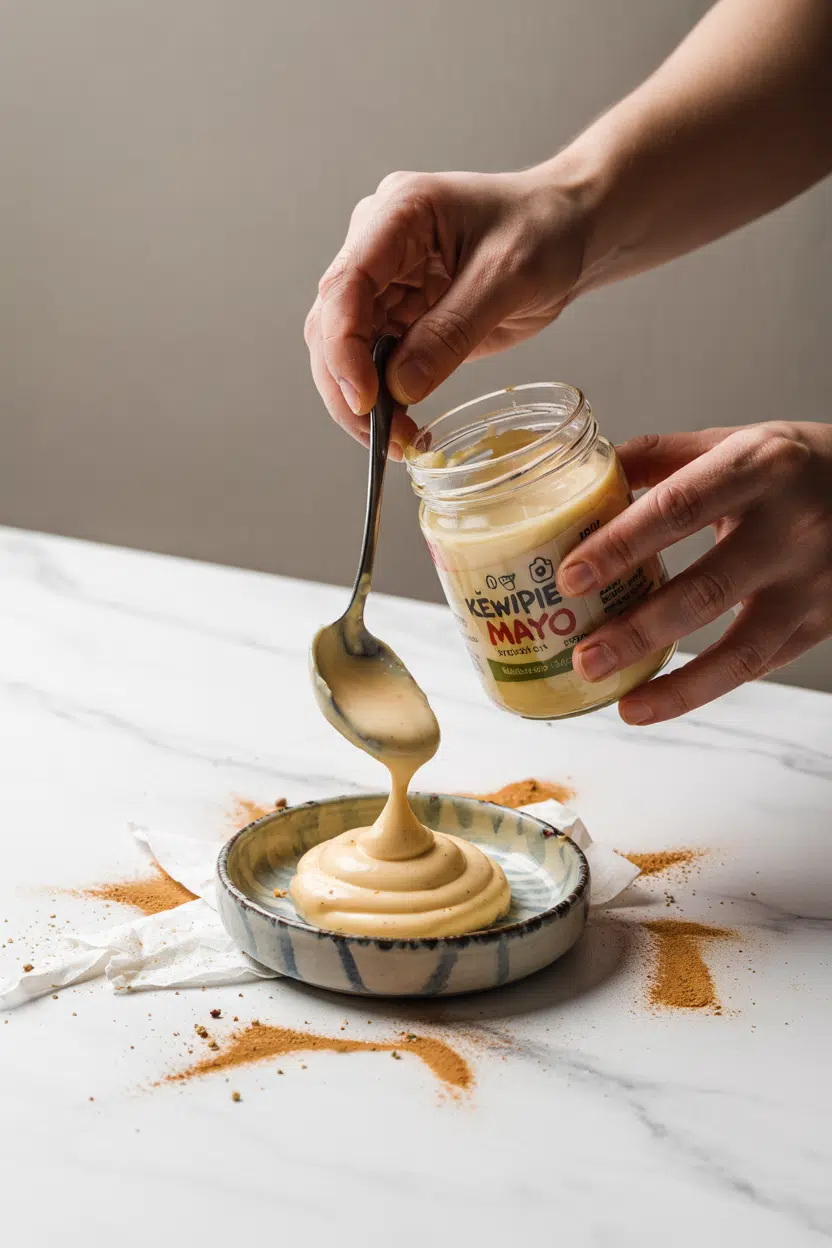
Kewpie mayo tastes like American mayo pushed further in every direction - more richness, more tang, more savoriness. The egg yolk-only formula means the fat content is noticeably higher, so the mouthfeel is closer to aioli than to a standard bottled sandwich spread.
The rice vinegar gives it a bright, clean tang without the sharp bite that white vinegar adds to American brands like Hellmann's. Underneath that acidity sits the umami note - a quiet savory lift that lingers after each bite without tasting artificial.
Sweetness is present but restrained. It rounds out the tang rather than competing with it, which is why kewpie works well with both salty and acidic foods without clashing.
How to Use Kewpie Mayo
Kewpie mayo's soft squeeze bottle isn't just branding - it signals the ingredient's primary role as a finishing condiment. You apply it at the end, not during the cook.
The most direct uses come from Japanese street food. Drizzled in a crosshatch pattern over okonomiyaki, it cuts the savory richness of the pancake.
Over takoyaki, it adds creaminess against the crisp exterior. For sushi accompaniments, a small amount mixed with sriracha makes the spicy mayo used widely in rolls and bowls.
Beyond Japanese applications, kewpie folds into potato salads and seafood salads with noticeably better results than standard mayo - the extra richness coats evenly and the umami amplifies any seafood or egg already in the dish.
Whisked with soy sauce and toasted sesame oil, it becomes a quick dressing that needs nothing else.
| Method | Best For | Tip |
|---|---|---|
| 🥗 Cold Finish | Drizzling over takoyaki, okonomiyaki, grilled corn, bowls | Use the squeeze bottle nozzle for clean crosshatch lines |
| 🥣 Folding | Potato salad, crab salad, deviled eggs | Add at the end - overworking breaks the emulsion |
| 🔥 Brief Heat | Gratinée on fish, torched sushi rolls, baked corn | Watch closely - kewpie browns faster than regular mayo |
| 🫙 Sauce Base | Spicy mayo, sesame dressing, dipping sauces | Whisk with soy + sesame oil for an instant dressing |
Grilled vegetables - especially corn with lime and chili - benefit from a thin coat applied right off the heat. The residual warmth loosens the kewpie slightly and lets it sink into the char.
If you need a swap in a recipe, kewpie mayo replacements generally point toward full-fat regular mayo with a small addition of rice vinegar and a pinch of MSG. For broader swaps, mayonnaise swaps cover the full range of egg-free and dairy-based alternatives.
How to Buy and Store Kewpie Mayo
Buy the original Kewpie brand - the one in the soft, narrow plastic bottle with a red cap and Japanese label. Check that egg yolks and rice vinegar appear near the top of the ingredient list. Generic "Japanese-style" mayonnaises exist, but most lack the specific yolk-to-vinegar ratio that makes the flavor profile work.
For storage, keep an unopened bottle in a cool pantry away from direct sunlight. Once opened, refrigerate it immediately with the cap tightly closed.
Store it upright to protect the nozzle from residue buildup. Opened kewpie lasts 1-2 months in the fridge at peak flavor - for a full breakdown of timelines, see our guide to kewpie mayo storage life.
The acidity from rice vinegar in the formula helps preserve it, but flavor degradation still happens past the two-month mark.
Start With One Application
Don't try kewpie in five dishes at once. Pick one entry point based on what you already cook.
- You cook Japanese food regularly - use it straight from the bottle as a drizzle over okonomiyaki or takoyaki.
- You make a lot of salads - swap it directly into your next potato or crab salad in place of standard mayo.
- You're new to it entirely - mix one tablespoon with sriracha and use it as a dipping sauce. It's the fastest way to understand what the umami base actually does.
The squeeze bottle means commitment is low. Try one use, taste the difference, and expand from there.
Frequently Asked Questions
Egg yolks (not whole eggs), vegetable oil, rice or apple cider vinegar, and an umami enhancer - either monosodium glutamate or yeast extract. The yolk-only formula is what separates it structurally from Western mayonnaise.
Hellmann's uses whole eggs and distilled white vinegar, producing a milder, less fatty result. Kewpie uses only egg yolks and rice vinegar, plus MSG, which makes it richer, tangier, and noticeably more savory.
Yes, the original Kewpie formula lists monosodium glutamate as an ingredient. Some export versions substitute yeast extract to meet labeling preferences in certain markets, but the savory effect is similar.
Slightly, but sweetness isn't the dominant note - umami and tang are. The mild sweetness comes from the formula balance rather than added sugar, and it reads as roundness rather than a candy-like flavor.
Yes, for short high-heat applications like a quick gratinée on fish or a broiled corn topping. Avoid it in long bake times - sustained heat destroys the emulsion and the umami character fades.