
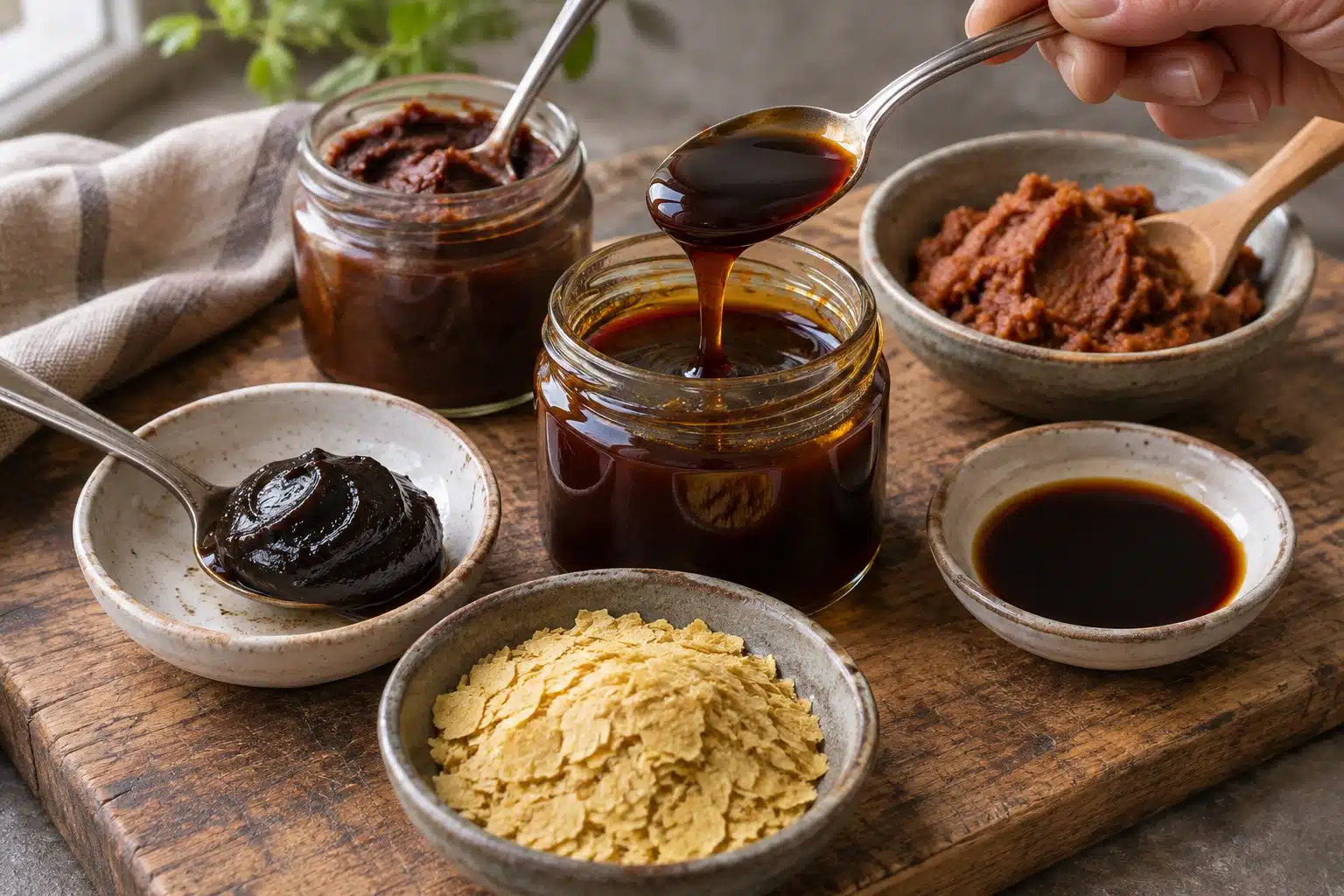
Vegemite is the closest Marmite substitute. Use it spoon for spoon, or a little less, because it tastes more intense.
In stews and gravy, Bovril, miso paste or soy sauce also give the salty, savory depth Marmite adds, but only Vegemite works as a spread on toast.
What Does Marmite Do in a Recipe?
Marmite is a glutamic-acid-rich yeast extract made from leftover brewing yeast. It is a sticky, dark-brown paste, and most recipes use it by the teaspoon because it is so concentrated.
Remember it later
Planning to try this recipe soon? Save it for a quick find later!

A swap has to cover the jobs Marmite does, and the dish decides which jobs matter most:
- Salt: Marmite has about 10.8 g of salt per 100 g, so one teaspoon seasons a whole pot of beef stew.
- Savory depth: the glutamate in yeast extract gives gravy and soup a meaty, brothy base, which is the umami people notice.
- Color: the dark paste turns pale gravy a deeper brown.
- Body: the syrupy paste clings to toast, melts into butter and mixes into dough without adding much liquid.
In gravy, soup and stew, salt and savory depth carry the dish, so thin liquids like soy sauce work. On toast or in dough, body matters, so you need a paste.
6 Marmite Substitutes, Ranked
We ranked these by how closely they match Marmite's flavor and texture. The last two change the taste the most.
| # | Substitute | Best For | Ratio | Key Note |
|---|---|---|---|---|
| 1 | Vegemite | ✨ Both | 1:1 | More intense |
| 2 | Bovril | 🍳 Cooking | 1:1 | Beefy, not vegan |
| 3 | Miso Paste | 🍳 Cooking | 1:1 | Add at the end |
| 4 | Soy Sauce | 🍳 Cooking | 1 teaspoon : 1 tsp | Thin, cut other salt |
| 5 | Nutritional Yeast Mix | 🌱 Vegan | 1 teaspoon + 1 tsp | Needs soy for salt |
| 6 | Worcestershire Sauce | 🍳 Cooking | 1:1 | Tangy, has anchovy |
Only Vegemite is a true spread, and every other swap works best in dishes where Marmite dissolves into hot liquid.
1 – Vegemite
Vegemite is also a brewers' yeast extract, so it brings the same salty, savory base.
It is thicker and darker than Marmite, and its flavor is more intense, slightly bitter and more yeast-forward, where Marmite is a little sweeter.

Swap it spoon for spoon, or start with about three-quarters of the amount in a delicate dish.
It hits harder, so taste before adding more, and it dissolves in hot stock the same way Marmite does.
- On toast: scrape on a thinner layer than you would with Marmite, because the flavor is stronger and slightly bitter.
- Gluten: Vegemite contains gluten because the yeast comes from brewing, so it is not a safe swap for a gluten-free guest.
- Skip it if: you want Marmite's sweeter, syrupy edge in a spread.
2 – Bovril
Bovril is a dense, salty paste made from beef extract. It is used to season soups and stews, so it fills Marmite's role in gravy, stews and pot roast, with a meaty flavor instead of a yeasty one.
Start with the same amount of Bovril as Marmite and taste before adding salt, because jars differ and we could not confirm a salt figure that holds for every version.
- Vegetarian and vegan cooking: skip it, because the current beef and chicken versions are made from meat extract.
- On toast: skip it, because it tastes like beef stock rather than Marmite.
3 – Miso Paste
Miso paste is fermented soybeans, so it brings salty, savory depth from soy protein instead of yeast.
It has a little less sodium than Marmite (about 3.7 g per 100 g against roughly 4.3 g), so start 1:1 and add a bit more at the end if the dish tastes flat.
The type of miso changes the result:
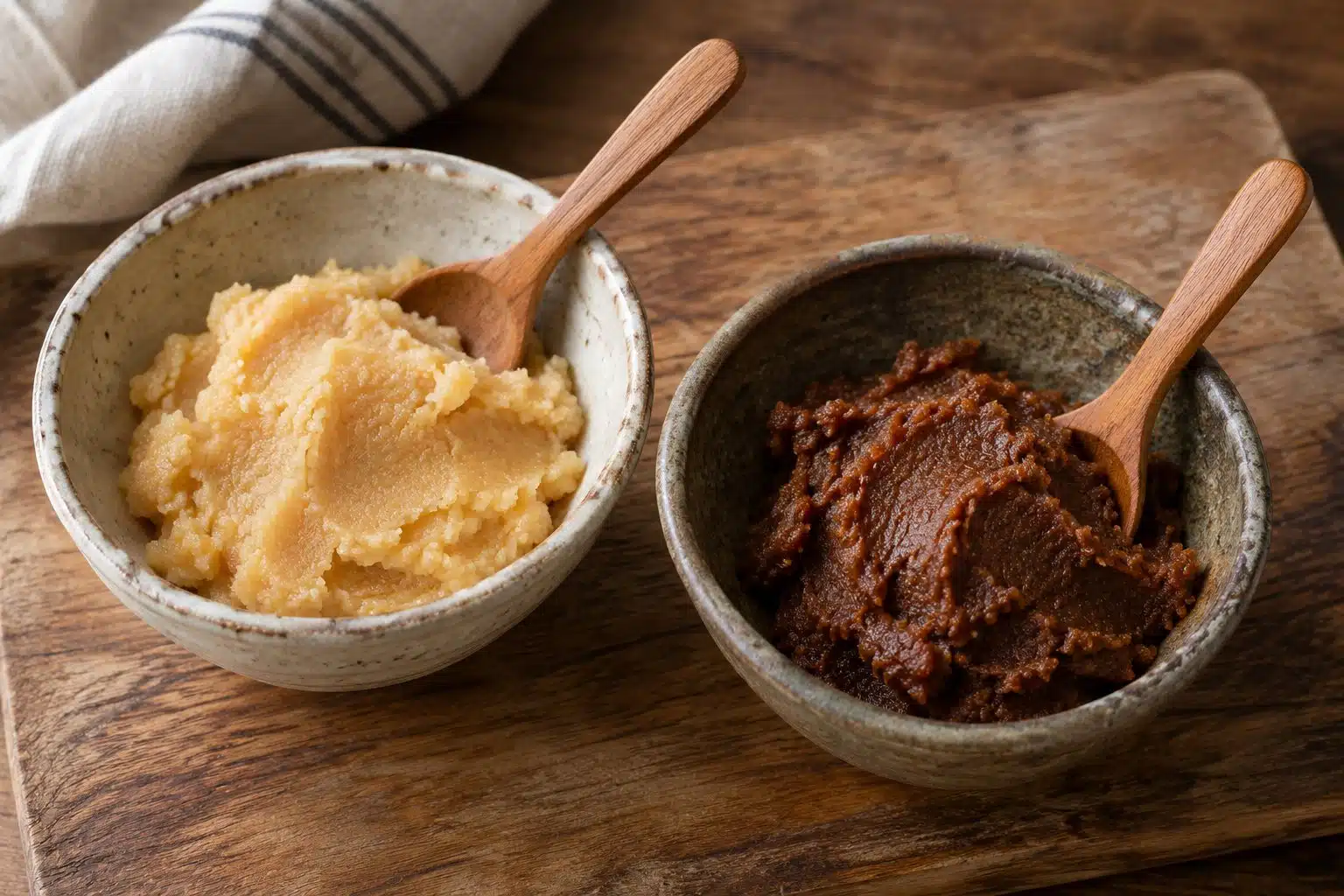
- Dissolve it first: stir the miso into a ladle of hot liquid, then pour that back into the pot so no lumps remain.
- Add it last: stir it in just before you take the pot off the heat, because overcooking kills the live cultures in miso.
4 – Soy Sauce
Soy sauce gives strong salt and umami but no thickness, so it works in soups, marinades, braises and gravy where Marmite dissolves anyway. Use 1 teaspoon soy sauce for 1 teaspoon Marmite, then cut the other salt in the recipe by half.
Soy sauce is saltier than Marmite by weight, at about 5.5 g of sodium per 100 g, so taste before adding more.
The flavor is cleaner and less fermented, and it will not coat meat or toast the way a paste does.
- Best in: thin liquids such as broth, marinades and stir-fry sauces.
- Skip it if: the recipe needs a paste to spread, bind or thicken.
5 – Nutritional Yeast Mix
For a vegan swap, mix 1 teaspoon nutritional yeast with 1 teaspoon soy sauce for each 1 teaspoon of Marmite. The yeast brings a nutty, savory taste, and the soy sauce brings the salt, because nutritional yeast has almost none (about 25 mg of sodium in 15 g for one brand).
The flakes do not dissolve fully, so whisk the mix into hot liquid and expect a little texture.
It tastes nuttier and cheesier than Marmite.
- Best in: soups, sauces and gravies that you can whisk smooth.
- Skip it if: you need a spread or a paste that dissolves cleanly.
6 – Worcestershire Sauce
Worcestershire sauce is a thin, tangy liquid made with vinegar, molasses or sugar, salt, soy sauce and usually anchovies. It adds savory depth, but the vinegar and sweetness are strong enough that you taste them in the finished dish.
Start with 1 teaspoon for 1 teaspoon of Marmite, taste, and add a little more only if the dish needs it.
It suits beef marinades, gravy and tomato-based sauces, where tang is welcome, and it will not thicken anything.
Which Marmite Substitute for Which Dish?
Match the swap to what Marmite is doing in your recipe.
| If You're Making | Pick | Why |
|---|---|---|
| Toast Spread | Vegemite | The only swap thick enough to spread, used in a thinner layer |
| Gravy or Stew | Bovril or red miso | Deep flavor and color that dissolve in hot liquid |
| Soup or Broth | Miso or soy sauce | Both blend into liquid, and miso goes in last |
| Marinade | Soy sauce or Worcestershire | Thin liquids that coat meat |
| Vegan Dishes | Miso, or yeast plus soy | No animal products, unlike Bovril and Worcestershire |
| Dough or Batter | Vegemite or miso | Pastes add flavor without extra liquid |
Dough and batter are where soy sauce and Worcestershire fail, because their extra liquid loosens the mix.
How to Keep a Swap from Turning Too Salty
Marmite is salty, and nearly every swap is too.
Table salt weighs about 2.5 times as much as the sodium in it, so Marmite's 10.8 g of salt per 100 g is roughly 4.3 g of sodium.
Vegemite has about 3.3 g, miso about 3.7 g, soy sauce about 5.5 g and nutritional yeast almost none, so soy sauce is the swap to watch.

Frequently Asked Questions
Yes, Marmite is mostly yeast extract rich in glutamic acid, the compound behind the savory taste called umami. Miso, soy sauce and Bovril are also rich in glutamate, the savory compound in monosodium glutamate, which is why they work as swaps.
No, Marmite is made from yeast extract, while Bovril is made from beef extract. Bovril tastes meaty rather than yeasty, and its current beef and chicken versions are not vegetarian.
They overlap in saltiness and umami, and cooks use Marmite much like soy sauce or Worcestershire, a quarter teaspoon at a time. Marmite is thicker, yeastier and a little sweeter, while soy sauce is thin and cleaner.
It gives a salty, meaty flavor but no yeasty depth, and Bovril is the closer meaty swap. Dissolve a small amount in the hot liquid the recipe already uses, taste, and cut the other salt, because bouillon is very salty.
Use 1 teaspoon of soy sauce for 1 teaspoon of Marmite, then cut the other salt in the recipe by half. Soy sauce is thinner, so a sauce may need a little longer simmering to reduce.
Yes, with a paste such as Vegemite or miso, used in the same amount with the other wet ingredients left alone. Soy sauce and Worcestershire add extra liquid that can loosen a dough or batter.



