Fettuccine is the closest swap for tagliatelle: use the same weight and cook it by its package. It is another flat egg ribbon, just a little thicker, so ragù, butter sauce and cream sauce cling the same way.
Pick pappardelle for a chunky meat sauce and linguine for a lighter one. Wide rice noodles are the gluten-free option, and spaghetti is the last resort for sauces that coat instead of cling.
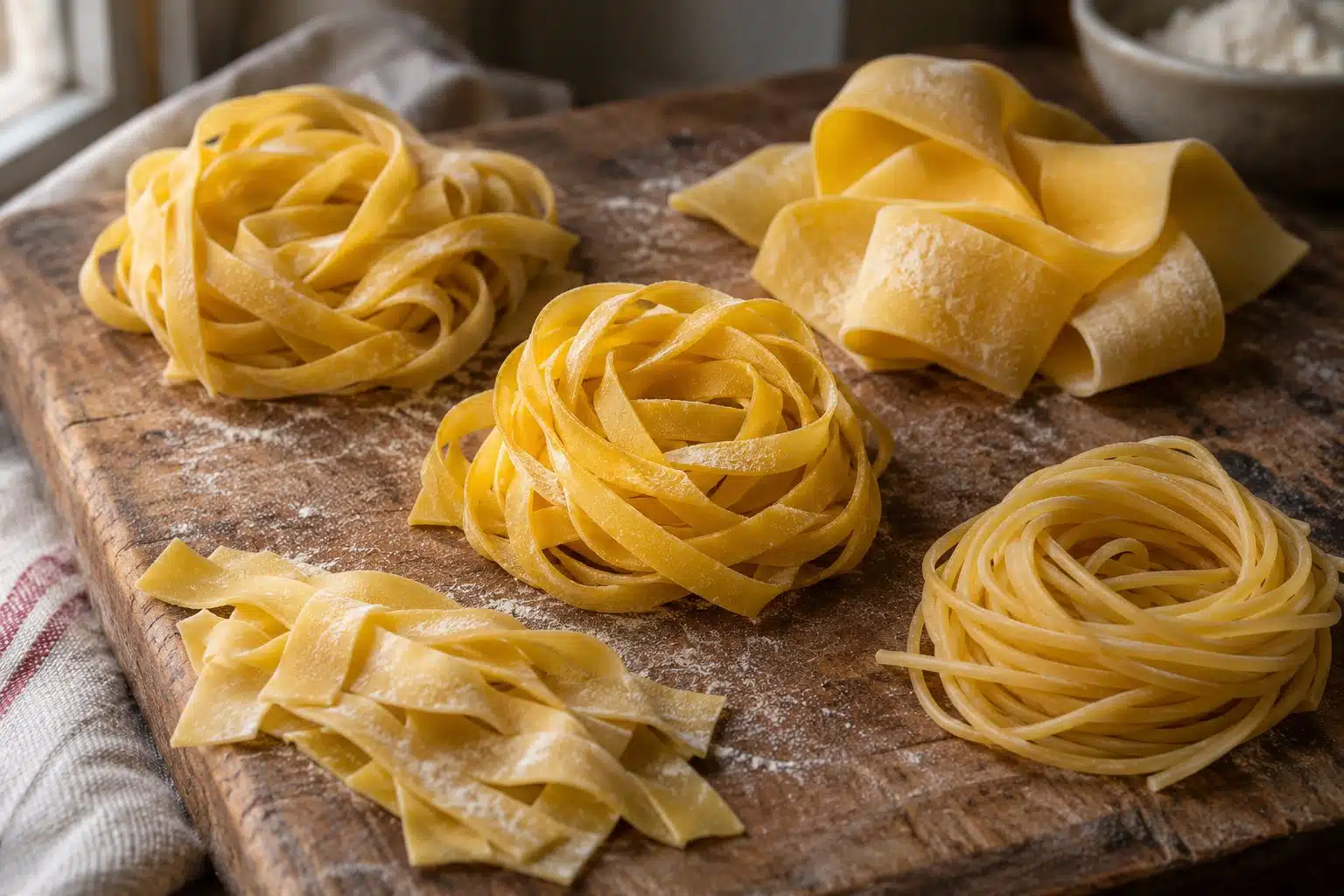
Fettuccine is the closest swap for tagliatelle. Use the same weight and cook it for the time on its package.
Use pappardelle for a chunky ragù and linguine for seafood and lemon sauces.
For gluten-free, use wide rice noodles at the same weight, and rinse them after boiling.
What Does Tagliatelle Do in a Dish?
Bolognese tagliatelle is a flat ribbon of egg dough, traditionally one egg for every 100 grams of flour, cut 6.5 to 7 mm wide before cooking. It swells to 8 mm in the pot, the cooked width that a gold replica in Bologna's Chamber of Commerce marks as the standard.
Remember it later
Planning to try this recipe soon? Save it for a quick find later!
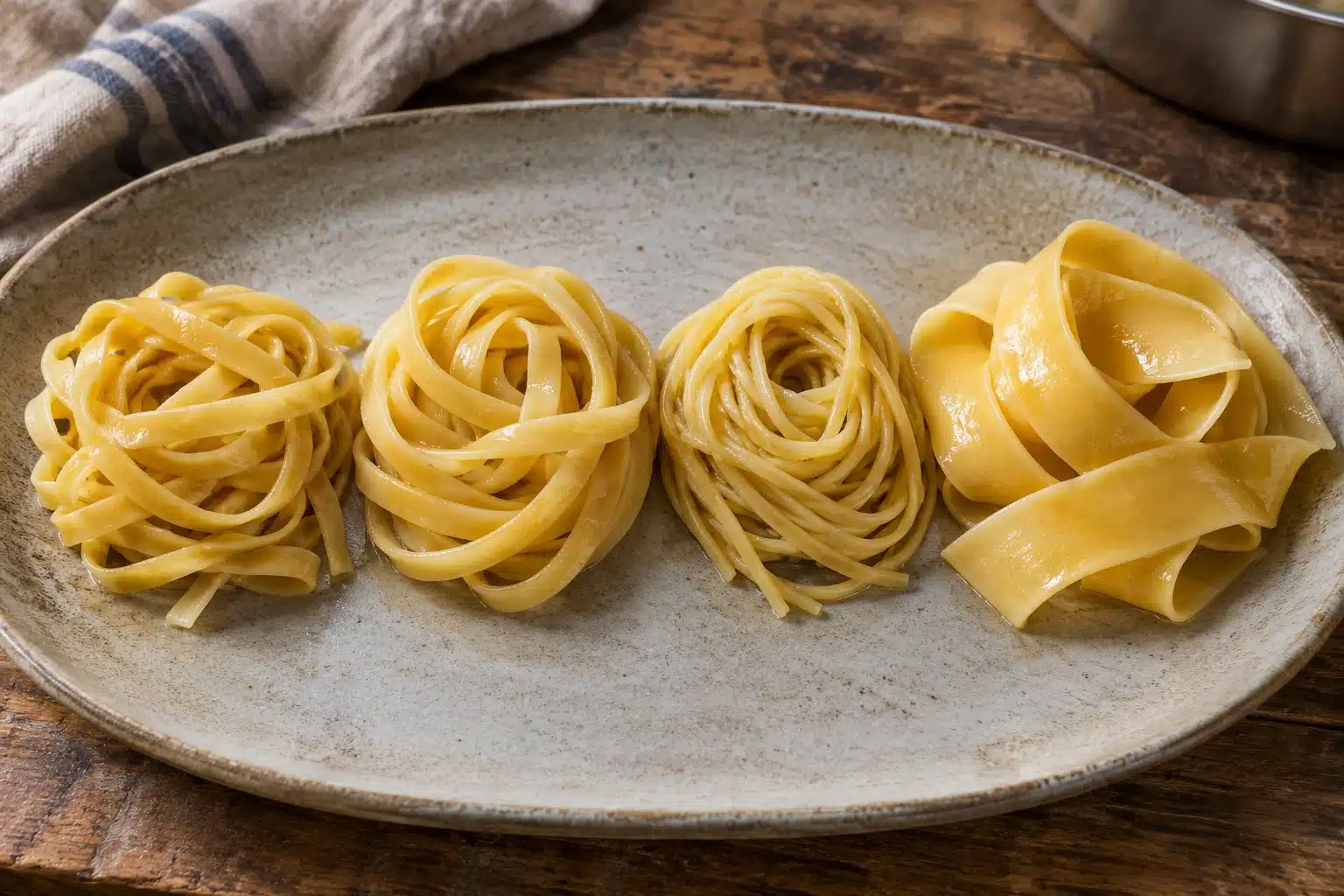
Three things set how tagliatelle eats, and a good swap matches at least two of them:
- Width: A ribbon about a quarter inch wide gives sauce a broad, flat face to cling to, which is why the classic partner is a meat-based Bolognese ragù.
- Egg dough: Egg gives the noodle a richer flavor and a softer bite than a plain flour-and-water pasta.
- Flat shape: Flat strands lift and coat in sauce, while round strands let thin sauce run to the bottom of the bowl.
| Shape | Width | Versus Tagliatelle |
|---|---|---|
| Tagliatelle | 6.5 to 7 mm raw | The reference |
| Fettuccine | About 6 to 7 mm | Same width, a little thicker |
| Linguine | About 4 mm | Narrower and thinner |
| Pappardelle | 20 to 30 mm | Several times wider |
| Spaghetti | Round strand | No flat face for sauce |
Width is the number to match. Fettuccine sits within a millimeter of tagliatelle, linguine runs narrower, and pappardelle is about three to four times wider.
Sources disagree by about a millimeter on fettuccine and tagliatelle, and brands cut their own, so treat these widths as close estimates.
The 8 Best Tagliatelle Substitutes, Ranked
Every pasta swap below uses the same weight as the tagliatelle in your recipe. Only the cooking time changes, so follow the package of the pasta you are using, since brands differ.
| # | Substitute | Best For | Ratio | Key Note |
|---|---|---|---|---|
| 1 | Fettuccine | 🍳 Cream, Ragù | 1:1 | Same width, slightly thicker |
| 2 | Pappardelle | 🍳 Chunky Ragù | 1:1 | Much wider, chewier |
| 3 | Wide Egg Noodles | 🍳 Butter, Cream | 1:1 | Egg flavor, often cut short |
| 4 | Linguine | 🍳 Seafood, Lemon | 1:1 | Narrower, holds light sauce |
| 5 | Fresh Lasagna Sheets | 🍳 Ragù, Cream | 1:1 | Cut into ¼-inch strips |
| 6 | Spaghetti | 🍳 Oil, Tomato | 1:1 | Round, little sauce cling |
| 7 | Wide Rice Noodles | 🌱 Gluten-Free | 1:1 | Softer, rinse after boiling |
| 8 | Zucchini Noodles | 🌱 Low-Carb | 2 zucchini per serving | Salt, drain, 2-minute sauté |
The first four are pasta you can swap without changing the dish. The last four are different foods that need a small adjustment to work.
1 – Fettuccine
Use the same weight of fettuccine and cook it for the time on its package. It is a flat ribbon about 6 to 7 mm wide, a hair thicker than tagliatelle, so ragù, butter sauce and cream sauce all cling almost identically.
In the US, fettuccine is the pasta people pair with Alfredo sauce, which makes it the natural choice for any cream-based tagliatelle recipe. It also holds up under carbonara and a Bolognese-style meat sauce.
Where it falls short: in a thin butter-and-sage sauce or a light broth, the thicker ribbon eats a little heavier than tagliatelle.
2 – Pappardelle
Pappardelle is 20 to 30 mm wide, and its rough surface grabs chunky sauce. Choose it for a ragù with pieces of meat, such as pork ragù with pappardelle, or for braised meats and mushroom sauces.
Dried pappardelle runs about 9 minutes and fresh 3 to 7, so taste a strand before you drain.
3 – Wide Egg Noodles
Wide egg noodles are the pantry stand-in when you want egg flavor and have no fresh pasta. Swap by weight and cook to the package time.
Many brands cut them short, so they eat more like a casserole noodle than a twirled ribbon. That suits butter-and-cheese sauces and creamy dishes better than a plate of ragù.
4 – Linguine
Linguine is about 4 mm wide, narrower than tagliatelle but flat enough for sauce to cling, which is why it turns up so often in seafood dishes.
Use it for clams, lemon and butter, white wine sauces, pesto, or a creamy dish like creamy lemon shrimp linguine. Swap by weight and cook to the package time.
Skip it for chunky ragù: the narrow strands hold less sauce per bite than a wide ribbon.
5 – Fresh Lasagna Sheets Cut into Ribbons
Cut fresh lasagna sheets into strips about ¼ inch (6 to 7 mm) wide and you have a close copy of tagliatelle. Most fresh sheets are egg dough, so check the label before you cut.
Do not cut them to the 1 inch width of pappardelle. A quarter inch keeps the bite close to tagliatelle.
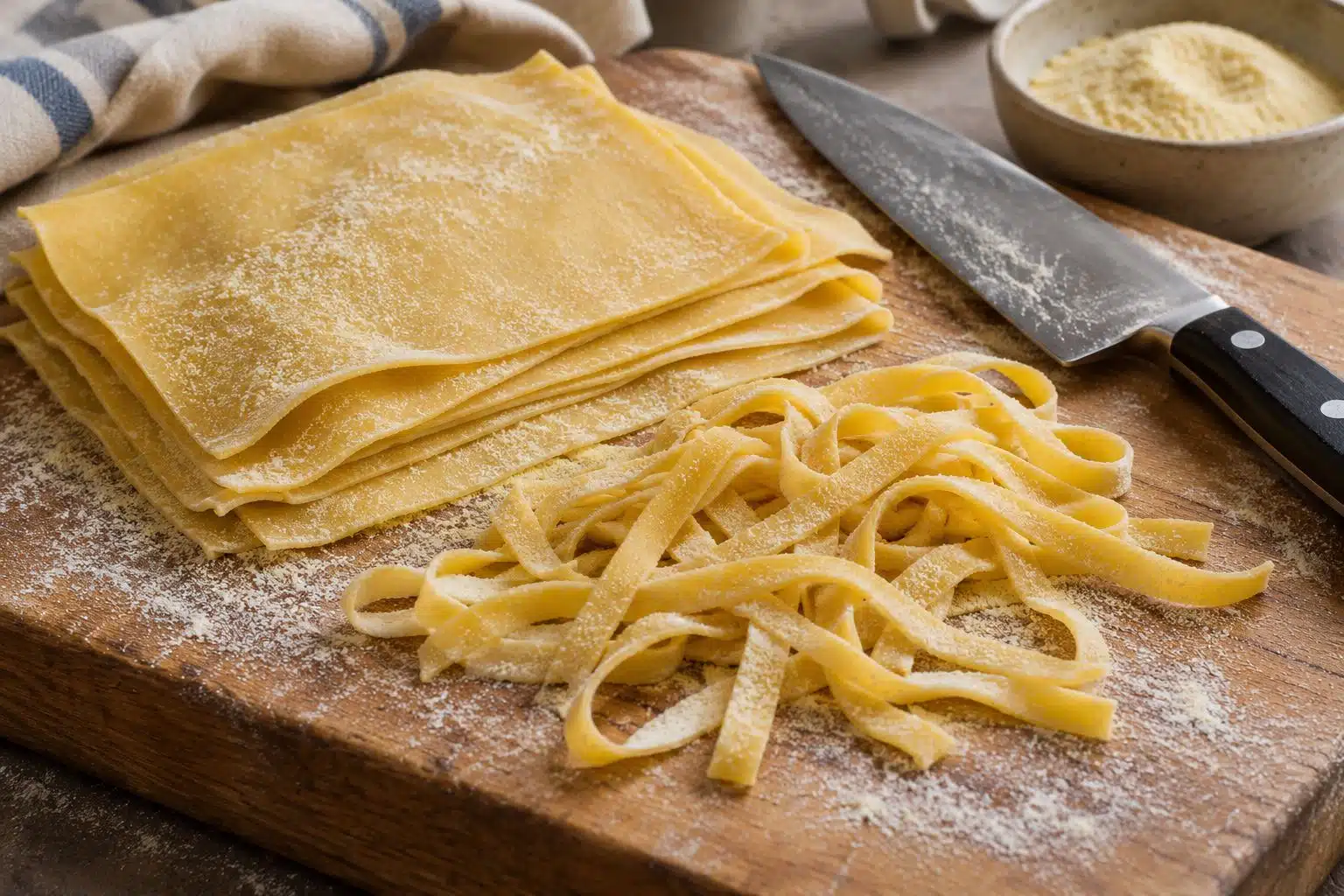
Dust the cut strips with semolina or flour and shake them loose so they do not glue together. Fresh pasta cooks much faster than dried, so start tasting after 2 to 3 minutes.
6 – Spaghetti
Spaghetti is the last-resort pasta swap. It is round, so it has no wide flat face for sauce to hold.
Use the same weight and the package time, and pick sauces that coat instead of cling, such as cacio e pepe, olive oil with garlic, or a smooth tomato sauce.
7 – Wide Rice Noodles
Wide dried rice noodles are the gluten-free swap that keeps the ribbon shape. Four details decide whether they come out right:
- Read the label: They should be rice flour and water, though some brands add tapioca starch.
- Boil briefly: Follow the package, usually a few minutes, and start tasting early because they go from tender to mushy fast.
- Cook them apart from the sauce: Rice noodles turn mushy if they simmer in the sauce, so toss them in at the end.
- Rinse in cold water: Drain right away and rinse to wash off surface starch so the ribbons do not clump.
The dish loses the egg flavor and the springy bite of wheat pasta, so choose a sauce with plenty of flavor.
Gluten-free fettuccine made from brown rice or corn is the other route. Follow its package time, because gluten-free pasta softens fast.
If you have no rice noodles either, the rice noodle replacements show what else to try.
8 – Zucchini Noodles
Zucchini noodles suit a low-carb plate, but they are not pasta. Zucchini holds a lot of water, so the noodles soften and thin out the sauce.
- Salt: Toss the spiralized zucchini with salt and let it sit about 10 minutes.
- Drain and press: Tip it into a colander and press out the liquid.
- Sauté for 2 minutes: Two minutes in an oiled pan is all it needs.
Plan on about 2 zucchini per serving, because they shrink as they lose water.
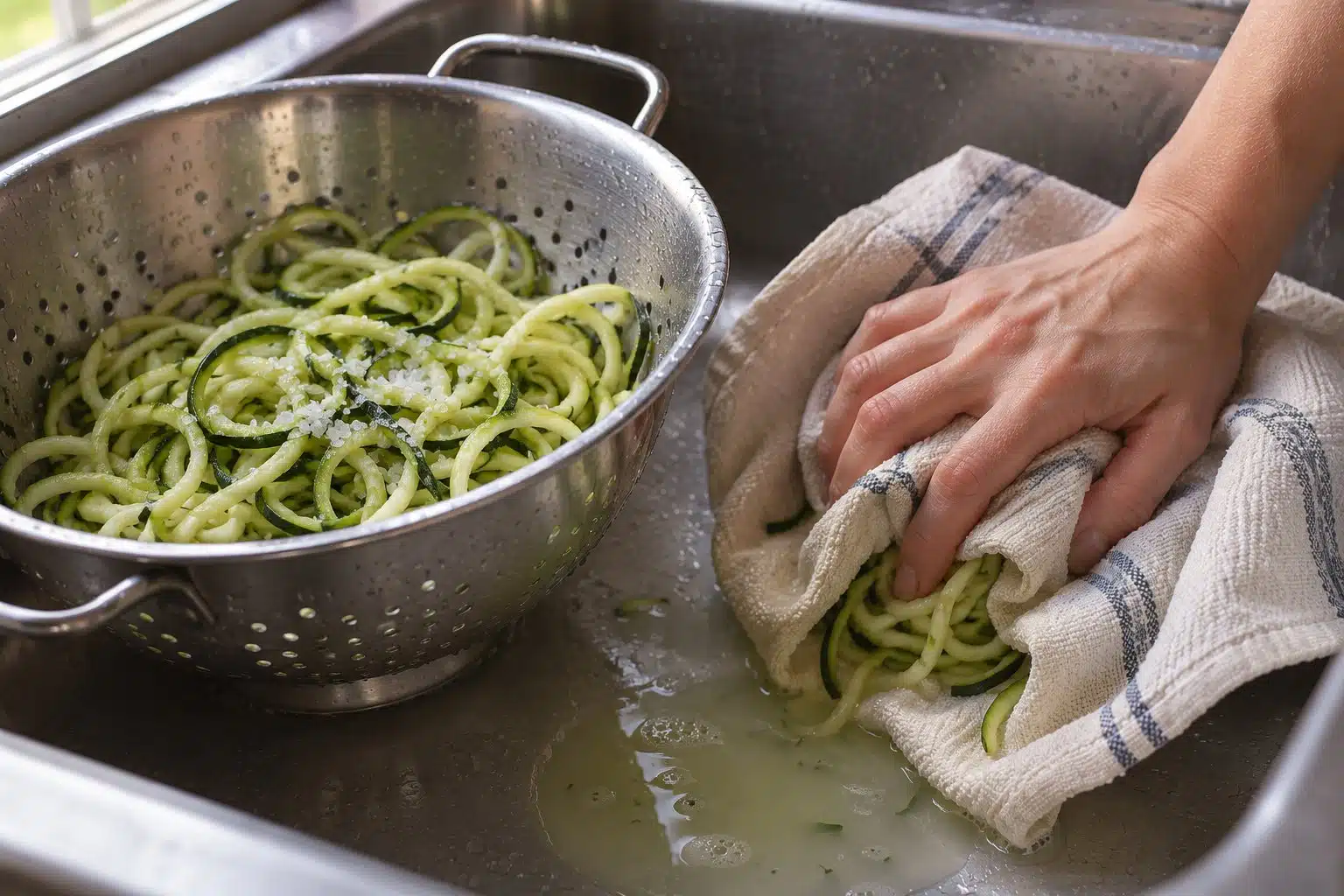
Add them to the sauce last and serve right away, because they keep releasing water as they sit.
Keep them out of baked pasta, because the water they release makes the dish soggy. For a low-carb plate that still eats like pasta, boxed keto pasta is the other route.
Which Swap Fits Which Sauce?
Match the swap to the sauce first and to your pantry second. The sauce decides how much cling and chew the noodle needs.
- Meat ragù: Pappardelle, because the wide ribbons hold the meat.
- Cream or cheese: Fettuccine, the same flat egg ribbon.
- Butter and herbs: Wide egg noodles, which keep the egg flavor.
- Seafood or lemon: Linguine, a narrow ribbon that suits a light sauce.
- Oil and garlic: Spaghetti, which coats without needing cling.
- No gluten: Wide rice noodles, which keep the ribbon shape without wheat.
Fettuccine fits cream, cheese and most meat sauces, so buy it first if you are shopping for a swap.
Fresh or Dried: How Do You Adjust the Weight?
Tagliatelle is often sold fresh, and fresh pasta weighs more per portion than dried. Store-bought fresh pasta runs about 1.25 to 1.5 times the dried weight, so a recipe that asks for 12 oz of fresh tagliatelle needs about 8 to 10 oz of a dried swap.
- Recipe says fresh, you have dried: Divide the weight by 1.25 to 1.5, so 12 oz fresh becomes 8 to 10 oz dried.
- Recipe says dried, you have fresh: Multiply by 1.25 to 1.5, so 8 oz dried becomes 10 to 12 oz fresh.
- Cooking time: Ignore the time in the recipe and follow the package of the pasta you actually boil.
Frequently Asked Questions
Tagliolini is a much narrower egg ribbon, so it suits light sauces such as butter or broth and gets lost under a chunky ragù. It also cooks faster, so go by the package time.
Width: tagliatelle is about 7 mm wide and pappardelle 20 to 30 mm. They swap in thick sauces, but pappardelle is better kept for the heaviest ragùs.
Yes, the traditional dough is 1 egg for every 100 grams of flour. Roll it thin, cut ribbons 6.5 to 7 mm wide, and boil them for far less time than dried pasta.
Yes, but the meat slides off round strands, so fettuccine or pappardelle holds more sauce per bite. A crisp green salad or garlic bread rounds out the plate, and the sides that go with Bolognese sauce have more ideas.
Yes, at the same weight. The two ribbons are within about a millimeter of each other, so tagliatelle works in Alfredo, carbonara and other fettuccine dishes.
Linguine is about 4 mm wide, narrower than tagliatelle. It suits seafood and lemon sauces better than a chunky ragù.
Wide rice noodles come closest in shape, and gluten-free fettuccine made from rice or corn also works. Cook either one by its package, since gluten-free pasta goes soft fast.