
Most cooks treat miso paste as a single ingredient when it's actually a spectrum - and reaching for the wrong type can make a dish taste muddy instead of complex. Understanding where miso sits on that spectrum changes how you cook with it entirely.
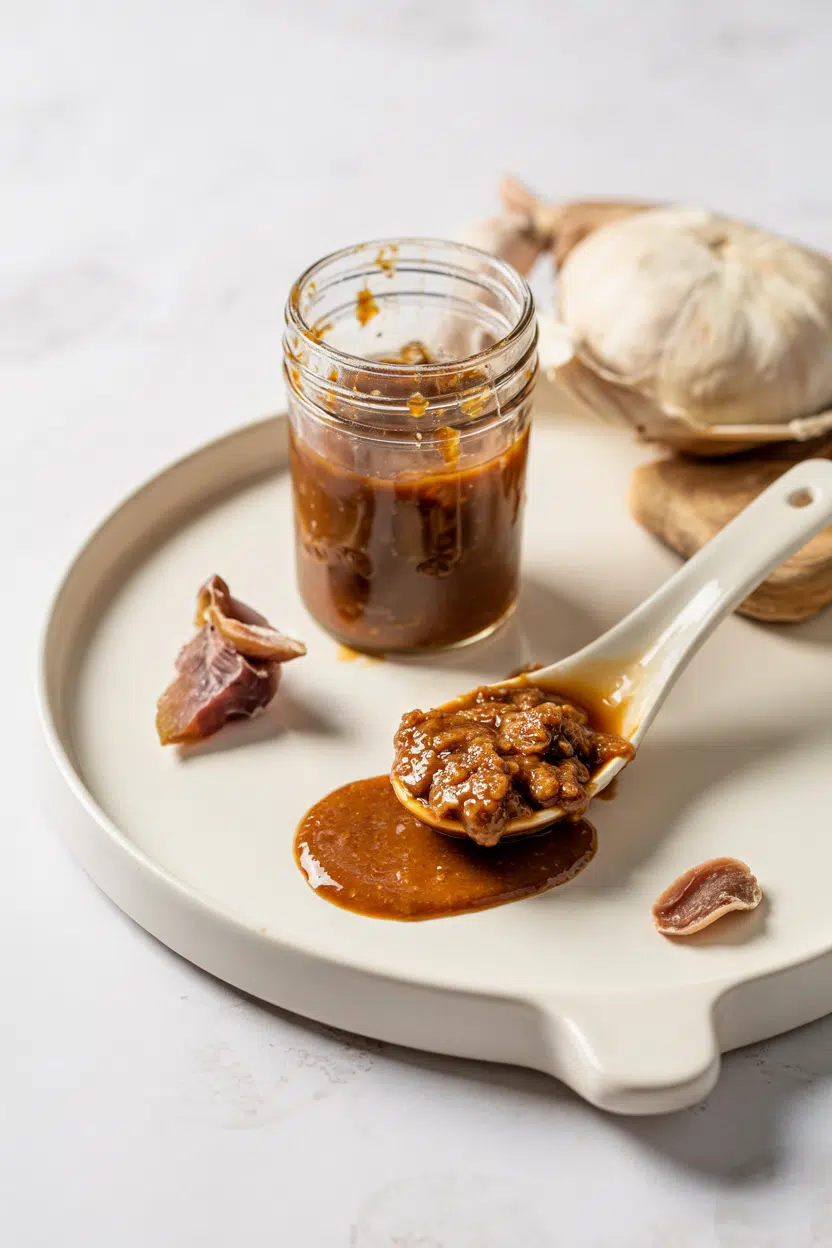
It's not just a soup base; it's a fermented condiment that works as a glaze, a marinade anchor, and a finishing agent in ways that even soy sauce alternatives rarely replicate.
Miso paste is a fermented soybean paste from Japan with umami-rich, salty, and nutty flavor. Lighter varieties are mild and subtly sweet; darker types run deeper and more intense. Use it in soups, glazes, dressings, and marinades.
What Is miso paste?
Miso is a fermented paste originating in Japan, made from soybeans, salt, and koji - a mold culture (Aspergillus oryzae) grown on rice, barley, or the soybeans themselves.
Remember it later
Planning to try this recipe soon? Save it for a quick find later!
Producers vary the grain base, soybean ratio, and fermentation length to produce wildly different results from the same core process.
The main varieties break down like this:
- Shiro (white) miso - Short fermentation, high rice-koji ratio; pale yellow and mildly sweet
- Aka (red) miso - Long fermentation, higher soybean ratio; deep brown-red and intensely savory
- Mugi (barley) miso - Made with barley koji; earthier and slightly rustic in character
- Hatcho miso - A regional specialty from Aichi, Japan; aged soybean paste, almost black, very dense
- Chickpea miso - A soy-free alternative; milder and less complex, common in vegan kitchens
Miso goes by several names depending on type - soybean miso, mugi miso, or simply "fermented soybean paste" on Western labels.
Barley-based versions are worth flagging for anyone avoiding gluten; the fermentation process doesn't always break it down fully, so it's worth reading about what happens to gluten during fermentation before assuming it's safe.
What Does miso paste Taste Like?
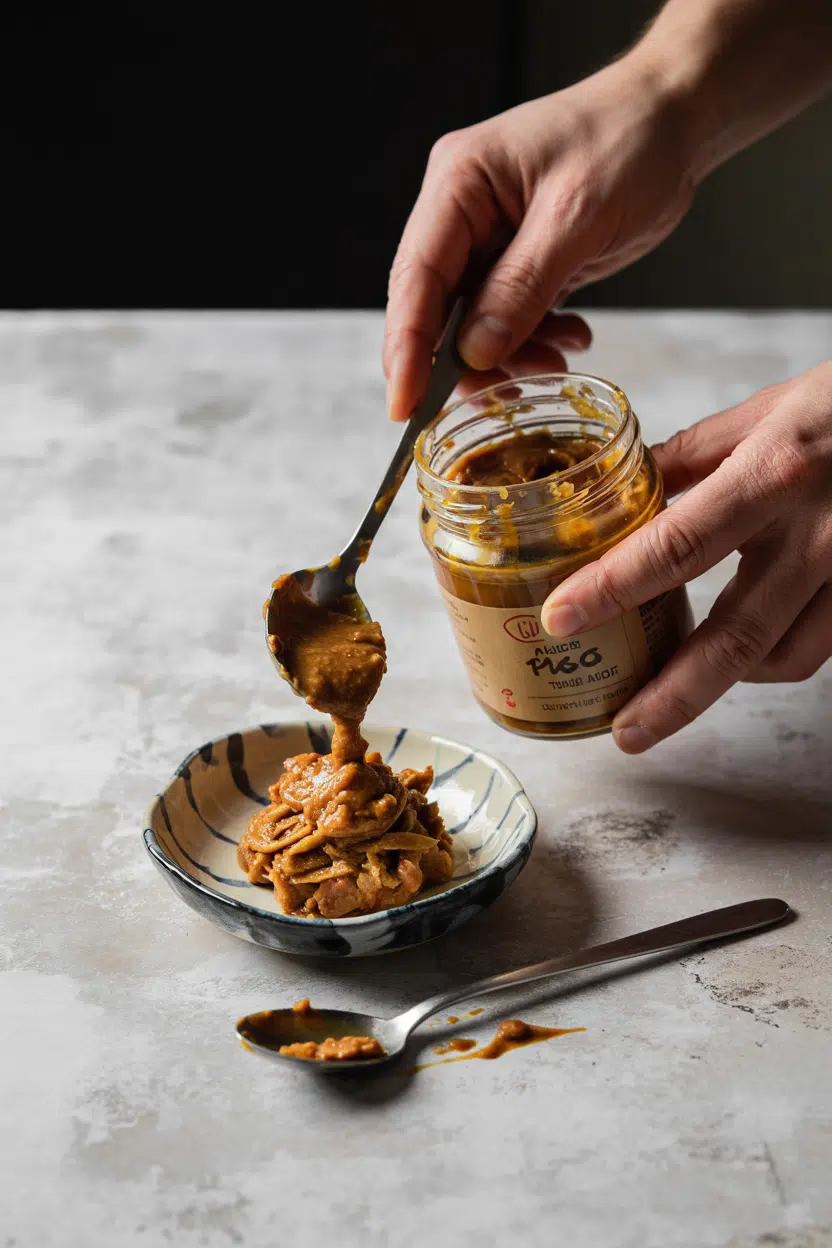
Miso tastes like a compressed version of several fermented foods at once - think concentrated soy sauce crossed with the savory depth of aged Parmesan, with a warm, toasted grain quality underneath. That combination is umami at its most direct.
Light misos carry a genuine sweetness that makes them approachable straight from the tub. Red and hatcho misos, by contrast, have almost no sweetness - just dense, salt-forward intensity that softens when diluted into hot liquid.
Heat affects the paste too: a rolling boil drives off aromatic compounds, leaving a flat, one-dimensional saltiness rather than the layered fermented note you want.
How to Use miso paste
Miso functions as a finisher, a glaze, and a flavor base - three distinct roles that require different handling. Knowing which role you need stops the paste from overpowering a dish.
| Method | Best For | Tip |
|---|---|---|
| 🥗 Raw / Unheated | Dressings, vinaigrettes, compound butter | Whisk into oil or acid first to break up the paste evenly |
| 🍲 Dissolved in liquid | Miso soup, ramen broth, noodle sauces | Add after removing from heat; strain through a fine mesh ladle |
| 🔥 Glaze / broiled | Miso-yaki fish, eggplant dengaku, tofu | Mix with mirin and sake; broil until just caramelized - watch closely |
| 🧂 Marinade | Meats, mushrooms, firm tofu | Salt content is high - reduce or skip added salt elsewhere |
| 🥒 Misozuke | Quick-pickled vegetables, fish fillets | Pack ingredient in paste for 4-24 hours; rinse before eating |
Miso pairs naturally with dashi or kombu stock, where its salt and umami lock into the stock's own glutamates. Ginger, scallion, and sesame oil are reliable partners.
More surprising: miso and butter work well together - a spoonful stirred into compound butter gives roasted vegetables and steak a savory, rounded finish. Yuzu or lemon cuts the saltiness when the paste feels heavy in a sauce.
For fish dishes, white miso is the safer starting point - its sweetness complements delicate flesh without overwhelming it. Red miso handles richer proteins like salmon, pork belly, or beef short rib.
If you're building a broth and don't have dashi powder replacements on hand, a small amount of red miso stirred into plain water gives a surprisingly grounded base.
How to Buy and Store miso paste
Look for miso in sealed tubs or vacuum-packed blocks, not loose or in unsealed containers. Good paste has a firm, slightly oily surface with uniform color - avoid anything with large dark patches or a dry, cracked top.
- For beginners - Start with shiro (white) miso; it's the most forgiving and widely available
- For deeper flavor - Mugi or red miso; look for versions without added alcohol or MSG if you want cleaner fermented notes
- For the longest shelf life - Red miso; higher salt content slows further fermentation after opening
Once opened, keep miso tightly sealed and refrigerated. Press a piece of plastic wrap directly onto the surface before closing the lid to limit oxidation.
Unopened miso stores for up to a year; opened and refrigerated, white miso holds for around 3 months, while red miso can last up to 12. For a full breakdown, see the guide to miso paste storage life.
If you ever run out mid-recipe, miso paste alternatives can work in a pinch, though none replicate the fermented complexity exactly.
Start with White, Build from There
New to miso? White miso is the entry point - mild enough to use generously without second-guessing, sweet enough to work in dressings and compound butter without the dish tasting pickled. Once you're comfortable with how the paste dissolves and where its salt lands in a recipe, move to mugi or yellow miso for everyday soups and braises.
Red miso and hatcho are for when you want the fermented note front and center - ramen bases, long marinades, bold glazes. Think of the variety spectrum as a volume knob, not a quality scale.
Frequently Asked Questions
Fermentation time is the main difference. White (shiro) miso ferments for weeks to a few months and tastes mild and slightly sweet. Red (aka) miso ferments for one to three years, producing a saltier, more intense flavor with less residual sweetness.
Most miso paste is vegan - it contains soybeans, salt, and koji grain with no animal products. However, some brands add bonito (fish flakes) to dashi-style blended misos, so check ingredient labels if strict veganism matters.
Technically yes, but the flavor suffers. Prolonged boiling breaks down volatile aromatic compounds, leaving a flat, overly salty result. Add miso off the heat or in the final 30 seconds for best results.
Unpasteurized miso does contain live cultures, including lactic acid bacteria. Most commercially sold miso in Western supermarkets is pasteurized, which kills those cultures - look for "unpasteurized" or "nama miso" on the label if live probiotics are the goal.
For miso soup, one tablespoon per 250ml of dashi is a standard starting point. Glazes and marinades typically use one to two tablespoons per four portions, since the salt concentrates during cooking.



