Steamed blue crabs piled on a newspaper-lined table, dusted in orange-red powder - that's where most people first meet Old Bay seasoning. It's one of the most recognizable blends in American cooking, and for good reason: nothing else delivers that particular hit of celery salt, paprika, and warm pepper in a single shake.

Whether you're building a proper Maryland-style seafood boil or just seasoning a bowl of popcorn, understanding what Old Bay actually is helps you use it with more intention and less guesswork.
Old Bay is a blended dry seasoning built on a celery salt base with paprika, black pepper, and warm spices. It's strongly aromatic, notably salty, and most at home on shellfish and seafood boils - though it works across roasted meats, snacks, and condiments.
What Is Old Bay Seasoning?
Old Bay is a proprietary blended dry seasoning created in Baltimore, Maryland in 1939 by German immigrant Gustav Brunn. He developed it specifically for the Chesapeake Bay's famous blue crab harvest, and the McCormick spice company has produced it ever since.
The exact recipe is proprietary, however the label lists celery salt, red pepper, black pepper, and paprika as core components. Additional spices - including dry mustard, ginger, cinnamon, bay leaf, and mace - round out the blend's herbal and warm background notes.
Old Bay is also sold under the informal names crab boil seasoning and "Old Bay crab seasoning," and you'll sometimes see it written as "OldBay" in regional recipes.
It's available in a standard spice tin, a larger shaker format, and a few derivative products like Old Bay hot sauce.
Unlike many seasoned salts that lean purely on sodium, Old Bay has genuine spice complexity. That layered composition is why it works beyond seafood - and why no single-spice substitute fully replicates it.
If you need a workaround, a good old bay seasoning replacements usually combines celery salt with paprika and cayenne, but the result is noticeably simpler.
What Does Old Bay Seasoning Taste Like?
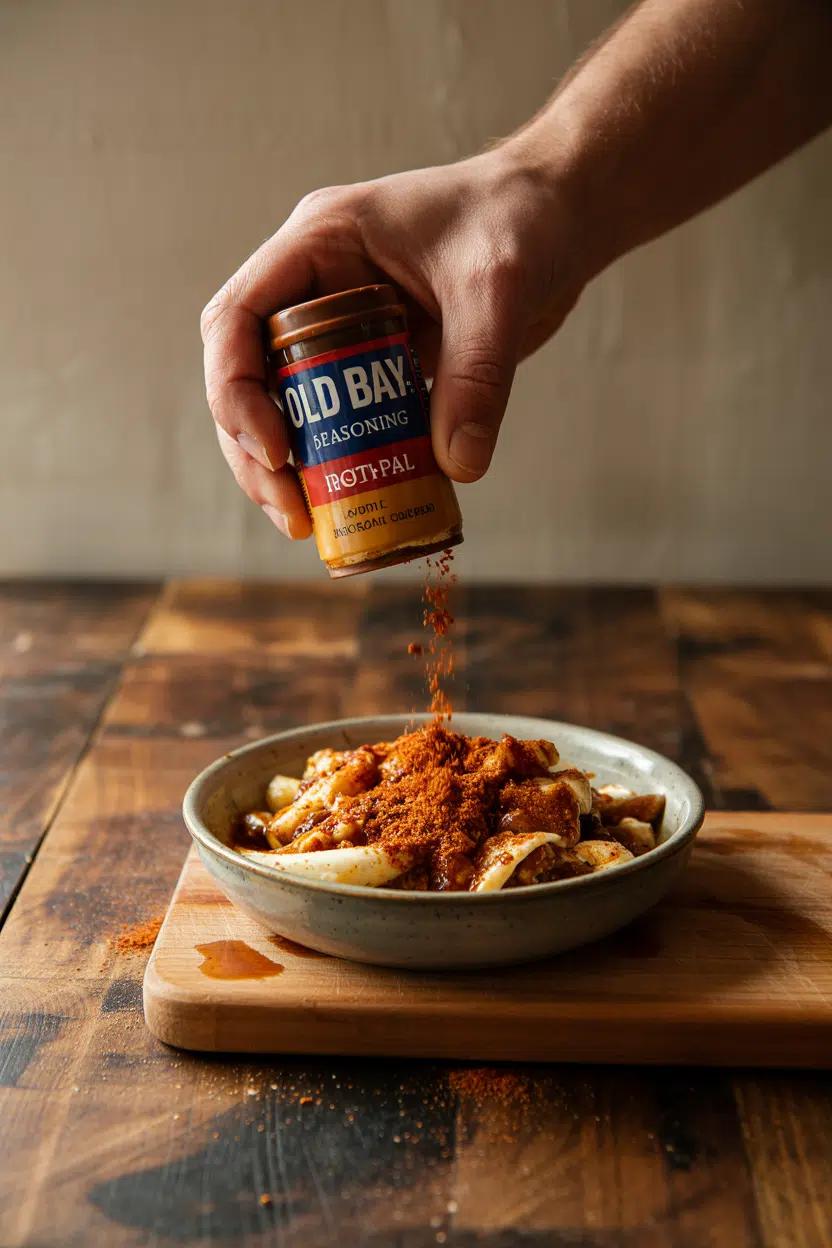
Old Bay leads with celery salt - bright, slightly grassy, and saline. Think of a more aromatic seasoned salt that also carries genuine heat.
Paprika adds a mellow, toasted sweetness behind the salt, while black pepper and red pepper push a mildly piquant warmth. That heat is real but measured - it won't overwhelm a dish the way cayenne can on its own.
When Old Bay hits heat - a boiling pot of water or a hot oven - the paprika and dried spice aromatics bloom fast.
The celery-salt character stays forward, however the warm notes from ginger and mace become more detectable in cooked applications than they are raw.
How to Use Old Bay Seasoning
Old Bay's strongest application is still the one it was built for: seafood boils. Add it directly to the cooking water when steaming or boiling crab legs, shrimp, or lobster, then shake more over the cooked shellfish before serving.
The Maryland blue crab tradition calls for a generous coating - nearly covering the shell surface.
Beyond the boil, Old Bay works as a dry rub and finishing spice across a much wider range of dishes than most people expect.
| Method | Best For | Tip |
|---|---|---|
| 🫕 Boil/Steam | Shrimp, crab, lobster, corn | Add 2-3 tablespoon per gallon of water; top again after draining |
| 🧂 Dry Rub | Chicken wings, roasted potatoes, fries | Coat before cooking; pair with butter or oil to help it adhere |
| 🥣 Incorporated | Crab cakes, chowders, seafood salads | Start with ½ teaspoon per cup of mixture; season to taste at the end |
| ✨ Finishing Sprinkle | Popcorn, fries, corn on the cob, aioli | Apply after cooking while still hot so it sticks to the surface |
Stirring Old Bay into mayonnaise or aioli makes a fast, well-seasoned spread for crab cakes or fried fish sandwiches. A ratio of ½ teaspoon per quarter cup of mayo is a reliable starting point.
If you enjoy it that way, check out what else works well with aioli to build out the plate.
Old Bay is worth keeping in mind for non-seafood applications too. It's widely used on roasted chicken and wings, in corn chowder, and as a finishing shake on popcorn.
How to Buy and Store Old Bay Seasoning
Look for a sealed tin or jar with a recent best-by date and an even orange-brown color throughout. Rub a small pinch between your fingers before buying if the container is already open at a bulk station - fresh Old Bay smells sharp and bright.
Stale Old Bay smells flat and dusty, with almost no celery-salt lift.
Storage is straightforward:
- 🌡️ Temperature - keep at room temperature in a pantry or spice drawer, away from heat sources
- ☀️ Light exposure - store in an opaque container or away from direct sunlight to protect paprika color and aroma
- 💧 Moisture - keep the lid sealed tightly; humidity causes clumping and accelerates flavor loss
- 📅 Shelf life - an opened tin holds peak potency for 12-24 months; aroma and heat fade first
For a closer look at how long it actually lasts, see the full breakdown of old bay seasoning storage life.
Where to Start With Old Bay
New to it? Steam shrimp with Old Bay in the water, then shake more on after.
That single cook tells you everything about how it performs.
Already using it on seafood? Try working it into a mayo-based sauce or a dry rub for roasted chicken thighs - the results are consistent and the learning curve is flat.
- 🦐 First cook - boiled or steamed shrimp; use 1 tablespoon per quart of water
- 🍗 Next step - rub onto chicken wings with oil before roasting at high heat
- 🥗 Beyond seafood - stir into mayo or fold into potato salad for quick results
One thing worth knowing: fresh crab cakes seasoned with Old Bay don't hold long in the fridge - plan to cook them within a day or two of mixing.
Frequently Asked Questions
No. Paprika and celery salt are the dominant flavors, however the blend also includes black pepper, red pepper, dry mustard, ginger, mace, cinnamon, and bay leaf. That extra complexity is why simple paprika-celery-salt combinations don't quite match it.
Yes - it works especially well on wings and thighs. Apply it as a dry rub with oil before roasting or frying. The paprika browns well and the celery-salt base seasons the meat through the skin.
One teaspoon of Old Bay contains roughly 160-180mg of sodium - far less than a teaspoon of table salt (about 2,300mg). However, recipes often call for multiple teaspoons, and the sodium accumulates quickly in boil water or mixed dishes.
McCormick's standard Old Bay is generally considered gluten-free, as none of the listed spices contain gluten. However, it's not certified gluten-free, so those with celiac disease should check the current label for shared-facility warnings.
Yes - add it early so the spices have time to bloom in the liquid. Start with ½ teaspoon per two cups of broth and adjust at the end, since sodium concentration increases as chowder reduces.