
Tearing open a fresh packet of nori fills the air with something clean and oceanic - a briny, faintly smoky scent that sharpens into toasted nuttiness the moment a sheet meets heat. That aroma alone signals what nori brings to the table: savory depth without heaviness, a sea-mineral backbone that lifts rice, raw fish, and pickled vegetables without overshadowing them.
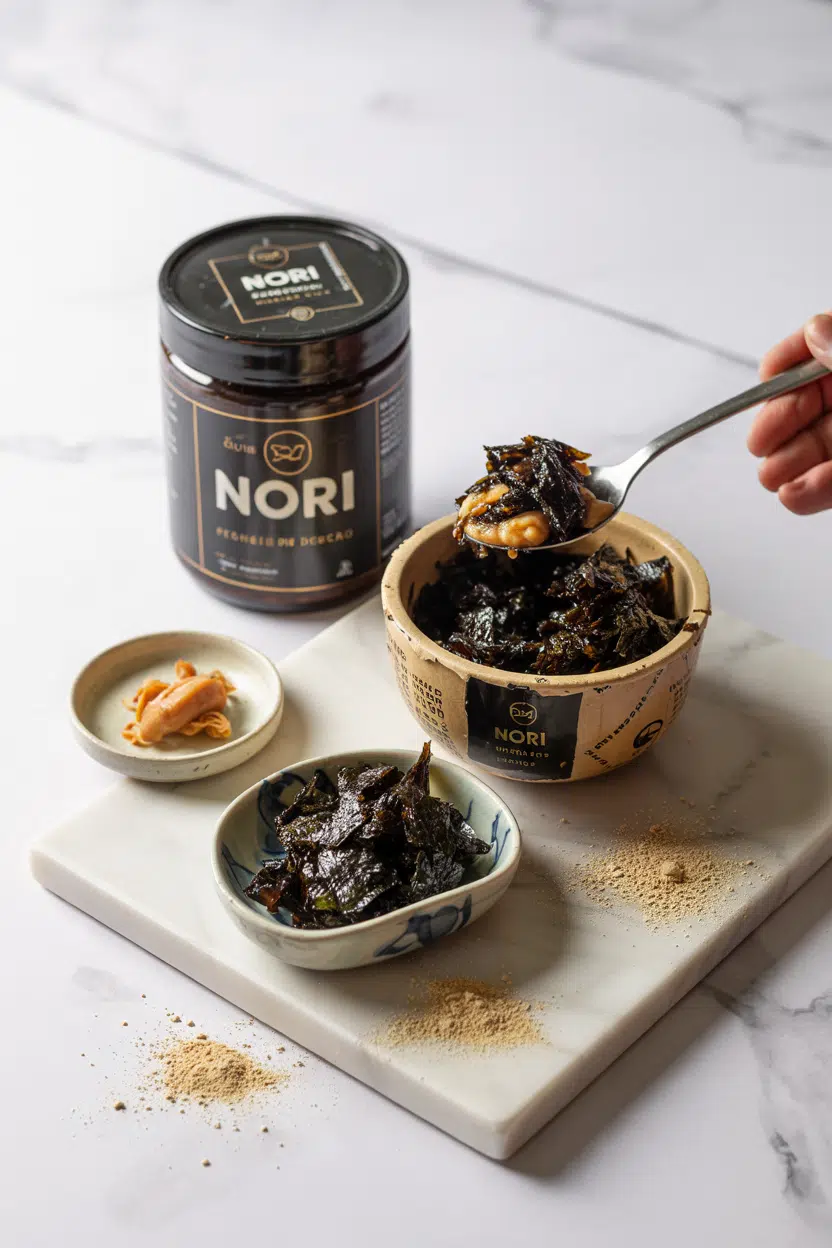
Used whole to wrap onigiri rice balls or crumbled into furikake as a finishing seasoning, nori is one of the few ingredients that works as structure, garnish, and flavor all at once.
Nori is a dried, pressed seaweed sheet with a moderate, umami-rich flavor - briny, faintly nutty, and deeply savory. It wraps sushi and onigiri, crumbles into rice seasonings, and floats in soups. Best stored airtight; crispness fades fast after opening.
What Is nori?
Nori is an edible seaweed - specifically dried, pressed sheets made from laver algae harvested along the coastal waters of Japan, Korea, and China. The laver is rinsed, shredded, layered onto frames, and dried into paper-thin sheets.
Remember it later
Planning to try this recipe soon? Save it for a quick find later!
Think of it as the seaweed equivalent of handmade paper.
Most commercially sold nori comes pre-roasted, giving it that characteristic dark green-to-black color and a slight sheen. Raw, unroasted sheets exist but are far less common outside specialty markets.
Japan and Korea both have deep traditions with this ingredient, though they treat it differently.
Japan uses it almost exclusively for rolling sushi and wrapping rice; Korea's version - gim - is often seasoned with sesame oil and salt, then eaten as a standalone snack. Korean kimbap shares structural DNA with Japanese maki but has its own fillings and flavor profile.
Two main grades exist in practice:
- Sushi-grade nori - full sheets, uniform dark green, minimal tears, used for rolling
- Snack or seasoned nori - smaller, pre-cut, often salted or sesame-oiled, eaten as-is
What Does nori Taste Like?
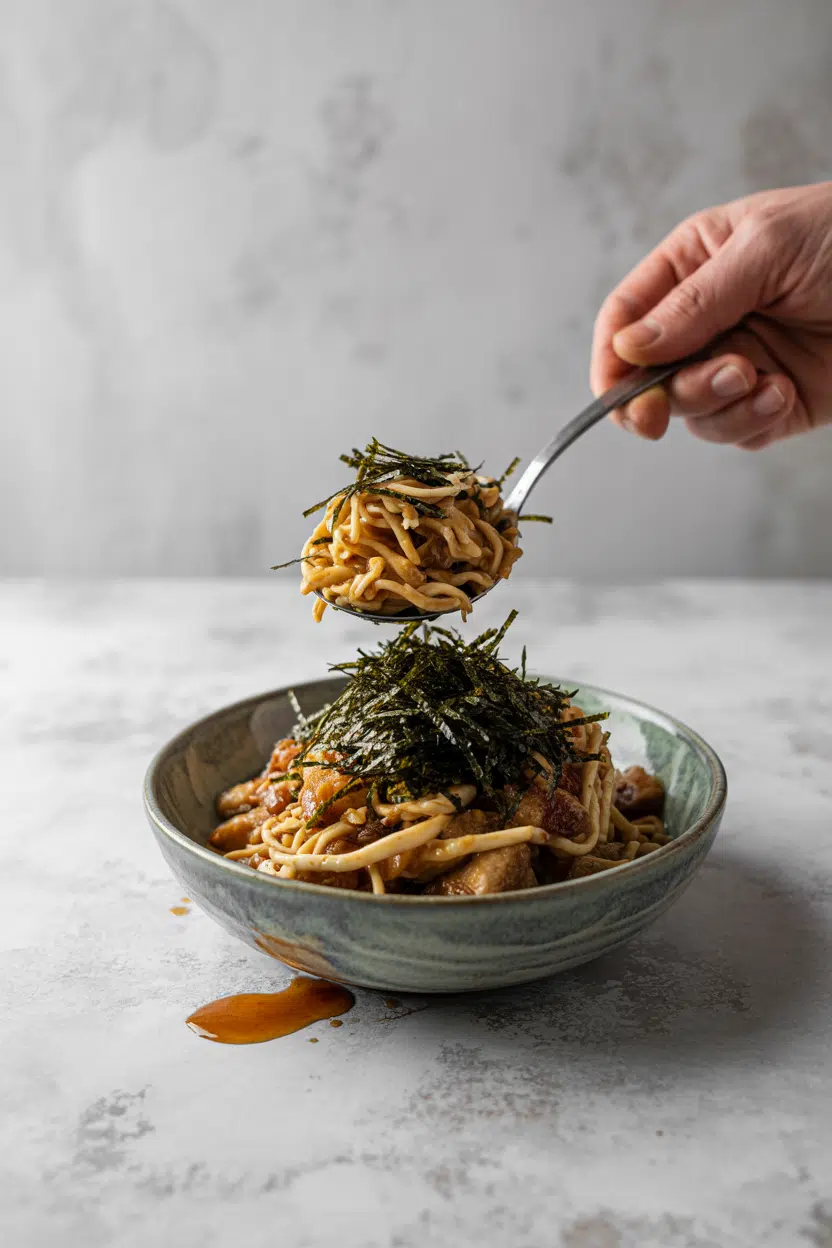
Nori's flavor sits at the intersection of the sea and the earth. The closest comparison is a lightly toasted spinach with the savory undercurrent of soy sauce - mineral and green without being sharp or fishy.
The dominant note is umami, driven by naturally occurring glutamates in the seaweed. That's why a single sheet wrapped around plain rice makes the whole bite taste more complete.
Heat changes things noticeably. A dry sheet straight from the package is crisp and mild.
Hold it briefly over a gas flame or dry skillet and the aroma opens up - the nutty notes sharpen and the brininess softens into something warmer. Moisture does the opposite: a nori sheet that contacts wet rice or liquid goes soft and slightly chewy within minutes, which is intentional in some applications and a problem in others.
How to Use nori
Nori pulls double duty in the kitchen - it's both a structural wrapper and a seasoning ingredient, and which role you need determines how you handle it.
For rolling, keep sheets whole and at room temperature. Humidity is the enemy before assembly, so work quickly.
For garnish work, crumble or shred dry sheets directly over a bowl, or cut into thin strips (called kizami nori) with scissors.
| Method | Best For | Tip |
|---|---|---|
| 🥗 Wrapping | Maki sushi, hand rolls, onigiri | Assemble and serve fast - moisture softens the sheet quickly |
| 🔥 Dry-Toasting | Intensifying aroma before use as garnish or snack | 3-5 seconds per side over medium heat; don't let it scorch |
| ✨ Crumbled/Shredded | Furikake blends, ramen, miso soup, rice bowls | Cut with scissors for cleaner strips than tearing by hand |
| 💧 Rehydrated | Floating in soups, blending into dressings | Brief contact with hot liquid is enough - over-soaking turns it slimy |
Nori pairs cleanly with sushi rice and rice vinegar, soy sauce, sesame oil, toasted sesame seeds, raw or smoked fish, pickled vegetables, avocado, cucumber, and egg. It doesn't play well with heavy dairy sauces or very sweet glazes - both bury its sea character entirely.
In Japanese cooking, it's foundational to maki rolls and onigiri. Korean cuisine uses gim-style sheets for kimbap and as a table snack.
Modern fusion kitchens crumble it over grain bowls, blend it into butter, or press it onto the outside of pan-seared fish for a crisped seaweed crust.
How to Buy and Store nori
At the store, look for uniform dark green-to-black sheets with a slight sheen. A white powdery bloom, torn edges, or a strongly fishy smell all point to age or poor storage - pass on those.
Once opened, seal sheets in an airtight bag or container with a desiccant packet to block moisture. Store away from heat and direct light.
Unopened, quality roasted nori can last many months; once opened, crispness starts fading within weeks.
For the rice side of sushi prep, it helps to know what you're working with - sushi rice versus arborio covers the key differences if you're building rolls from scratch.
Where to Start with Nori
New to nori? Start with a seasoned snack sheet - the pre-cut, sesame-oiled style sold in small packs. No prep, no rolling, immediate payoff.
It's the fastest way to get a read on the flavor before committing to full sushi-rolling sheets.
Once you're comfortable, step up to full yaki nori sheets. If you want to explore what happens when nori's flavor profile shifts slightly, nori alternatives covers the closest options - useful when sheets aren't available or you need a different texture.
Frequently Asked Questions
Yes. Most packaged nori is already roasted, so "raw" in practice means untoasted - still fully safe to eat. Unroasted laver sheets are edible but have a flatter, more aggressively oceanic flavor than the toasted kind.
Humidity absorbed from the air or from wet rice is the usual cause. Assemble rolls right before serving and keep unused sheets sealed. A quick pass over heat can restore some crispness to a slightly soft sheet.
It's a strong source of iodine, plant protein, vitamin A, and trace minerals. The iodine content is notably high - people managing thyroid conditions should watch portion sizes, as excess iodine can be a concern.
That powdery white bloom is a sign of age or moisture exposure - the sheet has started to degrade. It's not dangerous, however the flavor will be flat and the texture compromised. Discard and start fresh.
Good-quality nori should not taste fishy. A strong fishy smell or flavor is a sign of poor storage or age. Fresh roasted nori reads as briny and nutty, not like fish.



