
You measured out what you thought was enough nori for rice balls, but when you double-checked, you came up short. Nori brings that signature oceanic flavor and crisp texture that holds everything together.
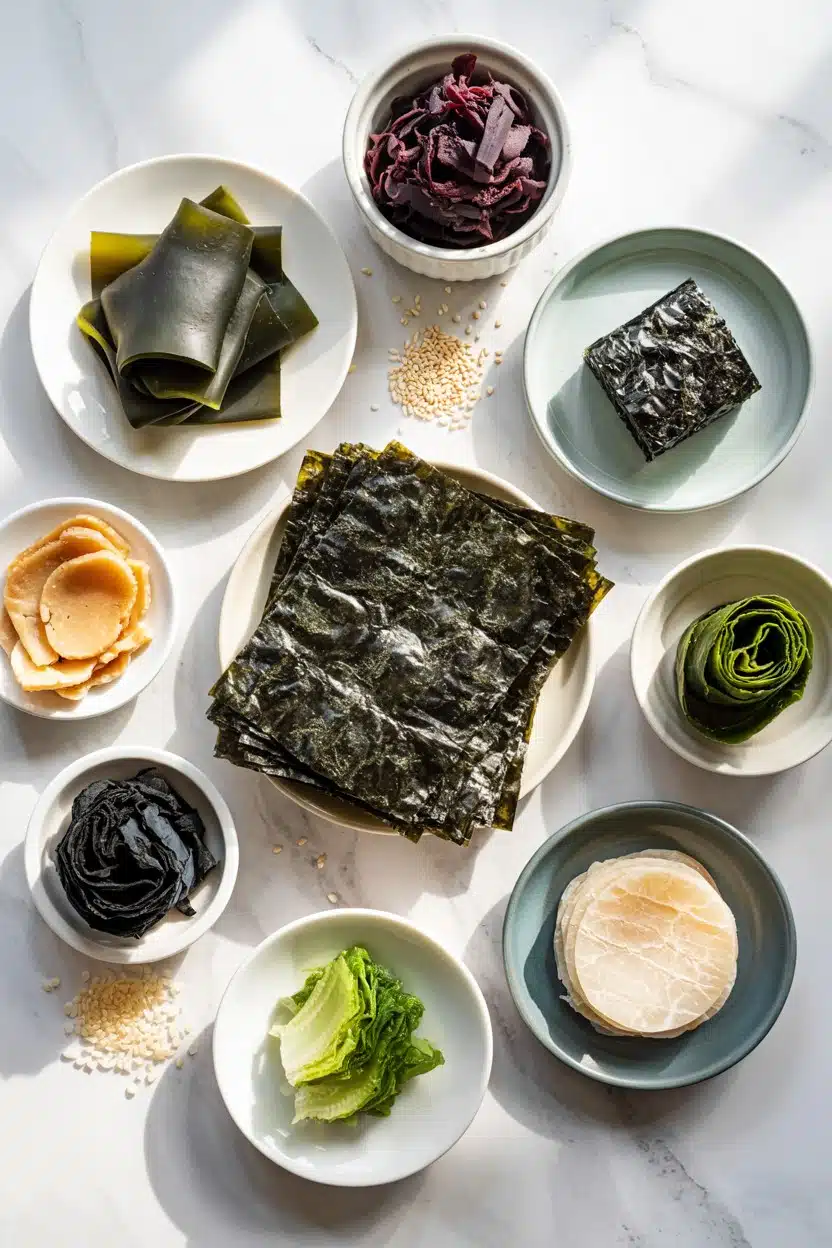
The best swap depends on whether you need seaweed flavor or just structural support. Some options mimic the taste but lack the crispness, while others wrap like nori but skip the briny kick.
When you're short on nori, **wakame** adds umami and brine for soups and salads, **soy paper** wraps sushi rolls without seaweed flavor, and **laver** offers the closest match for both taste and texture. The main risk is losing either the crisp wrap or the oceanic taste-pick based on which matters more for your dish.
6 Top Nori Alternatives That Hold Up
Below are nori substitutes that vary by shape, size, and heat flow. Match the role first, then adjust the ratio.
Remember it later
Planning to try this recipe soon? Save it for a quick find later!
| # | Substitute | Best For | Ratio | Key Note |
|---|---|---|---|---|
| 1 | Wakame | 🍳 Cooking | Equal volume | Rehydrate first, softer texture |
| 2 | Soy Paper | 🍳 Cooking | 1:1 sheet | No seaweed flavor, crisp wrap |
| 3 | Dulse | 🍳 Cooking | 1 tablespoon per sheet | Flaky form, strong smoky taste |
| 4 | Rice Paper | 🍳 Cooking | 1:1 sheet | Toast dry, neutral flavor |
| 5 | Laver | ✨ Both | Same quantity | Similar flavor, slightly brittle |
1 - Wakame
Wakame is a common edible seaweed that shares nori's umami and briny notes. It rehydrates softer than nori, so it won't hold crisp texture in wraps.
Use equal volume rehydrated for nori, but add it to soups or salads where texture flexibility works. Wakame delivers milder ocean flavor without the same intensity.
Wakame
Works for: Soups, salads, and dishes where soft seaweed texture fits
Skip if: You need crispy dry sheets for sushi wraps
Nori
Works for: Wrapping rolls, crispy garnishes, and dry sheet applications
Skip if: You want softer, rehydrated seaweed in broth
Here's what to know:
- Rehydrate 5 minutes before using, drain well
- Milder brine means less punch in cold dishes
- Chop finely for even distribution in fillings
- Works best when texture isn't critical
2 - Soy Paper
Soy paper mimics nori's structural role in sushi without delivering seaweed flavor. It's made from soybeans and wraps rolls with crisp, dry texture that holds together well.
Use 1 sheet per 1 sheet of nori for sushi rolls or decorative wraps. Missing soy paper too? Wrapper swaps for sushi covers options without seaweed taste.
Skip if: You need that oceanic, briny kick.
3 - Dulse
Dulse is a sea vegetable with rich umami that can impart seaweed flavor though texture varies. It's often sold as flakes or chewy sheets, so it won't wrap like nori.
Use 1 tablespoon flakes per 1 sheet nori, or crumble sheets into smaller pieces. Dulse brings stronger, smoky, more mineral taste, so start with less and taste as you go.
Quick specs:
- Sprinkle on rice bowls or stir into miso soup
- Blend into spreads for concentrated seaweed flavor
Skip if: You need whole sheets for wrapping.
4 - Rice Paper
Rice paper adds similar wrap-ability and crispness though without nori's flavor. It works for spring rolls and wraps needing crisp texture, but it lacks umami and briny notes.
Toast dry before using to firm it up-skip soaking if you want crunch. Use 1 sheet rice paper per 1 sheet nori for structural roles.
The essentials:
- Dry-toast over medium heat 30 seconds per side
- Slightly sweet, neutral flavor profile
- Different mouthfeel-thicker and less delicate
Out of rice paper as well? What to use for rice paper lists wrappers that steam or crisp.
Skip if: You need seaweed flavor or very thin texture.
5 - Laver
Laver is a seaweed similar to nori, often used in Chinese cuisine, providing comparable flavor and texture. It can be more brittle and comes in different shapes or sizes, but it delivers that oceanic taste.
| Use | Ratio | Notes |
|---|---|---|
| Sushi wraps | Same quantity | Slightly stronger taste |
| Snack wraps | Same quantity | Can be more brittle |
| Garnishing | Same quantity | Crisp, dry texture holds |
Use the same quantity as nori for snack wraps, sushi rolls, or garnishing. Laver's slightly stronger flavor means you might prefer it in savory applications where bold taste fits.
What to expect:
- Handle gently-breaks easier than nori
- Similar oceanic flavor with more intensity
- Available in Asian markets as roasted seaweed snacks
6 - Kombu (Rehydrated and Sliced Thin)
Kombu is a thick kelp used for broth, but when rehydrated and sliced thin, it can add umami to dishes needing seaweed presence. It won't wrap or crisp like nori.
Soak kombu 10 minutes, slice into thin strips, and use as a flavor layer in rice bowls or salads. It brings deep umami but lacks nori's crisp texture entirely.
Key details:
- Thick, chewy texture even when sliced thin
- Strong ocean flavor, less brine than nori
- Best for flavoring liquids or chopped into fillings
Skip if: You need crisp sheets for wrapping or garnishing.
Choosing the Right Nori Substitute
There's no swap that nails both flavor and texture exactly. Match the role first-if you need seaweed taste, go with laver or dulse; if you need wrapping structure, try soy paper or toasted rice paper.
Start with half the amount if using stronger-flavored options like dulse. Adjust gradually based on how your dish tastes.
- Closest match - Laver for similar oceanic flavor and crisp texture
- Easiest grab - Soy paper for ready-to-use sushi wrapping
- Dietary option - Rice paper for neutral, vegan-friendly wraps
Frequently Asked Questions
Lettuce works as a fresh, crisp wrapper but won't give you any seaweed flavor or the structural hold of nori. Use sturdy leaves like romaine and expect a different mouthfeel-more like a salad wrap than traditional sushi.
Wakame has a milder ocean flavor and less intensity than nori. It shares the briny, umami notes but won't deliver the same crisp texture or concentrated taste when used as a wrap.
Yes, but watch it closely-soy paper toasts faster than nori and can burn quickly. Use low heat and flip frequently for even crispness.
Keep dulse flakes in an airtight container in a cool, dry place. They'll stay fresh for several months and maintain their smoky, mineral flavor.
Laver and nori come from similar seaweed species but are prepared differently-laver is often roasted Chinese-style and can be slightly more brittle. They're close enough in flavor and texture to swap 1:1 in most recipes.
5 Best Substitutes for Nori
Ingredients
Method
- Determine whether your dish requires seaweed flavor or structural support to select the best substitute.
- For wakame, rehydrate for 5 minutes and drain well before measuring equal volume substitution.
- Use soy paper or rice paper sheets 1:1 as crisp wraps; toast rice paper dry over medium heat 30 seconds per side for firmness.
- Use 1 tablespoon dulse flakes per 1 sheet nori when sprinkling or blending for flavor, adjust amount gradually to taste.
- Substitute laver at the same quantity as nori for sushi wraps, snack wraps, or garnishing; handle gently due to brittleness.
- Soak kombu for 10 minutes, slice thinly, and add to dishes for umami flavor without crisp texture; ideal for flavoring rice or salads.
- Start with half the amount if using stronger flavors like dulse; adjust gradually based on final dish taste.
- Taste your dish after adding substitutes to ensure balance of flavor and texture fits your needs.
Notes
- Drain wakame well to prevent watery texture and preserve dish consistency when substituting for nori.



