Ciabatta does something no other white bread quite manages: it holds its structure through a panini press, soaks up olive oil without turning to mush, and still delivers a crust that shatters on the first bite.
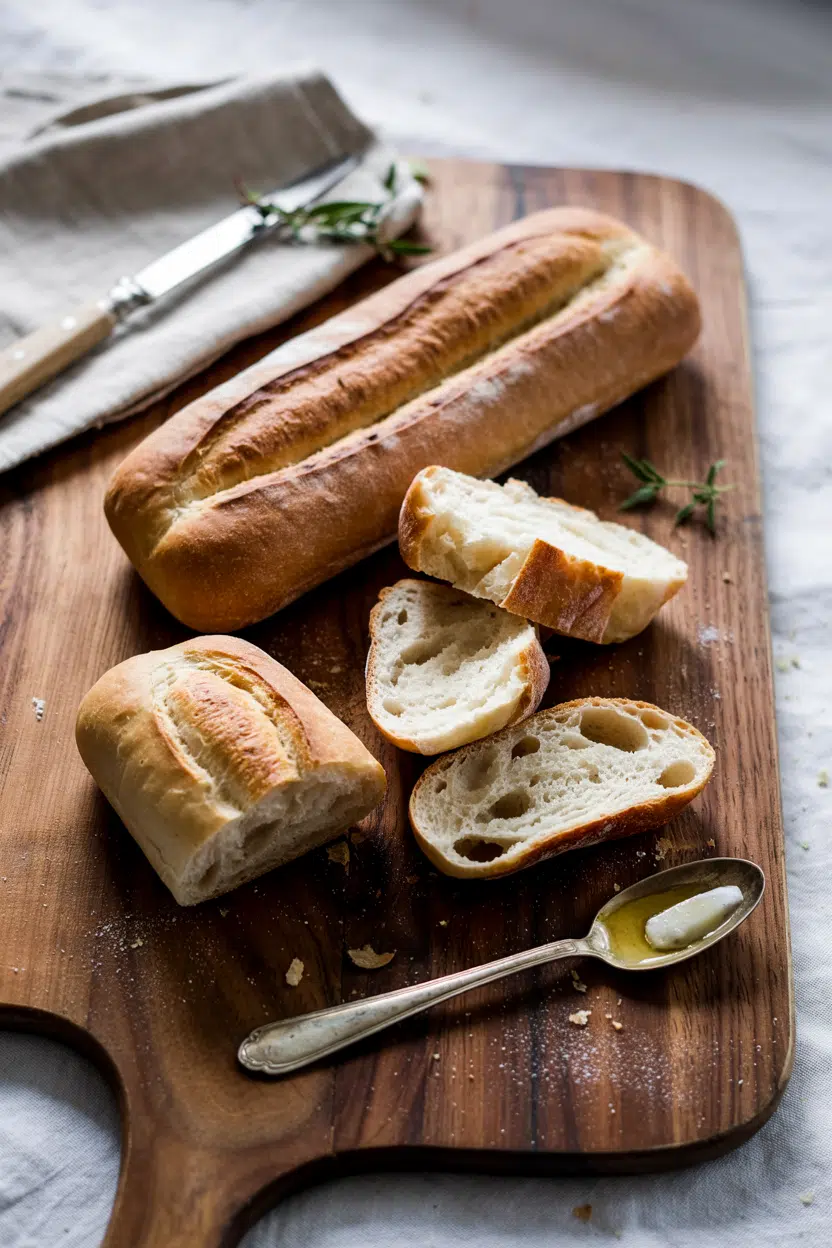
That performance comes from high-hydration dough - a wet, slack mix that produces the bread's signature open crumb and chewy interior.
Understanding those qualities helps you use it well, just as knowing the quirks of artisan loaves shapes how you handle baguette swaps that work or plan ahead with a storing sourdough loaf overnight guide.
Ciabatta is a high-hydration Italian white bread with a crisp crust and large, airy holes. Its mild wheaty flavor and chewy crumb make it ideal for panini, bruschetta, croutons, and dipping. Best eaten fresh, but freezes well within 48 hours.
What Is ciabatta?
Ciabatta originated in the Veneto region of northeastern Italy in 1982, developed by baker Arnaldo Cavallari as a response to the growing popularity of French baguettes in Italy.
Remember it later
Planning to try this recipe soon? Save it for a quick find later!
The name translates directly to "slipper" in Italian - a nod to the bread's flat, wide, slightly irregular shape.
It belongs to the artisan white bread category, defined by its high water-to-flour ratio, typically 75-80%, which is unusually wet compared to most breads.
That wet dough is often fermented using a biga, a stiff pre-ferment that develops flavor over many hours before the final mix.
The result is a loaf with a thin, golden crust and a crumb full of large, irregular holes - the open structure that distinguishes it from commercially produced sandwich bread.
You may see it labeled as ciabatta italiana, ciabatta loaf, or Italian slipper bread.
Common variations include ciabatta integrale (made with whole wheat flour), ciabatta al latte (with added milk for a softer crumb), and smaller rolls called ciabattine, widely used for individual sandwiches.
- 🇮🇹 Origin - Veneto, Italy, early 1980s
- Defining trait - High-hydration dough giving an open, hole-filled crumb
- Common forms - Full loaf, ciabattine rolls, whole wheat (integrale) version
- Pre-ferment method - Often uses biga for longer flavor development
What Does ciabatta Taste Like?
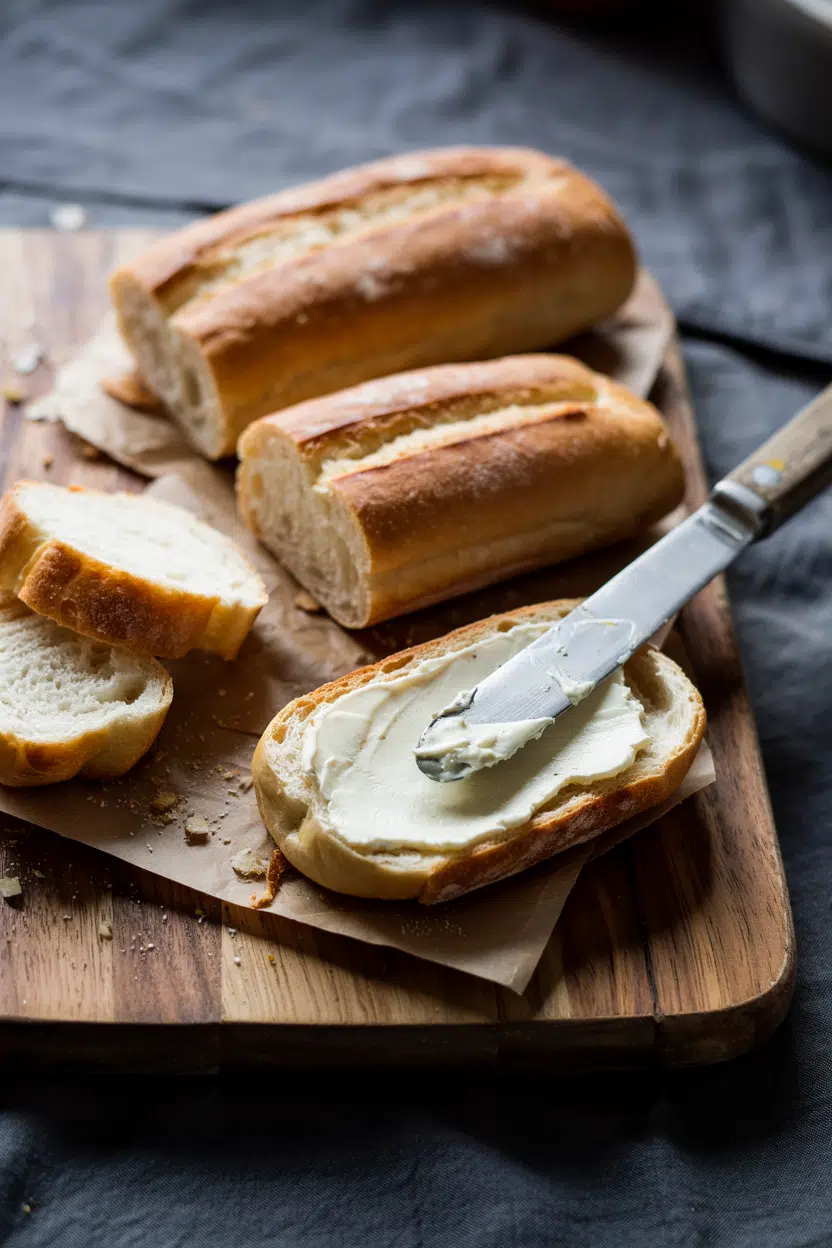
Ciabatta has a mild, wheaty sweetness at its core - not sugary, but the kind of gentle grain flavor that comes from good white flour and proper fermentation.
The crust adds a light nuttiness from the Maillard reaction during baking, giving the outer layer a slightly roasted note that contrasts with the softer interior.
When made with a biga or cold-fermented overnight, there's a subtle lactic tang - not as pronounced as sourdough, but enough to add depth.
Compared to a baguette, ciabatta is chewier with larger holes and a less brittle crust. The interior is springy enough to compress under a panini press and bounce back when used for open-faced sandwiches - neither too dense nor too delicate.
Flavor intensifies slightly when toasted, pushing the nutty crust notes forward.
How to Use ciabatta
Ciabatta earns its place across a wide range of preparations, mostly because the open crumb behaves differently depending on how you apply heat. The key decision is whether you want the crumb to stay airy or let it absorb something.
| Method | Best For | Tip |
|---|---|---|
| 🥪 Panini Press | Pressed sandwiches with melted cheese and cured meats | Use medium heat; high heat crushes the crumb before the cheese melts |
| 🔥 Broiler / Grill | Bruschetta base, garlic toast, crouton prep | Cut side down, 2-3 minutes; watch closely - the thin crust burns fast |
| 🌡️ Oven Warm | Reviving day-old loaves before serving | 5 minutes at 375°F unwrapped restores the crust without drying the crumb |
| 🫙 Torn Raw | Dipping into olive oil, soups, stews | Tear rather than slice - ragged edges hold more oil or broth |
For Italian applications, ciabatta works as a natural base for bruschetta - rub a cut half with raw garlic after toasting, then top as needed.
Split horizontally and pressed, it handles classic panini combinations well; planning what pairs with panini alongside a prosciutto-and-mozzarella fill rounds out a proper lunch spread.
Cubed and tossed with olive oil, rosemary, and flaky salt, it makes croutons with more chew and structure than standard sandwich bread can offer.
A thick slice alongside a herb crusted prime rib roast recipe soaks up pan drippings without collapsing the way a lighter bread would.
Pairings that work well include extra-virgin olive oil with balsamic, burrata or Taleggio, olive tapenade, roasted vegetables with pesto, and prosciutto or salami. For a simple spread, the bread's mild flavor makes it equally good with butter and jam at breakfast.
If you're out of ciabatta entirely, options for swapping out ciabatta cover the closest alternatives by use case.
How to Buy and Store ciabatta
Good ciabatta is easy to identify. Look for a thin, golden-brown crust with visible blistering on the surface, and check the crumb - torn open, it should show large, irregular holes, not a uniform fine grain.
Press the loaf lightly; it should spring back with some resistance.
Avoid loaves with a pale or soft crust, dense crumb, or a uniform interior - these are signs of industrial-style production that skips the long fermentation and high hydration.
At room temperature, store in a paper bag or wrapped in a clean kitchen towel for up to two days; plastic traps moisture and softens the crust.
Recognizing ciabatta spoilage signs early - mold patches, off smell, slimy crust - prevents you from serving a bad loaf.
For longer storage, freeze slices or a whole loaf within 24-48 hours; rewarm directly from frozen at 375°F for 8-10 minutes to restore the crust.
Start Here With Ciabatta
Go fresh from an artisan bakery if you can - same-day ciabatta at its best needs nothing beyond olive oil and salt. For sandwiches, split and press; for soups, tear and dip.
If you want the open crumb and mild tang but need a different texture, swapping out focaccia covers breads with similar Italian roots but a softer bite.
Frequently Asked Questions
Mild and wheaty, with a light nutty note from the crust and occasional subtle tang when long-fermented. It's not strongly flavored - the bread is designed to complement fillings and oils rather than compete with them.
No. Both are Italian and high-hydration, but focaccia is baked flat in an oiled pan, giving it a soft, pillowy crumb and an oily crust. Ciabatta has a crispier crust, larger holes, and a chewier interior without the added oil throughout.
Best eaten the day it's baked. Stored in a paper bag at room temperature, it holds for 1-2 days before the crust softens and the crumb dries out. Frozen within 48 hours, it keeps up to 3 months.
Place it cut-side down under a broiler or on a grill rather than in a toaster. A panini press works at medium heat - high heat compresses the crumb before the crust has time to crisp properly.
Yes, and it freezes well. Slice before freezing so you can pull individual pieces as needed, then reheat directly from frozen at 375°F for 8-10 minutes unwrapped to bring the crust back.