
Enoki mushrooms have thin, delicate stems and a mild sweetness that button mushrooms cannot copy, because the texture and look are completely different.

Enoki mushrooms bring a crisp, slender structure and subtle umami to soups and hot pots, and the CDC says they should be cooked. The raw-dish swaps below copy enoki's crunch rather than replace a raw mushroom.
In cooked dishes, shimeji mushrooms replace enoki 1:1 by weight and keep the delicate texture and mild umami.
Button mushrooms also go 1:1 by weight in soups and stir-fries, but you lose the slender look.
For raw salads, use bean sprouts 1:1 by volume. They are crisp but have no mushroom flavor.
Swaps That Match Enoki's Delicate Texture
Enoki mushrooms add crisp, slender texture and gentle umami that standard mushrooms can't replicate. The swaps below cover cooked applications, raw dishes, and pantry options.
Remember it later
Planning to try this recipe soon? Save it for a quick find later!
| # | Substitute | Best For | Ratio | Key Note |
|---|---|---|---|---|
| 1 | Shimeji Mushroom | 🍳 Cooking | 1:1 | similar delicate texture |
| 2 | Button Mushroom | 🍳 Cooking | 1:1 | firmer, loses slender shape |
| 3 | Oyster Mushroom | 🍳 Cooking | 1:1 | tender with mild sweetness |
| 4 | King Trumpet | 🍳 Cooking | 1:1 | chewier, needs slicing thin |
| 5 | Bean Sprouts | 🥗 Raw | 1:1 | crisp but no umami |
| 6 | Dried Enoki | 🍳 Cooking | 1 cup to 5 cups water | requires 15-20 min soak |
| 7 | DIY Shred Mix | 🥗 Raw | ½ cup each | mimics texture and color |
Five of the seven swaps go 1:1; only dried enoki and the DIY mix need different amounts.
1 – Shimeji Mushroom 🍄
Shimeji mushrooms come closest to enoki's delicate texture and mild umami in cooked dishes. The stems are slightly firmer and shorter, but the flavor runs nearly parallel.
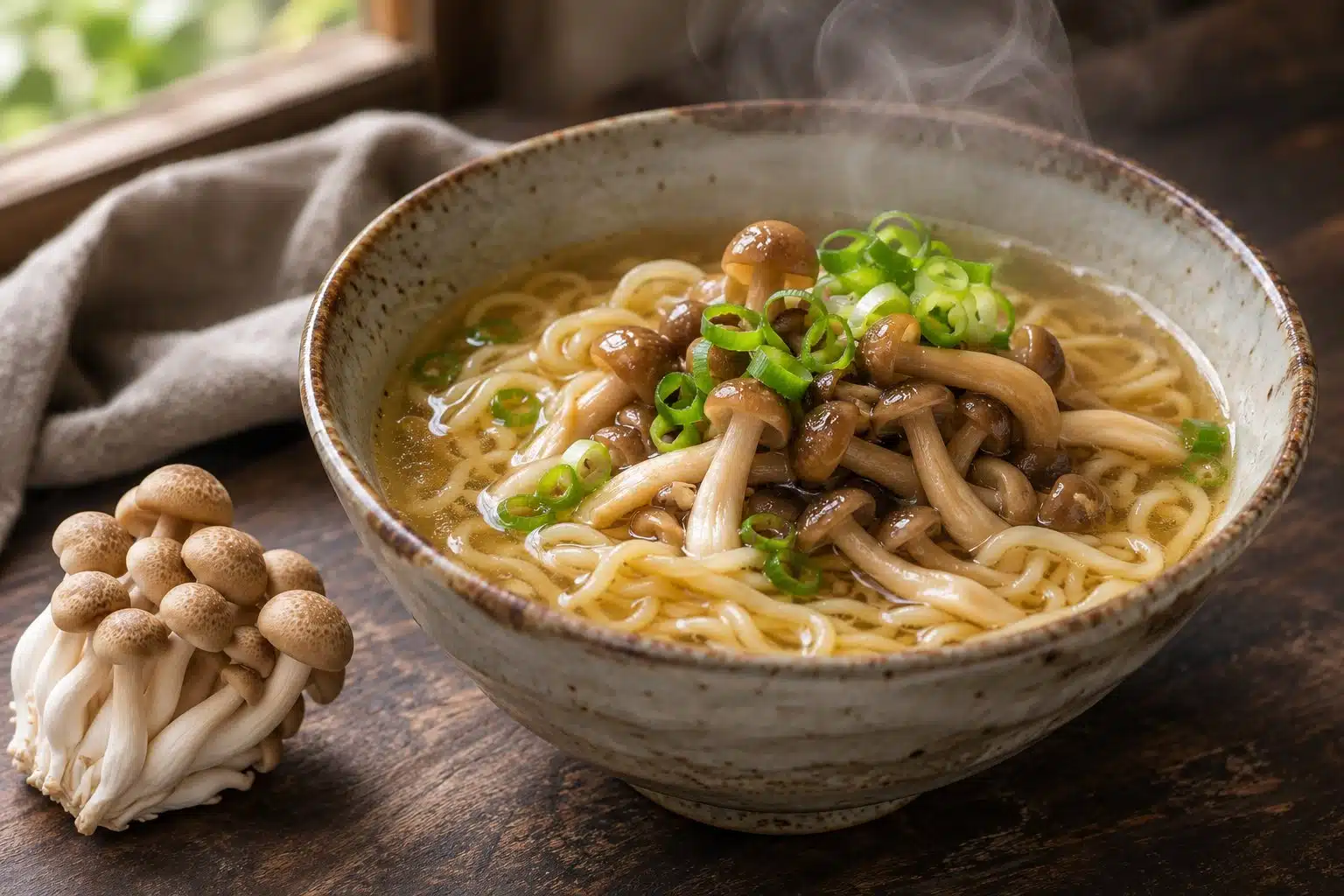
Use 1:1 by weight and swap directly in stir-fries, hot pots, and ramen. They soften quickly like enoki and don't overpower other ingredients.
The texture holds up better than button mushrooms in brothy soups. Shimeji adds the same gentle earthiness without needing adjustments to cooking time.
- What to buy: Brown buna or white bunapi clusters both work, since bunapi is a white-capped strain of the same species.
- How to prep: Trim off the woody base and separate the stems into small clusters.
- Cook them: Shimeji tastes bitter raw, and heat takes the bitterness away.
Skip them for raw salads where you need enoki's long, slender look. Shimeji's short, clustered shape doesn't give the same presentation.
2 – Button Mushroom 🍳
Button mushrooms step in when you need mild umami and can compromise on texture. They're firmer and spongier than enoki's crisp stems.
Use 1:1 by weight in soups, stir-fries, and noodle bowls. Quarter or slice them thin to mimic enoki's size, because whole buttons look too chunky.
They are denser than enoki, so give them a little more time in the pot before the broth is done.
- ✅ Available at every grocery store
- ✅ Mild flavor blends into most dishes
- ⚠️ Loses enoki's slender shape entirely
- ⚠️ Texture runs firmer and less delicate
They work fine in ramen and miso soup, where texture matters less than adding mushroom presence.
Cremini mushrooms are the browner, more mature version of the same mushroom. They swap in the same way and taste a little deeper.
3 – Oyster Mushroom 🌊
Oyster mushrooms bring tender texture and mild sweetness that works in hot pots and stir-fries. The flavor runs slightly sweeter than enoki with less crispness.
Use 1:1 by weight and tear oyster mushrooms into strips to approximate enoki's shape. They soften fast in broth and absorb surrounding flavors well.
- 🍳 In cooking: Add near the end to keep some texture
- ⚠️ Skip for raw: Thicker texture doesn't work in salads
The pale color and delicate structure make oyster mushrooms a visual match in lighter broths.
4 – King Trumpet Mushroom 🎺
King trumpet mushrooms provide mild umami but with denser, chewier texture. Slice them thin lengthwise to mimic enoki's slender form.
Use 1:1 by weight after cutting into matchsticks. They hold their shape better in stir-fries and won't break down like enoki does.
King trumpet is the same mushroom that grocery stores also label king oyster, so the DIY mix below uses it too.
- ✅ Stays firm during cooking
- ✅ Mild flavor won't overpower
- ⚠️ Requires knife work to approximate shape
They work in cooked applications where you need mushroom presence but not enoki's delicate snap. Skip them for raw dishes, because the texture is too dense and chewy.
5 – Bean Sprouts 🌱
Bean sprouts replicate enoki's crisp, tender texture in raw dishes but bring no mushroom flavor. They add crunch and a slight nutty freshness instead of umami.
Use 1:1 by volume in salads, spring rolls, and garnishes. They provide the same delicate bite without needing cooking.
- ✅ Matches crisp texture in raw use
- ✅ Bright, fresh flavor
- ⚠️ No umami or mushroom notes
They work where texture matters more than flavor, such as cold noodle salads or fresh bowls. Don't cook them for long, because they turn mushy fast and lose the crispness you're after.
Since sprouts add no umami, whisk a little soy sauce or dashi powder into the dressing to give the salad some savory depth.
6 – Dried Enoki Mushroom 🏪
Dried enoki mushrooms are the same ingredient preserved for longer shelf life. Rehydrate them in warm water for 15-20 minutes to restore texture.
Use 1 cup dried enoki to 5 cups water. The texture comes back slightly chewier but retains the mild umami and slender shape.
- Drain: Squeeze out the excess water before they go into the pot.
- Add late: Rehydrated stems soften faster than fresh enoki, so add them near the end of cooking.
They work well in soups and hot pots, where the stems finish cooking in the broth.
Skip them for raw salads or dishes you need right now, because the soaking time adds prep. Stock dried enoki if fresh isn't always available at your store.
7 – DIY Shred Mix 🥗
Shred king oyster stems and mix with thin watermelon radish slices to mimic enoki's texture and visual appeal in cold dishes. This combination builds crisp, delicate bite with color contrast.
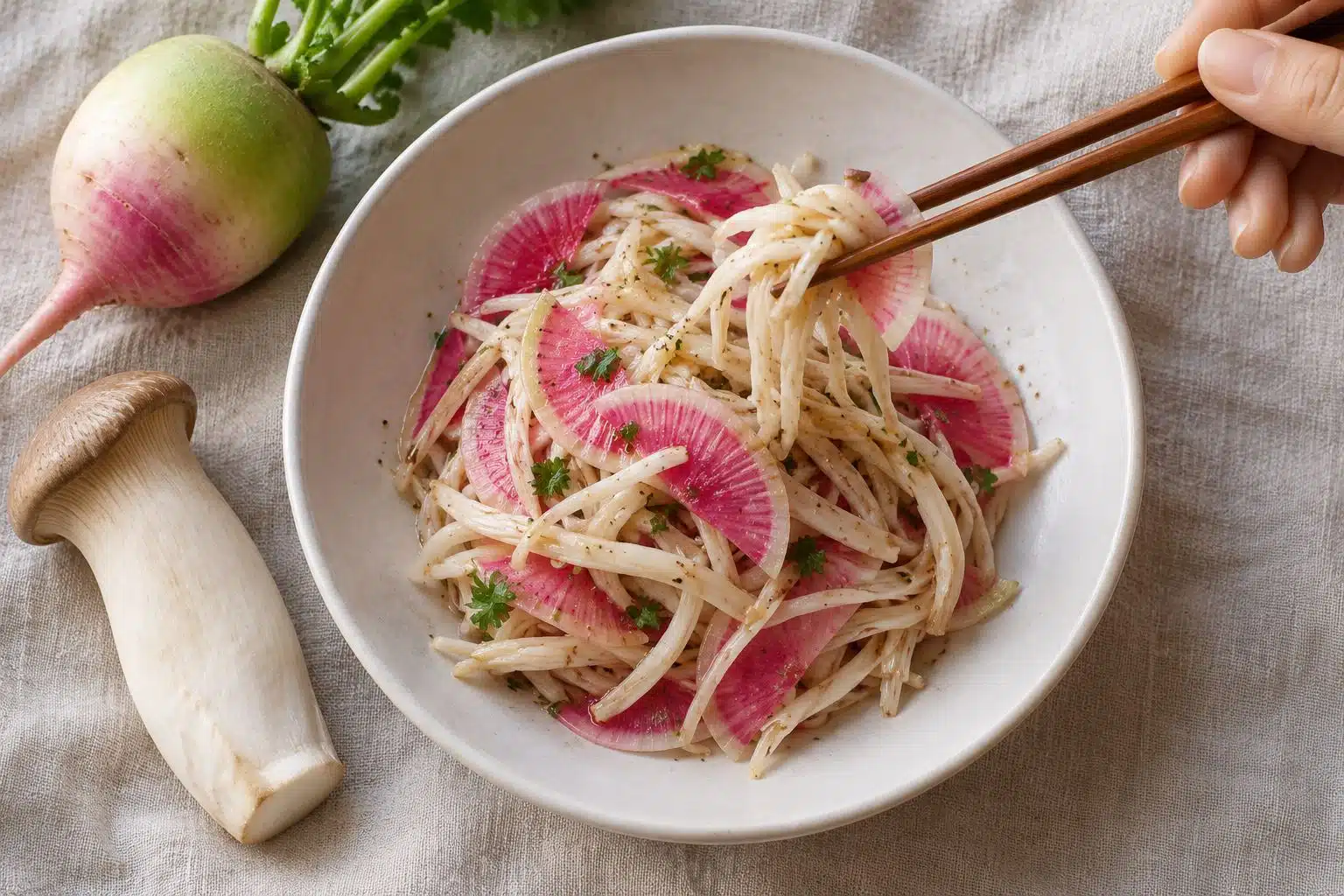
Use ½ cup shredded king oyster plus ½ cup thinly sliced watermelon radish per 1 cup enoki. The mushroom adds mild umami while radish brings crispness and brightness.
- Cut: Julienne the king oyster stems lengthwise to match enoki's slender form.
- Cook: Sear the shreds briefly in a dry pan and let them cool, since king trumpet is too dense and chewy to eat raw.
- Mix: Toss them with the radish just before serving so the radish stays crisp.
The radish provides the crisp snap, and its pink-and-white slices make the bowl brighter than plain enoki would.
This works in salads, cold noodle bowls, and garnishes where you want texture and visual interest. Skip it for hot dishes, because the radish loses crunch when heated.
If you can't find watermelon radish, thin daikon matchsticks give the same crunch in a plain white color.
Choose by What You're Making
- For hot pots and ramen: Shimeji mushrooms match texture and umami 1:1
- For stir-fries: Button or oyster mushrooms work with small adjustments
- For cold salads: Bean sprouts add crispness raw, and the DIY shred mix gives it after a quick sear
- For a pantry backup: Dried enoki keeps for months and rehydrates in 15-20 minutes
Pick based on whether you need the delicate texture, mild umami, or visual appeal most.
Frequently Asked Questions
Shiitake mushrooms bring stronger, woodsy umami that overpowers enoki's delicate flavor, and the texture is much chewier and denser. Use shiitake only if you're okay with a bolder mushroom presence that changes the dish's flavor balance.
Shimeji mushrooms come closest with delicate, tender texture and mild umami. They soften quickly in broth and don't overwhelm other ingredients, though the stems are slightly shorter and firmer than enoki.
No, they are different mushrooms that look alike in a cluster: enoki has long, thin white stems with tiny caps, while shimeji has shorter, thicker stems and a larger cap in brown or white. In cooked dishes they swap 1:1 by weight, but enoki is thinner, so add it late.
Bean sprouts work raw with crisp texture but no mushroom flavor, and the DIY shred mix works in salads once the king oyster is seared and cooled. Cook shimeji and oyster mushrooms, and skip raw sprouts if the eater is a child, an older adult, pregnant or has a weakened immune system, as the FDA advises.
Soak dried enoki in warm water for 15-20 minutes until they soften and plump up, then drain and squeeze out excess water before adding to soups or stir-fries. The texture comes back slightly chewier than fresh but still works well in broth-based dishes.
Enoki mushrooms have limited shelf life and some stores don't stock them regularly, so check Asian grocery stores, which carry fresh enoki more consistently. Dried enoki lasts months in the pantry and rehydrates quickly when you need them.



