
You spot them at the farmers market - dark brown caps, dense and slightly damp, with gills running clean underneath.
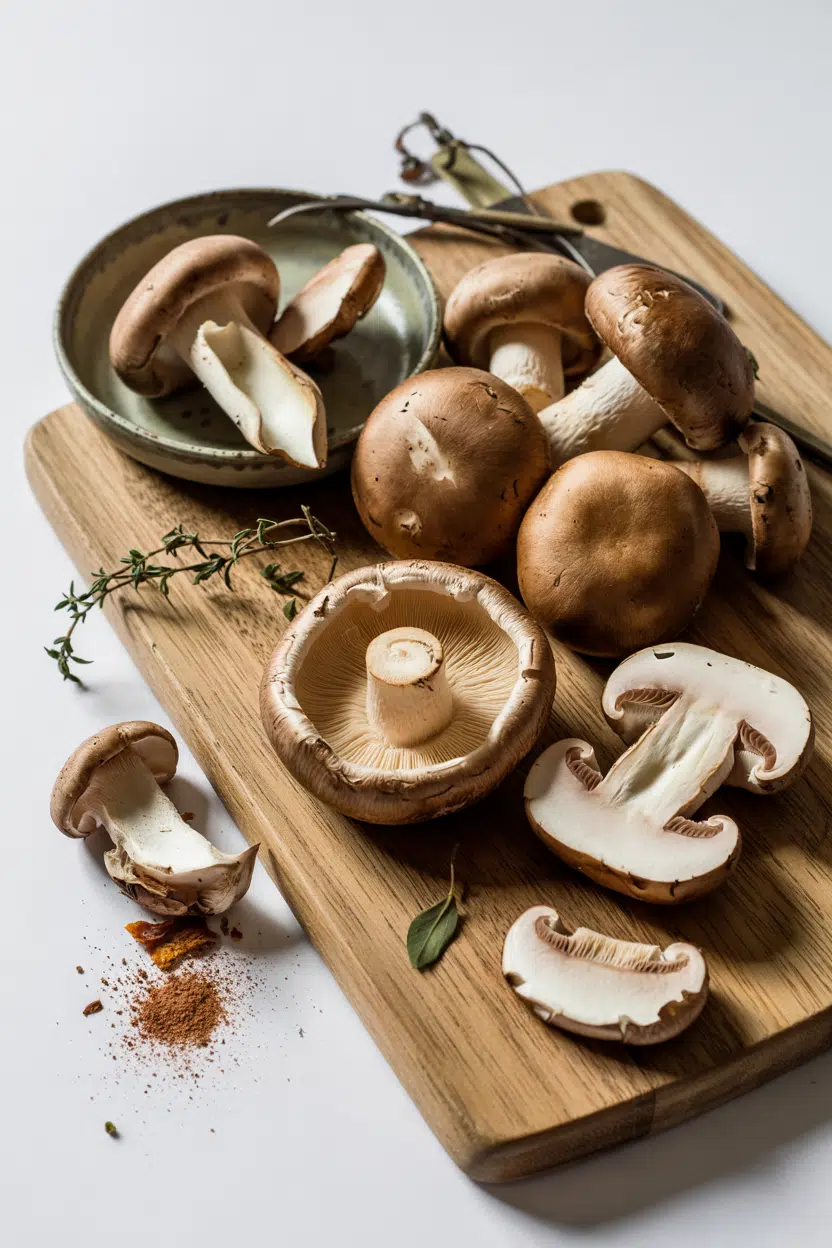
Shiitake mushrooms look humble next to flashier produce, yet they quietly anchor some of the most umami-forward cooking across East Asia.
If you're also weighing other strong-flavored fungi, comparing shiitake vs porcini options clarifies where each one wins, and oyster mushroom swaps that work covers the lighter end of the spectrum.
Shiitake is a firm, meaty mushroom with deep umami flavor, sold fresh or dried. Dried shiitake concentrates that savoriness and doubles as a stock base. Use it in stir-fries, braises, ramen, and vegetarian mains. Fresh keeps up to a week; dried lasts nearly a year.
What Is Shiitake Mushroom?
Shiitake (Lentinula edodes) is an edible fungus native to East Asia, cultivated in China and Japan for over a millennium.
Remember it later
Planning to try this recipe soon? Save it for a quick find later!
It grows naturally on hardwood logs - oak, chestnut, and chinquapin - and takes its name from the Japanese words for the shii tree (椎) and mushroom (茸).
The cap is dark brown, umbrella-shaped, and ranges from 5 to 12 centimeters across.
Underneath, pale cream gills run to a short, fibrous stem that is typically discarded or reserved for stocks.
You'll find shiitake sold two ways: fresh, with soft-firm caps ready to cook; and dried, which is darker, shriveled, and far more intensely flavored.
Outside Japan, they're also called oak mushrooms, and the dried form sometimes appears labeled as Chinese black mushrooms in Cantonese cooking.
- 🍄 Fresh shiitake - mild, immediate umami; best for stir-fries and grilling
- 🌑 Dried shiitake - concentrated savory depth; essential for ramen stocks and braising liquids
- 🪵 Log-grown vs. sawdust-grown - log cultivation takes longer and produces thicker, more aromatic caps
What Does Shiitake Mushroom Taste Like?
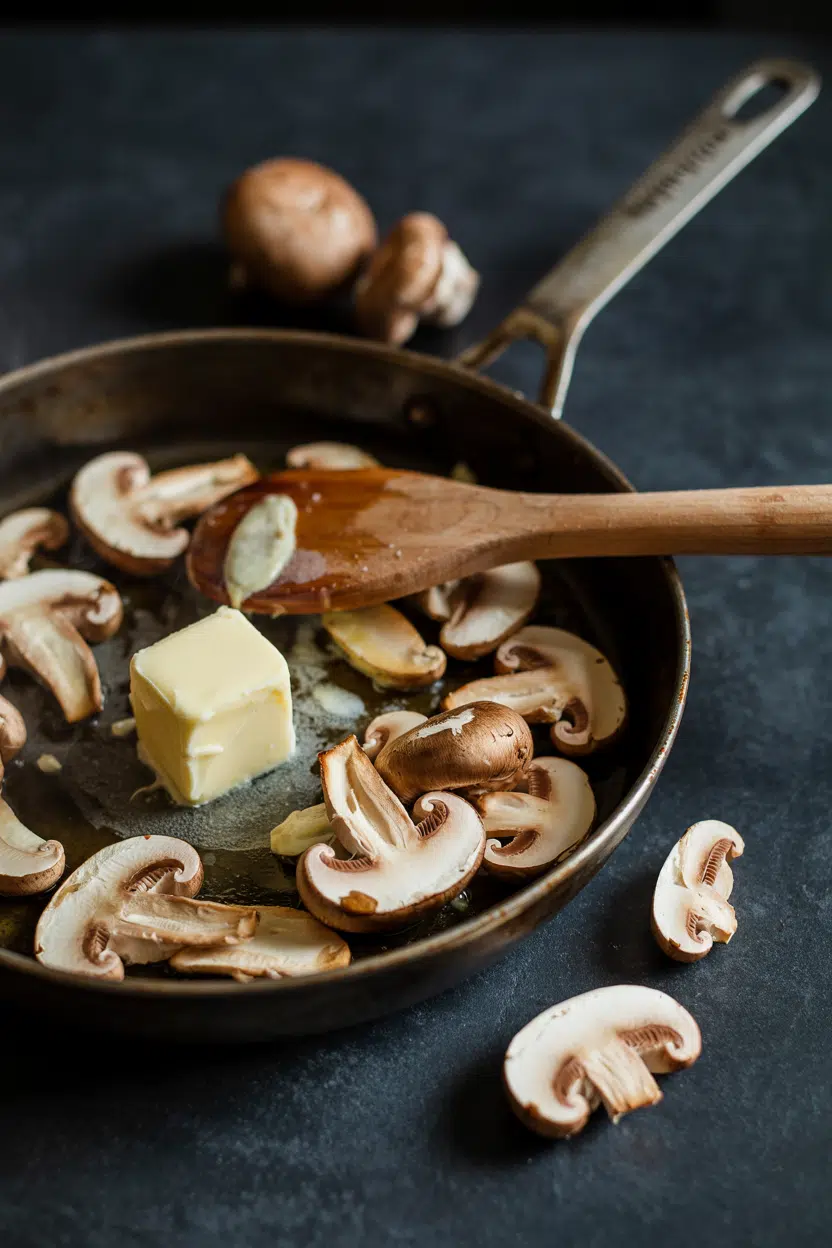
Shiitake delivers umami first - a deep, savory richness that lingers longer than most vegetables. Raw, the flavor is mild and faintly grassy, which is also why raw consumption is not recommended beyond very thin slices in salads.
Heat changes everything. Sautéing concentrates the savoriness and introduces a meatiness that earns frequent comparisons to portobello, while replacements for portobello mushroom show just how much overlap the two share.
Dried shiitake pushes further into smoky, almost beefy territory - the soaking liquid itself tastes like a light, savory broth.
How to Use Shiitake Mushroom
Shiitake is one of the few fungi that performs well across every cooking method -
high-heat browning, slow braises, and long stock simmers all produce different but worthwhile results. Sauté caps in a dry pan first to drive off moisture, then add fat; this gets you proper browning rather than steaming.
Pairing with soy sauce or tamari is standard across Japanese, Chinese, and Korean preparations, and replacements for soy sauce covers what to reach for when you're out.
Mirin adds a gentle sweetness that balances shiitake's savory weight - for more on that condiment, comparing aji mirin vs rice vinegar options is useful context.
Classic pairings also include garlic, ginger, scallions, sesame oil, tofu, dark leafy greens, and miso with kombu for stock.
| Method | Best For | Tip |
|---|---|---|
| 🍳 Sauté | Stir-fries, rice bowls, vegetarian mains | Dry-pan first, then add sesame oil or butter |
| 🍲 Braise | Soy-mirin braises, bento components | Simmer in soy, mirin, and ginger until deeply glazed |
| 🔥 Grill/Roast | Whole caps, side dishes, miso glazes | Brush with sesame oil; grill gill-side up first |
| 💧 Rehydrate | Ramen stock, miso soup, dashi-style bases | Use cold water, 20-30 min minimum; save the soaking liquid |
| 🥗 Raw (thin slices) | Salads only - and cook thoroughly if sensitive | Slice paper-thin; dress immediately to soften |
Beyond East Asian cooking, shiitake works in Western vegetarian dishes: diced into a mushroom ragout over polenta, torn into dumpling filling, or tempura-battered and served with tentsuyu.
If shiitake isn't available, shiitake mushroom stand-ins maps out which alternatives hold up in each context.
How to Buy and Store Shiitake Mushroom
Fresh shiitake should have firm, dry caps with no sliminess, no darkly stained stems, and gills that are pale and intact. Avoid any with wrinkled or sunken caps - that's age showing.
For dried shiitake, whole caps with a strong, smoky aroma outperform broken pieces; the latter has usually lost aromatic compounds during rough handling.
Store dried shiitake in an airtight container in a cool, dark pantry - not the fridge, where humidity can degrade them. The guide on storing shiitake mushroom correctly goes deeper on both forms.
When your stock needs that soaking liquid but you're short on dashi components, replacements for dashi powder covers what bridges the gap.
- Fresh shiitake - 5 to 7 days, paper bag, refrigerator crisper
- Dried shiitake - several months to a year, airtight container, cool pantry
- Rehydrated shiitake - use within 3 days; refrigerate submerged in soaking liquid
Start With the Dried Version
If you're new to shiitake, buy dried caps first. They're shelf-stable, affordable, and the soaking process teaches you immediately how much flavor this mushroom carries - one cup of rehydrating liquid tastes like a full bowl of broth.
From there, move to fresh caps for stir-fries and grilling. Once you've cooked both forms, the choice becomes intuitive: dried for depth, fresh for texture.
Frequently Asked Questions
Raw shiitake tastes mild and faintly grassy, with much less umami than cooked. The savory depth only develops fully with heat. Raw consumption also carries a risk of shiitake dermatitis in sensitive individuals, so cooking is strongly recommended.
Not exactly, but the comparison is understandable. Cooked shiitake has the same dense, chewy bite and savory depth as beef broth, which is why it works as a meat substitute in vegetarian cooking.
Submerge dried caps in cold water for at least 20-30 minutes, or up to several hours for thicker caps. Cold water draws out more flavor compounds than hot water, producing a richer soaking liquid you can use as stock.
Yes. Shiitake contains B vitamins, selenium, potassium, and beta-glucans - a dietary fiber linked to immune support. They also contain ergosterol, which converts to vitamin D when the mushroom is exposed to UV light.
Shiitake is low in protein compared to legumes or tofu, so it shouldn't be a primary protein source. Its real value in vegetarian cooking is umami - it replaces the savory depth that meat would otherwise provide.



