
You spot a cluster of enoki at the grocery store - long white stems bundled tight in plastic wrap, with tiny pinhead caps that look almost too delicate to cook.

They're not a specialty item anymore; enoki mushrooms show up in Asian grocery stores and mainstream supermarkets alike, sitting quietly next to shiitake and oyster varieties.
If you already know your way around shiitake mushroom swaps that work or alternatives to maitake mushroom, enoki will feel like a welcome change of pace - lighter, crispier, and far more subtle in flavor.
Enoki mushrooms are slender, white-stemmed cultivated mushrooms with a crisp bite and mild umami flavor. They work best in quick-cook applications - hot pot, miso soup, stir-fries - and raw in salads. Avoid long cooking times, which destroy their signature texture.
What Is Enoki Mushroom?
Enoki mushroom - also called enokitake or golden needle mushroom - is a cultivated variety native to East Asia, grown commercially in Japan, Korea, and China. Unlike foraged mushrooms, it's almost entirely a farmed product, raised in CO₂-rich containers that produce the characteristic long pale stems and tiny caps we recognize in stores.
Remember it later
Planning to try this recipe soon? Save it for a quick find later!
In the wild, enoki grows in clusters on dead or dying trees and looks quite different: darker caps, shorter stems, and a rougher appearance. The cultivated version is what nearly everyone outside of rural East Asia encounters.
- 🍄 Also known as - enokitake, golden needle mushroom, enoki
- Origin - East Asia; farmed primarily in Japan, Korea, China
- Form - Long, slender white stems (10-13 cm) with pinhead caps, sold in bundles
- Varieties - Standard white cultivated; wild-type enoki (darker, less common in markets)
- Category - Cultivated edible mushroom, species Flammulina velutipes
What Does Enoki Mushroom Taste Like?
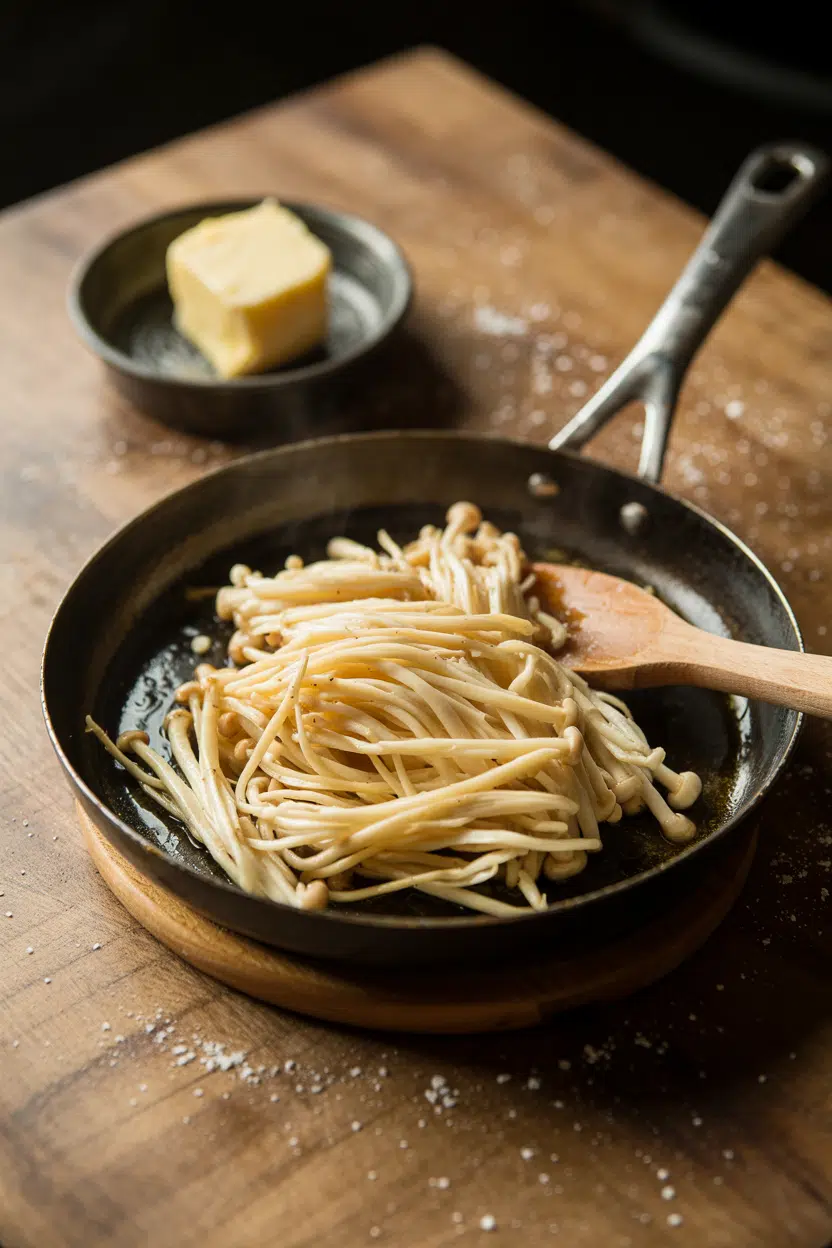
Enoki has a mild, understated flavor - nothing close to the earthiness of portobello or the meatiness of shiitake.
Think of it as a gentler, crispier oyster mushroom, or a firm bean sprout that carries just a whisper of mushroom umami.
Heat changes enoki noticeably.
Raw, the stems snap like a fresh bean sprout and carry almost no aroma. Cooked briefly, they soften to a pleasantly slippery, tender texture while the umami deepens - not dramatically, but enough to round out a broth.
Overcooked, they turn limp and watery, which is why timing matters more with enoki than with most other mushrooms.
How to Use Enoki Mushroom
Enoki's strength is its texture, not its flavor - so every cooking method should protect that snappy, slender bite. Japan, Korea, and China each have traditions built around this idea, and modern fusion kitchens have adopted it too.
For hot pot, enoki is nearly essential.
Adding them last - as you would when making Japanese sukiyaki hot pot at home - keeps the stems springy rather than waterlogged.
Miso soup is another natural fit; a small handful dropped in right before serving adds texture without muddying the broth, and there are many other pairing ideas for miso soup that complement enoki well.
| Method | Best For | Tip |
|---|---|---|
| 🥗 Raw | Salads, bento toppings, cold noodle dishes | Trim the base, separate stems, dress lightly |
| 🍲 Hot Pot | Shabu-shabu, sukiyaki, Korean jeongol | Add in the last 60-90 seconds only |
| 🥢 Stir-Fry | Garlic-soy side dish, Korean banchan | High heat, 1-2 minutes max |
| 🍤 Tempura | Appetizers, bento, snack platters | Keep clusters intact; don't overcrowd the oil |
| 🍜 Broth Garnish | Ramen, miso soup, clear Japanese soups | Drop in at the last moment, raw or barely blanched |
Enoki pairs well with soy sauce, sesame oil, scallions, and tofu - ingredients that complement without overpowering. Light seafood like scallops or shrimp works equally well.
If you're making tempura, note that tempura flour stand-ins can affect how the batter clings to thin stems, so a standard tempura flour is worth keeping on hand.
Avoid long braises or heavy cream sauces. Both destroy texture and bury the subtle flavor that makes enoki distinct from heartier mushrooms.
How to Buy and Store Enoki Mushroom
Fresh enoki should look clean and uniform. Reach for clusters with bright white or pale gold stems, tiny closed caps, and no sign of browning at the base.
At home, keep enoki unwashed in its original packaging or transfer it to a paper bag inside the crisper drawer. Moisture accelerates deterioration fast with this mushroom.
Check for enoki mushroom spoilage signs before using any cluster that's been sitting more than a few days - an opened pack narrows the window considerably.
- Shelf life - 5-10 days refrigerated; opened packages closer to 5
- Storage - Paper bag or original wrap, crisper drawer, never airtight plastic
- Don't wash - Rinse only immediately before use; moisture damages stems quickly
Starting with Enoki
Enoki isn't a mushroom that announces itself.
Its value is in what it contributes - clean texture, quiet umami, and visual elegance - rather than bold flavor.
Start by dropping a handful into miso soup or a hot pot; no prep required beyond trimming the base.
If you can't find them or want something with more body, the guide to alternatives to enoki mushroom covers the closest swaps, and the roundup on replacements for oyster mushroom is useful if you're shopping for a similar delicate texture.
Once you understand how briefly enoki needs to cook, the rest comes easily.
Frequently Asked Questions
Cultivated enoki sold in stores are safe to eat raw or cooked. However, there have been recalls linked to Listeria contamination in packaged enoki, so checking current recall notices before eating them raw is sensible practice.
Yes, raw enoki is common in salads and cold dishes across East Asia. Rinse thoroughly, trim the base cluster, and separate the stems before using them raw.
Add them at the very end - 60 to 90 seconds in a hot pan or broth is enough. Anything longer and the stems go limp and watery.
Unopened, 7-10 days in the crisper drawer. Once the pack is opened or the base is trimmed, use them within 4-5 days before the stems deteriorate.
In Japanese cooking, enoki appear most often in miso soup, shabu-shabu, and ramen as a finishing garnish. They're also wrapped in nori or meat slices and pan-fried as a simple side dish called enoki no bacon maki.



