
Crack open a tin of dashi powder and the smell hits you before anything else - smoky katsuobushi with a faint mineral edge of dried kelp underneath.

That two-second sensory moment tells you exactly what this pantry staple does: it delivers the foundational umami of Japanese cooking without a two-hour simmer.
The same flavor backbone that runs through miso soup, udon broth, and chawanmushi starts here, in a fine powder that dissolves in seconds.
Building a well-layered broth means understanding how your supporting players interact - knowing when swapping out soy sauce or comparing aji mirin vs rice vinegar options changes the final result helps dashi powder do its job better.
Dashi powder is a concentrated instant stock seasoning made from katsuobushi, kombu, and sometimes shiitake. It dissolves in hot water to produce a light, umami-rich broth with smoky and briny notes - the fast-track base for miso soup, noodle broths, and simmered dishes.
What Is Dashi Powder?
Dashi powder is a shelf-stable, instant stock seasoning that compresses the labor of traditional Japanese dashi into a fine, dissolvable granule.
Remember it later
Planning to try this recipe soon? Save it for a quick find later!
Traditional dashi - a clear, lightly smoky stock - is the flavor foundation of Japanese cooking, made by steeping katsuobushi (dried, fermented, smoked bonito flakes) and kombu (dried kelp) in hot water.
The powder replicates that process in concentrated form. Most commercial versions blend katsuobushi extract, kombu extract, and salt, with some adding dried shiitake for an earthier depth.
Shiitake-forward or kombu-only versions are sold specifically as vegetarian alternatives.
You'll see it sold under several names:
- 🧂 Dashi granules - same product, coarser grind
- 🧂 Instant dashi - used generically across brands
- 🧂 Hon-dashi - a specific Ajinomoto brand name, though widely misused as a category term
- 🧂 Dashi no moto - the Japanese term meaning "base for dashi," common on imported packaging
Reading the ingredient list matters. Better products list katsuobushi and kombu clearly; cheaper ones lean on MSG, salt, and flavor extracts with minimal actual fish or seaweed content.
What Does Dashi Powder Taste Like?
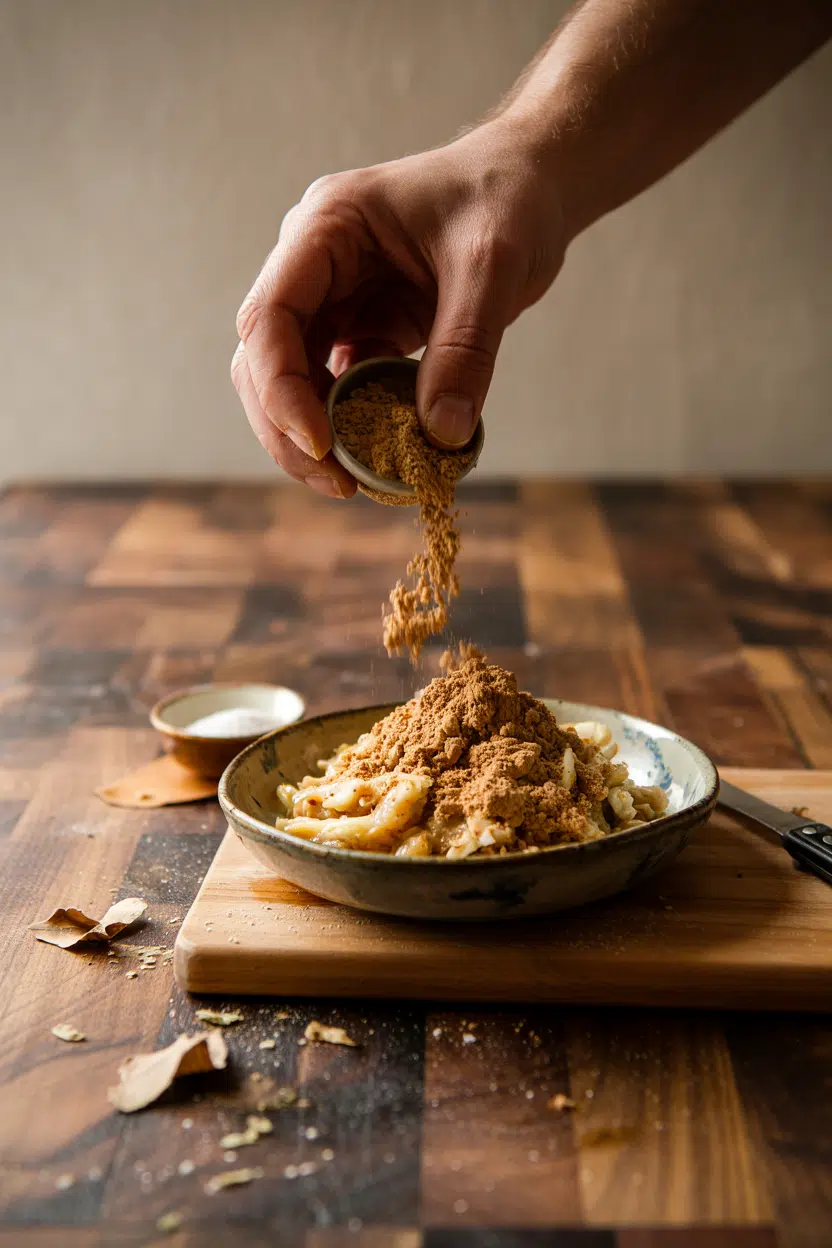
Dashi powder produces a broth closest to a light fish stock crossed with seaweed broth - but cleaner and more restrained than either alone.
The bonito component brings a smoky, slightly savory depth; the kombu brings a mineral, ocean-salt brightness that pushes it into umami territory.
The flavor is moderate in intensity - assertive enough to anchor a soup base, restrained enough to not overwhelm delicate ingredients like soft tofu or silken egg.
Heat amplifies the glutamate compounds from the kombu, which is why a hot bowl of miso soup tastes more rounded than the powder smells straight from the tin.
Shiitake-based dashi powders add a woodsy, earthier undertone that shifts the profile noticeably.
How to Use Dashi Powder
The standard application is simple: dissolve in hot water to build an instant dashi stock.
A typical ratio is about one teaspoon per two cups of water, though this varies by brand and dish - stronger concentrations suit nimono (simmered vegetables) or rich noodle broths, while lighter ratios suit clear soups.
Beyond stock, the powder works well as a dry seasoning additive sprinkled directly into braises, rice cookers, or whisked into sauces off heat.
Miso soup is the obvious entry point, but dashi powder earns its keep in udon and soba broths, chawanmushi (steamed egg custard), and takikomi gohan (seasoned rice cooked with vegetables).
For the latter, a half-teaspoon added to the rice cooker with soy sauce, mirin, and shiitake mushrooms builds a complete flavor base without a separate stock step.
It pairs closely with miso paste, soy sauce, and mirin - the three most common co-seasonings in Japanese home cooking. Tofu, daikon, scallions, clams, and shrimp all absorb dashi-based broths well.
If you run out, there are workable dashi powder stand-ins - though none replicate the exact smoky-mineral combination precisely.
| Method | Best For | Tip |
|---|---|---|
| 💧 Dissolved | Miso soup, udon broth, clear soups | Use 1 teaspoon per 2 cups hot water; adjust for intensity |
| 🍲 Added to simmering liquid | Nimono, braises, hot pots | Stir in early so it integrates with other seasonings |
| 🥣 Dry-sprinkled | Seasoned rice, sauces, dressings | Start with half the amount you think you need - it concentrates |
| 🥚 Whisked in | Chawanmushi, egg dishes | Dissolve fully before combining with egg to avoid lumps |
How to Buy and Store Dashi Powder
Read the ingredient list first. Good dashi powder names katsuobushi and kombu prominently, without leaning on generic "fish extract" or excessive filler salt. Single-use sachets preserve freshness well; airtight tins work too, but check the seal.
Clumping is the main storage enemy. Once opened, transfer to an airtight container and keep it away from humidity, heat, and direct light.
A cool pantry shelf works fine - the refrigerator adds unnecessary moisture risk. For shelf life specifics and whether freezing dashi powder makes sense for your situation, the answer depends on how often you cook with it.
- ✅ Unopened - keeps up to a year in a cool, dry pantry
- ✅ Opened - best within 6-12 months in an airtight container
- ❌ Clumped or fishy-smelling - discard; flavor is gone
Where to Start With Dashi Powder
Dashi powder rewards simple first uses. Start with a basic miso soup: dissolve one teaspoon in two cups of hot water, add a spoonful of miso paste, and finish with tofu and scallions.
Understanding what pairs with miso soup helps you build meals around this base quickly.
From there, try it in a rice cooker with soy sauce and shiitake.
Once you see how the powder layers with other seasonings, you'll reach for it in broths and sauces naturally - and if miso runs low, knowing your options for replacements for miso paste keeps the whole system running.
Frequently Asked Questions
No - hon-dashi is a specific brand by Ajinomoto, not a category name. Other brands make dashi powder using similar or different ingredient ratios. Hon-dashi is the most widely available, so the name stuck as shorthand.
Half a teaspoon per cup is a standard starting point. Increase to three-quarters of a teaspoon for richer broth in noodle soups or simmered dishes. Brand concentration varies, so always check the packaging first.
Standard dashi powder contains bonito (fish), so it's not vegetarian. Kombu-only or shiitake-kombu blends are sold specifically for plant-based diets - check labels for "vegan dashi" or "kombu dashi" on the packaging.
Yes, in liquid-based dishes. Sprinkle it into soups, braises, or the rice cooker and it dissolves in the existing moisture. Avoid adding it dry to low-moisture dishes - it won't distribute evenly.
It has a best-by date, and quality does fade after opening. Moisture exposure degrades the powder faster than age alone - clumping and a flat or stale aroma are signs it's past its best.



