
Slice a button mushroom raw over a green salad and it quietly does its job - a mild, slightly earthy bite that doesn't compete with the dressing.
Cook those same slices in a hot pan with butter and garlic, and a completely different mushroom shows up: browned edges, deeper savory notes, and a meatier chew that anchors the whole dish.
If you've only ever used portobello mushroom's flavor and uses as your reference point, the button version will feel understated - but that restraint is exactly why it appears in so many recipes across so many cuisines.
The button mushroom is a mild, firm-fleshed cultivated mushroom sold at its youngest stage. Raw, it's clean and lightly earthy. Cooked, it develops savory umami depth and a meaty texture. Works across salads, sautés, stuffed preparations, and sauces with minimal prep.
What Is Button Mushroom?
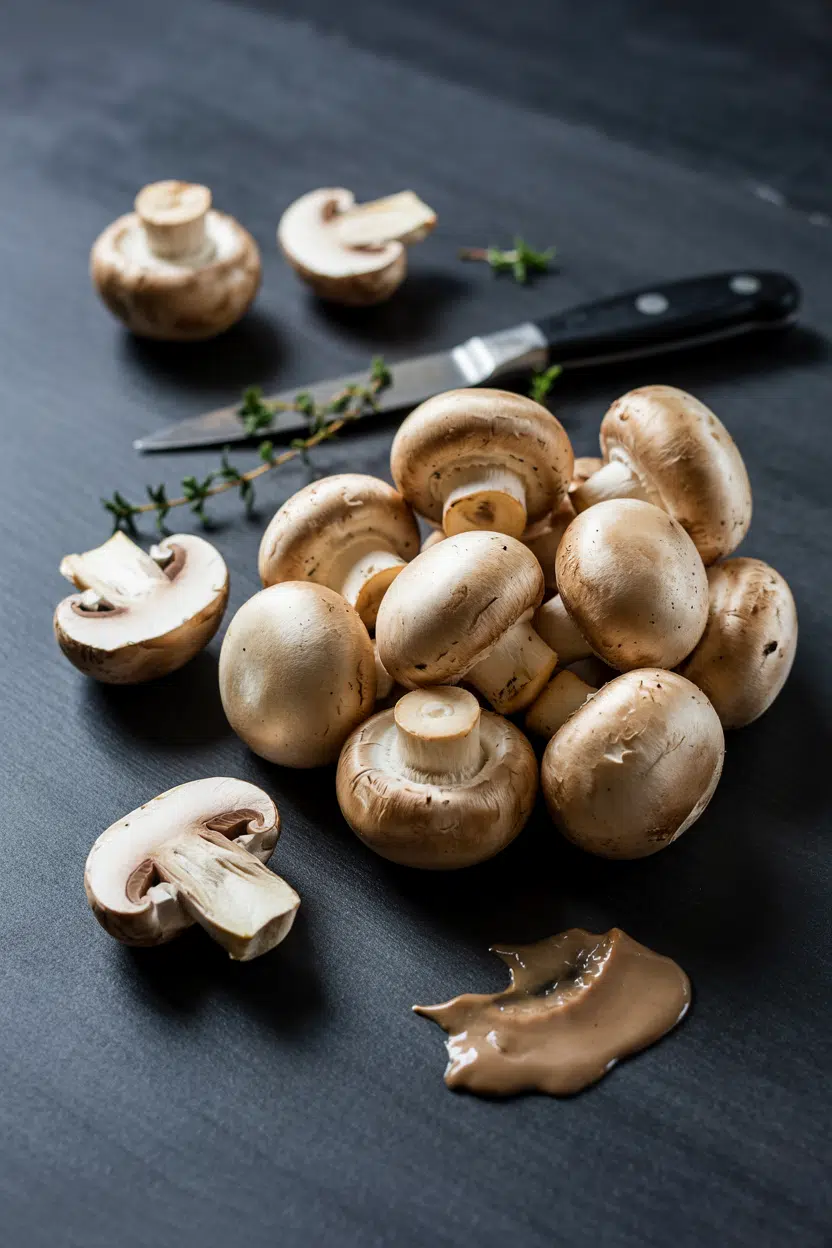
Button mushroom is the youngest harvested stage of Agaricus bisporus, the same species that matures into cremini and, further still, into portobello. At the button stage, the cap is smooth, domed, and pure white to slightly off-white, with edges that stay closed over the gills - a sign it was picked early.
Remember it later
Planning to try this recipe soon? Save it for a quick find later!
Commercial cultivation of Agaricus bisporus began in France in the 17th century, making it one of the earliest farmed mushrooms in Europe. Today it accounts for the majority of mushroom production worldwide and is available year-round in most grocery stores.
The white button differs from cremini mainly in maturity and moisture content. Cremini caps are broader and brown-skinned; button caps are smaller and paler, with a firmer, denser bite.
If you were swapping between them in a dish, most button mushroom swaps that work lean on cremini as the first alternative.
- 🍄 Scientific name - Agaricus bisporus, same species as cremini and portobello
- 🌍 Origin - First cultivated in Europe; now grown commercially on every continent
- 📏 Size at harvest - Caps typically 1-3 inches across, stem short and thick
- 🏷️ Also called - White button mushroom, common mushroom, table mushroom
What Does Button Mushroom Taste Like?
Raw button mushroom is mild - clean, faintly earthy, with a whisper of nuttiness. There's no bitterness and no sharp edge.
The flavor is subtle enough that it reads more as texture than taste when eaten cold in a salad.
Heat changes everything. Sautéed button mushrooms lose water quickly, concentrate their natural glutamates, and develop a savory, almost meaty note that sits closer to cooked chestnuts in mouthfeel than to any vegetable. The earthiness deepens without turning pungent.
Compared to cremini, the button is noticeably gentler - if you want a deeper read on how the flavors stack up, the taste of cremini mushroom explains the gap well.
Button mushroom's restraint makes it useful precisely because it doesn't dominate a dish.
How to Use Button Mushroom
Button mushrooms handle nearly every cooking method well, and the right choice depends on what texture you're after.
Raw and sliced works in green salads and grain bowls where you want texture without heat. Thin slices hold up well alongside assertive dressings.
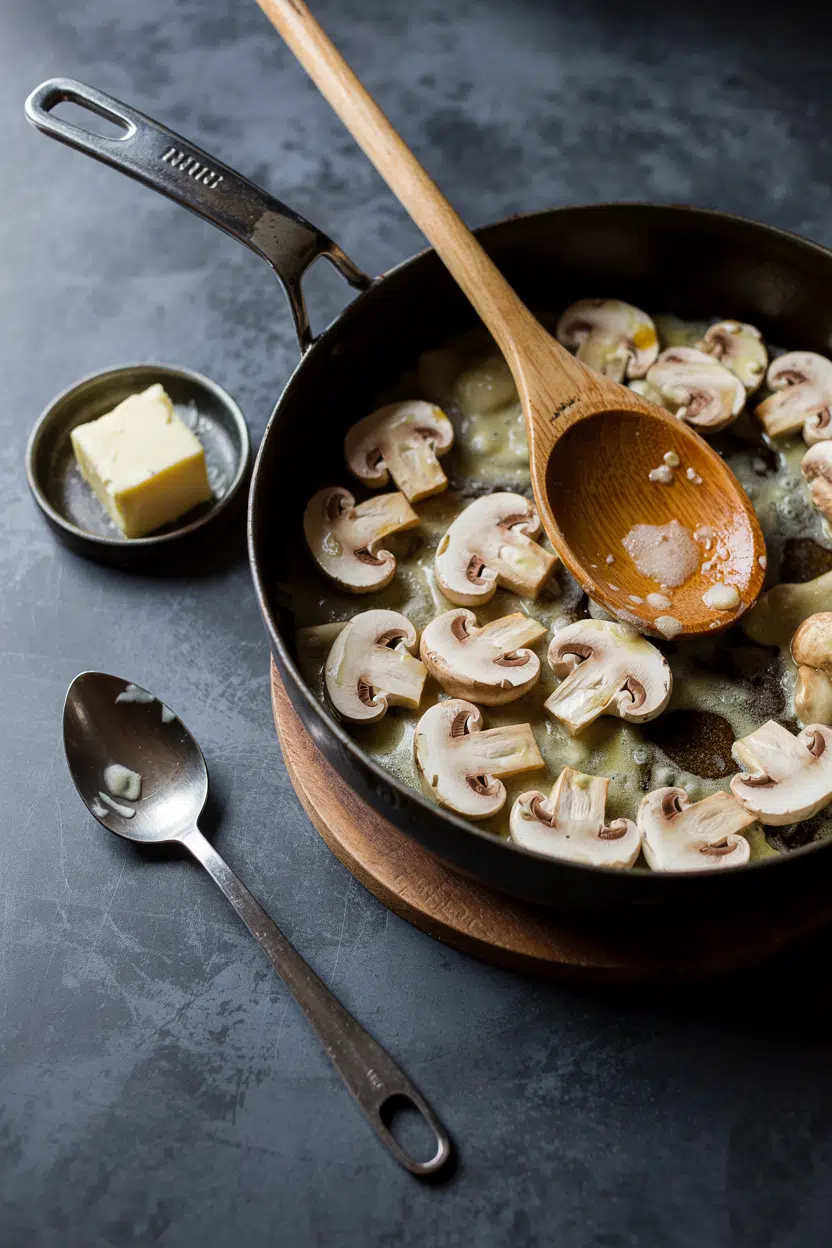
For sautéing, a hot, dry pan is critical - start without oil, let moisture evaporate, then add butter once the mushrooms start to brown. Crowding the pan traps steam and prevents browning.
For a reliable reference, making garlic butter sautéed mushrooms at home covers the technique step by step.
Whole or halved caps roast well at high heat, developing crisp edges. Skewered on a grill, they hold shape and take on smoke without falling apart.
Braised in wine or tomato sauce, they absorb surrounding flavors and add body. For dishes like frittatas or risotto, add them late so they don't overcook into mush.
Stuffed caps are one of the most reliable preparations - hollow out the stem, fill with cheese, breadcrumbs, or sausage, and bake until golden. Button mushrooms also fold into burger or meatloaf mixtures well, adding moisture and a quiet umami undertone. The flavor profile works across American, French bistro, Italian, and Chinese stir-fry applications.
Strong pairings include garlic, thyme, cream, shallot, parsley, butter, soy sauce, and cheddar. Avoid using them alongside very sweet fruit-forward desserts or delicate floral teas - the earthy notes clash.
| Method | Best For | Tip |
|---|---|---|
| 🥗 Raw | Salads, grain bowls, crudité platters | Slice thin; use within a day of washing |
| 🍳 Sauté | Sides, risotto, omelets, pasta sauces | Hot dry pan first; butter after moisture leaves |
| 🔥 Roast/Bake | Stuffed caps, sheet-pan sides, pizza topping | Halve for faster browning; high heat (425°F+) |
| 🍢 Grill | Skewers, BBQ sides | Skewer whole; brush with oil to prevent sticking |
| 🥘 Braise | Stews, ragù, braised sauces | Add midway through cooking; they shrink significantly |
How to Buy and Store Button Mushroom
At the store, look for caps that are smooth, pure white or off-white, with closed edges and no visible gills. The stem should feel firm and dry.
Any slimy sheen, darkening spots, or strong ammonia odor signals age - skip those boxes.
At home, keep them unwashed in a paper bag or breathable container in the fridge crisper drawer. Plastic traps moisture and accelerates softening.
Wash only just before use. For a full breakdown of timelines and conditions, storing button mushroom correctly covers every scenario.
Fresh button mushrooms typically last 5-10 days refrigerated when kept dry. UV-treated button mushrooms - labeled on the package - offer added vitamin D, though shelf life and storage rules are the same.
Where Button Mushroom Fits in Your Kitchen
Button mushroom is the low-commitment entry point to cooking with fresh mushrooms.
Start here if you want mild umami without strong mushroom flavor.
Try them sautéed in butter with garlic first - that preparation shows the full range of what heat does to their flavor.
From there, stuffed caps or a risotto addition are the logical next steps.
If a recipe calls for cremini or portobello and you're out, cremini mushroom stand-ins and portobello mushroom stand-ins both outline when button mushrooms cover the gap.
Frequently Asked Questions
Yes - "white mushroom" and "button mushroom" refer to the same thing: young, white-capped Agaricus bisporus harvested before maturity. Retailers use both terms interchangeably on packaging.
Yes. Raw button mushrooms are safe to eat and hold a firm texture in salads. Their flavor is mild and clean raw - cooking concentrates the umami significantly.
Use a hot, dry pan and don't crowd the mushrooms. Let moisture evaporate first, then add butter. Salting too early draws out liquid and prevents browning.
Typically 5-10 days when stored dry in a paper bag in the crisper drawer. Pre-washed or bagged mushrooms with trapped moisture deteriorate faster - check daily after day five.
Significantly - button mushrooms are roughly 90% water, so they lose most of their volume during sautéing or roasting. Plan on about three times the raw quantity you think you need.



