You spot it at the market - a long, white root that could pass for an oversized parsnip - and wonder what you're supposed to do with it.
Daikon radish sits in a quiet category of its own.
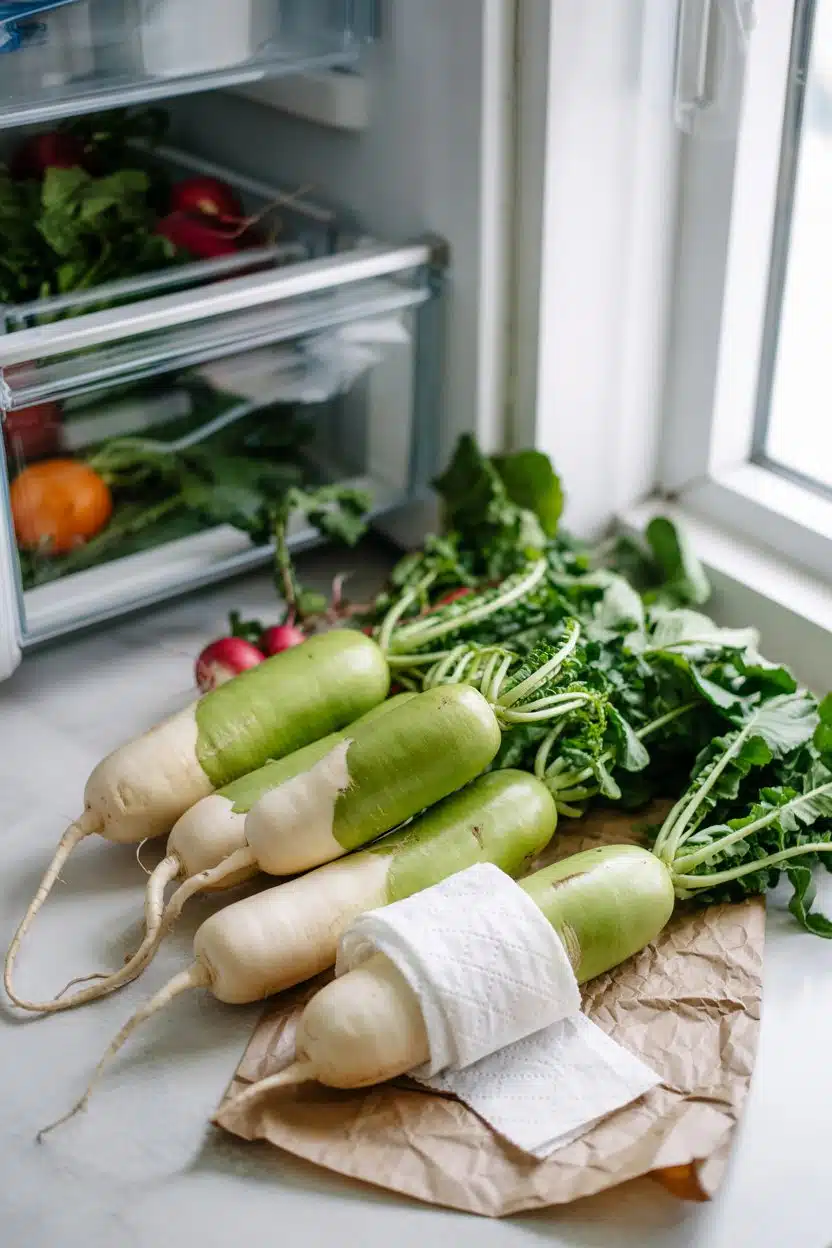
It's not as sharp as a small red radish, not as starchy as a turnip, and far juicier than either when you bite into it raw.
Daikon is a large East Asian white radish with crisp, juicy flesh and mild peppery flavor. Eaten raw, pickled, braised, or grated, it softens dramatically with heat and absorbs surrounding flavors. Whole roots keep 1-2 weeks refrigerated.
What Is daikon radish?
Daikon - also called mooli, white radish, or Japanese radish - is a winter root vegetable native to East Asia, grown and used across China, Japan, and Korea for centuries.
Remember it later
Planning to try this recipe soon? Save it for a quick find later!
The root typically runs 6-14 inches long with smooth, pale ivory skin and dense, water-rich flesh inside.
Unlike the small round radishes common in Western salads, daikon belongs to a larger subspecies of *Raphanus sativus* bred for size, mild flavor, and long keeping quality.
Several regional varieties exist. Japanese daikon tends to be the longest and mildest.
Korean radish (*mu*) is shorter, rounder, and slightly more peppery. Both are interchangeable in most preparations, though texture differences become more noticeable after cooking.
Flavor
Texture
Aroma
Moderate
What Does daikon radish Taste Like?
Raw daikon delivers a clean, lightly peppery bite - noticeable but never aggressive. It reads somewhere between a mild red radish and a fresh turnip, with a faint sweetness underneath that balances the sharpness.
The flesh is exceptionally juicy, which gives it a cooling quality that most root vegetables lack.
Heat changes everything. Simmer daikon in broth and that pepper edge softens almost completely, leaving a neutral, slightly sweet base that soaks up surrounding flavors like a sponge.
The texture shifts from snappy-crisp to something closer to cooked jicama - yielding but not mushy, with a subtle creaminess.
The top section of the root tends to be sweeter; the tip end runs slightly more bitter and sharp.
Worth knowing when you're grating it for daikon oroshi - a Japanese condiment - where the ratio of sweet to peppery matters more.
How to Use daikon radish
Daikon is one of those roots that earns its place across every cooking method.
Raw, it's julienned as a garnish for sushi and sashimi or thinly sliced into slaws.
Grated, it becomes daikon oroshi, served alongside grilled fish and tempura to cut richness with mild acidity.
If you're ever swapping out daikon radish, it's worth understanding just how different the cooked and raw forms behave before choosing an alternative.
| Method | Best For | Tip |
|---|---|---|
| 🥗 Raw | Slaws, salads, sashimi garnish | Slice thin; salt briefly to soften and draw out water if needed |
| 🥗 Grated | Daikon oroshi condiment | Use the upper third of the root for a sweeter, milder result |
| 🫙 Pickled | Takuan, quick Korean banchan, Vietnamese bánh mì filling | A brine with rice vinegar and a pinch of turmeric gives classic color |
| 🍲 Simmered | Oden, Korean guk, miso broth | Cut into thick rounds; add early so it absorbs the stock fully |
| 🔥 Roasted/Braised | Glazed side dishes with soy and mirin | Score the cut face so glaze penetrates; finish with sesame oil |
🇰🇷 Korean
🇨🇳 Chinese
🇻🇳 Vietnamese
🌏 Southeast Asian Fusion
Daikon pairs best with umami-forward ingredients. Swapping out soy sauce or swapping out miso paste in daikon braises will noticeably change the final flavor, since daikon acts as a neutral canvas that amplifies whatever surrounds it.
mirin
miso
sesame oil
ginger
scallions
grilled fish
rice vinegar
How to Buy and Store daikon radish
Reach for roots that feel dense and heavy for their size - a light root signals hollow, dry flesh.
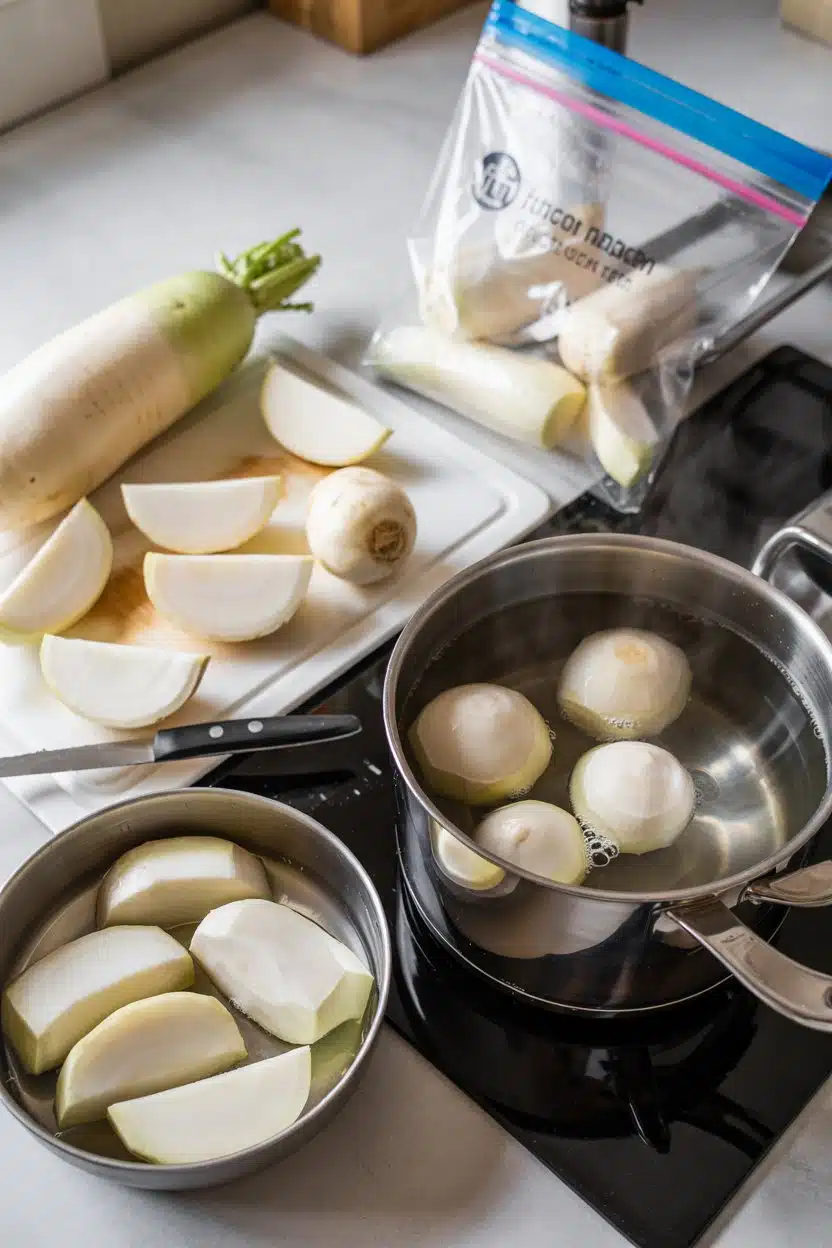
Skin should be smooth and white without soft spots, cracks, or green shoulders.
Smaller and medium roots (6-10 inches) are reliably sweeter and crisper; very large specimens often turn woody toward the center.
If the greens are still attached, bright, unwilted leaves confirm a recent harvest.
Store the root unwashed, loosely wrapped in a perforated plastic bag in the crisper drawer. Cut or peeled daikon should be used within 3-5 days.
For a full breakdown on storing daikon radish correctly, including what to watch for once it starts to turn, see our dedicated shelf life guide.
Start Here
New to daikon? Grate it raw and serve it alongside grilled salmon or pan-fried tofu.
That one use - daikon oroshi - shows you its raw character clearly and requires no recipe. From there, try a quick rice vinegar pickle.
Once you've seen how heat transforms it in a simple miso broth, the rest follows naturally.
Frequently Asked Questions
Daikon has mild heat - noticeably peppery raw, but much gentler than small red radishes or horseradish. The tip of the root runs slightly hotter than the upper end, and cooking reduces the sharpness almost entirely. People who find red radishes too aggressive usually handle daikon without issue.
Slice it thin for slaws and salads, julienne it for sushi garnishes, or grate it finely as a condiment (daikon oroshi) for grilled or fried foods. If the raw bite feels too sharp, lightly salting sliced daikon for 10 minutes draws out moisture and softens both texture and flavor before you dress it.
Freezing raw daikon is not recommended - the high water content causes the cells to rupture, leaving the thawed root limp and waterlogged. However, daikon that will be cooked in soups or stews can be blanched first, frozen in pieces, and added directly to hot liquid from frozen. Pickled daikon also does not freeze well; the brine changes texture and turns it rubbery.
Size and intensity are the main differences. Common red radishes are small, round, and significantly sharper, with a dry, dense bite. Daikon is far larger, much milder, and considerably juicier - it also holds up to long cooking in a way that small radishes don't, since they tend to become unpleasantly bitter when simmered.
Julienne or thinly slice the daikon, then combine rice vinegar, a small amount of sugar, and salt in a 2:1:0.5 ratio by volume and pour it over the pieces. After 30-60 minutes at room temperature the daikon will be tangy, lightly crunchy, and ready to use - refrigerate for up to two weeks. A pinch of turmeric gives it the bright yellow color typical of Vietnamese and Japanese versions.