
Sushi rice is the easiest place to spot rice vinegar at work.
The glossy, slightly tacky grains carry a quiet tang and a faint sweetness that plain cooked rice simply doesn't have - and that comes from a careful stir of rice vinegar, sugar, and salt while the rice is still hot.
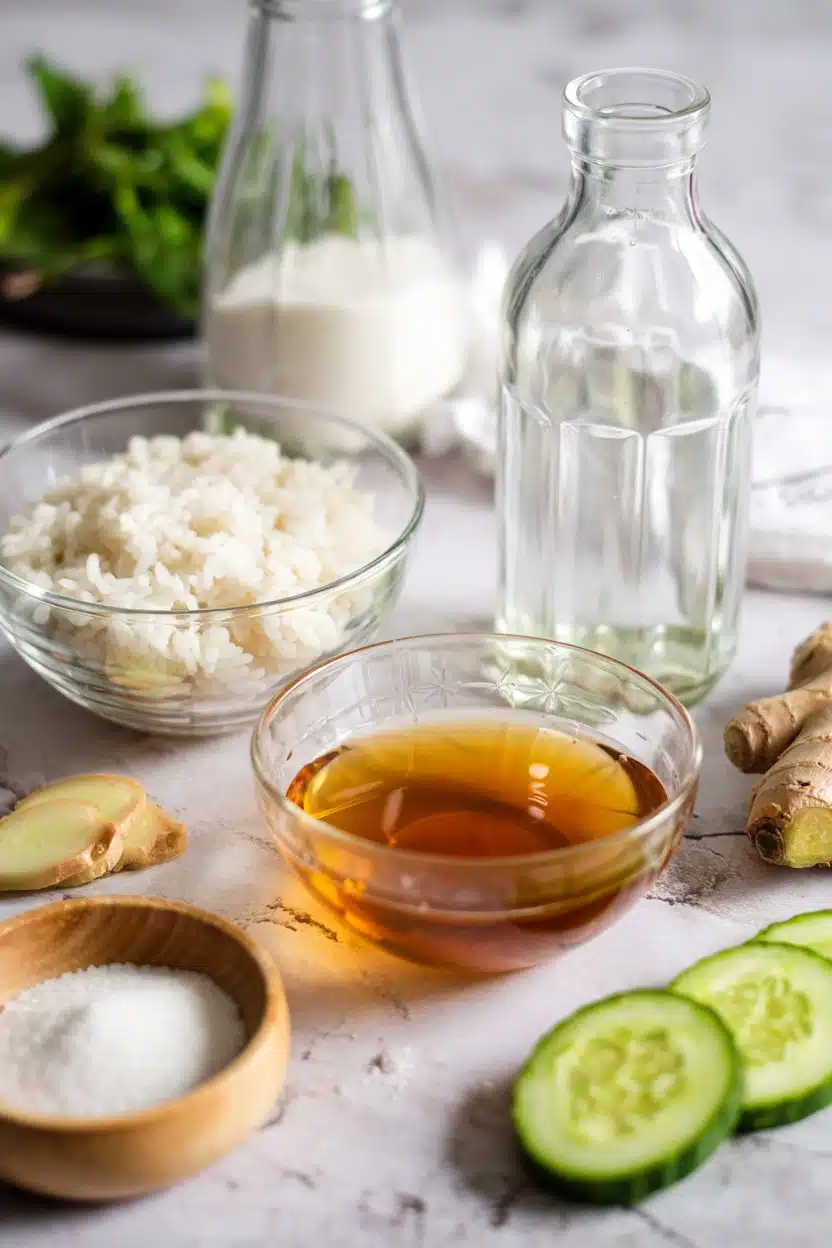
Beyond the sushi counter, this fermented grain vinegar shows up in cold noodle dressings, quick-pickled daikon, and stir-fry sauces, often doing its job without much fanfare.
Rice vinegar is a mild, fermented vinegar made from rice or rice wine. Its acidity is gentler than white wine vinegar, with a soft sweetness and a faint cereal background. Use it in dressings, pickles, marinades, and rice seasoning across East Asian cooking.
What Is Rice Vinegar?
Rice vinegar is produced by fermenting rice or rice wine, a process that converts the grain's natural sugars into acetic acid.
Remember it later
Planning to try this recipe soon? Save it for a quick find later!
It originated across East Asia - China, Japan, and Korea each developed their own traditions - and remains one of the most foundational pantry acids in those cuisines.
The Japanese variety (komezu) is very pale, almost colorless, and the mildest of the family.
Chinese black rice vinegar is a different creature entirely: dark, malty, and far more complex.
Understanding rice and its flavor helps explain why the vinegar made from it carries that distinctive cereal softness no other vinegar quite replicates.
Flavor
Texture
Aroma
Mild
What Does Rice Vinegar Taste Like?
Think of white wine vinegar with its sharpness dialed down by a third - and then add a faint sweetness that reads almost like a whisper of honey. That's the closest shortcut.
It's also comparable to a very light apple cider vinegar, though without the fruity overtone.
What sets rice vinegar apart is how it behaves with heat.
Added early to a braise or reduction, the delicate rice aroma fades and you're left with clean background acidity.
Added late - stirred in at the end of a pan sauce or drizzled over cold tofu - the softer, sweeter character stays intact. Seasoned rice vinegar amplifies the sweetness further because sugar and salt are added during production, making it noticeably rounder than the plain variety.
How to Use Rice Vinegar
Rice vinegar earns its keep across a range of applications.
It's gentle enough to dress raw ingredients without overpowering them and acidic enough to do real work in a pickle brine or marinade.
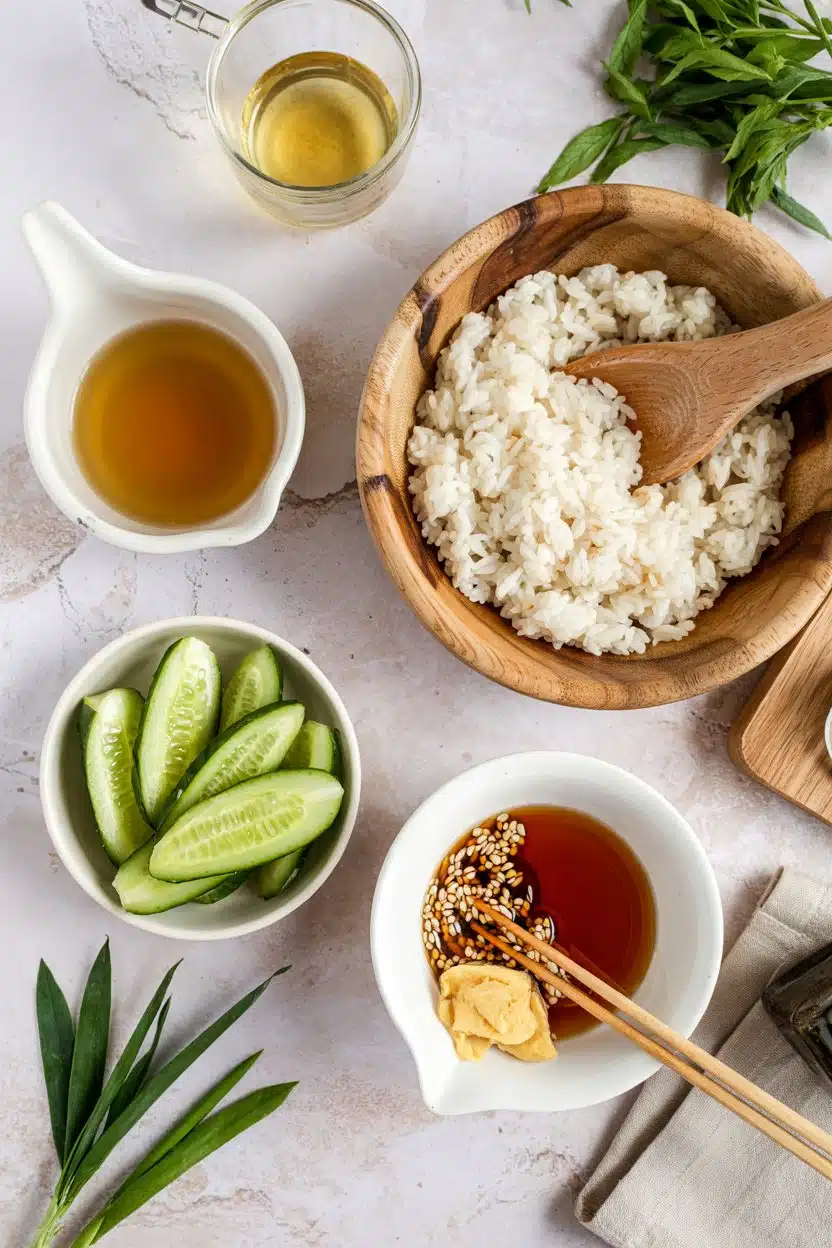
For quick-pickled cucumbers or tsukemono-style daikon, it produces a brightness that white vinegar can't match without also delivering harshness.
It's also the acid you reach for when deglazing a wok - combined with soy sauce and sesame oil, it rounds out the pan without competing.
| Method | Best For | Tip |
|---|---|---|
| 🥗 Raw | Vinaigrettes, cold noodle dressings, dipping sauces | Use plain rice vinegar and balance with a small amount of sesame oil |
| 🍳 Cooked | Deglazing stir-fry pans, finishing braises, balancing sauces | Add at the end of cooking to preserve the delicate rice aroma |
| 🫙 Pickling | Quick daikon pickles, cucumber tsukemono, pickled ginger | Use a hot brine, then cool completely before sealing |
| 🍚 Rice Seasoning | Sushi rice, seasoned grain bowls | Mix with sugar and salt, then fold into hot rice off the heat |
🇨🇳 Chinese
🇰🇷 Korean
🌏 Southeast Asian
mirin
sesame oil
garlic
ginger
chili flakes
scallions
honey
If you're working without it, alternatives to rice vinegar that mimic its mild acidity include diluted white wine vinegar or a small amount of apple cider vinegar - though neither carries the rice sweetness.
It's also worth knowing how it differs from its close relative: comparing aji mirin vs rice vinegar clears up a common source of confusion in East Asian recipes.
How to Buy and Store Rice Vinegar
Look for bottles labeled simply "rice vinegar" or "rice wine vinegar" with a short ingredient list - rice, water, and sometimes salt.
If a recipe calls for seasoned rice vinegar, you can buy it pre-made or make your own by dissolving sugar and salt into plain rice vinegar.
Japanese rice vinegar should be very pale or nearly clear.
Avoid bottles with cloudiness or sediment unless the label explicitly describes it as unfiltered.
Store opened bottles tightly sealed in a cool, dark pantry. Refrigeration isn't required, but it helps preserve the delicate rice aroma past the 12-month mark.
For full details on what to look for as it ages, see our guide on rice vinegar spoilage signs.
Where to Start with Rice Vinegar
New to this ingredient? Season a bowl of hot short-grain rice with rice vinegar, a pinch of sugar, and a pinch of salt.
That single exercise demonstrates exactly what it does - brightening without sharpening, adding depth without dominating.
If you cook East Asian dishes regularly, keep both plain and seasoned versions on hand. The plain bottle handles marinades, dressings, and braises.
The seasoned bottle is ready-to-use for sushi rice, and doubles as a quick shortcut in slaws and grain bowls.
Frequently Asked Questions
No - they are two distinct products made from rice. Rice wine (such as sake or Shaoxing wine) is an alcoholic beverage produced by fermenting rice and stopping the process before the alcohol converts to acid. Rice vinegar takes that fermentation further, producing acetic acid and losing most of its alcohol content.
You can, though the result will be noticeably milder and slightly sweeter. In Asian-style dressings and pickles, the swap works well. In recipes where white vinegar provides sharp structural acidity - such as certain baking applications or water-bath canning - rice vinegar's lower acidity may not perform the same way.
Seasoned rice vinegar is most commonly used to flavor sushi rice - it already contains the sugar and salt needed for the seasoning step, so no extra measuring is required. It also works as a quick shortcut in coleslaws and grain bowl dressings, though the added sugar means you should taste before adding more sweetener to a dish.
Plain rice vinegar contains negligible natural sugars from fermentation and is not meaningfully sweet on a nutrition label. Seasoned rice vinegar, however, has sugar and salt added during production and will list them on the ingredient panel - it's a noticeably different product and contributes added sugar to recipes.
Plain rice vinegar made solely from rice is gluten-free. The concern arises with seasoned rice vinegar, which sometimes contains soy sauce or other additives that may include wheat. Always check the label if gluten is a dietary concern, and look for bottles explicitly certified gluten-free when in doubt.



