You need 90 minutes from start to finish. No marinating overnight, no multi-hour braises-just pork belly, soy sauce, vinegar, and a pot that simmers while you handle everything else.
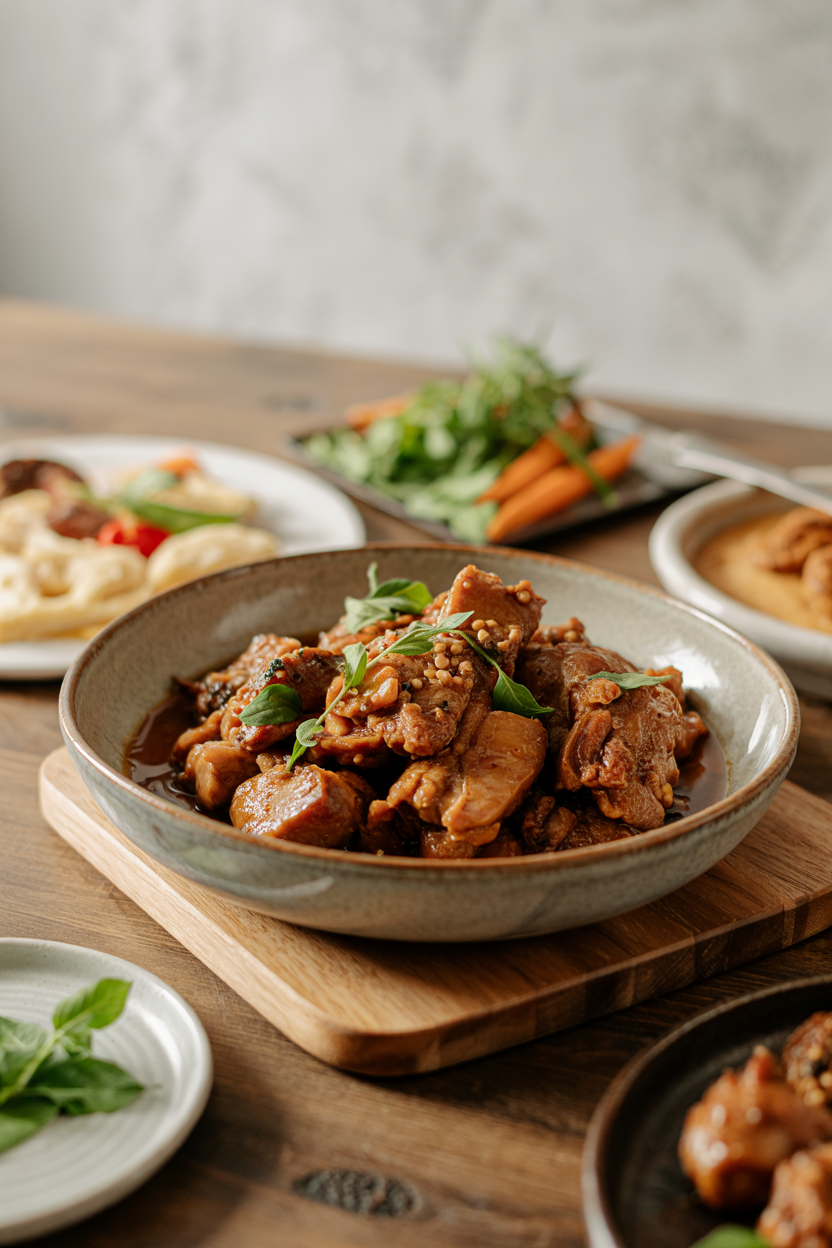
The braising liquid does the heavy lifting. Vinegar tenderizes the meat while soy sauce builds that dark, glossy finish Filipino adobo is known for.
This works for weeknight dinners when you want something that tastes slow-cooked but doesn't require all-day supervision. The pork comes out tender enough to pull apart with a fork, with edges that crisp slightly when you reduce the sauce at the end.
Pork Belly Adobo simmers pork belly in soy sauce, vinegar, garlic, and bay leaves until tender. Searing the pork first locks in flavor, and a 60-75 minute simmer breaks down the fat without drying out the meat. The result is glossy, fork-tender pork with a tangy-salty sauce perfect for rice.
Why This Recipe Works
Pork belly holds up to long simmering without falling apart. The fat renders slowly, keeping the meat moist while the vinegar tenderizes tough fibers, and searing before braising builds a base layer of caramelization that plain boiled pork lacks-if you want richness that tastes earned, not faked, try a quick pork dish that balances fat and acid from the start.
Remember it later
Planning to try this recipe soon? Save it for a quick find later!
Prep Time
15 min
Cook Time
1 hr 15 min
Total Time
1 hr 30 min
Servings
4 servings
Difficulty
Medium
Category
Main Dish
Quick Tip
Sear pork before simmer for better flavor
Best For
Weeknight | Meal prep | Family dinner
Five things that make this work:
- Pork belly stays juicy through long cooking - fat content prevents drying even after 75 minutes of simmering
- Vinegar tenderizes without a marinade - acid breaks down connective tissue during the braise, so meat turns fork-tender
- Searing builds fond before liquid goes in - browned bits on the pot bottom dissolve into the sauce for deeper flavor
- Low simmer prevents tough, rubbery texture - gentle heat renders fat slowly without seizing up the proteins
- Reducing the sauce at the end concentrates flavor - uncovered simmering in the last 15 minutes thickens the glaze naturally
What You'll Need
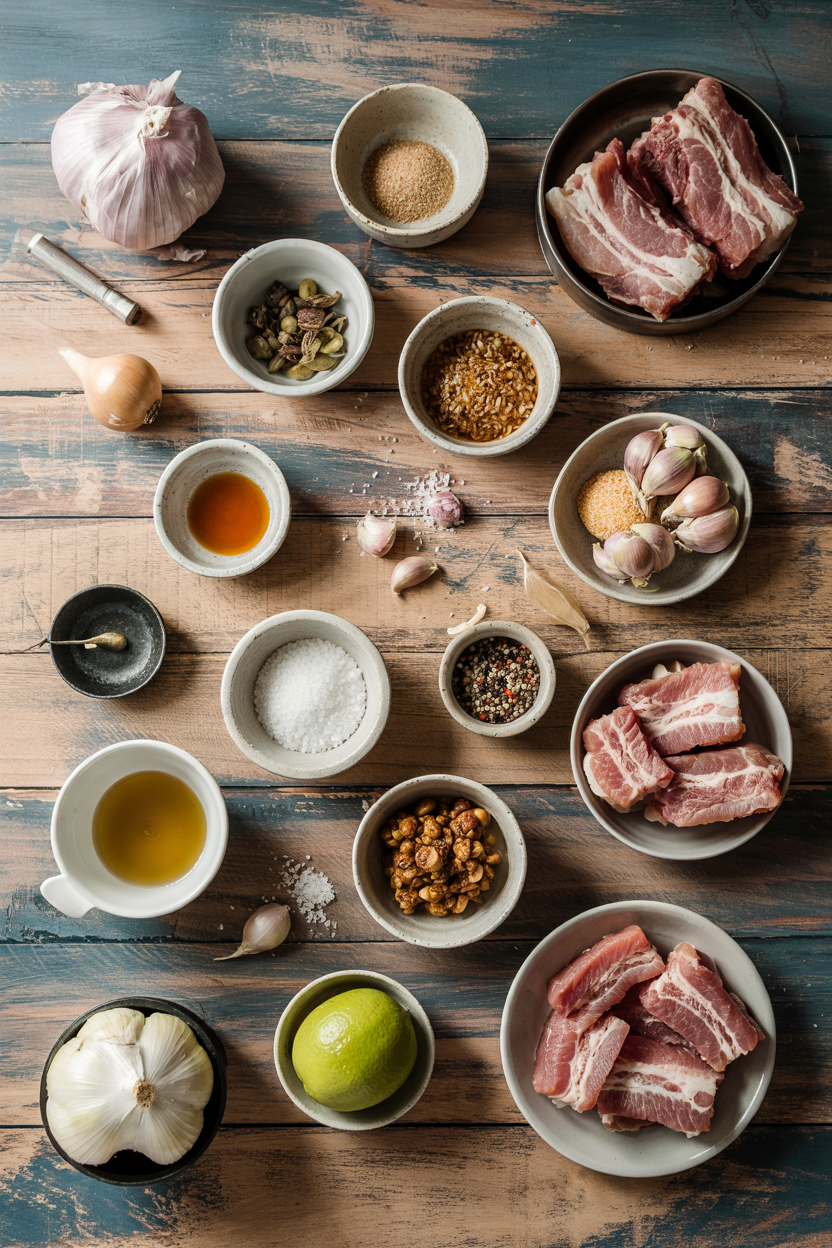
Stock your pantry with soy sauce, vinegar, garlic, and bay leaves. Most Filipino kitchens keep these on hand year-round, and the pork belly is the only thing you'll need to pick up fresh-everything else likely sits in your cabinet already.
- Pork belly (skin-on, 1.5-2 lbs)
- Garlic (6-8 cloves, smashed)
- Onion (1 medium, sliced)
- Bay leaves (3-4 leaves)
- Soy sauce (½ cup)
- Vinegar (¼ cup white or cane)
- Water (½ cup)
- Sugar (1 tbsp, optional)
- Black peppercorns (1 teaspoon whole)
- Oil (1 tablespoon for searing)
Ingredient Details
- Pork belly
Skin-on works best-it renders fat slowly and adds body to the sauce; boneless belly cooks faster but lacks depth - Soy sauce
Use regular soy sauce, not low-sodium-adobo needs the salt to balance vinegar's sharpness - Vinegar
White vinegar or cane vinegar gives the sharpest tang; apple cider vinegar softens the edge but changes the flavor profile - Garlic
Smash cloves with the side of a knife-more surface area equals faster flavor release into the braising liquid - Bay leaves
Dried bay leaves work fine; fresh ones add more herbal punch but aren't necessary for solid results - Black peppercorns
Whole peppercorns infuse heat slowly; ground pepper turns muddy and bitter during long simmering - Water
Use just enough to cover the pork-too much dilutes the sauce and takes longer to reduce at the end
Ingredient Swaps
Pork belly anchors this recipe, but leaner cuts work when you adjust cooking time. The vinegar-soy balance shifts slightly with each swap, so taste and tweak before you serve.
- Pork belly → pork shoulder - leaner texture, add 15-20 minutes simmering time, less fatty richness
- Soy sauce → tamari - gluten-free option, slightly less salty so you may need extra
- White vinegar → apple cider vinegar - milder tang, fruitier finish, works if you prefer less sharpness
- Sugar → brown sugar or omit entirely - brown adds caramel notes, skipping it makes the sauce more savory
Pork Shoulder
Works for: Budget cooking, meal prep in bulk, less fat overall
Skip if: You want the silky richness pork belly fat provides
Apple Cider Vinegar
Works for: Milder acidity, fruity undertones, kid-friendly versions
Skip if: You want sharp, classic Filipino adobo tang
Instructions
Cut the pork, marinate it for 30 minutes, then sear and simmer. The entire process takes 90 minutes, but only 15 require active work-the rest happens on the stove while you prep rice or clean up.
Cut and marinate the pork. Slice pork belly into 1.5-inch cubes. Toss with soy sauce, vinegar, smashed garlic, bay leaves, and peppercorns in a bowl. Let sit 30 minutes at room temperature.
Sear the pork belly. Heat oil in a heavy-bottom pot or Dutch oven over medium-high. Remove pork from marinade (save the liquid), then sear pieces 3-4 minutes per side until golden and caramelized.
Add the braising liquid. Pour reserved marinade, onion, water, and sugar into the pot. Bring to a boil, then reduce heat to low. Cover and simmer 60-75 minutes, stirring every 20 minutes, until pork pierces easily with a fork.
Reduce the sauce. Remove the lid, increase heat to medium, and simmer 10-15 minutes until sauce thickens and coats the back of a spoon. The pork edges will crisp slightly as liquid reduces.
Rest before serving. Turn off heat and let pork sit in the pot 10 minutes. The sauce thickens further as it cools, and flavors settle into the meat.
What to Serve With It
Adobo works on its own with rice, but sides that cut through fat make the meal feel complete. Most people default to plain steamed rice, which works, but planning your complete pork braciole meal ideas means balancing richness with something crisp, tangy, or light enough to reset your palate between bites.
| Side Dish | Prep | Why It Works | How to Serve |
|---|---|---|---|
| Steamed jasmine rice | Easy | Absorbs sauce without competing with flavor | Serve warm, spoon adobo sauce over rice |
| Sautéed greens (bok choy, spinach) | Easy | Balances richness with freshness and crunch | Toss with garlic, serve on the side |
| Pickled vegetables (atchara) | Medium | Adds acidic crunch that cuts through fat | Serve cold in a small bowl as a condiment |
| Fried egg | Easy | Yolk mixes with sauce for extra richness | Fry sunny-side up, place on top of rice |
| Garlic fried rice | Easy | Adds toasted garlic flavor that complements pork | Use day-old rice, fry with garlic until crispy |
Three ways to serve it:
- For weeknight meals: Steamed rice, sautéed bok choy, fried egg on top-fast, filling, balanced
- For meal prep: Portion pork with rice in containers, reheat with pickled vegetables on the side
- For family dinner: Garlic fried rice, crispy lumpia, fresh tomato-cucumber salad for contrast
Store and Reheat
Adobo holds up better than most braises when you reheat it. The sauce thickens as it cools, and flavors deepen overnight, so day-two adobo often tastes better than fresh-cooked.
| Method | Time | Best For |
|---|---|---|
| 🍳 Stovetop | 5-7 min on medium-low | Even reheating, restores sauce texture without drying pork |
| 📦 Microwave | 2-3 min on high, stir halfway | Quick reheating, less texture control but fast |
| 🔥 Oven | 10-15 min at 325°F | Larger portions, retains texture, good for meal prep containers |
For best results when storing:
- Cool adobo completely before refrigerating - hot food raises fridge temperature and creates condensation that dilutes the sauce
- Store in shallow, airtight containers - speeds cooling, prevents bacterial growth, keeps sauce from separating
- Reheat gently with a splash of water - restores sauce consistency if it thickened too much overnight
- Freeze in single-meal portions - thaws faster, reduces waste, works for up to 2 months without losing texture
- Skim excess fat before reheating - solidified fat on top is easy to remove cold, improves flavor balance when reheated
Frequently Asked Questions
Yes, adobo tastes better the next day. Store it in the fridge for up to 4 days and reheat gently on the stovetop with a splash of water to loosen the sauce.
Simmer for 60-75 minutes on low heat. The pork should pierce easily with a fork and pull apart without resistance when it's done.
Steamed jasmine rice, sautéed greens, pickled vegetables, or a fried egg all work. Anything that cuts through the richness or soaks up the sauce balances the plate.
Yes, chicken thighs or pork shoulder work. Reduce cooking time to 30-40 minutes for chicken, or add 15-20 minutes for leaner pork shoulder to tenderize properly.
Too sour means too much vinegar-add a teaspoon of sugar and simmer a few more minutes. Bland flavor usually means not enough marinating or unbalanced soy-to-vinegar ratio-taste and adjust before serving.
Pork Belly Adobo
Ingredients
Equipment
Method
- Slice pork belly into 1.5-inch cubes. Toss with soy sauce, vinegar, smashed garlic, bay leaves, and whole black peppercorns in a bowl. Let sit at room temperature for 30 minutes.1.5 lbs pork belly, 0.5 cup soy sauce, 0.25 cup vinegar, 6 cloves garlic, 3 bay leaves, 1 tsp black peppercorns
- Heat oil in a heavy-bottom pot or Dutch oven over medium-high heat. Remove pork from marinade (reserve the liquid). Sear pork pieces 3-4 minutes per side until golden and caramelized.1 tbsp oil, 1.5 lbs pork belly
- Pour the reserved marinade, sliced onion, water, and sugar into the pot. Bring to a boil, then reduce heat to low. Cover and simmer for 60-75 minutes, stirring every 20 minutes, until pork is fork-tender.0.5 cup soy sauce, 0.25 cup vinegar, 1 medium onion, 0.5 cup water, 1 tbsp sugar
- Remove the lid and increase heat to medium. Simmer uncovered for 10-15 minutes until the sauce thickens and coats the back of a spoon and pork edges crisp slightly.
- Turn off heat and let pork rest in the pot for 10 minutes to allow the sauce to thicken further and the flavors to settle.
Notes
- Use skin-on pork belly for best fat rendering and sauce body.
- Reserve marinade for braising to build deep flavor and avoid waste.
- Do not add garlic during searing to prevent bitterness; include it only in the marinade.