Found a half-eaten loaf tucked behind yesterday's leftovers - and now you're not sure if it's still safe to eat.
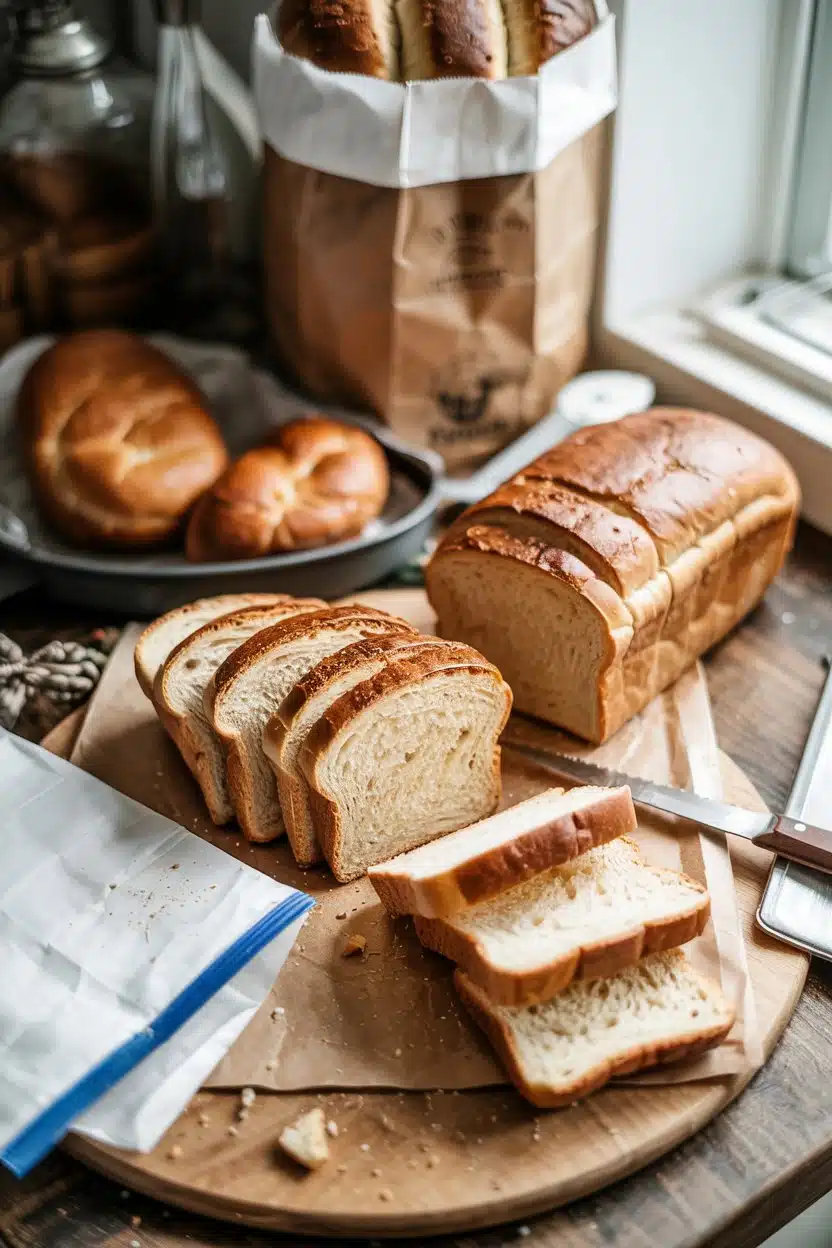
That's the moment most people realize they've never had a clear system for storing bread. Mold moves fast, and the wrong storage choice can cost you a loaf in under 48 hours.
Bread lasts 2-4 days at room temperature, up to 2 weeks in the fridge (though it stales faster there), and up to 6 months in the freezer. The best default for most loaves is a breadbox or paper bag at room temp - freeze what you won't finish in a few days.
How Long Does Bread Last?
Bread's shelf life hinges on two separate threats: mold and staling. Mold is a safety issue; staling is a texture issue caused by starch retrogradation - the process where starch molecules recrystallize and firm the crumb.
Remember it later
Planning to try this recipe soon? Save it for a quick find later!
Both happen faster than most people expect, and each storage method handles them differently.
| Method | State | Duration | Notes |
|---|---|---|---|
| 🛒 Pantry | Whole loaf | 2-4 days | Paper bag or breadbox; artisan crusty loaves decline fastest after day 2 |
| 🛒 Pantry | Sliced (opened) | 1-3 days | Original sealed plastic bag extends life; opened sliced bread stales quickly |
| 🧊 Fridge | Opened, any style | 7-14 days | Mold slows but starch retrogradation accelerates - expect a firmer, drier crumb |
| ❄️ Freezer | Sliced | Up to 3 months | Flash-freeze single slices first; toast directly from frozen |
| ❄️ Freezer | Whole loaf | 3-6 months | Vacuum-seal or double-wrap; longer storage risks crumb dryness and collapse |
How to Store Bread?
Room temperature is the right default for most loaves - not the fridge. Cold air slows mold but triggers retrogradation roughly six times faster than at room temp, leaving you with a loaf that's technically safe but unpleasantly firm.
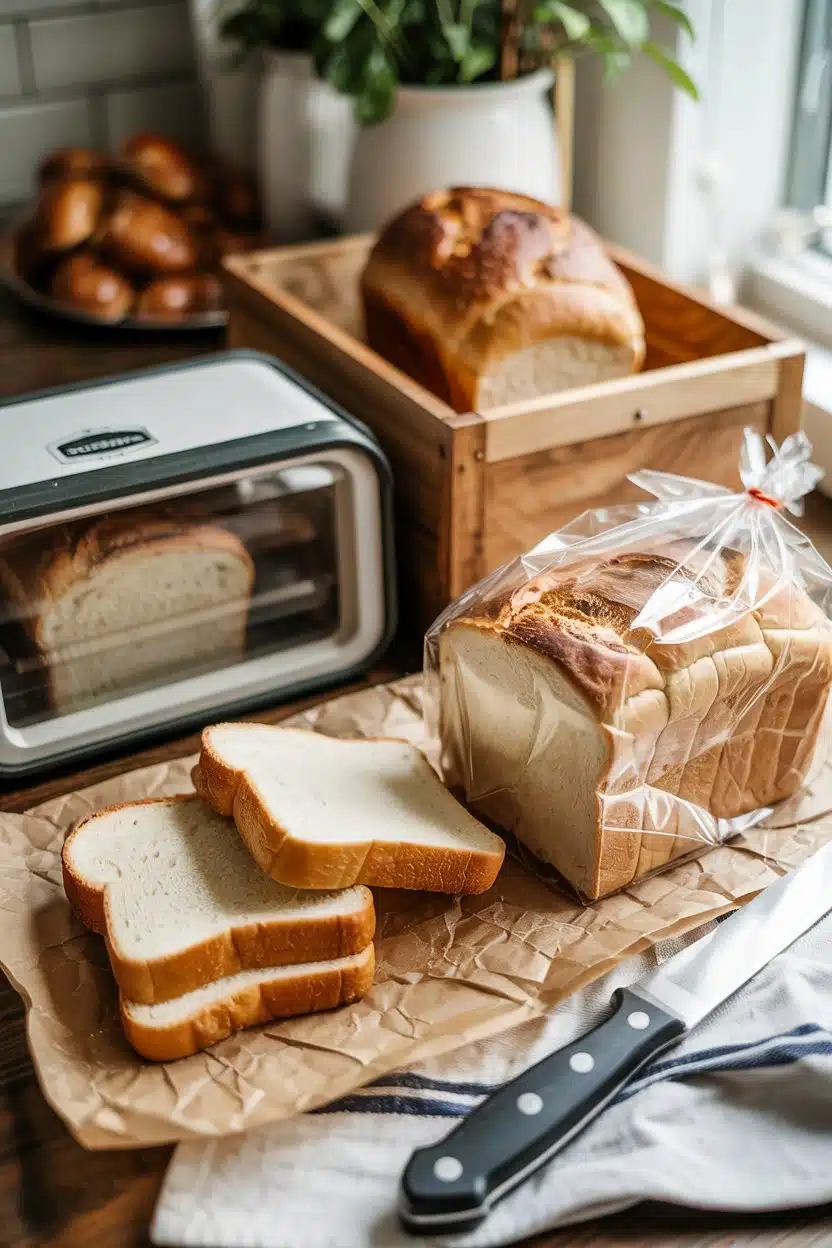
Reserve the fridge only for situations where you genuinely can't freeze and need the bread to last beyond four days.
2-4 days
Store in a paper bag, cotton bread bag, or a breadbox at 60-75°F away from direct sunlight. For artisan loaves, slice only what you need - cutting the whole loaf exposes crumb surface and speeds both staling and mold. Always cool a freshly baked loaf completely before wrapping; trapped steam encourages mold.
7-14 days
Place in the original sealed bag or transfer to an airtight zip-top bag to minimize moisture loss. Expect a noticeably firmer crumb - revive refrigerated slices in a toaster or warm oven rather than eating cold. This method suits commercial sandwich loaves better than crusty artisan bread, which loses its crust texture quickly.
Can You Freeze Bread?
Yes - freezing is the best long-term option for bread, and it preserves texture far better than the fridge does.
The key is wrapping tightly to prevent freezer burn and moisture loss, which cause the crumb to become dry and crumbly over time (a similar issue to what we cover about salmon freezer burn).
Sliced bread handles freezing especially well because you can pull out single pieces without disturbing the rest.
- Slice if needed - slice the loaf before freezing so you can remove only what you need later without thawing the whole thing.
- Flash-freeze slices - lay slices flat on a baking tray and freeze for 1-2 hours until solid; this prevents them from fusing together in the bag.
- Wrap tightly - wrap slices or the whole loaf in plastic wrap first, then in aluminum foil, or use a vacuum-seal bag; press out all air from zip-top bags.
- Label the bag - note the date and loaf type; rotate older packages first and use sliced bread within 3 months.
- Thaw correctly - toast slices directly from frozen for the best texture; for a whole loaf, unwrap and leave at room temperature 2-4 hours, or bake at 300°F for 8-12 minutes until the crust crisps and the crumb softens. Avoid microwaving - it makes the crumb gummy.
Signs Bread Has Gone Bad
Mold is the clearest disqualifier, and it's non-negotiable - don't cut the affected section off and eat the rest. Mold on bread spreads through the porous crumb before it's visible on the surface, so what looks like a small patch is usually larger contamination underneath. When in doubt, discard the whole loaf.
Visual Signs
- Blue, green, or black fuzzy or flat patches on the crumb or near the crust
- White or translucent wet spots (bacterial spoilage or freeze-thaw damage)
- Excessively cracked, hard crust and crumbling crumb (severe staling)
Smell Signs
- Unexpected sour, fermented, or yeasty odor on a bread that shouldn't smell that way
- Musty or moldy smell even when no visible spots are present yet
Texture Signs
- Slimy or sticky crumb surface (bacterial growth)
- Unusually dense, gummy interior - sign of poor freeze-thaw or advanced staling
Our mold in yogurt guide covers why surface mold often runs deeper than it looks - the same logic applies to bread's porous crumb.
Practical Storage Rules Worth Following
A few consistent habits will keep most loaves in good shape from the first slice to the last.
- 🍞 Keep crusty artisan loaves in a paper bag at room temp and slice as you go - never prewrap a warm loaf.
- ❄️ Flash-freeze individual slices on a tray before bagging so you can grab one at a time without thawing the whole package.
- 🛒 Use freezer-grade zip-top bags and press out all air, or vacuum-seal, to block freezer burn and odor transfer.
- 🔄 Label every freezer package with the date and loaf type - rotate older loaves first and don't rely on memory.
Frequently Asked Questions
Bread doesn't go bad faster in the fridge from a mold standpoint - cold temperatures do slow mold growth. However, refrigerator temperatures (around 35-40°F) sit in the optimal range for starch retrogradation, which firms and dries the crumb much faster than room temperature storage does. You'll get a mold-free loaf that tastes stale within a day or two.
Yes - some bread molds produce mycotoxins, which can cause nausea, vomiting, or more serious illness depending on the species and how much was consumed. Because bread's porous crumb lets mold spread invisibly beyond the visible patch, cutting off the moldy section and eating the rest isn't safe. Discard the entire loaf.
Sourdough's naturally acidic environment - produced during fermentation - inhibits mold growth, giving it a slight shelf life advantage over commercial sandwich loaves. At room temperature, a well-baked sourdough can hold for 4-5 days before mold appears, compared to 1-3 days for opened commercial sliced bread. The crust, however, softens and loses character faster than the crumb spoils.
"Best by" dates on commercial bread reflect peak quality, not a hard safety cutoff. If the bread shows no mold, no odd smell, and no slimy texture, it's generally safe to eat even a day or two past the printed date - especially if it's been stored correctly in a sealed bag. Use your senses rather than the date alone.
The biggest factors are airtight wrapping before freezing and correct thawing afterward. Double-wrap slices in plastic then foil, or use a vacuum-seal bag, to block moisture loss during freezer storage. Toast slices directly from frozen rather than thawing at room temperature - the rapid heat restores a soft interior and avoids the gummy texture that comes from slow, uneven thawing.