
Farro does something no refined grain can: it holds its shape, carries its flavor, and adds genuine chew to whatever it lands in. Drop it into a bowl of barley and you'll notice farro's nuttier edge immediately - it has more personality and more bite.

That resistance makes it the grain that cooks reach for when a dish needs structure, not just starch.
Farro is an ancient hulled wheat grain with a nutty, mildly sweet flavor and a firm, chewy bite. It's cooked in water or stock, used in salads, soups, and grain bowls, and stores well for up to a year dried.
What Is farro?
Farro is a collective term for three hulled wheat species harvested since the early Fertile Crescent civilizations. Emmer wheat (farro medio) is by far the most common type sold in stores today.
Remember it later
Planning to try this recipe soon? Save it for a quick find later!
Einkorn (farro piccolo) and spelt (farro grande) round out the group, though they're less frequently labeled as farro in North American markets.
All three types arrive at your kitchen dried, with a tough outer hull that must be removed before processing. After hulling, producers may sell it as whole farro (bran intact), semi-pearled (bran partially removed), or pearled (bran stripped away).
Whole farro takes the longest to cook - often 45 to 60 minutes - while pearled cooks in around 20 minutes.
The grain has deep roots in Tuscan and broader Mediterranean cooking, where it never fell out of rotation the way it did elsewhere. You'll also see it labeled farro medio or simply "emmer" on Italian imports.
- Whole farro - Maximum fiber and nutrients; requires soaking or longer cook time
- Semi-pearled farro - The middle ground; most common in U.S. grocery stores
- Pearled farro - Fastest cooking; loses some bran nutrition but still has firm texture
What Does farro Taste Like?
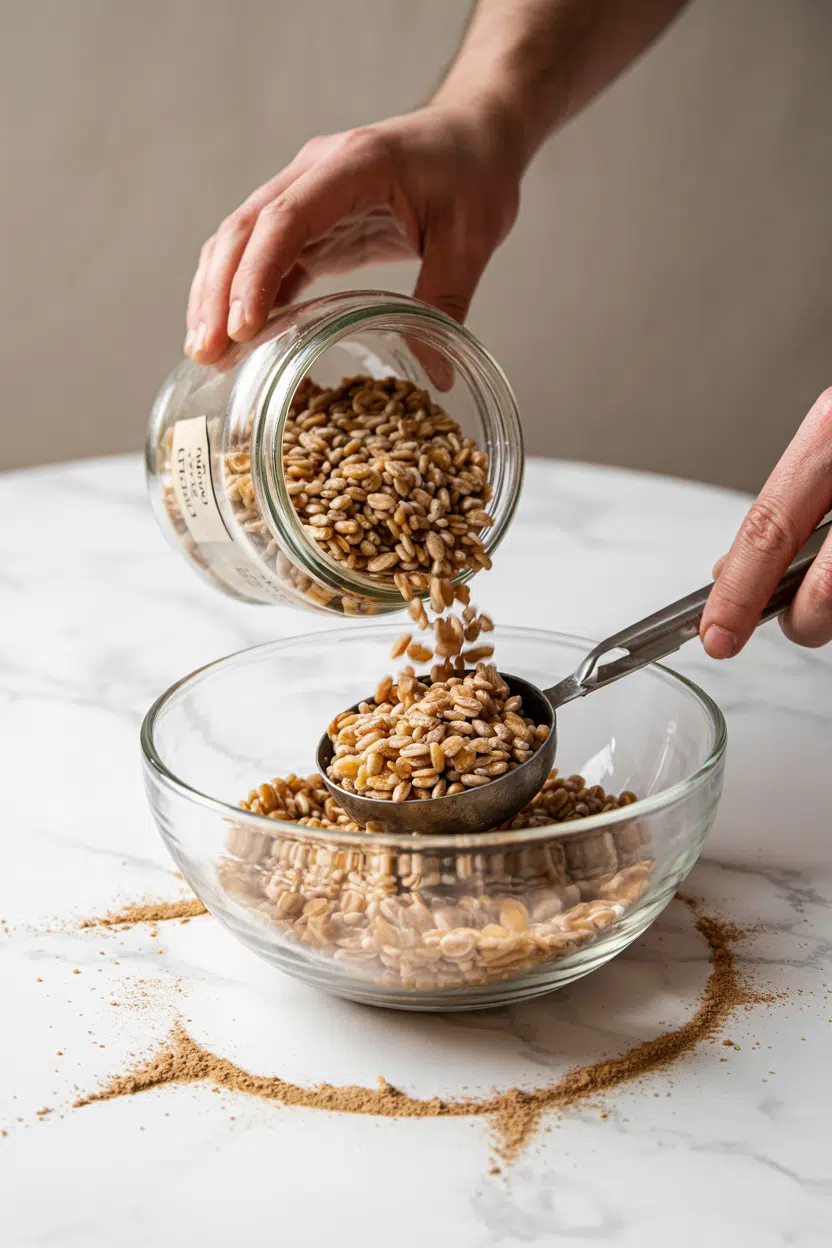
Farro has a genuinely nutty, earthy flavor with a mild sweetness that sets it apart from blander grains. It's often compared to barley but with a more pronounced toasted note - as if someone left the grain in a warm pan just a moment longer.
Heat deepens that character. Toast farro in a dry pan or with olive oil before simmering, and the nuttiness intensifies noticeably.
Left untoasted, it reads subtler - wheaty and clean, with a slight sweetness on the finish.
The chew is the defining feature. Cooked farro stays firm at the center even when fully tender - closer to al dente pasta than fluffy rice.
That bite doesn't disappear in soup or under dressing, which is exactly why it works so well in dishes with bold, acidic flavors.
How to Use farro
Farro's firmness makes it a workhorse across very different dish types. Start by simmering it in salted water or stock until tender, then let the recipe determine where it goes next.
In Italian cooking - particularly Tuscany - farro is stirred into minestrone or slow-braised with mushrooms and stock in a farro risotto-style pilaf. Unlike rice-based risotto, farro won't turn mushy even if you linger at the stove.
It pairs naturally with Parmesan or pecorino, olive oil, sage, and roasted root vegetables.
Cold applications work just as well. Farro can replace bulgur in tabbouleh-style grain salads, holding its structure under lemon dressing where softer grains would go limp.
It also works in breakfast bowls with milk, cinnamon, and fruit - a heartier alternative to oatmeal that stays chewy through the whole bowl.
| Method | Best For | Tip |
|---|---|---|
| 🍳 Simmered | Grain salads, side dishes, bowls | Use stock instead of water for deeper flavor |
| 🥘 Slow-braised | Risotto-style pilaf, mushroom dishes | Add liquid gradually and stir occasionally |
| 🥗 Cold/dressed | Grain salads, tabbouleh-style dishes | Cook ahead and chill; it holds texture well |
| 🍲 Added to soup | Minestrone, vegetable soups | Add cooked farro at the end to avoid over-softening |
| 🫙 Baked | Grain casseroles with cheese and greens | Par-cook before baking to control final texture |
How to Buy and Store farro
Look for whole or semi-pearled farro in sealed bags with hard, uniform kernels ranging from tan to deep brown. Avoid anything that smells musty, looks cracked, or has powdery residue in the bag - these signal age or improper storage.
The label matters: "pearled" means faster cooking but slightly less fiber.
Store dried farro in an airtight container away from heat and sunlight. Opened bags left loosely sealed will absorb moisture and turn stale faster.
For details on how long it lasts under different conditions, see our guide to farro storage guide.
- Pantry (dried) - 6-12 months in a sealed container
- Refrigerator/freezer (dried) - Extends well beyond 12 months
- Refrigerator (cooked) - 3-5 days; reheat with a splash of water or stock
Where to Start with farro
If you've never cooked farro before, a simple grain salad is your entry point. Simmer semi-pearled farro in salted water, drain, toss with olive oil and lemon, and add whatever roasted vegetables you have. That one bowl covers the grain's core flavor and texture without a complicated recipe.
From there, try it in soup - it builds body in minestrone the way barley replacements might, but with farro's distinctive nuttier flavor.
If you want to explore other options before committing to farro, our farro replacements guide covers the closest matches by texture and use.
Frequently Asked Questions
Whole farro has its bran intact, offering more fiber and nutrients but requiring 45-60 minutes of cooking. Pearled farro has the bran removed, cooks in about 20 minutes, and has a slightly softer bite.
Yes. Farro is a wheat grain and contains gluten. It's not safe for anyone with celiac disease or a serious wheat allergy.
Semi-pearled farro cooks in 25-30 minutes; whole farro takes 45-60 minutes, or less if soaked overnight. Pearled farro is done in around 20 minutes.
Yes, in most applications. Farro works as a rice substitute in grain bowls, sides, and soups, though its chew is firmer and its flavor noticeably nuttier. It won't become as soft or neutral as long-grain rice.
Both are nutritious whole grains, but they differ. Quinoa is gluten-free and a complete protein; farro offers more fiber per serving and higher iron content. Which is "healthier" depends on your dietary needs.



