
You spot it on the shelf between the rice and the dried lentils - a bag of barley, tan and unassuming, easy to walk past. Most home cooks reach past it without a second thought, defaulting to wheat berries or rice instead.

That's a missed opportunity. Barley brings a chewy, nutty character to soups, salads, and grain bowls that no other common cereal grain quite replicates.
Barley is a cereal grain with a nutty, mildly sweet flavor and satisfying chew. Hulled barley keeps the bran intact; pearled barley cooks faster but loses some fiber. Both suit soups, grain salads, and porridge. Dry barley stores well for up to a year.
What Is Barley?
Barley (Hordeum vulgare) is one of the oldest domesticated grains on earth, first cultivated in the Fertile Crescent of Southwest Asia roughly 10,000 years ago. It belongs to the cereal grain family alongside wheat, rye, and oats.
Remember it later
Planning to try this recipe soon? Save it for a quick find later!
Three forms appear in kitchens and breweries. Hulled barley has only the inedible outer hull removed, keeping the bran and germ fully intact -
this is the whole-grain form. Pearled barley goes through an additional polishing step that strips away some or all of the bran, producing a paler, smoother grain that cooks significantly faster. Malted barley has been germinated and kiln-dried to activate enzymes, making it the backbone of beer and whisky production.
The pearling process matters nutritionally. Hulled barley retains its beta-glucan soluble fiber, manganese, magnesium, and B vitamins; pearled barley loses a portion of these during polishing.
Barley also appears under the names pot barley (lightly pearled) and barley grits (cracked). On ingredient labels, look for Hordeum vulgare when checking packaged foods for hidden barley.
What Does Barley Taste Like?
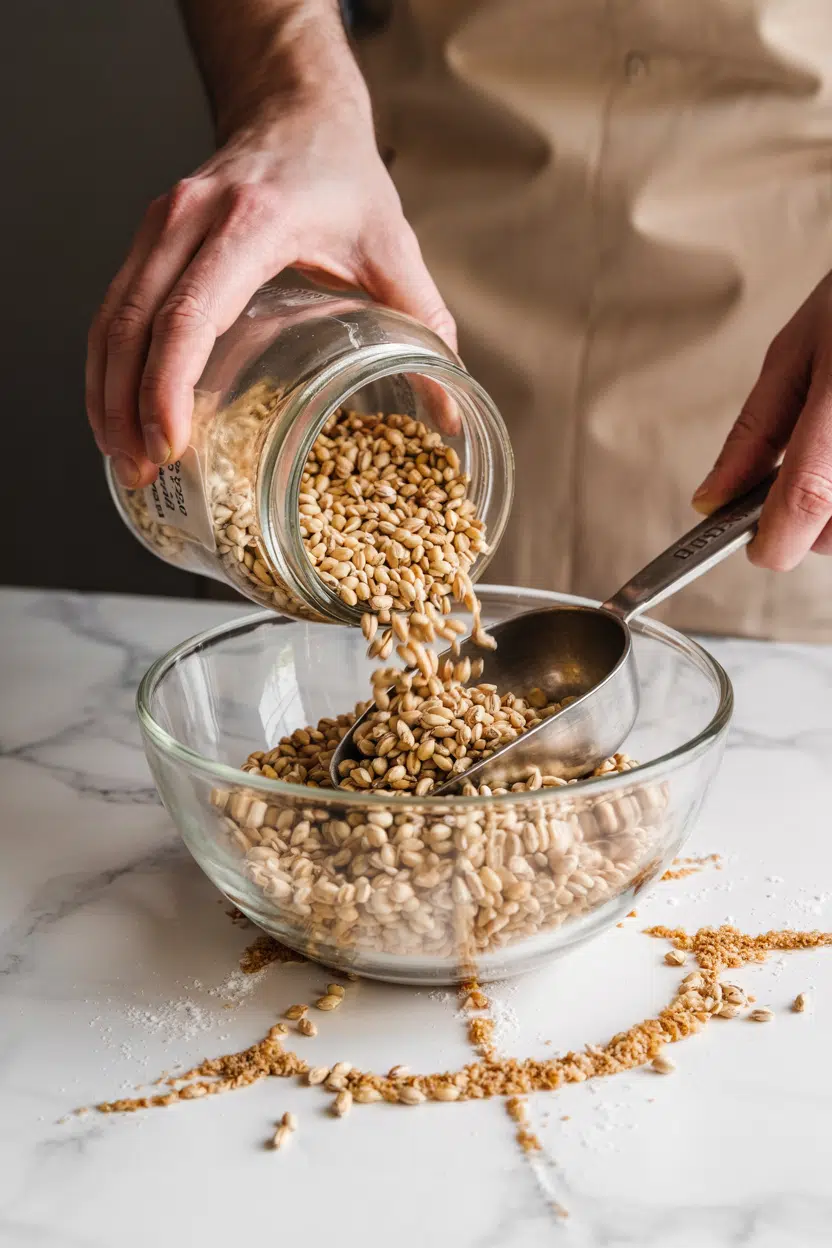
Barley has a mild, nutty sweetness with a faint toasty quality - closer to warm grain than sharp earthiness. Raw, it smells of toasted wheat with a subtle malt undertone.
Compared to similar grains, barley sits in familiar territory. It tastes close to farro or wheat berries, but less earthy than buckwheat and noticeably sweeter than plain brown rice.
Heat amplifies the toasty note, especially when you toast dry grains in a dry pan before simmering. Long cooking in broth softens the chew without making barley mushy - the grain holds its shape better than many alternatives.
How to Use Barley
Barley earns its keep in long-cooked dishes, but it handles more than just soup. Toasting the dry grain in a pan for two to three minutes before adding liquid deepens the nutty flavor considerably - worth the extra step.
| Method | Best For | Tip |
|---|---|---|
| 🍲 Simmering | Soups, stews, orzotto | Use a 1:3 grain-to-liquid ratio; hulled needs 60-90 min, pearled 25-40 min |
| 🥗 Cold/Room Temp | Grain salads, grain bowls | Cook ahead and cool completely; dress with lemon and olive oil while still warm |
| 🍚 Pilaf | Side dish replacing rice | Toast in butter first, then add hot stock - treat it like rice pilaf |
| 🌅 Porridge | Breakfast, warm bowls | Pearled barley works best here; simmer in milk for a creamy result |
| ⚗️ Malting | Beer, whisky, barley malt syrup | Home brewers: use crushed malted barley within 6 months of purchase |
In British and Irish cooking, barley is a standard addition to beef and root vegetable soups, where it adds body and chew. Scandinavian cooks use it in porridge and rustic breads.
Middle Eastern pilafs substitute barley for rice, pairing it with saffron, herbs, and lamb. East Asian kitchens brew roasted barley into mugicha, a tea common in Japan and Korea.
Strong pairings include mushrooms with thyme, lemon with parsley and feta, and butter with aged cheddar. Barley's mild sweetness also complements malt syrup or honey as a porridge topping.
Avoid pairing barley with very high-acid sauces - sharp vinegar or citrus in large amounts overwhelms its subtle grain flavor.
How to Buy and Store Barley
Look for hulled barley when nutrition is the priority - intact, uniform tan-to-golden grains with no musty smell. Pearled barley should be pale and smooth; reject any bag with insect debris, clumping, or a stale odor.
- Hulled barley - Denser, nuttier, higher fiber; takes longer to cook but holds up in slow braises.
- Pearled barley - Faster cooking, softer texture, slightly lower fiber; best for weeknight soups and porridge.
- Malted barley - Sold at homebrew shops; keep it separate from cooking barley to avoid contaminating other grains with fermentable enzymes.
Store dry barley in an airtight container in a cool, dark pantry. Uncooked barley lasts 6-12 months at room temperature, and longer if refrigerated or frozen.
For a full breakdown of shelf life across forms and storage conditions, see our guide to barley freshness guide.
Start With Pearled, Then Go Further
New to barley? Pearled barley is the easiest entry point - it cooks in under 40 minutes and works in almost any soup or grain salad without adjustment.
Once you're comfortable, move to hulled barley for higher fiber and more chew. From there, orzotto (barley risotto) is the best showcase dish - it highlights exactly what this grain does that rice and pasta cannot.
If you need a swap in a recipe, our roundup of barley replacements covers the closest options by use case.
Frequently Asked Questions
Hulled barley is a whole grain - only the inedible outer hull is removed, leaving bran and germ intact. Pearled barley is not technically a whole grain because the pearling process removes some or all of the bran layer.
Pearled barley simmers in 25-40 minutes. Hulled barley needs 60-90 minutes on the stovetop, or about 25-30 minutes in a pressure cooker.
No. Barley contains gluten and is unsafe for people with celiac disease or non-celiac gluten sensitivity. It also frequently appears in processed foods as malt flavoring, which is another gluten source to watch for on labels.
Hulled barley retains its bran and cooks slower with a chewier result. Pearled barley has the bran polished away, making it faster to cook, softer in texture, and lower in fiber and micronutrients.
Yes, with adjustments. Barley needs more liquid and longer cooking time than white rice. It also delivers more chew, so it works best in pilafs, soups, and grain bowls rather than dishes where soft, fluffy grains are expected.



