
Bite into a slice of hearts of palm and the first thing you notice is how clean it tastes - mild, faintly sweet, with a tender bite that gives way to something almost creamy. It sits in the same flavor territory as artichoke hearts and white asparagus, though softer and less bitter than either.

That restraint is exactly what makes it useful - it absorbs surrounding flavors without disappearing into them.
Hearts of palm is the tender inner core of certain palm trees - ivory-colored, mildly sweet, and slightly fibrous. Sold mostly canned or jarred, it works raw in salads, pureed into dips, or lightly sautéed in grain bowls and pasta.
What Is hearts of palm?
Hearts of palm is the edible inner core harvested from the growing tip of certain palm trees. It arrives at your kitchen as an ivory, cylindrical shoot - smooth on the outside, faintly layered within, with a structure that resembles a thick white asparagus spear.
Remember it later
Planning to try this recipe soon? Save it for a quick find later!
Also called palmito, palm heart, or palmito pupunha when sourced from the peach-palm variety, it has deep roots in Brazilian and Latin American cooking.
Two main sources matter. Wild palm species - including açaí - were historically the primary supply, though overharvesting pushed many into endangered status.
The peach-palm (pupunha), now widely cultivated in Brazil and Costa Rica, has largely replaced wild-harvested varieties and is a more sustainable choice.
Most people encounter hearts of palm canned or jarred in brine. Fresh or vacuum-packed pupunha exists in specialty markets and Latin grocery stores, offering a firmer texture and less of the briny mineral character that comes with prolonged preservation.
- Canned/jarred - Most common; mild brine flavor, softer texture, widely available
- Fresh or vacuum-packed - Firmer, cleaner flavor; found in specialty and Latin markets
- Pupunha variety - Cultivated peach-palm; the sustainable standard in modern supply chains
What Does hearts of palm Taste Like?
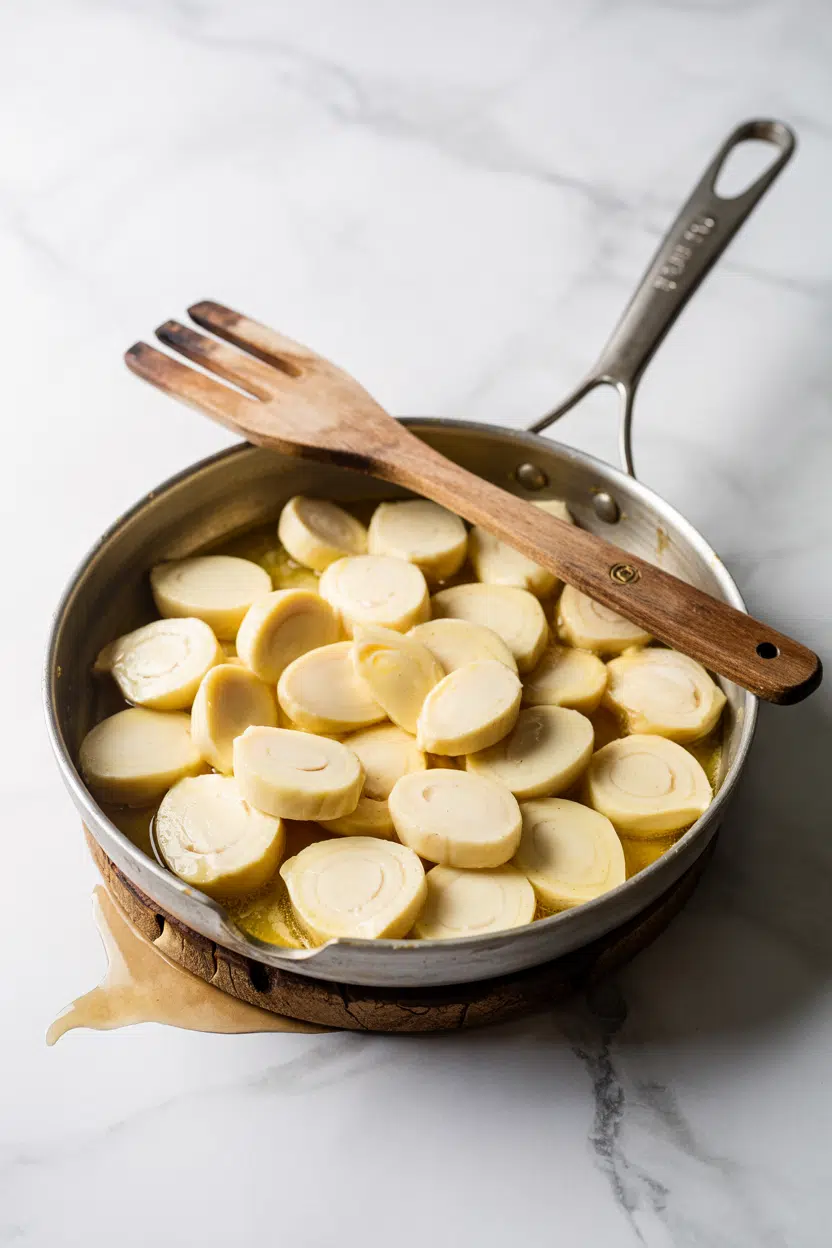
The flavor is genuinely mild - mildly sweet with a clean, slightly vegetal edge and a faint mineral or briny note from the canning liquid.
Think of it as sitting between artichoke hearts and white asparagus, but with less bitterness and a more delicate sweetness than either.
Heat shifts the profile slightly. A brief sauté or braise mellows what little mineral edge remains, nudging it toward something more neutral and absorbent.
Heavy, long cooking - anything past a gentle simmer - will make the texture mushy without adding any flavor benefit.
Fresh hearts of palm skips the brine character entirely. The sweetness reads cleaner, the fibrous structure holds firmer, and the overall impression is closer to a very mild, cooked artichoke bottom.
How to Use hearts of palm
Raw preparation is the simplest entry point, and it works well. Slice the cylinders into rounds or half-moons and toss with citrus, avocado, and olive oil for a quick starter. The same thin-sliced rounds fold naturally into a Niçoise-style salad alongside tuna and olives.
For cooked applications, keep heat brief and gentle. Halved spears hold up well on a grill for two to three minutes per side - they develop light char without losing structural integrity.
Light braising or sautéing with garlic and lemon works in grain bowls and creamy pasta dishes.
The shredded or pulled texture is where hearts of palm earns real attention in plant-based cooking. When pulled apart along its natural fibers, it mimics flaked crab convincingly, making it a go-to base for vegan crab cakes and ceviche-style dishes.
| Method | Best For | Tip |
|---|---|---|
| 🥗 Raw | Salads, starters, ceviche-style dishes | Slice thin; rinse brine first |
| 🍳 Sautéed/Braised | Grain bowls, pasta, antipasto | Keep heat moderate; 3-5 minutes max |
| 🔥 Grilled | Halved spears as a side or topping | Oil well; grill 2-3 min per side only |
| 🌀 Pureed/Shredded | Dips, vegan crab cakes, spreads | Pull fibers apart by hand for best texture |
It pairs cleanly with citrus (lemon and lime both work), avocado, capers, fresh herbs like parsley and dill, and mild tangy cheeses such as feta or goat cheese.
Avoid heavy, assertive spice blends - they overpower what makes hearts of palm worth using in the first place.
How to Buy and Store hearts of palm
Look for pale, firm cylinders in sealed cans or jars filled with clear liquid. Any cloudiness, off-odor, or brown-edged pieces signals quality loss - skip it.
Where the label specifies pupunha or notes sustainable sourcing, that's the better choice both ecologically and for texture.
Storage is straightforward once you know the one rule: keep opened pieces submerged. Transfer any unused hearts of palm to a sealed container, cover with fresh water or light brine, and refrigerate.
Opened jars or cans last 5-7 days this way. For full hearts of palm storage life details, including fresh pupunha timelines, that guide covers every format.
Unopened cans store in a cool, dry pantry for months to years. Fresh or vacuum-packed pupunha needs refrigeration and should be used within 3-5 days.
Where to Start
If you've bought a jar and aren't sure what to do with it, start raw. Rinse, slice into rounds, and toss with lemon juice, olive oil, and whatever herbs are in your fridge.
That single preparation shows you what the ingredient actually tastes like before you build anything more involved around it.
Once that clicks, pull some apart by hand and try it in place of crab in a simple patty or ceviche. An avocado lime crema alongside either preparation works well.
If you need to swap it out entirely, the hearts of palm replacements guide walks through the closest alternatives by texture and use case.
Frequently Asked Questions
Yes. Canned and fresh hearts of palm are both safe to eat straight from the container. Rinsing canned versions first removes excess brine and improves the flavor noticeably.
Five to seven days, kept submerged in fresh water or light brine in a sealed container. Don't leave them in the opened can - transfer immediately to extend shelf life.
They're low in calories and fat, with useful fiber and small amounts of potassium and vitamin C in fresh forms. The main caveat is sodium - canned varieties can run high, so rinsing helps.
Artichoke hearts are the closest match in flavor and texture for most cooked dishes. White asparagus works in salads where the mild, tender profile is what you need.
Close, but not identical. Fresh pupunha is firmer and has a cleaner sweetness with no brine character. Canned is perfectly usable for most recipes - just rinse well before serving.



