Pulling a slow-cooked pork shoulder apart with two forks - the meat collapsing into ribbons, fat glistening, steam rising - is one of the most unmistakable sensory moments in cooking.

The smell hits before the plate does, a dense, meaty warmth that signals hours of low heat doing exactly what it should.
Understanding the differences between bbq vs smoking matters here, because how you apply heat shapes how that aroma and texture develop.
Whether you reach for a Dutch oven or a smoker, knowing your way around cooking braising pan vs dutch oven right makes a real difference with a cut this forgiving yet uncompromising.
Pork shoulder is a heavily marbled, collagen-rich cut from the upper foreleg that becomes tender and shreddable after long, slow cooking. Its rich, porky flavor suits smoked barbecue, braised stews, and carnitas equally well.
What Is Pork Shoulder?
Pork shoulder comes from the upper foreleg and shoulder area of the hog - a section that works hard, building dense muscle threaded with fat and collagen. That connective tissue is exactly why this cut rewards patience.
Remember it later
Planning to try this recipe soon? Save it for a quick find later!
Two distinct sub-cuts fall under the umbrella name. Boston butt (confusingly, from the upper shoulder, not the rear) is typically square, well-marbled, and sold bone-in or boneless. Picnic shoulder sits just below it, is more triangular, and often comes with the skin on.
The cut is also called shoulder roast or simply pork butt depending on the region.
Across European traditions it appears in rustic braises and roasts; in North America it anchors pulled pork culture; and worldwide it shows up in preparations from Filipino adobo to Chinese red-cooked pork.
- 🐖 Boston butt - square roast, upper shoulder, ideal for pulling and smoking
- 🐖 Picnic shoulder - lower, skin-on option, better for slow roasting whole
- 🐖 Bone-in vs boneless - bone-in retains more moisture during long cooks; boneless is easier to portion
What Does Pork Shoulder Taste Like?
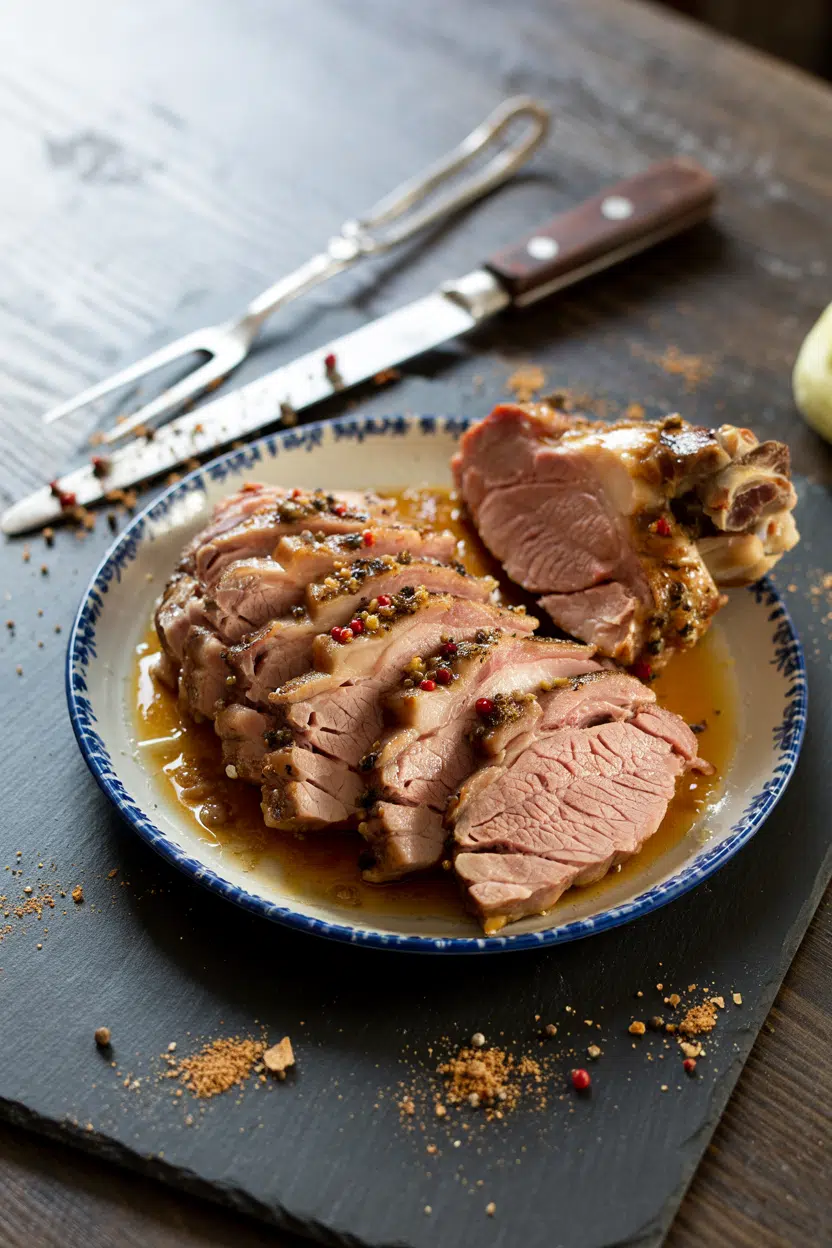
Raw pork shoulder smells meaty and fatty, and that directness doesn't disappear with cooking - it deepens.
The final flavor is a rich, porky umami layered with a quiet sweetness that comes from the rendered fat cap melting into the meat.
Understanding the taste of pork broadly helps here, because shoulder sits at the richer end of the spectrum compared to loin or tenderloin.
Think of it next to lamb shoulder: comparable richness, but milder and without the lanolin edge.
Against beef chuck, pork shoulder is noticeably sweeter and less iron-forward. Smoke adds a cured-meat depth that the raw cut doesn't have - a whole different register.
How to Use Pork Shoulder
Pork shoulder's collagen-to-gelatin conversion is the key mechanism behind every great preparation. Below a certain internal temperature - around 195-205°F - that collagen stays tough.
Push through it, and the meat becomes something you can pull apart with almost no effort.
American barbecue relies on low-and-slow smoking, typically a Boston butt held at 225-250°F for 10-16 hours.
Mexican carnitas braises the shoulder in its own fat with citrus and spice, while cochinita pibil wraps it in achiote and slow-cooks it in banana leaves.
Chinese red-cooked pork adds soy, rice wine, and sugar for a lacquered, braised result.
Filipino adobo simmers it in vinegar and garlic until the meat is fork-tender.
It pairs well with vinegar-based sauces, apple or pear (fruit acidity cuts the fat cleanly), garlic, onion, smoky paprika, chipotle, mustard, and pickled vegetables. Avoid pairing it with delicate herbal salads or light white sauces - the fat overwhelms both.
For cooking pork shoulder right, matching the cooking method to the dish makes the difference between average and excellent results.
| Method | Best For | Tip |
|---|---|---|
| 🔥 Smoking | Pulled pork, BBQ sandwiches | Wrap in foil after 165°F internal to push through the stall faster |
| 🍲 Braising | Ragu, adobo, red-cooked pork, stews | Brown the fat cap first; liquid should come only halfway up the meat |
| 🫕 Slow Roasting | Crispy-skin picnic shoulder, European roasts | Score the fat cap deeply and start at high heat to render, then drop temperature |
| ⚡ Pressure Cooking | Quick shredded pork for tacos or bowls | Add at least one cup of liquid; release pressure naturally for juicier results |
How to Buy and Store Pork Shoulder
Look for shoulders with even, white marbling running through the meat and a fat cap that's firm and cream-colored. Pale, dry-looking meat or any greenish tint means skip it.
Boston butt gives you a compact, square roast; picnic shoulder is more triangular and sometimes skin-on - both are correct choices depending on the recipe.
Store raw shoulder at the back of the fridge, in original packaging or a resealable bag, away from ready-to-eat foods.
For anything beyond four days, freeze it tightly wrapped with minimal air exposure - proper handling for keeping pork shoulder fresh is especially important with a cut this large.
- Refrigerated raw - 2-4 days; keep at 40°F or below
- Frozen whole - 6-12 months; double-wrap to prevent freezer burn
- Cooked shoulder - 3-4 days in the fridge; note that [how long carnitas keeps](https://forkliftkitchen.com/carnitas-shelf-life/) depends on how it was finished and stored
Where to Start With Pork Shoulder
If you've never cooked a pork shoulder, the slow cooker is the most forgiving entry point. Season generously, add a splash of liquid, and let time handle the rest.
Once you're comfortable with texture and timing, move to smoking or oven-braising for more layered results.
A bbq pulled pork sliders recipe is a practical next step - it teaches portioning, sauce balance, and how the fat interacts with an acidic condiment.
Frequently Asked Questions
Not exactly. Both come from the shoulder area, but Boston butt is the upper portion - square, well-marbled, and ideal for pulling. Picnic shoulder is the lower section, more triangular, and often sold skin-on.
At 225-250°F on a smoker, plan roughly 1.5-2 hours per pound. A 7-pound Boston butt typically runs 10-14 hours. A pressure cooker cuts that to around 90 minutes for a shredable result.
Rest the meat for at least 20-30 minutes after cooking, then use two forks or your hands (with heat-proof gloves). Meat that won't shred easily hasn't reached sufficient internal temperature - return it to heat rather than forcing it.
Yes, but only for a specific result. High heat at the start renders and crisps the fat cap. Sustained high heat, however, tightens the collagen before it can convert - you end up with chewy rather than tender meat.
Significantly more. Pork shoulder's heavy marbling and fat cap make it one of the fattier primal cuts, while loin is lean by comparison. That fat is precisely why shoulder stays moist through long cooking where loin would dry out.