Heavy whipping cream does one thing no other dairy product can replicate at scale: it holds structure.
Pour it cold and it coats a spoon like silk.
Whip it and it climbs to firm, stable peaks.
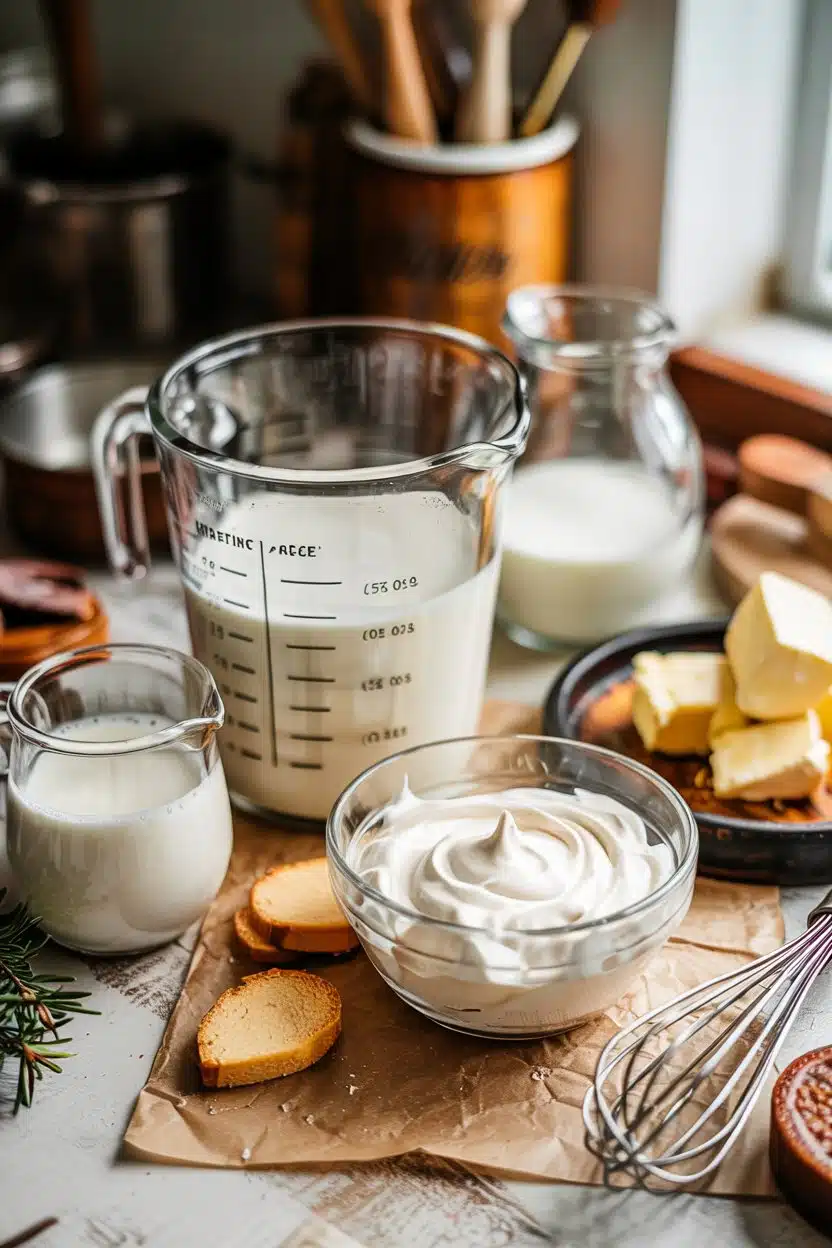
Stir it into a hot pan sauce and it tightens into a glossy, spoonable reduction without breaking.
That range - from liquid enricher to airy topper - is why it shows up in everything from beef stroganoff to chocolate ganache.
Heavy whipping cream is a high-fat liquid dairy with at least 36% milk fat. It has a mild, buttery sweetness and whips into stable peaks. Use it to enrich sauces, build custards, top desserts, or finish ganache. Opened, it lasts 5-7 days refrigerated.
What Is Heavy Whipping Cream?
Heavy whipping cream is the fat-rich layer that rises to the top of whole cow's milk before homogenization separates the two.
Remember it later
Planning to try this recipe soon? Save it for a quick find later!
In the US, it must contain at least 36% milk fat by law - enough fat to whip and hold stable peaks without additives.
You'll also see it labeled simply as heavy cream; both terms describe the same product.
Double cream, the British equivalent, runs slightly higher at around 48% fat, making it even richer and harder to overwhip.
It belongs to a broader category of liquid dairy that includes light cream, half-and-half, and whipping cream - though none of those match heavy cream's fat content or structural stability.
When ganache recipes call for heavy cream and you're out, the options for alternatives to heavy cream in ganache are narrower than most people expect.
Similarly, layered desserts that lean on swapping out mascarpone often still require heavy cream as the base.
Flavor
Texture
Aroma
Moderate
What Does Heavy Whipping Cream Taste Like?
Think of whole milk, then dial up the richness until the sweetness becomes rounder and the finish lingers.
That's roughly where heavy whipping cream lands - not sweet in the way sugar is sweet, but with a natural dairy sweetness that reads as indulgent rather than sharp.
Raw, it tastes closest to clotted cream in mouthfeel, though less thick. Heat changes it.
Reduced in a pan sauce, the sweetness fades and a deeper, almost savory dairy note takes over. Folded cold into a mousse, it stays light and neutral, letting other flavors - chocolate, citrus, vanilla - carry the front of the palate.
Its flavor is deliberately supportive. It doesn't compete.
That's what makes it so widely used as a base rather than a star.
How to Use Heavy Whipping Cream
Heavy whipping cream works across a wide range of techniques. The fat content is the reason: it withstands heat without instantly splitting, aerates when cold, and emulsifies fats when stirred into sauces. Temperature matters. Cold cream whips; warm cream reduces.

| Method | Best For | Tip |
|---|---|---|
| 🥗 Cold/Whipped | Toppings, mousses, stabilized layered desserts | Chill bowl and beaters before whipping for faster, firmer peaks |
| 🍳 Simmered/Reduced | Pan sauces, gravies, stroganoff, cream-based pastas | Reduce over medium heat - vigorous boiling can cause separation |
| 🧁 Baked | Quiche custard, tarts, savory clafoutis | Temper with eggs slowly to avoid scrambling at oven temperature |
| 🍫 Ganache | Chocolate ganache, truffles, tart glazes | Heat cream to just below a simmer; pour over chopped chocolate, don't stir immediately |
| ☕ Stirred In | Coffee, mashed potatoes, ice cream base | Add off the heat for potatoes to prevent graininess |
🇮🇹 Italian
🇬🇧 British
🇺🇸 American
butter
dark chocolate
citrus zest
aged cheeses
mushrooms
roasted meats
How to Buy and Store Heavy Whipping Cream
At the store, look for cartons labeled 36% milk fat or higher and check the sell-by date - fresher is always better for whipping stability.
A carton with any bloating or a sour smell at opening should go straight in the bin.
For cream spoilage signs that aren't always obvious, a slightly off smell is the most reliable indicator even before visible changes.
Keep it sealed and below 40°F. Unopened cartons last about 2-3 weeks from pack date.
Once opened, use within 5-7 days for reliable whipping. For everything you need to know about storing heavy whipping cream correctly, that window tightens if the carton has been left out even briefly.
When to Reach for It
Heavy whipping cream earns its place when you need fat to do structural work.
Start here if a sauce needs body without a roux.
Reach for it when a dessert calls for aerated lightness that holds overnight.
If your recipe is leaning on using butter for creaminess but needs a pourable consistency too, cream closes that gap.
It's the ingredient that sits between liquid and solid - and that's exactly the point.
Frequently Asked Questions
Heavy cream contains at least 36% milk fat; whipping cream sits lower, typically between 30-35%. That gap matters in practice - heavy cream whips to firmer, more stable peaks and holds longer without deflating. For cooked sauces the difference is minor, but for desserts that need to hold shape for hours, heavy cream is the more reliable choice.
Yes - a balloon whisk and a cold bowl work fine, though it takes 4-6 minutes of steady whisking compared to under 2 minutes with an electric mixer. Chill both the bowl and the cream beforehand to speed the process. Stop when you see defined trails in the cream; it's easy to over-whip by hand because you're monitoring constantly anyway.
They're close but not identical. Double cream is the British equivalent and runs around 48% milk fat versus heavy cream's 36% minimum. Double cream whips faster, holds stiffer peaks, and is harder to overwhip into butter - but it's richer than most American recipes expect. In most baking and sauce applications they're interchangeable; in delicate custards, the higher fat content of double cream can noticeably change the set. If you need [double cream swaps that work](https://forkliftkitchen.com/double-cream-substitutes/), the options depend on the recipe type.
You can freeze it, but expect a textural trade-off. Freezing separates some of the fat, so thawed cream may not whip to stable peaks as reliably. It works fine for cooked applications - sauces, soups, custards - where the emulsion re-forms with heat and stirring. Freeze in small portions and thaw overnight in the fridge for best results.
Curdling usually happens from one of three causes: adding cold cream directly to a very hot pan, boiling the sauce aggressively for too long, or introducing a high-acid ingredient like lemon juice without tempering. To prevent it, warm the cream slightly before adding, keep the heat at a steady simmer rather than a rolling boil, and add acidic ingredients off the heat or after the cream has fully reduced and stabilized.