You measured out kelp noodles for your cold sesame bowl, and the package is empty. The recipe depends on that firm, crunchy bite and neutral base that holds dressing without falling apart.
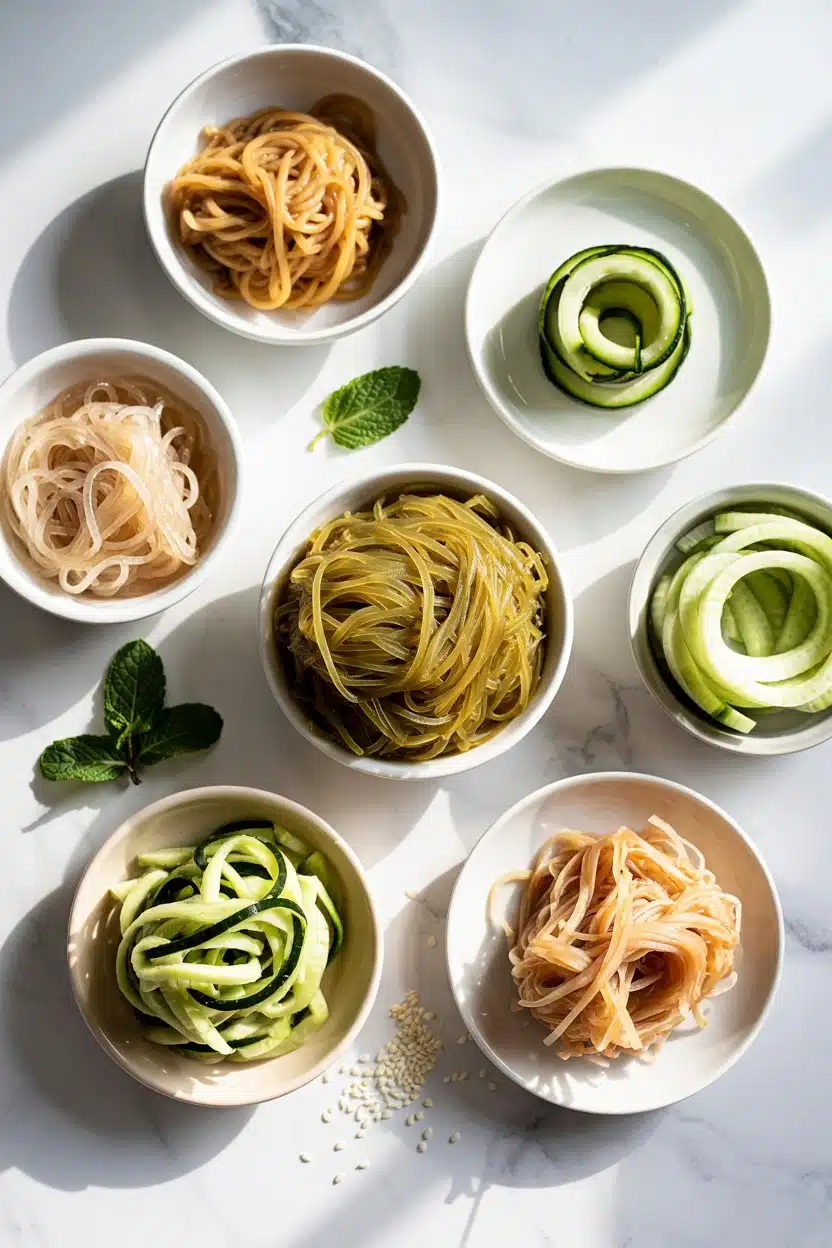
Kelp noodles act as a gluten-free, low-carb noodle with a snappy texture and mild seaweed flavor. The best swap depends on whether you need crunch, neutral flavor, or just a noodle shape.
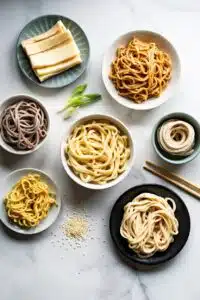
Shirataki noodles and glass noodles work best for low-carb noodle dishes, though shirataki is softer and glass noodles lack crunch. For cold salads needing texture, julienned cucumber delivers crunch without heat. Most swaps lose the seaweed saltiness, so taste and adjust seasoning.
5 Kelp Noodle Substitutes Without Big Changes
Kelp noodles bring a unique combination of texture and mild ocean flavor to raw and lightly cooked dishes. Some swaps maintain the noodle form, while others focus on matching the crunch.
Remember it later
Planning to try this recipe soon? Save it for a quick find later!
| # | Substitute | Best For | Ratio | Key Note |
|---|---|---|---|---|
| 1 | Shirataki Noodles | 🍳 Cooking | 1:1 | softer when cooked longer |
| 2 | Glass Noodles | 🍳 Cooking | 1:1 | slippery texture, needs cooking |
| 3 | Julienned Cucumber | 🍳 Cooking | 1:1 | cold dishes only |
| 4 | Zucchini Noodles | 🍳 Cooking | 1:1 | releases water, pat dry |
| 5 | Enoki Mushrooms | 🍳 Cooking | equal volume | earthy flavor, thin strands |
1 - Shirataki
Shirataki noodles are made from konjac yam and offer a similar translucent, chewy texture. They work in low-carb Asian noodle salads where you need a gluten-free base with neutral flavor.
Use 1:1 volume for kelp noodles. Rinse shirataki under cold water before using to remove the natural smell, then toss with dressing or stir-fry briefly.
- Texture stays firm when served cold or quickly heated
- Flavor is milder than kelp noodles, lacking seaweed saltiness
- Best for salads and light stir-fries, not raw applications
Shirataki Noodles
Works for: low-carb noodle bowls and salads needing chew
Skip if: you need the briny seaweed taste or raw crunch
Kelp Noodles
Works for: raw salads and cold dishes with snappy texture
Skip if: you want soft, slippery noodles or no ocean flavor
Skip if: you're serving the dish completely raw-shirataki softens more than kelp noodles.
2 - Glass Noodles
Glass noodles are made from mung bean starch and turn clear when cooked. They replace kelp noodles as a gluten-free base in warm noodle stir-fries or soups.
Use 1:1 volume for kelp noodles. Soak glass noodles in hot water for 5-8 minutes until soft, then drain and add to your dish.
What to expect:
- Softer texture than kelp noodles, more slippery than crunchy
- Very neutral flavor with slight chewiness when cooked
- Best for warm dishes where texture blends with sauce
- Not a match for raw salads needing firm bite
Skip if: you want firm crunch or are making a cold, raw dish.
3 - Cucumber
Julienned cucumber mimics the crisp, hydrating texture that kelp noodles provide in cold dishes. It works in cold raw salads and fresh bowls where crunch matters more than noodle form.
Use 1:1 volume for kelp noodles. Slice cucumber into thin matchsticks with a julienne peeler or mandoline, then toss with dressing just before serving.
Key details:
- Fresh, watery texture with lightly sweet flavor
- Adds more water content-drain excess liquid before mixing
If you're out of cucumber too, quick substitutes for cucumber has crisp alternatives for cold salads.
Skip if: you're cooking the dish or need a traditional noodle shape.
4 - Zucchini Noodles
Zucchini noodles offer a fresh, low-carb noodle option for light warm or cold noodle dishes. They replace kelp noodles as a gluten-free base though they are softer and without ocean flavor.
Use 1:1 volume for kelp noodles. Spiralize zucchini into noodles, then either serve raw or sauté briefly for 2-3 minutes to warm through.
- Mild, slightly vegetal flavor that pairs with most dressings
- Releases water when salted or cooked-pat dry before mixing
Missing zucchini as well? Zucchini noodle replacements covers veggie swaps for low-carb dishes.
Skip if: you need firm crunch or a noodle that holds shape when dressed.
5 - Enoki Mushrooms
Enoki mushrooms have thin, stringy strands that provide a similar texture to kelp noodles in salads or bowls. They work in warm noodle and salad bowls where you want a delicate, mild bite.
Use equal volume as kelp noodles. Trim the base cluster, then separate the strands and toss into your dish raw or cook briefly in broth or stir-fry.
The essentials:
- Delicate, slightly nutty, earthy flavor
- Different heat behavior-wilts quickly when cooked
- Best for warm noodle bowls, not raw cold salads
| Use | Ratio | Notes |
|---|---|---|
| Raw salads | Equal volume | Separate strands, toss at end |
| Stir-fries | Equal volume | Add last minute to avoid wilting |
| Broth bowls | Equal volume | Drop in just before serving |
Out of enoki as well? Enoki mushroom swaps has thin-strand alternatives for noodle bowls.
Skip if: you want exact noodle shape or need the seaweed taste of kelp.
Before You Swap Kelp Noodles
Test with a small batch if you're unsure. Most swaps need minor tweaks to match the texture or flavor you expect from kelp noodles.
The closest match matters:
- Closest match - Shirataki noodles for translucent chew
- Easiest grab - Julienned cucumber for cold crunch
- Vegan option - Glass noodles for gluten-free base
Frequently Asked Questions
Yes, but rinse them first. Shirataki noodles work in raw salads after rinsing under cold water to remove the natural smell, then toss with dressing just before serving.
Glass noodles work in cold dishes after soaking and cooling, but they're softer and slippery, not crunchy like kelp noodles. They suit cold noodle salads where texture blends with sauce.
Salt zucchini noodles and let them sit for 10 minutes, then squeeze out excess water with paper towels. This prevents soggy salads and keeps the noodles firm.
Shirataki and glass noodles work in stir-fries. Rinse shirataki first and sauté briefly, or soak glass noodles until soft, then stir-fry for 1-2 minutes to heat through.
No substitute matches the briny seaweed flavor. Add soy sauce, tamari, or a pinch of salt to mimic the oceanic taste kelp noobles bring to dishes.
5 Best Substitutes for Kelp Noodles
Ingredients
Method
- Choose a substitute based on dish type: shirataki or glass noodles for cooking; julienned cucumber for cold crunch; zucchini or enoki for texture variations.
- Prepare shirataki noodles by rinsing under cold water to remove odor; use 1:1 volume ratio; toss with dressing or briefly stir-fry if warm.
- Soak glass noodles in hot water for 5-8 minutes until tender; drain and rinse cold to stop cooking; use 1:1 volume ratio.
- Julienne cucumber into thin strips; drain excess water before mixing; use 1:1 volume ratio; suitable for cold dishes only.
- Spiralize zucchini into noodles; salt and let sit 10 minutes then pat dry; use 1:1 volume ratio; can be served raw or lightly sautéed.
- Trim and separate enoki mushrooms; toss equal volume into dishes raw or cook briefly to avoid wilting; use 1:1 volume ratio.
- Adjust seasoning with soy sauce or salt to compensate for lack of seaweed flavor in substitutes.
- Test a small batch first to ensure the texture and flavor meet your dish needs before scaling up.