Sliced thin and scattered over a bowl of ramen, radishes add a sharp, cooling contrast that no other root vegetable quite replicates.

That peppery snap - the same quality that makes cooks reach for alternatives to horseradish - comes from a distinct chemical reaction inside the bulb itself. Understanding that helps you use radish far more intentionally.
Radish is a crisp, peppery root vegetable with a sharp bite when raw and a mellow, sweet character when cooked. Small red salad types and long white daikon are the most common forms. Use raw, pickled, roasted, or braised.
What Is Radish?
Radish belongs to the Brassicaceae family, the same group that gives us mustard, cabbage, and horseradish. Originally cultivated across Central Asia and later developed extensively in Europe and East Asia, it's one of the oldest root vegetables in recorded agriculture.
Remember it later
Planning to try this recipe soon? Save it for a quick find later!
The part we eat is the swollen hypocotyl - a thickened section just below the soil line, not a true root. Shape and size vary widely across varieties.
- 🔴 Red salad radish - small, round, and sharp; the classic grocery store type
- ⬜ Daikon - long white Japanese radish, milder and denser; works well as a [swapping out jicama](https://forkliftkitchen.com/jicama-substitutes/) candidate in raw preparations requiring crunch
- 🌸 Watermelon radish - green outside, vivid pink inside; milder bite, striking on a plate
- 🥕 French breakfast radish - elongated, pale-tipped, with a gentler heat than round types
The peppery bite in all varieties comes from isothiocyanates, compounds released when the cell walls break during cutting or chewing. Daikon produces fewer of these than small salad types, which is why it reads as noticeably milder.
What Does Radish Taste Like?
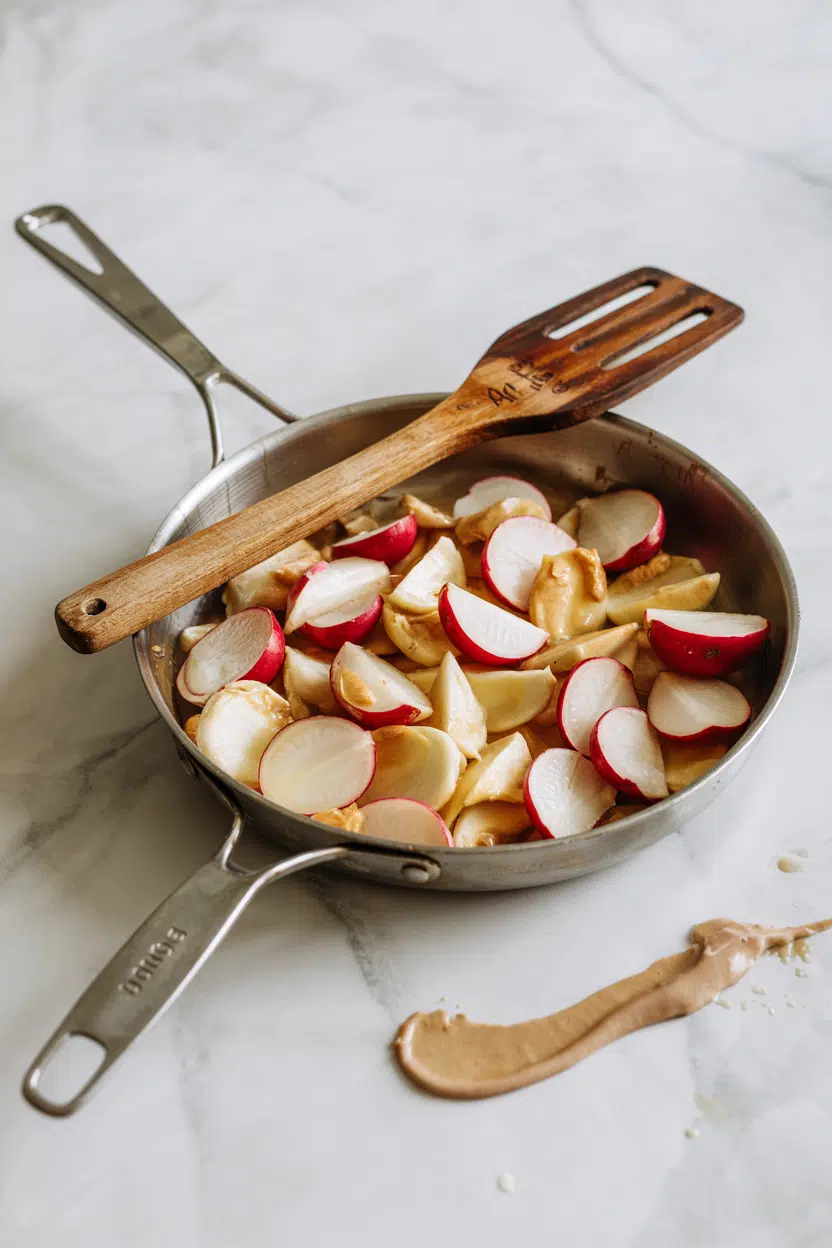
Raw radish delivers a sharp, mustard-like bite up front, followed by a faint sweetness that lingers. The heat resembles mild horseradish, though lighter and more watery - somewhere between that and a crisp cucumber.
Heat is the main variable. Roasting or braising breaks down the isothiocyanates responsible for that sharp kick, leaving a sweeter, slightly nutty character instead.
Daikon leans toward mild turnip or jicama with a cleaner bite - consulting alternatives to turnip can show you how closely they align in cooked dishes.
Young radishes pulled early are the mildest of all. As the bulb matures and the weather warms, the peppery heat intensifies noticeably.
How to Use Radish
Raw preparations are where radish shows the most range. Thinly sliced into salads and slaws, it contributes crunch and a bright, peppery note that cuts through creamy dressings. Julienned into tacos alongside pork or braised meats, it does the same job a pickled vegetable would - but faster.
Pickling transforms radish entirely. Quick-pickled daikon in a vinegar-sugar brine is a staple condiment across Korean and Vietnamese cooking, adding tangy brightness to rice bowls and banh mi. For daikon specifically, daikon oroshi - finely grated raw - is served alongside grilled fish and tempura in Japanese cooking as a palate-clearing garnish.
| Method | Best For | Tip |
|---|---|---|
| 🥗 Raw | Salads, slaws, tacos, sandwiches | Slice thin; pairs well with butter, dill, crème fraîche |
| 🫙 Pickled | Condiments, banh mi, rice bowls | Use rice vinegar and sugar for a cleaner, milder brine |
| 🍳 Roasted | Side dishes, sheet-pan meals | High heat (425°F) caramelizes the cut face; flip once |
| 🥘 Braised | Soups, stews, oden broth | Add daikon early - it needs 30+ minutes to soften through |
Radish also works as a spread ingredient - grated into compound butter with chives, it gives a sharp, herbal finish on crusty bread.
If you don't have it on hand, a look at alternatives to radish can point you toward the closest match for each method.
How to Buy and Store Radish
Pick bulbs that feel firm and heavy for their size, with smooth, uncracked skin. Soft spots or a hollow feeling when pressed indicate the flesh has dried out inside.
If greens are attached, they should stand upright and look fresh - limp, slimy tops mean the radish has been sitting too long.
For daikon, choose straight, uniformly white roots with no brown patches or soft sections at the stem end. Yellowing skin is a reliable sign of age.
- Refrigerate unwashed - store in a perforated bag in the crisper drawer to maintain crunch
- Small salad radishes - last 7-14 days with greens removed
- Daikon - keeps up to 2-3 weeks refrigerated; wrap cut ends in damp paper towel
For a full breakdown of timing by variety, radish's shelf life covers each type in detail.
The peppery compounds that give radish its bite - the same mustard oils you'd look to replace when replacements for mustard oil are needed - also fade with age, so fresher is sharper.
Start Here Based on What You Need
New to radish? Buy small red salad radishes, slice thin, and serve with butter and sea salt on good bread. That's the fastest way to understand what you're working with.
If you want heat, go raw and skip the salting step. If you want sweetness, roast at high heat until the cut faces caramelize.
Radish rewards the cook who knows which version they're after before it hits the cutting board.
Frequently Asked Questions
They're peppery rather than spicy - the heat comes from isothiocyanates, not capsaicin. Small red radishes are the sharpest; daikon is considerably milder and closer to a mild turnip.
Salt thin slices, rest 10 minutes, then rinse - this draws out moisture and softens the bite without cooking. Roasting or braising removes most of the heat entirely.
Daikon is a long, white Japanese radish with a mild, clean flavor and dense flesh. It's widely used grated raw as daikon oroshi, pickled, or braised in soups like oden.
Yes - radish greens are edible and mildly peppery, similar to arugula. Use them in salads when very young, or sauté with garlic and olive oil when more mature.
Yes, over time they go spongy as moisture evaporates. Storing unwashed in a perforated bag in the crisper, with greens removed, keeps them firm the longest.