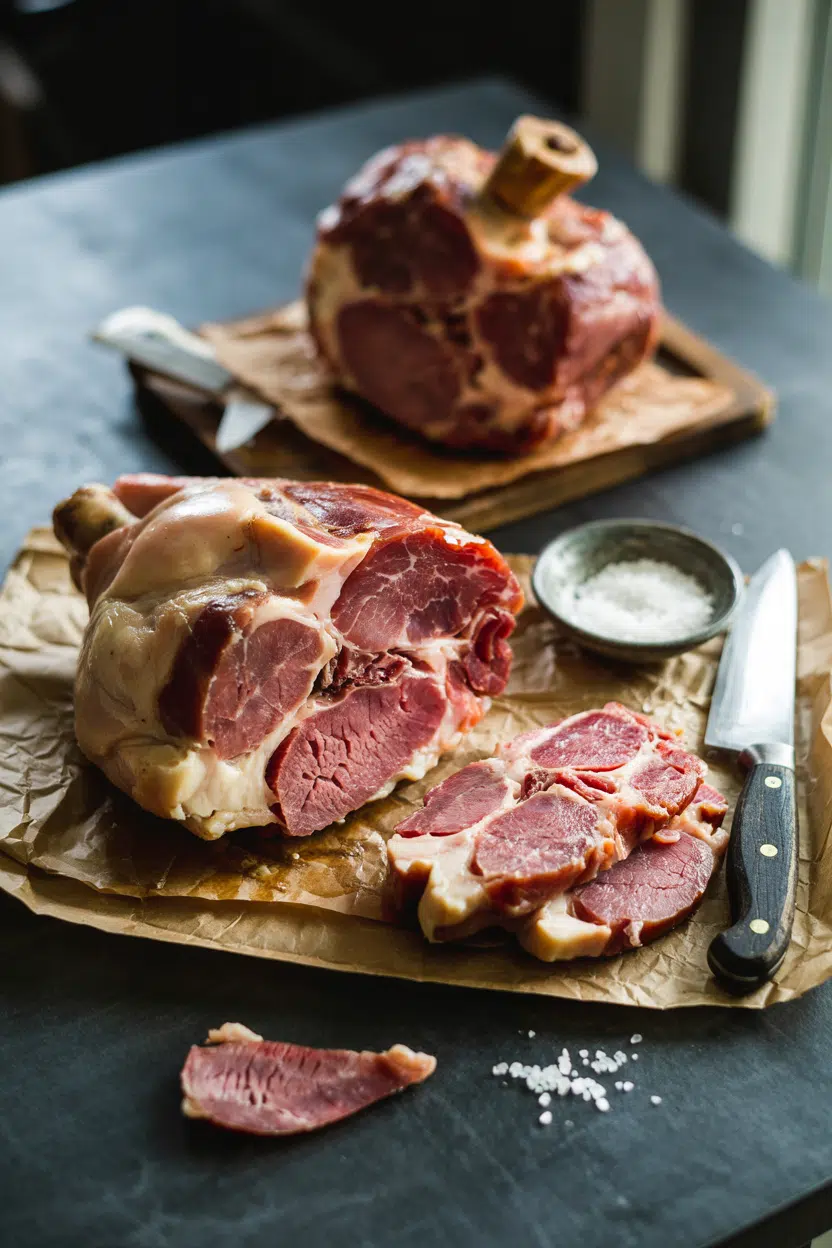
You spot it at the butcher counter - a chunky, bone-in piece with thick skin, visible fat, and a deep reddish-brown color if it's been smoked. It looks intimidating if you've never cooked with it before, and most shoppers walk right past it.
That's a mistake worth correcting, because a ham hock is one of the most affordable cuts that delivers serious depth to soups, stews, and braises. If you already love pork belly adobo or braised pork shoulder, this cut belongs in your rotation.
Understanding pork hock vs ham hock labeling will also save you confusion at the store.
A ham hock is a bone-in pork shank cut sold fresh, smoked, or cured. It delivers rich, porky, smoky depth to slow-cooked dishes and releases collagen that thickens broths naturally. Best in soups, stews, and braised greens.
What Is Ham Hock?
A ham hock is the joint that connects a pig's lower leg to its foot - the shank end, sold with skin, bone, fat, and connective tissue intact. It comes from the same general area as a pork shoulder but is a smaller, tougher section that needs long, slow heat to become useful.
Remember it later
Planning to try this recipe soon? Save it for a quick find later!
You'll see it labeled as pork hock, pig hock, or ham shank depending on the retailer. In Germany, a closely related preparation is called eisbein - boiled pork knuckle served with mustard and sauerkraut.
Most hocks sold in North America are either smoked or cured, which gives them a firmer texture and saltier profile than fresh. Fresh hocks are pale pink and milder; smoked ones run deep reddish-brown.
There's also a regional variation between front and rear hocks - rear hocks are meatier, though both work in long-simmered applications.
The cut is prized specifically for what surrounds the bone: dense connective tissue that breaks down into gelatin during cooking, thickening broth naturally without any added starch.
What Does Ham Hock Taste Like?
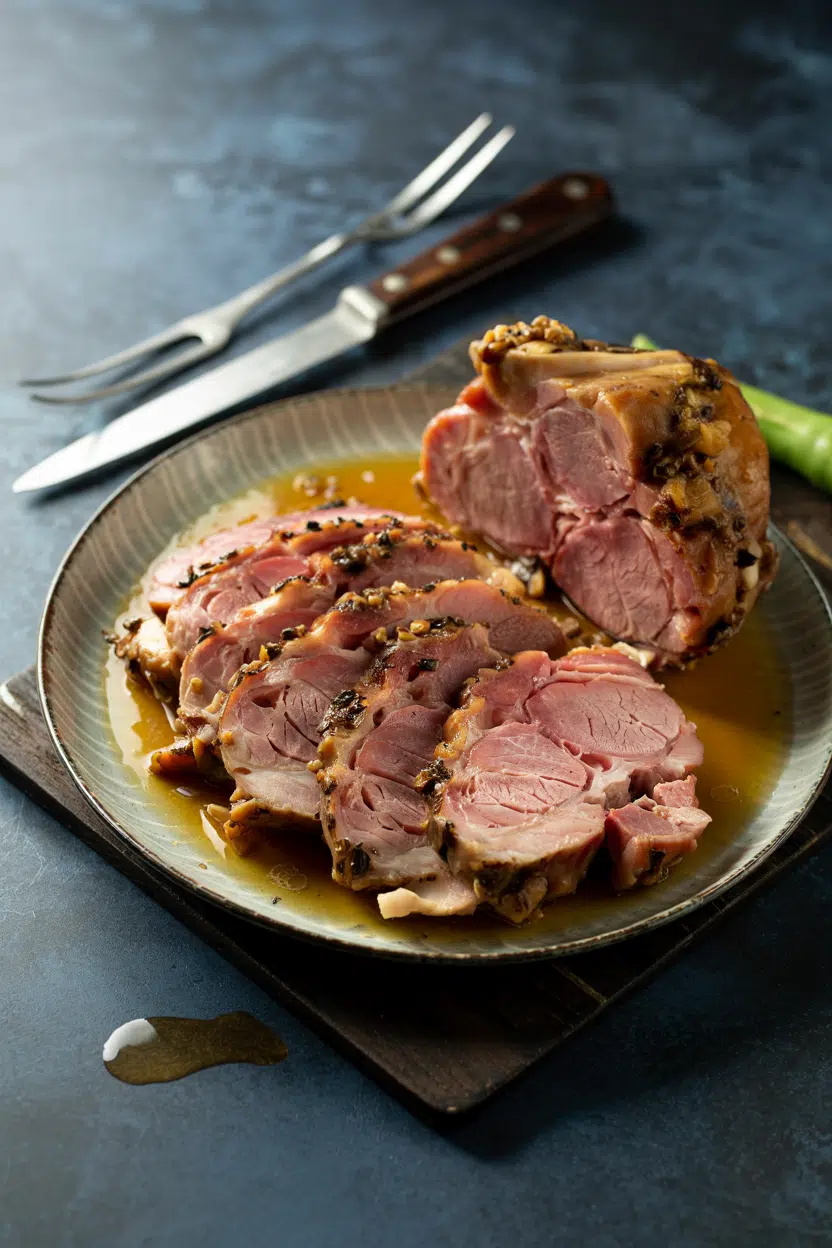
Ham hock tastes like a concentrated, bone-in version of smoked ham - but richer, more gelatinous, and noticeably deeper in flavor from the collagen-heavy shank tissue. A smoked or cured hock leans heavily salty and smoky, similar to salt pork but with more body.
Fresh hocks taste milder, closer to unseasoned pork broth with a meaty backbone.
The longer a hock simmers, the more its collagen dissolves into the cooking liquid - this is what gives classic split pea soup its glossy, thick consistency. The meat itself, once pulled from the bone, is fibrous but tender, with a shredded texture similar to pulled pork.
Understanding what gelatin does in a broth explains why ham hock-cooked soups feel so much more satisfying than versions made with broth alone.
How to Use Ham Hock
Ham hock is a flavoring cut, not a serving piece - the whole point is what it gives to the liquid and vegetables around it.
Drop one into a pot and it works for hours, releasing salt, smoke, pork fat, and dissolved collagen into everything it touches.
The four main methods are worth knowing side by side:
| Method | Best For | Tip |
|---|---|---|
| 🍲 Long Simmering | Split pea soup, collard greens, lentil stew | Simmer 2-3 hours; remove, shred meat, return to pot |
| 🥘 Braising | Sauerkraut pots, bean braises, cabbage dishes | Pair with aromatics - onion, bay leaf, black pepper |
| 🔥 Boil then Roast | Crisped skin dishes, eisbein-style presentations | Boil first until tender, then roast at high heat for crackling |
| 🍜 Broth Base | Ramen-style soups, Chinese braises, bone broth | Combine with aromatics; strain for a clean, rich liquid |
Southern U.S. cooking leans on ham hock heavily - collard greens and black-eyed peas are the standard pairings. German and Eastern European traditions use it in sauerkraut and braised cabbage dishes, where the salt in the hock balances the acidity of fermented vegetables.
You can find more pairing ideas in our guide to side dishes for pork and sauerkraut. Caribbean cooks add hock to rice-based stews for a smoky foundation.
When the hock has done its job, don't discard it. Pull the meat off the bone, chop or shred it, and stir it back into the pot.
The skin, if braised long enough, turns soft and gelatinous - some cooks slice and serve it, others discard it.
How to Buy and Store Ham Hock
At the counter, look for hocks with intact, unbroken skin, pink-to-deep-red meat, and a clean pork smell. Gray discoloration, slimy film, or a sour odor are all reasons to pass.
Smoked hocks should smell like wood smoke - not chemical or harsh.
Storage is straightforward:
- 🧊 Fresh hock - refrigerate tightly wrapped for 3-5 days; freeze for up to 6 months
- 🥩 Smoked or cured hock - refrigerates for 7-10 days; vacuum-sealed keeps longer
- 📦 Freezing - wrap in plastic then foil, or use a vacuum bag to prevent freezer burn
- 🍲 Cooked hock - store in its braising liquid in the fridge for up to 4 days
See our full breakdown of ham hock storage guide if you're working with bulk purchases or want to plan ahead. If you can't find hock at all, a guide to ham hock swaps covers the closest alternatives by dish type.
Start Here If You're New to Ham Hock
Buy a smoked hock. Drop it into a pot of dried split peas or collard greens with water, onion, garlic, and bay leaf.
Cook it low and slow for two to three hours. That first batch will show you exactly what this cut does - how it thickens liquid, how it seasons as it cooks, and why a pot made without it tastes flat by comparison.
Once you're comfortable with the basics, move into bean braises or sauerkraut pots where the hock's salt and smoke do different work.
Frequently Asked Questions
Pork shank is the raw, uncured lower leg cut. Ham hock typically refers to the same area after curing, smoking, or processing - making it saltier and more shelf-stable. In casual use, both terms describe the same part of the pig.
It depends on the type. Smoked and cured hocks are often partially cooked through the smoking process but still need long cooking to become tender. Fresh hocks are always raw and require full cooking before eating.
Plan for 2-3 hours of simmering on the stovetop, or 6-8 hours on low in a slow cooker. The hock is done when the meat pulls easily from the bone and the skin has softened.
Yes, after long braising the skin becomes soft and gelatinous. If you want crispy skin instead, boil the hock first until tender, then roast it at high heat to render and crisp the exterior.
Smoked turkey legs or smoked turkey necks are the closest swap - similar smoke and collagen without the pork. Salt pork or smoked bacon also work, though they add less body to the broth.