
Endive does something few leaves can manage: it holds its shape under heat, keeps its crunch raw, and brings a clean bitter note that makes rich ingredients taste sharper and brighter. That structural reliability is why Belgian bistros braise it alongside roast chicken and why New American chefs hollow out individual leaves to serve as endive boats for blue cheese or smoked salmon.
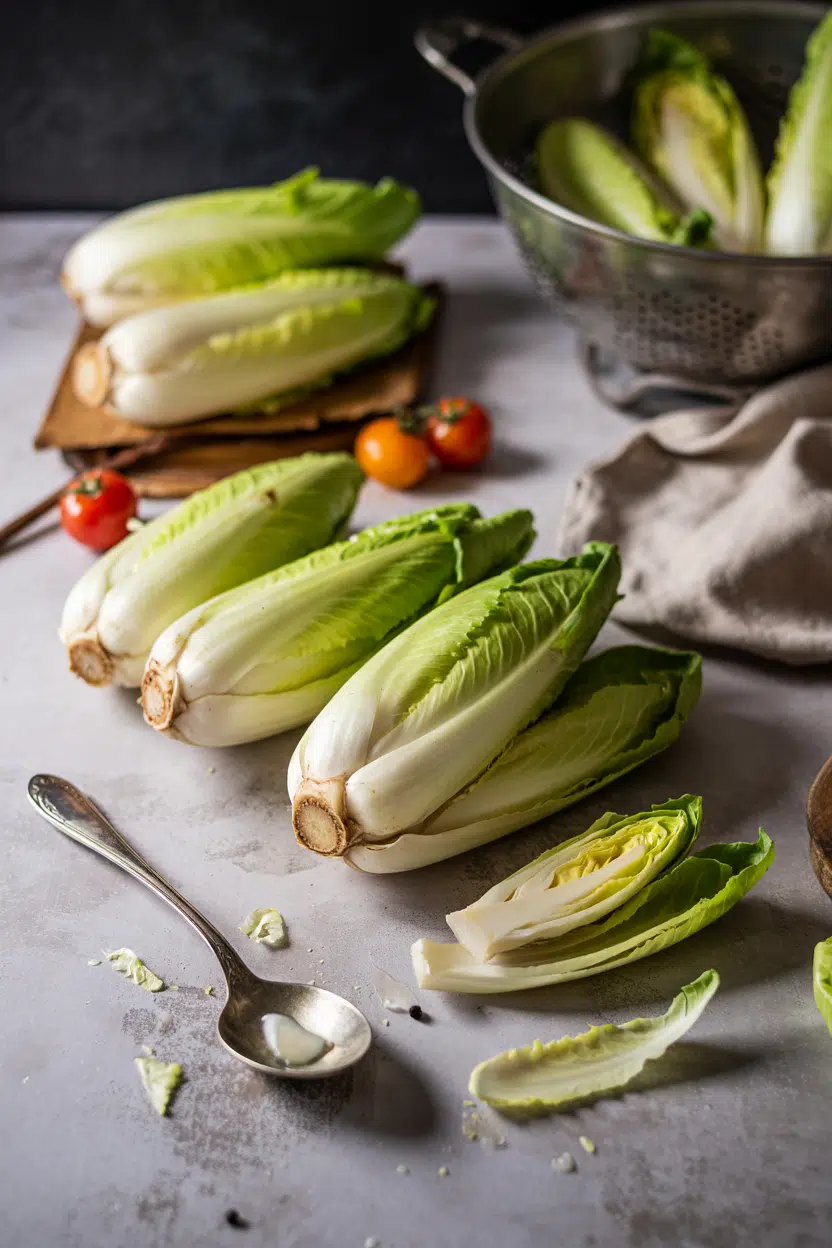
If you've been reaching for frisée substitutes or softer greens to add contrast to a dish, this compact chicory deserves a closer look.
Belgian endive is a pale, tightly packed chicory leaf with a clean, moderate bitterness that softens with heat. Raw, it works as a vessel or salad green; braised or grilled, it turns mildly sweet. Pairs well with blue cheese, citrus, walnuts, and cured meats.
What Is endive?
Belgian endive - also called witloof or chicon - is a blanched, forced vegetable grown through a two-stage process. Chicory roots are first cultivated in fields, then transferred to dark, cool growing chambers where new compact heads sprout in the absence of light. That darkness is what keeps the leaves pale white to yellow and suppresses chlorophyll development, which would otherwise deepen the bitterness.
Remember it later
Planning to try this recipe soon? Save it for a quick find later!
The result is a tight, cylindrical head roughly four to six inches long, with firm pale ribs and a pointed tip. It belongs to the chicory family, which also includes frisée and radicchio - however, endive is far more compact and structured than either.
In the United States, "endive" can confusingly refer to curly endive or frisée, so specifying Belgian endive or witloof avoids the mix-up.
- Belgian endive (witloof) - the compact, blanched head; mild bitterness; firm ribs
- Curly endive (frisée) - loose, feathery leaves; more pronounced bitterness; used mainly raw
- Radicchio - another chicory; deeper red color; sharper, slightly peppery edge
Origin is northern Europe, with Belgium refining the forced-growing method in the nineteenth century.
What Does endive Taste Like?
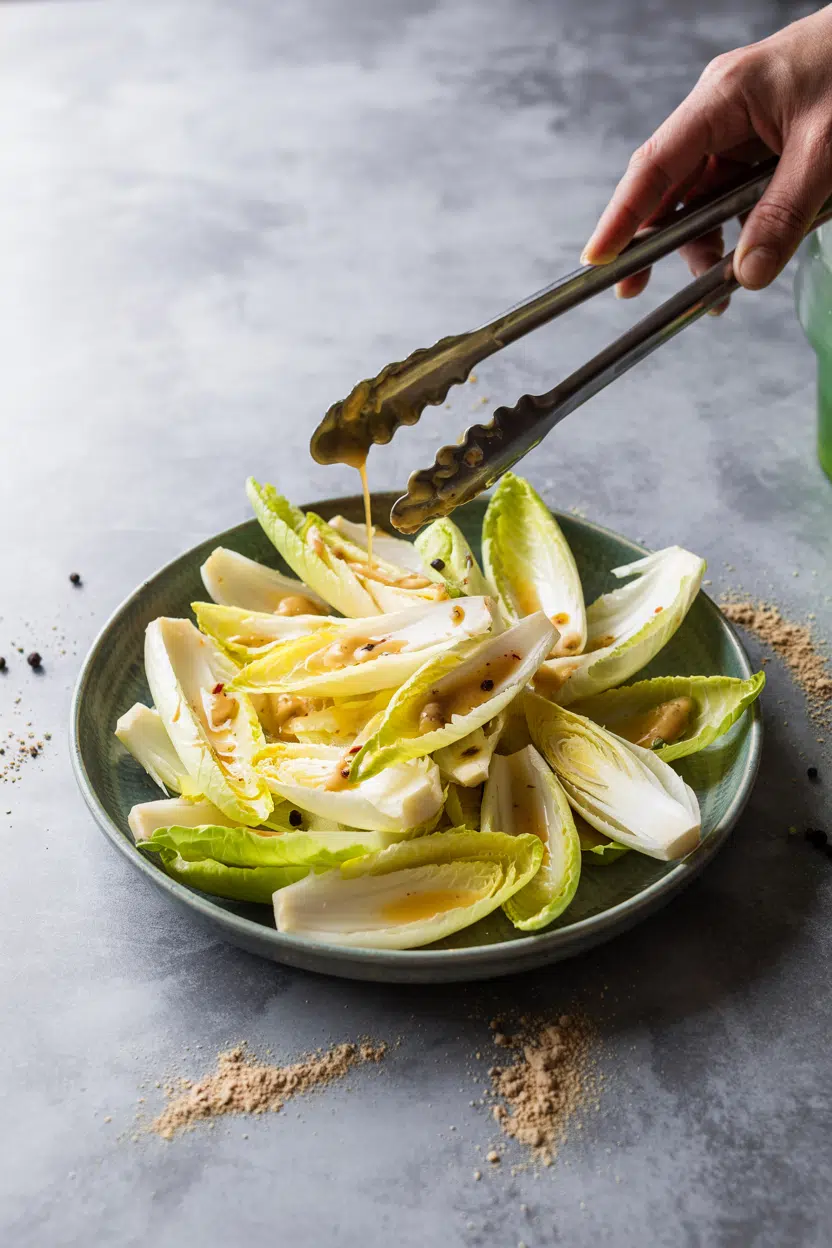
Raw Belgian endive delivers clean bitterness with a crisp snap on the firm ribs and more delicate texture at the leaf tips. The bitterness is moderate - noticeable but not harsh, and it carries a subtle nutty undertone that gets more pronounced as you chew.
Compared to its chicory relatives, endive sits between mild romaine and the deeper bite of radicchio. It lacks the peppery heat of arugula entirely.
Heat changes the profile significantly. Braising or grilling breaks down the bitter compounds, pulling out a mild sweetness and soft, almost buttery texture. A honey glaze on grilled endive pushes it further into caramel-edged territory without losing the chicory backbone entirely.
How to Use endive
Endive's firm leaf structure makes it one of the few greens that works equally well raw and cooked. Raw, each leaf curves naturally into a scoop - ideal for endive boats with blue cheese or a smear of pâté topped with a walnut half.
Shaved thinly, it adds bitter crunch to slaws and citrus salads.
For cooked preparations, the braising pan or Dutch oven both handle endive well. Halved heads braised in chicken stock and butter for 20-25 minutes soften fully and develop mild sweetness - a classic Belgian side dish.
Grilling with olive oil chars the tips and adds smoke. A gratin baked under béchamel or cream sauce makes endive the structural element that holds the whole dish together.
| Method | Best For | Tip |
|---|---|---|
| 🥗 Raw | Endive boats, salads, slaws, dip scoops | Separate leaves carefully to keep the scoop shape intact |
| 🍳 Braised | Warm side dish, mellowed bitterness | Add a pinch of sugar to the braising liquid to offset bitterness |
| 🔥 Grilled | Charred edges, caramelized flavor, appetizer halves | Brush with olive oil and keep heat high - fast char preserves texture |
| 🫕 Gratin/Baked | Rich side dishes, endive wrapped in ham under cream sauce | Blanch briefly before baking to prevent excess water in the gratin |
Belgian and French bistro cooking use endive most frequently, though it appears often in Mediterranean-influenced salads and New American menus. Strong pairings include toasted walnuts, hazelnuts, orange segments, sherry vinegar, smoked salmon, and cured ham.
If you need a substitute, endive replacements covers the closest options by cooking method.
How to Buy and Store endive
Good endive is dense. Pick up the head - it should feel heavy and compact, with tightly packed pale leaves and bright yellow-green tips.
Reject any head showing brown edges, split bases, or limp outer leaves. Green coloring deeper than yellow signals light exposure during growing, which pushes bitterness higher.
Store whole heads loosely wrapped in a perforated plastic bag in the crisper drawer. Don't wash until ready to use.
For full endive storage guide details by storage method, whole heads typically hold for one to two weeks. Cut or separated leaves deteriorate faster - use within three to five days.
Start Here With endive
Endive rewards a straightforward first use. Separate the leaves, fill them with something creamy and tangy - a good blue cheese substitute works if you don't have the real thing - and finish with a walnut and a squeeze of orange.
That single combination shows exactly what endive does: bitter structure meeting rich, acidic, and nutty counterweights.
From there, try braising. One session in butter and stock is enough to understand how dramatically heat mellows this leaf and why it's a staple alongside roasted meats across Belgian cooking.
Frequently Asked Questions
Belgian endive is grown from chicory roots, so it's technically a chicory product - however, "chicory" often refers to the root or to loose-leaf varieties. Witloof is the specific forced-head form most people mean when they say Belgian endive.
Endive is moderately bitter - noticeably less sharp than radicchio, which also carries a slightly peppery edge. If [radicchio vs red cabbage](https://forkliftkitchen.com/radicchio-vs-red-cabbage/) already feels too strong for your palate, endive is the milder starting point.
Yes - raw endive is crisp, firm, and holds its shape well. The individual leaves work as natural scoops for dips, cheeses, and canapé fillings without softening or wilting quickly.
Endive boats are individual endive leaves used as edible scoops or vessels for fillings like blue cheese, smoked salmon, or pâté. The leaf's natural curve and firm rib make it structurally ideal for one-bite appetizers.
Braising and grilling significantly reduce bitterness, converting it to mild sweetness. A small amount of sugar or honey in the cooking liquid accelerates that shift and brings out endive's natural nutty undertone.



