Focaccia does something no other bread does quite as cleanly: it functions as a complete flavor vehicle on its own, before a single topping is added. The combination of high-hydration dough, generous olive oil, and coarse salt means the bread arrives at the table already seasoned, already rich.
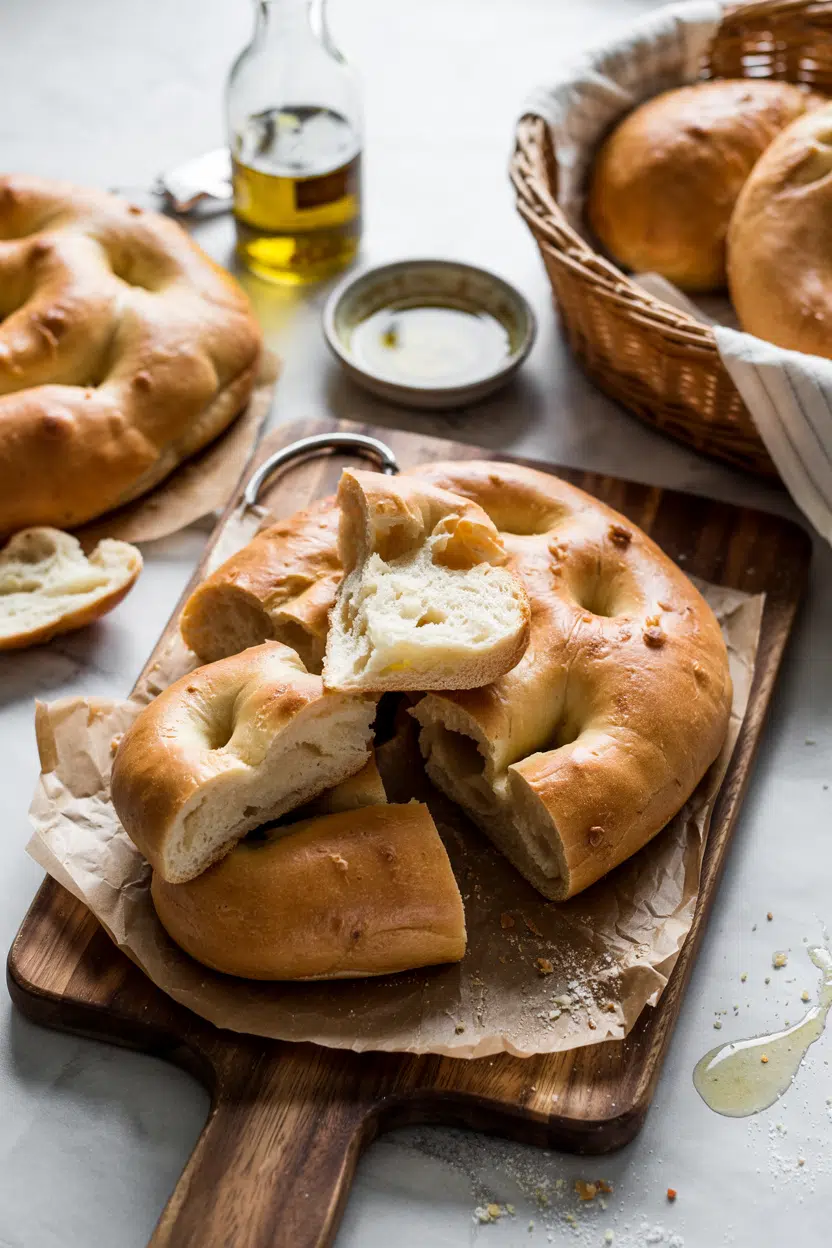
It shares DNA with pizza dough and ciabatta but occupies its own lane entirely. Understanding what focaccia actually is - and how it behaves - changes how you shop for it, store it, and put it to work.
Focaccia is a high-hydration Italian flatbread from Liguria, dimpled and drenched in olive oil before baking. It delivers a soft, open crumb under a crisp, golden crust. Best eaten within 24-48 hours, it works across sandwiches, soups, dipping, and simple flatbread meals.
What Is Focaccia?
Focaccia is a yeasted flatbread built on a notably wet dough - hydration often runs 75-80%, which is higher than most sandwich loaves and closer to ciabatta territory.
Remember it later
Planning to try this recipe soon? Save it for a quick find later!
That excess water, combined with a long ferment, is what creates the large, irregular air pockets that define a good loaf's interior.
The bread originates from Liguria, the coastal region of northwest Italy where it's known locally as focaccia Genovese or fugàssa in the Ligurian dialect.
A sheet pan or baking pan is standard equipment - the dough spreads flat, gets pressed with fingertips to form signature dimples, then is flooded with olive oil before the oven.
Several regional variants exist beyond the Ligurian original:
- Focaccia al rosmarino - stripped back to olive oil, salt, and rosemary; the most widely recognized style outside Italy
- Focaccia di Recco - a thin, unleavened Ligurian version filled with stracchino cheese; structurally different from standard focaccia
- Focaccia alla Genovese - the classic thick version, sometimes topped with olives or caramelized onions
- Focaccia barese - from Puglia, typically topped with fresh tomatoes and olives, with a slightly softer crust
What Does Focaccia Taste Like?
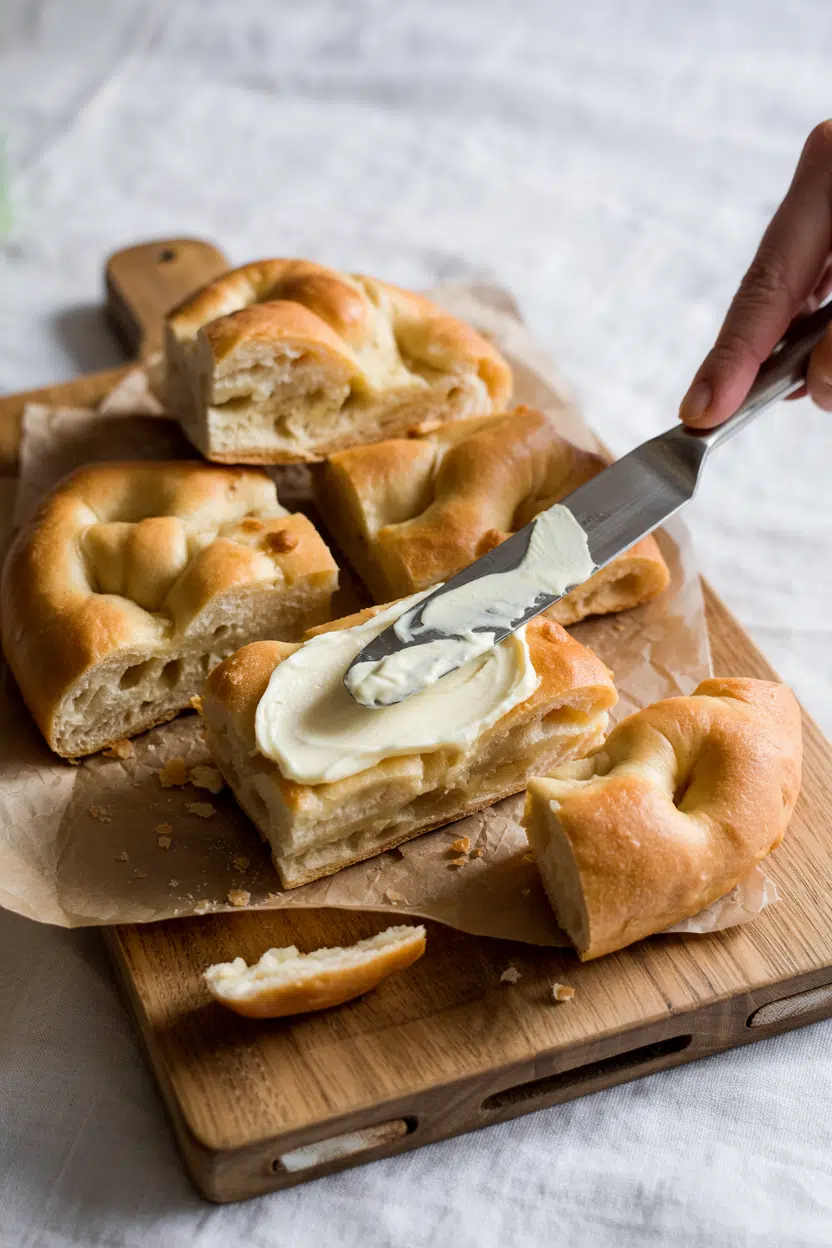
The dominant note is olive oil - not background richness, but a forward, present flavor that coats the crumb. Sea salt hits next, concentrated in the dimples where oil pools during baking.
Underneath, there's a mild yeastiness from the fermented dough, balanced by toasty, Maillard-driven edges along the crust.
Think of it as a soft ciabatta crumb made richer - the open interior feels similar, however the olive oil soaked into focaccia's crumb gives it a depth ciabatta doesn't carry.
Rosemary or thyme toppings add a resinous, aromatic layer that lifts the whole profile without changing its fundamental character.
How to Use Focaccia
Sandwiches are the most direct application. Split the loaf horizontally and fill it with prosciutto, arugula, and stracchino - the Ligurian standard. The oiled crumb holds up to fillings without going soggy the way softer sandwich breads do.
Beyond sandwiches, focaccia earns its place in several roles:
- Soup companion - serve warm slabs alongside minestrone or ribollita; the open crumb soaks broth efficiently
- Dipping strips - cut into finger-width strips for extra-virgin olive oil and balsamic; the crust gives enough structure to prevent drooping
- Flatbread base - top with halved cherry tomatoes, mozzarella, or roasted garlic and return to a hot oven for 5-7 minutes; it functions like a thick-crust pizza without needing separate dough
- Croutons - cube day-old focaccia, toss in olive oil, and toast for panzanella or Caesar; the existing oil content means less added fat needed
- Bread board anchor - slice into irregular pieces for a cheese and charcuterie spread; pairs directly with goat cheese, aged pecorino, and cured meats
Avoid pairing focaccia with watery, thin sauces. Its olive-oil character overpowers delicate clear broths, and excess moisture turns the crumb dense and flat.
For a different bread option in similar applications, focaccia alternatives and ciabatta swaps cover the closest alternatives.
| Method | Best For | Tip |
|---|---|---|
| 🥗 Fresh/Split | Sandwiches with prosciutto, stracchino, arugula | Slice horizontally with a serrated knife; don't compress the crumb |
| 🔥 Topped & Baked | Open-face flatbread pizzas, tomato and cheese | Use a very hot oven (450°F+) and pre-warm the pan |
| 🍲 Served Warm | Soup pairing, bread board, dipping strips | Reheat uncovered so the crust crisps back up |
| 🥩 Grilled | Smoky char for salads, crouton base | Brush cut sides with olive oil; grill 1-2 min per side only |
How to Buy and Store Focaccia
Good focaccia announces itself visually. Visible dimples and a glossy, oil-sheened top are non-negotiable - they indicate proper technique and adequate olive oil.
Tear or press the loaf gently; it should spring back slightly, and a torn edge should reveal large, irregular air pockets rather than a dense, uniform crumb.
Storage is straightforward:
- Room temperature (1-2 days) - wrap in a clean kitchen towel or paper bag; plastic traps moisture and softens the crust
- Refrigerator (3-5 days) - only if the focaccia is filled or if you need the extended window; wrap airtight to prevent drying
- Freezer (up to 1 month) - slice before freezing so you can pull individual portions; wrap tightly in foil, then bag
For a complete breakdown of how focaccia freshness guide compares across storage methods, that guide covers timing, texture changes, and freezer tips in full detail.
Where to Start with Focaccia
Focaccia rewards simplicity first. If you're buying it, go to a bakery over a supermarket - the quality difference is immediate and the bread freshness guide question resolves itself because a proper loaf disappears in a day anyway.
If you're cooking with it, start with the dipping strip approach. No cutting, no filling, no assembly - just warm strips alongside a dish you're already making.
Once you've worked through a loaf that way, the sandwich and flatbread applications follow naturally.
Frequently Asked Questions
Focaccia tastes primarily of olive oil and sea salt, with a mild yeasty background and toasty edges from the oven. The crumb is richer than ciabatta due to oil soaked into the dough during baking.
Focaccia uses a wetter, higher-hydration dough and is typically twice as thick as pizza crust. It's also loaded with olive oil before baking, giving it a richer, more bread-like result rather than a crisp, sauce-ready base.
At room temperature, focaccia is best within 24-48 hours. Frozen portions last up to a month - wrap tightly in foil before bagging to prevent freezer burn.
Use an oven or toaster oven at 375°F for 5-8 minutes, uncovered. Microwaving makes the crumb gummy and softens the crust permanently.
Focaccia Genovese is the original Ligurian version - thick, olive-oil-drenched, and topped with coarse salt. It's the reference point for nearly every focaccia style made outside Italy.