
Ras el hanout brings layered warmth to tagines, couscous, and roasted meats with its blend of sweet and savory spices. When you run out, you need a mix that delivers similar complexity without flattening the dish.
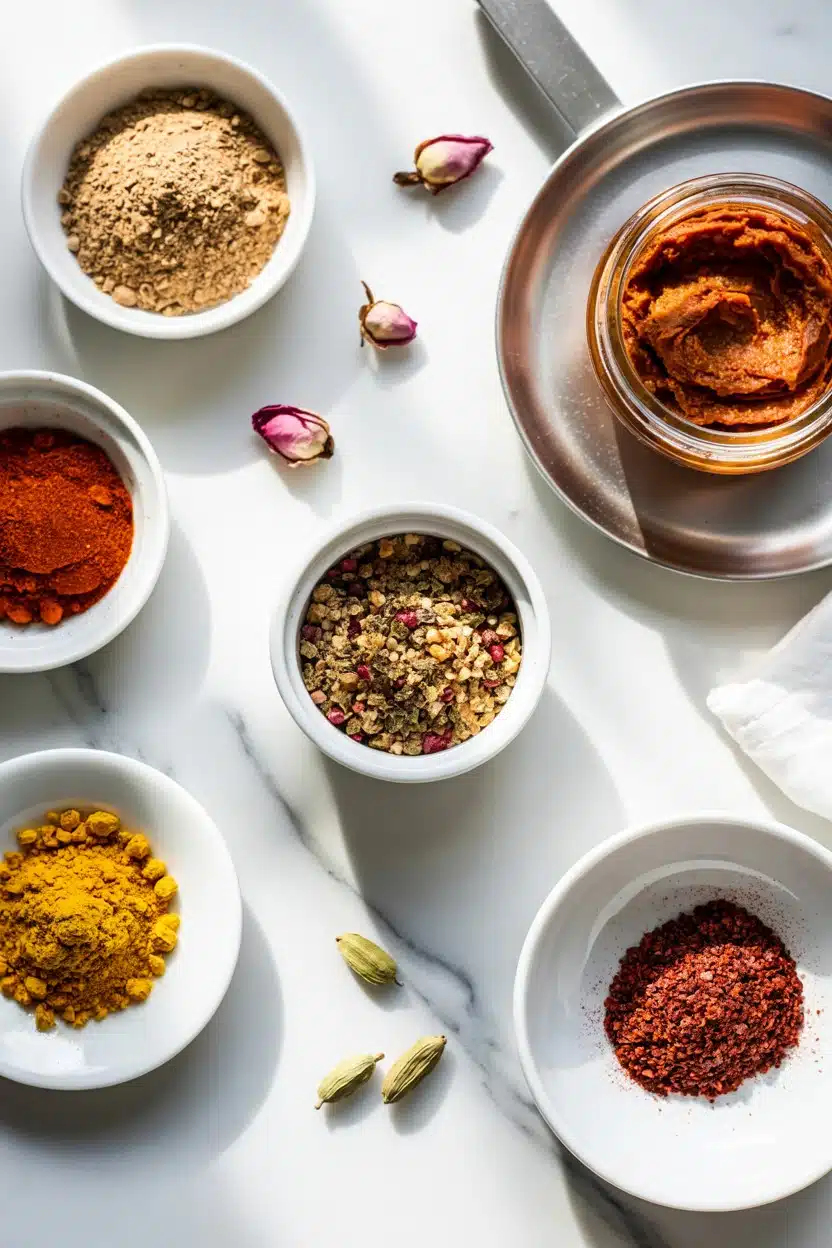
The closest match is baharat, which shares cumin, coriander, and cinnamon as its base. It won't replicate every floral note, but it gives you the warm aromatic backbone that makes North African cooking recognizable.
We tested five blends and homemade combinations to find what works in stews, rubs, and rice dishes. Some shift the flavor profile toward Indian or Asian cuisine, while others keep you closer to Moroccan territory.
The right swap depends on whether you're making a slow-cooked tagine or a quick spice rub. Match the substitute to your cooking method and flavor goals.
Baharat is the best substitute for Ras el Hanout, delivering similar warmth with cumin, coriander, and cinnamon. Use it 1:1 in stews and meat rubs. Garam masala adds more clove and cardamom, while a homemade blend of cumin, coriander, cinnamon, and paprika gives you control over the balance.
| # | Substitute | Best For | Ratio | Key Note |
|---|---|---|---|---|
| 1 | Baharat | ✨ Both | 1:1 | More smoky, less floral |
| 2 | Garam Masala | 🍳 Cooking | 1:1 | Stronger clove presence |
| 3 | Curry Powder | 🍳 Cooking | 1:1 | Turmeric-forward |
| 4 | Homemade Blend | ✨ Both | See recipe | Build your own balance |
| 5 | Five-Spice | 🍳 Cooking | 1 teaspoon per 1 tbsp | Licorice notes |
Here are the best replacements, starting with the closest match.
1. Baharat (Closest Match)
Baharat shares the warm spice foundation of ras el hanout with cumin, coriander, and cinnamon at its core. It leans smokier and more peppery than ras el hanout, but it keeps the aromatic depth you need for Moroccan-style cooking.
Remember it later
Planning to try this recipe soon? Save it for a quick find later!
Use it in the same amount as ras el hanout calls for. The flavor won't be identical, but it won't pull your dish into a different cuisine either.
Best applications:
- Lamb or chicken tagines
- Roasted vegetables with olive oil
- Spice rubs for grilled meats
- Rice pilafs with dried fruit
It works especially well in slow-cooked dishes where the spices have time to meld. The smoky notes deepen as they cook, giving you complexity similar to what ras el hanout provides.
Results vary by dish. A simple Baharat Spice Blend substitutes list helps when you're also short on baharat. Start with this when you want the most familiar flavor profile.
Garam Masala for Rich, Warming Dishes
Garam masala shifts the profile toward Indian cuisine with more clove and cardamom presence. It still delivers the warm complexity that defines ras el hanout, just with a different regional accent.
How it differs:
- Stronger clove and cardamom notes
- Less floral sweetness
- Earthier overall flavor
Use the 1:1 ratio in braised meats, hearty stews, and dishes where bold spice is welcome. Skip it in recipes that need subtle sweetness or delicate balance, like couscous salads or light vegetable dishes.
The swap depends on what to use for Garam Masala if you're navigating multiple spice shortages. It works best when you're cooking something that can handle assertive flavor.
Garam Masala
Works for: Braised lamb, beef stews, lentil dishes, spiced meat rubs
Skip if: Making fresh couscous salads, delicate fish, or dishes needing floral notes
Curry Powder in Hearty, Saucy Dishes
Curry powder simplifies the spice profile with turmeric and coriander leading the way. It adds warmth and color but loses some of the aromatic nuance that makes ras el hanout special.
The turmeric gives everything a golden hue and an earthy base note. This works in curries and stews where bold flavor matters more than subtle complexity.
Key adjustments:
- Expect more earthy, less sweet flavor
- Golden color shows up strongly in light-colored dishes
Use it 1:1 in recipes where you're building a sauce or braising liquid. The spices have time to mellow and blend with other ingredients.
Skip curry powder in recipes that showcase delicate flavors or need the floral sweetness ras el hanout provides. It's too straightforward for dishes like spiced nuts or light grain salads.
Each substitute behaves differently. Understanding the role of tested Madras Curry Powder replacements makes you more flexible when multiple spices run low. Start with half the amount, taste, then add more if needed.
Build Your Own with Cumin, Coriander, Cinnamon, and Paprika
Mixing your own blend gives you control over the balance and lets you adjust for what your dish needs. This combination hits the core flavors of ras el hanout without requiring a dozen different spices.
The basic ratio: Combine ½ teaspoon cumin, ½ teaspoon coriander, ¼ teaspoon cinnamon, and ¼ teaspoon paprika to replace 1 tablespoon of ras el hanout.
Flavor tweaks:
- Add a pinch of ginger for brightness
- Include cardamom if you have it for floral notes
This works well for quick spice rubs or when you want to customize the flavor intensity. It won't match the complexity of a true ras el hanout, but it covers the essential warm and earthy notes.
Each substitute behaves differently. Understanding the role of simple Cumin substitutes list helps you adapt when your pantry is running low on multiple fronts. Taste as you go and adjust the ratios to match your dish.
Five-Spice for Experimental Cooking
Chinese five-spice takes you outside North African cuisine with star anise and licorice-forward notes. It's not a natural substitute, but it works in fusion dishes or when you're willing to shift the flavor profile entirely.
Use it sparingly-1 teaspoon of five-spice per 1 tablespoon of ras el hanout. It's more potent and can dominate a dish if you use too much.
Where it fits:
- Experimental braised meats
- Fusion grain bowls
- Finishing spice for roasted root vegetables
Skip five-spice in traditional Moroccan recipes or anywhere authentic flavor matters. The licorice notes clash with the citrus and rose elements common in North African cooking.
Each substitute behaves differently. Understanding the role of Chinese Five Spice Powder substitutes ranked gives you options when you're working with Asian spices. This works best when you're cooking creatively rather than following tradition.
5 Which Substitute Should You Use?
Start with what your dish needs most-warm complexity, smoky depth, or bright spice notes. Baharat is the safest choice because it keeps you in the same flavor family as ras el hanout.
Garam masala works when you're making something hearty that can handle assertive spice. Curry powder fits best in saucy dishes where turmeric's earthiness won't overpower.
| If You Need... | Use This | Because |
|---|---|---|
| Closest flavor match | Baharat | Shares cumin, coriander, cinnamon base |
| More warming spice | Garam masala | Brings extra clove and cardamom |
| Golden color + earthiness | Curry powder | Turmeric adds both hue and depth |
| Custom balance | Homemade blend | Adjust ratios to your taste |
| Experimental fusion | Five-spice (use less) | Different profile, interesting results |
Test your swap with half the amount first, especially with garam masala or five-spice. You can always add more, but you can't pull back once the spice is in the dish.
Final Thoughts on Swapping Ras El Hanout
Start with the closest match to keep your dish in the same flavor neighborhood. Baharat works in nearly every application where ras el hanout shines, from tagines to spice rubs.
Adjust seasoning as you cook-taste after adding your substitute and compensate for missing sweetness or floral notes with a pinch of cinnamon or a touch of honey. Cooking time doesn't need to change, but whole spices in homemade blends benefit from toasting before you grind them.
Build your pantry with baharat or garam masala for the most flexibility. Both cover enough ground to replace ras el hanout and work in their own right for a range of dishes.
Frequently Asked Questions
Allspice alone won't work because it's too one-dimensional and sweet. Mix it with cumin and coriander (½ teaspoon each plus ¼ teaspoon allspice) to get closer to ras el hanout's complexity. This combination covers warm, earthy, and slightly sweet notes better than allspice by itself.
Use one tablespoon of baharat for every tablespoon of ras el hanout your recipe calls for. Baharat is slightly more peppery and smoky, so taste your dish halfway through cooking. You may want to add a small pinch of cinnamon or cardamom to bring back some of the floral sweetness.
Yes, ras el hanout loses aromatic strength after about six months, especially if stored in light or heat. Keep it in an airtight container in a cool, dark place to maintain flavor. If your blend smells faint or dusty rather than fragrant, use 1.5 times the amount the recipe calls for or replace it entirely.
You can, but your dish will taste simpler and lose the layered complexity ras el hanout provides. Use ½ teaspoon cumin and ¼ teaspoon cinnamon per tablespoon of ras el hanout if that's all you have. Add coriander, paprika, or ginger if possible to build more depth and balance the sweet-savory profile.
Ras el hanout is a warm spice blend with cumin, cinnamon, and coriander, while za'atar is herby with thyme, sesame, and sumac. They're not interchangeable because za'atar tastes tangy and herbal rather than warm and complex. Use za'atar as a finishing spice for flatbreads and vegetables, not as a substitute in stews or meat rubs.
5 Best Substitutes for Ras El Hanout
Ingredients
Method
- Choose a substitute based on your dish and desired flavor profile.
- Prepare the substitute by blending or mixing if using a homemade blend.
- Use the recommended 1:1 ratio for most substitutes, or follow the specific blend ratio for homemade or five-spice.
- Adjust seasoning while cooking; taste the dish and add cinnamon or cardamom for floral notes if needed.
- Use substitutes sparingly in delicate dishes to avoid overpowering flavors.
Notes
- Start with half the amount for strong substitutes like garam masala or five-spice, then adjust.
- Homemade blends benefit from toasting whole spices before grinding for fuller flavor.
- Store ras el hanout and substitutes in airtight containers away from light and heat to maintain potency.



