
You're prepping a roast and realize the carrot bag is empty. The recipe needs them for sweetness and moisture-just skipping them leaves a gap.
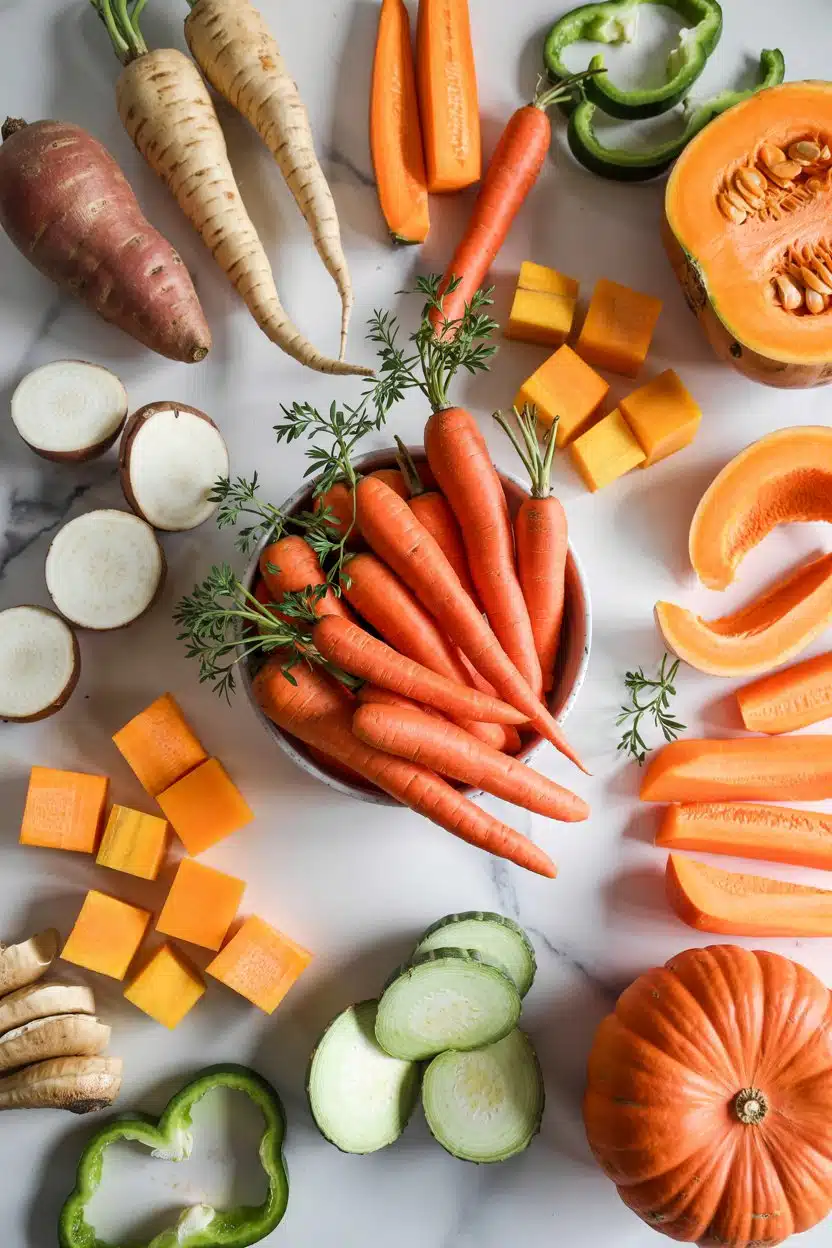
Carrots break down into tender, sweet pieces when cooked. They add color, but more importantly, they balance savory flavors in stews, soups, and roasted dishes.
A few root vegetables and squashes can step in.
For roasts and stews, we reach for parsnip or sweet potato. Both soften like carrots and bring natural sweetness. The main risk is color-neither delivers that bright orange-but in soups and braises, they hold up well. In purees, butternut squash mimics carrot's smooth texture.
| # | Substitute | Best For | Ratio | Key Note |
|---|---|---|---|---|
| 1 | Parsnip | 🍳 Cooking | 1:1 | Sweeter, nuttier flavor |
| 2 | Sweet Potato | 🍳 Cooking | 1:1 | Richer, denser texture |
| 3 | Butternut Squash | 🍳 Cooking | Equal volume | Softer, best pureed |
| 4 | Zucchini | 🍳 Cooking | 1:1 | Less sweet, mild |
| 5 | Yellow Beet | 🍳 Cooking | 1:1 | Earthier, mineral notes |
| 6 | Pumpkin | 🍳 Cooking | 1:1 | Sweet, mild, softer |
| 7 | Celery Root | 🍳 Cooking | 1:1 | Savory, less sweet |
1. Parsnip 🥕
Parsnip looks like a pale carrot and cooks down with the same tender bite. Use it 1:1 in any recipe calling for carrots.
Remember it later
Planning to try this recipe soon? Save it for a quick find later!
The flavor runs sweeter and nuttier-not bad, just different. Parsnips soften at the same rate as carrots in roasts and stews.
- ✅ Similar texture and cooking time
- ✅ Adds natural sweetness
- ⚠️ No orange color
- ⚠️ Slightly earthier flavor
If you run low on those, we've covered swaps when Parsnip runs out for backup options.
2. Sweet Potato 🍠
Sweet potato brings the sweetness and moisture you need, but with a denser, starchier texture. Use 1:1 in roasts, stews, and baked dishes.
The flavor leans richer and more pronounced than carrots. Sweet potato softens nicely but won't hold its shape as firmly in long braises.
Cut pieces smaller than you would carrots-they cook faster. In soups, they'll thicken the broth slightly.
3. Butternut Squash 🎃
Butternut squash matches carrot's sweetness and moisture but breaks down softer. Use equal volume in soups, stews, and purees.
The texture won't stay as firm as carrots in long cooking. Squash works best when you don't need distinct pieces-think blended soups or mashed sides.
Peel and cube it the same way you'd prep carrots. The flavor stays mild and slightly nutty, which blends well with most seasonings.
Need other swaps? Check tested Butternut Squash replacements for more options.
4. Zucchini 🥒
Zucchini adds moisture without the sweetness. Use 1:1 in soups, stews, and sautés where carrot's sugar isn't critical.
The flavor stays mild and slightly grassy. Zucchini softens faster than carrots, so add it later in cooking to prevent mush.
- ✅ Holds moisture well
- ✅ Cooks quickly
- ⚠️ No sweetness to speak of
This swap works when you need bulk and texture but can skip the sweet notes. For more on zucchini, explore Zucchini alternatives worth trying.
5. Yellow Beet 🌕
Yellow beet delivers carrot-like sweetness with an earthier, mineral-forward flavor. Use 1:1 in roasts, stews, and purees.
The texture softens similarly to carrots when cooked. Yellow beets won't give you orange color, but they won't stain dishes red like regular beets.
Peel and cube them as you would carrots. The flavor pairs well with hearty meats and root vegetable medleys.
If beets are an issue too, see Beet substitutes for cooking for backup plans.
6. Pumpkin 🎃
Pumpkin replicates carrot's sweetness and moisture but with a softer, smoother texture. Use 1:1 in soups, stews, and baking.
The flesh breaks down faster than carrots. In soups, pumpkin adds body and a mild, nutty-sweet flavor that doesn't compete with other ingredients.
- ✅ Sweet and mild
- ⚠️ Softer texture-won't stay firm
Cube fresh pumpkin or use canned puree in equal amounts. For alternatives, check easy Pumpkin swaps that work.
7. Celery Root (Celeriac) 🥔
Celery root offers moisture and soft texture without carrot's sweetness. Use 1:1 in soups, stews, and roasts where savory flavors lead.
The flavor carries a mild celery-like note with earthy undertones. Celery root softens at a similar rate to carrots in long cooking.
- ✅ Holds up in stews
- ✅ Adds moisture without sweetness
- ⚠️ Lacks carrot's natural sugar
Peel off the tough outer layer before cubing. This swap shines in savory dishes where you don't need sweetness balancing the pot.
Running low on celery root? We've listed Celeriac replacements that work for backup.
Which Carrot Swap to Use
- For roasts and stews: Parsnip or sweet potato-both soften like carrots and add sweetness
- For soups and purees: Butternut squash or pumpkin blend smoothly without chunks
- For savory dishes: Celery root or zucchini when you can skip the sweet notes
Match the swap to what carrots do in your recipe. If sweetness matters, pick parsnip or sweet potato.
If texture and moisture matter more, zucchini or celery root fill the gap.
Frequently Asked Questions
Yes, frozen parsnips or butternut squash work in most cooked dishes. Thaw and drain them first to prevent excess water in your recipe. They'll soften faster than fresh, so add them later in the cooking process.
Raw parsnip works thinly sliced or grated, though it's tougher than carrot. Yellow beets also work raw when shredded. Most other swaps-like sweet potato or pumpkin-taste better cooked.
Sweet potato and parsnip add the most sweetness-both run sweeter than carrots. Butternut squash and pumpkin follow closely. Zucchini and celery root bring little to no sweetness.
Yes, mixing parsnip with sweet potato or adding celery root with butternut squash works well. Combining swaps balances sweetness and texture without relying on one ingredient alone.
Most swaps cook at similar rates to carrots, but zucchini and butternut squash soften faster. Add them 5-10 minutes later than you'd add carrots to prevent overcooking. Parsnip and celery root match carrot timing closely.
7 Best Substitutes for Carrot
Ingredients
Method
- Choose the substitute based on recipe needs-sweetness, texture, or moisture.
- Peel and cube or prepare the substitute similarly to carrot.
- Use a 1:1 ratio by volume for most substitutes, adjusting cooking times as needed.
- Add substitutes like zucchini or butternut squash later in cooking to prevent over-softening.
- Taste and adjust seasoning to balance sweetness or earthiness of the substitute.
Notes
- Parsnip and sweet potato add the most sweetness and closely mimic carrot texture.
- Butternut squash and pumpkin work well for purees due to soft textures.
- Zucchini and celery root provide moisture without sweetness for savory dishes.



