• Skip to primary navigation
  • Skip to main content
  • Skip to primary sidebar
  • Recipe Index
    • Air Fryer
  • Side Dishes
  • Substitutes
  • About
  • Contact
  • Subscribe

ForkLiftKitchen

menu icon
go to homepage
  • Recipe Index
    • Air Fryer
  • Side Dishes
  • Substitutes
  • About
  • Contact
  • Subscribe
subscribe
search icon
Homepage link
  • Recipe Index
    • Air Fryer
  • Side Dishes
  • Substitutes
  • About
  • Contact
  • Subscribe
×

Blog

What Is Flounder? Taste, Texture, Uses & Tips

March 10, 2026

Most cooks assume flounder is just another neutral white fish - easy to overlook, hard to get excited about.
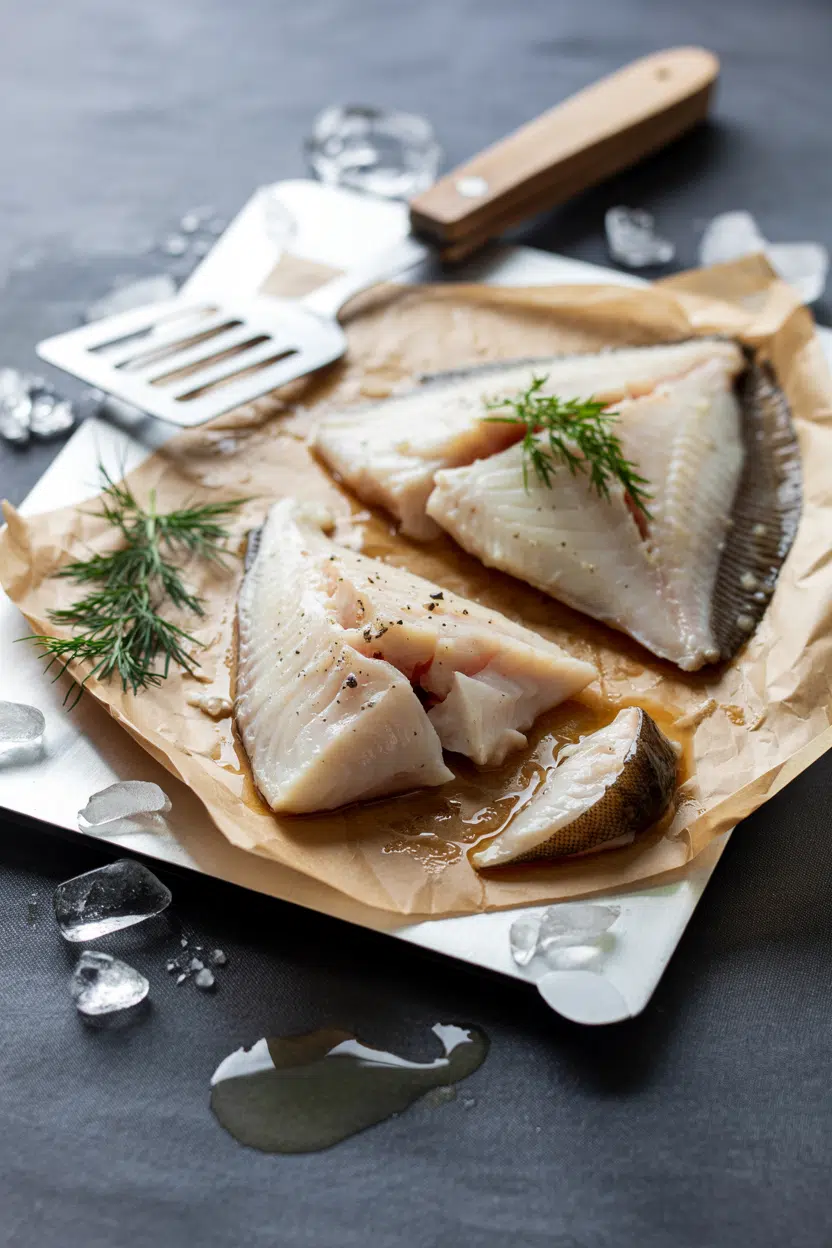
What Does Flounder Taste Like

That assumption costs them one of the most forgiving fillets in the seafood case.

Flounder's mild, clean flavor is a feature, not a flaw, and understanding fish and its flavor helps explain why delicate white fish like this responds so well to acid, fat, and fast heat.

If you've been defaulting to alternatives to cod every time you want a simple weeknight fillet, flounder deserves a closer look.

QUICK SUMMARY

Flounder is a mild, flaky flatfish with sweet, clean flavor and a delicate texture that cooks fast. It suits pan-searing, baking, and light frying. Fresh fillets last 1-2 days on ice; frozen keeps 3-6 months.

🐟Category: Flatfish, white fish, lean protein
👅Flavor: Mildly sweet, clean, lightly buttery, faintly briny
🍳Best Uses: Pan-seared, baked en papillote, lightly fried
🛒Buy It: Glossy fillets, no brown edges, fresh sea smell
❄️Shelf Life: 1-2 days fresh on ice; frozen up to 6 months
⚠️Avoid: Heavy spiced sauces, long high-heat cooking, thick braises

What Is Flounder?

Flounder belongs to a large family of flatfish found in coastal waters across the North Atlantic, North Pacific, and coastal Europe and Asia.

Both eyes migrate to the same side of the head as the fish matures - a distinctive feature that makes it instantly recognizable at the fishmonger.

Several species travel under the flounder name. Summer flounder, widely sold as fluke, is the most common on the U.S. East Coast.

Winter flounder is slightly smaller and firmer. European flounder appears across British and northern European markets.

The flesh is pale white, thin, and always sold as fillets or occasionally whole for smaller specimens. Fillets are typically narrower and more delicate than those of thicker white fish like cod or haddock.

Knowing the species on the label matters - swapping out flounder works well with sole or fluke, since both share similar thickness and cook times.

  • 🐠 Summer flounder (fluke) - mild, slightly sweet; most widely available in the U.S.
  • 🐠 Winter flounder - firmer texture, slightly denser fillet than fluke
  • 🐠 European flounder - found in British and Scandinavian markets; leaner profile

What Does Flounder Taste Like?
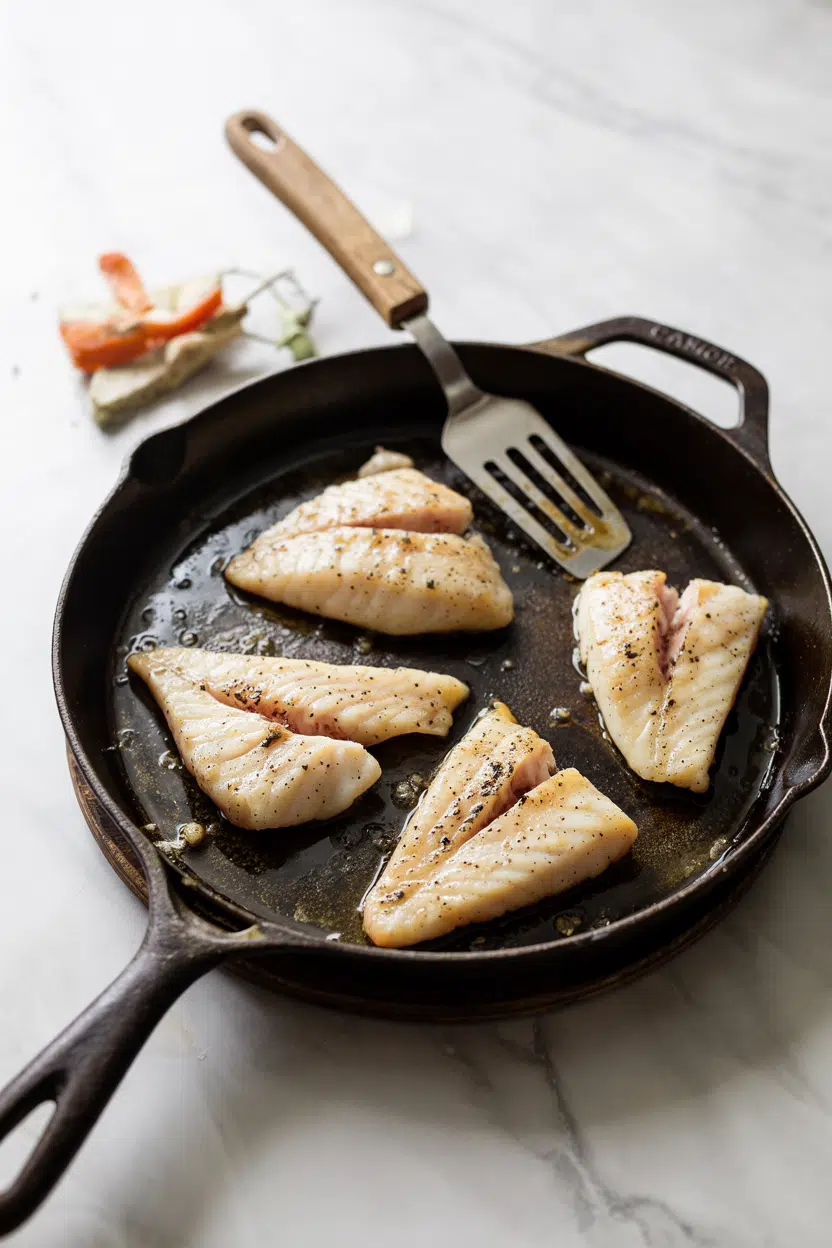
flounder - What Does Flounder Taste Like

Flounder is genuinely mild - not in a disappointing way, but in the way that leaves room for everything else on the plate.

The raw flesh smells faintly oceanic, clean rather than pungent, which is one of the first signs you have a fresh specimen.

Cooked, the flavor opens up slightly: sweet and buttery, with just enough brininess to remind you it's seafood. It's softer and more subtle than sole and considerably more delicate than cod.

Heat firms the flake quickly, so the texture window between perfectly cooked and overdone is narrow.

Sensory SnapshotMild Intensity
👅 Flavor
mildly sweetcleanlightly butteryfaint brine
✋ Texture
delicatefine flakethin fillet
👃 Aroma
mild oceanicclean sea air
Golden Rule
Pull flounder off the heat the moment the flesh turns opaque. It carries over fast, and even 60 extra seconds in the pan pushes it from tender to dry.

How to Use Flounder

Flounder rewards simple, fast cooking. The thin fillet gives you very little margin for low-and-slow methods, but that same thinness means dinner is on the table in under ten minutes when the technique is right.

For wider inspiration on what to pair alongside it, dishes alongside white fish covers a broad range of sides that work.

Pan-searing is the most practical approach for weeknight cooking. A hot pan, a small amount of butter or oil, and two to three minutes per side is all it takes. The flesh picks up a light golden crust while staying moist inside.

How Flounder Is Used
MethodBest ForTip
🍳 Pan-SearedWeeknight fillets with lemon and herbsPat completely dry before the pan; moisture kills the crust
🫙 En PapilloteRetaining moisture with white wine and capersSeal the parcel tightly; steam does the work
🍟 Light FryFish and chips, breaded fillets, tacosUse fine breadcrumbs or light batter; thick coatings overpower the fish
🫗 PoachedChowders, delicate fish stews, stuffed preparationsUse a court-bouillon; plain water leaves the flesh flat

Flounder is central to New England seafood cooking, British seaside frying, and Japanese preparations - lightly grilled or as tempura, where its clean flavor handles light batters without disappearing.

Good pairing ideas for flounder extend from classic lemon and dill to brown butter with toasted almonds.

Note that brown butter itself is a deeply useful finish - though if you have extra on hand, a brown butter blondies recipe shows how well it translates into baking.

Avoid heavy, strongly spiced sauces; they erase everything the fish brings.

Try It In
🧈Compound Butter (Herb)Finish pan-seared flounder with a slice melted over the hot fillet→🐟Oven-Baked Fish and ChipsWorks with flounder fillets wherever the recipe calls for white fish→🍋Lemon Pound Cake (No-Bake)A bright citrus dessert to balance a light fish dinner→

How to Buy and Store Flounder

Fresh flounder signals quality clearly. Whole fish should have shiny, moist skin, red-pink gills, and clear eyes. Fillets should be glossy, firm, and free of brown edges - any yellowing or dull surface means it's past its window.

Buy from fishmongers who label by species. "Flounder" on its own is vague; summer flounder and winter flounder are distinct fish with different textures, so knowing which one you're getting matters for cooking.

Frozen fillets are a reliable backup when fresh isn't available - storing flounder correctly covers how to freeze and thaw without wrecking the delicate texture.

Watch Out
Fresh flounder kept in the fridge without ice degrades fast. Store it on ice in the coldest part of the fridge and cook within 1-2 days - no exceptions.
  • 🧊 Fresh on ice - use within 1-2 days; keep in the coldest fridge zone
  • ❄️ Frozen fillets - vacuum-seal or wrap tightly in foil and a freezer bag; best within 3-6 months
  • 🐟 Sole as a backup - thin fillets of sole behave almost identically; check [alternatives to sole fish](https://forkliftkitchen.com/sole-fish-substitutes/) if your fishmonger is out of flounder

Start Here With Flounder

Flounder is the right fish for cooks who want results without fuss. The narrow flavor profile is an asset - it adapts to whatever acid, fat, or herb you build around it, rather than fighting the dish.

Best Pick
If you're new to cooking flounder, start with a simple pan-sear: hot pan, butter, two minutes per side, finish with lemon juice and fresh parsley. It's the method that shows you exactly what this fish can do.

Cook it quickly, season it simply, and don't overthink the sides. Flounder does its job the moment you stop trying to make it something bigger than it is.

Frequently Asked Questions

Is flounder fish mild or strong?

Flounder is mild - one of the mildest white fish available. The flavor is lightly sweet and clean with minimal brininess, making it a reliable choice for people who find stronger fish off-putting.

What is the difference between flounder and sole?

Both are flatfish with mild white flesh, however sole tends to have a slightly firmer texture and a more pronounced sweetness. Flounder is thinner and more delicate, making it even more sensitive to overcooking.

Is flounder healthy to eat?

Yes. Flounder is lean, low in calories, and a solid source of protein, vitamin B12, and selenium. Omega-3 content is lower than oily fish like salmon, however it still contributes to a balanced diet.

How long does flounder last in the fridge?

Fresh flounder fillets last 1-2 days refrigerated, stored on ice in the coldest section. Don't push past that window - the texture and smell deteriorate quickly once the fillet starts to age.

Can you use flounder in fish tacos?

Yes, and it works well. Lightly bread and pan-fry the fillets, then break into chunks for tacos with a bright slaw and a squeeze of lime. The mild flesh holds up without overpowering the other toppings.
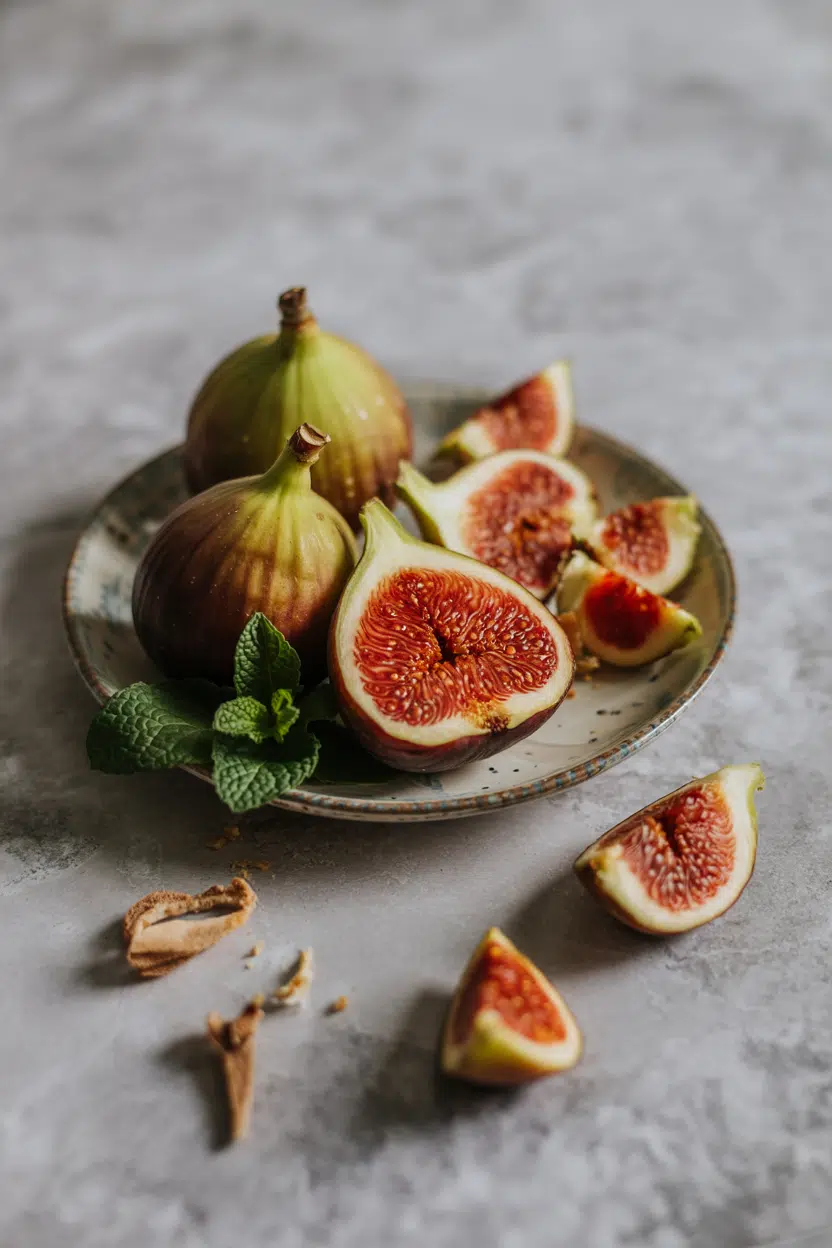
What Is Fig? [Taste, Uses & More]

March 10, 2026

Bite into a ripe fig and the experience is immediate: a rush of honeyed sweetness, a faint floral scent, and a jammy give that few other fruits can match.

What Is Fig

That gentle collapse of soft flesh against tiny crunchy seeds is what makes figs - draped over prosciutto or pressed into warm bread - so hard to replicate.

QUICK SUMMARY

The fig is a soft, honey-sweet fruit with jammy flesh, crunchy seeds, and warm floral aroma. Fresh figs are delicate and short-lived; dried figs concentrate those sugars into a raisin-like intensity. Both work in savory and sweet cooking across Mediterranean and Middle Eastern traditions.

🍯Flavor: Honeyed-sweet with subtle berry acidity and a nutty seed note
🫐Texture: Soft, jammy interior with tiny crunchy seeds and thin chewy skin
🌍Origin: Mediterranean and Western Asia; one of the oldest cultivated fruits
🍽️Best Uses: Fresh over cheese, roasted with honey, dried in tagines or baked goods
📅Shelf Life: Fresh figs last 2-5 days refrigerated; dried figs keep several months at room temperature

What Is Fig?

The fig is not technically a conventional fruit.

It is a syconium - a swollen, hollow stem structure that encloses hundreds of tiny flowers and seeds, all fused into one edible package. Ficus carica, the common fig tree, originates in the Mediterranean and Western Asia, and remains central to Greek, Turkish, Italian, and North African food traditions to this day.

Several varieties reach markets and home kitchens regularly. Black Mission figs are dark-skinned and deeply sweet, with a rich berry note. Kadota figs are milder, green-skinned, and less assertive -

a better pick when you want fig texture without dominating sweetness. Calimyrna figs (also called Smyrna figs) are large, golden, and nutty, and appear frequently in dried form.

Fresh figs and dried figs behave quite differently in cooking. Fresh fruit is perishable and delicate.

Dried figs concentrate the sugars dramatically, shifting from gentle sweetness toward something closer to a date substitute in recipes that call for chewy, intense sweetness.

What Does Fig Taste Like?

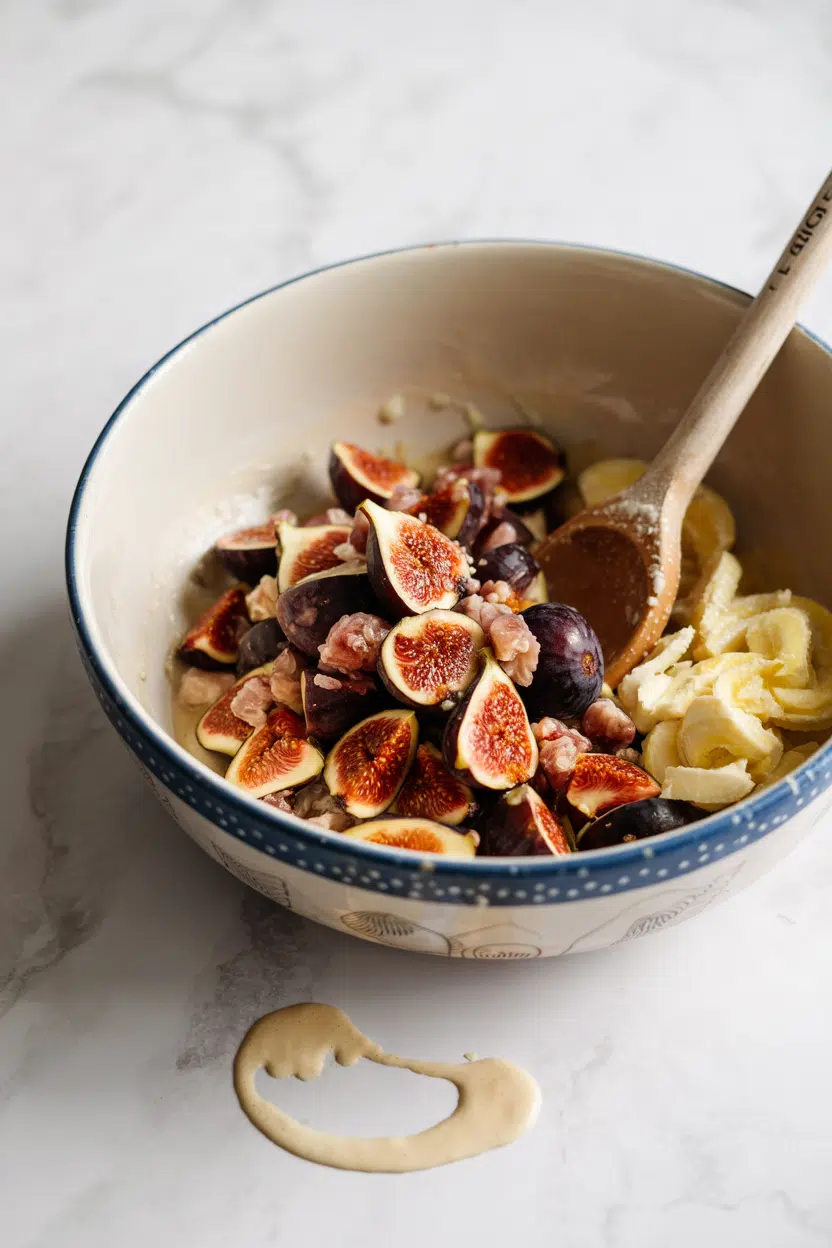
fig - What Is Fig

A fresh fig tastes like a soft pear crossed with honey and toasted nuts, with a faint edge of berry-like acidity underneath all that sweetness. The seeds contribute a mild, nutty crunch, and the skin adds a barely-there chewiness that keeps each bite interesting.

Sensory SnapshotModerate Intensity
👅 Flavor
honeyed-sweetberry-like aciditynuttymalty undertone
✋ Texture
jammycrunchy seedsthin chewy skin
👃 Aroma
floral-sweetwarmearthy-malt

Heat changes everything.

Roasting or grilling a fresh fig concentrates its sugars rapidly, deepening the honey note and softening the acidity into something almost caramel-like. Dried figs move further still - the malty undertone intensifies, acidity drops away, and the sweetness becomes raisin-dense rather than floral.

Golden Rule
Taste your fig before cooking. An underripe fig is astringent and starchy - it will not sweeten up in the pan. Only ripe, yielding figs reward roasting or slicing raw.

How to Use Fig

Fresh figs need almost no preparation. Slice them over ricotta or chèvre with a thread of olive oil and cracked black pepper, and the dish is done in two minutes.

They also hold up well in salads alongside prosciutto, arugula, walnuts, and balsamic vinegar - the salt of the meat and the sharpness of the greens cut through the sweetness cleanly.

Cooking unlocks a different register entirely. Roasting fig halves with honey and thyme at high heat pulls out their sugar and concentrates their jammy interior, making them a strong savory-sweet side for roasted pork or duck.

Slow-simmering figs with sugar and lemon zest produces a fig compote or fig jam that stores well and works across a wide range of dishes - spread on toast, spooned over blue cheese, or used wherever you might reach for a fig jam substitute.

Dried figs are the more forgiving format for everyday cooking. Chop them into North African tagines, fold them into quick breads or galettes, or add them to trail mix where their concentrated sweetness functions as a natural binding note.

How Fig Is Used
MethodBest ForTip
🥗 Raw/SlicedCheese boards, salads, open-faced toastsUse only fully ripe figs - unripe ones taste chalky
🔥 Roasted/GrilledSavory-sweet sides, meat pairings, warm saladsHalve the figs and roast cut-side up at 200°C/400°F for 15-20 min
🫕 Slow-SimmeredJams, compotes, chutneys, saucesAdd a splash of balsamic or citrus to balance sweetness
🍞 BakedGalettes, quick breads, tartsDried or fresh both work; dried figs need no pre-cooking
🥘 Braised/DriedTagines, grain dishes, trail mix, stuffingsRehydrate dried figs in warm water or juice for 20 min before using

Pairings worth knowing: goat cheese and blue cheese are the classic matches; almonds, rosemary, orange zest, and aged balsamic all work in the same direction. If you want a substitute for the cheese element, explore your goat cheese alternatives before swapping in something neutral.

Try It In
🧀Blue Cheese Dressing (Homemade)The sharpness of blue cheese balances fig's honey sweetness perfectly→

How to Buy and Store Fig

Ripe figs yield gently to pressure without feeling mushy, and the skin should be taut and unbroken. Avoid any fig that leaks clear sap from the stem or shows sticky residue - that signals overripeness. At the market, note the variety: Black Mission figs run darker and sweeter; Kadota figs are pale green and milder; Calimyrna are large and nutty.

Watch Out
Do not wash fresh figs until you're ready to eat them. Excess moisture accelerates mold. Store them dry, in a single layer, in a breathable container in the fridge.

Fresh figs are best used within 2-5 days of purchase - they do not hold like apples or pears. Dried figs store in an airtight container at cool room temperature for several months.

For longer storage, fig halves and pureed figs freeze well for up to six months. A full breakdown of storage timelines is covered in the fig freshness guide guide.

Where to Start With Fig

Fresh figs are the entry point worth trying first if you haven't cooked with them. Halve four ripe Black Mission figs, place them cut-side up on a baking sheet, drizzle with honey, scatter thyme, and roast for 15 minutes.

That single preparation shows you everything - the jammy texture, the deepening sweetness, and why figs work so well against salty, fatty counterparts.

  • Start fresh - buy Black Mission or Kadota figs when in season (late summer to early fall) for the fullest flavor.
  • Go dried first - if fresh figs aren't available, dried Calimyrna figs are widely stocked year-round and work in most cooked applications.
  • Pair with salt - match figs with prosciutto, aged cheese, or olives before attempting sweet-only preparations.
  • Try a fig substitute - when figs are out of season or unavailable, a few alternatives mimic the jammy sweetness in cooked dishes.
Shortcut
No fresh figs? Rehydrate dried figs in warm orange juice for 20 minutes. They won't match the texture of fresh, but the flavor lands close enough for most salads, boards, and roasted dishes.

Frequently Asked Questions

Are figs a fruit or a vegetable?

A fig is a fruit - specifically an infructescence called a syconium, where the "flesh" is actually a swollen stem enclosing hundreds of tiny flowers. Botanically unusual, but firmly in the fruit category for cooking and nutrition purposes.

How do fresh and dried figs taste different?

Fresh figs are lightly sweet, floral, and jammy with subtle berry acidity. Dried figs concentrate those sugars significantly - the malty undertone intensifies and the texture becomes dense and chewy, closer to a raisin or date.

Can you eat fig skin?

Yes, fig skin is fully edible. It's thin, slightly chewy, and carries a mild earthy note that complements the sweet interior. Some people prefer to peel very thick-skinned varieties, but for Black Mission and Kadota, the skin is typically left on.

How do you tell if a fig is ripe?

A ripe fig yields gently under light pressure and hangs heavy from the stem. Unripe figs feel firm and may seep milky sap from the stem end - that latex-like liquid is a reliable sign the fig needs more time.

Do figs work in savory dishes?

They do, and often better than in sweet ones. Figs pair naturally with prosciutto, aged cheese, rosemary, and balsamic vinegar - their sweetness functions like a seasoning against salt and fat rather than as a dessert component.

What Is Feta Cheese? Flavor, Taste & Uses

March 10, 2026

You spot it at the cheese counter - a dense white block floating in cloudy brine, looking almost too simple for the shelf space it commands. Feta cheese earns its place in more kitchens than almost any other brined variety, and for good reason: that sharp, salty tang works in salads, baked dishes, and quick weeknight meals with equal ease.

What Is Feta Cheese

If you've been crumbling pre-crumbled bags from the fridge section, knowing what real feta actually tastes and behaves like will change how you shop.

QUICK SUMMARY

Feta is a brined sheep-and-goat milk cheese from Greece with a tangy, salty, crumbly character. Buy it as a block in brine, keep it submerged in the fridge, and use within 1-2 weeks of opening for the best flavor.

🧀Category: Brined sheep-and-goat milk cheese, Greek origin
👅Flavor: Briny, tangy, salty with a bright acidic finish
🍽️Best Uses: Greek salad, spanakopita, baked in olive oil, roasted vegetables
❄️Shelf Life: Several weeks unopened; 1-2 weeks once opened in brine
🛒Buy It: Look for a pure white block in brine - avoid yellowed edges or dry, chalky surfaces

What Is feta cheese?

Feta is a Protected Designation of Origin (PDO) cheese, meaning genuine feta can only be produced in specific regions of Greece - primarily Macedonia, Thrace, Epirus, Thessaly, and a handful of other areas.

It's made from sheep's milk, or a blend of sheep's milk with up to 30% goat's milk, then aged in brine for a minimum of two months.

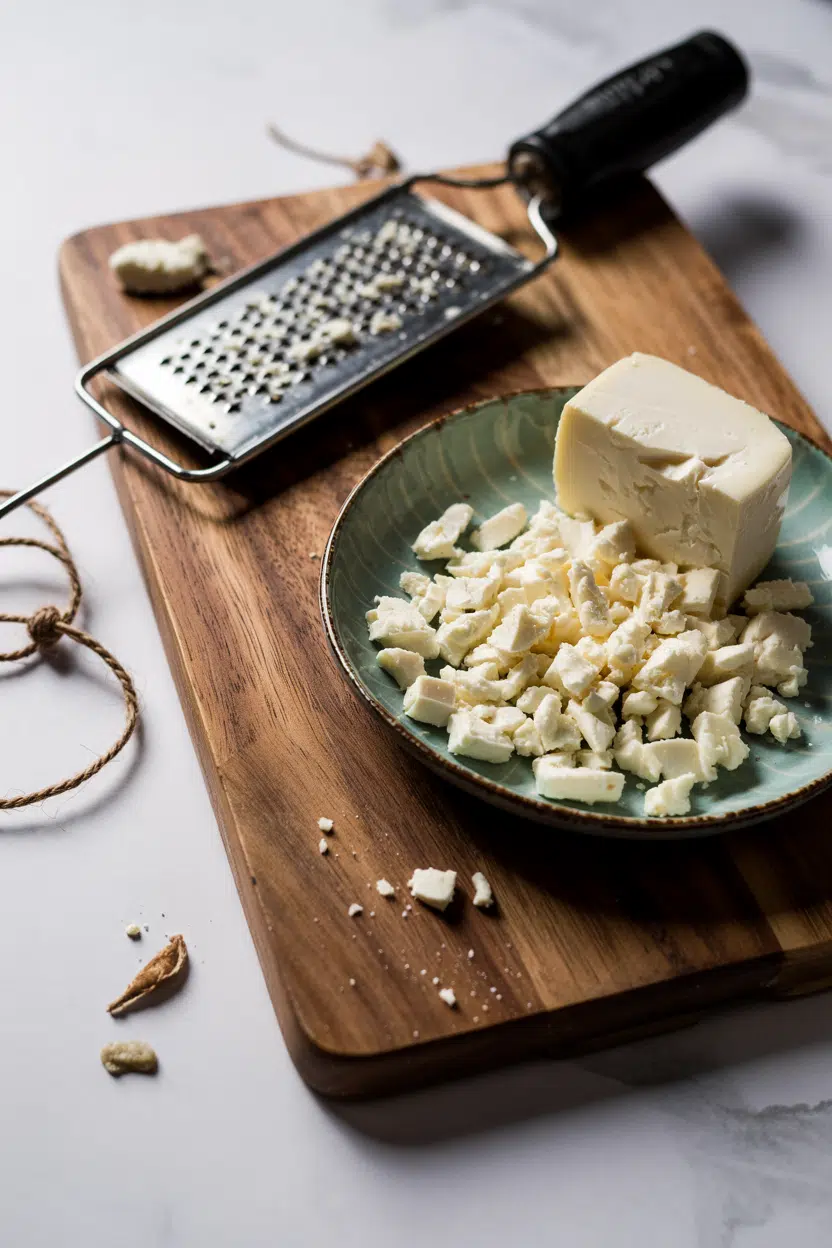
That brining process is what defines the cheese structurally and flavor-wise. The result is a dense white block with a firm, slightly springy interior that crumbles cleanly when pressed.

Feta sits in a different category from fresh cheeses like ricotta - if you've tracked ricotta storage life before, you know it's fragile and mild by comparison. Feta is harder, sharper, and far more shelf-stable in its brine.

Outside Greece, cow's milk "feta-style" cheeses exist widely, but they lack the PDO designation and typically taste milder and less complex.

What Does feta cheese Taste Like?

feta cheese - What Is Feta Cheese

Tangy, salty, and bright - those three words cover feta's baseline flavor, but the intensity level matters here. This is a strong cheese, not a background note.

Sensory SnapshotStrong Intensity
👅 Flavor
BrinyTangySaltyBright acidic
✋ Texture
CrumblyFirm-moistCreamy when warm
👃 Aroma
Mildly tangySlightly sheepy

Raw from the block, feta lands closest to a tangier, saltier goat cheese or a firmer ricotta salata. Heat changes things noticeably.

Baked, the sharp edges soften into a creamier, more yielding texture - the brininess pulls back slightly and the milky sheep's fat comes forward. Crumbled cold over a salad, it stays assertive and almost squeaky-firm.

Older brine-packed feta tends to be saltier and more pungent than younger blocks. That variation is worth knowing before you reach for the salt shaker.

How to Use feta cheese

Feta belongs first in Greek and Mediterranean cooking, where it appears in horiatiki (the classic Greek salad), layered between phyllo sheets in spanakopita, and baked whole in shallow dishes with olive oil and oregano. These aren't the only places it works, however.

Golden Rule
Balance feta's saltiness before adding extra salt to any dish. Taste the finished plate first - feta often provides more than enough.
How Feta Cheese Is Used
MethodBest ForTip
🥗 Crumbled rawSalads, grain bowls, egg dishesCrumble by hand for irregular chunks that hold texture
🔥 BakedBaked feta dip, roasted vegetables, pastaDrizzle generously with olive oil before baking to prevent drying
🍳 GriddledSaganaki-style starter, flatbreadsDust with flour first so the crust sets before the block collapses
🥣 Whisked into dressingsCreamy vinaigrettes, dipsBlend with lemon juice and olive oil for a smooth, pourable result
🥧 Crumbled into fillingsSpanakopita, omelets, stuffed peppersSqueeze excess moisture from any vegetables before mixing

Beyond Greece, feta fits naturally into Balkan and Middle Eastern dishes. Crumbled over grilled lamb or fish just before serving, it melts slightly from the residual heat and delivers a sharp contrast to smoky meat.

In modern fusion cooking, it's stirred into warm pasta with lemon and olive oil or scattered over flatbreads where you'd want a salty, crumbly finish.

Feta's most useful pairing partners are olive oil, lemon, oregano, roasted peppers, olives, cucumbers, and - less predictably - watermelon, where its salt cuts through sweetness cleanly.

Avoid pairing it with overly sweet preparations or delicate white wines with no acidity to push back against the brine.

Try It In
🧀Feta and Goat Cheese RecipesSide-by-side dishes showing how both cheeses handle heat and salads→🍽️Goat Feta Cheese RecipeA simple showcase for the sheep-goat blend at its best→🧂Feta and Blue Cheese RecipesBold brined and aged cheeses used together for maximum contrast→

How to Buy and Store feta cheese

Buy a solid block in brine whenever possible. Look for pure white color with no yellowing, and press the surface lightly - it should feel dense and slightly springy.

Dry, chalky edges or an off-putting sour smell are signs to skip it. Vacuum-packed feta at the supermarket is a workable backup, though expect a firmer, drier texture.

Watch Out
Never store opened feta uncovered or dry. Without brine, it dries out and develops a harsh, overly salty edge within days.

Once opened, keep feta submerged in its original brine or in fresh lightly salted water in a sealed container in the coldest part of the fridge. Unopened brine-packed blocks last several weeks; once opened or repackaged, use within 1-2 weeks.

For a full breakdown, see our guide on feta cheese freshness guide.

Start with the block

If you've only ever bought pre-crumbled feta, the block is worth trying first. It's moister, more flavorful, and holds up better in cooking - whether you're layering spanakopita or crumbling it over a grain bowl.

Need something milder? Check our feta cheese replacements if saltiness is the sticking point.

Feta also holds its own alongside other brined cheeses - halloumi is a natural companion in Mediterranean spreads, though it grills where feta crumbles. Pick feta when you want that tangy, briny contrast to do the heavy lifting.

Frequently Asked Questions

Is feta cheese made from goat or sheep milk?

Primarily sheep's milk. Authentic PDO feta is made from sheep's milk alone or a blend with up to 30% goat's milk. Cow's milk versions exist outside Greece but don't carry the PDO label.

Why is feta so salty?

Salt is applied during production and the cheese is then stored in brine, absorbing sodium continuously. The longer a block sits in brine, the saltier it becomes.

Can you freeze feta cheese?

Yes, but texture suffers. Frozen feta becomes more crumbly and dry after thawing, which makes it better suited to cooked dishes than raw salads. Freeze in an airtight container for up to three months.

How do you soften dry feta?

Soak it. Submerge the block in fresh lightly salted water for 30-60 minutes and it will rehydrate noticeably. Avoid plain unsalted water, which can make the flavor flat.

Is feta cheese lactose-free?

Not entirely, however it's lower in lactose than most fresh cheeses because the aging and brining process breaks down much of the lactose. Many people with mild lactose sensitivity tolerate it without issue.

What Is Double Cream? Taste, Uses & More Guide

March 9, 2026

Most people assume double cream is just a richer version of whatever cream they already use - and that assumption costs them. It behaves differently, whips faster, and holds structure that lighter creams simply can't match.

What Is Double Cream
QUICK SUMMARY

Double cream is a high-fat British cream (~48% butterfat) with a rich, buttery flavour and thick, coating texture. It whips to stable peaks faster than heavy cream, resists curdling in hot sauces, and works across desserts, pan sauces, and custards.

🥛Category: High-fat cow's milk cream, ~48% butterfat
👅Flavour: Rich butterfat sweetness with mild lactic tang
🍮Best Uses: Whipped desserts, pan sauces, ganache, custard bases
📅Shelf Life: 1-2 weeks unopened; 3-5 days once opened
🌍Origin: United Kingdom; widely used across British and European cooking

What Is Double Cream?

Double cream is a high-fat dairy cream produced from cow's milk, defined by its unusually elevated butterfat content - around 48% in UK-standardised products.

That fat percentage is what separates it from single cream (~18% fat) and even heavy cream (~36% fat in the US), placing it in a category of its own.

The name comes from the old British practice of skimming cream twice from unhomogenised milk, concentrating the fat layer. It's sold widely across the UK and Europe, and you'll sometimes see it labelled simply as "48% cream" in European markets.

Several distinct forms exist on shelf:

  • Pasteurised fresh double cream - the standard; richest flavour, shortest shelf life
  • UHT double cream - heat-treated for longer storage, slightly cooked note to the flavour
  • Organic double cream - same fat spec, often from grass-fed herds with a marginally more pronounced dairy character

In American kitchens, heavy cream is the closest equivalent, though it falls noticeably short on fat content. If a recipe calls for double cream and you can't source it, there are double cream alternatives worth knowing before you start.

What Does Double Cream Taste Like?

double cream - What Is Double Cream

Butterfat is the dominant note. Double cream tastes clean and dairy-sweet, with a mild lactic tang underneath - not sour, just a quiet brightness that stops the richness from feeling flat.

Compared to US heavy whipping cream, the difference is immediate. Double cream coats the palate more fully, and that coating lingers.

The fat content gives it a near-neutral sweetness that carries other flavours - vanilla, chocolate, citrus - without competing with them.

Sensory SnapshotStrong Intensity
👅 Flavor
ButteryLactic tangClean dairy sweet
✋ Texture
ThickCoatingSmooth
👃 Aroma
Fresh milkySubtle butter

When heated, the flavour mellows and the aroma turns gently buttery.

Chilled straight from the fridge, it's denser and the lactic note is slightly more pronounced - which is why cold double cream whips so much faster and holds peaks more reliably than its lower-fat counterparts.

Golden Rule
Always whip double cream cold. Warm cream has loosened fat globules that won't trap air properly - you'll get soft, unstable foam instead of firm peaks.

How to Use Double Cream

Double cream handles heat, cold, and mechanical force better than most creams. That stability comes from fat, and it opens up a wide range of methods.

How Double Cream Is Used
MethodBest ForTip
🥣 Whipped ColdTopping puddings, berries, sconesStop at soft peaks for spoonable cream; keep going for piping
🍳 Stirred Into SaucesPan sauces, soups, puréesAdd off direct heat and whisk in; don't boil hard after adding
🍫 Ganache BaseChocolate ganache, tart glazesHeat gently to just below simmering before pouring over chocolate
🍮 Custard & Crème AnglaiseIce cream bases, poured custardTemper with egg yolks slowly - double cream's fat makes it forgiving
🧁 Folded Into BattersMousses, chilled cheesecakesFold, don't stir; over-mixing deflates the aerated structure

British cooking leans on double cream most heavily - spooned over summer pudding, stirred into a beef pan sauce, or poured cold alongside warm fruit crumbles.

French patisserie uses it in crème anglaise and as a base for rich ganache; if you're working with chocolate and need a substitute in ganache, understanding the fat role matters.

Pairings worth knowing: strawberries and stone fruit, dark chocolate, vanilla, lemon curd, roast mushrooms, almond praline, and the savoury side - beef pan sauces and reduced chicken jus both benefit from a tablespoon stirred in off the heat.

Watch Out
Double cream can split in high-acid sauces. Always temper it in gradually and avoid combining with sharp vinegar reductions without lowering the heat first.
Try It In
🍮Double Cream RecipesPractical uses from whipped toppings to rich sauce finishes→

How to Buy and Store Double Cream

Look for cartons or tubs labelled "double cream" with a pale ivory colour and no visible watery separation at the surface. Where the label shows fat content, aim for 48% - anything lower is likely a single or whipping cream product in disguise.

Shortcut
If you can't find fresh double cream locally, UHT double cream is a reliable shelf-stable option - check our guide to UHT cream before buying.

Storage is straightforward:

  • Unopened - keep at 0-4°C (32-40°F) in the original sealed container; lasts 1-2 weeks depending on pack date
  • Opened - transfer to a clean airtight container and use within 3-5 days
  • Freezing - not recommended for fresh double cream; fat and water separate on thawing, making it unsuitable for whipping

For a full breakdown of how long double cream stays usable, see our double cream storage life guide. And if your cream has already turned, heavy cream alternatives cover the closest options across common recipes.

Where to Start With Double Cream

New to it? Spoon it cold over fresh berries or a warm crumble - no prep needed, and you'll understand the texture immediately.

For cooking: Try finishing a pan sauce. Remove the pan from heat, stir in two tablespoons of cold double cream, and watch the sauce take on gloss and body that thinner creams won't give you.

Baking: Use it as the liquid base in a whipped ganache or as the cream element in a no-churn ice cream - its high fat content means it freezes with minimal ice crystals.

Frequently Asked Questions

Is double cream the same as heavy cream?

No. Double cream contains around 48% butterfat, while US heavy cream sits at roughly 36%. Double cream whips firmer, holds peaks longer, and adds noticeably more body to sauces.

Can you whip double cream?

Yes - and it whips faster than lighter creams. Keep it cold and watch carefully; it can over-whip to a buttery texture within seconds of reaching stiff peaks.

Can you freeze double cream?

Technically yes, but it's not ideal. Thawed double cream separates and won't whip; it's only usable in cooked applications like sauces or baked custards after freezing.

Can double cream be used in sauces?

Yes, and its high fat content makes it more stable in heat than single cream. Add it off direct boil and avoid combining with strong acids without tempering first.

How many calories are in double cream?

Roughly 450-500 kcal per 100ml, almost entirely from fat. It's predominantly saturated fat, with small amounts of vitamin A and calcium.

What Is Cornstarch? [Taste, Uses & More]

March 9, 2026

You spot a box of cornstarch at the back of the spice cabinet and wonder if it's still any good - or, more likely, you're not sure what you bought it for in the first place. Cornstarch is one of those pantry staples that works quietly in the background, thickening a glossy stir-fry sauce, crisping a fried chicken coating, or keeping a lemon custard from weeping.

What Is Cornstarch

Unlike tapioca starch or potato starch, it's almost completely neutral in flavor, which is exactly why it's so useful.

QUICK SUMMARY

Cornstarch is a fine white starch extracted from corn kernels. It's nearly flavorless, gluten-free, and used primarily to thicken sauces, crisp fry coatings, and stabilize baked goods. Shelf life runs 1-3 years depending on whether the container is open.

🌽What It Is: Pure starch from corn endosperm, sold as a fine white powder
👅Flavor: Neutral, faintly sweet grain note - essentially tasteless in cooked dishes
🍳Best Uses: Slurry thickening, fry coatings, custards, gluten-free baking blends
📦Shelf Life: 2-3 years unopened; 12-24 months once opened if stored dry
✅Diet Notes: Gluten-free and vegan; high in digestible starch, low in fiber and micronutrients

What Is Cornstarch?

Cornstarch - also called maize starch in much of the world - is the purified starch extracted from the endosperm of dried corn kernels.

The process strips away the protein and fiber, leaving behind an almost pure carbohydrate powder that's bright white and extremely fine to the touch.

In the United States, some cooks confuse it with corn flour, which is whole-ground corn and has a distinctly different texture and flavor. They are not interchangeable.

In the UK and parts of Australia, "cornflour" actually refers to what Americans call cornstarch - so the name shifts depending on where you are.

Cornstarch belongs to the broader category of starch thickeners, alongside alternatives like arrowroot and potato starch. Here's how the common varieties compare:

  • ⚪ Cornstarch - bright white, neutral flavor, produces a glossy and slightly opaque gel
  • 🌿 Arrowroot - very similar thickening power, but clearer finish and works better in acidic sauces
  • 🥔 Potato starch - thickens at lower temperatures, slightly heavier texture in sauces
  • 🌾 All-purpose flour - thicker ratio needed, clouds liquids, adds faint wheaty flavor

What Does Cornstarch Taste Like?

cornstarch - What Is Cornstarch

Raw cornstarch tastes like almost nothing. There's a faint, faintly sweet grain note - closer to plain white rice flour diluted in water, but milder and less detectable.

Most people wouldn't be able to identify it blind.

The more important flavor story happens during cooking. When cornstarch gelatinizes in a hot liquid, it disappears entirely into the sauce or filling.

It doesn't add a starchy or floury aftertaste the way all-purpose flour can.

Sensory SnapshotMild Intensity
👅 Flavor
neutralfaint sweet grainbland
✋ Texture
powdery drysilky when cooked
👃 Aroma
virtually odorlessfaint corn

One caveat: overcooking breaks the gel. Extended boiling causes starch retrogradation, where the thickened sauce thins out and turns watery - a sign the starch structure has collapsed.

How to Use Cornstarch

Cornstarch does its best work when you understand its two main jobs: thickening and coating. Each requires a slightly different technique.

For thickening, always mix cornstarch into cold liquid first to form a slurry before adding it to anything hot. Pouring dry cornstarch directly into a hot sauce creates lumps that won't dissolve.

The difference between a roux and a slurry matters here - a slurry is faster, produces a clearer finish, and is the standard method in Chinese stir-fry cooking. For coatings, toss proteins dry in cornstarch before frying to get a light, airy crust that stays crisper longer than an all-purpose flour coating.

Golden Rule
Never boil a cornstarch-thickened sauce for more than 1-2 minutes after it thickens. Prolonged high heat breaks the gel and thins it back out.

Cornstarch also plays a supporting role in baking. Mixed into rice flour blends or wheat flour alternatives, it tenderizes the crumb and lightens the texture without adding flavor.

In custards and pie fillings, it stabilizes egg yolks and produces a clean, non-cloudy set.

How Cornstarch Is Used
MethodBest ForTip
🥣 SlurryGlossy sauces, gravies, soups, stir-friesMix 1 part cornstarch to 2 parts cold water before adding to hot liquid
🍳 Dry CoatingFried chicken, shrimp, tofu, potsticker fillingsToss proteins dry; fry immediately for the crispest crust
🧁 Baked BlendsGluten-free cakes, shortbreads, tender pastryReplace up to 25% of flour with cornstarch for a lighter crumb
🍮 Custard StabilizerLemon curd, pastry cream, fruit pie fillingsWhisk with sugar first to distribute evenly before adding liquids

Avoid using cornstarch in high-alcohol sauces - alcohol inhibits full gelatinization and leaves the sauce thin. For acidic sauces with lots of citrus or vinegar, arrowroot powder holds up better.

Try It In
🍋One-Pan Baked Lemon Herb Chicken ThighsCornstarch in the coating helps the skin crisp without deep frying→🍲Slow Cooker Chicken Tortilla SoupA small slurry added late thickens the broth without dulling the flavor→🥔Loaded Baked Potato SoupCornstarch gives the creamy base body without the heaviness of extra flour→

How to Buy and Store Cornstarch

Look for a fine, bright white powder with no gray or yellow specks and a neutral smell when you open the container. Any off-color or damp clumps suggest moisture has already gotten in.

Buy food-grade cornstarch only - industrial grades exist and are not the same product.

Watch Out
Cornstarch absorbs moisture fast. A single steamy kitchen session with an open container can cause enough clumping to make it difficult to measure accurately later.

Choose smaller packages if you cook with it occasionally. Once opened, transfer the contents to a sealed jar or airtight container and keep it in a cool, dry pantry.

Check your cornstarch freshness guide if you're unsure whether an old box is still good - clumping and off-smell are the main signals to toss it.

  • Unopened - 2-3 years in a cool, dry pantry
  • Opened - 12-24 months in an airtight container away from heat and humidity

Start With Sauces

If you've never cooked with cornstarch before, thickening a sauce is where to begin. Mix one tablespoon with two tablespoons of cold water, stir it into a simmering liquid, and watch it tighten in under a minute.

That single technique covers most of what cornstarch does well.

From there, try it in a fry coating - even a light dusting on chicken or shrimp before pan-frying makes a noticeable difference in crispness. Once you've used it those two ways, the rest of its applications follow naturally.

Frequently Asked Questions

Is cornstarch the same as corn flour?

Not in the US. Cornstarch is pure extracted starch; corn flour is whole-ground corn with a coarser texture and noticeable flavor. In the UK and Australia, "cornflour" refers to what Americans call cornstarch - the naming flips completely.

Can you substitute cornstarch for flour as a thickener?

Yes, but use about half as much. Cornstarch has roughly twice the thickening power of all-purpose flour and produces a clearer, glossier result. It won't add the faint floury flavor that a roux-based sauce carries.

How long does cornstarch last once opened?

About 12-24 months in an airtight container stored away from heat and moisture. It doesn't spoil in a traditional sense but loses effectiveness when moisture causes clumping. A dry, sealed jar extends its usable life significantly.

Why did my cornstarch-thickened sauce turn thin after cooking?

Prolonged boiling breaks the starch gel - a process called retrogradation. Remove the sauce from high heat within 1-2 minutes of it thickening. Reheating a cooled cornstarch sauce can also thin it slightly.

Does cornstarch work in acidic sauces?

It works, but acid weakens the gel over time. For sauces with heavy citrus or vinegar, arrowroot holds up better and stays clear longer. Use cornstarch in mildly acidic dishes and add it as late as possible.

What Is Cornichon? [Taste, Uses & More]

March 9, 2026

Most people assume a cornichon is just a tiny pickle - a miniature version of what you'd find next to a deli sandwich. That misread undersells it considerably.

What Is Cornichon

A cornichon brings a sharper, more concentrated acidity than standard dill pickles and carries herby, mustardy complexity that makes it a precision ingredient, not an afterthought.

QUICK SUMMARY

A cornichon is a small French pickled gherkin brined in sharp vinegar with mustard seed and tarragon. Firm, snappy, and intensely tart, it's used as a condiment and garnish - most often alongside pâté, cured meats, and rich sauces - rather than eaten by the handful.

👅Flavor: Sharp vinegar tang, savory brine, faint mustard and tarragon notes
✋Texture: Firm, snappy crunch with dense flesh and tiny seeds
🍽️Best Uses: Charcuterie boards, steak tartare, tartar sauce, ham sandwiches
🧂Pairs With: Pâté, foie gras, smoked fish, Dijon mustard, creamy cheeses
🕐Shelf Life: Opened jars last 1-3 months refrigerated in brine
🛒Buy It: Look for uniformly green, upright pickles with visible mustard seeds in the jar

What Is Cornichon?

Cornichon is a small pickled cucumber originating in France, with the Basque and Burgundy regions credited for popularizing its use in classic French cooking. The name simply means "small horn" in French, a nod to the cucumber's tapered shape.

Unlike standard pickles, cornichons are harvested very young - typically under an inch long - to preserve their firm, dense flesh.

They're packed in a sharp white vinegar brine seasoned with mustard seeds, tarragon, and sometimes pearl onions or peppercorns, giving them a flavor profile distinct from American dill pickles.

You may see them labeled under several names:

  • Cornichons de Paris - the classic French-style preparation, small and sharply brined
  • Baby gherkins - the common English-language label; same product, different marketing
  • French gherkins - emphasizes origin; often signals the traditional mustard-tarragon brine
  • À la moutarde - labeled varieties include visible mustard seed and intensified savory notes

The tarragon swaps sometimes appear in home-brined versions, but traditional jars rely on the real herb for that faintly anise-like herby undertone.

What Does Cornichon Taste Like?

cornichon - What Is Cornichon

Cornichons hit with an immediate, bright vinegar tang - more aggressive than a bread-and-butter pickle and less dill-forward than a classic American kosher pickle. The brine has a pronounced saltiness that follows the acid, then settles into a savory, slightly mustardy finish.

Sensory SnapshotStrong Intensity
👅 Flavor
Sharp vinegarSalty-acidMustardyHerbyFaint vegetal
✋ Texture
FirmSnappy crunchDense flesh
👃 Aroma
Sharp vinegaryHerby-mustardy

That underlying vegetal cucumber note is subtle - still present, but subordinate to the brine. Heat dulls the vinegar sharpness slightly, which is why cornichons added to a warm pan sauce mellow faster than you'd expect.

Compared to a dill pickle, cornichons are crisper, smaller, and considerably more acidic. Their flavor is concentrated by design: you're not eating a full pickle, you're deploying a burst of acid contrast.

How to Use Cornichon

Cornichons are built for rich, fatty contexts. Their role is acid balance - cutting through fat and weight so the palate resets between bites.

The most classic application is alongside a charcuterie board: cornichons served whole next to pâté, rillettes, or foie gras. That same logic applies to cured and smoked proteins - smoked salmon, corned beef, cured ham - where the vinegar sharpness offsets the salt and fat simultaneously.

A well-built charcuterie board almost always includes them for this reason.

Golden Rule
Serve cornichons cold and whole alongside rich plates. Slicing or chopping is for sauces - whole cornichons deliver the snap and acid hit that makes them work as a garnish.

Beyond the board, cornichons earn their keep across several preparations:

How Cornichon Is Used
MethodBest ForTip
🥗 Whole, rawCharcuterie boards, pâté plates, cocktail skewersServe cold; pair with [Dijon mustard](https://forkliftkitchen.com/dijon-mustard-substitutes/) on the side
🔪 Chopped/mincedSteak tartare, tartar sauce, remoulade, vinaigrettesFine chop releases brine into the sauce - taste before adding extra salt
🍳 Briefly warmedPan sauces for pork or chicken, bistro-style reductionsAdd at the end - sustained heat kills the crunch and flattens acid
🥪 Sliced, layeredHam-and-cheese sandwiches, croque-monsieur, deli-style wrapsSlice thin lengthwise to distribute acid evenly through each bite

Cornichons also pair well with sharp mustards, creamy brie or camembert, and gin-based cocktails - they're a classic martini garnish in French bistro tradition. Avoid pairing them with delicate fruit-forward sauces or floral desserts; the vinegar sharpness will dominate.

Try It In
🥩Roasted Garlic Béarnaise SauceChop cornichons into the finished sauce for a sharp, briny counterpoint to butter→🍲Creamy Beef StewStir in sliced cornichons at the finish to lift heavy cream-based sauces→

How to Buy and Store Cornichon

Look for jars where the cornichons are uniformly small and green, standing upright in clear brine. Cloudy or foamy liquid, limp texture through the glass, or pale-yellow coloring are all signs of poor quality or age.

Jars labeled à la moutarde indicate the traditional mustard-seed-and-tarragon seasoning - worth seeking out over plain vinegar-packed versions.

Watch Out
Don't discard the brine after opening. Keeping cornichons submerged in their original liquid extends crunch and acidity significantly past the first few weeks.

Storage is straightforward:

  • Unopened jars - store in a cool, dark pantry for several months to up to a year
  • Opened jars - refrigerate immediately; transfer to a sealed jar if the original lid is damaged
  • Best texture window - 1 to 3 months after opening; texture softens gradually after that

For a detailed look at how long they last under different conditions, see our guide to cornichon freshness guide.

Start With the Classic Pairing

If you've never used cornichons before, start with pâté. That combination - fatty, smooth pâté against the sharp snap of a whole cornichon - is the clearest demonstration of what this ingredient does.

Once that clicks, explore what to serve alongside a full pâté spread and you'll find cornichons appearing throughout. From there, chopping them into tartar sauce or steak tartare is the natural next step.

For those who can't find them locally, cornichon swaps can approximate the flavor, though none match the exact crunch-to-acid ratio.

Frequently Asked Questions

What is the difference between a gherkin and a cornichon?

Cornichons are a specific type of gherkin - always French-style, very small, and packed in sharp white vinegar with mustard seed and tarragon. General gherkins vary widely by country; they may use dill brine, sweeter vinegar, or different spicing entirely.

Are cornichons the same as pickles?

Technically yes - cornichons are pickled cucumbers. In practice, they differ from American-style pickles in size, brine composition, and intensity. Cornichons are sharper, smaller, and crunchier than most standard dill or bread-and-butter pickles.

Can you make cornichons at home?

Yes, using small pickling cucumbers harvested young. A basic home brine uses white wine vinegar, salt, mustard seeds, and fresh tarragon. The challenge is sourcing cucumbers small enough - most grocery varieties are too large for authentic results.

Do cornichons contain a lot of sodium?

They're notably high in sodium relative to their size. A few cornichons can contribute 200-300mg of sodium depending on the brand. Anyone monitoring salt intake or on vitamin K-sensitive medications should check labels carefully.

Should you rinse cornichons before eating?

No - rinsing washes away the brine coating that carries most of the flavor. If the saltiness is too strong for a recipe, reduce other salt sources in the dish rather than rinsing the cornichons themselves.

5 Best Substitutes for Liquid Smoke in Barbecue & Grilling

March 9, 2026

You reach for the bottle-empty. The recipe needs that smoky depth, but you're not running out to the store. A few smart swaps can deliver the same smoky character without any special trips.

5 Best Substitutes for Liquid Smoke in Barbecue & Grilling

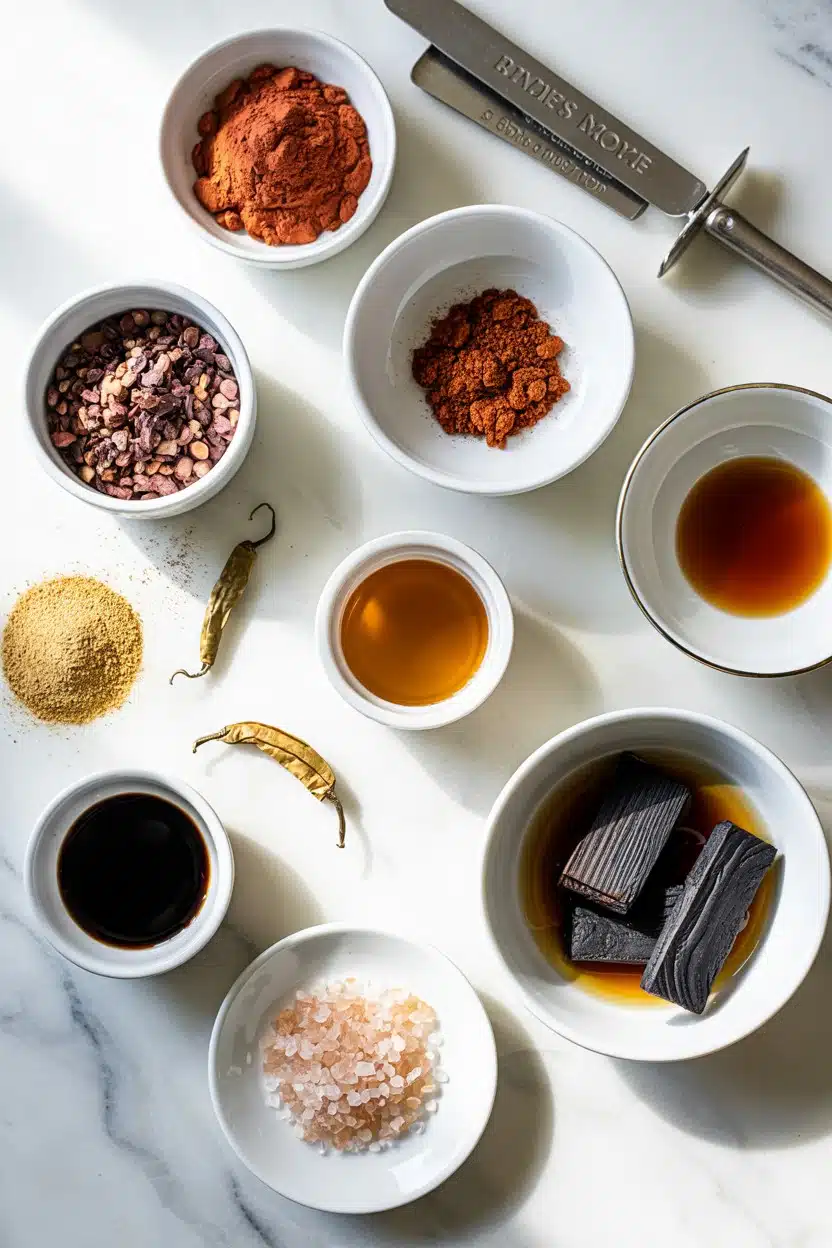
Liquid smoke adds deep, wood-fired flavor to marinades, sauces, and stews. When it's not available, look for swaps that bring smokiness through dried spices, charred vegetables, or umami-rich blends. Each option shifts the flavor slightly, so match the swap to your dish.

QUICK SUMMARY

Smoked paprika and chipotle in adobo deliver the closest smoky punch. Charred veggies add natural smoke but change texture. Coffee powder brings umami depth without direct smokiness. Pick based on whether you need dry seasoning, liquid flavor, or just rich background notes.

🔥Closest match: Smoked paprika for dry rubs and sauces
⚖️Core ratio: 1 teaspoon smoked paprika per 1 tablespoon liquid smoke
⚠️Common mistake: Using too much coffee powder-it turns bitter fast

4 Best Liquid Smoke Alternatives for Recipes

Swaps range from spice-based to technique-driven. Choose based on whether your recipe needs a dry seasoning, a liquid component, or just background umami.

Quick Substitute Reference
#SubstituteBest ForRatioKey Note
1 Smoked Paprika ✨ Both 1 teaspoon per 1 tbsp Intensifies aroma
2 Charred Veggies 🍳 Cooking ¼ cup pureed per 1 tbsp Changes texture
3 Chipotle in Adobo 🍳 Cooking 1 teaspoon sauce per 1 tbsp Adds spicy kick
4 Soy Sauce Mix 🍳 Cooking 2 tablespoon mix per 1 tbsp High sodium
5 Coffee Powder 🍳 Cooking ½ teaspoon per 1 tbsp No direct smokiness

1 - Smoked Paprika

Smoked paprika comes from ground peppers dried over wood fires. It brings both smoky aroma and a subtle sweetness that works in dry rubs, sauces, and stews.

Use 1 teaspoon smoked paprika per 1 tablespoon liquid smoke. It won't add moisture, so blend it with a small amount of water or broth if your recipe needs liquid volume.

Sweet Smoked Paprika

Works for: Marinades, tomato-based sauces, mild stews

Skip if: You need heat or intense smoke

Hot Smoked Paprika

Works for: Spicy rubs, chili, bold glazes

Skip if: Your dish is delicate or mild

Here's what to know:

  • Sweet paprika stays mild-hot paprika brings pepper heat
  • Color deepens faster than liquid smoke-watch the browning

Out of smoked paprika too? Paprika swaps for cooking covers milder spice blends.

2 - Charred Veggies

Grilling or charring onions, peppers, or tomatoes creates natural smoky flavor. Purée them and stir into soups, sauces, or braises for a veggie-forward swap.

Use ¼ cup puréed charred vegetables per 1 tablespoon liquid smoke. The texture shifts from liquid to chunky, so this works best in blended dishes.

The essentials:

  • Char over high heat until blackened
  • Remove skins if bitter-bell peppers especially
  • Purée smooth or leave slightly chunky

Skip if: You need a clear sauce or fast prep-charring takes time and adds bulk.

3 - Chipotle in Adobo

Chipotle peppers in adobo sauce deliver smoky heat with a tangy edge. The sauce alone brings enough flavor without using the whole pepper.

Best Pick
Start with 1 teaspoon adobo sauce per 1 tablespoon liquid smoke-taste and add more if needed. The spice builds fast.

The sauce blends into marinades and stews without changing texture. It adds mild heat, so pull back on other spices if your recipe already has chili or cayenne.

Quick specs:

  • Sauce only: smoky, tangy, mild heat
  • Whole pepper: intense spice, chunky texture

Missing adobo sauce as well? Adobo sauce alternatives covers spicy liquid swaps.

Skip if: You need neutral smokiness-this adds noticeable heat and tang.

4 - Soy Sauce Mix

Combine 2 tablespoon soy sauce, ⅛ teaspoon smoked salt, and a pinch of cinnamon per 1 tablespoon liquid smoke. This blend builds umami and subtle smokiness through layered flavors.

UseRatioNotes
Barbecue sauceFull mixAdds salty-sweet depth
GlazesFull mixCaramelizes well
Beef stewReduce soy by halfBalance salt levels

The soy sauce adds liquid volume, so you won't need extra broth. Smoked salt carries the smoky note, while cinnamon rounds out the warmth.

Key details:

  • Use low-sodium soy if your dish is already salty
  • Skip smoked salt if unavailable-regular salt + extra paprika works
  • Cinnamon is subtle-don't taste it directly

Out of smoked salt too? Smoked salt swaps has a few options.

Skip if: Soy allergy or you're watching sodium-this mix runs high on both.

5 - Coffee Powder

Instant coffee or espresso powder adds roasty, earthy depth that mimics the dark complexity of smoked ingredients. It doesn't taste like coffee in savory dishes-it just deepens the background.

Use ½ teaspoon instant coffee powder per 1 tablespoon liquid smoke. Stir it into stews, chili, or braised meats where it can dissolve and blend.

Watch Out
More than 1 teaspoon per batch turns bitter-start small and taste as you go.

Coffee powder works best in beef-heavy dishes where umami matters more than smoke. It won't add aroma, so pair it with smoked paprika if you need both depth and scent.

What to expect:

  • Dissolves fast in hot liquid
  • Darkens color slightly
  • No coffee flavor at low amounts
  • Bitter if overdone

No espresso powder either? Instant coffee swaps covers roasty alternatives.

Skip if: You need pure smoke flavor or you're cooking vegetarian dishes where coffee's bitterness can dominate.

How to Choose a Liquid Smoke Substitute

Pick based on whether you need dry seasoning, liquid volume, or just deep background flavor. Smoked paprika handles most situations, while charred veggies and chipotle work when you want complexity.

  • Closest match - Smoked paprika for concentrated smoke
  • Easiest grab - Chipotle in adobo already in liquid form
  • Dietary option - Charred veggies for plant-based depth

Frequently Asked Questions

Can I use smoked paprika in place of liquid smoke for baking?

Yes, but reduce the amount-½ teaspoon smoked paprika per 1 tablespoon liquid smoke works in baked beans or cornbread. It adds color and aroma without extra moisture.

Does charring vegetables really match liquid smoke's flavor?

Charring adds natural smokiness but also brings veggie sweetness and texture. It works best in soups or purées where those qualities fit the dish.

Can I skip the cinnamon in the soy sauce mix?

Yes-the cinnamon adds warmth but isn't critical. Use soy sauce and smoked salt alone if you want a cleaner, saltier profile.

Will instant coffee taste like coffee in my stew?

Not at the right amount-½ teaspoon per batch just deepens savory notes. More than that, and bitterness starts to show.

What's the best liquid smoke substitute for vegan recipes?

Charred vegetables or smoked paprika-both add smokiness without animal products. Chipotle in adobo also works if you want heat.

5 Best Substitutes for Liquid Smoke in Barbecue & Grilling

5 Best Substitutes for Liquid Smoke

No ratings yet
Liquid smoke adds wood-fired flavor to marinades, sauces, and stews. Use smoked paprika for dry rubs and sauces or chipotle in adobo for liquid smoky heat. Charred veggies add texture and natural smoke, while coffee powder provides umami depth without direct smokiness.
Print Recipe Pin Recipe
Prep Time 10 minutes mins
Cook Time 8 minutes mins
Total Time 18 minutes mins
Servings: 4 servings
Course: Condiments, Sauces
Cuisine: American
Ingredients Method Notes

Ingredients
  

  • 1 teaspoon Smoked Paprika Use 1 teaspoon smoked paprika per 1 tablespoon liquid smoke. Blend with water or broth if recipe needs liquid volume.
  • 0.25 cup Charred Veggies Puree Use ¼ cup pureed charred vegetables per 1 tablespoon liquid smoke. Works best in blended dishes due to texture.
  • 1 teaspoon Chipotle in Adobo Sauce Use 1 teaspoon sauce per 1 tablespoon liquid smoke. Adjust spice level as it builds fast.
  • 2 tablespoons Soy Sauce Mix (Soy sauce, smoked salt, cinnamon) Combine 2 tablespoon soy sauce, ⅛ teaspoon smoked salt, and a pinch of cinnamon per 1 tablespoon liquid smoke. Adjust salt as needed.
  • 0.5 teaspoon Instant Coffee Powder Use ½ teaspoon instant coffee powder per 1 tablespoon liquid smoke to add roasted umami depth without direct smokiness.

Method
 

  1. Choose your substitute based on recipe needs: dry seasoning, liquid flavor, or background umami.
  2. For smoked paprika, blend with a small amount of water or broth if your dish requires liquid.
  3. For charred veggies, char onions, peppers, or tomatoes over high heat until blackened, remove skins if bitter, then puree smooth or leave slightly chunky.
  4. Use the specified ratio for each substitute to replace 1 tablespoon of liquid smoke as a guide; adjust to taste.
  5. Add substitutes into your recipe accordingly and taste as you go to ensure balance and desired smoky depth.

Notes

Add smoked paprika slowly and blend well to avoid a gritty texture that affects your dish's consistency.

Tried this recipe?

Let us know how it was!

What Is Collard Green? [Taste, Uses & More]

March 9, 2026

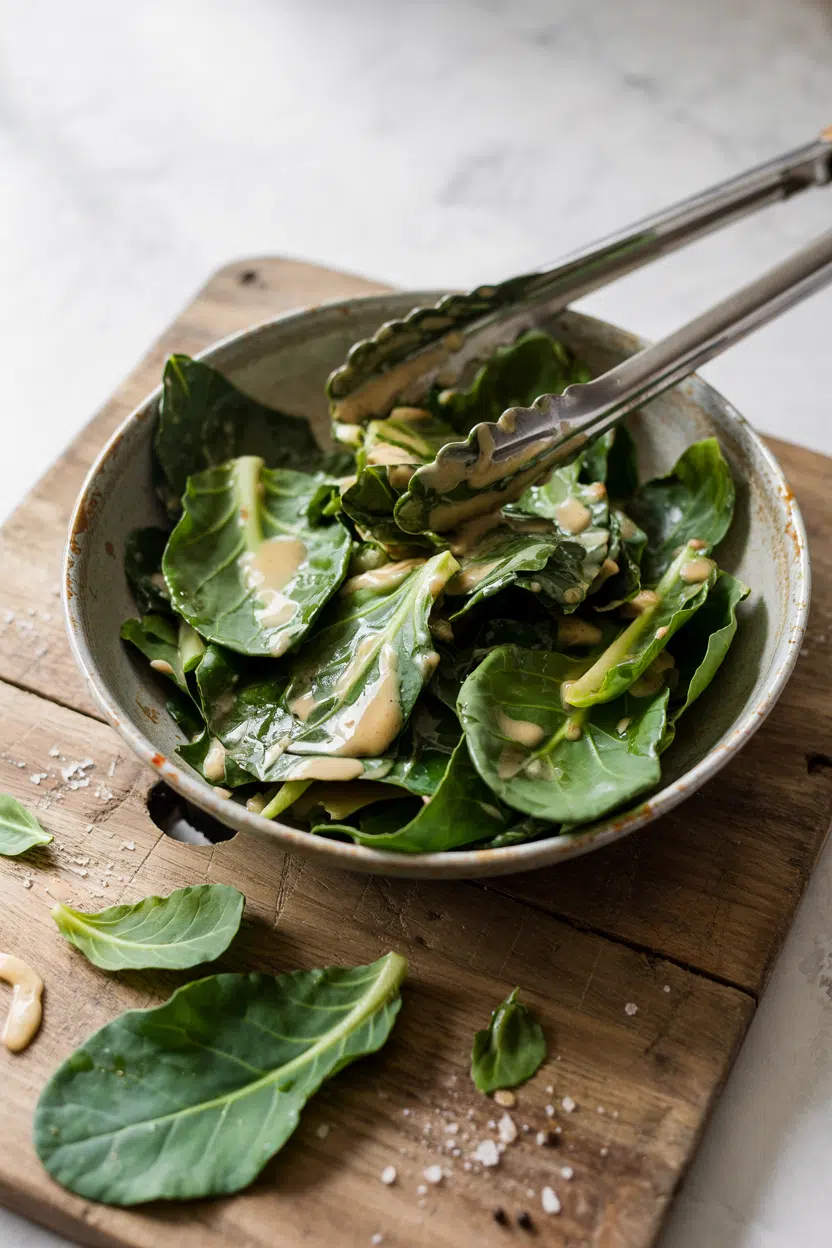
You spot a hefty bunch of collard greens at the market - broad, dark leaves fanning out like oversized paddles, stems thick enough to feel almost architectural. Most people walk past them, unsure what to do with something so sturdy.

What Is Collard Green

That's a missed opportunity, because few greens hold up to long, smoky cooking the way collards do, and that toughness is exactly the point. They're a staple across swiss chard alternatives and mustard green swaps lists, but collards deserve to be understood on their own terms.

QUICK SUMMARY

Collard greens are a large, dark Brassica leaf with mild bitterness that softens dramatically during braising. Common in Southern U.S. and Portuguese cooking, they pair best with smoked meats and acidic finishes. Raw leaves last up to 10 days refrigerated.

🌿Flavor: Earthy, mildly bitter, slightly peppery near the stem
🍳Best Use: Slow-braised with smoked pork, vinegar, and aromatics
🌍Cuisines: Southern U.S., Portuguese, Brazilian, African diaspora
🛒Buying Tip: Deep green, flexible stems, moist white cut ends
📅Shelf Life: Raw 5-10 days; cooked 3-5 days, both refrigerated

What Is Collard Green?

Collard green - botanically Brassica oleracea - belongs to the same species as cabbage, kale, and broccoli, though it grows as a non-heading, open-leaf plant.

Its roots trace to West Africa, where it was cultivated long before it became a cornerstone of Southern U.S. cooking through the African diaspora.

The leaves are large and flat with a prominent central rib, dark blue-green in color, and noticeably thicker than most other leafy greens. That thickness is structural - the leaf resists wilting and holds its shape through hours of braising.

You'll hear them called collards, colewort, or couve in Portuguese and Brazilian cooking. Unlike kale, which has curly or lacinato varieties with distinct personalities, collards are relatively uniform - same broad leaf, same sturdy build, across most bunches you'll find at market.

Best Pick
Choose bunches with deep blue-green leaves, flexible (not brittle) stems, and moist white cut ends at the base. Avoid any sign of yellowing or slimy leaf edges.

What Does Collard Green Taste Like?

collard green - What Is Collard Green

Raw collards have a mild, grassy bitterness - less sharp than mustard greens, less mineral than kale, but with a faint pepper note near the thick central stem. The raw flavor is assertive enough to notice, not aggressive enough to overwhelm.

Heat changes everything. Long braising pulls out that bitterness and replaces it with something earthy, savory, and almost sweet.

The leaves absorb whatever liquid they cook in - pot likker spiked with smoked turkey or ham hock turns them deeply savory and faintly smoky.

Sensory SnapshotModerate Intensity
👅 Flavor
earthymildly bitterslightly peppery
✋ Texture
thick and sturdy rawsilky when braised
👃 Aroma
green and vegetalsmoky when cooked with pork

Acid - vinegar, lemon - brightens the cooked flavor sharply. A splash at the end of braising cuts through the richness and lifts the whole pot.

How to Use Collard Green

Southern-style braised collards are the most recognized preparation: leaves stripped from the central rib, chopped, and cooked low and slow in seasoned broth with smoked pork. A ham hock or smoked turkey neck added early in cooking gives the pot likker its signature depth. If you're planning a full Southern spread, pairings for smoked turkey breast is a useful starting point for building the meal around it.

Portuguese couve a mineira takes a faster route - thin-sliced leaves sautéed quickly in olive oil and garlic, finished with salt. Brazilian cooking uses the same technique alongside rice and beans.

Both approaches prove collards don't need hours to be good; they just need different goals.

Shortcut
Thin-slicing collards (chiffonade) before sautéing cuts cook time to under 5 minutes and gives you tender, not mushy, results without any braising liquid.

Beyond those two anchor preparations, collards work across several methods:

How Collard Green Is Used
MethodBest ForTip
🫕 BraisingSouthern-style greens, pot likkerCook 45-90 min with smoked meat; finish with vinegar
🍳 SautéingPortuguese couve, quick weeknight sideSlice thin; high heat, 3-5 min only
🥗 Raw (massaged)Hearty salads, slawsThin-slice and massage with salt and acid to soften
🥬 Leaf-wrappingGrain or protein fillings as a wrapBlanch briefly to make pliable without tearing
🍲 StewingSoups, beans, lentilsAdd near the end so leaves stay intact, not mushy

Vinegar, garlic, and hot red pepper flakes are the classic flavor partners. lard swaps like smoked olive oil or bacon fat work well when you want the rendered richness without the pork itself.

Try It In
🌿Southern Collard GreensClassic braised greens with smoked seasoning and pot likker→🍖Southern Collard Greens with Ham HockLong-braised with ham hock for maximum depth and richness→

How to Buy and Store Collard Green

At the store, look for firm, deep blue-green leaves - no large brown spots, no slimy edges, no yellowing. Flexibility matters: leaves that crumble when you bend them are past their prime.

Check the cut base of the bunch; fresh collards have moist, pale ends and no sour smell.

  • 🌡️ Refrigerator storage - Wrap unwashed leaves loosely in a damp paper towel, place in a perforated plastic bag, and store in the crisper drawer.
  • 💧 Don't wash before storing - Moisture on the leaves accelerates rot; wash immediately before cooking only.
  • 📅 Shelf life - Raw whole leaves hold 5-10 days; for the full breakdown, see our guide on [collard green shelf life](https://forkliftkitchen.com/collard-green-shelf-life/).
  • ❄️ Freezing - Blanch first, squeeze dry, then freeze in portions for up to 12 months.
Watch Out
Collard greens are very high in vitamin K. If you take blood-thinning medication (warfarin), keep your weekly intake consistent rather than cutting them out entirely - sudden large changes in vitamin K intake affect how the medication works.

Start With the Braise

If you've never cooked collards, start with the braise. It's forgiving, it showcases what makes this green distinct, and it teaches you the right texture to aim for.

If braised greens feel like too much for a weeknight, try the thin-sliced sauté instead - same leaf, faster result.

For anyone building out a rotation of sturdy greens, the collard green swaps guide covers when kale or chard can step in and when they can't.


Frequently Asked Questions

Are collard greens the same as kale?

No. Both are Brassica oleracea, but collards have broader, flatter leaves with a milder, earthier flavor. Kale is more bitter and fibrous, and it breaks down faster during cooking than collards do.

How do you remove bitterness from collard greens?

Long, slow braising is the most reliable method - heat breaks down the bitter compounds over time. Adding an acid like apple cider vinegar at the end also cuts any remaining bitterness without masking the earthy flavor.

Can you eat collard greens raw?

Yes, but the texture requires preparation. Thin-slicing and massaging the leaves with salt and acid for a few minutes breaks down the fibrous structure enough for salads and slaws.

How long do collard greens last in the fridge?

Raw whole leaves last 5-10 days stored unwashed in a damp paper towel inside a perforated bag. Cooked collards keep 3-5 days in a sealed container.

Do you have to remove the stems before cooking collard greens?

Not always. For long braises, the stems soften enough to eat. For sautés or salads, strip the leaf from the central rib - it stays tough and fibrous even with high heat.

5 Best Substitutes for Kasoori Methi in Indian Curries

March 9, 2026

You open the jar expecting those signature dried fenugreek flakes and find it empty. The dal's simmering, but Kasoori Methi adds that bittersweet herbal note you can't ignore.

5 Best Substitutes for Kasoori Methi in Indian Curries

Fresh fenugreek leaves get closest, but other herbs bring similar earthiness. The best swap depends on whether you need the herbal aroma, the bitterness, or both.

QUICK SUMMARY

Fresh fenugreek leaves (methi) provide the truest flavor match, though you'll need more volume. Dried thyme and oregano bring herbal bitterness without the specific fenugreek profile. Use four times as much fresh methi as dried, or equal amounts of dried herbs. Main risk: missing fenugreek's unique sweet-bitter balance.

🌿Closest match: Fresh methi-same plant, milder when fresh
📊Core ratio: 4 tablespoon fresh leaves per 1 tablespoon dried flakes
⚠️Common mistake: Using equal amounts of fresh and dried-fresh needs higher volume

5 Smart Kasoori Methi Swaps When You're Out

Some swaps keep the herbal profile, while others mimic the bitterness. Match your choice to what the dish needs most.

Quick Substitute Reference
#SubstituteBest ForRatioKey Note
1 Fresh Methi 🍳 Cooking 4:1 Use 4 tablespoon fresh per 1 tablespoon dried
2 Dried Thyme 🍳 Cooking 1:1 Herbal with mild bitterness
3 Maple & Celery 🍳 Cooking 1 teaspoon each Mix for bittersweet notes
4 Dried Oregano 🍳 Cooking 1:1 Pungent with herb notes
5 Ground Fenugreek 🍳 Cooking 1 teaspoon per 1 tbsp More bitter, less herbal

1 - Fresh Methi

Fresh fenugreek leaves come from the same plant, delivering that herbal, slightly bitter profile. The moisture content means you need significantly more volume to match the concentrated flavor of dried flakes.

Fresh Methi

Works for: Curries and dals with enough liquid to handle the moisture

Skip if: The recipe needs dry texture or concentrated aroma

Dried Kasoori Methi

Works for: Any dish needing that signature sweet-bitter punch

Skip if: You want bright, grassy notes instead of concentrated earthiness

Use 4 tablespoon chopped fresh leaves for every 1 tablespoon dried. Chop fine and add near the end of cooking-fresh leaves lose punch when simmered long.

Key details:

  • Add in final 5-10 minutes of cooking
  • Chop stems and all for fuller flavor

Skip if: You're making naan or roti where dry flakes are traditional.

2 - Dried Thyme

Thyme brings herbal earthiness with a touch of bitterness, making it a solid pantry swap when fenugreek isn't available. The flavor's different-more minty, less sweet-but it fills the herbal role in cooked dishes.

Use 1 tablespoon dried thyme for every 1 tablespoon Kasoori Methi. Add it early in the cooking process so the oils release and mellow.

Here's what to know:

  • Works best in spice blends where exact fenugreek flavor isn't critical
  • Use half the amount first, then taste-thyme can overpower
  • Add fresh thyme near the end if using instead of dried
  • Combines well with cumin and coriander in curry bases

Skip if: The dish relies on fenugreek's signature sweet-bitter balance.

3 - Maple & Celery

Maple syrup mimics fenugreek's sweet undertone while dried celery leaves add herbal bitterness. This combo works when you need both elements in finishing touches.

Shortcut
Mix the syrup and crushed celery leaves together before adding-easier to distribute evenly

Mix 1 teaspoon maple syrup with 1 teaspoon crushed dried celery leaves. Stir into sauces or dressings near the end of cooking.

The essentials:

  • Use real maple syrup, not pancake syrup
  • Crush celery leaves in your palm before mixing
  • Best added in final minutes to preserve aroma

If you're short on maple syrup too, what to use instead of maple covers options for bittersweet notes.

Skip if: You're making dry dishes where liquid sweetness won't work.

4 - Dried Oregano

Oregano delivers pungent herbaceous notes with mild bitterness, making it useful in slow-cooked vegetable dishes. The Mediterranean profile differs from fenugreek, but the bitter edge and aromatic intensity fill a similar space.

Use 1 tablespoon dried oregano for every 1 tablespoon Kasoori Methi. Add it early so the oils bloom and the pungency softens.

Watch Out
Oregano's stronger than thyme-start with half the amount and adjust after tasting

Quick specs:

  • Works in tomato-based curries and stews
  • Pairs well with garlic and ginger

Skip if: You need true fenugreek aroma for traditional dal or paneer dishes.

5 - Ground Fenugreek

Ground fenugreek seeds share the plant origin and bring similar bitterness with a nuttier, more intense flavor. The powder form lacks the leafy aroma of dried methi, but it delivers the core bitter-sweet taste.

UseRatioNotes
Spice blends1 teaspoon per 1 tbspAdd early, toast lightly first
Curries1 teaspoon per 1 tbspMix with yogurt or tomatoes
Dals½–1 teaspoon per 1 tbspStart low, bitter compounds concentrate

Use 1 teaspoon ground fenugreek seeds for every 1 tablespoon Kasoori Methi. Add early and cook well to mellow the bitterness.

If ground fenugreek isn't available either, swaps for fenugreek seeds includes alternatives for spice mixes.

Skip if: You need the leafy aroma and texture for finishing dishes like aloo methi.

Final Thoughts on Swapping Kasoori Methi

Fresh methi gets closest to the original flavor profile. If you don't have it, dried thyme or oregano provide herbal bitterness without the exact fenugreek notes.

Ground fenugreek seeds work when you need bitterness more than herbal aroma. Match the swap to your dish-wet curries handle fresh leaves, while spice blends need dried options.

  • Closest match - Fresh fenugreek leaves-same plant, milder fresh
  • Easiest grab - Dried thyme-herbal with practical ratios
  • Vegan option - Any of these-all plant-based swaps

Frequently Asked Questions

Can I skip Kasoori Methi entirely?

Yes, but you'll lose the signature bittersweet herbal note. Try adding extra fresh cilantro or a pinch of dried thyme for some herbal flavor.

Does ground fenugreek taste like dried methi leaves?

Ground fenugreek seeds deliver similar bitterness but lack the leafy, herbal aroma. Use less-it's more concentrated and can overpower when added in equal amounts.

Can I use fresh cilantro instead of Kasoori Methi?

Fresh cilantro adds herbal brightness but lacks fenugreek's bitterness and earthy depth. It works as a finishing herb but won't replicate the core flavor.

What's the difference between fresh and dried fenugreek?

Dried methi concentrates the flavor-you need four times as much fresh to match the intensity. Fresh leaves are greener and milder, while dried brings deeper, more bitter notes.

How do I store Kasoori Methi to keep it fresh?

Keep dried methi in an airtight container away from light and heat. It stays potent for 6-12 months when stored properly.

5 Best Substitutes for Kasoori Methi in Indian Curries

5 Best Substitutes for Kasoori Methi

No ratings yet
This guide provides five practical substitutes for Kasoori Methi, focusing on matching the herbal aroma, bitterness, or both. Choose based on your dish's needs and adjust volumes accordingly.
Print Recipe Pin Recipe
Prep Time 7 minutes mins
Cook Time 10 minutes mins
Total Time 17 minutes mins
Servings: 4 servings
Course: Guide, Substitutes
Cuisine: Indian-Inspired
Ingredients Method Notes

Ingredients
  

  • 4 tablespoons Fresh Methi Use 4 tablespoon fresh leaves per 1 tablespoon dried flakes; chop fine and add near the end of cooking.
  • 1 tablespoon Dried Thyme Use equal amounts to dried Kasoori Methi; add early in cooking and taste to avoid overpowering.
  • Maple & Celery Mix 1 teaspoon maple syrup with 1 teaspoon crushed dried celery leaves; add near cooking end for bittersweet notes.
  • 1 tablespoon Dried Oregano Use equal amounts to dried Kasoori Methi; add early, start with half amount and adjust after tasting.
  • 1 teaspoon Ground Fenugreek Use 1 teaspoon ground fenugreek per 1 tablespoon Kasoori Methi; add early and cook well to mellow bitterness.

Method
 

  1. Choose the substitute based on the dish's need for herbal aroma, bitterness, or both.
  2. If using fresh methi, chop finely and add 4 times the dried amount near the end of cooking (last 5-10 minutes).
  3. For dried thyme or oregano, add equal amounts early in cooking to release oils, starting with less oregano to prevent overpowering.
  4. Mix maple syrup and crushed dried celery leaves before adding to sauces or dressings near cooking's end to distribute evenly.
  5. Add ground fenugreek seeds early in cooking, cook well to mellow the more intense, nutty bitterness.
  6. Taste and adjust amounts as needed to balance the herbal bitterness and aroma in your dish.

Notes

Add fresh methi slowly near the end of cooking to prevent watery dishes and preserve flavor intensity.

Tried this recipe?

Let us know how it was!

5 Best Substitutes for Parsley in Fresh Herb Finishes

March 9, 2026

You reach for parsley and find an empty bunch wilted in the crisper. The recipe calls for that bright, grassy finish, but you're out.

5 Best Substitutes for Parsley in Fresh Herb Finishes

Swaps range from neutral herbs to stronger flavors that shift the dish slightly. Pick based on how parsley shows up in your plate-raw garnish, cooked into sauce, or folded into salad.

QUICK SUMMARY

When you're out of parsley, **cilantro** and **chervil** offer the closest match for fresh brightness and tender texture. Both work well as garnishes or in salads. The main risk is stronger flavor-cilantro leans citrusy, chervil brings mild anise notes. Choose based on the dish's flavor profile and whether you need a neutral finish or can handle a slight shift.

🌿Closest swap: Cilantro matches parsley's fresh, leafy brightness with a slightly bolder edge.
📏Core ratio: **Use equal amounts for most fresh swaps**-adjust down for stronger herbs like tarragon.
⚠️Common mistake: Using dried parsley as a 1:1 swap-it works in cooked dishes but fails as a fresh garnish.

5 Parsley Substitutes Without Big Changes

Some swaps bring mild shifts in flavor or texture. Others step farther from parsley's neutral profile but still deliver fresh brightness.

Quick Substitute Reference
#SubstituteBest ForRatioKey Note
1 Cilantro ✨ Both 1:1 More citrusy and pungent
2 Chervil 🍳 Cooking 1:1 Delicate anise undertone
3 Basil 🍳 Cooking ¾ amount Sweet, peppery, more aromatic
4 Dried Parsley 🍳 Cooking 1 teaspoon per 1 tablespoon fresh Rehydrate for best results
5 Tarragon 🍳 Cooking ½ amount Stronger licorice flavor

1 - Cilantro

Cilantro shares parsley's tender, leafy texture and fresh brightness. It works in most dishes where parsley finishes the plate or adds color to salads.

The flavor leans citrusy and slightly more pungent than parsley's mild vegetal note. Use equal amounts-1 tablespoon cilantro per 1 tablespoon parsley-and expect a brighter, more assertive finish.

Fresh Garnishes

Works for: tacos, salsas, grain bowls, Middle Eastern or Latin dishes where cilantro fits the profile.

Skip if: you need a neutral herb or the dish tilts European (French, Italian) where cilantro's citrus edge feels out of place.

Cooked Dishes

Works for: stir-fries, curries, or sauces added at the end where parsley would fold in gently.

Skip if: parsley's subtle bitterness balances rich flavors-cilantro's brightness might overwhelm.

Skip if: your dish needs parsley's mild, vegetal backbone or you're cooking for someone who tastes cilantro as soapy.

2 - Chervil

Chervil offers tender leaves and fresh brightness similar to parsley. It suits refined dishes where a delicate herbal note finishes sauces or garnishes plates.

The flavor carries mild anise undertones-softer than tarragon but more distinct than parsley. Use equal amounts-1 tablespoon chervil per 1 tablespoon parsley-and add it late to preserve its fragile leaves.

Key details:

  • Works best in French-style sauces, egg dishes, or delicate salads
  • Wilts faster than parsley-chop just before serving
  • Flavor fades quickly under heat-stir in at the very end

If you're out of chervil too, tested chervil swaps covers milder options for dishes needing subtle brightness.

Skip if: you need a robust herb that holds up through longer cooking or the dish requires parsley's neutral, grassy flavor.

3 - Basil

Basil brings fresh green brightness but with a sweeter, more aromatic profile than parsley. It works when the dish can handle a shift toward peppery, slightly minty undertones.

Best Pick
Basil shines in Italian dishes, pesto-based recipes, or summer salads where its bold flavor complements tomatoes, garlic, and olive oil.

Use ¾ amount-¾ tablespoon basil per 1 tablespoon parsley-because basil's flavor is stronger. The leaves are softer and bruise easily, so tear them by hand or add whole to avoid discoloration.

What to expect:

  • Sweeter, less bitter than parsley with a peppery kick
  • Pairs well with Mediterranean flavors but clashes with delicate sauces
  • Add fresh at the end-heat turns basil muddy and dark
  • Works raw in salads or as a topping for pizza, pasta, or grain bowls

If you're short on basil as well, swaps that match basil covers options for similar aromatic brightness.

Skip if: parsley's mild, neutral finish is key or the dish leans French, German, or Eastern European where basil's sweet profile feels out of place.

4 - Dried Parsley

Dried parsley flakes retain parsley's signature flavor in a more muted, slightly musty form. They work in cooked dishes where fresh texture isn't critical.

The leaves lose their crisp bite when dried, so they won't replace parsley in raw applications. Use 1 teaspoon dried per 1 tablespoon fresh-rehydrate in warm water or broth for 5 minutes before adding to soups, stews, or slow-cooked sauces.

The essentials:

  • Best for cooked dishes where parsley simmers into the base
  • Rehydrating improves texture and revives some brightness
  • Flavor is duller than fresh but still recognizably parsley
UseRatioNotes
Soups & Stews1 teaspoon dried per 1 tablespoon freshAdd early—needs time to soften and release flavor
Marinades1 teaspoon dried per 1 tablespoon freshRehydrate first or mix into liquid base
Fresh GarnishesNot recommendedTexture is papery and flavor too muted for raw use

Skip if: you're garnishing a finished plate or the recipe relies on parsley's fresh, crisp texture-dried flakes won't deliver.

5 - Tarragon

Tarragon adds fresh green brightness with a distinct anise-licorice flavor. It works when the dish can handle a stronger herbal note or already leans French in style.

The flavor is more intense than parsley's mild vegetal profile. Use half the amount-½ tablespoon tarragon per 1 tablespoon parsley-and add it late to preserve its delicate leaves.

Watch Out
Tarragon's licorice edge dominates mild dishes-it pairs well with cream, eggs, and chicken but clashes with tomato-based or neutral recipes.

Quick specs:

  • Best in béarnaise sauce, egg dishes, or creamy chicken recipes
  • Pairs well with lemon, white wine, and butter-based sauces

Missing tarragon too? Tarragon swaps for cooking covers milder herbs that won't overpower your dish.

Skip if: parsley's neutrality balances the plate or you're cooking Italian, Middle Eastern, or Latin dishes where tarragon's anise flavor feels out of place.

Final Thoughts on Swapping Parsley

No herb replicates parsley's mild, grassy neutrality exactly. Cilantro and chervil stay closest when you need fresh brightness and tender texture. Dried parsley works in cooked dishes but won't replace fresh garnishes.

  • Closest match - Cilantro for fresh brightness with a citrusy edge
  • Easiest grab - Dried parsley for cooked dishes when fresh isn't available
  • Dietary option - Basil for Mediterranean or Italian-style recipes needing bold flavor

Frequently Asked Questions

Can I use cilantro instead of parsley in Italian dishes?

Cilantro works technically but shifts the flavor profile away from Italian tradition. Its citrusy, pungent edge clashes with tomato-based sauces, garlic, and olive oil where parsley's mild bitterness balances the dish. Skip it in pasta, marinara, or gremolata-basil fits better for Italian cooking.

How much dried parsley equals 1 tablespoon of fresh parsley?

Use 1 teaspoon dried parsley per 1 tablespoon fresh. Dried herbs concentrate in flavor but lose texture, so they work best in cooked dishes like soups, stews, or sauces where parsley simmers into the base. Rehydrate dried parsley in warm water for 5 minutes before adding to revive some brightness and soften the leaves.

Can I substitute basil for parsley in tabbouleh?

Basil changes the dish too much. Tabbouleh relies on parsley's mild, grassy flavor to balance lemon, tomatoes, and bulgur. Basil's sweet, peppery profile shifts the salad toward Italian flavors and overwhelms the delicate grain base. Cilantro works better if you're out of parsley, though it leans slightly more citrusy.

Is chervil a good parsley substitute for baking or sweet dishes?

No. Chervil's mild anise undertone doesn't suit sweet or baked recipes. Parsley rarely shows up in desserts, but if a savory baked dish calls for it-like herb bread or quiche-chervil works as long as you're okay with a subtle licorice edge. Skip it in anything sweet or neutral.

What's the best parsley substitute for a fresh garnish?

Cilantro matches parsley's tender texture and fresh brightness best. Use equal amounts and expect a slightly more citrusy, pungent finish. Chervil works for delicate dishes needing a refined touch, though it's harder to find. Skip dried parsley-it won't deliver the crisp, vibrant look or flavor a fresh garnish requires.

5 Best Substitutes for Parsley in Fresh Herb Finishes

5 Best Substitutes for Parsley

No ratings yet
When you need a parsley substitute, choose cilantro or chervil for fresh brightness and tender texture. For cooking, dried parsley or basil work well, adjusting amounts to taste and dish style.
Print Recipe Pin Recipe
Prep Time 6 minutes mins
Cook Time 5 minutes mins
Total Time 11 minutes mins
Servings: 4 servings
Ingredients Method Notes

Ingredients
  

  • 1 tablespoon Cilantro Use equal amounts; fresh garnish or salad best for citrusy, pungent flavor
  • 1 tablespoon Chervil Use equal amounts; add late to preserve delicate anise flavor in cooked dishes
  • Basil Use ¾ amount; sweeter, more aromatic; add fresh at the end to avoid darkening
  • 1 teaspoon Dried Parsley Use 1 teaspoon per 1 tablespoon fresh; rehydrate for 5 minutes before cooking for best
  • Tarragon Use half amount; stronger licorice flavor; add late to preserve flavor in cooked dishes

Method
 

  1. Identify how parsley is used in your dish: raw garnish, cooking, or salad ingredient to choose the best substitute accordingly.
  2. For fresh herbs like cilantro and chervil, use equal amounts and add at the end to maintain texture and flavor.
  3. Use ¾ the amount of basil when substituting; tear leaves by hand and add fresh at the end to avoid discoloration.
  4. For dried parsley, use 1 teaspoon per tablespoon of fresh parsley, and rehydrate in warm water or broth for 5 minutes before adding.
  5. Use half the amount of tarragon and add late to preserve its licorice flavor; avoid in tomato-based or neutral dishes.
  6. Taste and adjust as needed, especially with stronger herbs like cilantro, basil, and tarragon to prevent overpowering your dish.

Notes

  • Rehydrate dried parsley thoroughly before use to prevent a dry, gritty texture and to maintain flavor in cooked dishes.

Tried this recipe?

Let us know how it was!

How Long Does Hummus Last? [Storage Guide]

March 9, 2026

You just bought a tub of hummus at the store, or maybe you blended a batch at home, and now you're wondering how long it will actually last before it turns.

The answer depends on whether it's opened or unopened, store-bought or homemade, and where you're keeping it - fridge, freezer, or pantry.

QUICK SUMMARY

Opened hummus lasts 3-7 days in the fridge. Unopened refrigerated tubs hold for 2-3 weeks. Shelf-stable jars keep up to 12 months in the pantry. Freezing works but causes texture changes - expect some graininess after thawing.

🧊Fridge (opened): 3-7 days in a sealed airtight container
❄️Freezer: 1-3 months; texture becomes grainy after thawing
🏠Pantry (sealed jar): 6-12 months; follow the best-by date on packaging

How Long Does Hummus Last?

Shelf life varies more than most people expect with hummus. A commercially sealed, shelf-stable jar stored in the pantry has a dramatically different timeline than an opened tub sitting in your fridge.

Hummus Shelf Life
Method State Duration Notes
🏠 Pantry Unopened (shelf-stable) 6-12 months Commercial jars only; keep cool, dark, and sealed
🧊 Fridge Unopened (refrigerated) 2-3 weeks Check use-by date; stays good until that date if sealed
🧊 Fridge Opened 3-7 days Homemade lasts 3-4 days; store-bought up to 7 days if sealed cold
❄️ Freezer Opened 1-3 months Safe longer but quality drops; best for cooked dishes after thaw
🏠 Counter Opened 4-8 hours max Warm rooms shorten this window; bacteria grow fast in chickpea-based dips

Homemade hummus - made without preservatives from chickpeas, tahini, lemon juice, and olive oil - sits at the shorter end of every range. Store-bought versions contain stabilizers that push the clock further.

Watch Out
Opened hummus left out for more than 8 hours should be discarded - even if it looks fine. Bacterial growth in chickpea-based dips outpaces any visible spoilage signs.

How to Store Hummus

How you seal and position hummus in the fridge matters more than most people realize. Air contact is the main enemy - it dries the surface, speeds oxidation, and shortens the window significantly.

Fridge: Transfer opened hummus to a shallow airtight container and press plastic wrap directly onto the surface before sealing. If you're resealing a commercial tub, leave the thin olive oil layer on top - it slows drying and oxidation. Store it on a middle shelf, never the door, where temperature fluctuates with every opening.

Pantry: Keep unopened shelf-stable jars in a cool, dark spot away from heat sources like the stove or oven. Once opened, they move immediately to the fridge.

Counter: Hummus is perishable the moment it's opened. If you're serving it at a party or alongside something like guacamole, set the bowl over ice if it will be out for longer than one hour.

Golden Rule
Press plastic wrap directly onto the hummus surface - not just over the container - before sealing. This single step can add 1-2 extra days to your fridge life.

Can You Freeze Hummus?

Yes, hummus freezes safely - but texture changes are guaranteed. Chickpeas and tahini don't hold their emulsion through a freeze-thaw cycle the way dairy-based dips do.

Expect some graininess and separation when it thaws.

That said, frozen hummus is still very usable, especially stirred into warm dishes or re-emulsified with a food processor. Homemade hummus with added yogurt or dairy has a shorter post-thaw window than classic chickpea-tahini versions.

  1. Portion first - divide into small airtight freezer-safe containers or heavy-duty bags to avoid repeated thaw cycles.
  2. Smooth the surface - press hummus flat and leave a little headspace for expansion.
  3. Label with the date - use within 1-3 months for the best result.
  4. Freeze bags flat - this speeds up thawing significantly when you need it fast.
  5. Thaw in the fridge - allow 12-24 hours, or submerge the sealed bag in cold water for 1-2 hours if pressed for time.
  6. Re-emulsify - pulse briefly in a food processor with 1-2 teaspoon of olive oil or water to restore creaminess.

Some tahini separation may not fully recover even after blending. Use grainy thawed hummus in soups, grain bowls, or sauces rather than as a straight dip.

Signs Hummus Has Gone Bad

Normal oil separation is not spoilage - don't toss hummus just because the olive oil has pooled on top. That's expected and easily stirred back in. Actual spoilage looks and smells distinctly different.

Signs It's Gone Bad
👀
VisualGreen, blue, or white fuzzy mold spots · Dark brown or black streaks unrelated to spices · Thick watery separation with a film-like discolored surface
👃
SmellSour or fermented odor · Ammonia-like sharpness distinct from normal lemon-garlic aroma
✋
TextureSlimy or tacky surface · Excessive graininess unrelated to freezing

Discard hummus that shows any combination of these signs. Scooping out mold and eating the rest isn't safe - mold roots in soft, moist foods run deeper than the visible surface.

Storing Hummus the Right Way

Four habits separate hummus that lasts a full week from a tub you throw out after three days.

  • 🧊 Seal with contact - plastic wrap pressed directly on the surface cuts air exposure at the source.
  • ❄️ Freeze in portions - small containers mean you only thaw what you need, protecting the rest from repeated temperature changes.
  • 🫙 Watch added ingredients - hummus made with dairy or yogurt spoils faster than classic chickpea-tahini versions; label it clearly.
  • 🔄 Re-emulsify after thawing - a quick pulse in a [food processor](https://forkliftkitchen.com/food-processor-shelf-life/) with a drizzle of olive oil brings grainy hummus back to a usable consistency.

If you run low and need a stand-in quickly, check what works as a hummus substitute - several options hold up well as spreads and dips.

Shortcut
Serve hummus chilled from a bowl set over ice. It stays food-safe longer without any extra work, especially useful at gatherings where dishes sit out for an hour or more.

Frequently Asked Questions

How long does homemade hummus last in the fridge?

Homemade hummus lasts 3-4 days refrigerated in a sealed airtight container. It has no preservatives, so it spoils faster than store-bought versions. Press plastic wrap onto the surface before sealing to extend freshness.

Can you freeze store-bought hummus?

Yes. Transfer it to a freezer-safe container before freezing - most commercial tubs aren't built for the freezer. It stays safe for up to 3 months, though texture will be grainier after thawing.

Does freezing hummus change the texture?

Always. The chickpea-tahini emulsion breaks during freezing, leaving the hummus grainy and sometimes watery. A quick food-processor pulse with olive oil helps, but it rarely returns to its original smoothness.

Can you eat hummus after the expiration date?

Unopened shelf-stable hummus is often still safe a few days past its best-by date if stored properly, but refrigerated hummus should not be eaten past its use-by date. Check for mold, sour smell, or slimy texture before deciding.

Is it safe to refreeze hummus after thawing?

No. Refreezing thawed hummus increases graininess and raises spoilage risk. Freeze in small portions from the start so you only thaw what you'll use in one sitting.

How Long Does Salmon Last? [Storage Guide]

March 9, 2026

Buying a fresh salmon fillet from the market feels great - until you get home and realize you're not cooking it until tomorrow, or maybe the day after. Raw salmon has one of the shortest fridge windows of any protein, and the gap between "perfectly fresh" and "should have used it yesterday" is narrow.

Knowing exactly how long it lasts, and how to store it correctly, means fewer wasted fillets and safer meals. This guide covers every storage method, spoilage signs, and the freezer approach that can extend salmon freezer burn risk - so you can act before it becomes a problem.

QUICK SUMMARY

Raw salmon keeps 1-2 days in the fridge and up to 3-6 months in the freezer. Cooked salmon lasts 3-4 days refrigerated in an airtight container. Sliminess, ammonia smell, or off-color flesh means discard - no taste-testing.

🧊Fridge (raw): 1-2 days, stored over ice in a sealed container
🍳Fridge (cooked): 3-4 days in an airtight container, fully cooled first
❄️Freezer: 3-6 months raw; 2-3 months cooked; vacuum-seal extends quality

How Long Does Salmon Last?

Fresh salmon sits in a tight window. Raw fillets - whether still in original packaging or rewrapped - stay safe in the fridge for 1-2 days, and that clock starts from the moment it was packed at the counter, not when you got home.

Cooked salmon is more forgiving at 3-4 days, though that shortens if it's mixed into a mayo-based sauce or salad. For any fish with a similarly short fridge life, our fish freshness guide guide covers the full spectrum.

Salmon Shelf Life
Method State Duration Notes
🧊 Fridge Raw (unopened) 1-2 days Store in coldest part; keep on ice if possible
🧊 Fridge Raw (opened) 1-2 days Rewrap tightly or store on ice in sealed container
🧊 Fridge Cooked 3-4 days Airtight container; shorter if mixed with sauces
❄️ Freezer Raw 3-6 months Best quality within 3 months; vacuum-seal extends life
❄️ Freezer Cooked 2-3 months Portion or flake before freezing to reduce texture loss
🏠 Counter Thawing only ≤2 hours max 1 hour max if ambient temp exceeds 90°F (32°C)

Vacuum-sealed portions and belly cuts - fattier than center-cut fillets - tend to hold quality longer in the freezer. The high fat content that makes belly cuts rich to eat also acts as a mild buffer against ice-crystal damage.

How to Store Salmon

The original Styrofoam tray most supermarket salmon comes on is not an adequate storage vessel. Leaving fish on that loose tray exposes the flesh to air and increases cross-contamination risk in your fridge. Rewrap the fillet tightly in plastic wrap the moment you get home.

Fridge: Place the wrapped fillet in a shallow airtight container over a layer of crushed ice, then set the container on a rimmed tray to catch any meltwater. Replace ice daily and position the salmon on the coldest shelf - typically the back of the lowest rack, away from the door. Cooked salmon should cool completely before sealing; trapping steam promotes bacterial growth. If you plan to use it cold in a salad, keep the dressing separate and combine only when serving.

Counter: Raw salmon should never sit at room temperature as a storage method. Two hours is the absolute maximum - even for thawing - and that drops to one hour in a warm kitchen.

Golden Rule
If your salmon wasn't on ice at the fish counter and sat in a warm car, subtract that transit time from its two-day fridge window. The clock never stops.

Smoked salmon is a common source of confusion here - it is not the same as fresh, and curing variables change its shelf life significantly. Our smoked salmon freshness guide guide breaks that down separately.

Can You Freeze Salmon?

Yes - and it's the single best way to extend salmon's usefulness beyond the two-day fridge window. Raw fillets freeze well for 3-6 months, with the best texture coming from portions used within the first three months.

Cooked salmon lasts 2-3 months frozen, though the flesh becomes slightly drier after thawing regardless of preparation.

The key difference between a good freeze and a mediocre one is air removal. Fat in salmon's flesh oxidizes when exposed to air, producing off-flavors even before visible freezer burn appears.

Vacuum-sealing is the most effective method; our vacuum-sealed salmon shelf life guide explains exactly how much extra time that buys you.

  1. Pat dry - remove excess moisture from each fillet with paper towels before wrapping.
  2. Portion - divide into single-meal sizes; flash-freeze portions on a tray for 1-2 hours so they don't freeze into a solid block.
  3. Wrap tightly - use plastic wrap or butcher paper, pressing out all air pockets around the flesh.
  4. Bag and seal - place wrapped portions in a heavy-duty freezer bag or vacuum-seal; remove as much air as possible.
  5. Label - note the purchase date and cut (belly vs. center); use belly cuts first for best texture.

For thawing, move frozen salmon to the fridge on a tray the night before you need it. For a faster option, submerge the sealed bag in cold water and swap out the water every 30 minutes.

Cook immediately after a cold-water thaw - do not return it to the fridge uncooked.

Watch Out
Never refreeze salmon that has been thawed in cold water. It can be refrozen only if it thawed slowly in the fridge and was never above 40°F (4°C).

Signs Salmon Has Gone Bad

Fresh salmon has a mild, clean sea scent. Any significant sharpness in the smell is your first warning. Ammonia or strong fishy odor means bacterial breakdown is well underway, and no amount of rinsing or cooking fixes that.

Signs It's Gone Bad
👀
VisualDull brownish edges · grayish film on cut surfaces · milky or cloudy residue on flesh · greenish or black discoloration near skin
👃
SmellStrong sour ammonia odor · aggressively fishy scent (fresh salmon smells mild and oceanic)
✋
TextureSlimy or tacky surface that won't rinse clean · flesh that flakes apart too easily before cooking

Don't taste-test to confirm. Slimy salmon is a firm discard - the surface sliminess that appears on spoiled fish is a bacterial biofilm, and it won't cook off safely.

Getting the Most from Your Salmon

Four habits make a real difference in how long salmon stays usable and safe.

  • 🧊 Ice bed in the fridge - store raw salmon over crushed ice in a sealed container; replace ice daily for the closest thing to fish-counter conditions at home.
  • 🐟 Sushi-grade when eating raw - if you plan to serve salmon raw or lightly cured, use sushi-grade fish or freeze at ≤-4°F (-20°C) for 7 days first to reduce parasite risk. Our guide on [does curing salmon kill parasites](https://forkliftkitchen.com/does-curing-salmon-kill-parasites/) covers this in detail.
  • 📦 Portion before freezing - flash-freeze individual fillets on a tray before bagging so you can grab exactly what you need without thawing the whole batch.
  • 🥗 Dress cold dishes last - if cooked salmon will go into a salad or cold dish, add dressing only at serving time to avoid cutting its 3-4 day fridge life short.

If you regularly cook salmon and want alternatives when fresh fish isn't available, salmon replacements or tuna swaps can fill the gap without compromising a recipe.

Shortcut
Bought more salmon than you'll use in two days? Freeze it the day you buy it - not on day two. Freshness at the time of freezing directly determines quality when thawed.

Frequently Asked Questions

Can you freeze salmon and for how long?

Yes. Raw salmon freezes well for 3-6 months, with best quality within the first three months. Vacuum-sealing extends that window; cooked salmon lasts 2-3 months frozen.

How long does cooked salmon last in the fridge?

3-4 days in an airtight container, fully cooled before sealing. That window shortens if the salmon is mixed with mayo-based dressings or sauces.

Is slimy salmon bad?

Yes. Surface sliminess on salmon is a bacterial biofilm - it won't cook off, and it won't rinse away. Discard the fish immediately without taste-testing.

Can you refreeze thawed salmon?

Only if it thawed in the fridge and stayed below 40°F (4°C) throughout. Salmon thawed in cold water must be cooked before refreezing - it cannot go back raw.

How do you thaw salmon safely?

The safest method is overnight in the fridge on a tray. For faster thawing, submerge the sealed bag in cold water, changing the water every 30 minutes, then cook immediately.

How Long Does Bacon Last? [Storage Guide]

March 9, 2026

Leaving a half-open pack of raw bacon sitting loosely in the fridge - sealed with nothing more than a fold - is the fastest way to shorten its shelf life by days.

Bacon, a cured pork product, carries enough moisture and fat that exposure to air accelerates both oxidation and bacterial growth quickly.

The good news is that with the right wrapping and a clear understanding of timelines, most bacon keeps reliably for days in the fridge and months in the freezer.

QUICK SUMMARY

Bacon keeps 1-2 weeks unopened in the fridge and up to 7 days after opening. Cooked bacon lasts 4-5 days refrigerated. For longer storage, freeze raw bacon for 1-2 months at best quality, or up to 6 months if kept solidly frozen.

🧊Fridge (raw, opened): Use within 7 days; wrap tightly or transfer to airtight container
❄️Freezer (raw): Best quality 1-2 months; safe up to 6 months continuously frozen
⚠️Key Rule: Never store opened bacon loose in its original wrapper - always reseal or transfer

How Long Does Bacon Last?

Bacon's shelf life depends heavily on whether the package has been opened and whether the bacon has been cooked. Commercially packaged raw bacon is vacuum-sealed with curing agents including nitrites, which slow spoilage - but that protection drops once the seal breaks.

Bacon Shelf Life
Method State Duration Notes
🧊 Fridge Raw, unopened 1-2 weeks Check sell-by date; keep in original vacuum seal
🧊 Fridge Raw, opened 7 days Wrap tightly or use airtight container immediately
🧊 Fridge Cooked 4-5 days Store in shallow airtight container; reheat to 165°F
❄️ Freezer Raw 1-2 months Best quality window; safe up to 6 months at 0°F
❄️ Freezer Cooked 1 month Freeze flat in portions; quality declines beyond 1 month

Raw bacon from the butcher counter without a vacuum seal sits at the shorter end of these ranges. Like most meat freshness guide windows, the clock starts from the purchase date - not the date you open the pack.

Watch Out
The sell-by date on unopened bacon applies only while the package stays sealed. Once opened, count 7 days from that day - not from the printed date.

How to Store Bacon

Proper storage starts before you open the pack. Keep unopened bacon in its original vacuum-sealed packaging until you're ready to cook, and position it on a middle fridge shelf - not the door, where temperature swings shorten safe storage time noticeably.

Once opened, transfer matters. Fridge: Press out as much air as possible, wrap remaining slices tightly in plastic wrap or foil, then place inside a heavy-duty resealable bag. An airtight container works equally well.

Slip a sheet of parchment between layers to prevent slices from sticking and to reduce handling. Cooked bacon: Store in a shallow airtight container so slices cool quickly and evenly. This also speeds up reheating on busy mornings.

A few habits that make a real difference:

  • Label everything - write the open date on the bag so you're not guessing later in the week.
  • Cook extra intentionally - refrigerating pre-cooked slices gives you a 4-5 day buffer and cuts morning prep time.
  • Use oldest packs first - rotate stock by checking freeze dates before reaching for the newest package.

Can You Freeze Bacon?

Yes, and it's one of the most practical ways to handle a bulk purchase. Raw bacon freezes well within the 1-2 month quality window, and vacuum-sealed packaging can go straight into the freezer if unopened. For everything else, follow these steps.

  1. Separate the slices by laying them in a single layer on a parchment-lined tray.
  2. Pre-freeze for 1-2 hours until slices are firm enough to handle individually without tearing.
  3. Transfer to heavy-duty freezer bags or vacuum-seal in meal-size portions - 2 to 4 slices per bag works well for most households.
  4. Remove all air, label with the freeze date and original sell-by date, then store flat at 0°F.

Thaw a full 1 lb pack in the fridge for around 24 hours. For a faster option, place the sealed bag in cold water for 30-60 minutes.

Some recipes - like oven-baked strips - work fine cooking bacon directly from frozen, though you'll need to adjust timing.

Texture does change. The fat in bacon can turn slightly grainy after extended freezing, and crisping may be uneven compared with fresh slices. Staying within the 1-2 month window minimizes this considerably.

Golden Rule
Never refreeze thawed raw bacon without cooking it first. Thawing and refreezing raw increases texture loss and spoilage risk significantly.

Signs Bacon Has Gone Bad

Don't rely on the date alone. Bacon can spoil before its window closes, especially if storage conditions were inconsistent. Trust what you see, smell, and feel over the printed label.

Signs It's Gone Bad
👀
VisualGreen or grayish tint on edges or surface · thick slimy film on raw slices · darkened, overly dry patches on cooked bacon
👃
SmellSharp sour or putrid odor · rancid fatty smell distinct from normal smoky-cured aroma
✋
TextureSticky or slimy feel on raw slices · mushy or crumbly cooked bacon rather than firm or crisp

A grayish tint alone isn't always a red flag - bacon oxidizes at the edges and can look slightly gray while still safe. However, when that discoloration pairs with sliminess or an off smell, discard it without tasting.

Slimy raw bacon in particular is a clear spoilage signal, not a texture quirk.

Shortcut
If bacon smells sour or rancid and feels tacky, don't try to cook it off - discard immediately. Heat doesn't neutralize the bacteria responsible.

Getting the Most From Every Pack

A few targeted habits extend bacon's usability without extra effort. Portion before freezing - single-meal bags mean you never thaw more than you need.

For even crisping straight from frozen, separate slices on an oven tray and let the fat render gradually rather than crowding a pan.

Swapping out for bacon replacements occasionally also reduces waste when a full pack won't be used in time. Curing gives bacon its long shelf life advantage over fresh beef or uncured cuts, but that advantage only holds when storage is handled correctly from day one.

  • Freeze in portions - 2-4 slices per bag prevents over-thawing and repeated handling.
  • Parchment between layers - stops slices sticking and protects against freezer burn on long-term storage.
  • Middle fridge shelf only - steady temperature makes a measurable difference in how long opened bacon holds.

Frequently Asked Questions

How long is bacon good after the sell-by date?

Unopened bacon typically stays safe 1-2 weeks past purchase, which often overlaps with or exceeds the sell-by date. Once opened, the sell-by date no longer applies - count 7 days from opening instead.

Can you refreeze bacon after thawing?

Not without cooking it first. Refreezing raw thawed bacon degrades texture significantly and raises spoilage risk. Cook it fully, then freeze the cooked slices for up to 1 month.

How long does cooked bacon last in the fridge?

Cooked bacon lasts 4-5 days refrigerated in a shallow airtight container. Storing it flat in a single layer helps it cool faster and reheat more evenly.

Is slimy bacon safe to eat?

No. A slimy or tacky coating on raw bacon indicates bacterial growth and the bacon should be discarded. This is true even if the smell seems mild or the color looks acceptable.

Does smoked bacon last longer than unsmoked?

Marginally, but not enough to change storage timelines. Both types rely primarily on refrigeration and airtight sealing rather than the smoking process to maintain safe shelf life.

How Long Does Butter Last? Complete Storage Guide

March 9, 2026

Butter that smells faintly sour when you unwrap it isn't always a crisis - but it's a sign you've pushed past a storage window somewhere.

Unlike harder dairy products, butter is a water-in-fat emulsion with a surprisingly wide shelf life range depending on salt content, whether it's been opened, and how well it's wrapped.

Salted butter and unsalted butter behave very differently in the fridge and freezer, and storing them the same way is one of the most common mistakes home cooks make.

If you rely on butter daily - for baking, spreading, or finishing sauces - getting the storage right means less waste and better flavor.

QUICK SUMMARY

Butter lasts 1-3 months refrigerated once opened and up to 12 months frozen when factory-sealed. Salted butter outlasts unsalted at every stage. Always keep it tightly wrapped to block odors and slow rancidity.

🧊Fridge (opened): 1-3 months; salted lasts closer to the longer end
❄️Freezer: 6-12 months opened; up to 12 months factory-sealed
⚠️Key rule: Wrap tightly in foil or parchment, then seal in an airtight container

How Long Does Butter Last?

Shelf life for butter swings widely based on two factors: salt content and storage method. Salt actively inhibits microbial growth, which is why a salted stick left properly wrapped in the fridge can still be good at three months, while unsalted butter starts losing quality sooner.

Unopened, commercially sealed blocks last even longer because the factory packaging limits oxygen exposure.

Butter Shelf Life
Method State Duration Notes
🏠 Pantry Opened 2-3 days max Covered butter dish only; unsalted softens and turns faster
🧊 Fridge Opened 1-3 months Salted lasts longer; keep tightly wrapped to block odors
🧊 Fridge Unopened 3-4 months Factory seal preserves quality; store away from aromatic foods
❄️ Freezer Opened 6-12 months Wrap tightly; salted butter tolerates freezing slightly better
❄️ Freezer Unopened 12 months Factory-sealed blocks hold peak quality at a full year

Cultured butter is worth a separate note. Its active cultures continue developing over time, so flavor shifts noticeably near the end of the fridge window - use it within the shorter end of the range for best results.

Golden Rule
Unsalted butter for baking, salted for spreading - and always store them separately so you're not burning through the wrong stick first.

How to Store Butter

The wrapping matters as much as the location. Butter absorbs odors aggressively because of its high fat content - a stick sitting next to cut onions or strong cheese in an unwrapped state will taste like both within days.

Counter: A covered butter dish works for 2-3 days maximum, and only for small amounts you'll actually use. Unsalted butter goes rancid faster at room temperature, so this method only makes sense for salted butter in cooler kitchens.

Fridge: Keep each stick in its original foil or parchment, then place it inside an airtight container or resealable bag. This double layer blocks fridge odors and slows oxidation. Don't store butter in the door compartment - temperature fluctuates there more than on a middle shelf.

Before freezing: Portion the butter before it goes into the freezer rather than after. Repeated thawing of the same block breaks down texture faster than any other mistake.

  • Aromatic neighbors - Keep butter away from garlic, fish, and aged cheese; fat pulls their odors through even sealed wrappers.
  • Unwrapped storage - Original paper alone isn't enough for fridge storage longer than a week or two.
  • Room temp blocks - Large blocks left out accelerate rancidity, especially unsalted; only keep what you'll use in 2-3 days on the counter.

Can You Freeze Butter?

Freezing butter works well, and it's one of the few dairy products where the frozen version stays genuinely functional. Texture may develop slight graininess after thawing due to water crystal formation, but the butter still performs correctly in baking and cooking.

For spreading, thaw slowly in the fridge and it comes back close to fresh.

  1. Portion first - Divide into usable amounts: full sticks, half sticks, or tablespoon-sized portions for baking.
  2. Wrap each piece - Use parchment or foil, pressed tightly around the butter with no air gaps.
  3. Bag and label - Place wrapped pieces in a labeled airtight freezer bag or rigid container; note the date and whether it's salted or unsalted.
  4. Freeze flat - Lay the bag flat so pieces freeze quickly and stack cleanly.

Thaw a full block in the fridge for 12-24 hours. For quicker use, pull individual portions and thaw at room temperature for 15-30 minutes.

Use thawed butter within 1-2 weeks in the fridge, and don't refreeze - repeated freeze-thaw cycles dull flavor and break the emulsion faster. Similar texture and timing issues apply to cream freshness guide when frozen, so handle both the same way.

Watch Out
If butter develops surface condensation after moving from the freezer to the fridge, blot gently and rewrap immediately - moisture on the surface accelerates mold growth.

Signs Butter Has Gone Bad

Rancidity is the main risk with butter, not mold - though both can happen. Rancid butter smells sharp, sour, or soapy; if you've ever used it in baked goods, that off-note comes through in the finished dish.

Don't rely on visual checks alone, because rancidity often sets in before the appearance changes.

Signs It's Gone Bad
👀
VisualYellowed or darkened color · uneven streaks (oxidation) · blue/green mold spots · cloudy liquid separating on surface
👃
SmellSharp or sour rancid odor · soapy smell · unusually strong tang in non-cultured butter
✋
TextureSlimy surface film · excessively crumbly or chalky feel indicating fat separation

Discard butter that shows mold - don't scrape it off. Mold sends threads into the fat that aren't visible to the eye, and butter's soft structure means contamination spreads further than it appears.

Getting the Most from Every Block

A few habits make a real difference in how long your butter stays usable. These apply whether you're buying in bulk or just keeping a single stick on hand.

  • Buy salted for the counter - Salt extends shelf life; unsalted belongs in the fridge or freezer until needed.
  • Label frozen portions - Mark salted versus unsalted and the date before freezing; they look identical once wrapped.
  • Portion before you freeze - Thaw only what you need so the rest stays undisturbed.
  • Rewrap after every use - Exposure to air after each opening is cumulative; tight rewrapping slows rancidity between uses.

If butter isn't available or you've run out mid-recipe, butter replacements can fill the gap in most baking and cooking contexts - as can options explored in guides on butter substitutes for mac and cheese for stovetop dishes.

And for dairy-free cooking more broadly, milk replacements cover the liquid side of the equation.

Shortcut
Buy butter in bulk when it's on sale, portion into sticks, freeze flat in labeled bags, and thaw one stick at a time in the fridge as needed - zero waste, always fresh.

Frequently Asked Questions

Does salted butter last longer than unsalted?

Yes. Salt inhibits microbial growth, which extends shelf life at every storage stage. Unsalted butter is more perishable and should be used sooner or kept frozen until needed.

How long does butter last in the fridge unopened?

Commercially sealed butter keeps 3-4 months refrigerated. The factory packaging limits oxygen exposure, so quality holds longer than an opened, rewrapped stick.

How do you thaw frozen butter quickly without melting it?

Thaw individual portions at room temperature for 15-30 minutes for spreadable texture. For baking where cold or grated butter is needed, grate it frozen directly into the recipe.

Can you use butter past its best before date?

Often yes, if it smells clean and shows no discoloration or mold. Best before dates indicate peak quality, not safety - properly stored butter frequently remains good for weeks beyond that date.

Does clarified butter or ghee last longer than regular butter?

Yes, significantly. Removing the milk solids and water eliminates the components that cause rancidity fastest. Ghee can last several months at room temperature in a sealed jar and up to a year refrigerated.

How Long Does Whole Milk Last? [Storage Guide]

March 9, 2026

Buying a fresh jug of whole milk and wondering how long it will actually last is a reasonable question - and the answer depends on whether it's been opened, where it's stored, and what type of milk it is.

Pasteurized whole milk opened in your fridge has a short window of 4-7 days, while UHT (ultra-high temperature) milk in an aseptic carton can sit in your pantry for months unopened.

Getting this right means less waste, safer food, and milk that actually tastes like milk.

QUICK SUMMARY

Opened whole milk lasts 4-7 days in the fridge. Unopened pasteurized milk stays good 5-7 days past its printed date. Shelf-stable UHT milk lasts 6-9 months in the pantry - refrigerate after opening and use within the same 4-7 day window.

🧊Fridge (opened): 4-7 days sealed in the coldest zone, not the door
❄️Freezer: 1-3 months; expect fat separation - best for cooking
📦Pantry (UHT only): Up to 9 months unopened; refrigerate immediately after opening

How Long Does Whole Milk Last?

Shelf life for whole milk splits into two very different categories. Standard pasteurized whole milk - the kind found in the refrigerated aisle - has a tight window, while shelf-stable UHT milk behaves more like a pantry staple.

The sell-by date on a carton of pasteurized milk is a retailer guide, not an expiration. Unopened, you can reasonably use it 5-7 days past that printed date if stored properly.

Once opened, that buffer tightens considerably.

Whole Milk Shelf Life
Method State Duration Notes
🧊 Fridge Unopened 5-7 days past printed date Pasteurized; keep below 40°F
🧊 Fridge Opened 4-7 days Seal tightly; store in coldest zone, not door
❄️ Freezer Opened or portioned 1-3 months Fat separation expected; use in cooking after thaw
🏠 Pantry Unopened (UHT only) 6-9 months Aseptic carton only; refrigerate after opening

Temperature is the controlling factor. Milk stored at the back of the fridge - where it's coldest and most consistent - will reliably hit the high end of each range.

How to Store Whole Milk

Every extra minute whole milk spends outside the fridge shortens how long it lasts inside it. The two-hour rule applies strictly: return the carton within two hours of use, without exception.

Golden Rule
Never store whole milk in the fridge door. Door temperature fluctuates every time it opens, accelerating spoilage faster than anywhere else in the refrigerator.

Fridge: Keep milk in its original carton or transfer to a food-grade airtight pitcher - avoid metal lids, which can introduce off-flavors over time. Place it on the middle or back shelf, where temperature stays below 40°F most consistently.

Pantry: Only UHT whole milk in a sealed aseptic carton can sit at room temperature. Once opened, refrigerate it immediately and treat it identically to standard pasteurized milk.

Freezer: Leave expansion room before freezing, and portion into recipe-sized amounts. Full details are in the freezing section below.

One practical habit worth building: write the opened date directly on the carton. The 4-7 day window passes faster than most people expect, and a dated carton removes any guesswork.

  • 🥛 Absorbs odors easily - keep milk away from strong-smelling foods like onions or aged cheese
  • 📦 Smaller portions for daily use - avoid repeatedly exposing the full container to room temperature
  • 🌡️ Check fridge temperature - anything above 40°F shortens usable life across the board

Can You Freeze Whole Milk?

Yes - with one honest caveat. Fat separation after thawing is normal and expected, which means thawed whole milk pours grainy or slightly curdled. It's not spoiled.

It's just structurally changed.

Drinking it straight after thawing is underwhelming for most people, but using it in milk replacements for recipes, sauces, soups, or baking works well. The texture change disappears once heat or blending is involved.

Watch Out
Never freeze whole milk in a sealed, full container. Milk expands as it freezes and will crack or burst the container. Always leave 1-2 inches of headspace.
  1. Portion first - divide into 1-cup or recipe-sized amounts before freezing; this prevents repeated thaw and refreeze cycles
  2. Leave headspace - pour out 1-2 inches from each container so expansion doesn't crack the seal
  3. Use freezer-safe containers - heavy-duty freezer bags laid flat or rigid airtight containers both work; avoid thin-walled bottles
  4. Label with the date - frozen whole milk is best used within 1-3 months for quality, though it stays safe beyond that
  5. Thaw in the fridge - allow 24-48 hours; shake or whisk gently to re-emulsify before use
  6. Use within 48 hours - once thawed, treat it like freshly opened milk and don't refreeze

Thawed whole milk performs well in coffee, béchamel, custard bases, and smoothies. For drinking straight, fresh milk is always the better call.

Signs Whole Milk Has Gone Bad

Trust your senses. Whole milk gives clear signals before it becomes a problem at the table.

Signs It's Gone Bad
👀
VisualVisible curds or clumps after shaking · Yellowish or gray tint (normal milk is creamy white) · Thick separation that won't recombine
👃
SmellSharp, tangy, or sour odor · Missing the clean, neutral milky aroma
✋
TextureSlimy mouthfeel · Pronounced curdiness when poured

Note that some separation after freezing is not spoilage - it's a physical change from fat freezing and thawing. A sour smell alongside separation is what confirms the milk has turned.

Discard immediately if smell, appearance, or texture are off. Don't taste it to confirm.

Practical Tips for Getting the Most From Whole Milk

A few consistent habits extend how long your milk stays usable without any special equipment.

  • 📅 Date the carton on opening - write it on the side in marker so the 4-7 day window is always visible
  • 🧊 Back of the fridge, not the door - temperature stability matters more than convenience
  • 🍲 Plan for thawed milk specifically - use it in dishes where texture won't show, like soups or [heavy cream substitutes](https://forkliftkitchen.com/heavy-cream-substitutes/) in baked recipes
  • 🛒 Buy volume that matches your use rate - a gallon you won't finish in a week costs more than two smaller cartons

If you regularly find yourself with leftover milk at the end of the week, portioning some into the freezer on day two or three - before it's close to turning - keeps it genuinely useful.

For recipes that call for whole milk alternatives, thawed milk is usually a direct drop-in without anyone noticing.

Shortcut
If you rarely finish a full gallon, buy half-gallons instead. Smaller containers mean less repeated opening and a shorter exposure window - both of which slow spoilage.

Frequently Asked Questions

How long is opened whole milk good in the fridge?

4-7 days from opening, stored sealed at the back of the fridge below 40°F. The door is the worst spot - temperature swings there shorten that window noticeably.

Can you freeze whole milk and drink it after thawing?

Technically yes, but fat separation gives thawed milk a grainy or slightly curdled texture. Most people find it unpleasant to drink straight - it's far better used in cooking, baking, or blended drinks.

Can UHT whole milk be stored at room temperature?

Yes, but only while the aseptic carton is sealed. UHT milk lasts 6-9 months at room temperature unopened. Once you break the seal, refrigerate it and use within 4-7 days.

Is it safe to refreeze thawed whole milk?

No. Refreezing is not recommended once whole milk has fully thawed. Use it within 48 hours of thawing, and portion before the initial freeze to avoid needing to refreeze any portion.

Does the sell-by date mean whole milk expires that day?

No - it's a retailer inventory guide, not a safety deadline. Unopened pasteurized whole milk stored properly is typically good 5-7 days past the printed sell-by date.

How Long Does Milk Last? [Storage Guide]

March 9, 2026

Finding a carton at the back of the fridge that smells faintly sour is one of those small kitchen crises nobody plans for.

Pasteurized milk has a shorter window than most people assume, and the rules shift depending on whether you're dealing with a standard refrigerated carton or a shelf-stable UHT carton that's been sitting in the pantry.

Knowing which type you have - and how to store it - means less waste and no unpleasant surprises.

QUICK SUMMARY

Opened pasteurized milk lasts 4-7 days in the fridge. Unopened, it's good for 5-7 days past the manufacture date. UHT milk can sit in the pantry until opened, then follows the same fridge rules. Freeze for up to 3 months; expect some texture change after thawing.

🧊Fridge (opened): 4-7 days; keep sealed in original container away from the door
❄️Freezer: Best within 3 months; up to 6 months, but texture declines
🏠Pantry: UHT only, unopened aseptic carton; pasteurized milk never belongs here

How Long Does Milk Last?

Shelf life depends heavily on processing method.

Standard pasteurized milk - the kind sold refrigerated - lasts 5-7 days from the manufacture date unopened, and 4-7 days once you break the seal. Ultra-pasteurized (UHT) milk in aseptic packaging can stay shelf-stable unopened for 6-9 months, though it needs refrigeration the moment you open it and follows the same 4-7 day rule from there.

The sell-by or best-by date printed on a carton is a quality marker set by the manufacturer, not a hard safety cutoff. Milk that's a day or two past that date may still be fine - use your senses, not just the label.

Milk Shelf Life
Method State Duration Notes
🧊 Fridge Unopened (pasteurized) 5-7 days From manufacture date; UHT refrigerated lasts up to 2 weeks unopened
🧊 Fridge Opened 4-7 days Reseal tightly; applies to pasteurized whole, 2%, and skim
❄️ Freezer Opened or unopened 3-6 months Best quality within 3 months; texture changes likely after that
🏠 Pantry Unopened UHT only 6-9 months Aseptic packaging required; check package date
🏠 Counter Opened 2 hours max 1 hour if ambient temperature exceeds 90°F

Lactose-free milk follows similar timelines to standard pasteurized, though some brands use UHT processing, which extends the unopened window noticeably.

How to Store Milk

The single most common storage mistake is putting milk in the fridge door. Door shelves experience the most temperature fluctuation every time the fridge opens, which accelerates spoilage in pasteurized milk faster than most people realize.

Keep it on a middle or lower shelf toward the back where temperatures stay consistently cold.

Golden Rule
Always store milk in its original container. The opaque carton blocks light, which degrades riboflavin and can affect flavor - especially in whole milk with higher fat content.

For different milk types, the approach varies slightly:

  • Pasteurized whole or skim milk - Keep in the original sealed carton or jug; write the open date on the cap so you're not guessing later.
  • UHT unopened cartons - Store upright in a cool, dark pantry away from sunlight and heat sources; no refrigeration needed until opened.
  • Glass bottle milk - Seal tightly after each use; glass doesn't insulate as well as opaque cartons, so keep it away from the fridge light.
  • Refrigerated cream or half-and-half - Apply the same fridge rules; cream storage life mirrors that of pasteurized milk once opened.

Never leave opened milk on the counter while cooking for extended periods. The two-hour rule applies at standard room temperature - less in a warm kitchen.

Can You Freeze Milk?

Yes, and it works better than most people expect - with one caveat. Fat separation is inevitable after thawing, meaning the cream and liquid proteins split apart. Homogenized milk reconstitutes more easily than non-homogenized, but neither version fully returns to its original smooth texture.

Thawed milk is best used in cooking and baking - soups, sauces, pancake batter - rather than drinking straight from a glass.

Watch Out
Never freeze milk in a sealed carton without leaving headspace. Liquid expands as it freezes, and a fully sealed carton will deform or burst in the freezer. Transfer to a rigid freezer-safe container first.

Follow these steps for clean results:

  1. Portion it out - Freeze in measured amounts (one cup is practical) so you only thaw what a recipe needs.
  2. Leave headspace - Pour milk into a rigid freezer-safe container, filling only to about 1-2 inches below the lid to allow expansion.
  3. Seal and label - Mark the container with the date and fat content (whole, 2%, skim), since texture changes differ by fat level.
  4. Freeze flat if possible - A shallow container freezes faster and stacks efficiently.
  5. Thaw overnight in the fridge - Keep the container upright. Gently invert or stir before use to reincorporate separated fat. Don't microwave to speed the process.

Quality is best within 3 months. Milk frozen up to 6 months is technically safe but noticeably grainier.

Signs Milk Has Gone Bad

Your nose is the fastest diagnostic tool here. Fresh milk has a faint, clean milky smell - anything sour, yeasty, or rancid means bacterial fermentation has already progressed.

Don't rely on the date alone; pasteurized milk can sour before the printed date if it's been stored poorly or exposed to temperature swings.

Signs It's Gone Bad
👀
VisualCurdled lumps separating from watery liquid · Yellowing or darker tint in the creamline · Mold at the cap or rim
👃
SmellSour or rancid odor · Yeasty, fermented smell distinct from fresh milk
✋
TextureSlimy mouthfeel · Thick, clotted consistency from bacterial activity

When in doubt, discard. Spoiled milk contains bacteria that cooking doesn't always neutralize safely, particularly for young children or anyone immunocompromised.

Similar spoilage logic applies to yogurt freshness guide - the fermented base changes the signs, but the same smell-first approach holds.

Practical Tips for Getting the Most Out of Milk

A few habits make a real difference in how long your milk stays usable. The type of milk matters most - UHT and pasteurized milk have genuinely different pantry and fridge rules, and mixing them up wastes both product and money.

  • Write the open date on the cap - Don't trust your memory; a quick marker note takes two seconds.
  • Never leave it in a warm car - Even 20 minutes in summer heat shortens the shelf life of refrigerated milk significantly.
  • Freeze in cup-sized portions - Measured freezer portions mean no thawing a full half-gallon for a single recipe.
  • Use thawed milk in cooked applications - Soups, béchamel, baked goods, and oatmeal handle the textural changes far better than a cold glass would.

If you regularly run through milk replacements as a backup, many shelf-stable plant-based options follow UHT-style pantry storage until opened - worth knowing before you're stuck mid-recipe.

Shortcut
If you only remember one thing: pasteurized milk lives in the fridge (never the pantry), UHT lives in the pantry until opened, and both last 4-7 days refrigerated once the seal is broken.

Frequently Asked Questions

Can you freeze milk and still drink it?

Yes, though texture changes after thawing. Fat separation and graininess are common, so thawed milk works better in cooked recipes than as a beverage. Homogenized milk reconstitutes more smoothly after stirring.

How long does milk last after the expiration date?

Possibly 1-2 days, depending on storage conditions. The printed date is a quality guideline, not a safety cutoff - always smell and check for curdling before using milk past its date.

Can you freeze milk in the carton?

Not recommended. Milk expands as it freezes, and a full sealed carton will deform or burst. Transfer to a rigid freezer-safe container with 1-2 inches of headspace before freezing.

Is UHT milk safe at room temperature?

Yes, but only when unopened and in its original aseptic packaging. Ultra-high-temperature processing eliminates bacteria that would otherwise require refrigeration. Once opened, UHT milk is just as perishable as standard pasteurized milk.

Does freezing milk kill bacteria?

No. Freezing suspends bacterial activity but doesn't destroy it. Bacteria resume multiplying once milk thaws, so thawed milk should be used within 1-2 days and kept refrigerated throughout.

How Long Does Cream Cheese Last? [Storage Guide]

March 9, 2026

Leaving cream cheese on the counter while you prep a recipe seems harmless, but two hours at room temperature is the hard limit before bacterial growth becomes a real concern.

That one habit - along with storing it in the fridge door - accounts for most premature spoilage. Cream cheese has a shorter usable window than people expect, and knowing the exact numbers for opened versus unopened blocks prevents both waste and food safety risks.

If you regularly use soft spreadable cheeses, the same logic applies to mascarpone replacements and ricotta cheese alternatives - dairy-based soft cheeses share similar storage rules.

QUICK SUMMARY

Unopened cream cheese lasts 3-4 weeks in the fridge. Once opened, use it within 7-10 days. Freezing extends life to 2-3 months, but expect a crumbly texture - best reserved for cooked or blended recipes after thawing.

🧊Fridge (opened): 7-10 days in an airtight container with film pressed to surface
❄️Freezer: 2-3 months; quality best within 2 months
⚠️Counter limit: Discard after 2 hours at room temp - 1 hour if above 90°F

How Long Does Cream Cheese Last?

Shelf life for cream cheese depends primarily on whether the package has been opened and how consistently cold your fridge runs.

Unopened blocks hold for 3-4 weeks refrigerated, but the best by date printed on the foil is the real governing number - don't assume three weeks is safe if the date says otherwise.

Once you break the seal, the clock shortens considerably. Opened cream cheese lasts 7-10 days, and that window shrinks if you've introduced bacteria via a wet or double-dipped utensil.

Dishes built with cream cheese - baked cheesecakes, frostings, dips - follow standard cooked-dish rules and last 3-4 days refrigerated.

Cream Cheese Shelf Life
Method State Duration Notes
🧊 Fridge Unopened 3-4 weeks Use best by date as primary guide
🧊 Fridge Opened 7-10 days Seal airtight; avoid cross-contamination
🧊 Fridge Cooked dishes 3-4 days Store airtight; applies to frostings, bakes, dips
❄️ Freezer Unopened 2-3 months Freeze in original packaging for best seal
❄️ Freezer Opened 2 months Texture changes; use in cooked applications only
🏠 Counter Opened 2 hours max 1 hour if ambient temp exceeds 90°F

How to Store Cream Cheese

The fridge is the only viable home for cream cheese, and placement within it matters. Store it on a middle or lower shelf, never in the door - temperature swings in the door accelerate spoilage faster than most people realize.

Fridge (unopened): Leave it in the original foil packaging until you're ready to use it. That sealed foil provides a better barrier than most containers. Fridge (opened): Press a sheet of plastic film directly onto the cut surface to limit air exposure, then place the block in a small airtight container. This two-layer approach keeps the surface from drying out or absorbing fridge odors.

Keep utensils clean and dry every time you scoop. Double-dipping a wet knife introduces bacteria that can cut days off the usable window - this is one of the most common causes of early spoilage.

Similar dairy products like sour cream follow the same contamination logic.

Golden Rule
Never store cream cheese in the fridge door. A consistent 35-38°F on a middle shelf is what keeps it at full quality for the entire 7-10 day window.

Can You Freeze Cream Cheese?

Yes - with one important caveat. Freezing prevents spoilage but almost always changes the texture. Thawed cream cheese turns crumbly and may separate, making it unsuitable for spreading raw on a bagel.

For cheesecake batter, frostings, warm sauces, or blended dips, that texture shift is effectively invisible.

  1. Choose your format - leave an unopened block in its original packaging, or portion opened cream cheese into ½-cup scoops for easier recipe use later.
  2. Wrap tightly - for blocks, add a layer of plastic wrap then foil over the original packaging; for scoops, wrap each in plastic and place in a freezer bag with the air pressed out.
  3. Label with the date - quality is best within 2 months, though it's safe up to 3 months.
  4. Thaw in the fridge - allow 24 hours for a standard 8-oz block; never thaw on the counter.
  5. Re-emulsify before using - beat with an electric mixer or fold into a warm mixture to restore a smoother consistency.

Don't re-freeze thawed cream cheese. Repeated freeze-thaw cycles accelerate both separation and bacterial risk, and the texture degradation becomes difficult to fix even with whipping.

Use thawed product within 3-5 days.

Shortcut
Freeze in pre-measured ¼-1/2 cup portions so you can thaw exactly what a recipe calls for - no partial block waste.

Signs Cream Cheese Has Gone Bad

Cream cheese gives fairly clear signals when it's past safe use. The lactic acid bacteria that give it that familiar tang are normal, but distinct off-odors - sour-yeasty or rotten-egg - signal something has gone wrong beyond normal fermentation.

Signs It's Gone Bad
👀
VisualGray or green mold spots · slimy darkened surface film · yellowish or brown discoloration at edges
👃
SmellSharp sour or yeasty odor · rotten-egg smell distinct from normal tang
✋
TextureSlimy or excessively watery surface · gritty or stringy when stirred
Watch Out
Do not cut mold off cream cheese and use the rest. Soft cheeses allow mold roots to penetrate below the visible surface - discard the entire block.

Some liquid pooling on top of cream cheese is normal whey separation and doesn't mean it's spoiled. However, liquid that looks darkened or sits on a slimy film is a different sign entirely - discard at that point.

Getting the Most from Every Block

A few targeted habits make a real difference in how long cream cheese stays usable. These apply whether you're buying standard packaged block cream cheese or a Neufchâtel-style lower-fat version.

  • 🧊 Check the date first - buy the block with the furthest best by date and refrigerate immediately after purchase.
  • 🥄 Use a clean, dry utensil - every scoop. No exceptions. Moisture and bacteria from other foods cut the 7-10 day window short.
  • ❄️ Freeze before it's too late - if you won't finish it in a few days, freeze it now rather than at the end of day nine.
  • 🍰 Route thawed product to cooked recipes - baked cheesecakes, cream-based sauces, and frostings all mask the texture change effectively.

If you run out and need a substitute for a recipe, cream cheese swaps cover the closest options for both baking and spreading applications.

Frequently Asked Questions

How long does opened cream cheese last in the fridge?

Opened cream cheese lasts 7-10 days refrigerated. That window assumes it's stored in an airtight container with plastic film pressed to the surface and that clean utensils are used every time.

Can you freeze Philadelphia cream cheese?

Yes. Freeze it in the original unopened packaging for up to 3 months. Expect a crumbly, separated texture after thawing - beat it smooth before using in baked or blended recipes.

Does cream cheese go bad if it has liquid on top?

Not necessarily - clear whey separation is normal and harmless; stir it back in. Discard only if the liquid is darkened, cloudy, or sits on a slimy film.

Can you freeze cream cheese and still use it in frosting?

Yes. Frosting is one of the best uses for thawed cream cheese because beating it with butter and sugar re-emulsifies the texture. Thaw fully in the fridge first, then whip before mixing.

Is mold on cream cheese dangerous?

Yes. Unlike hard cheeses, soft cheeses let mold penetrate below the visible surface. Discard the entire block - cutting around the mold is not safe.

How Long Does Rice Last in the Fridge? [Storage Guide]

March 9, 2026

Leftover rice sitting in a pot on the stove is one of the most common food safety risks in a home kitchen.

Cooked rice can harbor Bacillus cereus spores that survive cooking - and if the rice sits out too long, those spores activate and produce toxins that reheating won't destroy.

Knowing exactly how long different types of rice last, and how to store them properly, keeps meals safe and cuts down on waste.

QUICK SUMMARY

Cooked rice lasts 3-4 days in the fridge and up to 12 months in the freezer. Uncooked white rice keeps 1-2 years in the pantry; brown rice is shorter. Cool cooked rice fast, store it in airtight containers, and never leave it at room temperature for more than 2 hours.

🧊Fridge (cooked): 3-4 days in a shallow airtight container
❄️Freezer (cooked): Best within 6 months; safe up to 12 months
🏠Pantry (uncooked): White rice 1-2 years; brown rice 3-6 months
⚠️Key Rule: Refrigerate cooked rice within 1-2 hours of cooking - no exceptions

How Long Does Rice Last?

Shelf life varies sharply depending on whether your rice is cooked or dry, and what variety it is. White rice is shelf-stable for so long because it's had the bran layer milled away, removing the oils that cause spoilage. Brown rice keeps those bran oils intact, which is why it goes rancid months before white rice does.

Rice Shelf Life
Method State Duration Notes
🏠 Pantry Uncooked, sealed 12-24 months White rice only; keep in airtight container away from moisture
🏠 Pantry Uncooked, opened 6-12 months Transfer to airtight container immediately after opening
🧊 Fridge Uncooked, brown rice 3-6 months Prevents rancidity from bran oils past the 3-month mark
🧊 Fridge Cooked 3-4 days Refrigerate within 1-2 hours; Bacillus cereus risk grows fast
❄️ Freezer Cooked 6-12 months Best quality within 6 months; portion before freezing
❄️ Freezer Uncooked Indefinite (best 1-2 yrs) Useful for brown rice or deterring pantry pests
🏠 Counter Cooked 2 hours max Discard after 2 hours; bacterial toxins form and survive reheating

For fried rice specifically, day-old refrigerated rice performs better than freshly cooked rice - the drier, firmer grains fry without clumping. Plan to use it within 1-2 days for the best texture result.

How to Store Rice

Dry and cooked rice need completely different approaches, and mixing up the method is the most common storage mistake.

Pantry (uncooked white rice): Transfer to a sealed airtight container immediately after opening the bag. Keep it in a cool, dark cupboard away from steam sources like the stove or dishwasher. Use a first-in, first-out rotation if you buy in bulk.

Fridge (cooked rice): Spread hot rice across a shallow tray to cool it rapidly - aim to get it below room temperature within one hour. Then transfer to shallow airtight containers and refrigerate. Never put a large hot pot of rice directly into the fridge; slow cooling in the center creates the exact warm, moist conditions Bacillus cereus needs.

Brown rice (pantry vs. fridge): Store brown rice in the fridge or freezer if you won't use it within three months. The bran oils oxidize at room temperature, turning the rice rancid faster than most people expect.

Golden Rule
Cooked rice must be refrigerated within 1-2 hours of cooking. If it's been sitting out longer than that, discard it - reheating won't neutralize the toxins already produced.

Can You Freeze Rice?

Cooked rice freezes well, making it one of the more practical batch-cooking staples - similar to how cooked chicken holds up in the freezer for meal prep. The process matters more than most people realize, though.

Freezing rice that wasn't cooled quickly first just locks in any bacterial risk that built up during slow cooling.

  1. Cool rapidly - Spread freshly cooked rice in a thin layer on a baking sheet. Get it to room temperature within one hour.
  2. Portion by meal - Divide into single-serving or recipe-sized amounts before freezing. This avoids partial thawing and repeated temperature changes.
  3. Pack and seal - Transfer to airtight freezer bags or rigid containers. Squeeze out excess air, or use a vacuum sealer for longer storage.
  4. Label and freeze - Mark each bag with the cook date. Freeze within 1-2 hours of the rice reaching room temperature.

To reheat, microwave from frozen with a splash of water and a loose cover to trap steam. Alternatively, warm it in a pan with a small amount of water over medium heat until steaming throughout.

Jasmine and basmati rice tend to retain texture well after freezing; short-grain sticky rice can turn slightly mealy. Uncooked rice can also go in the freezer - it's a practical solution for long-term grain storage or stopping pantry pests from getting into a large bag of brown rice.

Shortcut
Freeze rice in flattened zip-lock bags laid on a sheet pan. Once solid, stack them upright like files - much easier to grab a single portion fast.

Signs Rice Has Gone Bad

Cooked rice gives clear signals when it's no longer safe. Uncooked brown rice is subtler - rancidity develops gradually and is easy to miss if you're not looking for it.

Signs It's Gone Bad
👀
VisualMold or fuzzy growth on cooked rice · Wet or slimy sheen on grains · Darkening or unusual gloss on uncooked brown rice
👃
SmellSour or fermented odor from cooked rice · Rancid or stale smell from uncooked brown rice
✋
TextureSlimy or mucilaginous cooked grains · Dry, powdery, or brittle uncooked grains

Any of these signs means discard - don't taste-test to confirm. With cooked rice especially, the toxins produced by Bacillus cereus have no odor or visible marker, so a rice that looks and smells fine can still be unsafe if it sat out too long.

Watch Out
Rice left out overnight is not safe to eat, even after reheating. The bacterial toxins are heat-stable and won't be destroyed by a microwave or stovetop reheat.

Practical Rice Storage Habits

A few consistent habits make the difference between safe storage and repeat waste. These apply whether you cook a small batch or a weekly meal-prep portion, much like packing freezer-friendly meal portions ahead of time.

  • 🧊 Cool on a tray first - Never refrigerate rice in the pot it cooked in; shallow layers cool in a fraction of the time.
  • 📦 Label every container - Write the cook date on cooked rice; 3-4 days passes faster than it seems.
  • 🌾 Treat brown and white rice differently - Brown rice needs fridge or freezer storage past three months; white rice is fine in the pantry.
  • 🍳 Plan fried rice in advance - Set aside a portion of cooked rice specifically for next-day frying; fresh rice is too wet.

Frequently Asked Questions

Is it safe to eat rice left out overnight?

No. Cooked rice left out for more than 2 hours should be discarded. Bacillus cereus produces heat-stable toxins that reheating cannot destroy, even if the rice looks and smells fine.

Does brown rice go bad faster than white rice?

Yes, significantly. Brown rice retains its bran oils, which oxidize and turn rancid within 3-6 months at room temperature. White rice, stripped of those oils, keeps 1-2 years in the pantry.

How do you store leftover rice for fried rice?

Refrigerate it uncovered for the first 30 minutes to help it dry out, then seal and store for up to 2 days. Drier, day-old grains fry without clumping or turning mushy.

How do you reheat frozen rice without drying it out?

Add a splash of water before microwaving and cover loosely to trap steam. In a pan, use 1-2 tablespoons of water over medium heat, stirring until the grains are evenly hot.

Can you store uncooked rice in the freezer?

Yes. It's especially useful for brown rice to prevent rancidity, or to keep pantry pests out of large bags. Seal tightly to block moisture, and use within 1-2 years for best quality.

How Long Does Asparagus Last? [Storage Guide]

March 9, 2026

Storing asparagus flat in the fridge, wrapped in a damp paper towel and sealed in a bag, is the most common approach - and it's also one of the fastest ways to end up with limp, slimy stalks by day three.

Asparagus behaves more like a cut flower than a typical vegetable, and treating it that way changes everything about how long it stays crisp and snappy.

Whole spears stored correctly can last up to seven days; handled carelessly, they're borderline unusable in two.

QUICK SUMMARY

Raw asparagus lasts 4-7 days in the fridge when stored upright in water. Trimmed or wrapped spears last 3-5 days. Blanched and frozen asparagus holds for up to 12 months. The single biggest factor is method - upright in water beats every other fridge approach.

🧊Fridge (raw): 4-7 days upright in water; 3-5 days wrapped in damp towel
🍳Fridge (cooked): 3-4 days in an airtight container; dressings reduce this
❄️Freezer (blanched): 8-12 months; blanching before freezing is non-negotiable for texture

How Long Does Asparagus Last?

How long asparagus lasts depends heavily on how intact the spears are and where you store them. Whole, untrimmed spears in an upright water setup outlast every other configuration - the cut ends drink moisture the same way a flower stem would.

Asparagus Shelf Life
Method State Duration Notes
🧊 Fridge Raw, whole (upright in water) 4-7 days Change water every 2 days; thin pencil spears trend shorter
🧊 Fridge Raw, trimmed (damp towel) 3-5 days Wrapped spears lose crispness faster than upright storage
🧊 Fridge Cooked 3-4 days Keep in airtight container; dressings or sauces shorten fridge life
❄️ Freezer Blanched 8-12 months Freeze flat in single layer; tips soften slightly after thaw
🏠 Counter Raw, whole 12-24 hours Warmth accelerates tip softening and sugar loss; avoid if possible

Spear thickness also matters. Thin pencil asparagus has less water reserve and degrades faster than thick spears - expect it to hit the lower end of any window. Green beans follow a similar pattern, where size affects how quickly texture deteriorates in storage.

How to Store Asparagus

The upright-in-water method isn't just a preference - it's measurably better than every alternative. Standing trimmed asparagus in a jar or tall glass with 1-2 inches of water covering the cut ends, then loosely draping a plastic bag over the tips, mimics the way florists keep fresh-cut stems alive.

Golden Rule
Change the water every two days. Stagnant water breeds bacteria that will slime your stalks from the base up - fresh water keeps the cut ends clean and drinking freely.

If upright storage isn't practical, the damp-towel method works as a backup. Here's how to execute both approaches cleanly:

  • 🫙 Upright jar method - Trim woody ends, stand spears in 1-2 inches of cold water, cover tips loosely with a plastic bag, and refrigerate. Best for whole bunches.
  • 🧻 Damp towel wrap - Wrap trimmed spears in a lightly damp paper towel, then slide into a perforated produce bag. Don't seal it airtight - airflow matters.
  • 🍽️ Cooked asparagus - Store in an airtight container once fully cooled. Keep dressings and sauces separate until serving to avoid waterlogging.
  • 🚫 Counter storage - Only acceptable for a few hours before cooking. Warmth accelerates the conversion of sugars to starch, which dulls flavor fast.

One thing worth knowing: keep asparagus away from apples, pears, or other ethylene-producing fruits in your crisper drawer. Ethylene gas speeds tip deterioration noticeably.

Can You Freeze Asparagus?

Yes - with one firm condition. Freezing raw asparagus without blanching first produces limp, unappealing spears that fall apart in the pan. Blanching halts the enzymes responsible for texture breakdown, and it takes less than five minutes.

Watch Out
Blanching time scales with spear thickness: thin spears need 2 minutes, medium spears 3 minutes, thick spears 4 minutes. Under-blanch and the enzymes keep working in the freezer.
  1. Trim uniformly - Snap off woody ends and sort spears by thickness so they blanch evenly.
  2. Blanch - Cook in boiling salted water for 2-4 minutes depending on thickness.
  3. Ice water shock - Transfer immediately to ice water for the same duration to stop cooking.
  4. Dry thoroughly - Pat spears completely dry; surface moisture causes ice crystals that damage texture.
  5. Freeze flat - Spread a single layer on a baking sheet and freeze until solid, about 1-2 hours.
  6. Bag and label - Transfer to airtight freezer bags, press out excess air, and mark with the date.

For thawing, overnight in the fridge is cleanest. You can also add frozen spears directly to soups, sautés, or stir-fries without thawing - the heat does the work.

Expect tips to be softer and stalks slightly less snappy after freezing, so aim for cooked applications rather than dishes where texture is the whole point.

Signs Asparagus Has Gone Bad

Fresh asparagus has a grassy, clean smell and snaps crisply when bent. Anything that departs significantly from those two markers deserves a closer look before it goes anywhere near a pan.

Signs It's Gone Bad
👀
VisualSlimy or glossy coating on stalks · Darkened or blackened tips · Brown streaks running lengthwise · White fuzzy mold at cut base
👃
SmellSour or fermented odor · Sharp, off vegetal smell distinct from fresh grassy scent
✋
TextureLimp stalks that bend without snapping · Mushy, water-soaked bases · Stringy fibrous pull when broken

Sliminess is the clearest red flag - it signals active bacterial growth and the spears should go straight in the bin. Don't taste-test stalks that show any combination of sliminess, sour smell, or visible mold. Unlike soft spots on firm vegetables, asparagus spoilage tends to be widespread rather than isolated, so trimming around a bad section rarely saves the bunch.

Getting the Most from Every Bunch

Good storage habits at the start extend shelf life more than anything you can do midway through the week. A few targeted adjustments make a real difference.

Shortcut
If you're not cooking asparagus within two days of buying it, set up the upright jar method immediately - don't wait until it starts to wilt.
  • Trim minimally - Cut just the woody ends, not a generous inch off the top. The lower stalk is tender once roasted or peeled, and overtrimming wastes the best part.
  • Blanch before freezing - Always. Raw-frozen asparagus is one of the more disappointing outcomes in a home freezer.
  • Use frozen spears in cooked dishes - Soups, casseroles, and grain bowls are where asparagus alternatives and frozen spears both perform well without the texture gap showing.
  • Store away from ethylene sources - Move asparagus away from apples and pears in the crisper; even brief exposure accelerates tip softening.

Frequently Asked Questions

Can you freeze raw asparagus?

Technically yes, but the results are poor. Without blanching, enzymes continue breaking down texture in the freezer, leaving you with limp, stringy spears. Always blanch first for anything worth eating.

How long does cooked asparagus last in the fridge?

Three to four days in an airtight container. Asparagus dressed with vinaigrette or cream-based sauces degrades faster - store sauces separately and combine at serving time.

Why did my asparagus get slimy?

Sliminess is bacterial growth, typically caused by excess moisture trapped against the stalks. Storing asparagus wet in a sealed bag is the most common cause - the upright water method keeps bases clean and airflow around the stalks.

Should asparagus be stored upright or wrapped?

Upright in water is better. It extends fridge life by 1-2 days compared to wrapped storage and keeps tips from softening prematurely. Use the damp-towel wrap only when a tall jar isn't practical.

How long does asparagus last after cutting the ends?

Trimmed spears last 3-5 days in the fridge. The fresh cut exposes more surface area to air, so moisture escapes faster - storing trimmed spears upright in water helps offset this.

How Long Does Zucchini Last? [Storage Guide]

March 9, 2026

You just got home from the farmers' market with an armful of zucchini and now you're wondering how long they'll actually hold up before turning soft and slimy.

Whole, unwashed zucchini keeps well in the fridge for one to two weeks, but cut pieces drop to just three to four days - and the wrong storage move can cut that window in half.

Like other squash freshness guide situations, timing and method matter more than most people expect.

QUICK SUMMARY

Whole zucchini lasts 1-2 weeks in the fridge unwashed and uncut. Cut pieces last 3-4 days in a sealed container. Blanched shredded zucchini freezes well for 10-12 months. Never freeze whole raw zucchini - the texture collapse is severe.

🧊Fridge (whole): 1-2 weeks in the crisper, unwashed and unwrapped
🔪Fridge (cut): 3-4 days in an airtight container with a paper towel
❄️Freezer: 10-12 months blanched and shredded; never freeze whole and raw

How Long Does Zucchini Last?

Shelf life depends heavily on whether the zucchini is whole or cut, and how it was handled before it reached your kitchen. Smaller, firmer zucchini consistently outlast larger ones because their skin is thicker and their flesh holds less water.

Zucchini Shelf Life
Method State Duration Notes
🏠 Pantry Whole 2-4 days Only firm, freshly harvested zucchini; keep cool and dry
🧊 Fridge Whole 1-2 weeks Unwashed, in crisper at 38-40°F; smaller zucchini last longer
🧊 Fridge Sliced/cut 3-4 days Sealed container with paper towel to absorb moisture
❄️ Freezer Shredded (blanched) 10-12 months Best for baking or soups; texture too soft for raw use after thawing
❄️ Freezer Whole (raw) Not recommended Severe cellular damage causes mushy, watery texture on thaw

The pantry window is narrow - only use it for very firm, freshly picked zucchini you'll cook within a few days. Once zucchini is cut or shows any soft spots, the fridge is the only viable short-term option.

How to Store Zucchini

The single rule that extends zucchini's life most: don't wash it before storage. Water on the skin speeds moisture buildup and pushes spoilage forward by several days.

Pantry: Set firm, freshly harvested zucchini in a cool, dry spot away from direct sun. Keep them away from apples and bananas - both release ethylene gas that accelerates softening and decay.

Fridge: Place whole zucchini unwrapped or loosely wrapped in a perforated produce bag in the crisper drawer. For cut pieces, pat the exposed flesh dry, layer between paper towels, and seal in an airtight container.

Watch Out
Storing zucchini next to ethylene-producing fruit like apples or bananas accelerates decay. Keep them separated in the crisper or use a dedicated produce drawer.

A few more storage habits worth building:

  • Choose smaller zucchini - firmer flesh and thinner skins resist waterlogging and buy you closer to the two-week mark.
  • Cover cut surfaces - exposed flesh dehydrates and browns quickly, so always seal cut zucchini in a container rather than wrapping loosely in plastic.
  • Don't crowd the crisper - airflow around the zucchini slows surface moisture buildup.

Can You Freeze Zucchini?

Freezing works, but only with preparation. Raw whole zucchini should never go straight into the freezer - the high water content causes severe cellular damage, and what thaws out is a watery, collapsed mess. Blanching before freezing is what preserves structure.

Golden Rule
Always blanch zucchini before freezing. Skipping this step leads to enzyme activity that degrades color, texture, and flavor even at freezer temperatures.
  1. Shred or slice - For baking use, shred finely. For cooked dishes, cut into ½-inch slices or cubes.
  2. Blanch - Shredded zucchini needs 1 minute in boiling water; slices or cubes need 2 minutes.
  3. Shock and drain - Transfer immediately to ice water to stop cooking, then drain thoroughly. For shredded zucchini, squeeze out excess moisture by hand.
  4. Flash-freeze slices - Spread slices or cubes in a single layer on a baking tray and freeze until solid before bagging.
  5. Bag flat - Portion into flat freezer bags, press out air, and label with the date. Flat bags stack easily and thaw faster.

Thaw in the fridge overnight, or add frozen directly to soups, stews, or batters without thawing. For baking with shredded zucchini, always squeeze out thawed liquid before measuring - 1 cup shredded zucchini weighs roughly 115-125 g after draining, and excess water throws off batter consistency.

If you're planning future meals and want ideas for pairings for zucchini, frozen portions work well in most cooked preparations.

Signs Zucchini Has Gone Bad

Zucchini gives clear signals when it's past its prime. Check before you cook - questionable squash isn't worth a taste-test.

Signs It's Gone Bad
👀
VisualSoft, sunken spots darkening to brown or black · Slimy or translucent patches on the skin · White or green fuzzy mold at cut ends or punctures
👃
SmellSour or fermented odor · Musty mildew smell if mold is present
✋
TextureMushy, collapsing flesh · Slippery skin · Inner flesh that strings or separates into watery fibers

Sliminess and a sour smell together mean discard without question. A single soft spot on an otherwise firm zucchini can be cut away if the rest shows no discoloration, however any mold means the whole thing goes.

If your zucchini regularly spoils before you use it, consider zucchini alternatives that have longer shelf lives, or explore eggplant alternatives for dishes where a firmer vegetable would work.

Getting the Most from Your Zucchini

Good storage habits pay off most at the buying stage. Start with the right zucchini and the rest of the process is straightforward.

Shortcut
If you only use zucchini occasionally, buy small and firm, store whole in the crisper unwashed, and plan to use within a week. That single habit eliminates most spoilage.
  • Buy smaller zucchini - under 6 inches hold up longer and have less seed mass to turn watery.
  • Freeze shredded portions by weight - grate, squeeze, drain, then freeze in 115-125 g flat packs sized for one recipe batch.
  • Use the pulp - liquid and seeds squeezed out of shredded zucchini go well in stocks and soups; don't discard them.
  • Cut zucchini has a hard deadline - use it within three to four days and keep cut surfaces sealed at all times.

Frequently Asked Questions

Can you freeze zucchini raw?

Not whole, and not recommended without blanching. Raw zucchini's high water content causes ice crystals to rupture cell walls, resulting in a mushy, waterlogged texture when thawed. Blanching first - even just one minute for shredded - prevents this.

How long does zucchini last in the fridge after cutting?

Three to four days in a sealed airtight container. Layering the cut pieces between paper towels absorbs excess moisture and keeps the flesh from turning slippery at the cut surface.

Should you wash zucchini before storing?

No. Washing before storage adds surface moisture that accelerates mold and skin breakdown. Wash only immediately before cutting or cooking.

Does freezing zucchini ruin the texture?

It changes the texture significantly - thawed zucchini is softer and releases water. That's fine for soups, stews, or baked goods like zucchini bread, however it won't hold up in raw salads or lightly cooked dishes.

Can you store zucchini at room temperature?

Only briefly - two to four days at most, and only for very firm, freshly harvested zucchini kept in a cool, dry spot. Anything already soft or cut must go straight to the fridge.

« Previous Page
Next Page »

Primary Sidebar

ForkliftKitchen recipe developer

Welcome!

Recipe Developer · 12+ Yr Kitchen Veteran

I'm the recipe developer behind this site, focused on practical, well-tested dishes and smart ingredient swaps. Every recipe is written to be clear, reliable, and easy to make at home.

650+ Recipes
12+ Yrs Exp.
3x Tested
Our Story →

As Featured In

Allrecipes

TASTE OF HOME

Food52

HUFFPOST

Yahoo! Life

Our Editorial Standards

  • ✓ Every recipe tested at least 3 times before publishing
  • ✓ Substitutes verified by real kitchen trials, not guesswork
  • ✓ Reviewed for accuracy by our editorial team
  • ✓ Updated regularly with seasonal info and reader feedback

Most Popular

  • Creamy Lemon Shrimp Linguine
    Creamy Lemon Shrimp Linguine
  • Creamy Garlic Mushroom Chicken
    Creamy Garlic Mushroom Chicken
  • Sesame Ginger Chicken Noodle Bowls
    Sesame Ginger Chicken Noodle Bowls
  • Baked Lemon Herb Fish Fillets
    Baked Lemon Herb Fish Fillets
  • Veggie Loaded Fried Rice
    Veggie Loaded Fried Rice
  • Spicy Garlic Shrimp Stir Fry
    Spicy Garlic Shrimp Stir Fry

Join 8,000+ Home Cooks

Weekly Kitchen Tips

Easy recipes, smart substitutes, and real cooking shortcuts — every Thursday.

Subscribe Free →


Side Dishes

  • What to Serve With Asian Salmon? 15 Best Side Dishes
    What to Serve With Asian Salmon? 15 Best Side Dishes
  • Side Dishes for Strawberry Spinach Salad
    15 Best Side Dishes for Strawberry Spinach Salad
  • Sides for Grilled Cauliflower Steaks to Complete the Meal
    15 Sides for Grilled Cauliflower Steaks to Complete the Meal
  • 15 Sides To Serve With Calabacitas
    15 Best Sides for Calabacitas – Mexican-Inspired Favorites


Substitutes

  • 7 Best Substitutes for Hot Sauce in Marinades & Stir-Fries
    7 Best Substitutes for Hot Sauce in Marinades & Stir-Fries
  • 9 Best Substitutes for Butter in Baking and Cooking
  • 7 Best Substitutes for Tagliatelle for Italian Pasta Dishes
    7 Best Substitutes for Tagliatelle for Italian Pasta Dishes
  • 7 Best Substitutes for Udon Noodles in Asian Stir-Fries
    7 Best Substitutes for Udon Noodles in Asian Stir-Fries


Browse by Topic

  • Side Dishes320
  • Substitutes785
  • Dinner163
  • Air Fryer77
  • Taste Profiles484
  • Food Storage123


Reader Reviews

★★★★★

"Finally a food blog that tells you exactly why a substitute works instead of just listing options."

— Sarah M., via email

★★★★★

"The side dish recommendations are so specific — saved my dinner party twice this month."

— James R., Pinterest comment

★★★★★

"I trust this site more than most because they actually test everything. You can tell."

— Priya K., blog comment

Footer

↑ Back to Top

Forklift Kitchen

We do the heavy lifting so you can enjoy the cooking. Tested recipes, smart substitutes, and perfect pairings—built for real home cooks.

Content

  • Recipes
  • Substitutes
  • What to Serve With
  • Blog

Company

  • About Us
  • Contact
  • Subscribe

Legal

  • Privacy Policy
  • Terms of Service

As an Amazon Associate I earn from qualifying purchases.

© 2026 Forklift Kitchen.

Rate This Recipe

Your vote:


A rating is required
A name is required
An email is required