
Shaved raw over a spring pasta with lemon and Parmesan, asparagus barely registers as a "cooked" ingredient - and that's exactly the point.

It shares some DNA with what makes green bean distinct and carries a mild bitterness closer to leek swaps that work, but asparagus holds its own category entirely.
Knowing how it tastes, behaves under heat, and how to pick a good bunch is what separates great spring cooking from forgettable side dishes.
**Asparagus** is a spring vegetable harvested as tender young spears. It tastes green and grassy raw, turning nutty and slightly sweet with high heat. Use it blanched, roasted, or grilled. Fresh spears last about 4-7 days in the fridge with proper storage.
What Is Asparagus?
Asparagus (Asparagus officinalis) is a perennial plant native to Europe and Western Asia. We harvest it in spring as young shoots - called spears - before they branch out and fern.
Remember it later
Planning to try this recipe soon? Save it for a quick find later!
Three main varieties appear at markets. Green asparagus is the most common, with a pronounced grassy flavor. White asparagus, grown underground away from light, tastes milder and slightly more bitter. Purple asparagus has a sweeter profile and tends to revert to green color once cooked.
Spear thickness varies widely, from pencil-thin to jumbo. Thicker spears aren't tougher by default - the base end is the problem zone regardless of width.
You'll sometimes see it labeled "garden asparagus" or referred to by its species name, but in most grocery and farmers' market contexts, asparagus spear covers all of them.
- 🟢 Green asparagus - standard variety, grassy and slightly bitter, widely available
- ⬜ White asparagus - blanched underground during growth, pale, milder flavor
- 🟣 Purple asparagus - sweeter, anthocyanin-rich, turns green when heated
What Does Asparagus Taste Like?
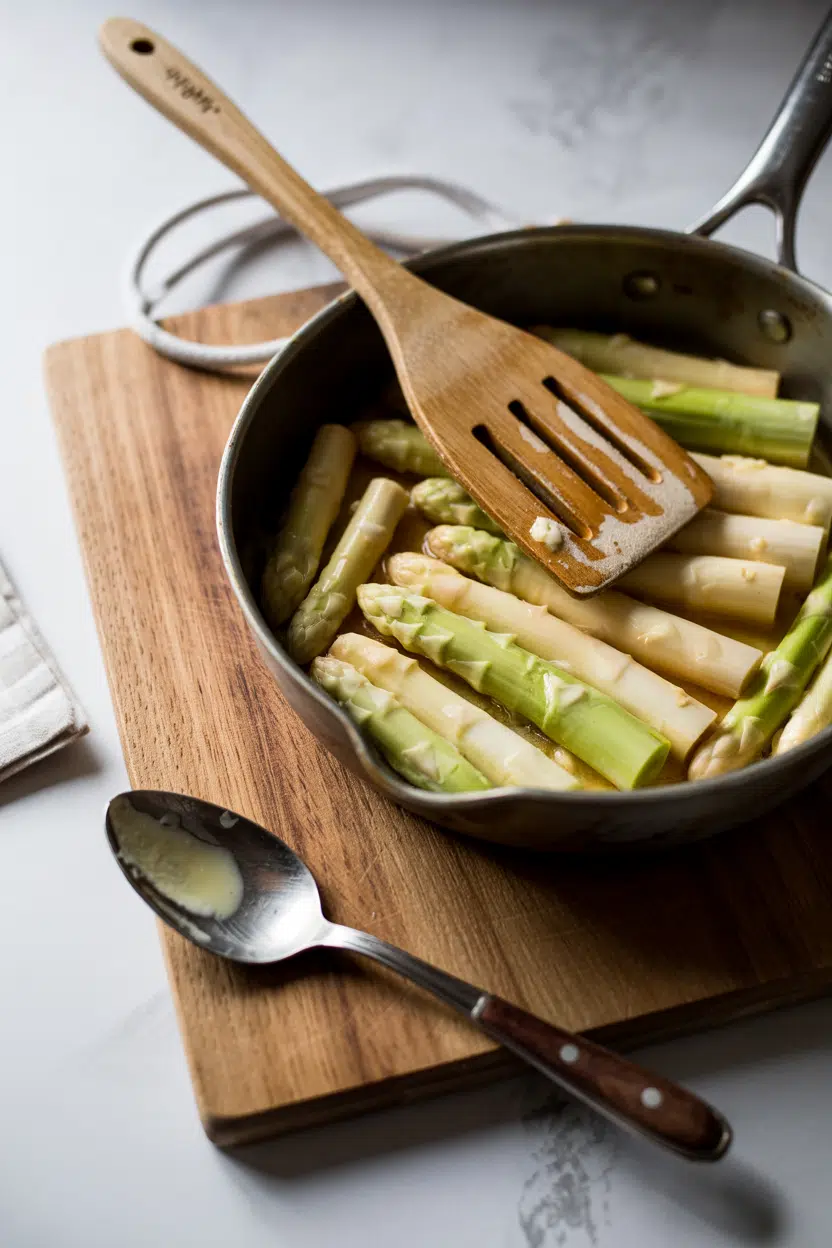
Raw asparagus tastes green and grassy, with a clean brightness and a mild bitter edge - closer to a snap pea than a leafy green. There's also a faint leek-like quality that comes through, especially near the tip.
Heat changes everything. Roasting at high temperature draws out natural sugars and creates a nutty, almost caramelized note that raw spears never hint at. Grilling adds a char layer on top of that sweetness.
Some asparagus - particularly older or overcooked spears - develops a faint sulfurous note. This comes from asparagusic acid compounds, which are also responsible for the well-known urine odor effect.
Fresh, properly cooked spears keep this well in the background.
How to Use Asparagus
Asparagus handles most cooking methods well, but method choice changes the outcome significantly. Quick cooking preserves its green bite; high-heat roasting or grilling builds sweetness and char.
| Method | Best For | Tip |
|---|---|---|
| 🥗 Raw / Shaved | Salads, thin-sliced spring pasta | Use a peeler on thick spears for ribbon-thin slices |
| ♨️ Blanched | Pasta toss, cold sides, prep for freezing | Shock in ice water immediately to lock in color |
| 🔥 Roasted | Sheet-pan sides, vinaigrette dishes | Roast at 425°F (220°C) for 10-12 minutes, single layer |
| 🍖 Grilled | Steak or fish sides, char-forward dishes | Toss in oil before grilling to prevent sticking |
| 🍤 Tempura-Fried | Appetizers, Japanese-style preparations | Keep batter cold and fry immediately for crunch |
Italian and French kitchens use asparagus most heavily - think risotto with tips stirred in at the last minute, or classic French preparations finished with hollandaise. A full a eggs benedict with hollandaise recipe shows exactly how well asparagus works alongside that sauce.
Asparagus pairs cleanly with lemon, butter, and aged hard cheeses like Parmesan or pecorino.
Wrapping spears in prosciutto before roasting adds salt and fat without overpowering the green flavor.
Avoid heavy sugary glazes - they mask what makes this vegetable worth cooking in the first place.
If asparagus isn't available, checking asparagus swaps that work gives you the closest matches for each dish type.
How to Buy and Store Asparagus
Look for straight, firm spears with tightly closed, compact tips and smooth skin along the stalk. Limp stalks, shriveled or splayed tips, and split ends at the base all signal age.
At home, stand cut ends upright in a jar with an inch of water and cover the tips loosely with a bag.
Alternatively, wrap the cut ends in a damp paper towel before refrigerating.
Either method keeps tips crisp for up to a week.
For longer storage, blanch first - freezing kale without blanching explains why that blanching step matters even for hardy greens, and the logic applies here too.
A full breakdown of timing and conditions is in our guide on how long asparagus keeps, including frozen shelf life up to 12 months.
Where to Start With Asparagus
Spring is the window - asparagus outside its season loses flavor fast and costs more.
If you're after something familiar and low-effort, roasted or grilled spears as a side are the entry point. Move to blanching once you want to use them in pasta or cold dishes.
The prosciutto-wrapped baked version is the right call when you need something guests will actually remember.
- 🔥 Start roasting - if you've never cooked asparagus, high heat is your baseline
- 🥗 Start raw - if you want to taste the vegetable before committing to a method
- 🍝 Start blanching - if pasta or cold preparations are your goal
- 🥓 Start wrapped - if you want a crowd-pleasing first dish with built-in flavor backup
Frequently Asked Questions
Asparagusic acid breaks down during digestion into sulfur-containing compounds that your kidneys excrete quickly. Not everyone can detect the odor - that's a genetic difference in smell receptors, not digestion.
Fresh spears last 4-7 days stored upright in water or with damp-wrapped ends. Cooked asparagus keeps 3-4 days in a sealed container.
Yes. Raw asparagus is safe and has a firm, crisp texture with a clean grassy flavor. Thin spears or shaved ribbons work best raw - thick ones can taste woody without heat.
Yes - tips are the most tender and flavorful part of the spear. They cook faster than the stalk, so add them slightly later if you're cutting and sautéing.
Snap or cut off the woody bottom third - it separates naturally where the tender part begins. For thick spears, peeling the lower stalk with a vegetable peeler removes the fibrous outer layer.



