
Bacon does something in a pan that few other ingredients can match - it releases fat, crisps at the edges, and fills the kitchen with a smoky, savory smell that signals the whole dish is about to get more interesting. That rendered fat is as valuable as the meat itself, carrying the same smoky depth and coating everything it touches.
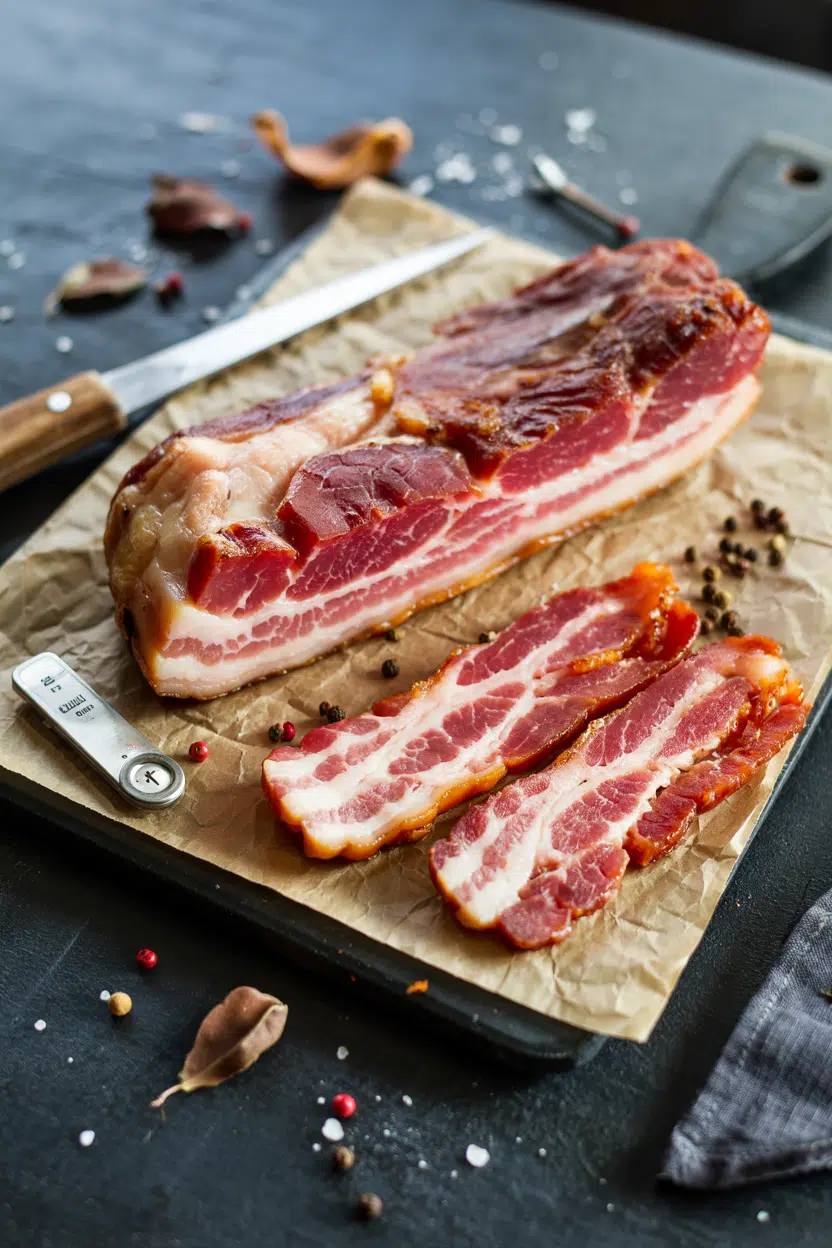
Whether you're building a French lardon stew, a British full breakfast, or a weeknight pasta, understanding how bacon works means getting more out of every slice.
Bacon is a cured, often smoked pork product made from pork belly or back. It delivers salty, smoky, umami-rich flavor and renders fat that doubles as a cooking medium. Used across breakfast, sandwiches, pasta, and stews, it's a strong-flavored ingredient that earns its place in small amounts.
What Is Bacon?
Bacon is a cured pork product with roots in Northern European preservation traditions, where salting and smoking meat extended its shelf life through winter. Most bacon sold in the US comes from pork belly, yielding the familiar streaky slices with alternating bands of meat and fat.
Remember it later
Planning to try this recipe soon? Save it for a quick find later!
UK and Irish bacon, called rashers, typically comes from the back loin and is leaner with a larger meat eye.
Across Europe, cured pork takes several regional forms worth knowing.
- Streaky bacon - the American standard, cut from pork belly, with high fat content and strong crisping ability
- Back bacon - cut from the loin, common in British cooking; meatier and less fatty than streaky
- Pancetta - the Italian equivalent, cured with spices but rarely smoked; sold rolled or flat
- Lardons - small cubed cuts of cured pork belly used in French cooking, rendered in stews and salads
- Salt pork - heavily salted pork belly used as a flavor base in beans and braises, not typically sliced and eaten alone
The curing process involves salt, often sugar, and sometimes sodium nitrate, which fixes the pink color and prevents bacterial growth during smoking or aging.
What Does Bacon Taste Like?
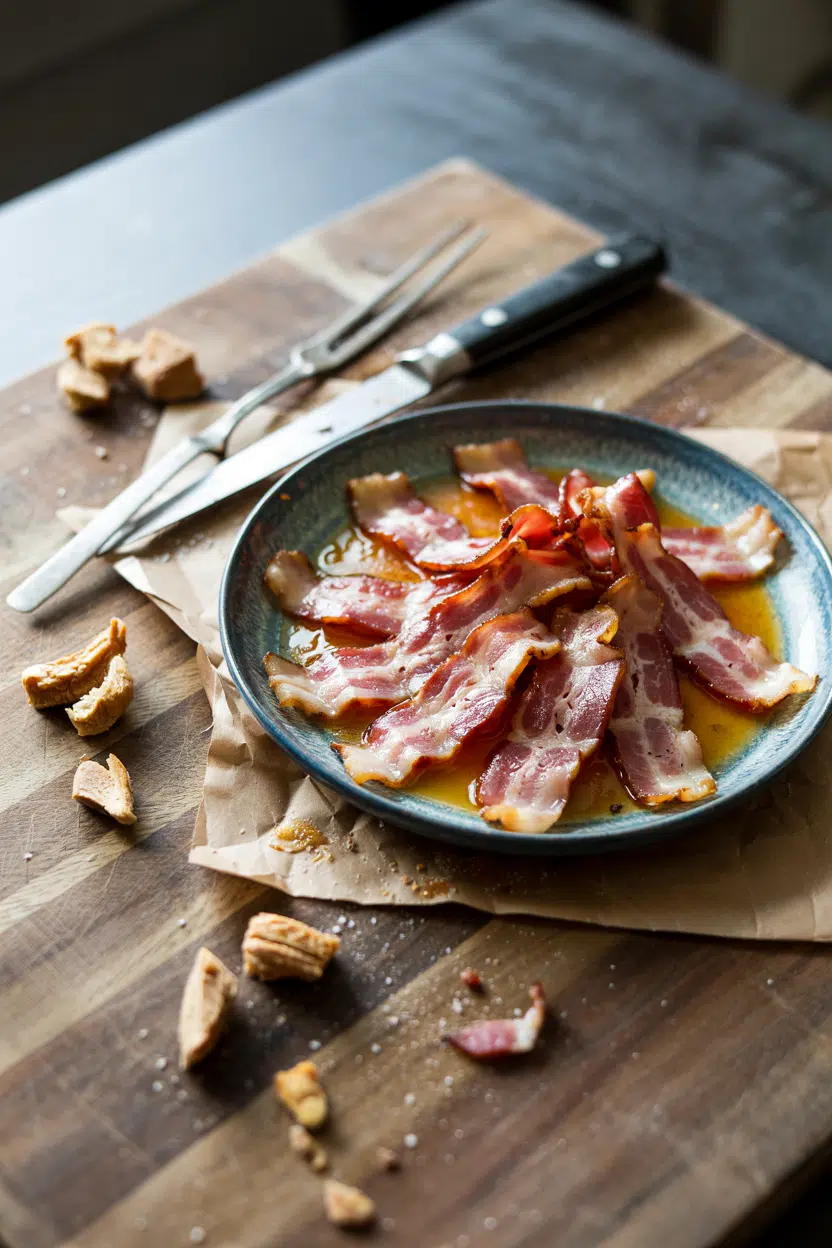
Bacon's flavor is assertive and layered - primarily salty, with deep umami from the curing process and a smoky finish that lingers. Think of concentrated ham with added smoke and the richness of rendered pork fat. The slight sweetness you notice in many American varieties comes from sugar or maple in the cure, not the meat itself.
Heat changes everything. Raw bacon is soft, pale, and mildly salty - edible but unappealing.
As it cooks, the fat renders out and the Maillard reaction browns the meat, concentrating flavor and building those crispy edges. Overcook it and bitterness appears; undercook it and the fat stays waxy and chewy.
How to Use Bacon
Bacon functions in two ways in a recipe: as the featured ingredient or as a background flavor builder. Knowing which role it's playing changes how you cook it.
| Method | Best For | Tip |
|---|---|---|
| 🍳 Pan-Frying | Breakfast plates, BLTs, crumbling over salads | Start in a cold pan to render fat evenly before crisping |
| 🫙 Oven-Baking | Batch cooking, even crispness across multiple strips | Use a wire rack over a sheet pan so fat drips away |
| 🔥 Slow-Cooking | Stews, braises, lardons in French-style dishes | Cut into lardons first; fat melts into the sauce over time |
| 🌯 Wrapping | Bacon-wrapped scallops, dates, filets, or vegetables | Secure with a toothpick; cook seam-side down first |
| 🫕 Rendered Fat | Sautéing greens, frying eggs, deglazing for pan sauces | Strain and store in a sealed jar; keeps weeks in the fridge |
In American cooking, bacon defines the breakfast plate alongside eggs and toast. British cooking uses back bacon rashers in a full breakfast or a bacon butty.
French cuisine relies on lardons - diced pork belly - sautéed in a hot pan to build the fat base for salads like frisée aux lardons or slow-cooked dishes like coq au vin. Italian-influenced dishes lean on pancetta alternatives when pancetta isn't available, with bacon stepping in as the closest match.
Bacon pairs naturally with eggs, sharp cheddar, and blue cheese. It cuts through the bitterness of kale and Brussels sprouts and bridges sweet-savory combinations with apples, pears, or maple glaze.
Stirred into pasta or mac and cheese, it adds smoky umami without requiring a complex sauce. Avoid pairing smoked bacon with delicate white fish - the smoke will overwhelm rather than complement.
How to Buy and Store Bacon
At the store, look for slices with clearly defined alternating bands of meat and fat - unevenly fatty slabs often crisp poorly because the meat-to-fat ratio is off. Pale pink meat with translucent white fat is the target.
For smoked varieties, check the label: "natural smoke" or "hickory smoked" differs from "smoke flavoring," which is a liquid additive.
Storage matters as much as purchase quality. Unopened, vacuum-sealed bacon keeps 2-3 weeks in the fridge. Once opened, wrap tightly in parchment then foil, or use an airtight container - exposure to air speeds up rancidity and odor transfer. For full details on bacon freshness guide and freezer timelines, raw bacon frozen properly holds for 4-6 months. Rendered and strained bacon fat stores well in the fridge for several weeks and works as a lard substitute in savory baking.
Where to Start With Bacon
Start with pan-fried streaky bacon in a cold skillet - no oil needed, low to medium heat, and patience. That single technique teaches you everything: how the fat renders, when to pull it, and how to use what's left in the pan.
Once you have the basic fry down, the rendered fat opens a second layer of cooking. Sauté greens in it, fry eggs in it, or build a pan sauce.
If you need a leaner alternative with similar cured pork flavor, bacon replacements like pancetta or turkey bacon cover most of the same ground with different fat levels.
Frequently Asked Questions
Streaky bacon comes from pork belly and has high fat content; it crisps aggressively and renders a lot of fat. Back bacon comes from the loin, carries more meat per slice, and stays chewier rather than crisping to a snap.
Technically it's cured, not raw, but eating it uncooked is not recommended. Curing reduces bacterial risk; however, it doesn't eliminate pathogens the way cooking does, and the fat texture is unpleasant and waxy without heat.
Unopened refrigerated bacon holds 2-3 weeks; check the sell-by date. Once opened, cooked bacon keeps 4-5 days wrapped tightly, and raw opened bacon is best used within 7 days.
Pork belly or back is rubbed or brined with salt, sugar, and often sodium nitrate, then left to cure for several days. Most commercial bacon is then cold- or hot-smoked over hardwood before being sliced and packaged.
Bacon is high in sodium, saturated fat, and nitrates - all flagged in high-consumption diets. In small quantities it contributes protein, niacin, and B12, but it's not a health food by standard nutritional benchmarks.



