You spot it at the deli counter -
a tight roll of pale-pink meat, dusted with cracked pepper, and labeled simply "pancetta." It's not bacon, and it's not prosciutto, though both comparisons get made constantly.
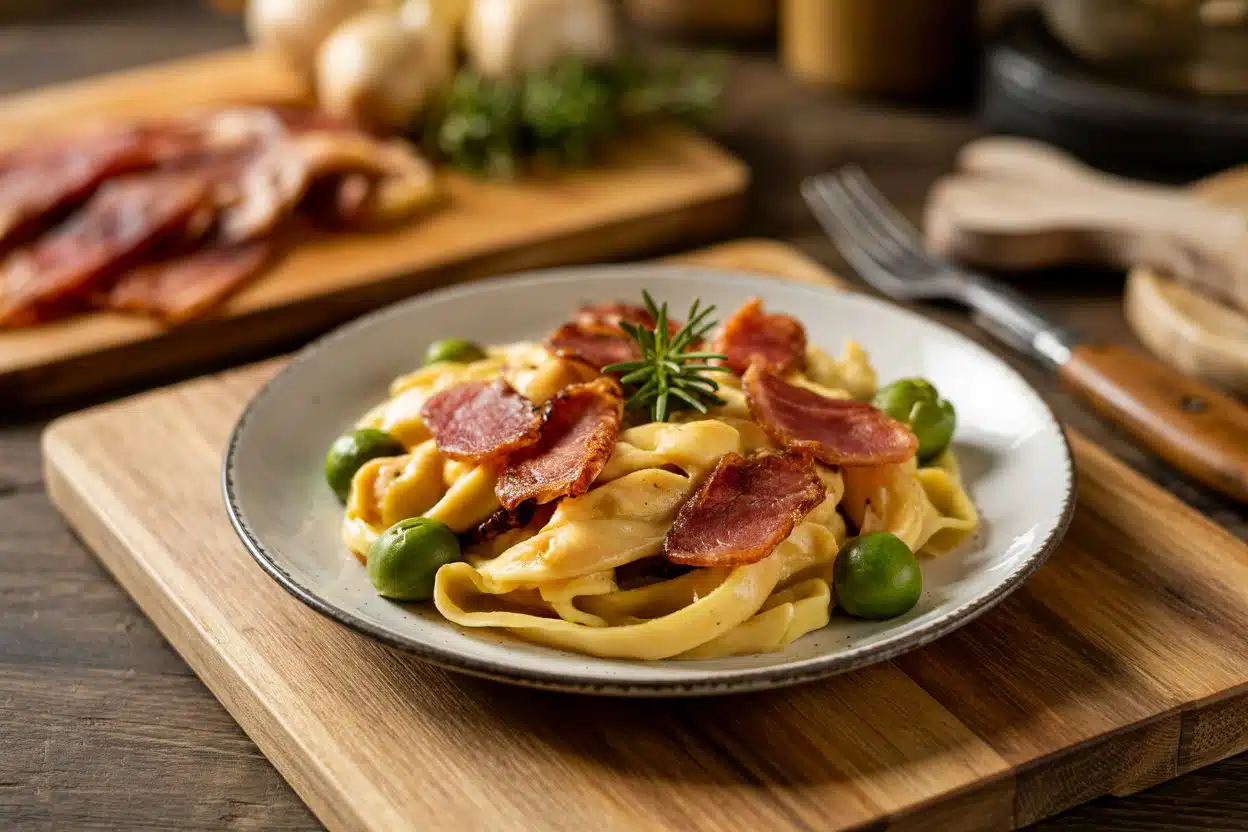
Pancetta is salt-cured pork belly, air-dried and preserved without smoking, and it brings a concentrated, fatty, savory depth that very few other ingredients can replicate at the same price point.
Pancetta is Italian salt-cured pork belly, sold rolled or sliced, with a salty-umami flavor and warm spice notes. Use it as a rendering fat for pasta sauces, a wrap for roasting, or sliced thin on a charcuterie board. Strong intensity, no smoke.
What Is Pancetta?
Pancetta comes from the pork belly - the same fatty, layered cut used for bacon - but the curing process takes a different route. No smokehouse involved.
Remember it later
Planning to try this recipe soon? Save it for a quick find later!
The belly is rubbed with salt, black pepper, and spices like nutmeg or juniper, then air-dried for weeks until the moisture drops and the flavors concentrate.
It originates in northern Italy, particularly Emilia-Romagna, where cured pork products have been a pantry staple for centuries. Two main forms exist in most markets: pancetta tesa (flat, similar to a slab of bacon) and pancetta arrotolata (tightly rolled, then sliced into rounds).
The rolled version is most common outside Italy, and you'll usually find it pre-sliced at the deli counter or in vacuum-sealed packages.
It's often called "Italian bacon," which is technically a misnomer. Bacon is smoked; pancetta is not. Guanciale is the closer Italian relative - made from cured pork cheek - and actually more traditional in dishes like carbonara, though pancetta substitutes well.
What Does Pancetta Taste Like?
Pancetta's flavor is direct and unapologetic - deeply salty, fatty in the way only cured pork belly can be, with a nutty, slightly sweet undertone from the rendered fat.
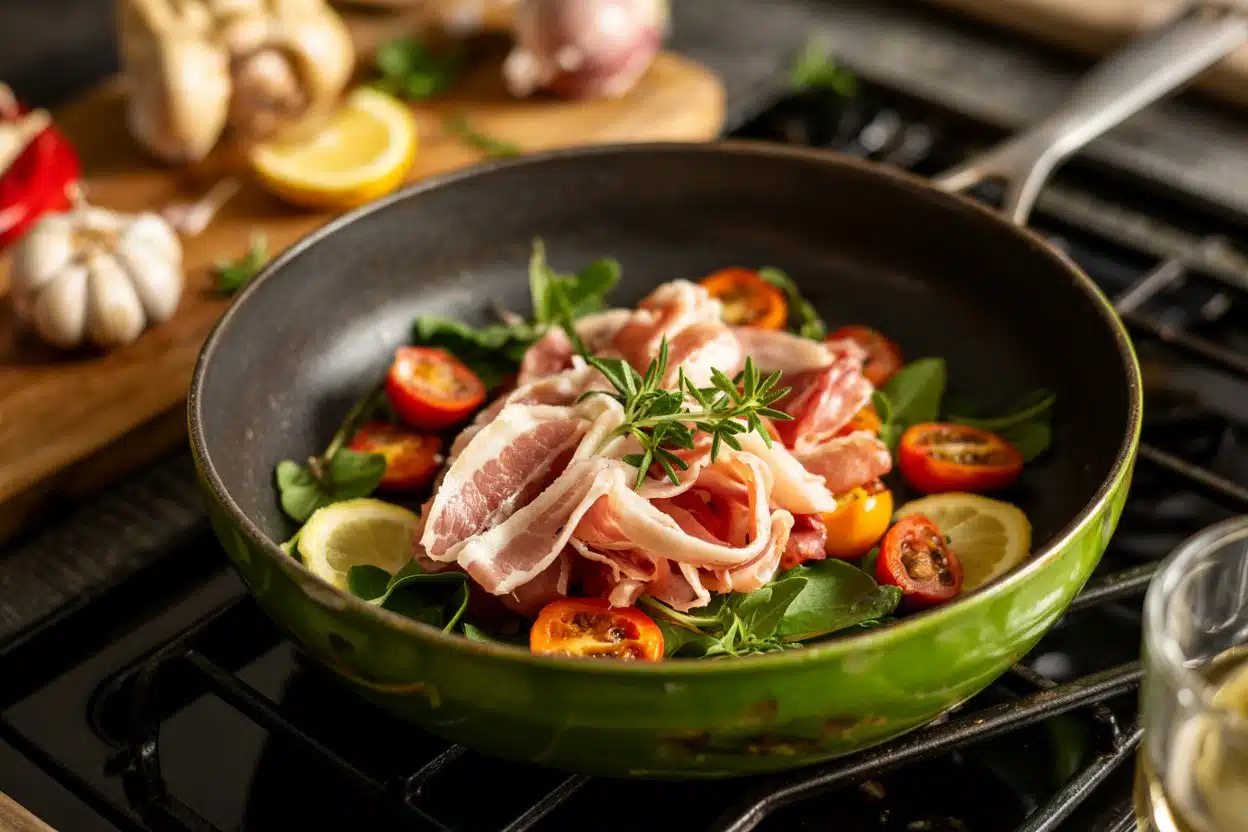
Warm spice notes from black pepper and sometimes nutmeg run underneath, never overpowering.
Compared to bacon, pancetta is less assertive - smokiness doesn't compete with your other ingredients. That absence of smoke is actually what makes it so useful in Italian cooking, where the cured pork adds body and fat without pulling the dish in a barbecue direction.
Render it in a pan and the fat turns silky and fragrant; eat it raw-sliced and the texture firms up into something almost charcuterie-board elegant.
How to Use Pancetta
Diced and rendered in a skillet, pancetta becomes the fat foundation for some of the most important Italian pasta sauces. It's the standard starting point for carbonara and amatriciana - the rendered fat coats the pasta and the crisped bits add texture.
This same technique works equally well with beans and lentils; drop diced pancetta into the pot early and let it melt into the cooking liquid.
Thin slices have a completely different role. Wrap them around chicken thighs, fish fillets, or pork tenderloin before roasting, and the fat bastes the protein from the outside as it renders.
The result is a self-basting effect that keeps lean cuts moist.
| Method | Best For | Tip |
|---|---|---|
| 🥗 Raw/Sliced | Charcuterie boards, salads, wrapping uncooked proteins | Slice thin so fat layers separate cleanly |
| 🍳 Rendered | Carbonara, amatriciana, bean braises, lentil soups | Start in a cold pan; renders more evenly |
| 🔥 Wrapped and Roasted | Chicken, fish, pork tenderloin | Secure with kitchen twine so it doesn't shrink off |
| 🫕 Braised | Slow-cooked greens, ragu, stews | Add at the start; fat and salt distribute over long cook times |
Pancetta also earns a place on the charcuterie board alongside hard cheeses like pecorino or Parmesan, and fruit pairings - figs, sliced apple - cut through the saltiness cleanly.
For recipes where pancetta plays a structural role in meatballs or sausage blends, it acts as both binder and seasoning.
Avoid pairing it with strongly smoky ingredients; the flavors stack without adding anything. Delicate white fish can also get overwhelmed - that's a case where a lighter hand, or a different ingredient, serves better.
If you're out of pancetta, pancetta swaps like guanciale, speck, or even unsmoked lardons will fill most of the same roles.
Air Fryer Garlic Parmesan Chicken TendersWrap in pancetta before air frying for a self-basting, crispy exterior→Air Fryer Garlic Parmesan MeatballsFold diced pancetta into the mix for extra fat and savory depth→Crispy Garlic Parmesan Chicken TendersPancetta wrapping adds salt and crunch alongside the parmesan crust→
How to Buy and Store Pancetta
At the deli, look for firm, pale-pink meat with even white fat throughout. Pre-sliced vacuum packs should show clean, unragged edges with no sticky or slimy film on the surface.
A whole rolled pancetta should have a dry outer casing and visible curing spices pressed into the exterior.
Storage is straightforward once you know the rules:
- 🧊 Unopened vacuum pack - refrigerate and use by the pack date; can last weeks
- 📦 Opened sliced pancetta - wrap tightly in plastic or store in an airtight container with a paper towel; use within 5-7 days
- 🔪 Whole cured roll - wrap in butcher paper, refrigerate, and use within 2-3 weeks
For a full breakdown of timelines and freezing options, see our guide on pancetta storage life.
Where to Start With Pancetta
New to pancetta? Render diced pancetta in a cold skillet over medium heat until the fat is clear and the edges crisp. That fat is your cooking base - add onion, garlic, or pasta water from there.
It's the lowest-effort entry point, and it immediately shows you what this ingredient does better than almost anything else.
If you cook a lot of egg-based or tomato-based pasta, pancetta will become a regular.
Those who want to explore the broader world of guanciale swaps or bacon replacements will find pancetta sitting at the center of that conversation - close enough to both, identical to neither.
Frequently Asked Questions
No. Both come from pork belly, but bacon is smoked and pancetta is not. Pancetta is salt-cured and air-dried, giving it a purer cured pork flavor without smoky notes.
Thinly sliced pancetta can be eaten without cooking - the salt-curing process preserves it. Thicker cuts or diced pancetta are better rendered in a pan to improve texture and release fat.
Guanciale is the most traditional swap - richer and slightly fattier. Unsmoked lardons or speck work if neither is available; avoid standard smoked bacon, which pulls the flavor in the wrong direction.
Not always. Cured pancetta is safe to eat as-is when sliced thin, similar to prosciutto on a charcuterie board. Cooking it is a texture and flavor choice, not a food safety requirement for properly cured product.
Opened sliced pancetta keeps 5-7 days refrigerated when wrapped tightly. An unopened vacuum pack lasts weeks; a whole cured roll, up to 2-3 weeks once the outer casing is cut.