Whole milk shows up in the most relied-upon recipes - crème anglaise, béchamel, tres leches cake - and most of the time it's not interchangeable with the reduced-fat versions.
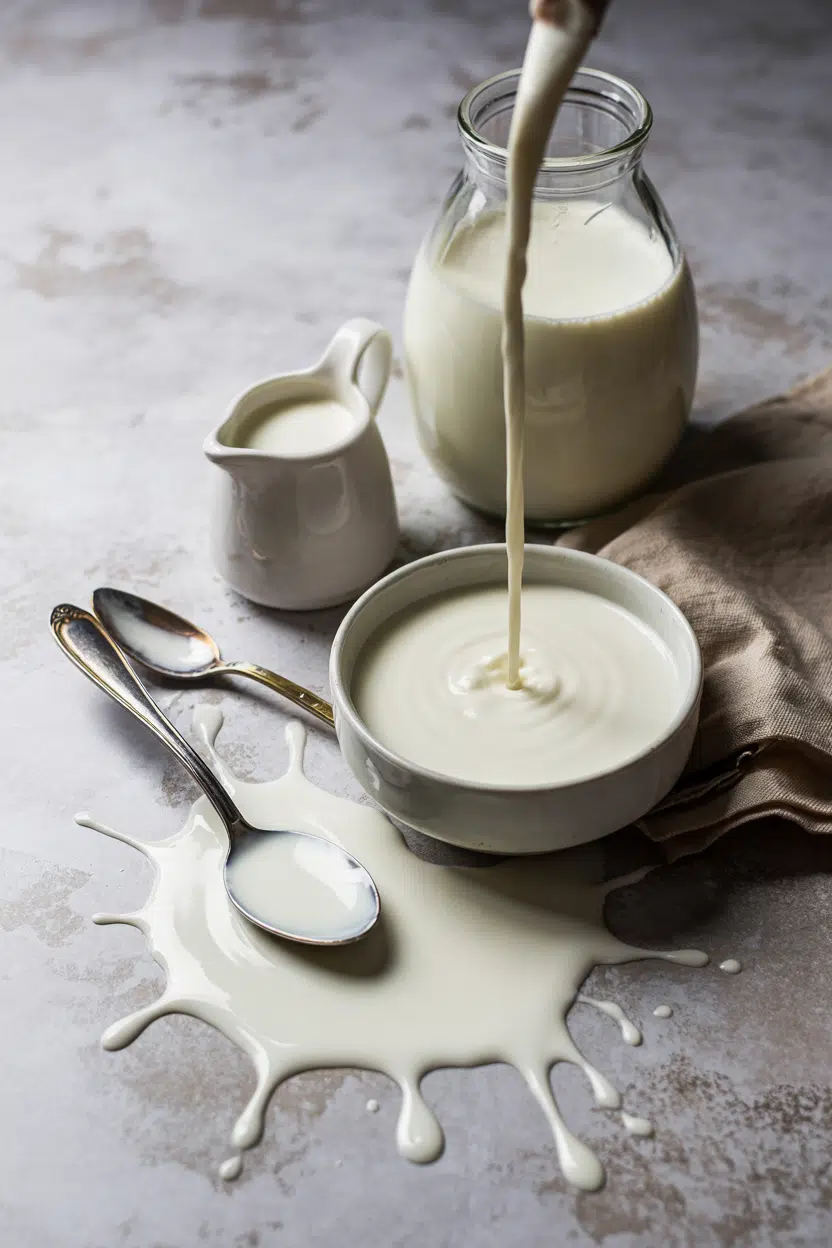
Knowing how milk's flavor and uses shift with fat content changes how you cook with it, and knowing what can go wrong helps you avoid curdled sauces and off-tasting custards, whether you're watching for milk spoilage signs or tracking how close your carton is to the wire.
Whole milk is fresh pasteurized cow's milk with its natural fat intact - roughly 3.25% milk fat in the U.S. It has a mild, creamy, lightly sweet flavor and a silky mouthfeel that makes it the preferred liquid in custards, sauces, and steamed coffee drinks.
What Is Whole Milk?
Whole milk is pasteurized cow's milk sold with its natural fat content intact - standardized at a minimum of 3.25% milk fat in the United States.
Remember it later
Planning to try this recipe soon? Save it for a quick find later!
In the UK and Commonwealth countries, it goes by full-cream milk; you'll also see it labeled as full-fat milk or whole cow's milk depending on the region.
Nearly all commercial whole milk is homogenized, meaning the fat globules are broken down so cream no longer separates and rises to the top.
It also undergoes pasteurization - heat treatment that eliminates pathogens - which differs from ultra-pasteurization (UHT), a higher-heat process that extends shelf life for months at room temperature but alters flavor slightly.
Whole milk sits above 2%, 1%, and skim milk on the fat scale, and that fat is not cosmetic. Milk fat carries fat-soluble vitamins A and D and aids their absorption, while also giving whole milk its characteristic body and coating feel.
A few common varieties worth knowing:
- 🐄 Standard pasteurized - most common in U.S. supermarkets, 1-3 week shelf life
- 🌿 Grass-fed or pasture-raised - slightly more complex aroma, sometimes a faint grassy note
- 📦 UHT (ultra-pasteurized) - shelf-stable unopened, mildly cooked flavor, used widely in Europe
- 🧪 Organic whole milk - produced without synthetic hormones or pesticide-treated feed
What Does Whole Milk Taste Like?
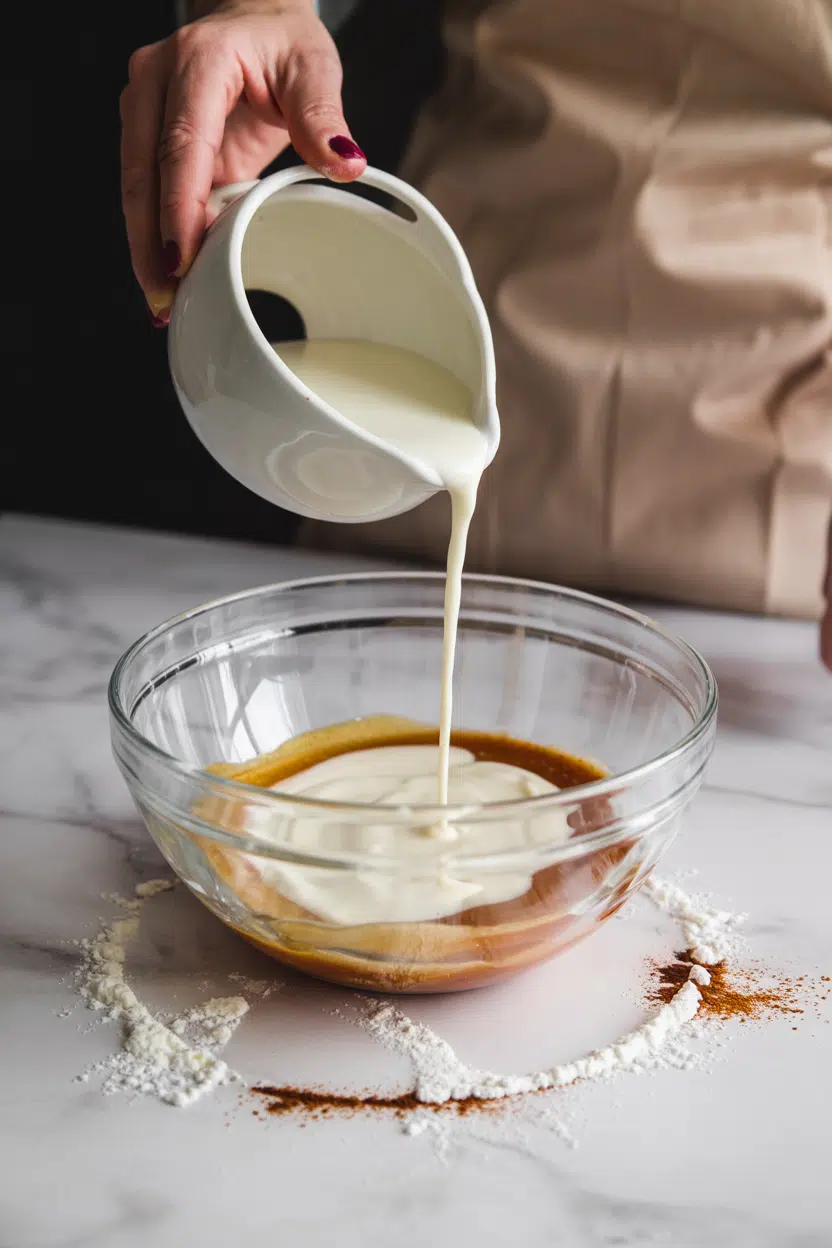
Whole milk has a mild, dairy-sweet flavor with a clean finish. The sweetness comes from lactose, not added sugar, and it's subtle - closer to a whisper than a note you'd name in a blind tasting.
The closest comparison is light cream significantly diluted with water, or the base liquid in a milk-rich café latte.
It coats the palate in a way skim milk does not, because milk fat clings to taste receptors and extends perceived richness.
Heat changes the picture. Gently scalded whole milk develops a deeper, almost cooked-cream note that's part of what makes custard and béchamel smell so good.
At high heat without attention, however, the milk proteins casein and whey can denature and scorch, flattening that pleasant sweetness into something flat and faintly burnt.
How to Use Whole Milk
Whole milk earns its place across a wide range of dishes, and the fat content is the reason it performs where lower-fat milks fall short.
In custards and crème anglaise, the fat slows protein coagulation, giving you a wider window before the eggs scramble.
In béchamel, the fat helps hold the emulsion between butter and starch, producing a sauce with a smooth, glossy finish.
For anyone swapping dairy in a recipe, using skim milk for creaminess requires different technique - typically adding fat back separately - because the stripped-down version behaves differently under heat.
On the sweet side, whole milk is the standard liquid in pancake batters and crêpes, where its fat contributes to a tender crumb.
| Method | Best For | Tip |
|---|---|---|
| 🍳 Scalded | Custards, crème anglaise, flan, béchamel | Heat to 180°F, then temper slowly into eggs |
| ☕ Steamed/Frothed | Lattes, cappuccinos, café au lait | Whole milk fat creates stable, dense microfoam |
| 🥗 Raw/Cold | Drinking, cereal, drinking chocolate | Serve well chilled; flavor dulls at room temperature |
| 🧁 In Batter | Pancakes, crêpes, quick breads | Don't overmix once milk is added - gluten tightens fast |
| 🍦 Ice Cream Base | Churned ice cream, semifreddo | Combine with cream for balanced fat and body |
French pastry and sauce-making rely on whole milk as a base fat, while American comfort cooking uses it across everything from gravies to cornbread. Latin American desserts like tres leches and flan depend on its fat structure to set properly. Understanding whole milk in dairy recipes makes substituting easier when you're out mid-recipe.
How to Buy and Store Whole Milk
At the store, check the sell-by or use-by date first and choose the furthest date available. Avoid containers with swollen sides, leaking seams, or a watery-looking fill line through translucent jugs.
For the best flavor, look for grass-fed or pasture-raised labeling - these often carry a slightly more complex, grassy aroma that registers in custards and hot drinks.
Store it at or below 40°F, tightly sealed. Once opened, consume within 5-7 days for best quality, though you can monitor whole milk's shelf life by checking smell and appearance rather than relying on dates alone.
UHT whole milk stays shelf-stable for months before opening, making it useful for stocking up - however, its flavor differs slightly from standard pasteurized, and it should still be refrigerated and used within 7-10 days after opening.
Start With the Custard
If you're new to cooking with whole milk, start with a simple custard or béchamel - both are low-risk, make the fat content's role obvious, and reveal how the milk behaves under heat.
The silkiness you get won't come from skim or 2%, and that difference is immediate.
Once you've worked with milk in dairy recipes and have a feel for how whole milk emulsifies and sets, branching into ice cream bases or stovetop puddings is straightforward.
The fat is the constant - learn to work with it, not around it.
Frequently Asked Questions
U.S. whole milk contains a minimum of 3.25% milk fat by weight. A standard 8-oz glass has roughly 8 grams of total fat, about 5 of which are saturated.
The difference is milk fat. Fat carries flavor compounds and coats the palate, making whole milk taste richer and creamier. At 2%, roughly half that fat has been removed, and the thinner mouthfeel is noticeable side by side.
Yes, and the result is typically better. Whole milk adds fat and moisture that skim lacks, producing a more tender crumb in cakes and quick breads. Substitute 1:1 without adjusting other ingredients.
It can if exposed to high heat or a strong acid. Boiling whole milk causes proteins to denature and clump; adding acid like lemon juice at high temperatures has the same effect. Keep heat gentle and avoid combining with acidic ingredients until off the heat.
Opened whole milk lasts 5-7 days in the fridge when stored properly below 40°F. UHT whole milk opened the same day should be used within 7-10 days, even though the unopened carton was shelf-stable.