Milk does something in cooking that water never can: it builds structure, adds richness, and carries fat-soluble flavor all at once.
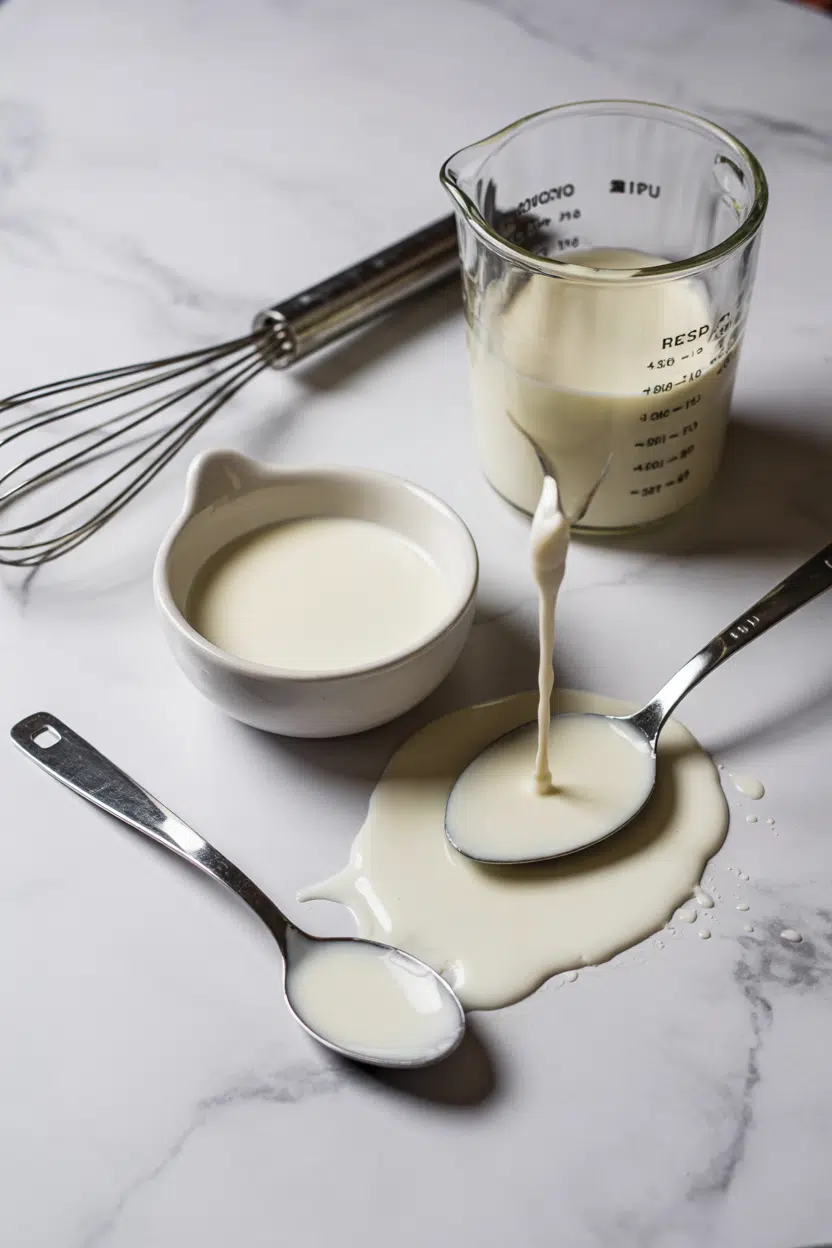
A béchamel without milk is just a roux paste.
Custard without it is scrambled eggs.
Whether you're reaching for whole milk, skim, or butter in dairy recipes, understanding what milk contributes helps you make better decisions at every step - and knowing how long yogurt keeps is a useful parallel for tracking milk's own short window.
Milk is a mild, creamy dairy liquid with a subtle lactic sweetness and light tang. It functions as a liquid base, tenderizer, and fat carrier in cooking. Whole milk is the most kitchen-useful form. Opened, it lasts 5-7 days in the fridge.
What Is Milk?
Milk is the liquid produced by female mammals to nourish their young, and the version we use in kitchens almost always comes from cows.
Remember it later
Planning to try this recipe soon? Save it for a quick find later!
It's an animal-derived dairy liquid made up of water, fat (butterfat), proteins (casein and whey), lactose, and minerals - a composition that makes it uniquely functional in cooking.
Processing matters more than most people realize. Pasteurization kills pathogens through heat without changing flavor much. Homogenization breaks fat globules into uniform size so cream doesn't separate.
Raw milk skips both steps, retaining a slightly grassier, more complex flavor - though food safety agencies advise against it for vulnerable populations.
Fat percentage defines the common types:
- 🥛 Whole milk - roughly 3.25% fat; the standard for cooking and baking
- 2% (reduced fat) - lighter mouthfeel, still works well in most recipes
- Skim (nonfat) - watery texture, low richness; best in lower-fat applications
- UHT (ultra-pasteurized) - shelf-stable unopened; slightly cooked flavor, longer life
- Raw milk - unprocessed, sold in limited regions; grassier, more perishable
The whey brine for feta guide shows how whey - one of milk's core proteins - continues to work after the cheesemaking process ends.
What Does Milk Taste Like?
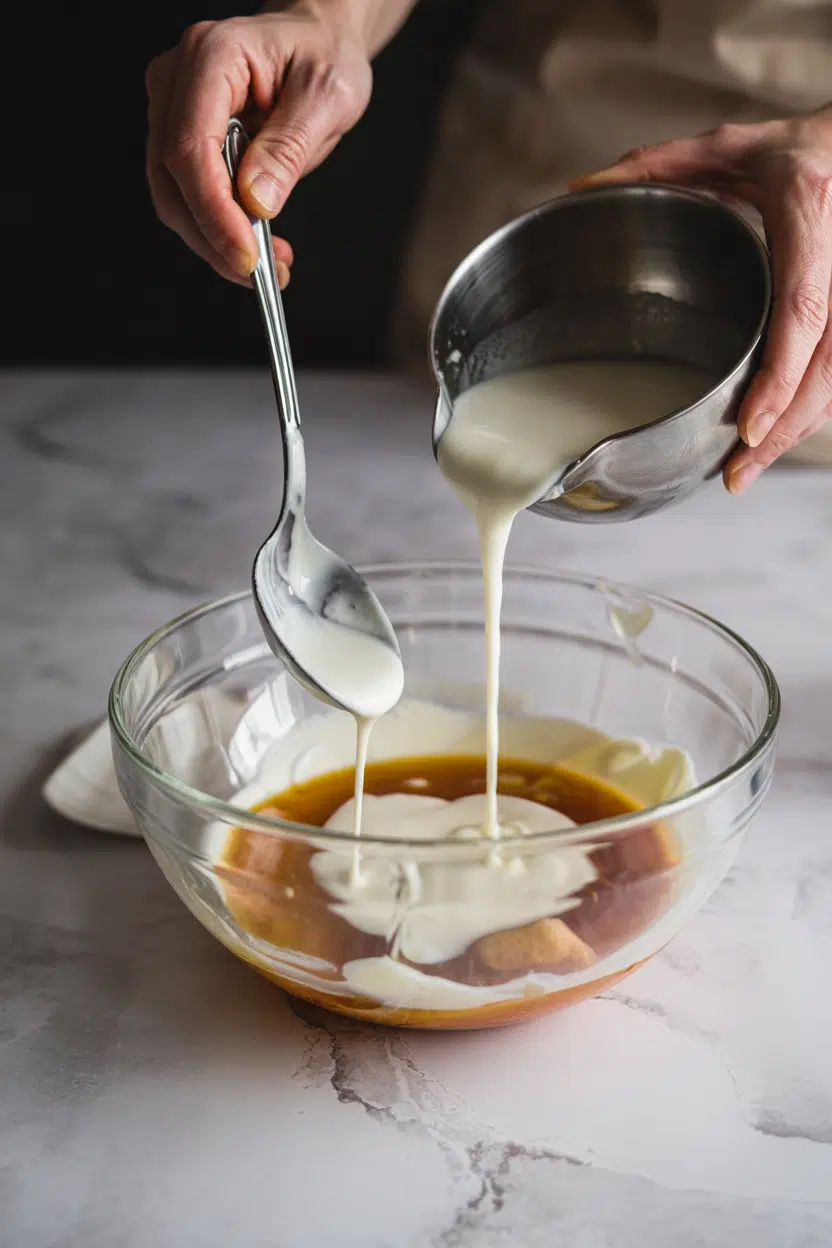
Fresh whole milk is mildly sweet with a clean lactic undertone - not aggressively tangy, not rich like cream. The fat carries a soft, slightly coating quality on the palate that skim milk simply doesn't replicate.
Heat changes the flavor noticeably. Scalded milk - brought just below a simmer - develops a slightly caramelized, rounder sweetness as lactose begins to concentrate. Reduced long enough, it moves toward dulce de leche territory: dark, dense, and nutty.
Cold milk straight from the fridge reads cleaner, closer to that fresh green-sweet note that raw milk amplifies further.
Compared to light cream, milk is thinner and less fatty, with more obvious lactic brightness. Think of it as cream's restrained sibling - present but not dominant.
How to Use Milk
Milk's fat and protein content make it a functional workhorse across cooking methods, not just a background liquid.
In French cooking, it's the base of béchamel - heated with a roux of flour and butter to create a sauce that coats pasta, binds gratins, or forms the foundation of a soufflé.
Indian kitchens use whole milk curdled with lemon juice or vinegar to produce fresh paneer, while simmered and spiced milk forms the base of masala chai and lassi.
In baking and batters, milk tenderizes gluten while adding protein for structure.
Pancake batter relies on it for a soft, slightly springy crumb - and where you'd normally reach for dairy, using milk for creaminess covers the best non-dairy swaps when you're working around restrictions.
| Method | Best For | Tip |
|---|---|---|
| 🔥 Scalding | Custards, béchamel, infused creams | Heat to just below simmer (180°F); don't boil |
| ♨️ Steaming/Frothing | Lattes, cappuccinos, flat whites | Whole milk froths best; skim collapses quickly |
| 🫧 Reducing | Dulce de leche, milk caramel, condensed milk | Stir regularly - milk scorches fast on high heat |
| 🧪 Curdling | Paneer, ricotta, fresh cheese | Add acid off heat; stir gently and once |
| 🧁 Batters | Pancakes, tempura, crepes | Don't overmix - milk activates gluten quickly |
Avoid pairing milk with high-acid raw fruit at high heat - the acid coagulates the proteins and breaks the sauce. Strong iodine-forward fish can also react with dairy fat to produce a metallic off-note.
How to Buy and Store Milk
At the store, check the sell-by date first and choose the most recent carton from the back of the shelf - those are newest. Look for intact, sealed containers with no dents or swelling.
A brief sniff at the cap before purchase is reasonable; sour or off smells before opening signal a problem.
Storage and shelf life by type:
- Pasteurized whole/skim - up to 2-3 weeks unopened; use within 5-7 days of opening
- UHT (ultra-pasteurized) - shelf-stable for months unopened; refrigerate after opening and use within 7-10 days
- Raw milk - most perishable; best within 7-10 days even unopened
Off-milk smells sour and looks either curdled or slightly yellow. For related spoilage signals, the cream spoilage signs guide covers what to watch for across high-fat dairy.
A full rundown on milk in dairy recipes also breaks down shelf life across fat levels in more detail.
Where to Start With Milk
Whole milk is the right default for most home cooks. It performs across every method - sauces, batters, custards, hot drinks - without compromise.
- 🥛 New to cooking with milk? - Start with béchamel: equal parts butter and flour, then add warm milk slowly
- Lactose concerns? - Lactose-free milk behaves identically in cooking; the [is goat cheese lactose free guide](https://forkliftkitchen.com/is-goat-cheese-lactose-free/) covers related dairy tolerance nuances
- Need longer shelf life? - Buy UHT if you use milk infrequently; flavor is slightly less fresh but functionally identical
- Avoiding dairy entirely? - Oat milk is the closest structural stand-in; [clotted cream stand-ins](https://forkliftkitchen.com/clotted-cream-substitutes/) covers the richer end of the spectrum
Frequently Asked Questions
Milk is lighter and more lactic, with less fat-driven richness. Cream coats the palate heavily; milk leaves a cleaner, slightly sweet finish. The difference becomes most obvious in coffee - cream mutes bitterness more aggressively than milk does.
Food safety agencies including the FDA classify raw milk as a higher-risk product due to potential pathogens like Salmonella and E. coli. Pasteurization removes those risks without significantly altering flavor for most uses. Sale of raw milk is restricted or banned in many U.S. states.
Opened pasteurized milk stays fresh for 5-7 days when kept below 40°F. UHT milk, once opened, lasts 7-10 days. Smell and texture are more reliable indicators than the date - sour smell or visible clumping means discard.
Casein proteins in milk destabilize when exposed to acid or excessive heat, clumping together and separating from the liquid. Adding lemon juice or vinegar triggers this deliberately for paneer. Unintended curdling usually means the milk was near spoiled or heat was too high.
Yes - milk freezes well for up to 3 months. Thaw it in the fridge and shake or stir well, since fat separates during freezing. Texture is slightly grainier after thawing, so frozen milk works better in cooked applications than for drinking straight.