
Most people assume a cornichon is just a tiny pickle - a miniature version of what you'd find next to a deli sandwich. That misread undersells it considerably.

A cornichon brings a sharper, more concentrated acidity than standard dill pickles and carries herby, mustardy complexity that makes it a precision ingredient, not an afterthought.
A cornichon is a small French pickled gherkin brined in sharp vinegar with mustard seed and tarragon. Firm, snappy, and intensely tart, it's used as a condiment and garnish - most often alongside pâté, cured meats, and rich sauces - rather than eaten by the handful.
What Is Cornichon?
Cornichon is a small pickled cucumber originating in France, with the Basque and Burgundy regions credited for popularizing its use in classic French cooking. The name simply means "small horn" in French, a nod to the cucumber's tapered shape.
Remember it later
Planning to try this recipe soon? Save it for a quick find later!
Unlike standard pickles, cornichons are harvested very young - typically under an inch long - to preserve their firm, dense flesh.
They're packed in a sharp white vinegar brine seasoned with mustard seeds, tarragon, and sometimes pearl onions or peppercorns, giving them a flavor profile distinct from American dill pickles.
You may see them labeled under several names:
- Cornichons de Paris - the classic French-style preparation, small and sharply brined
- Baby gherkins - the common English-language label; same product, different marketing
- French gherkins - emphasizes origin; often signals the traditional mustard-tarragon brine
- À la moutarde - labeled varieties include visible mustard seed and intensified savory notes
The tarragon swaps sometimes appear in home-brined versions, but traditional jars rely on the real herb for that faintly anise-like herby undertone.
What Does Cornichon Taste Like?
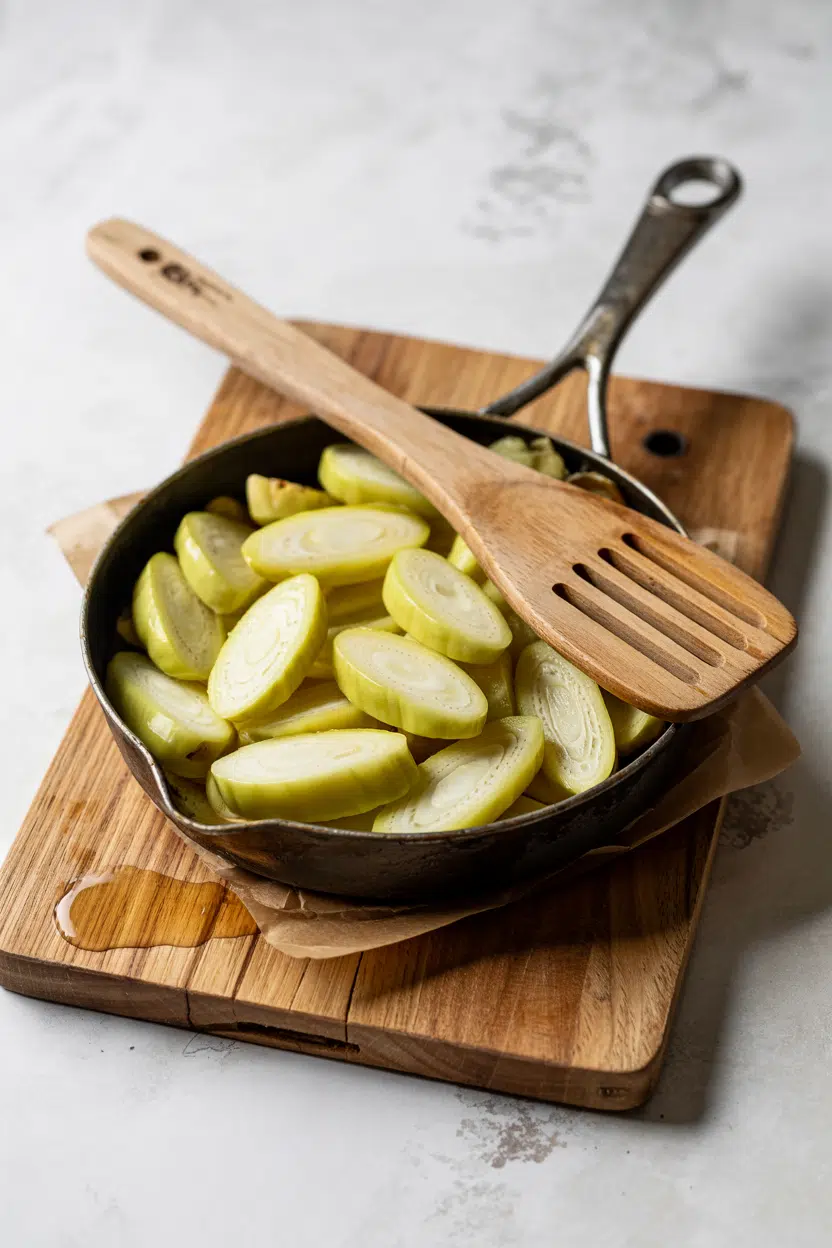
Cornichons hit with an immediate, bright vinegar tang - more aggressive than a bread-and-butter pickle and less dill-forward than a classic American kosher pickle. The brine has a pronounced saltiness that follows the acid, then settles into a savory, slightly mustardy finish.
That underlying vegetal cucumber note is subtle - still present, but subordinate to the brine. Heat dulls the vinegar sharpness slightly, which is why cornichons added to a warm pan sauce mellow faster than you'd expect.
Compared to a dill pickle, cornichons are crisper, smaller, and considerably more acidic. Their flavor is concentrated by design: you're not eating a full pickle, you're deploying a burst of acid contrast.
How to Use Cornichon
Cornichons are built for rich, fatty contexts. Their role is acid balance - cutting through fat and weight so the palate resets between bites.
The most classic application is alongside a charcuterie board: cornichons served whole next to pâté, rillettes, or foie gras. That same logic applies to cured and smoked proteins - smoked salmon, corned beef, cured ham - where the vinegar sharpness offsets the salt and fat simultaneously.
A well-built charcuterie board almost always includes them for this reason.
Beyond the board, cornichons earn their keep across several preparations:
| Method | Best For | Tip |
|---|---|---|
| 🥗 Whole, raw | Charcuterie boards, pâté plates, cocktail skewers | Serve cold; pair with [Dijon mustard](https://forkliftkitchen.com/dijon-mustard-substitutes/) on the side |
| 🔪 Chopped/minced | Steak tartare, tartar sauce, remoulade, vinaigrettes | Fine chop releases brine into the sauce - taste before adding extra salt |
| 🍳 Briefly warmed | Pan sauces for pork or chicken, bistro-style reductions | Add at the end - sustained heat kills the crunch and flattens acid |
| 🥪 Sliced, layered | Ham-and-cheese sandwiches, croque-monsieur, deli-style wraps | Slice thin lengthwise to distribute acid evenly through each bite |
Cornichons also pair well with sharp mustards, creamy brie or camembert, and gin-based cocktails - they're a classic martini garnish in French bistro tradition. Avoid pairing them with delicate fruit-forward sauces or floral desserts; the vinegar sharpness will dominate.
How to Buy and Store Cornichon
Look for jars where the cornichons are uniformly small and green, standing upright in clear brine. Cloudy or foamy liquid, limp texture through the glass, or pale-yellow coloring are all signs of poor quality or age.
Jars labeled à la moutarde indicate the traditional mustard-seed-and-tarragon seasoning - worth seeking out over plain vinegar-packed versions.
Storage is straightforward:
- Unopened jars - store in a cool, dark pantry for several months to up to a year
- Opened jars - refrigerate immediately; transfer to a sealed jar if the original lid is damaged
- Best texture window - 1 to 3 months after opening; texture softens gradually after that
For a detailed look at how long they last under different conditions, see our guide to cornichon freshness guide.
Start With the Classic Pairing
If you've never used cornichons before, start with pâté. That combination - fatty, smooth pâté against the sharp snap of a whole cornichon - is the clearest demonstration of what this ingredient does.
Once that clicks, explore what to serve alongside a full pâté spread and you'll find cornichons appearing throughout. From there, chopping them into tartar sauce or steak tartare is the natural next step.
For those who can't find them locally, cornichon swaps can approximate the flavor, though none match the exact crunch-to-acid ratio.
Frequently Asked Questions
Cornichons are a specific type of gherkin - always French-style, very small, and packed in sharp white vinegar with mustard seed and tarragon. General gherkins vary widely by country; they may use dill brine, sweeter vinegar, or different spicing entirely.
Technically yes - cornichons are pickled cucumbers. In practice, they differ from American-style pickles in size, brine composition, and intensity. Cornichons are sharper, smaller, and crunchier than most standard dill or bread-and-butter pickles.
Yes, using small pickling cucumbers harvested young. A basic home brine uses white wine vinegar, salt, mustard seeds, and fresh tarragon. The challenge is sourcing cucumbers small enough - most grocery varieties are too large for authentic results.
They're notably high in sodium relative to their size. A few cornichons can contribute 200-300mg of sodium depending on the brand. Anyone monitoring salt intake or on vitamin K-sensitive medications should check labels carefully.
No - rinsing washes away the brine coating that carries most of the flavor. If the saltiness is too strong for a recipe, reduce other salt sources in the dish rather than rinsing the cornichons themselves.



