• Skip to primary navigation
  • Skip to main content
  • Skip to primary sidebar
  • Recipe Index
    • Air Fryer
  • Side Dishes
  • Substitutes
  • About
  • Contact
  • Subscribe

ForkLiftKitchen

menu icon
go to homepage
  • Recipe Index
    • Air Fryer
  • Side Dishes
  • Substitutes
  • About
  • Contact
  • Subscribe
subscribe
search icon
Homepage link
  • Recipe Index
    • Air Fryer
  • Side Dishes
  • Substitutes
  • About
  • Contact
  • Subscribe
×

Blog

How Long Does Broccoli Last? [Storage Guide]

March 9, 2026

Broccoli is one of those vegetables that seems sturdy but turns on you faster than expected.

Buy a head on Monday, and by Thursday the florets may be yellowing and the stalk going soft - especially if it was washed before storage or sealed in a solid bag. Whole raw broccoli lasts 5-10 days in the fridge under the right conditions, while cut florets drop to 3-5 days.

Handling and storage choices matter more with broccoli than with most produce, and unlike kale without blanching, broccoli genuinely needs that blanching step before the freezer.

QUICK SUMMARY

Whole raw broccoli lasts 5-10 days in the fridge, while cut florets drop to 3-5 days. Blanched and frozen, it keeps 8-12 months. Store unwashed in a perforated bag with a damp paper towel. Keep away from ethylene-producing fruits.

🧊Fridge (whole): 5-10 days unwashed in high-humidity crisper drawer
🥦Fridge (florets): 3-5 days in perforated container with paper towel
❄️Freezer (blanched): 8-12 months; blanching is non-negotiable for good results

How Long Does Broccoli Last?

Raw broccoli is a living vegetable - it respires after harvest, which means it degrades faster than most people expect. The crown stays intact longer than loose florets, because every cut surface accelerates moisture loss and yellowing.

Broccoli Shelf Life
Method State Duration Notes
🧊 Fridge Raw whole 5-10 days Unwashed; high-humidity crisper; florets deteriorate faster than stalk
🧊 Fridge Raw florets 3-5 days Perforated container with paper towel; cut surfaces lose moisture quickly
🧊 Fridge Cooked 3-4 days Airtight container; reheat once only
❄️ Freezer Blanched florets 8-12 months Blanching locks color and texture; airtight freezer bags
🏠 Counter Whole (temporary) 12-48 hours max Cool room only; avoid heat and direct sun

One factor that speeds deterioration is proximity to ethylene-producing produce. Apples, bananas, and tomatoes all emit ethylene gas, which accelerates yellowing in broccoli faster than temperature alone.

How to Store Broccoli

The single biggest mistake is washing broccoli before putting it away. Excess surface moisture is the main driver of mold and sliminess, so keep it dry until you're ready to cook.

Watch Out
Never seal broccoli in a solid, non-perforated plastic bag. Trapped moisture with no airflow causes rot within days - use a perforated bag or leave the bag loosely open.

Fridge (whole head): Trim any damaged outer leaves, leave unwashed, and wrap loosely in a damp paper towel. Place in a perforated plastic bag or produce container in the high-humidity crisper drawer. Fridge (cut florets): Store in a perforated container lined with a fresh paper towel to absorb excess moisture, and use within 3-5 days. Stalks: Store trimmed stalks separately - they stay firm longer than florets and rehydrate well in cold water if they've softened slightly.

Keep the crown intact for as long as possible. Separating florets exposes cut surfaces that yellow quickly, so only break down the head when you're close to cooking.

Can You Freeze Broccoli?

Freezing broccoli raw is possible, however the results are noticeably worse. Skipping blanching allows myrosinase enzymes to keep working in the freezer, which produces dull color, mushy texture, and sharper sulfur off-flavors after thawing.

Golden Rule
Always blanch broccoli before freezing. Two to three minutes in boiling water followed by an immediate ice bath stops enzyme activity and locks in the bright green color.
  1. Trim and cut - Remove the stem, then cut florets into uniform pieces so they freeze and thaw evenly.
  2. Blanch - Boil florets for 2-3 minutes, then transfer immediately to an ice bath for 2-3 minutes to stop cooking.
  3. Drain and dry - Drain thoroughly, then pat completely dry. Any surface water creates ice crystals that damage texture.
  4. Flash-freeze - Spread florets in a single layer on a tray and freeze for 1-2 hours until solid.
  5. Bag and seal - Transfer to airtight freezer bags, remove excess air, label with the date, and store for up to 8-12 months.

For soups, stir-fries, or sautés, add frozen florets directly to the pan - no thawing needed. For roasted or steamed applications, thaw in the refrigerator for a few hours and pat dry before cooking.

Expect a softer texture than fresh; stalks in particular can turn fibrous and mealy if they weren't blanched.

Signs Broccoli Has Gone Bad

Most spoilage in broccoli is easy to spot before it becomes a safety question. Act on multiple signals together rather than one sign alone.

Signs It's Gone Bad
👀
VisualFlorets yellowing or browning at tips · Dark, slimy patches on stalk or florets · White, gray, or black mold between florets
👃
SmellStrong sulfurous or sharp cabbage-like odor · Noticeably more aggressive than normal green smell
✋
TextureLimp or soggy florets · Slimy or pithy stalk

Yellow florets with a fresh smell are a borderline case - not unsafe, however color and flavor have deteriorated.

Use them in soups, purees, or blended sauces where the visual matters less. Sliminess, off-odors, or any visible mold mean discard. Don't try to salvage by cutting around bad spots.

Getting the Most From Your Broccoli

A few consistent habits extend shelf life significantly without adding any prep time.

  • Buy whole, not pre-cut - Pre-cut florets have already started losing moisture and yellowing from cut surfaces.
  • Check your crisper humidity - The high-humidity setting dramatically slows wilting and yellowing compared to the low-humidity drawer.
  • Separate stalks early - If you're prepping for the week, cut stalks off first. They store firmer longer and work well rehydrated in cold water.
  • Use yellowed florets strategically - Slight yellowing doesn't mean waste. Broccoli soup or a blended side dish hides color while preserving the nutritional value.

If you find yourself with broccoli that's past its prime more often than not, it may be worth switching to a similarly sturdy brassica - broccoli alternatives like broccolini or cauliflower have comparable storage windows with slightly different flavor profiles.

Shortcut
Prep a batch on shopping day: blanch, flash-freeze on a tray, then bag. You'll have freezer-ready florets for months with zero weekly effort.

Frequently Asked Questions

How long does cooked broccoli last in the fridge?

Cooked broccoli keeps for 3-4 days in an airtight container in the fridge. Reheat it only once - repeated reheating softens the florets further and concentrates the sulfur smell.

Can you freeze broccoli raw?

You can, however the quality degrades noticeably. Without blanching, enzymes remain active in the freezer, producing mushy texture and sharper off-flavors after thawing. Blanching first takes under five minutes and makes a significant difference.

Does broccoli last longer whole or cut?

Whole heads last significantly longer - up to 10 days versus 3-5 days for cut florets. Every cut surface accelerates moisture loss and yellowing, so hold off on breaking down the head until you're ready to cook.

How long do broccoli florets last after cutting?

Cut florets last 3-5 days refrigerated in a perforated container with a paper towel. The paper towel absorbs excess moisture that would otherwise cause sliminess at the cut ends.

Can you store broccoli next to other vegetables?

Most vegetables are fine neighbors, however keep broccoli away from ethylene-producing fruits like apples, bananas, and tomatoes. Ethylene gas speeds yellowing noticeably, even through a loosely closed bag.

How Long Does Salsa Last? [Storage Guide]

March 9, 2026

Leftover salsa sitting in an open jar is one of those fridge questions that comes up more than it should.

Whether it's a half-finished commercial jar or a batch of fresh pico de gallo you made on Sunday, the answer to "is this still good?" depends entirely on the type and how it's been stored.

QUICK SUMMARY

Opened jarred salsa lasts 7-21 days in the fridge. Fresh pico de gallo lasts just 3-5 days. Sealed commercial jars keep up to 18 months in the pantry. Freeze cooked or jarred salsa for up to 3-4 months - texture softens, so use it in cooked dishes.

🧊Fridge (opened jar): 7-21 days sealed tight, away from the door
🍅Fresh pico de gallo: 3-5 days before texture breaks down
❄️Freezer: 3-4 months; best for cooked applications after thawing
🏠Pantry (sealed): 6-18 months - check the best-by date
⚠️Counter rule: Discard opened salsa left out more than 2-4 hours

How Long Does Salsa Last?

How long salsa stays good depends on three variables: whether it's been opened, how it was made, and where it's stored.

A sealed commercial jar has vinegar, citric acid, and salt working in its favor - an opened jar of fresh tomato salsa has none of that.

Salsa Shelf Life
Method State Duration Notes
🏠 Pantry Unopened (jarred/canned) 6-18 months Check best-by date; discard if lid bulges
🧊 Fridge Opened (jarred) 7-21 days Keep sealed and away from door
🧊 Fridge Fresh / pico de gallo 3-5 days Becomes watery; use quickly
❄️ Freezer Opened or cooked 3-4 months Texture softens; use in cooked dishes
🏠 Counter Opened (any) 2-4 hours max Heat and cross-contamination accelerate spoilage

Fresh pico de gallo - made with raw tomato, onion, cilantro, and lime juice - has no preservatives to slow bacteria. That 3-5 day window closes fast, especially if your fridge runs warm.

Commercial jarred salsa earns its longer fridge life from pressure-canning and added acid.

Watch Out
Don't judge jarred salsa by the unopened shelf life. Once opened, even a premium commercial jar spoils within 1-3 weeks - the same as a homemade batch.

How to Store Salsa

Storage method matters more than most people expect with salsa. A few small habits extend the fridge window significantly.

Pantry: Keep sealed commercial jars in a cool, dark spot away from the stove or any heat source. Once purchased from a refrigerated aisle, keep it cold - don't move it back to the pantry.

Fridge: After opening, reseal the original jar tightly or transfer salsa to a clean, airtight container. Wide-mouth glass jars reduce contamination risk when scooping. Keep salsa toward the back of the fridge, not in the door where temperature swings.

Counter: Treat served salsa like any perishable - the 2-hour rule applies. At a party, set the bowl over ice or swap it out every two hours.

  • 🥄 Use a clean spoon every time - double-dipping introduces bacteria that shorten shelf life by days.
  • 📦 Downsize the container - moving salsa to a smaller jar reduces headspace and slows oxidation.
  • 🏷️ Label with the open date - the 1-3 week fridge window is easy to lose track of without it.

Can You Freeze Salsa?

Yes, salsa freezes well for cooked applications - but raw texture won't survive. Tomato and pepper cell walls rupture during freezing, so thawed salsa becomes thinner and more watery than fresh.

That's fine for chilaquiles, stewed beans, or sauces; it's not ideal for dipping.

Golden Rule
Don't freeze fresh pico de gallo expecting to use it raw. Freeze it only if you plan to cook with it - the crunch and texture won't come back after thawing.

Fresh pico de gallo in particular suffers the most. If you have extra, consider using it as a base for a cooked tomato sauce rather than freezing it.

Commercial or blended homemade salsa holds up better - and a quick blend before freezing reduces ice-crystal damage on the vegetables.

  1. Cool first - bring salsa to fridge temperature before freezing; never freeze hot salsa.
  2. Portion into freezer-safe containers - use airtight containers or heavy-duty freezer bags, leaving ½-1 inch of headspace for expansion.
  3. Remove air and seal - press out air from bags, seal tight, then freeze flat to save space.
  4. Label with the freeze date - quality holds for 3-4 months; after that, flavor fades.
  5. Thaw overnight in the fridge - stir well and drain excess liquid before using; do not refreeze after thawing.

Signs Salsa Has Gone Bad

Salsa gives clear signals when it's past its point. Trust your eyes and nose before anything else.

Signs It's Gone Bad
👀
VisualFuzzy mold (white, black, or green) on the surface or under the lid · Cloudy, slimy film separating on top · Significant browning or gray color in tomato-based salsa
👃
SmellSour, yeasty, or fermented odor · Smell distinctly different from the normal bright tomato and pepper aroma
✋
TextureSlimy coating on vegetable chunks · Overly mushy or grainy mouthfeel

Never taste-test to confirm - if mold, a strong sour smell, or sliminess is present, discard the whole jar. That applies even if only a small area appears affected; mold roots run deeper than the visible surface.

Keeping Salsa Longer

A few practical habits make a real difference across the life of an opened jar. The goal is less about tricks and more about removing the conditions bacteria need to grow.

  • 🌡️ Keep it cold and consistent - store salsa at the back of the fridge, not in the door, to avoid temperature swings.
  • 🫙 Match container to quantity - as you work through a jar, transfer the remainder to a smaller container to minimize air contact.
  • 🍳 Cook with aging salsa - salsa approaching the end of its fridge life works well in eggs, rice, or braised meat before it turns.
  • 🧊 Freeze in meal-sized portions - smaller freezer portions mean you thaw only what you need and avoid waste; consider [salsa substitutes](https://forkliftkitchen.com/salsa-substitutes/) when you run out unexpectedly.
Shortcut
If you have leftover jarred salsa nearing three weeks, blend it smooth, freeze it flat in a bag, and use it as a quick cooking sauce straight from frozen - no thaw needed for stovetop dishes.

Frequently Asked Questions

How long is opened jarred salsa good for in the fridge?

Most opened commercial jarred salsa lasts 7-21 days refrigerated. The range varies by brand - those with higher vinegar or citric acid content last closer to three weeks, while lower-acid varieties fall toward one week.

Does salsa go bad if left out overnight?

Yes. Opened salsa left at room temperature beyond 4 hours enters the bacterial danger zone. Discard it - the risk isn't worth it, even if it looks and smells fine.

Can you freeze pico de gallo?

Technically yes, but only for cooked use. Freezing collapses the raw tomato and onion texture completely, leaving it watery and soft - not suitable for dipping but fine cooked into sauces or eggs.

Can you freeze salsa to keep it longer?

Yes, for up to 3-4 months. Blended or cooked salsa freezes better than chunky fresh varieties. Always thaw in the fridge overnight and drain excess liquid before use.

Does an unopened salsa jar need to be refrigerated?

Only if it came from the refrigerated aisle. Shelf-stable pressure-canned salsa is fine in the pantry until opened. Refrigerated-aisle salsa must stay cold from the moment of purchase.

How Long Does Chicken Broth Last? [Storage Guide]

March 9, 2026

Freezing chicken broth is one of the smartest moves in a home cook's routine - but only if you know the right window to do it.

Whether you're working with a half-used carton or a homemade batch simmered from chicken bones and aromatics, timing matters more than most people realize.

Store-bought broth lasts 3-4 days once opened, and homemade follows the same window. Freeze beyond that, and you're extending good broth into months of reliable flavor.

QUICK SUMMARY

Chicken broth lasts 3-4 days in the fridge once opened or cooked. Freeze it in portioned containers for up to 4-6 months of best quality. Unopened commercial broth keeps 6-12 months in the pantry. Don't leave opened broth on the counter - refrigerate immediately.

🧊Fridge: 3-4 days in an airtight container, opened or homemade
❄️Freezer: 4-6 months best quality; freeze in 1-2 cup portions
🏠Pantry: 6-12 months unopened; once open, refrigerate immediately

How Long Does Chicken Broth Last?

Shelf life depends on two things: whether the broth is commercial or homemade, and whether the container has been opened. Unopened store-bought cartons and cans are shelf-stable, designed to sit in a pantry for months without refrigeration.

Chicken Broth Shelf Life
Method State Duration Notes
🏠 Pantry Unopened 6-12 months Check the best-by date and confirm the seal is intact before use.
🏠 Pantry Opened Not safe Opened broth left at room temperature becomes unsafe within hours.
🧊 Fridge Opened (store-bought) 3-4 days Store in an airtight container; low-sodium broth may lose freshness slightly faster.
🧊 Fridge Homemade (cooked) 3-4 days Cool quickly before refrigerating; same window as commercial opened broth.
❄️ Freezer Opened or cooked 4-6 months Best quality within 4 months; technically safe longer but flavor degrades.

One nuance worth knowing: low-sodium chicken broth doesn't earn a longer fridge window just because it has less salt. Salt slows microbial growth, so lower-salt varieties may actually fade faster in flavor terms.

The 3-4 day rule still applies across the board.

How to Store Chicken Broth

The method shifts depending on whether you're dealing with an unopened commercial product or a batch you've already opened or cooked. Each state has a clear home.

Pantry: Keep unopened cartons and cans in a cool, dark spot away from direct heat or steam. Once you break the seal, the pantry is no longer an option - move it to the fridge immediately. Fridge: For store-bought broth, pour leftover liquid into a glass jar or airtight container with a tight lid and refrigerate within 30 minutes of opening. For homemade broth, cool the pot to near room temperature - no more than 2 hours - before transferring to shallow containers. Shallow containers matter because they chill faster throughout, keeping the broth safely out of the bacterial danger zone.

Watch Out
Leaving an opened carton or a pot of homemade broth on the counter overnight - even to "cool down" - and then refrigerating it significantly increases spoilage risk. Refrigerate within 2 hours, always.

Counter: Room temperature is not a storage method for opened broth. Two hours is the hard limit before you need to refrigerate or discard.

Can You Freeze Chicken Broth?

Yes - and it's the best way to preserve broth beyond the 3-4 day fridge window. Both store-bought and homemade versions freeze well, though the process matters.

  1. Cool completely - bring the broth to near room temperature; don't add hot liquid directly to freezer containers.
  2. Skim or keep the fat - remove the fat layer for clearer broth, or leave it for richer flavor; the fat can also be frozen separately.
  3. Portion into measured amounts - use 1-2 cup portions in freezer-safe containers or heavy-duty zip bags; recipe-sized portions avoid repeated thawing of large batches.
  4. Remove air and seal - press out excess air from bags, leave 1 inch headspace in rigid containers to allow expansion.
  5. Label with date and volume - freeze bags flat for efficient stacking; use within 4-6 months for best quality.

Thaw overnight in the fridge, or submerge a sealed bag in cold water for faster results. Use fully thawed broth within 24 hours. Homemade broth made from bones will often gel when chilled - that thick, gelatinous texture is normal and not a spoilage sign.

Reheat and whisk to recombine any separation that occurs after thawing. If you're curious about how gelatin storage guide works more broadly, the same protein-based behavior applies here.

Golden Rule
Never refreeze broth that has already been thawed. Repeated freeze-thaw cycles degrade flavor and introduce food safety risk. Portion before freezing so you only thaw what you need.

Signs Chicken Broth Has Gone Bad

Trust your senses here - spoiled broth usually announces itself clearly. Don't taste it to check.

Signs It's Gone Bad
👀
VisualCloudy with floating mold flecks · unusual greenish tint or excessive darkening · curdled clumps that don't dissolve when heated
👃
SmellSour or rotten odor instead of mild savory aroma · metallic or yeasty smell from packaged broth
✋
TextureSlimy film on the surface · sticky residue inside the container · off-smelling gelatin after melting

Fat globules floating in cold broth are not a spoilage sign - that's just rendered fat rising to the surface, which is normal in homemade stock. The concern is mold, sliminess, or any smell that doesn't match the clean savory baseline you'd expect from fresh chicken.

When in doubt, discard. Broth is not worth the risk.

Getting the Most from Every Batch

Good storage habits cut waste and keep broth ready when you need it. These four practices make the biggest difference.

  • Label before you freeze - include the date and volume so you never guess how old a bag is or how much is inside.
  • Use an ice bath for homemade batches - submerge the pot in cold water before refrigerating; this cuts cooling time significantly and keeps broth safely below 40°F faster.
  • Freeze fat separately - if you want cleaner, lower-fat broth for certain recipes, skim and freeze the fat layer on its own in a small container.
  • Don't rely on sodium level as a safety indicator - low-sodium store-bought broth follows the same 3-4 day window; less salt doesn't mean longer shelf life.

If you ever run short, bouillon cube replacements can fill the gap in a pinch without sacrificing much depth in cooked dishes.

Shortcut
Freeze broth directly in an ice cube tray, then transfer the cubes to a zip bag. Each cube is roughly 2 tablespoons - easy to grab for sautéing or quick pan sauces without thawing a full portion.

Frequently Asked Questions

How long does homemade chicken broth last in the fridge?

Homemade broth lasts 3-4 days refrigerated in an airtight container. Cool it quickly in an ice bath before storing - broth left to cool slowly on the counter increases bacterial risk before it even hits the fridge.

How long can you keep an opened carton of chicken broth?

Once opened, a carton lasts 3-4 days in the fridge. Transfer leftover broth to a sealed container - the original carton's resealable spout doesn't create an airtight environment and allows faster flavor loss.

Can you freeze chicken broth directly in the carton?

No. Cartons aren't designed for freezing - they can split as liquid expands. Transfer broth to freezer-safe containers or heavy-duty zip bags with headspace before freezing.

Does homemade broth need to be refrigerated immediately after cooking?

Not instantly, but within 2 hours. Use an ice bath to speed cooling before refrigerating - putting a large pot of scalding broth directly into the fridge raises the internal temperature and can compromise other stored food.

Is gelatinous chicken broth safe to eat?

Yes. Gel texture in chilled broth comes from collagen released during cooking - it's a sign of a well-made, bone-based stock. It melts back to liquid when heated and has no impact on safety.

How Long Does Tofu Last? [Storage Guide]

March 9, 2026

Finding a package of tofu at the back of your fridge - with no memory of when you bought it - is a familiar moment of doubt.

Tofu spoils faster than most people expect, and the signs aren't always obvious until you open the package.

Whether it's an unopened block, leftovers sitting in water, or something you stashed in the freezer, knowing what's safe keeps you from a bad meal and a wasted ingredient.

QUICK SUMMARY

Unopened tofu lasts up to 14 days in the fridge. Once opened, store it submerged in fresh cold water and change that water daily - it stays good for 3-5 days. Freeze it for up to 3 months, but expect a chewier texture after thawing.

🧊Fridge (opened): 3-5 days submerged in fresh water, changed daily
❄️Freezer (raw): Up to 3 months; texture becomes denser and chewier
🏠Pantry: Shelf-stable aseptic packs only - 6-12 months unopened

How Long Does Tofu Last?

Shelf life depends heavily on the type of tofu and how it's stored. Fresh refrigerated tofu - the kind sold in water-filled packages - follows a very different timeline than shelf-stable aseptic packs, which sit in a pantry for months without refrigeration.

Tofu Shelf Life
Method State Duration Notes
🏠 Pantry Shelf-stable (unopened) 6-12 months Aseptic/vacuum packs only; follow package date
🧊 Fridge Unopened 7-14 days Keep at steady fridge temp; check use-by label
🧊 Fridge Opened 3-5 days Submerge in fresh cold water; change water daily
❄️ Freezer Raw 3 months Texture becomes firm and spongy after thawing
❄️ Freezer Cooked 2-3 months Cool, drain, and wrap well to prevent freezer burn

The use-by date on an unopened pack is your starting point, not a guarantee. Tofu stored on the fridge door - where temperatures swing every time you open it - will degrade faster than tofu kept on a middle shelf.

Other proteins like seitan follow similar fridge-life patterns, for reference.

Watch Out
Never leave opened fresh tofu at room temperature for more than 2 hours. Bacteria multiply quickly once the cold chain is broken.

How to Store Tofu

Once a package is open, the storage method you choose makes the difference between tofu lasting two days or five.

Fridge (opened block): Drain the original liquid, place the tofu in a clean shallow container, and cover it completely with fresh cold water. Seal with a lid and change the water every day. Crumbled or sliced tofu doesn't store as well this way - keep it in an airtight container and use it within 2-3 days instead.

Fridge (unopened): Keep it in its original sealed packaging on a stable middle shelf, away from the door. Don't open it until you're ready to use it.

Pantry: Only shelf-stable aseptic-pack tofu belongs in a pantry. Store it in a cool, dry spot away from heat sources. Standard refrigerated fresh tofu cannot be stored at room temperature safely.

  • 🧊 Use a fitted plate or small weight - keeps the block fully submerged so no surface is exposed to air
  • 🧊 Avoid the fridge door - temperature swings shorten fridge life noticeably
  • 🧊 Don't skip the water change - leaving tofu in stale water is the fastest way to spoil it early

Can You Freeze Tofu?

Yes - with one important caveat. Firm and extra-firm tofu freeze well and actually improve for certain uses after thawing. Silken tofu does not; it turns grainy and watery, losing the smooth texture that makes it useful in desserts and smoothies.

The textural change happens because ice crystals form inside the block during freezing, creating small pockets throughout the curd. After thawing, those pockets make the tofu denser, chewier, and far more absorbent - ideal for soaking up a marinade before stir-frying.

  1. Drain and press Remove the tofu from its packaging and press out as much moisture as possible using a clean towel or tofu press.
  2. Cut or keep whole Slice into cubes or strips for portion-ready use, or freeze the whole block if you prefer to prep later.
  3. Pre-freeze on a tray (optional) Spread pieces in a single layer on a lined baking tray and freeze for 1-2 hours so they don't clump together.
  4. Transfer and seal Move to an airtight freezer bag or vacuum-sealed bag, pressing out excess air to prevent freezer burn.
  5. Label with date and portion size Use within 3 months for best texture and flavor.

To thaw, move the bag to the fridge for 8-24 hours. Press out the liquid that releases before cooking.

For a faster option, simmer thawed cubes briefly in your sauce - they'll absorb flavor quickly. If avoiding freezer burn is a concern with other proteins, the same freezer burn principles apply here: air is the enemy.

Golden Rule
Press tofu before freezing, not just after thawing. Less water going in means better texture and less ice damage to the curd structure.

Signs Tofu Has Gone Bad

Fresh tofu has a mild, slightly beany smell and a clean white surface. Any departure from that baseline is worth taking seriously.

Signs It's Gone Bad
👀
VisualCloudy or slimy film on the surface · Pink, green, or dark mold spots · Bloated or gas-filled packaging
👃
SmellSour or ammonia-like odor · Yeasty smell distinct from normal mild beany scent
✋
TextureExcessive sliminess · Slippery surface that peels away · Crumbly, rotten feel

Swollen packaging is a clear sign of bacterial gas production - discard the entire pack without opening it. Don't taste-test tofu you suspect has turned; discard it at the first sign of sliminess, off-odors, or discoloration.

When tofu is fresh, the storage water should stay relatively clear; if it turns murky or smells off before you've changed it, that's spoilage in progress.

Getting the Most from Your Tofu

Good storage habits are straightforward once they're routine. Here are the moves that matter most.

  • Freeze firm or extra-firm only - silken tofu becomes grainy after thawing and won't recover its texture for delicate uses
  • Change the water every day - stale water is the main reason opened tofu spoils before its 3-5 day window closes
  • Keep silken tofu fresh in the fridge - if you're planning soups or blended recipes, don't freeze that portion; keep it refrigerated and use it within a few days
  • Label everything you freeze - date and portion size on the bag means you rotate stock and use it within the 3-month window

If tofu doesn't suit your needs this time, tofu swaps cover a range of plant-based alternatives worth considering. tempeh alternatives are also worth a look if you want something with a firmer bite and longer fridge life.

Shortcut
Buy shelf-stable aseptic tofu when you only use it occasionally. No water changes, no daily maintenance - just open and use when you're ready.

Frequently Asked Questions

How long does opened tofu last in the fridge?

Opened tofu lasts 3-5 days when stored submerged in fresh cold water with the water changed daily. Crumbled or pre-sliced tofu has a shorter window - use it within 2-3 days in an airtight container.

Can you freeze tofu and will it change texture?

Yes, and the texture does change significantly. Ice crystals create pockets inside the curd, making it denser and chewier - better for absorbing marinades but not suitable for silky applications like desserts.

Is it safe to eat tofu after the use-by date?

Not reliably. The use-by date on refrigerated tofu is a safety marker, not just a quality guide. If the package is still sealed, cold, and shows no signs of bloating or off-smell, it may be fine - but any doubt means discard.

How do you thaw frozen tofu for stir-fry?

Move it to the fridge 8-24 hours before cooking. Once thawed, press out the released liquid firmly before adding it to the pan - this step is what lets the tofu brown and absorb sauce properly.

Can you freeze tofu in liquid?

No - freeze tofu after draining and pressing, not submerged in water or brine. Freezing in liquid causes uneven ice formation and a waterlogged texture after thawing that's difficult to cook with.

How Long Does Cottage Cheese Last? [Storage Guide]

March 9, 2026

Buying a fresh tub of cottage cheese feels straightforward until you realize it's been sitting in your fridge for ten days and you can't remember when you opened it.

Unlike yogurt, which gives you a more forgiving window, cottage cheese moves fast once the seal is broken - and the difference between "still good" and "discard it" can come down to just a day or two.

This guide covers how long it lasts, how to store it properly, and exactly what to look for when you're not sure.

QUICK SUMMARY

Unopened cottage cheese lasts 2-3 weeks in the fridge. Once opened, use it within 5-7 days. Freeze for up to 3 months, but expect texture changes - thawed curds work best in cooked dishes, not straight from the container.

🧊Fridge (opened): 5-7 days in a tightly sealed container at ≤40°F
❄️Freezer: Up to 3 months; texture loosens significantly after thawing
⚠️Key Rule: Discard if you see mold, smell ammonia, or notice slimy curds

How Long Does Cottage Cheese Last?

Shelf life depends on two things: whether the tub is open, and how consistently cold your fridge stays. An unopened tub kept at ≤40°F (4°C) typically lasts 2-3 weeks past the pack date, or until the printed use-by date if that falls earlier.

Once you break the seal, the clock resets. Opened cottage cheese is best used within 5-7 days, regardless of what the pack date says.

Cottage Cheese Shelf Life
Method State Duration Notes
🧊 Fridge Unopened 2-3 weeks Continuous refrigeration at ≤40°F; defer to use-by date if earlier
🧊 Fridge Opened 5-7 days Tightly seal after each use; increasing whey separation signals declining freshness
❄️ Freezer Opened 2-3 months Texture becomes grainy and watery; use in cooked applications after thawing
🏠 Counter Opened 2 hours max Dairy curds spoil quickly at room temperature; discard if left out longer

Temperature consistency matters more than most people realize. Storing the tub in the fridge door - where temps fluctuate every time you open the door - will noticeably shorten freshness compared to keeping it on a middle shelf.

The dairy curds in cottage cheese are particularly sensitive to those repeated temperature swings.

How to Store Cottage Cheese

The fridge is the only real option for day-to-day storage. Keep the tub on a middle or back shelf where the temperature stays the most stable.

Golden Rule
After every scoop, press a sheet of plastic film directly against the surface of the curds before snapping the lid back on. This limits air contact and slows whey separation.

A few method-specific points worth noting:

  • Original container - The rigid tub with a snap-on lid is purpose-built for this job; stick with it unless it's damaged.
  • Airtight glass container - A good backup if the original lid no longer seals tightly; glass also reduces odor pickup from surrounding fridge contents.
  • Large tubs - Portion into smaller airtight containers before you start using the batch, so only one portion gets repeatedly exposed to air.
  • Fridge door - Avoid it entirely. Temperature swings there shorten freshness faster than almost anything else.

If you're comparing storage windows with other fresh dairy products, ricotta follows a similar pattern - brief fridge life after opening, freezer as the backup option.

Can You Freeze Cottage Cheese?

Yes, but with an important caveat. Freezing works, and the 2-3 month window is genuinely useful for bulk buyers - however, the thawed product will not match the texture of fresh cottage cheese.

The curds become grainier and watery after a freeze-thaw cycle, and the structure often breaks down into a loose, almost pourable consistency. That's fine for cooked dishes like casseroles, pancakes, or blended sauces - it's a problem if you planned to eat it straight.

Best Pick
Large-curd cottage cheese holds up slightly better in the freezer than small-curd varieties. If you know you'll be freezing a batch, buy large-curd and it'll blend back together more cleanly after thawing.
  1. Drain and stir - Pour off or stir out excess whey, then give the curds a gentle mix.
  2. Portion it out - Divide into airtight, freezer-safe containers or heavy-duty bags sized for single use. Leave a little headspace for expansion.
  3. Seal the surface - Press plastic wrap directly onto the curds before closing the lid to minimize freezer burn.
  4. Label with date - Mark the container with today's date; use within 3 months.
  5. Thaw overnight in the fridge - Never thaw on the counter. Stir vigorously once thawed and use within 3 days.

Signs Cottage Cheese Has Gone Bad

Mild tanginess is normal for cottage cheese - that's just the nature of cultured dairy, and it's not a spoilage indicator on its own.

What you're actually watching for is a shift in the type of smell, the texture of the whey, and any surface changes on the curds.

Signs It's Gone Bad
👀
VisualGreen, blue, or black mold spots · cloudy or yellow-brown whey · darkening around the lid
👃
SmellSharp sour odor · ammonia-like smell rather than mild dairy tang
✋
TextureSlimy film on curds · curds collapsed into overly watery slurry

If you see mold, smell ammonia, or feel sliminess on the curds, discard the entire container. Mold on soft dairy products spreads invisibly below the surface - scooping out the visible part isn't safe.

Watch Out
Don't rely on smell alone to judge safety. Cottage cheese that smells mildly tangy is almost always fine. The real red flags are ammonia odor, visible mold, or a slimy texture - any one of those means it's done.

Getting the Most Out of Every Tub

The biggest waste with cottage cheese comes from poor portioning habits and overlooking what thawed product can still do. A few adjustments make a real difference.

  • Check the use-by date first - For unopened tubs, that printed date matters more than a general 2-3 week estimate.
  • Portion before opening - Splitting a large tub into smaller airtight containers on day one means only one portion takes repeated air exposure.
  • Redirect thawed curds - Blended into pancake batter, stirred into a pasta sauce, or mixed into a smoothie, thawed cottage cheese works well wherever smooth texture isn't critical. For recipe ideas that rely on fresh dairy alternatives, cream cheese swaps and cottage cheese replacements are worth a look if you run out before you planned to.
  • Manage whey actively - Gently stir it back in before serving to firm the curds slightly, or pour it off if you prefer a drier texture.

Frequently Asked Questions

Can you freeze cottage cheese and keep the texture?

Not really. Freezing changes the curd structure - they become grainier and watery after thawing. Frozen cottage cheese is still usable, but works best blended into cooked dishes rather than eaten straight.

How long is cottage cheese good after opening?

Five to seven days, refrigerated at ≤40°F. The use-by date on the pack no longer applies once opened - the 5-7 day window starts from the day you first break the seal.

Does cottage cheese go bad if it smells tangy?

Mild tang is normal - cottage cheese is a cultured dairy product. It's gone bad when the smell shifts to sharp sour or ammonia-like, especially alongside visible mold or slimy curds.

Is cottage cheese safe to eat after the sell-by date?

If it's unopened and has been continuously refrigerated, it's often still good for a few days past the sell-by date. Always check for mold, off-odor, or slimy texture before eating - don't rely on the date alone.

Can you cook with frozen cottage cheese?

Yes. Thawed cottage cheese blends well into casseroles, pancake batter, pasta sauces, and smoothies. The broken-down texture becomes an advantage when it's being mixed or cooked rather than served as-is.

How Long Does Blueberries Last? [Storage Guide]

March 9, 2026

Blueberries are one of those things you buy with good intentions and forget about until something in the crisper drawer smells off.

Fresh blueberries last anywhere from 1 to 10 days depending on how you store them - and the gap between those two numbers comes down to a few simple habits.

Knowing when to refrigerate, when to freeze, and what spoilage actually looks like will save you from tossing a perfectly good pint.

QUICK SUMMARY

Fresh blueberries last 5-10 days in the fridge stored unwashed in a breathable container. Wash them early and that window shrinks to 2-4 days. Frozen whole berries stay good for 6-12 months. The single biggest mistake is washing before refrigerating.

🧊Fridge (unwashed): 5-10 days in a vented container with paper towel
❄️Freezer (whole): 6-12 months flash-frozen in an airtight bag
⚠️Key rule: Never refrigerate wet blueberries - moisture is the fastest path to mold

How Long Do Blueberries Last?

Shelf life for fresh blueberries shifts significantly based on two factors: whether they've been washed, and what container they're sitting in. Unwashed berries in a breathable container get the longest run - up to 10 days, though peak quality is usually within the first 3-7.

Blueberry Shelf Life
Method State Duration Notes
🏠 Counter Raw, whole 1-2 days Heat and sunlight speed softening and mold; use immediately
🧊 Fridge Raw, unwashed 5-10 days Best in vented clamshell; peak quality in first 3-7 days
🧊 Fridge Raw, washed 2-4 days Dry thoroughly before refrigerating to reduce mold risk
❄️ Freezer Raw, whole (flash-frozen) 6-12 months Single-layer freeze first; transfer to airtight bag
❄️ Freezer Cooked (sauce, compote) 6-9 months Store in airtight freezer-safe containers; label with date

Counter storage is only viable for berries you plan to use the same day or next. Beyond that, refrigeration is non-negotiable.

How to Store Blueberries

The original vented clamshell container is genuinely the best option for refrigerator storage. It's already designed for airflow, which is exactly what keeps condensation from pooling around the berries.

Golden Rule
Never wash blueberries before refrigerating. The natural bloom - that silvery-white coating - protects the skin and slows spoilage. Wash only when you're ready to eat.

If you've transferred berries to another container, line the bottom with a paper towel to absorb condensation, use a shallow container to avoid crushing the lower layers, and keep the lid loose or vented.

Overcrowding is a common mistake - packed berries trap moisture and mold spreads quickly once it starts on one berry.

  • Counter: Leave at room temperature only if using within a day; keep out of direct sunlight and away from heat sources.
  • Fridge: Store in the original clamshell or a shallow breathable container with a paper towel; place in the crisper drawer where humidity is more stable.
  • Inspect on arrival: Pull out any crushed or damaged berries immediately - one bad berry accelerates mold across the whole container.

Can You Freeze Blueberries?

Yes, and frozen blueberries hold up remarkably well for cooking, baking, and smoothies. The key is flash-freezing in a single layer before bagging - skip this step and you'll end up with a solid frozen clump.

For more on that technique, the same principle applies when you flash-freeze meatballs.

  1. Skip washing if possible - or rinse and pat completely dry before freezing; any surface moisture becomes ice crystals that damage texture.
  2. Spread in a single layer on a rimmed baking sheet, making sure berries aren't touching.
  3. Freeze 2-4 hours until each berry is firm solid all the way through.
  4. Transfer to an airtight freezer bag, press out excess air, label with the date, and return to the freezer.

Thaw in the refrigerator for a few hours when using in recipes. For smoothies or baked goods, add them straight from frozen - no thawing needed.

Expect thawed berries to be softer and juicier; they won't hold their shape for fresh presentations like parfaits or salads.

Watch Out
Frozen-then-thawed blueberries release significant juice. Plan for it in recipes - they'll bleed into batter, yogurt, or cream. Use truly fresh berries when appearance matters.

Signs Blueberries Have Gone Bad

Most blueberry spoilage is visible before it becomes a smell problem. Check the bottom of the container first - that's where damaged berries settle and mold typically starts.

Signs It's Gone Bad
👀
VisualGray or white fuzzy mold at stem end · dark collapsed berries · leaking juice · heavy shriveling
👃
SmellFermenting or yeasty odor when container is opened · sour smell distinct from normal berry scent
✋
TextureSlimy or mushy berries · burst easily with light pressure

One moldy berry doesn't always mean the whole container is lost. Remove affected berries immediately, check the rest carefully, and refrigerate the survivors.

However, if you open the container and smell fermentation, or if mold in yogurt has taught you anything - discard the whole batch rather than risk it.

Getting the Most from Every Pint

Good storage habits pay off over the full week a pint can last. A few practices make the difference between berries that hold and berries that go before you use them.

  • Rotate older berries forward - move them to the front of the fridge and use them first in smoothies or baking, where softer texture doesn't matter.
  • Wash in small batches - only rinse what you're eating right now; leave the rest dry in the container.
  • Use paper towel consistently - swap it out if it becomes damp; wet paper towel defeats its own purpose.
  • For freezer shape preservation - flash-freeze a full single layer if you want individual berries for salads or garnishes rather than a loose baking mix.

If you run out of fresh berries mid-recipe, blueberry substitutes can cover most applications, and blackberry substitutes or raspberry substitutes work especially well in cooked preparations.

Frequently Asked Questions

How long do blueberries last in the fridge unopened?

An unopened vented clamshell can last up to 10 days refrigerated. The sealed packaging helps maintain airflow while keeping moisture from accumulating on the berries. Once opened, use within 5-7 days for best quality.

Can you freeze blueberries without washing them?

Yes - freezing unwashed is actually preferred. Skipping the rinse means no surface moisture to form ice crystals that damage the skin. Rinse after thawing, just before use.

Do blueberries need to be refrigerated?

Not for one or two days, but refrigeration is strongly recommended beyond that. At room temperature, blueberries soften and mold within 24-48 hours, especially in warm kitchens.

How long do frozen blueberries last in the freezer?

Properly flash-frozen whole blueberries last 6-12 months with good quality. After that, they're still safe but may develop freezer burn and lose flavor. Cooked blueberry products like compote are best within 6-9 months.

Can you eat blueberries if one in the container is moldy?

Sometimes. Remove the moldy berry and any touching it, then inspect the rest. If the remaining berries look and smell normal, they're fine to eat - but refrigerate and use within a day.

How Long Does Turkey Last? [Storage Guide]

March 9, 2026

Leftover turkey is where most storage questions actually start - a fridge full of carved meat, a picked-over carcass, and no clear answer on how long any of it is safe.

The good news stops at fridge space: raw turkey holds only 1-2 days uncooked, while cooked leftovers stretch to 3-4 days.

Getting those windows right matters, because turkey spoils faster than many people expect, and the stakes with poultry are higher than with most proteins.

QUICK SUMMARY

Raw turkey - whole or parts - lasts 1-2 days in the fridge. Cooked turkey keeps 3-4 days refrigerated. Freeze raw whole birds up to 12 months, parts 6-9 months, and cooked turkey 2-6 months. Always chill within 2 hours of cooking or purchase.

🧊Fridge (raw): 1-2 days in original packaging at 40°F or below
🍽️Fridge (cooked): 3-4 days in a shallow airtight container
❄️Freezer: Raw whole up to 12 months; cooked leftovers 2-6 months

How Long Does Turkey Last?

Turkey has some of the shortest raw shelf life among common proteins. A fresh whole turkey or raw parts - breasts, thighs - sit safely in the fridge for just 1-2 days after purchase.

Cooked turkey, properly stored, buys you a little more time at 3-4 days.

Several factors affect how long any given bird holds up: how cold your fridge actually runs, whether packaging stayed sealed, and how quickly you chilled the meat after buying or cooking it.

Raw turkey left in a warming car or on a counter for even an hour starts losing that window.

Turkey Shelf Life
Method State Duration Notes
🧊 Fridge Raw whole 1-2 days Store at 40°F (4°C) or below in original packaging
🧊 Fridge Raw parts 1-2 days Bone-in or boneless breasts and thighs
🧊 Fridge Cooked 3-4 days Sliced, shredded, or whole in airtight container
❄️ Freezer Raw whole Up to 12 months Best quality within 6-9 months; freeze ASAP
❄️ Freezer Raw parts 6-9 months Wrap tightly; vacuum seal for best results
❄️ Freezer Cooked 2-6 months Slices and casseroles; texture degrades near the 6-month mark
🏠 Counter Any 2 hours max Only during active serving; not for storage

Similar windows apply to other poultry - though turkey's larger mass means whole birds take longer to chill through, which tightens the margin.

How to Store Turkey

How you store turkey matters as much as how fast you do it. Chill within 2 hours of purchasing raw turkey or finishing a cooked meal - that window shrinks to 1 hour in a warm kitchen above 90°F.

Fridge: Keep whole raw turkey in its original sealed packaging and place it on the lowest shelf to prevent drip contamination onto ready-to-eat foods. For opened packages or raw parts, transfer to a resealable freezer bag. Cooked turkey - sliced or shredded - goes into shallow airtight containers so it cools evenly and quickly.

Freezer: Wrap raw parts or whole birds tightly in plastic wrap first, then a layer of heavy-duty foil or a vacuum bag. Remove all air from resealable bags before sealing. Label everything with the cut type, pack date, and intended use.

Watch Out
Never leave a large roasted turkey on the counter to "cool down" before refrigerating. A whole bird holds heat for hours, keeping the interior in the bacterial danger zone (40-140°F) far too long.

Counter: Not for storage. The only time turkey sits out is during active serving.

Can You Freeze Turkey?

Yes - and freezing is the right call any time you won't use raw turkey within 2 days or cooked leftovers within 4. Whole raw birds keep quality up to 12 months frozen, though flavor is best within the first 6-9 months.

For a deeper look at meat storage life across cuts and species, the differences in freezing windows are worth knowing.

Texture does change. Breast meat is the most vulnerable: white meat dries out and can turn slightly stringy after freezing and thawing. Double-wrapping and freezing quickly minimizes ice crystal formation, which is the main driver of that texture loss.

  1. Pat dry Pat turkey pieces dry with paper towels to reduce surface moisture before wrapping.
  2. Wrap tightly Cover in plastic wrap first, pressing out air, then wrap again in heavy-duty foil or slide into a vacuum-seal bag.
  3. Label clearly Mark each package with cut type, date, and intended use - for example, "raw breast - freeze 02/01/2026."
  4. Thaw safely In the fridge: allow 24 hours per 4-5 lbs for whole birds, or 24 hours per 1-2 lbs for parts. For faster thawing, use cold-water submersion in a sealed bag, changing water every 30 minutes (30 minutes per pound). Cook immediately after cold-water thaw.
Golden Rule
Freeze stuffing separately from the cavity. Stuffing absorbs moisture and freezes at a different rate than meat, making it harder to thaw safely and evenly.

Signs Turkey Has Gone Bad

Trust your senses, but know the specific cues for turkey. Don't taste-test to check - discard any turkey that shows one or more of these signs.

Signs It's Gone Bad
👀
VisualGrayish or greenish discoloration on skin or meat · Slimy or tacky surface film on raw or sliced cooked turkey
👃
SmellSour, rotten, or sulfur-like odor · Stronger off-smell on cooked leftovers than fresh-cooked aroma
✋
TextureMushy meat that breaks apart rather than pulling in fibrous strands · Excessively dry or crumbly cooked meat

One note on color: the thigh meat naturally darkens during roasting. That's normal. Grayish or greenish patches on skin or raw breast meat are not - those indicate spoilage, not cooking variation.

Storage Tips Worth Following

A few targeted habits separate safe turkey storage from guesswork.

  • 🧊 Cool carved meat fast - spread slices in a single layer in shallow pans before refrigerating; stacked meat holds heat longer.
  • 📦 Portion before freezing - vacuum-seal or double-wrap individual portions so you thaw only what you need, limiting air exposure on the rest.
  • 🏷️ Label every package - include cut, date, and use, especially for mixed holiday leftovers.
  • 🛒 Buy close to cook date - if buying whole for a holiday, refrigerate within 1 hour and cook or freeze within 1-2 days.

If you're planning ahead for batch cooking, freezer-friendly meal prep strategies that work for proteins like cooked turkey portions translate well to leftover management. And if you ever run short, knowing your turkey alternatives keeps dinner plans on track.

Frequently Asked Questions

Can you freeze raw turkey after thawing?

Yes, but only if it was thawed in the refrigerator - not in cold water or at room temperature. Fridge-thawed turkey can be refrozen safely, though some moisture and texture quality is lost with each freeze-thaw cycle.

How long can cooked turkey sit out?

Two hours maximum at room temperature - one hour if the kitchen is above 90°F. After that, bacterial growth enters unsafe territory and refrigerating won't reverse it.

Does turkey go bad faster than chicken?

No - raw turkey and raw chicken share the same 1-2 day fridge window. The practical difference is that whole turkeys are much larger, so they take longer to fully chill after purchase, which can shorten the effective safe window if not refrigerated quickly.

Can you refreeze cooked turkey?

Yes, if it was thawed in the fridge and hasn't exceeded 4 days refrigerated. Texture will degrade further - cooked breast meat especially turns drier - so use refrozen portions in soups or casseroles rather than sliced.

Is it safe to cook turkey from frozen?

Yes. USDA guidance confirms you can cook turkey directly from frozen - expect cooking time to increase by roughly 50%. A meat thermometer is essential: the thickest part of the thigh must reach 165°F (74°C).

How Long Does Pesto Sauce Last? [Storage Guide]

March 9, 2026

Picking up a jar of pesto sauce at the store is easy - knowing how long it stays good once you're home is where most people run into trouble.

The olive oil, parmesan, pine nuts, and fresh basil that make pesto work are exactly the ingredients that spoil fastest once air hits them.

Opened jars need the fridge and a bit of attention; homemade batches are even more time-sensitive. Get the storage right and pesto holds for weeks or longer.

QUICK SUMMARY

Opened pesto lasts 5-7 days in the fridge with an olive oil layer on top. Unopened commercial jars stay good up to 4 weeks refrigerated or 6-12 months in the pantry. Freeze in small portions for up to 12 months.

🧊Fridge (opened): 5-7 days - seal tight with olive oil on top
❄️Freezer: 6-12 months in single-serving portions
🏠Pantry (unopened): 6-12 months - check best-by, keep cool and dark

How Long Does Pesto Sauce Last?

Pesto's shelf life depends heavily on whether the jar has been opened and where you're storing it. Homemade pesto and opened commercial jars both clock in at 5-7 days refrigerated - the clock starts the moment air hits that surface.

Unopened store-bought jars vary by brand and formula. Shelf-stable commercial pesto can sit in a cool pantry for 6-12 months, while refrigerated commercial varieties (check the label - not all shelf-stable pesto looks different from the refrigerated kind) last 2-4 weeks unopened in the fridge.

Pesto mixed into cooked dishes - say, stirred through hot pasta or spread on chicken - behaves more like a perishable leftover and should be used within 3-4 days.

Pesto Sauce Shelf Life
Method State Duration Notes
🧊 Fridge Opened 5-7 days Airtight container; thin olive oil layer on surface
🧊 Fridge Unopened (commercial) 2-4 weeks Check manufacturer best-by; refrigerate after opening
🧊 Fridge Cooked (in dish) 3-4 days Treat as a perishable leftover
❄️ Freezer Opened/portioned 6-12 months Portion into cubes; best color and aroma within 6 months
🏠 Pantry Unopened (shelf-stable) 6-12 months Cool, dark spot; discard after best-by date

The biggest variable for homemade pesto is basil oxidation. Because there are no preservatives, the surface browns faster and microbial activity picks up quicker than in commercial versions.

How to Store Pesto Sauce

How you store pesto after opening makes the difference between five days and two. A few small steps at each use extend the window significantly.

Pantry: Unopened, shelf-stable commercial jars belong in a cool, dark spot - away from the stove or any heat source. Don't transfer to plastic for long-term storage; the original glass jar is better at keeping air out.

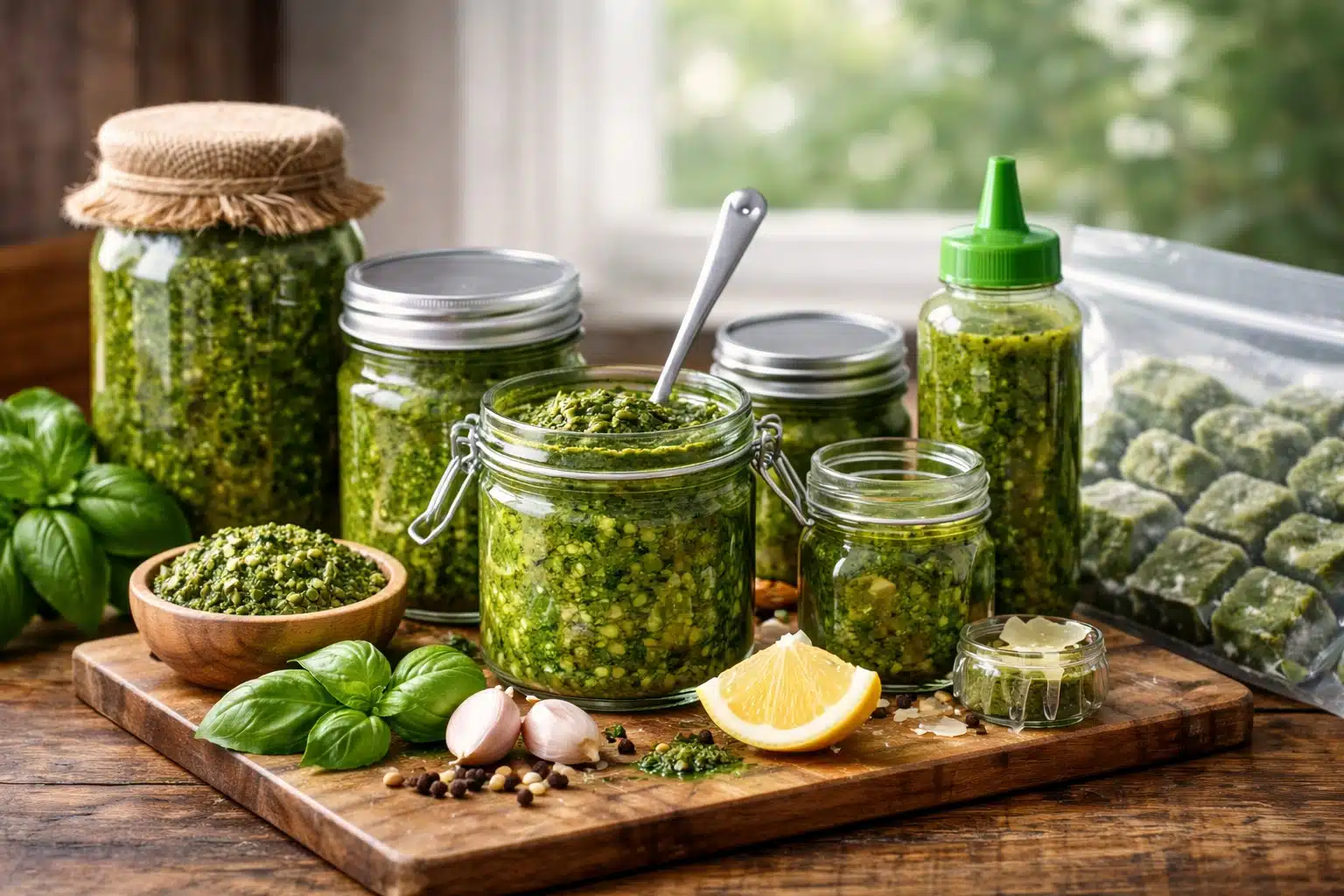
Fridge: After opening, move pesto to a shallow airtight glass or BPA-free container. Press out any trapped air, then pour a thin 1-2 mm layer of olive oil over the surface. That oil barrier is what slows browning - without it, basil oxidizes within a day or two.

Freezer: Portion into small amounts before freezing (see the next section). Don't freeze a full open jar; you'll lose the ability to thaw only what you need.

Watch Out
Some commercial pesto jars look shelf-stable but require refrigeration even before opening. Always check the label - if it says "keep refrigerated," the pantry isn't an option.

One common mistake worth avoiding: sealing and refrigerating homemade pesto while it's still warm. The condensation that forms inside the container accelerates spoilage.

Let it cool to room temperature first.

Can You Freeze Pesto Sauce?

Yes - and it's one of the better herbs-and-oil sauces to freeze. The key is portioning before it goes in, not after.

Texture changes do happen. The olive oil may separate after thawing and the pesto can look grainy or slightly dull. That's normal behavior from the fat content, not a sign of spoilage. A quick whisk with a teaspoon of fresh olive oil or a splash of lemon juice usually brings it back together.

  1. Portion it out - Spoon pesto into an ice-cube tray at 1-2 tablespoons per cavity, or use small silicone molds.
  2. Freeze until solid - Leave in the tray for 2-4 hours until fully frozen through.
  3. Transfer and label - Pop the cubes into a labeled freezer bag or airtight container, press out excess air, and note the date.
  4. Thaw correctly - Drop a frozen cube directly into hot pasta or soup, or defrost a larger portion in the fridge overnight. Avoid high-heat microwaving, which worsens discoloration.
Golden Rule
Don't refreeze pesto that has been fully thawed and held in the fridge for more than 24 hours. Quality drops sharply and the safety margin narrows.

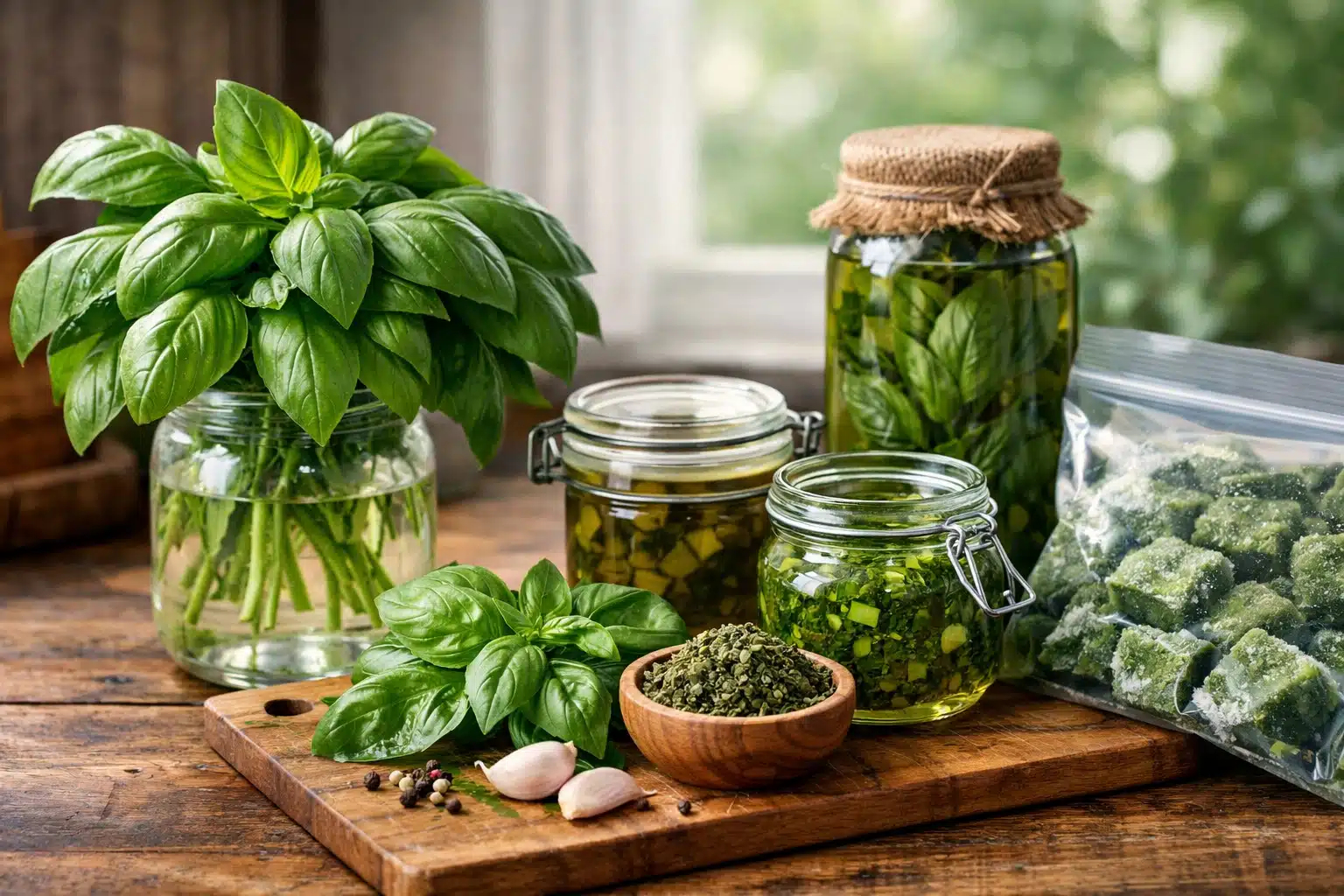
Store-bought jarred pesto freezes just as well as homemade. For homemade pesto, briefly blanching the basil before processing helps preserve green color through the freeze-thaw cycle.

Signs Pesto Sauce Has Gone Bad

Most spoilage in pesto is visible or smells wrong before you'd ever taste it. A little surface darkening from oxidation is normal - that's just the basil reacting to air.

What you're watching for goes beyond light color changes.

Signs It's Gone Bad
👀
VisualGray-brown spreading across surface · white mold spots on surface or rim · cloudy film with curdled oil separation
👃
SmellSour or fermenting odor · sharp off-smell from parmesan or pecorino breakdown
✋
TextureSlimy or viscous feel beyond normal oiliness · grainy chalky curds from spoiled cheese

Mold, a sour or fermenting smell, or a slimy texture are all hard stops - discard the jar without tasting. The parmesan and pecorino in pesto can break down in ways that smell aggressively off before visible mold even appears.

Shortcut
If thawed pesto smells fine but looks dull or slightly gray, it's still usable. Stir in a teaspoon of fresh olive oil and a squeeze of lemon juice to freshen both color and aroma before serving.

Storing Pesto the Right Way

A few consistent habits keep pesto in good shape from the first use to the last. These apply whether you're working with a commercial jar or a batch of homemade pesto made with fresh basil.

  • Oil the surface every time - After each use, scrape down the jar edges and pour a thin layer of olive oil over the surface before resealing.
  • Portion before freezing - Single 1-2 tablespoon cubes let you pull exactly what you need without thawing an entire batch.
  • Label freezer containers - Use within 6 months for the best aroma and color, even though the pesto stays safe longer.
  • Brighten before serving - If thawed pesto looks dull, a small squeeze of lemon juice and fresh olive oil restores it quickly.

If you run out and need a quick swap, there are several pesto sauce alternatives worth knowing for pasta, sandwiches, and dips.

Frequently Asked Questions

How long does homemade pesto last in the fridge?

Homemade pesto lasts 5-7 days refrigerated in an airtight container. Without preservatives, it oxidizes and spoils faster than commercial versions - an olive oil layer on the surface helps extend that window by a day or two.

Does pesto go bad if left out?

Yes. Opened pesto left at room temperature for more than 2 hours enters the danger zone for bacterial growth. Discard any portion that has sat out that long, especially in warm kitchens.

Can you freeze pesto with Parmesan cheese?

Yes, pesto with Parmesan freezes well. The cheese may contribute to a slightly grainy texture after thawing, but a quick stir with fresh olive oil smooths it out. Some cooks omit the cheese before freezing and add it fresh after thawing for cleaner results.

Is it safe to eat pesto after 2 weeks in the fridge?

Only if it's an unopened commercial jar with a best-by date still ahead. Opened pesto - store-bought or homemade - should be discarded after 7 days regardless of how it looks.

How do you stop pesto from turning brown?

Pour a thin layer of olive oil directly over the surface after every use and seal the container tightly. For homemade batches, briefly blanching the basil before processing significantly slows oxidation both in the fridge and freezer.

How Long Does Heavy Cream Last? [Storage Guide]

March 9, 2026

Pouring heavy cream straight into the fridge door is one of the most common storage mistakes home cooks make - and it quietly shortens shelf life every time the door swings open. Temperature fluctuations from door storage stress the cream faster than the steady cold of a middle shelf.

Understanding exactly how long heavy cream lasts, and how storage method changes that window, saves you from a ruined sauce or a carton you have to throw away. The rules differ depending on whether the carton is opened, unopened, or shelf-stable UHT - and those differences matter.

If you're also tracking cream freshness guide across other dairy products in your fridge, the same core principles apply.

QUICK SUMMARY

Unopened refrigerated heavy cream lasts 7-14 days in the fridge. Once opened, use it within 5-7 days. Frozen cream keeps 2-3 months but won't whip after thawing - save it for cooked dishes only.

🧊Fridge (opened): 5-7 days in a sealed, airtight container on a middle shelf
❄️Freezer: 2-3 months; expect separation - use in sauces and soups only
⚠️Key rule: Never leave opened cream out more than 2 hours; write the open date on the carton

How Long Does Heavy Cream Last?

Shelf life depends on two variables: whether the carton has been opened and whether you bought refrigerated pasteurized cream or shelf-stable UHT cream. Those are genuinely different products with different timelines.

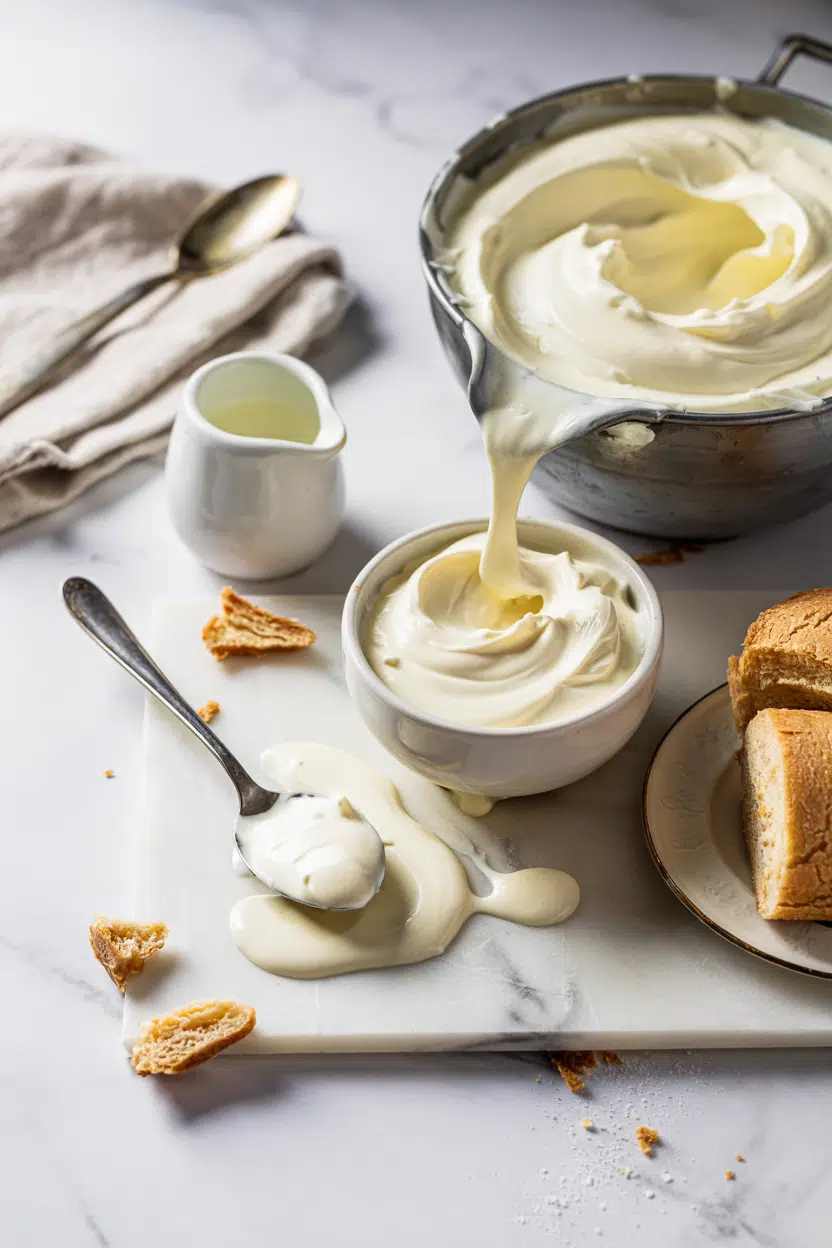
Refrigerated pasteurized heavy cream - the kind found in the cold dairy case - keeps 7-14 days unopened before the sell-by date. Once opened, that window drops sharply to 5-7 days.

Shelf-stable UHT heavy cream, sold in aseptic packaging, can sit in the pantry until its printed date, sometimes months away, however it still needs refrigeration the moment you open it.

Heavy Cream Shelf Life
Method State Duration Notes
🏠 Pantry UHT, unopened Until printed date Aseptic/shelf-stable packs only; refrigerate immediately after opening
🧊 Fridge Unopened 7-14 days Refrigerated pasteurized cream; check label for exact sell-by date
🧊 Fridge Opened 5-7 days Keep cold and sealed; store on a middle shelf, not in the door
❄️ Freezer Opened or unopened 2-3 months Best for cooked applications; texture unsuitable for whipping after thaw
🏠 Counter Opened 2 hours max 1 hour if ambient temperature exceeds 90°F; discard after

Sell-by dates are not expiration dates - cream that smells and looks fine a day or two past that date is often still safe. That said, opened cream past 7 days is a genuine risk regardless of what the label says.

How to Store Heavy Cream

The goal is simple: keep it cold, sealed, and away from temperature swings. Where in the fridge you place it matters more than most people expect.

Fridge: Store on a middle shelf where temperature stays consistently between 35-38°F. Reseal the original carton tightly after every pour, or transfer opened cream into a clean airtight container - an opaque one is better because light exposure can accelerate oxidation. Avoid wide, shallow bowls that maximize surface contact with air. Write the open date directly on the carton so you're not guessing later.

Counter: Leave cream out only as long as you're actively cooking with it. The two-hour rule is firm.

Pantry: Only UHT heavy cream in sealed aseptic cartons belongs here. Once opened, it goes straight into the fridge - no exceptions.

Golden Rule
Middle shelf, sealed tight, open date written on the carton. Those three habits extend usable life to the full 5-7 days every time.

For cooked dishes where you need a dairy-free or lower-fat option, a quick look at heavy cream swaps or milk alternatives can help you plan around what's in the fridge already.

Can You Freeze Heavy Cream?

Yes - with a clear caveat. Frozen heavy cream almost always separates on thawing, making it unsuitable for whipping.

For sauces, soups, and baked goods, though, it works fine.

Watch Out
Don't freeze cream in the original carton without leaving headspace. Expansion during freezing can split the package and leak inside your freezer.
  1. Portion first - Pour cream into a freezer-safe airtight container, leaving at least an inch of headspace for expansion. For recipe-friendly amounts, freeze in an ice-cube tray first, then transfer the cubes to a sealed freezer bag.
  2. Label with the date - Mark the container clearly; quality degrades after 2-3 months even if the cream stays technically safe longer.
  3. Thaw overnight in the fridge - Never thaw on the counter. Once thawed, whisk or shake the cream firmly to recombine the separated fat before using in cooked applications.
  4. Add at the end of cooking - For sauces, stir thawed cream in during the final minutes and simmer gently rather than boiling, which worsens the grainy texture.

If texture after thawing is a concern for a specific recipe, keeping a small amount of fresh cream on hand to finish a dish - alongside the frozen batch - solves the problem cleanly.

UK readers using whipping cream will find the same freezing behavior applies.

Signs Heavy Cream Has Gone Bad

Fresh heavy cream has a faint, sweet dairy smell. Any significant departure from that baseline is a warning sign worth taking seriously.

Signs It's Gone Bad
👀
VisualThick curds separating from watery liquid · Yellow or gray discoloration at the surface · Mold on the surface or around the container rim
👃
SmellSour or sharp odor · Rancid smell distinctly different from fresh cream's mild sweetness
✋
TextureSlimy film on the surface · Gritty or grainy mouthfeel when tasted

Note that slight separation in fresh cream - thin liquid sitting below a thicker layer - is normal and not spoilage. A quick shake or stir should recombine it. Curdling, sliminess, or any off odor are different matters entirely: discard immediately and don't taste-test further.

For comparison, half-and-half shelf life follows a similar spoilage pattern, and the same visual checks apply. If you've already gone through your cream and need a stand-in, crème fraîche substitutes cover several fridge-stable options that hold longer.

Practical Tips for Getting the Most From Heavy Cream

Good habits at purchase and storage extend usable life without any extra effort.

  • 📅 Write the open date on the carton - a quick marker note prevents guessing and reduces waste.
  • 🧊 Freeze in measured portions - ½-cup or 1-cup amounts match most recipes so you only thaw exactly what you need.
  • 🥣 Chill your bowl and beaters - cold equipment helps fresh cream whip to better volume; warm equipment fights you.
  • 🍲 Keep a fresh splash on hand - if using previously frozen cream in a sauce, a small addition of fresh cream at the finish smooths out any graininess from the thawed batch.
  • 🚪 Move it off the door - consistent cold on a middle shelf is the single biggest controllable factor in how long opened cream stays usable.
Shortcut
Freeze cream in an ice-cube tray, transfer cubes to a bag, and pull out exactly what each recipe needs - no thawing a full carton for two tablespoons.

Frequently Asked Questions

Can you freeze heavy cream and still whip it?

No. Freezing causes the fat to separate, and thawed cream rarely holds stable peaks. Reserve frozen cream for cooked sauces, soups, or baked goods where texture is less critical.

How long does heavy cream last in the fridge after opening?

5-7 days when kept sealed in an airtight container on a middle shelf. Door storage or loose sealing can shorten that to 3-4 days.

Is it safe to use cream past the sell-by date?

Sell-by is a retailer's stocking guide, not a safety cutoff. Unopened cream stored properly may be fine 1-2 days past that date - smell and appearance are the real tests.

Can you freeze an unopened carton of heavy cream?

Technically yes, but don't freeze it in the original carton without leaving headspace - expansion can split the packaging. Transfer to a freezer-safe container first.

Does heavy cream last longer than half-and-half?

Their opened fridge lives are nearly identical - both typically 5-7 days. Heavy cream's higher fat content gives it a slight edge in resisting bacterial growth at the margins.

How Long Does Tuna Last? [Storage Guide]

March 9, 2026

Many cooks pull tuna from the fridge without checking when they bought it, and that habit causes more problems with fish than almost any other protein.

Tuna spans a wide range - shelf-stable canned pantry staple, raw sashimi-grade steak, vacuum-packed fillet, and cooked leftovers - and each form has its own strict timeline.

Knowing which rules apply to what you have in hand is the difference between a safe meal and a wasted one.

QUICK SUMMARY

Canned tuna lasts up to 5 years unopened in the pantry. Fresh raw tuna gives you 1-2 days in the fridge. Cooked tuna keeps 3-4 days refrigerated. Freeze raw steaks and cooked portions for up to 2-3 months - but never store opened tuna in the metal can.

🥫Pantry (unopened): 12-60 months; check the best-by date on the can or pouch
🧊Fridge (raw fresh): 1-2 days; sushi-grade is best used within 24 hours
❄️Freezer (raw steaks): 2-3 months best quality; vacuum-seal to reduce freezer burn

How Long Does Tuna Last?

How long tuna keeps depends almost entirely on its form and how it was packaged. A sealed can and a fresh sashimi-grade steak share almost nothing in common once you start counting days.

Tuna Shelf Life
Method State Duration Notes
🏠 Pantry Unopened canned/pouch 12-60 months Cool, dry place; check best-by date
🏠 Pantry Opened Not safe Refrigerate immediately after opening
🧊 Fridge Raw fresh (sushi-grade) 1-2 days Best within 24 hours; keep at 32-38°F
🧊 Fridge Raw fresh (vacuum-packed) 2-3 days Once opened, use within 24 hours
🧊 Fridge Cooked leftovers 3-4 days Airtight container; cool within 2 hours
🧊 Fridge Opened canned/pouch 2-3 days Transfer to sealed container immediately
❄️ Freezer Raw steaks/fillets 2-3 months Vacuum-seal at 0°F (-18°C) for best results
❄️ Freezer Cooked tuna 2-3 months Texture changes on thaw; use in cooked dishes
❄️ Freezer Unopened canned/pouch Indefinite Possible can bulging; rarely necessary

Fresh raw tuna deteriorates faster than most other fish storage guide timelines because of its high protein content and fat composition, especially in fatty cuts like bluefin. Sushi-grade fish in particular carries zero margin for error - treat 24 hours as the hard cutoff.

Golden Rule
The best-by date on canned tuna is a quality marker, not a safety cliff - but once you cross 5 years or see a swollen can, discard it without opening.

How to Store Tuna

Storage method depends on which form you're working with. Getting the container right matters as much as the temperature.

Pantry: Keep only factory-sealed cans and shelf-stable pouches here. Store upright in a cool, dry spot away from direct sunlight or heat sources like stoves and dishwashers.

Fridge: Raw fresh steaks need the coldest zone - place them on a rimmed tray over ice or directly against the back wall. Opened canned or pouched tuna must transfer immediately into a sealed non-metal container; leaving it in the original can speeds up metallic off-flavors and corrosion. For cooked tuna or tuna salad, use an airtight container and refrigerate within 2 hours of cooking.

Freezer: Raw steaks intended for later use should go in as soon as you get home if you're not cooking within a day. Vacuum-sealing before freezing is the most reliable method for preventing freezer burn and color loss, particularly in fatty cuts.

  • 🧊 Raw fresh steaks - wrap tightly in butcher paper or vacuum-seal; never use a loose bag with air gaps
  • 🥫 Opened canned tuna - glass or BPA-free plastic container with a tight lid; use within 2-3 days
  • 🍽️ Cooked leftovers - shallow airtight container; label with the date before refrigerating
  • 🚫 Opened metal cans - never store in the fridge; transfer always

Can You Freeze Tuna?

Yes - raw steaks and cooked tuna both freeze well enough for practical use, with some caveats about texture. Unopened canned and pouched tuna can technically be frozen indefinitely, however it's rarely worth the effort given their long pantry life.

Fatty tuna like bluefin or toro suffers the most from freezing - the fat structure breaks down and the flesh can turn stringy or lose its creamy texture. Leaner varieties like skipjack may become slightly drier but hold up better overall.

For raw tuna you plan to use in cooked dishes like seared steaks or pasta, the quality difference after thawing is manageable.

  1. Pat dry Remove excess moisture from raw or cooked tuna with paper towels before packaging.
  2. Portion Divide into meal-size pieces so you only thaw what you need.
  3. Wrap tightly Wrap each piece in plastic wrap, then a layer of aluminum foil - or use a vacuum-sealer for the best protection.
  4. Label and freeze Mark the date clearly and freeze at 0°F (-18°C). Rotate stock every 2-3 months.

Thawing: Move frozen tuna to the fridge 12-24 hours before use. For faster results, place the sealed bag in cold water and swap the water every 30 minutes. Never thaw at room temperature - bacterial growth accelerates quickly at warmer temps. Don't refreeze thawed tuna unless you cook it first.

Watch Out
If you bought raw tuna intending to serve it as sashimi after freezing, only do so with product that was labeled sashimi-grade or previously frozen to sashimi standards by the supplier - and follow their guidance exactly.

Signs Tuna Has Gone Bad

Fresh tuna should smell briny and clean, like ocean water. Anything sharper or more pungent than that is a red flag worth taking seriously.

Signs It's Gone Bad
👀
VisualDull brownish or gray edges on raw flesh · Greenish or black spots on canned tuna · Cloudy or milky liquid in opened pouch or container
👃
SmellStrong sour or vinegary odor · Sharp ammonia smell indicating protein breakdown
✋
TextureSlimy or sticky film on raw or cooked surface · Mushy, grainy flesh that falls apart with off odor

The ammonia smell is the clearest sign of protein breakdown - it means spoilage is well underway. Slight browning on the very surface of a raw steak can be normal oxidation; gray color reaching deeper into the flesh is not.

Discard tuna if any of these signs appear, regardless of how recently you bought it.

Shortcut
When in doubt with any fresh fish, apply the two-check rule: smell it first, then look at the color. If either fails, the tuna goes out.

Storage Habits Worth Keeping

Four practical habits cover most of the storage mistakes we see with tuna. Build these in and you'll waste far less.

  • Date everything immediately - label containers and freezer bags the moment you pack them; guessing later always costs you
  • Transfer opened cans right away - a sealed glass container keeps opened canned tuna tasting clean for the full 2-3 days
  • Buy sushi-grade from reputable sellers - source matters more than storage for raw fish intended to be eaten uncooked; if you need alternatives, look at tuna alternatives that may be easier to source fresh locally
  • Freeze on purchase day - if you know you won't cook fresh steaks within 24 hours, vacuum-seal and freeze immediately rather than letting them sit; vacuum-sealed fish held in the fridge too long loses quality fast

Frequently Asked Questions

Can you freeze canned tuna?

Unopened cans and pouches can be frozen, however it's almost never necessary given their 1-5 year pantry life. Freezing an already-opened can is not recommended - transfer the contents to a freezer-safe container first, and use within 2-3 months.

How long does raw tuna last in the fridge for sashimi?

Sashimi-grade raw tuna is best consumed within 24 hours of purchase. Even kept at 32-38°F, quality drops sharply after that window and food safety risk increases.

Is it safe to eat tuna that smells fishy?

A mild briny scent is normal. A sharp, sour, or ammonia-like smell is not - that indicates protein breakdown and the tuna should be discarded. Fresh tuna should never smell aggressively "fishy."

How long does cooked tuna salad last in the fridge?

Tuna salad keeps 3-4 days refrigerated in an airtight container. The limiting factor is usually the mayonnaise or other perishable mix-ins, not the tuna itself - don't push it past day 4.

Can you refreeze thawed tuna?

Not safely if it's still raw. Once raw tuna has thawed in the fridge, cook it before refreezing. Refreezing raw fish causes significant texture damage and raises the risk of bacterial growth during the repeated thaw cycle.

How Long Does Ricotta Cheese Last? [Storage Guide]

March 9, 2026

Leftover ricotta from last night's lasagna is one of those fridge mysteries that nobody quite knows how to handle.

Most people assume it keeps as long as any other soft cheese, but ricotta's high moisture content makes it one of the faster-spoiling dairy products in your refrigerator.

The good news is that with the right container and a couple of simple habits, you can get every usable day out of it - and freeze what you won't finish in time.

QUICK SUMMARY

Opened ricotta lasts 5-7 days in the fridge in an airtight container. Unopened, pasteurized ricotta keeps 7-10 days from the manufacture date. Frozen ricotta is safe for 2 months but turns grainy - use it only in cooked dishes after thawing.

🧊Fridge (opened): 5-7 days in a sealed container with plastic wrap pressed to surface
❄️Freezer: Up to 2 months; texture becomes grainy after thawing
⚠️Counter limit: 2 hours maximum - discard anything left out longer

How Long Does Ricotta Cheese Last?

Shelf life depends on two things: whether the container has been opened, and whether you're working with packaged pasteurized ricotta or a fresh batch made without stabilizers.

Packaged whole-milk or part-skim ricotta carries a reliable use-by date stamped on the tub - that date applies only while the seal is intact.

Ricotta Cheese Shelf Life
Method State Duration Notes
🧊 Fridge Unopened 7-10 days Count from manufacture date; check the use-by stamp on the tub
🧊 Fridge Opened 5-7 days Press plastic wrap to surface; shorter if ricotta came from a hot cooked dish
❄️ Freezer Opened/portioned 2 months Safe beyond that but texture degrades further; label with date
🏠 Counter Any 2 hours max Soft dairy enters the danger zone quickly; discard if left out longer

Fresh homemade ricotta cheese - made without the stabilizers found in commercial tubs - sits at the shorter end of these windows. Expect 3-5 days refrigerated, and plan your meals accordingly.

Unlike something shelf-stable like the shelf life of sugar, ricotta gives you a narrow window that closes fast.

How to Store Ricotta Cheese

The original sealed container is your best option until you break the seal. Once opened, transfer ricotta to a shallow airtight container - shallower than the original tub, so less surface area is exposed to air.

Fridge: Spoon the ricotta into a clean airtight container, then press a sheet of plastic wrap directly onto the surface before snapping the lid shut. This limits both air exposure and whey pooling. If whey has already pooled, drain off 1-2 tablespoons before resealing; excess whey dilutes the curds and speeds up spoilage.

Counter: Keep ricotta out for no more than 2 hours total - during prep, serving, or cooling. That includes time spent on a warm stovetop nearby.

Watch Out
Never store ricotta in the fridge door. Temperature fluctuates there every time the door swings open, which accelerates whey separation and shortens shelf life noticeably.

One overlooked habit: use a clean spoon every time you reach into the container. Introducing bacteria from a used utensil cuts days off the remaining shelf life.

Never double-dip.

Can You Freeze Ricotta Cheese?

Freezing ricotta works, with one honest caveat. Texture changes significantly - after thawing, the curds become grainy and slightly crumbly, and the creaminess you get from fresh ricotta won't fully return.

That said, frozen and thawed ricotta performs well in baked pastas, stuffed shells, pancake batter, and sauces where the texture difference is masked by heat and mixing.

  1. Portion first. Divide into recipe-sized amounts - typically ½ to 1 cup - so you thaw only what you need and avoid repeated freeze-thaw cycles.
  2. Pack tightly. Spoon into an airtight freezer-safe container or a heavy-duty freezer bag, then press out as much air as possible before sealing.
  3. Freeze flat. If using a bag, lay it flat in the freezer. It speeds thawing and stacks efficiently.
  4. Label with the date. Use within 2 months for best quality; beyond that it's safe but the texture degrades further.
  5. Thaw overnight in the fridge. Once thawed, stir or whisk to recombine the whey back into the curds before using.
Golden Rule
Thawed ricotta is a cooked-dish ingredient only. Don't spread it on toast or serve it fresh - use it in lasagna, fillings, or pancakes where texture doesn't need to be silky.

If you're looking at other soft cheeses that behave similarly in the freezer, checking out mascarpone replacements or cream cheese alternatives can help when thawed ricotta still won't work for your recipe.

Signs Ricotta Cheese Has Gone Bad

Normal ricotta is white to ivory with a mildly milky, slightly sweet scent. A thin layer of separated whey on top is not spoilage - stir it back in, then smell.

Signs It's Gone Bad
👀
VisualColored mold spots (blue, green, or black) · Thick cloudy whey with brownish tinge that won't recombine · Yellowing or darkening curds
👃
SmellSharp, sour "curdled" dairy odor · Ammonia-like or fermented smell
✋
TextureSlimy film on surface · Stringy or unusually gummy curds

Mold, ammonia smell, or sliminess means discard immediately - the whole container, not just the affected layer. Unlike hard cheeses where you can cut away mold, ricotta's soft, moist structure allows contamination to spread through the curds invisibly.

Getting the Most Out of Every Tub

Three habits separate ricotta that lasts the full week from a tub you pitch after three days.

  • 🗓️ Check the use-by date at purchase - choose the latest date on the shelf, and plan your first use for within a day or two of opening.
  • 🥄 Portion before you freeze - whole frozen tubs force you into a single all-or-nothing thaw, which usually means waste or texture loss across the board.
  • 🔄 Don't mistake whey for spoilage - separated whey is normal; drain or stir it before concluding the ricotta is gone. If the smell and color are fine, it's still good.
  • 🍝 Plan cooked uses for the final days - baked dishes and sauces tolerate slightly older ricotta far better than fresh applications do.
Shortcut
If you end up with ricotta past its prime but not yet spoiled, blend it into a pasta sauce or mix it into pancake batter - heat masks minor texture changes completely.

If ricotta consistently runs out before you can use it, ricotta cheese replacements like drained cottage cheese alternatives can fill in for most cooked applications.

Frequently Asked Questions

How long does ricotta last after opening in the refrigerator?

Opened ricotta lasts 5-7 days refrigerated in an airtight container. Ricotta that was heated in a cooked dish - like a stuffed shell filling - sits at the shorter end of that range.

Can you freeze ricotta cheese and use it in lasagna?

Yes. Frozen ricotta becomes grainy after thawing, but lasagna and other baked pasta dishes mask that texture change completely. Thaw overnight in the fridge and stir before using.

Is ricotta safe to eat after it smells a bit sour?

A mild, lightly tangy smell can be normal for older ricotta - stir it and check for mold or sliminess. A sharp, ammonia-like, or fermented odor means discard it.

Can I freeze ricotta in a freezer bag?

Yes - use a heavy-duty freezer bag, press out as much air as possible, and freeze it flat. Flat bags thaw faster and stack better than containers.

How do you prevent ricotta from getting watery?

Press plastic wrap directly onto the surface before sealing the container - this limits air contact and slows whey separation. Draining off pooled whey before resealing also helps.

How Long Does Coconut Milk Last? [Storage Guide]

March 9, 2026

Buying a can of coconut milk for one recipe and wondering what to do with the rest is one of the most common kitchen headaches.

Opened canned coconut milk lasts 4-7 days in the fridge, while an unopened can stays shelf-stable for up to two years - but the rules shift depending on whether you're working with a carton, a can, or homemade coconut milk.

Unlike cow's milk, coconut milk separates naturally in storage, which looks alarming but doesn't always signal spoilage. Knowing what's normal and what's dangerous saves you from both wasting good milk and using bad.

QUICK SUMMARY

Opened canned coconut milk keeps 4-7 days refrigerated in a sealed nonreactive container. Unopened cans last up to 2 years in the pantry. Freeze for 2-3 months, but expect separation - use thawed milk in cooked dishes only.

🥫Pantry (unopened): 6-24 months until best-by date
🧊Fridge (opened): 4-7 days in a sealed container
❄️Freezer: 2-3 months; use in cooked recipes after thaw
🏠Homemade: 2-3 days refrigerated; no preservatives, oxidizes fast

How Long Does Coconut Milk Last?

Shelf life varies more with coconut milk than with most dairy alternatives because the format - can, aseptic carton, or fresh - changes everything.

A commercial can relies on heat sterilization with no stabilizers, while carton blends often contain guar gum or xanthan that extend opened shelf life slightly differently.

Coconut Milk Shelf Life
Method State Duration Notes
🏠 Pantry Unopened can or carton 6-24 months Use best-by date as guide; discard bulging or rusted cans
🧊 Fridge Opened 4-7 days Sealed nonreactive container; stir before use
🧊 Fridge Homemade 2-3 days No preservatives; oxidizes quickly even when covered
❄️ Freezer Opened or cooked 2-3 months Separation is normal; use in sauces, curries, soups
🏠 Counter Opened 2-4 hours max Bacterial growth risk; discard if left out longer

Carton coconut milk with added stabilizers tends to hold together slightly longer once opened than plain canned, but the 4-7 day fridge window still applies. Homemade has no buffer at all - two days is the safe ceiling.

How to Store Coconut Milk

The biggest mistake people make is leaving opened coconut milk in the original can. Metal cans can impart off-flavors and increase contamination risk once the seal is broken, so transfer immediately.

Pantry: Keep unopened cans and cartons upright in a cool, dry spot away from direct sunlight. Roll the can gently before opening to mix the layers without splashing. Discard any can that's bulging, deeply dented, or shows rust.

Fridge: Pour opened coconut milk into a glass jar with a tight lid or a BPA-free plastic container. Fat separation is normal - the thick cream rises to the top. Stir or shake before each use to reincorporate.

Counter: Never leave opened coconut milk at room temperature beyond 2-4 hours. Bacterial growth accelerates fast without refrigeration.

Golden Rule
Label every opened container with the date. The 4-7 day fridge window is easy to lose track of when the jar looks fine.

It also helps to separate the thick coconut cream layer from the thinner liquid before storing. Use the cream for curries and desserts; reserve the watery portion for smoothies or broth-based dishes.

If you're working with other plant-based milks alongside coconut milk, the same glass-container rule applies across the board.

Can You Freeze Coconut Milk?

Yes - with one firm expectation. Freezing coconut milk causes fat-water separation, turning it grainy and curd-like after thawing.

That texture rules it out for whipped cream or fresh panna cotta, but it's completely fine for cooked sauces, curries, and soups where heat smooths everything out.

  1. Portion first Pour coconut milk into ice cube trays or small airtight freezer-safe containers, leaving headspace for expansion.
  2. Optional emulsifier step Whisk 1-2 tablespoons of neutral oil per cup of coconut milk before freezing to improve texture after thawing.
  3. Seal and label Cover trays with plastic wrap or transfer frozen cubes to a zip-lock bag; mark the date and use within 2-3 months.
  4. Thaw in the fridge Move to the refrigerator overnight - never thaw at room temperature.
  5. Re-emulsify before use Vigorously whisk or blend with an immersion blender after thawing; for recipes needing smooth texture, blending is non-negotiable.

Freezing in ice cube trays is especially practical for smoothies - drop one or two frozen cubes directly into the blender without full thawing.

If a recipe calls for a stabilizer and you're out, checking guar gum alternatives can help you compensate for texture issues in frozen-and-thawed applications.

Watch Out
Don't freeze full-fat coconut milk expecting the same texture for fresh uses like whipped toppings. Separation is irreversible - it re-emulsifies for cooking, not for raw applications.

Signs Coconut Milk Has Gone Bad

Normal fat separation looks white and creamy. Spoilage looks and smells different - and once you know the markers, it's hard to miss.

Signs It's Gone Bad
👀
VisualGrayish or pink discoloration · mold or dark spots on surface · large slimy clumps that don't stir back in
👃
SmellSour or fermented odor · sharp off-smell replacing the natural nutty sweetness
✋
TextureSlimy surface film · chalky, grainy curds that refuse to re-emulsify after stirring

The smell test is your most reliable tool. Fresh coconut milk has a mild, nutty sweetness - a sour or fermented edge means bacterial activity has taken hold. Do not taste-test to confirm; if any sign above is present, discard it.

Shortcut
Stir before you sniff. If the separated layers blend back smoothly and smell clean, it's still good. Slime plus sour smell means it's done.

Getting the Most From Every Can

Most coconut milk waste comes down to a few avoidable habits rather than actual spoilage. A little planning at the moment you open the can goes a long way.

  • Portion for freezing immediately - if you know you won't finish the can within 5 days, freeze what you won't use before it starts to age.
  • Use the cream layer strategically - spoon it off for high-fat applications like curries or desserts; the thinner liquid suits smoothies and soups.
  • Don't confuse canned and carton - carton blends with stabilizers behave differently; check labels and treat each format on its own terms.
  • Match the right coconut milk substitute to the recipe if you're short - not all swaps work equally in hot versus cold applications.

Frequently Asked Questions

How long does canned coconut milk last after opening?

4-7 days refrigerated in a sealed nonreactive container. Transfer out of the metal can immediately after opening - storing in the original can shortens that window and risks off-flavors.

Can you freeze coconut milk for smoothies?

Yes - ice cube trays work best. Frozen cubes drop directly into the blender, so full thawing isn't needed. Separation is fine here since blending re-emulsifies the mixture.

What does bad coconut milk smell like?

Sour, sharp, or fermented - clearly different from the mild, nutty sweetness of fresh coconut milk. Any vinegary or rancid edge means it's spoiled; discard without tasting.

Is canned coconut milk safe to use after the expiration date?

Best-by dates on cans are quality markers, not hard safety cutoffs. An undamaged, properly stored can is often still safe a few months past the date - inspect for bulging, rust, and off-smell before using.

How do you re-emulsify separated coconut milk?

Vigorous whisking works for mildly separated milk. For thawed or heavily separated coconut milk, an immersion blender gives a smoother result - especially important in recipes like panna cotta or cream sauces.

How Long Does Feta Cheese Last? [Storage Guide]

March 9, 2026

Buying a block of feta cheese at the market feels low-stakes until it's sitting in your fridge and you can't remember when you opened it. Unlike halloumi or fresh ricotta, brined feta has a meaningful shelf life advantage - the salt brine it lives in actively preserves it.

Handled correctly, an opened block stays good for up to three weeks; mishandled, it can turn in days.

QUICK SUMMARY

Unopened feta cheese keeps 4-6 weeks in the fridge. Once opened, submerge it in fresh brine and use within 1-3 weeks. Frozen feta lasts 2-3 months but becomes crumbly - best reserved for cooked dishes.

🧊Fridge (unopened): 4-6 weeks sealed in original packaging or brine
🧊Fridge (opened): 1-3 weeks submerged in fresh salted water
❄️Freezer: 2-3 months; texture turns crumbly - use in bakes or sauces

How Long Does Feta Cheese Last?

Shelf life for feta hinges almost entirely on whether it stays cold and stays wet. Vacuum-packed blocks and sealed tubs of brine are optimized environments - open them and the clock starts moving faster.

Feta Cheese Shelf Life
Method State Duration Notes
🧊 Fridge Unopened 4-6 weeks Keep sealed; commercial vacuum-pack or original brine tub
🧊 Fridge Opened 1-3 weeks Submerge in fresh brine; wrap tightly if dry block
❄️ Freezer Opened 2-3 months Best for cooked dishes; texture becomes more crumbly
🏠 Counter Opened 4-8 hours max Safe only during serving; discard after prolonged exposure

The 1-3 week range for opened feta isn't arbitrary. Sheep's milk and goat's milk cheeses like feta carry higher moisture content than aged hard cheeses, making them more vulnerable once air reaches the cut surface.

Staying submerged in salted brine slows that deterioration significantly.

Golden Rule
An opened feta block left dry in the fridge - no brine, no airtight wrap - loses moisture and flavor within days. Always keep it covered.

How to Store Feta Cheese

The method that matters most is keeping opened feta away from air and odors. Your fridge is full of both.

Fridge (unopened): Leave it in the original sealed packaging until you're ready to use it. Don't puncture vacuum-pack ahead of time.

Fridge (opened, brined): Transfer the cheese and its brine to a glass jar or airtight plastic tub. If the brine level drops, top it up with a solution of one teaspoon of salt per cup of water. Keep the block fully submerged at all times.

Fridge (opened, dry block): Wrap tightly in plastic wrap, pressing out air at each layer. Store in an airtight container to block odor transfer from neighboring foods. Feta absorbs fridge smells quickly when left exposed.

Counter: Fine for up to 4-8 hours while serving - no longer. Room temperature accelerates bacterial growth on high-moisture cheese.

  • 🫙 Best container - A glass jar with a tight lid holds brine without leaching odors or flavors
  • Leftover brine - Strain and reserve it for dressings or to brine vegetables; discard if it smells off or turns cloudy
  • Label opened containers - Write the date you opened it; feta looks fine long past its prime

Similar soft brined cheeses follow comparable storage logic - the brine is the preservation system, not an afterthought.

Can You Freeze Feta Cheese?

Yes - with one important caveat about texture. Frozen feta retains its flavor well, however the structure changes noticeably after thawing.

Watch Out
Never freeze feta while it's still sitting in brine. The excess water forms ice crystals that shatter the protein structure, leaving you with a grainy, waterlogged block.

Pat the cheese dry before freezing. The texture shift is real but manageable - thawed feta crumbles more easily and loses some of its creamy bite, which makes it less ideal for salads but perfectly suited to baked dishes, omelets, and sauces.

  1. Drain and dry Remove the feta from brine and pat it thoroughly dry with paper towels.
  2. Wrap tightly For a block, wrap in plastic wrap first, then a layer of aluminum foil. For crumbled feta, portion into freezer bags and press out all the air before sealing.
  3. Label and freeze Mark each package with today's date and a use-by date 2-3 months out.
  4. Thaw in the fridge Move blocks to the fridge 24 hours before use; crumbles need 12-18 hours. Drain any liquid and blot dry before adding to a dish.

Quality is best within the 2-3 month window. It stays safe beyond that, however the flavor dulls noticeably after the three-month mark.

Signs Feta Cheese Has Gone Bad

Feta's natural aroma is tangy, slightly earthy, and salty. Anything sharper or more acrid than that is a warning sign worth taking seriously.

Signs It's Gone Bad
👀
VisualFuzzy blue-green or black mold on surface · Cloudy pinkish or brownish brine · Slimy sheen across the block
👃
SmellSharp ammonia odor beyond normal tang · Rotten or sulfurous smell
✋
TextureMushy or slimy center in a previously firm block · Chalky crumbling paired with off-odors

One distinction worth knowing: harmless white sediment can form in the brine over time - that's just mineral deposits from the salt solution, not mold. Blue-green or black fuzzy growth on the cheese itself is a different matter entirely.

Don't try to cut around visible mold on feta. Its high moisture content means contamination spreads through the block faster than it does on firm aged cheeses.

If you see mold, smell ammonia, or feel sliminess, discard the whole piece.

Getting the Most From Every Block

Good feta storage comes down to a few consistent habits rather than any single trick.

  • Make fresh brine - Mix 1 teaspoon salt per cup of water and top up the jar whenever brine levels fall below the cheese
  • Use factory brine wisely - Transfer it to a clean jar and extend its life; don't keep topping it up indefinitely once it looks cloudy
  • Freeze in portions - Freeze crumbled feta in recipe-sized bags so you only thaw what you need
  • Thaw for salads carefully - Use thawed feta within 24-48 hours and always pat dry; excess moisture dilutes dressings and softens texture

If you run out of feta entirely, knowing your feta cheese alternatives saves a last-minute trip to the store. For reference on how other fresh dairy products age, the ricotta storage guide guide follows similar principles around moisture and cold storage.

Shortcut
Buy feta in brine over vacuum-packed dry blocks when possible. The liquid environment does half the preservation work for you.

Frequently Asked Questions

How long does feta last in the fridge after opening?

Opened feta keeps 1-3 weeks when stored properly in the fridge. Submerging it in fresh salted brine pushes it toward the longer end; a dry, loosely wrapped block may turn within a week.

Can you freeze feta cheese in brine?

No - drain and dry the cheese first. Freezing feta while submerged causes ice crystals to form throughout the block, producing a grainy, waterlogged texture after thawing.

Does freezing feta change the taste?

Flavor holds up better than texture does. Frozen and thawed feta tastes largely the same but crumbles more and loses some creaminess - qualities that matter less in a baked dish than in a salad.

Can you freeze crumbled feta?

Yes, and it's actually more practical than freezing a block. Portion crumbled feta into small freezer bags, press out the air, and freeze for up to 3 months - it's ready to add straight to hot dishes from frozen.

Is white bloom on feta the same as mold?

Not always. Powdery white mineral deposits from salt brine are harmless. Fuzzy white, blue-green, or black growth on the surface is mold - discard the entire piece, not just the affected section.

How Long Does Lettuce Last? Fridge & Freezer Guide

March 9, 2026

Freezing lettuce is one of those ideas that sounds practical until you pull out a bag of limp, waterlogged leaves and realize salad is off the table.

Lettuce is more perishable than most fresh herbs storage guide comparisons suggest - a whole iceberg head can last up to two weeks refrigerated, while pre-washed bagged leaves may go slimy in three days.

Knowing exactly which variety you have, and how it's stored, is the difference between a crisp salad and a compost pile.

QUICK SUMMARY

Whole lettuce heads last 7-14 days in the fridge; loose leaves last 1-3 days once cut. Frozen lettuce keeps 6-12 months but loses crunch entirely - use it only in cooked dishes. Keep leaves dry and away from ethylene-producing fruit.

🧊Fridge (whole): 7-14 days for iceberg or romaine; 3-7 days for loose leaf
✂️Fridge (cut): 1-3 days before leaves brown and go limp
❄️Freezer: 6-12 months airtight - cooked use only, not raw salads

How Long Does Lettuce Last?

Shelf life depends heavily on variety and prep state. A tightly wrapped iceberg head holds up far longer than a torn butterhead leaf, because intact cell walls slow moisture loss and browning.

Cut surfaces oxidize quickly, which is why sliced or pre-washed leaves expire so fast.

Lettuce Shelf Life
Method State Duration Notes
🏠 Counter Whole head 6-12 hours Loses crispness fast; avoid warm kitchens
🧊 Fridge Raw whole head 7-14 days Iceberg lasts longest; loose leaf shortens to 3-7 days
🧊 Fridge Raw sliced/torn 1-3 days Cut surfaces brown and wilt faster
❄️ Freezer Raw (chopped) 6-12 months Cooked use only; texture becomes limp after thawing

Pre-washed bagged leaves sold at the store are already near peak freshness by the time they're purchased. Use them within two to three days of opening, regardless of the printed date.

How to Store Lettuce

Moisture is the enemy. Wet leaves packed into a sealed bag create the conditions that turn your crisper drawer into a slime generator within days.

Fridge (whole head): Remove any damaged outer leaves, then wrap the head loosely in a dry paper towel before placing it in a perforated produce bag. Store it in the crisper drawer on a high-humidity setting. Replace the paper towel once it becomes damp - usually every two to three days.

Fridge (loose or torn leaves): Line a ventilated plastic container with a fresh paper towel, add the dry leaves, and lay another towel on top before sealing. Never store lettuce wet; spin or pat it completely dry first.

Counter: A whole head survives six to twelve hours at room temperature, but no longer. Don't leave lettuce out during meal prep and expect it to stay crisp.

Golden Rule
Keep lettuce away from apples, pears, and tomatoes. These fruits release ethylene gas, which accelerates yellowing and wilting even through a closed produce bag.

One revival trick worth keeping: if leaves go limp before spoiling, a 10-20 minute soak in ice water restores enough crispness for salads. It won't fix sliminess, only wilting.

Can You Freeze Lettuce?

Yes - with a firm caveat. Frozen lettuce never returns to salad-ready crispness. Ice crystals rupture the leaf cells, leaving a soft, watery texture after thawing.

That said, it works well blended into smoothies, stirred into soups, or wilted into sautéed dishes, much like you'd use spinach swaps in cooked applications.

Watch Out
Do not freeze lettuce expecting it to work in raw salads. The texture change is permanent - once frozen, it's a cooked-dish ingredient only.

Follow these steps to freeze lettuce correctly:

  1. Chop and dry - Tear or chop leaves into usable portions, then pat completely dry with paper towels.
  2. Flash-freeze - Spread leaves in a single layer on a baking tray and freeze for 1-2 hours until solid.
  3. Bag and seal - Transfer to an airtight freezer bag, press out all air, and seal. Vacuum-sealed bags reduce ice crystals and extend quality to the full 12-month window.
  4. Thaw correctly - Move the bag to the fridge overnight, or add frozen leaves directly to hot soups and stews without thawing first.

Stored airtight at 0°F (-18°C), frozen lettuce holds quality for 6-12 months.

Signs Lettuce Has Gone Bad

Most spoilage in lettuce starts at the stem end or inner leaves, not the outer surface - so check the core, not just what you can see.

Signs It's Gone Bad
👀
VisualSlimy or glossy leaf surfaces · Large brown or black patches on edges · Darkening or collapse of the central core
👃
SmellSour or musty odor from the crown · Off smell localized to bagged leaves
✋
TextureLeaves feel slimy or mushy · Separation from the ribs on head lettuces

A few brown leaf tips don't automatically mean discard - trim them off and check the interior. Persistent slime, foul odor, or widespread browning is a hard stop. Discard the whole head.

Storage Habits Worth Building

Small habits applied consistently keep lettuce fresh for its full lifespan. For context, the same logic applies when managing kale without blanching storage life - leafy greens share the same core enemies: moisture, ethylene, and temperature swings.

  • 🛒 Buy whole heads - Iceberg and romaine last significantly longer than pre-washed bagged leaves; choose whole when shelf life matters.
  • 📄 Rotate the paper towel - Replace it every 2-3 days; a saturated towel accelerates sliminess rather than preventing it.
  • 🍎 Separate from ethylene sources - Never store lettuce next to apples, pears, or tomatoes in the crisper.
  • 🫙 Don't mix leaf types - Delicate green leaf varieties deteriorate faster when stored alongside heartier romaine, spreading spoilage to the whole container.

If you're out of lettuce before your next shop, consider what works as a lettuce substitute for salads and wraps - several options hold up better in storage.

Frequently Asked Questions

Can you freeze lettuce for later use?

Yes, but only for cooked dishes. Freezing permanently destroys the crunch, leaving leaves soft and watery after thawing. Use frozen lettuce in soups, stews, or blended drinks - never raw salads.

How long does lettuce last in the fridge once opened?

Opened bagged lettuce lasts 1-3 days once exposed to air. Reseal the bag with a dry paper towel inside to extend that slightly. Whole heads you've started pulling leaves from last 5-7 days if kept wrapped.

Does washing lettuce shorten its shelf life?

Only if you store it wet. Water left on the leaves speeds sliminess significantly. Wash just before use, or dry leaves thoroughly with a salad spinner before refrigerating.

Can you revive wilted lettuce?

Yes - submerge wilted leaves in ice water for 10-20 minutes. The cells reabsorb water and crispness returns. This only works on wilted leaves, not ones that are already slimy or brown.

Which lettuce lasts longest in storage?

Iceberg holds up best - up to 14 days refrigerated as a whole head. Romaine comes second at 7-10 days. Butterhead and loose-leaf varieties are the most delicate, typically lasting just 3-5 days.

How Long Does Basil Last? [Storage Guide]

March 9, 2026

Freezing basil is one of the smartest moves you can make with a big summer harvest - but only if you do it right. Fresh basil lasts 5-10 days in the fridge, 1-4 days on the counter, and up to a year in the freezer when packed in oil.

How you store it from the start determines whether you're pulling fragrant green cubes out in January or tossing a blackened, slimy bunch in October.

QUICK SUMMARY

Fresh basil lasts up to 10 days refrigerated and up to 12 months frozen in oil or pesto. Keep it dry before refrigerating, never in the coldest fridge zone, and freeze in olive oil to lock in volatile aromatic oils for cooked dishes.

🧊Fridge life: 5-10 days whole; 3-5 days washed leaves
❄️Freezer life: 6-12 months in oil or pesto; 3-6 months whole leaves
⚠️Key rule: Never refrigerate basil wet - moisture triggers rapid browning and sliminess

How Long Does Basil Last?

Fresh basil is one of the more perishable herbs you'll bring home. Unlike hardier stems such as parsley, basil is chill-sensitive and breaks down quickly under cold or wet conditions.

Basil Shelf Life
Method State Duration Notes
🧊 Fridge Raw, whole bunch 5-10 days Genovese leaves near 10 days if stems are trimmed and leaves kept dry
🧊 Fridge Washed, loose leaves 3-5 days Wet leaves discolor and go limp faster; dry and containerize immediately
❄️ Freezer Pesto or chopped in oil 6-12 months Best method for preserving green color and aromatic oils
❄️ Freezer Whole leaves (flash-frozen) 3-6 months Airtight bag essential; texture softens, best for cooked dishes
🏠 Pantry Dried, sealed jar 12-36 months Flavor fades before safety becomes a concern; store away from heat
🏠 Counter Upright in water 1-4 days Cooler rooms extend life; keep out of direct sun and away from cold drafts

The wide range in fridge life - five to ten days - comes down to two variables: leaf damage and moisture. Bruised or wet leaves tip toward the shorter end every time.

How to Store Basil

Fresh basil needs a different approach depending on when you plan to use it. Two methods work well for the fridge; one works for short-term counter storage.

Upright in water (counter or fridge door): Trim about half an inch off the stems and place the bunch in a glass with 1-2 inches of water. Cover loosely with a plastic bag and keep it away from cold blasts - basil is chill-sensitive and suffers cold injury near the back wall of a fridge. This method suits basil you'll use raw within a few days.

Paper towel wrap (fridge): For leaves you won't use immediately, dry them completely, wrap in a paper towel, and slide into a perforated plastic bag or produce container. The paper towel absorbs any residual moisture that would otherwise cause browning.

Golden Rule
Don't wash basil until the moment you need it. Refrigerating wet leaves is the fastest way to end up with a slimy, discolored bunch within two days.

Pantry (dried basil only): Sealed commercial jars keep well for one to three years. Keep lids tight and store away from the stove or any heat source - volatile oils degrade quickly under warmth and light.

Can You Freeze Basil?

Yes, and it's worth doing before a large crop goes to waste. The method you choose changes how useful the basil will be later.

Oil-packed basil keeps far better than plain frozen leaves. Blending or chopping leaves with olive oil before freezing protects the volatile aromatic compounds that give basil its character. Plain flash-frozen leaves retain less flavor and turn limp once thawed - they're useful in soups and sauces, not on a Caprese salad.

  1. Pesto or oil-cube method - Blend leaves with olive oil (and a squeeze of lemon juice to slow oxidation), pour into an ice-cube tray, and freeze solid.
  2. Transfer to bags - Pop the frozen cubes out and seal in an airtight freezer bag. Remove as much air as possible. Label with the date.
  3. Flash-freeze whole leaves (optional) - Lay dry leaves in a single layer on a baking sheet. Freeze until solid, then transfer to an airtight bag immediately.
  4. Thaw correctly - Add oil cubes directly to hot pans - no thawing needed. Thaw whole leaves briefly at room temperature for cooked applications only. Never refreeze thawed basil.

Storing herbs in ice-cube trays is one of the more practical preservation techniques for any soft herb, and basil benefits more than most because the oil protects its aroma through months of freezer storage.

Signs Basil Has Gone Bad

Bad basil usually announces itself through three senses at once. Knowing which signs are salvageable and which mean discard helps avoid unnecessary waste.

Signs It's Gone Bad
👀
VisualDark brown or black spots on leaf edges and veins · Translucent wet patches where cell walls have collapsed · Overall wilting across the bunch
👃
SmellSour or fermented odor · Metallic or musty notes replacing basil's clove-like aroma
✋
TextureSlimy or mushy stems · Leaves that tear rather than snap · Stems that bend instead of standing firm
Watch Out
Significant sliminess, dark rot, or a sour smell means discard - no exceptions. Mildly limp leaves with slight edge browning can still go into pesto or a cooked sauce.

The brown spotting on basil is distinct from decay in other herbs: it traces along veins and edges first, a sign of bruising or chill injury rather than mold. Mold appears as fuzzy white or grey growth - that batch goes straight in the bin.

Getting the Most From Your Basil

A few targeted habits make the difference between basil that lasts a week and basil you're throwing out after two days.

  • 🌿 Freeze in olive oil - Oil-packed cubes preserve volatile aromatics far better than plain frozen leaves; add them directly to hot pans.
  • 💧 Keep it dry - Excess moisture is the single biggest driver of early decay; pat leaves dry before storage and hold off washing until use.
  • 🌡️ Avoid cold spots - Store basil in the fridge door or front of a shelf, never near the back where temperatures drop and chill injury blackens edges.
  • 🍅 Redirect bruised leaves - Brown-edged or slightly wilted leaves still carry good flavor; redirect them to [basil substitutes](https://forkliftkitchen.com/basil-substitutes/) in sauces or soups rather than discarding.
  • 🏷️ Label frozen portions - Date your ice-cube bags and use the oldest cubes first; oil-packed basil holds quality for up to 12 months.
Shortcut
If you bought basil to use raw within three days, skip the fridge entirely. A glass of water on the counter, loosely tented with a bag, keeps leaves glossy and aromatic longer than cold storage.

Frequently Asked Questions

Can you freeze basil leaves whole?

Yes, but expect texture loss. Flash-frozen whole leaves become limp once thawed and work best added directly to soups or cooked sauces. They won't hold up for raw applications like salads or garnishes.

Does frozen basil taste the same as fresh?

Not exactly. Oil-packed or pesto-frozen basil comes closest, since the oil protects aromatic compounds during freezing. Plain frozen leaves lose a noticeable amount of brightness and freshness compared to just-picked basil.

Should you wash basil before refrigerating?

No. Wet leaves decay significantly faster in the fridge, developing sliminess and browning within a day or two. Wash basil only immediately before use.

Can you refreeze thawed basil?

No. Refreezing thawed basil breaks down cell structure further and accelerates flavor loss. Portion basil into single-use quantities before freezing so nothing goes to waste.

What is the best way to preserve basil for winter?

Freeze it in olive oil using an ice-cube tray - this method retains the most aroma and color over months. Dried basil is a workable backup but loses the fresh, clove-like character that makes the herb distinctive.

What Is Clotted Cream? [Taste, Uses & More]

March 8, 2026

Thick, cool, and faintly golden on top - clotted cream announces itself before you even taste it. That dense, spoonable layer carries a warm milky scent with a whisper of caramelized butter, something between double cream and a soft, lightly browned dairy fat.

What Is Clotted Cream

One small spoonful lands heavy on the tongue, richly sweet without being sugary, with a buttery finish that lingers. Nothing else quite replicates it - not whipped cream, not mascarpone swaps, not anything made in a blender.

QUICK SUMMARY

Clotted cream is a heat-treated, high-fat dairy cream from southwest England, slow-baked until a dense golden layer forms on top. It tastes rich, buttery, and mildly sweet with a faint nutty note from the crust. Best served cold on scones or spooned over warm desserts.

🍦Flavor: Rich milky sweetness, buttery, slightly nutty, mild lactic tang
🥄Texture: Dense, spoonable interior with a slightly crusted golden top
🫙Best Uses: Scones with jam, warm puddings, poached fruit, pancakes
❄️Shelf Life: Unopened 2-3 weeks refrigerated; opened 3-5 days
⚠️Avoid: High-heat cooking and acidic marinades - fat separates or curdles

What Is Clotted Cream?

Clotted cream is a heat-treated dairy product originating from Devon and Cornwall in southwest England, where it remains a protected regional specialty.

Full-fat cow's milk is gently heated for many hours at a low temperature, then left to cool slowly so the cream rises and sets into a thick, clotted layer on the surface.

The result has a fat content of 55-65%, far higher than standard heavy cream (around 36%) or even double cream (48%). That fat concentration is what gives clotted cream its signature density - it doesn't pour, it's lifted with a spoon.

You may also see it labeled Devonshire cream or simply "clotted Cornish cream," depending on the region of origin. Both are authentic; the main regional debate concerns whether jam or cream goes first on a scone.

  • Fat content - 55-65%, which is higher than any other common cream product
  • Golden crust - forms during the slow heating process; it's the most flavored part of the tub
  • No thickeners - the texture comes entirely from fat concentration and gentle heat, not additives

What Does Clotted Cream Taste Like?

clotted cream - What Is Clotted Cream
Sensory SnapshotStrong Intensity
👅 Flavor
rich milkybutterylightly nuttymild tang
✋ Texture
densesilkycrusted top
👃 Aroma
warm milkcaramelized butter

The closest comparison is a very thick, lightly caramelized heavy cream crossed with mascarpone - but clotted cream has more buttery weight and a faint nuttiness that mascarpone lacks entirely.

That nuttiness comes specifically from the golden crust, which carries the most concentrated flavor in the tub.

The sweetness is natural, not added. It reads as milky richness rather than sugar, with a barely-there lactic tang underneath.

Served cold, the flavor is composed and restrained. Spoon it onto something warm and the fat softens slightly, releasing more of that caramelized dairy note.

Golden Rule
Always scoop some of the golden crust into each serving - it carries the most flavor and is the part most worth eating.

How to Use Clotted Cream

Clotted cream is a finishing product, not a cooking ingredient. Heat it aggressively and the fat separates into a greasy puddle.

The right move is to serve it cold, at room temperature, or spooned gently onto something already warm.

The classic application is the cream tea: a warm scone split open, spread with clotted cream and strawberry jam. The Devonshire method puts cream first, jam on top.

Cornwall reverses it. Both work; the argument is mostly about regional pride.

Beyond scones, clotted cream earns its place across a short but well-defined range of uses:

How Clotted Cream Is Used
MethodBest ForTip
🥗 Cold / Room TempScones, shortbread, fresh berries, afternoon tea servicePull from fridge 10 minutes before serving for better spreadability
🍳 Spoon onto WarmSticky toffee pudding, poached rhubarb, warm pancakes or wafflesAdd just before serving - residual heat softens it without breaking
✨ Fold In (off-heat)Porridge, warm fruit compote, finishing a sauceStir gently at the end; never bring clotted cream to a boil
🍽️ GarnishFruit tarts, smoked salmon on rye (small amounts), honey and brittle platesUse sparingly - its richness is a contrast element, not a base

Clotted cream pairs cleanly with honey, nut brittle, lightly toasted bread, and fresh strawberries or raspberries. It anchors the afternoon tea spread as reliably as any other element on the table.

If you can't source it locally, a look at clotted cream swaps will help you find the closest workable alternative.

Try It In
🥣Creamy Overnight OatsFold in a spoonful at serving for dense, dairy-forward richness→🥩Creamy Beef StroganoffStir in off-heat for a richer finish than sour cream alone→🦞Creamy Lobster RavioliA small dollop adds buttery weight to a delicate cream sauce→

How to Buy and Store Clotted Cream

Look for the crust. A well-made tub of clotted cream should show a firm, pale gold layer across the top - that's your quality indicator. Check the fat content label (55-65% is standard) and avoid any tub with visible liquid pooling inside or a sour smell at opening.

Watch Out
Excessive liquid separation in the tub usually means the cream was stored at inconsistent temperatures - skip it and choose another.

Storage is straightforward: keep it refrigerated at 34-40°F (1-4°C) in its original sealed tub. Unopened, most tubs last 2-3 weeks.

After opening, cover tightly and use within 3-5 days. For a full breakdown, see our guide on clotted cream storage life.

Freezing is technically possible but degrades the texture - the dense, silky body turns grainy after thawing. Fresh is strongly preferred.

Start Simple, Then Expand

A warm scone and a jar of clotted cream is still the best entry point - and it shows you the full flavor range in a single bite. Once you're comfortable with its richness, start spooning it over sticky toffee pudding or folding it into porridge.

Keep portions small. At 55-65% fat, a little carries a lot.

Reach for it when you want genuine dairy richness that no whipped cream or soft cheese quite delivers the same way.

Frequently Asked Questions

How is clotted cream different from heavy cream?

Heavy cream contains around 36% fat and pours easily; clotted cream sits at 55-65% fat and holds its shape in a spoon. The slow-heating process also gives clotted cream a distinct buttery, slightly nutty flavor that heavy cream doesn't have.

Is clotted cream the same as mascarpone?

No. Mascarpone is an Italian cream cheese made by acidifying cream, giving it a slightly tangy, soft-cheese quality. Clotted cream is heat-set, not acidified, and has a more distinctly buttery flavor with no cheese character.

Can you whip clotted cream?

No - and you shouldn't try. Its fat structure is already set by the heating process, so whipping breaks it into a greasy, separated mess rather than adding volume. Serve it as-is, straight from the tub.

How long does clotted cream last after opening?

Three to five days refrigerated is the standard window. Keep it tightly covered and stored at 34-40°F - any warmer and it deteriorates faster than the label suggests.

Can you freeze clotted cream?

Technically yes, but the texture suffers - the dense, silky interior turns grainy once thawed. If you do freeze it, use it only in cooked applications afterward rather than serving it straight.

What Is Chinese Five Spice Powder? [Taste, Uses & More]

March 8, 2026

Most cooks treat five spice powder as a one-note shortcut - something you shake onto pork and forget. That undersells it considerably.

What Is Chinese Five Spice Powder
QUICK SUMMARY

Chinese five spice powder is a ground aromatic blend of star anise, cassia, cloves, Szechuan pepper, and fennel seed. It delivers sweet, warm, numbing, and pungent notes simultaneously - built for pork, duck, and slow braises, but useful far beyond.

🌟Flavor: Warm, licorice-sweet with a numbing citrus bite from Szechuan pepper
🍖Best Uses: Char siu pork, roasted duck, red braises, marinades, spiced glazes
🫙Shelf Life: Peak aroma within 6-12 months; usable longer but progressively weaker
🌿Dietary: Naturally gluten-free and vegan; avoid if sensitive to anise or fennel
🛒Buy It: Choose finely ground blends that smell strongly of star anise and cassia - skip anything flat or musty

What Is Chinese Five Spice Powder?

Chinese five spice powder - also written as wu xiang fen (五香粉) or simply five-spice powder - is a finely ground blend rooted in Cantonese and Szechuan cooking traditions from southern China.

The name refers to the five flavor categories in classical Chinese cooking: sweet, bitter, sour, salty, and pungent.

The standard blend combines star anise, Chinese cinnamon (cassia), cloves, fennel seed, and Szechuan peppercorn. Some regional versions swap in white pepper, licorice root, or dried ginger, so exact ratios vary by brand and region.

Unlike spice mixes assembled loosely at the table, five spice is a foundational seasoning - built to deliver balance in a single measure. It shares that concept with blends like ras el hanout from North African cooking, though the flavor profiles are quite different.

  • Star anise - the dominant note; provides the licorice-like sweetness that defines the blend
  • Cassia (Chinese cinnamon) - warmer and more resinous than Ceylon cinnamon; adds baking-spice depth
  • Szechuan peppercorn - not a true pepper; contributes floral, citrusy heat and a mild numbing effect
  • Cloves - bring sharp, pungent warmth and a faintly bitter edge
  • Fennel seed - softer anise sweetness that rounds out the sharper notes

What Does Chinese Five Spice Powder Taste Like?

chinese five spice powder - What Is Chinese Five Spice Powder

Five spice hits multiple registers at once, which is exactly what makes it difficult to describe simply. The entry note is licorice-sweet from star anise and fennel seed, followed almost immediately by warm spice from cassia and cloves.

Sensory SnapshotStrong Intensity
👅 Flavor
licorice-sweetwarm spicepungentnumbing citrus
✋ Texture
finely groundslightly gritty if fresh-milled
👃 Aroma
licorice-forwardresinouswarm

The Szechuan peppercorn brings something neither garam masala nor any Western spice blend delivers - a mild numbing sensation with a citrusy, almost floral finish. Think of it as a concentrated garam masala crossed with anise candy, but with that distinctive edge.

With heat, the licorice notes mellow slightly and the clove-driven bitterness softens into background warmth. Added at the end of cooking, the aroma stays sharper and more pronounced.

Watch Out
Five spice is potent. Even ¼ teaspoon can dominate a dish. Start with less than you think you need - you can always add more, but the licorice note is hard to walk back.

How to Use Chinese Five Spice Powder

Pork and duck are the classic entry points. Five spice is the backbone of char siu - the Cantonese barbecue pork that gets its signature sweet-savory depth from this blend combined with hoisin, soy, and honey. It works in exactly the same role for roasted duck and fatty chicken thighs, where its resinous warmth cuts through the richness.

Beyond traditional applications, five spice integrates well into braising liquids for red-braised beef or slow-cooked pork belly. When you're building a braising liquid in a Dutch oven, add five spice early so the long cook time rounds out the sharper notes.

How Chinese Five Spice Powder Is Used
MethodBest ForTip
🧂 Dry RubChar siu pork, roasted duck, grilled ribsCombine with salt, sugar, and white pepper; apply at least 30 minutes before cooking
🫕 BraiseRed-braised beef, slow pork belly, braised tofuAdd to liquid early; long cooking mellows licorice and deepens warmth
🥢 MarinadeChicken thighs, duck legs, eggplantPair with soy sauce, hoisin, sesame oil, garlic, and ginger for balance
✨ FinishingNoodle soups, stir-fry sauces, roasted vegetablesAdd in the final minute; heat-sensitive aroma compounds stay intact
🍪 BakingSpiced shortbread, cookies, spiced glazesUse sparingly - ½ teaspoon per batch is usually enough alongside vanilla or brown sugar

If you're working with hoisin sauce in a marinade, five spice is a natural pairing - both share a sweet-fermented depth that reinforces each other. For roasted vegetables, sweet potato and eggplant carry the blend especially well.

Avoid pairing five spice with delicate green herbs or light seafood, where its licorice notes tend to overwhelm rather than complement.

Try It In
🍗Air Fryer Chili-Lime Chicken WingsSub five spice into the dry rub for a warm, aromatic twist→🍯Air Fryer Honey Garlic Chicken TendersHoney and garlic mirror the sweet-savory balance five spice thrives in→

How to Buy and Store Chinese Five Spice Powder

Fresh five spice smells unmistakably of star anise and cassia the moment you open the container. If the aroma is faint, dusty, or flat, the volatile compounds have already degraded - skip it.

Best Pick
Blends that list individual spice origins or relative proportions are a reliable sign of quality. Whole-spice five spice kits - where you toast and grind the components yourself - produce noticeably fresher results than pre-ground commercial versions.
  • Airtight, opaque container - protects volatile oils from light and air degradation
  • Cool pantry or spice drawer - away from stovetop heat, which accelerates flavor loss
  • Label with the date opened - five spice is at peak within 6-12 months; beyond that it still works but weaker

For detailed guidance on when to replace your jar, the full shelf-life breakdown for five spice powder covers what signs indicate it's past usable.

Where to Start With Five Spice

If this blend is new to you, start with a pork shoulder marinade - soy sauce, hoisin, honey, garlic, and ½ teaspoon of five spice. That combination keeps the blend in a supporting role while you learn how much its licorice warmth amplifies.

Already familiar? Push into less expected territory: a pinch in spiced shortbread, or stirred into chili oil for serving alongside char siu pork.

If the specific spice profile doesn't suit a dish, a look at five spice substitutes will show you the closest alternatives.

Frequently Asked Questions

What spices are in Chinese five spice powder?

The standard blend is star anise, cassia (Chinese cinnamon), cloves, fennel seed, and Szechuan peppercorn. Some regional or commercial versions substitute white pepper, licorice root, or dried ginger for one of the five components.

Is Chinese five spice spicy or sweet?

It's both. The sweetness comes from star anise, fennel, and cassia; the heat from cloves and Szechuan pepper. Szechuan pepper also adds a mild numbing sensation, which is distinct from the burn of chili heat.

Can you substitute Chinese five spice with garam masala?

In a pinch, yes - both are warm, multi-spice blends. However, garam masala lacks the licorice notes of star anise and the numbing quality of Szechuan pepper, so the result will be warmer but less distinctly Chinese in character.

How much five spice powder should you use?

For a marinade or dry rub, ½ to 1 teaspoon per pound of meat is a reasonable starting range. For soups or braises, ¼ teaspoon per serving is usually enough - the flavor concentrates as liquid reduces.

Can you make Chinese five spice powder at home?

Yes, and freshly toasted whole spices ground at home produce a noticeably brighter aroma than store-bought powder. Toast each spice separately in a dry pan until fragrant, then cool completely before grinding together.

What Is Chickpea? [Taste, Uses & More]

March 8, 2026

Chickpeas do something few other legumes can: they hold their shape when you need them firm, collapse into silk when you need them creamy, and absorb surrounding flavors without losing their own. Unlike black beans, which have a pronounced earthiness, chickpeas stay mild enough to work across wildly different cuisines - from a spiced Indian chana masala to a bright Mediterranean stew.

What Is Chickpea

That range makes them one of the most genuinely useful things to keep in your pantry.

QUICK SUMMARY

A mild, nutty legume sold dried or canned, chickpeas work whole, mashed, or pureed across Middle Eastern, Mediterranean, and South Asian cooking. Flavor is earthy and slightly sweet, with a texture that ranges from firm to creamy depending on how you cook them.

🫘Category: Legume (pulse), sold dried, canned, or cooked
👅Flavor: Nutty, mildly sweet, earthy - similar to a mild cannellini bean
🍳Best Uses: Hummus, chana masala, roasted snacks, soups, salads
⏱️Shelf Life: Dried: 1-2 years; Canned unopened: up to 5 years; Cooked: 3-4 days
✅Dietary: Naturally vegan, gluten-free, high in plant protein and fiber

What Is Chickpea?

Chickpeas are a round, beige legume - a pulse crop in the same family as lentils and beans - originating from the Eastern Mediterranean and South Asia, where they've been cultivated for over 7,000 years.

The seed sits inside a small papery pod, and each has a distinctive dimple at one end.

Two main types dominate markets worldwide. Kabuli chickpeas are the larger, pale-tan variety most common in Western grocery stores -

the kind you see in cans. Desi chickpeas (also called chana) are smaller, darker, and have a thicker skin; they're standard in South Asian cooking and ground into besan (gram flour) for batters and flatbreads.

You'll also see them called garbanzo beans (the Spanish name widely used in the US), kabuli chana, or simply chana depending on the regional context.

  • Kabuli - Large, cream-colored, mild; the standard for hummus and Western salads
  • Desi - Smaller, darker, nuttier; used in chana masala and ground into gram flour
  • Black chickpea (Kala chana) - A desi subtype with a darker skin and firmer bite after cooking

If you're looking at chickpea alternatives for a recipe, cannellini beans are the closest match for texture and mild flavor.

What Does Chickpea Taste Like?

chickpea - What Is Chickpea

Chickpeas taste mild and nutty, with a faint sweetness and a low but present earthiness. The closest comparison is a mild, slightly grainy potato crossed with a cannellini bean - there's substance without sharpness.

Raw dried chickpeas have almost no aroma worth noting. Cooked, they develop a quiet, beany warmth that's easy to build on with spice.

Sensory SnapshotMild Intensity
👅 Flavor
nuttymildly sweetearthy
✋ Texture
firm (whole)creamy (pureed)
👃 Aroma
mildly beanylow intensity

Heat changes their texture more than their flavor. Pressure-cooking produces a creamier, more yielding bean.

Roasting concentrates the nuttiness and crisps the exterior into something close to a cracker.

Golden Rule
Chickpeas absorb surrounding flavors well - season aggressively in stews, soups, and dressings, because their mild base won't do the heavy lifting on its own.

How to Use Chickpea

Chickpeas sit at the center of several iconic dishes, and understanding those uses makes it easier to improvise. Hummus is the most recognized: dried or canned chickpeas pureed with tahini, lemon, and garlic into a smooth dip.

Blending warm, freshly cooked chickpeas produces a noticeably silkier result than cold canned ones.

In South Asian cooking, chana masala is the main event - chickpeas simmered in a spiced tomato-onion gravy until they soak up the heat of cumin, coriander, and garam masala. Desi chickpeas hold up better here than Kabuli because of their firmer skin.

Beyond those two anchors, the options spread quickly.

How Chickpea Is Used
MethodBest ForTip
🥗 Whole (cold)Salads, grain bowlsRinse canned chickpeas thoroughly; dry before adding
🍲 SimmeredStews, soups, chana masalaAdd chickpeas in the final 15-20 min to avoid mushiness
🔥 RoastedCrunchy snacks, salad toppersDry completely before roasting; 200°C / 400°F for 25-30 min
🫙 PureedHummus, creamy soups, dipsRemove skins first for the smoothest result
🫓 Ground (besan)Batters, flatbreads, pakorasUse gram flour immediately - it can turn bitter if stored open

Pairing chickpeas is straightforward: tahini and lemon are the classic base for dips; cumin, coriander, and paprika work across both Mediterranean and South Asian applications. Olive oil, roasted garlic, and herbs like parsley carry the legume well in lighter preparations. A roasted eggplant salad with tahini is a strong example of chickpeas working alongside bold, smoky flavors without competition.

Chickpeas are less effective in raw preparations where crisp, watery vegetables set the texture - unless you've roasted them first. Also compare lentils if your recipe needs something that breaks down into a thicker, softer mass.

Try It In
🥗Mediterranean Chickpea SaladWhole chickpeas with olive oil, herbs, and vegetables — no cooking required→🥒Crispy Chickpea and Cucumber Chopped SaladRoasted chickpeas add crunch and protein to a light chopped salad→💨Air Fryer Crispy ChickpeasFast method for crunchy, seasoned chickpeas with minimal oil→

How to Buy and Store Chickpea

Canned chickpeas are the fastest option - look for plump, intact beans and clear (not murky) liquid in the can. Avoid any can that's dented at the seam. For dried, choose pale, uniform Kabuli seeds or firm, unbroken Desi seeds. Excess powder at the bottom of a bag signals age or moisture damage.

Watch Out
Old dried chickpeas (2+ years) may never fully soften, even after long soaking and cooking. If a bag has shriveled or brittle beans, skip it regardless of the printed date.

Storage by form:

  • Dried chickpeas - Airtight container, cool dark pantry; good for 1-2 years
  • Canned, unopened - Pantry shelf; check can date, typically 2-5 years
  • Opened canned / cooked - Sealed container in the fridge; use within 3-4 days

For full guidance on chickpea storage guide across all forms, including freezing cooked chickpeas, see our dedicated storage guide.

Where to Start With Chickpeas

Start with canned. They're ready in minutes and cover most recipes without any planning.

Once you're cooking with them regularly, dried chickpeas give you better texture and lower cost per serving.

Try hummus first if you're new to the ingredient - it shows what the bean becomes when pureed. Move to roasted chickpeas next to understand the other end of the texture spectrum.

If you already cook with chickpeas and want to push further, besan (gram flour) opens a different set of applications entirely: batters, flatbreads, and savory pancakes that most Western pantries never touch.

Frequently Asked Questions

Can you eat chickpeas raw?

No - raw dried chickpeas are hard, indigestible, and can cause stomach upset. Canned chickpeas are pre-cooked and safe to eat straight from the can, but dried ones require soaking and cooking first.

How do chickpeas taste compared to other beans?

Milder and nuttier than most. Black beans are earthier and more mineral; kidney beans are meatier. Chickpeas have a faint sweetness and a slightly grainy texture that sets them apart from creamier white beans.

How long do canned chickpeas last once opened?

Three to four days in a sealed container in the refrigerator. Transfer them out of the can; storing food in open cans accelerates off-flavors from the metal lining.

What are the two main types of chickpeas?

Kabuli and Desi. Kabuli are the large, pale-tan beans common in cans and Western recipes. Desi are smaller, darker, and have a thicker skin; they're standard in South Asian cooking and ground into gram flour (besan).

Are chickpeas healthy?

Yes, by most measures. A 100g cooked serving provides roughly 7-9g of plant protein, significant dietary fiber, iron, and folate. Some people experience gas from the oligosaccharides in chickpeas - soaking dried beans and discarding the water reduces this.

What Is Red Wine? [Taste, Uses & More]

March 8, 2026

That first sip of red wine - dry, faintly bitter, trailing a long note of dark fruit - gives you a clear signal about what this ingredient does in cooking.

What Is Red Wine? [Taste, Uses & More]

It carries red wine vinegar and its flavor in the same genetic family, but wine is rawer, more complex, and far harder to replace once you've tasted what it does to a braise.

Knowing what what pairs with beef stew looks like also tells you a lot about where red wine fits - it's practically built into those pairings from the start.

QUICK SUMMARY

Red wine is a fermented dark-grape beverage used for drinking and cooking. It adds tannin, acidity, and fruit depth to braises, sauces, and reductions. Opened bottles last 3-7 days refrigerated. Choose a drinking-quality bottle, not a salt-added "cooking wine."

🍷Flavor: Dry, tannic, acidic with dark fruit and earthy undertones
🍳Best Uses: Deglazing, braising, reducing, marinating red meats
🛒Buying Tip: Skip salted "cooking wine" - use any drinkable bottle you'd enjoy
❄️Storage: Re-cork and refrigerate; use within 3-7 days of opening
⚠️Avoid With: Delicate fish, dairy-heavy sauces, and very sweet desserts

What Is Red Wine?

Red wine is a fermented beverage produced from dark-skinned grape varieties - Cabernet Sauvignon, Merlot, Pinot Noir, Syrah, and dozens more.

Unlike white wine, the grape skins and seeds stay in contact with the juice during fermentation, giving red wine its color and tannin structure.

The result is a spectrum of styles, from the light and silky Pinot Noir to the dense and grippy Cabernet Sauvignon.

Region shapes it heavily - Burgundy Pinot Noir and Napa Cabernet share a grape category but taste like different worlds.

In cooking circles, red wine also goes by vino tinto or simply table red.

You'll sometimes see "cooking red wine" on store shelves, but those products contain added salt and aren't a straight swap.

If you're curious how fortified relatives differ, the dishes alongside port context shows how port - a sweetened, spirit-boosted cousin - operates in a completely different register.

  • 🍇 Cabernet Sauvignon - High tannin, bold structure; best for long braises and reductions
  • 🍇 Merlot - Softer tannin, plummy fruit; works well in pan sauces
  • 🍇 Pinot Noir - Lighter body, bright acidity; good for delicate braises and mushroom sauces
  • 🍇 Syrah/Shiraz - Peppery, dark fruit; suits lamb and robust stews

What Does Red Wine Taste Like?

Red wine tastes like unsweetened dark grape juice with a bitter edge - tannins grip the sides of your tongue while acidity keeps the finish bright and clean.

It's not sweet unless there's significant residual sugar, which is rare in dry reds.

Sensory SnapshotModerate Intensity
👅 Flavor
tannicacidicdark fruitearthy
✋ Texture
thin to medium-bodiedsilky to grippy
👃 Aroma
berryplumoakleather

Heat changes the profile significantly. When red wine reduces in a hot pan, the alcohol burns off quickly and tannins concentrate, which deepens bitterness unless balanced with fat or stock.

A full reduction into a wine syrup loses most of the bright acidity, leaving behind an almost jammy, intense fruit character.

Golden Rule
Taste the wine before adding it to the pan. If you wouldn't drink it, you won't want to eat it - off flavors concentrate as the liquid reduces.

How to Use Red Wine

Deglazing is where red wine earns its place fastest. Pour a splash into a hot pan after searing steak or lamb chops, and it lifts the fond instantly, pulling those browned bits into a glossy sauce base. The acidity also keeps the sauce from tasting flat.

For longer applications, braising is where red wine does its most important work. Classic beef bourguignon relies on a full bottle to build a sauce over hours - the tannins soften, the fruit deepens, and the acidity balances the richness of the beef.

Osso buco and short-rib braises follow the same logic.

Red wine also strengthens tomato-based ragù by rounding the raw acidity of the tomatoes and adding color depth. A smaller pour works here - half a cup is usually enough.

How Red Wine Is Used in Cooking
MethodBest ForTip
🥩 DeglazingPan sauces for steak, lamb chops, liverUse immediately after searing; scrape fond thoroughly
🍲 BraisingBeef short ribs, lamb shanks, beef bourguignonChoose a full-bodied Cab or Merlot for long braises
🥩 MarinatingRed meats before grilling or roastingAdd acid-sensitive herbs after marinating, not during
🫕 ReducingWine reductions for roasted lamb or duckReduce by at least half; finish with cold butter
🍝 SimmeringRagù, mushroom sauces, slow-cooked stewsAdd early so alcohol has time to cook off

One pairing rule holds firm: avoid red wine with delicate white fish. The tannins overpower mild flesh and, if dairy is in the sauce, the acidity can cause curdling.

For those situations, look at white wine swaps that work to find a gentler acid source.

French and Italian cooking built their foundational sauces - Bordelaise, Burgundy pan sauce, and slow ragù - around red wine. Spanish and Argentinian cooking use it more as a braising and pairing element, often lighter-handed.

Knowing the right sides for red wine dishes helps you build a complete plate around these preparations.

Try It In
🍷Fruity Red Wine SangriaShowcases red wine's fruit character in a cold, crowd-friendly drink→🍐Red Wine Poached PearsDemonstrates how a reduction concentrates flavor into a syrupy finish→🥂Spanish Red Wine SangriaA regional spin with brandy and citrus that highlights earthy wine notes→

How to Buy and Store Red Wine

For cooking, choose a drinking-quality bottle you'd actually open at the table - anything in the $10-$18 range works well. Avoid any bottle labeled "cooking wine," which contains added salt that throws off seasoning.

Check for a clean cork, clear fill level, and no leakage around the capsule.

Watch Out
Salted "cooking wine" sold in supermarket aisles adds sodium you can't control. One cup can add hundreds of milligrams of salt to your dish before you season anything.

Once opened, re-cork the bottle tightly and refrigerate it upright. This slows oxidation and off-flavors.

Lighter reds like Pinot Noir go stale faster - use them within 3 days. Fuller reds hold up closer to 7 days.

You can track red wine spoilage signs if you're unsure whether a bottle is still usable.

Unopened bottles store best on their side in a cool, dark spot - a basement corner or a wine fridge. Style determines longevity: lighter, fruit-forward reds are best within 1-3 years, while structured Cabernets can hold 5-10 years.

Start Here

Red wine is worth keeping in the kitchen rotation if you cook beef, lamb, or mushrooms regularly. Grab a Merlot or mid-weight Cabernet Sauvignon - they cover the widest range of cooking tasks without tipping into excess tannin.

If you find yourself avoiding it because of the alcohol, it's worth knowing that about what happens to gluten during fermentation applies to wine too - much of what's in the raw ingredient changes significantly with heat and time.

And if you need to skip it entirely, red wine vinegar stand-ins can cover the acidity gap in a pinch.

Frequently Asked Questions

What can I use instead of red wine in a beef stew?

Beef stock with a tablespoon of tomato paste and a splash of red wine vinegar gets close. The vinegar replaces acidity; the tomato paste adds depth. It won't have the same fruit character, however.

Is red wine necessary for beef bourguignon?

Traditional beef bourguignon uses a full bottle - it's structural, not optional. A non-alcoholic red wine or a mix of beef stock and grape juice can substitute, though the tannin depth won't fully replicate.

Can I substitute red wine with vinegar in cooking?

Only partially. Red wine vinegar replicates the acidity but not the body or fruit. Use one tablespoon of red wine vinegar per quarter cup of wine, then add stock to make up the liquid volume.

How long does opened red wine last in the fridge?

Most opened reds last 3-7 days refrigerated with the cork replaced. Lighter styles like Pinot Noir fade faster; full-bodied Cabernets hold better. Smell and taste before cooking - a sharp, vinegary note means it's turned.

What non-alcoholic options replace red wine in sauces?

Non-alcoholic red wine (now widely available) is the most direct swap. Alternatively, use unsweetened grape juice plus a small amount of red wine vinegar to add the acidity the wine would normally contribute.

5 Best Substitutes for Lingonberry Jam for Nordic Cooking

March 8, 2026

You pull out your jar of lingonberry jam, and it smells off. That sharp, fresh tartness is gone. Using it now would ruin the clean brightness your Swedish meatballs or breakfast spread needs.

5 Best Substitutes for Lingonberry Jam for Nordic Cooking

Swaps aren't all equal-some match the tartness, others the texture. Pick based on what the jam does in your recipe: tart punch for meat, spreadable sweetness for toast, or glaze for finishing.

QUICK SUMMARY

Cranberry sauce and red currant jelly work best for most uses. Cranberry sauce delivers the tart-sweet balance for meat dishes, while red currant jelly glazes beautifully. Mix cranberry and red currant for a close match, or simmer fresh cranberries with sugar and lemon for a homemade fix.

🥄Closest Match: Cranberry sauce-same tartness and moisture
⚖️Core Ratio: Use 1:1 by volume for most swaps
⚠️Common Mistake: Using sweeter berry jams-they lack the tart bite lingonberry provides

6 Top Lingonberry Jam Alternatives That Hold Up

Each substitute here matches lingonberry's tartness or texture in different ways. Choose based on your dish-meat accompaniments need tartness, baked goods need moisture, glazes need smooth consistency.

Quick Substitute Reference
#SubstituteBest ForRatioKey Note
1 Cranberry Sauce 🍳 Cooking 1:1 More gelatinous texture
2 Red Currant Jelly 🍳 Cooking ¾ volume Clear jelly finish
3 Mixed Berry Jam 🥧 Baking 1:1 Sweeter, less tart
4 Cranberry-Red Currant Jam ✨ Both 1:1 mix Balanced tartness
5 Lingonberry-Style Sauce 🍳 Cooking Equal volume Fresh, bright finish

1 - Cranberry Sauce

Cranberry sauce is the closest swap for Nordic meat dishes and spreads. The tartness matches lingonberry almost exactly, with a similar spreadable texture that works for Swedish meatballs or as a toast topping.

Swap 1:1 by volume-no adjustment needed. The sauce is slightly sweeter and more gelatinous than lingonberry jam, so it clings differently to meat, but the tart punch stays intact.

Whole Berry Cranberry Sauce

Works for: chunky texture in spreads, cold applications

Skip if: you need a smooth glaze or thin consistency

Jellied Cranberry Sauce

Works for: smooth spreads, glazing meat, baking

Skip if: you want visible fruit pieces or seediness

Here's what to know:

  • Use whole berry for rustic dishes with visible texture
  • Jellied works better for smooth glazes or baking
  • Add a pinch of lemon zest if the sauce tastes flat
  • Chill before serving for firmer texture

If you're short on cranberry sauce too, swaps instead of Cranberry Sauce covers tart alternatives that work.

Skip if: you need the distinct lingonberry aroma for traditional Swedish recipes.

2 - Red Currant Jelly

Red currant jelly brings the same tart profile with a smooth, clear finish. It's less moist than lingonberry jam, so it's best for glazing roasted meat or finishing dishes where you want a glossy, translucent layer.

Use about ¾ the volume of lingonberry jam-red currant jelly is more concentrated. Warm it slightly before brushing on meat for easier spreading.

Missing red currant jelly too? Red Currant Jelly swaps has tart options that glaze well.

Skip if: your recipe needs seediness, chunkiness, or the extra moisture jam provides.

3 - Mixed Berry Jam

Mixed berry jam works for baking and breakfast spreads where you need moisture and mild tartness. Raspberry and blueberry blends add deeper berry sweetness, so the tart edge is softer than lingonberry.

Best Pick
Use in muffins, scones, or thumbprint cookies-the sweeter flavor balances baked goods without overpowering.

Swap 1:1 by volume. The jam is less tart, so add a squeeze of lemon juice (1 teaspoon per ¼ cup jam) if you want more brightness.

Quick specs:

  • Works best in sweet baked goods, not savory dishes
  • Add lemon juice to boost tartness if needed

Skip if: you're making a meat accompaniment or need pure lingonberry sharpness.

4 - Cranberry-Red Currant Jam

Mixing cranberry and red currant creates a balanced tart-sweet spread that mimics lingonberry closely. The cranberry brings moisture and tartness, while red currant adds smooth texture and a clean berry finish.

Mix equal parts cranberry sauce and red currant jelly (1:1) to replace lingonberry jam. The blend works for both cooking and finishing-use it on meatballs, toast, or as a glaze.

The essentials:

  • Blend keeps the tartness without extra sweetness
  • Works in most lingonberry recipes without big changes

If you're missing currants as well, tested Currant swaps covers berries that hold tartness.

Skip if: strict traditional recipes call for pure lingonberry flavor.

5 - Lingonberry-Style Sauce

Simmer fresh cranberries with sugar and lemon juice to make a homemade sauce that replicates lingonberry's tart sweetness and moisture. It's fresher and brighter than store-bought jam, with customizable texture.

UseRatioNotes
Meat topping1:1Cook until thickened, slightly chunky
Toast spread1:1Simmer longer for jam-like consistency
Glaze¾ volumeStrain for smooth finish, reduce to syrup

Cook 2 cups cranberries with ½ cup sugar and 2 tablespoon lemon juice over medium heat until berries pop and sauce thickens (8-10 minutes). Use equal volume once cooled and thickened.

Key details:

  • Adjust sugar to taste-more for sweeter, less for tart
  • Add a splash of water if sauce gets too thick
  • Chill before serving for firmer texture

Out of cranberries as well? Cranberries swaps that work has tart berry picks.

Skip if: you're baking and need firm jam consistency-this sauce stays saucier.

Final Thoughts on Swapping Lingonberry Jam

Start with cranberry sauce for meat dishes or red currant jelly for glazing. Match the swap to what lingonberry jam does-tartness for savory, moisture for baked goods, smooth texture for finishing.

Closest match - Cranberry sauce for tart-sweet balance
Easiest grab - Red currant jelly for glazing
Homemade option - Simmer cranberries with lemon for fresh tartness

Frequently Asked Questions

Can I use regular strawberry jam instead of lingonberry jam?

No-strawberry jam is too sweet and lacks the tartness lingonberry provides. Use cranberry sauce or red currant jelly for a closer match.

How do I make lingonberry jam less tart for kids?

Mix the jam with a sweeter berry jam (like raspberry) at a 1:1 ratio. This softens the tartness while keeping some of the lingonberry flavor.

Does cranberry sauce work in baking like lingonberry jam?

Yes, but it's more gelatinous and slightly sweeter. Use jellied cranberry sauce for smoother texture in cakes or muffins-whole berry works for chunkier baked goods.

Can I freeze homemade lingonberry-style sauce?

Yes-freeze in small portions (¼ cup servings) for up to 3 months. Thaw in the fridge and stir before using, as texture may separate slightly.

What's the best swap for lingonberry jam on Swedish pancakes?

Red currant jelly works best-its smooth texture spreads easily and the tartness balances the sweetness of pancakes. Use slightly less than you would lingonberry jam.

5 Best Substitutes for Lingonberry Jam for Nordic Cooking

5 Best Substitutes for Lingonberry Jam

No ratings yet
Choose substitutes based on what lingonberry jam does in your dish: tart punch for meat, spreadable sweetness for toast, or a smooth glaze. Cranberry sauce and red currant jelly cover most needs with easy 1:1 swaps.
Print Recipe Pin Recipe
Prep Time 6 minutes mins
Cook Time 10 minutes mins
Total Time 16 minutes mins
Servings: 4 servings
Course: Substitutes
Cuisine: Nordic-Inspired
Ingredients Method Notes

Ingredients
  

  • 1 cup Cranberry Sauce Use whole berry for chunky texture or jellied for smooth glaze; 1:1 volume swap
  • 0.75 cup Red Currant Jelly Use ¾ volume as it is more concentrated; warm slightly before using
  • 1 cup Mixed Berry Jam Use 1:1 volume; add 1 teaspoon lemon juice per ¼ cup jam to boost tartness if needed
  • Cranberry-Red Currant Jam Mix equal parts cranberry sauce and red currant jelly for 1:1 volume substitute
  • 1 cup Lingonberry-Style Sauce Simmer fresh cranberries with sugar and lemon; adjust sugar to taste; use equal volume once cooled

Method
 

  1. Identify the role of lingonberry jam in your recipe: tartness for meat, sweetness for toast, or smooth glaze for finishing dishes.
  2. Choose your substitute accordingly: cranberry sauce for tart punch, red currant jelly for glaze, mixed berry jam for baking, or a homemade lingonberry-style sauce.
  3. Prepare substitutes if needed: warm red currant jelly, mix cranberry and red currant jam for balance, or simmer fresh cranberries with sugar and lemon for lingonberry-style sauce.
  4. Apply volume ratios carefully: use cranberry sauce and mixed berry jam 1:1, red currant jelly at ¾ volume, and cranberry-red currant mix equal parts by volume.
  5. Adjust flavor by adding lemon zest or juice to cranberry sauce or mixed berry jam if the tartness seems flat or too mild.
  6. Chill sauce substitutes like cranberry or lingonberry-style before serving for a firmer texture and better cling to foods.
  7. Use the substitutes compatible with your dish; avoid sweeter jams for meat dishes as they lack lingonberry's distinctive tart bite.

Notes

Warm red currant jelly slightly before use to prevent a thick, difficult glaze and ensure smooth spreading.

Tried this recipe?

Let us know how it was!
« Previous Page
Next Page »

Primary Sidebar

ForkliftKitchen recipe developer

Welcome!

Recipe Developer · 12+ Yr Kitchen Veteran

I'm the recipe developer behind this site, focused on practical, well-tested dishes and smart ingredient swaps. Every recipe is written to be clear, reliable, and easy to make at home.

650+ Recipes
12+ Yrs Exp.
3x Tested
Our Story →

As Featured In

Allrecipes

TASTE OF HOME

Food52

HUFFPOST

Yahoo! Life

Our Editorial Standards

  • ✓ Every recipe tested at least 3 times before publishing
  • ✓ Substitutes verified by real kitchen trials, not guesswork
  • ✓ Reviewed for accuracy by our editorial team
  • ✓ Updated regularly with seasonal info and reader feedback

Most Popular

  • Creamy Lemon Shrimp Linguine
    Creamy Lemon Shrimp Linguine
  • Creamy Garlic Mushroom Chicken
    Creamy Garlic Mushroom Chicken
  • Sesame Ginger Chicken Noodle Bowls
    Sesame Ginger Chicken Noodle Bowls
  • Baked Lemon Herb Fish Fillets
    Baked Lemon Herb Fish Fillets
  • Veggie Loaded Fried Rice
    Veggie Loaded Fried Rice
  • Spicy Garlic Shrimp Stir Fry
    Spicy Garlic Shrimp Stir Fry

Join 8,000+ Home Cooks

Weekly Kitchen Tips

Easy recipes, smart substitutes, and real cooking shortcuts — every Thursday.

Subscribe Free →


Side Dishes

  • What to Serve With Asian Salmon? 15 Best Side Dishes
    What to Serve With Asian Salmon? 15 Best Side Dishes
  • Side Dishes for Strawberry Spinach Salad
    15 Best Side Dishes for Strawberry Spinach Salad
  • Sides for Grilled Cauliflower Steaks to Complete the Meal
    15 Sides for Grilled Cauliflower Steaks to Complete the Meal
  • 15 Sides To Serve With Calabacitas
    15 Best Sides for Calabacitas – Mexican-Inspired Favorites


Substitutes

  • 7 Best Substitutes for Hot Sauce in Marinades & Stir-Fries
    7 Best Substitutes for Hot Sauce in Marinades & Stir-Fries
  • 9 Best Substitutes for Butter in Baking and Cooking
  • 7 Best Substitutes for Tagliatelle for Italian Pasta Dishes
    7 Best Substitutes for Tagliatelle for Italian Pasta Dishes
  • 7 Best Substitutes for Udon Noodles in Asian Stir-Fries
    7 Best Substitutes for Udon Noodles in Asian Stir-Fries


Browse by Topic

  • Side Dishes320
  • Substitutes785
  • Dinner163
  • Air Fryer77
  • Taste Profiles484
  • Food Storage123


Reader Reviews

★★★★★

"Finally a food blog that tells you exactly why a substitute works instead of just listing options."

— Sarah M., via email

★★★★★

"The side dish recommendations are so specific — saved my dinner party twice this month."

— James R., Pinterest comment

★★★★★

"I trust this site more than most because they actually test everything. You can tell."

— Priya K., blog comment

Footer

↑ Back to Top

Forklift Kitchen

We do the heavy lifting so you can enjoy the cooking. Tested recipes, smart substitutes, and perfect pairings—built for real home cooks.

Content

  • Recipes
  • Substitutes
  • What to Serve With
  • Blog

Company

  • About Us
  • Contact
  • Subscribe

Legal

  • Privacy Policy
  • Terms of Service

As an Amazon Associate I earn from qualifying purchases.

© 2026 Forklift Kitchen.

Rate This Recipe

Your vote:


A rating is required
A name is required
An email is required