Miso soup without tofu feels incomplete - that quiet, custardy cube absorbing the dashi broth is one of the most understated moments in a bowl of food.
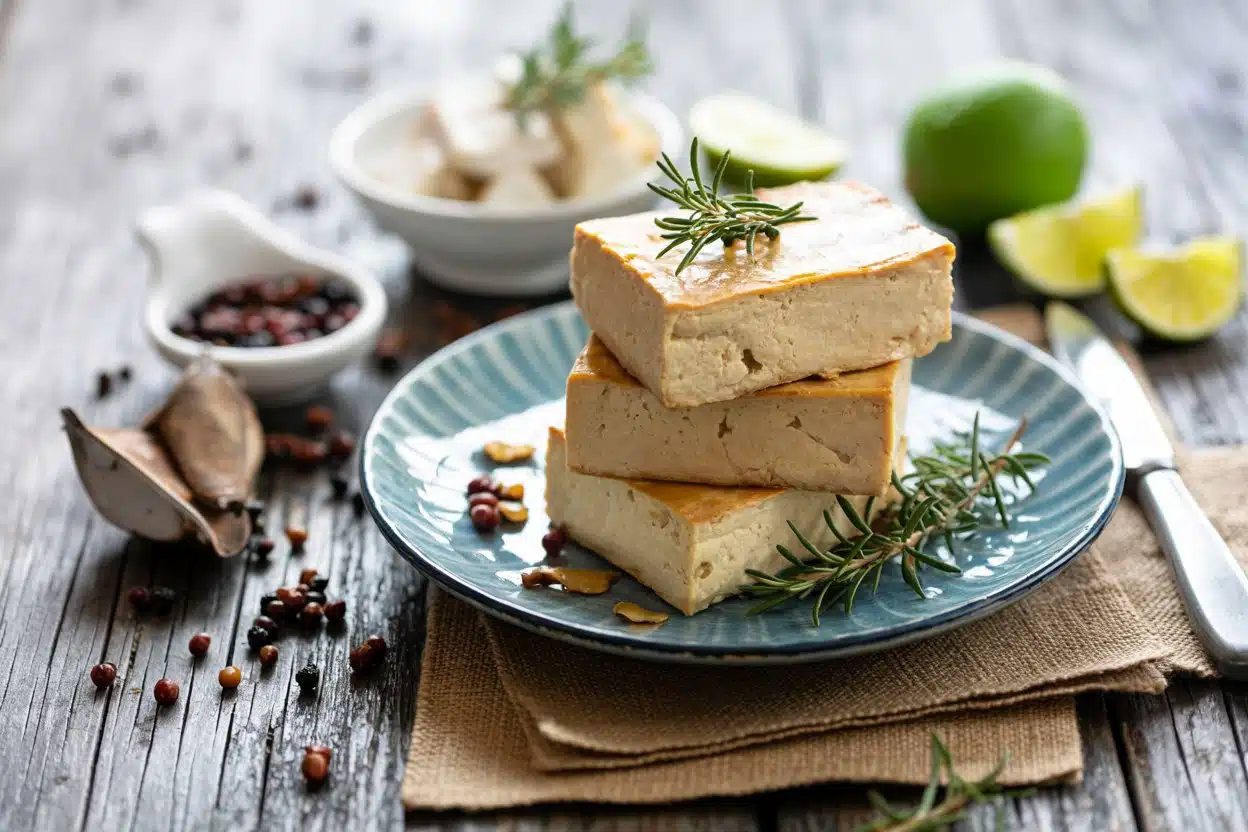
Tofu pulls off the same trick across dozens of dishes: it takes on flavor without announcing itself, holds its shape when pressed, and practically dissolves when left silken.
Unlike seitan, which has distinct chew and wheat flavor, tofu stays neutral by design - and that neutrality is the whole point.
Tofu is a coagulated soy product made by pressing soy milk curds into blocks. It ranges from silken to extra-firm, with a mild, clean flavor that absorbs marinades and sauces well. Used across East Asian cooking and beyond, it suits both savory and sweet applications depending on the texture you choose.
What Is Tofu?
Tofu originated in China over two thousand years ago and spread throughout East Asia, becoming foundational in Chinese, Japanese, and Korean cooking.
Remember it later
Planning to try this recipe soon? Save it for a quick find later!
It's made by curdling soy milk with a coagulant - typically calcium sulfate or nigari (magnesium chloride) - then pressing the curds into molds, much like dairy cheesemaking.
The coagulant used affects both texture and nutrition. Calcium sulfate produces a firmer, calcium-rich block; nigari yields a more delicate, mineral-clean curd.
Four main textures define the category:
- Silken - Undrained and unpressed; custardy, scoopable, fragile
- Soft - Slightly more structure; still delicate, holds in broth
- Firm - Dense enough to slice, marinate, and pan-cook
- Extra-firm - Lowest moisture content; best for searing, grilling, and frying
Tempeh is a common comparison, but it's a fermented whole-soybean product with an earthier, more assertive flavor - a different animal entirely.
Tofu is also sometimes compared to milk replacements in the sense that soy milk is its starting point, but the pressing process makes it its own distinct category.
What Does Tofu Taste Like?
Tofu's flavor is deliberately restrained. On its own, it tastes mildly beany - clean and faintly nutty, with no sharpness or bitterness.
The closest comparisons are blanched ricotta for silken varieties, or mild paneer for firm and extra-firm blocks.
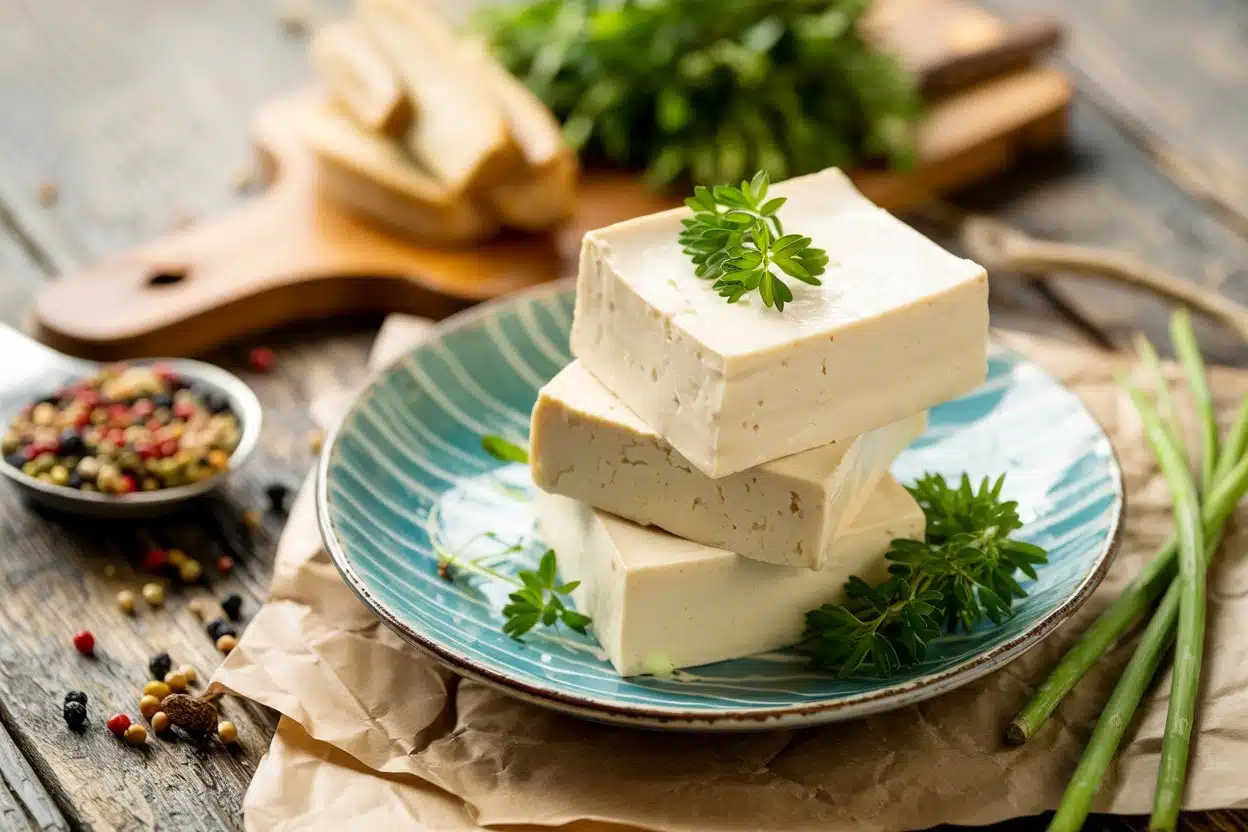
Heat changes the picture. Searing or deep-frying firm tofu develops a light golden crust and draws out a subtle umami depth that raw tofu doesn't have. Aged or fermented tofu (fermented doufu) pushes that umami further still, though that's a separate product category.
Pressing extra-firm tofu before cooking removes residual moisture, which sharpens flavor concentration and helps it take on marinades - soy sauce, ginger, garlic - far more effectively.
How to Use Tofu
Choosing the right texture for the method is the whole game with tofu. Silken belongs in the blender; firm and extra-firm belong in the pan or on the grill.
| Method | Best For | Tip |
|---|---|---|
| 🥣 Blended | Smoothies, dressings, vegan desserts | Use silken only; firm won't blend smooth |
| 🍳 Pan-seared | Bowls, sandwiches, stir-fries | Press firm or extra-firm first; pat completely dry |
| 🛢️ Deep-fried | Agedashi tofu, Korean dubu jorim | Coat in potato starch or cornstarch for crispness |
| 🫕 Braised | Mapo tofu, hot pots, miso soup | Soft or firm absorbs sauce while holding shape |
| 🔥 Grilled | Skewers, yakitori-style, summer dishes | Oil well and use extra-firm to prevent sticking |
Pairings follow a consistent logic: soy sauce or tamari, sesame oil, miso, ginger, garlic, and scallions all amplify tofu's mild base without overwhelming it. Chili pastes like gochujang add heat that extra-firm tofu can stand up to.
For acid, rice vinegar or a squeeze of citrus works at the end of cooking rather than as a prolonged marinade.
If a dish calls for something with more structural bite, tofu alternatives like firm paneer or chickpea tofu (made from chickpea flour) are worth knowing. Similarly, tempeh alternatives are often confused with tofu alternatives - they serve different culinary roles.
Air Fryer Crispy Tofu BitesShows how dry heat crisps extra-firm tofu without deep frying→Japanese Agedashi TofuClassic deep-fried soft tofu in dashi broth with a starch crust→Sichuan Mapo Tofu with PorkBraised soft tofu in a numbing, spicy sauce - a flavor-absorption showcase→
How to Buy and Store Tofu
At the store, look for firm, even-surfaced blocks with no yellowing or cracks. Silken tofu typically comes in aseptic cartons that don't require refrigeration until opened - check sell-by dates and avoid bulging packaging.
Once opened, block tofu should sit submerged in fresh cold water in a sealed container. Change that water daily.
Proper tofu storage life tops out at 3-5 days once opened, and up to 3 weeks unopened in the fridge. Frozen firm or extra-firm tofu keeps for 3 months - freezing changes the texture to something spongier and more porous, which actually absorbs marinades more aggressively.
Where to Start with Tofu
New to tofu? Start with extra-firm in a hot pan.
Press it, dry it, sear it in neutral oil until golden on two sides, then add soy sauce and sesame oil in the last minute. That single technique covers the fundamentals: moisture removal, heat, flavor transfer.
From there, silken opens a different direction entirely - blended into a miso-based dressing or stirred gently into broth. If you're branching into fermented soy products, miso paste is a natural pairing that deepens tofu's quiet umami.
Tofu rewards patience more than technique.
Frequently Asked Questions
Silken tofu is undrained and unpressed, giving it a custardy, fragile texture suited to blending and soups. Firm tofu has had more moisture removed and holds its shape for slicing, searing, and grilling. They aren't interchangeable in recipes.
Press extra-firm tofu for at least 20 minutes, then pat it completely dry before cooking. Tossing in cornstarch or potato starch before pan-frying or air frying creates a crispier outer crust.
Yes, but only firm or extra-firm varieties. Freezing changes the texture - it becomes chewier and more porous, which is actually useful for marinating. Silken tofu turns grainy and watery after freezing.
Only faintly. Raw tofu has a mild, clean soybean note that's barely perceptible. Cooking - especially searing - mostly neutralizes it, and any sauce or marinade takes over entirely.
Yes. Tofu contains all nine essential amino acids, making it one of the few plant-based complete proteins. Calcium content varies depending on whether calcium sulfate was used as the coagulant.