
Crack open a tin of good albacore packed in olive oil and the smell alone tells you what you're dealing with - clean, marine, and faintly mineral. Tuna sits in a category of its own among everyday fish: dense enough to eat like a steak, fatty enough to melt at the belly, and mild enough to anchor anything from a poke bowl to a Niçoise.
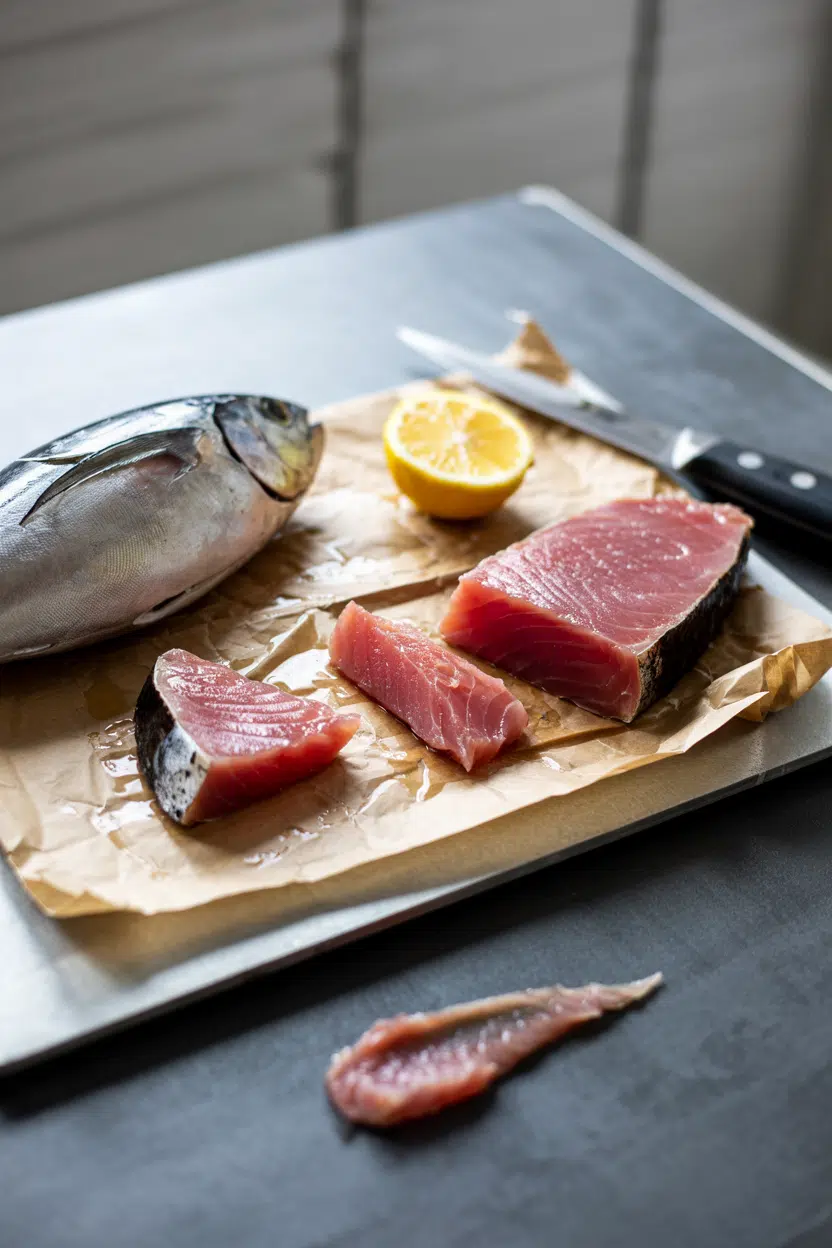
If you've only eaten it canned, the fresh version will genuinely reframe how you think about the fish.
Pelagic oily fish like mackerel swaps that work and sardines share some of tuna's marine character, though none match its meatiness - just as keeping sardines fresh follows different rules than handling a fresh tuna loin.
Tuna is a large, migratory saltwater fish with firm, meaty flesh and a moderate, umami-rich flavor. Sold fresh, frozen, or canned, it spans everything from buttery bluefin toro used raw in sushi to shelf-stable albacore for everyday cooking.
What Is Tuna?
Tuna belongs to the family Scombridae and comprises several distinct species, each with different culinary profiles. Bluefin (Thunnus thynnus) is the most prized - a massive, high-fat fish whose fatty belly section, called toro, commands extraordinary prices at sushi counters.
Remember it later
Planning to try this recipe soon? Save it for a quick find later!
Yellowfin and bigeye are leaner, sold fresh as "ahi" in Hawaiian cuisine and Japanese sashimi bars alike.
Albacore (Thunnus alalunga) has the palest flesh of the group, mild in flavor, and is the species most commonly labeled "white tuna" in North American cans. Skipjack is the workhorse of global canning - smaller, darker, and more assertive in flavor.
All tuna are pelagic, meaning they roam open ocean rather than hugging the seafloor. That constant movement builds dense, deeply vascularized muscle, which explains the red-to-deep-pink color of most cuts and the iron notes you detect on the palate.
- 🐠 Bluefin - richest fat content; toro belly is the benchmark for sashimi
- 🐠 Yellowfin / Bigeye (Ahi) - lean, firm, mild; the go-to for poke and seared steaks
- 🐠 Albacore - pale, mild, low in fat; premium canned and slow-poach candidate
- 🐠 Skipjack - small, dark, assertive; dominant species in most canned tuna worldwide
What Does Tuna Taste Like?
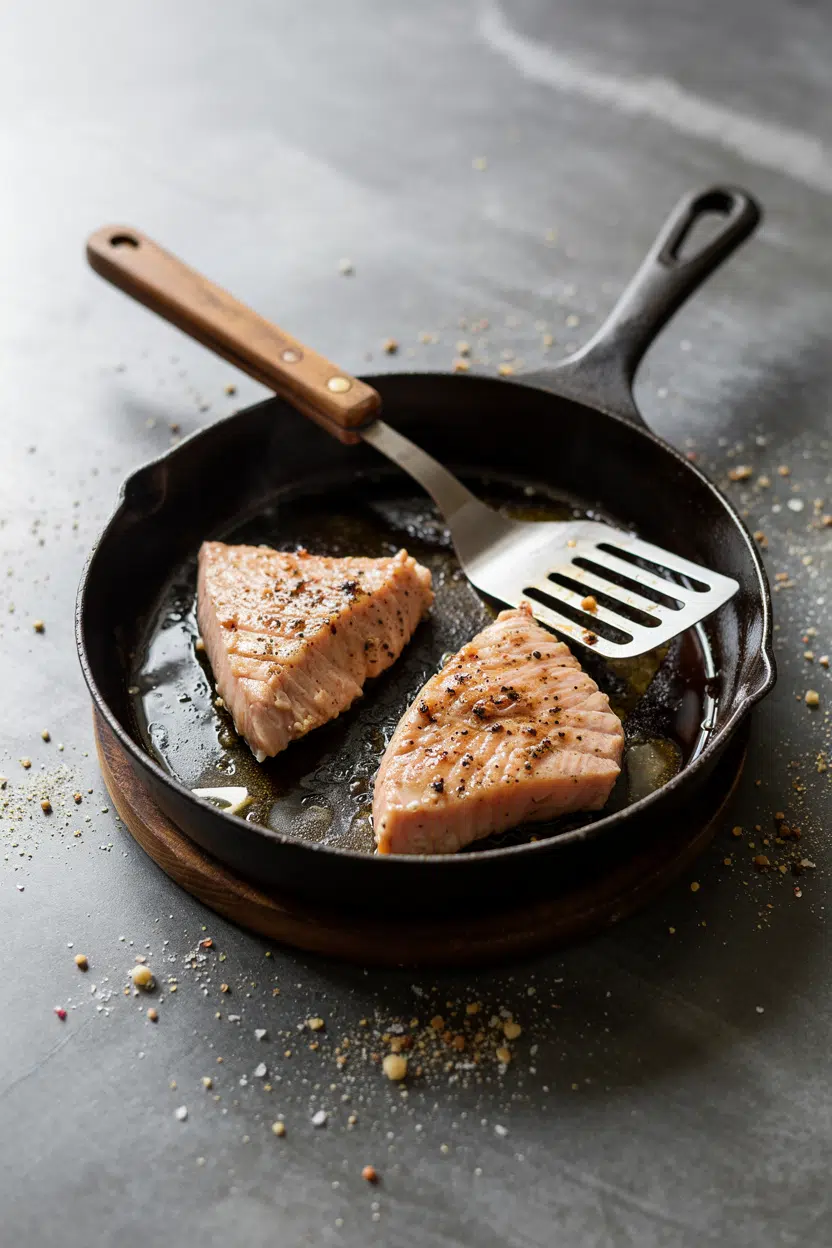
Raw tuna reads as umami-forward and gently briny, with iron notes that vary by cut. Lean loin sections taste clean and subtly oceanic.
Fatty toro from the belly is closer to rich salmon belly - unctuous, almost sweet, with the fat carrying flavor forward.
Heat changes everything. Seared rare over high heat, a yellowfin steak develops a savory crust that genuinely resembles lean beef - firm bite, mineral depth, no fishiness.
Overcooked tuna loses its moisture rapidly and turns chalky, which is why most cooking advice skews toward rare or medium-rare centers. The metallic note intensifies when the fish ages - fresh tuna should smell clean, not sharp.
How to Use Tuna
Raw preparations are where high-grade tuna shines hardest. Sliced thin as sashimi or draped over sushi rice as nigiri, bluefin and yellowfin need almost nothing - maybe soy sauce, wasabi, and a curl of pickled ginger. Poke bowls layer cubed ahi with soy, sesame oil, scallion, and cucumber over rice; note that poke spoilage signs appear quickly once the fish is dressed, so serve it promptly.
For cooked applications, a thick yellowfin or bigeye steak seared in a hot cast iron pan with a cracked pepper crust hits the table in under four minutes.
Mediterranean preparations go longer and lower - tuna grilled over charcoal and finished with olive oil and lemon, or slow-poached in olive oil until just set, which produces an exceptionally tender result for pasta or salads.
Canned tuna operates in a separate register entirely. Albacore packed in oil works beautifully in a Niçoise with green beans and hard-boiled eggs, while skipjack in water handles sandwiches and quick pasta sauces equally well. If you're considering swapping out tuna in a recipe, the preparation method matters more than the species.
| Method | Best For | Tip |
|---|---|---|
| 🥗 Raw / Sashimi | Sashimi, nigiri, poke bowls | Use sushi-grade bluefin or yellowfin; keep ice-cold until serving |
| 🔥 Hot Sear | Tuna steak, pepper-crusted loin | 2 min per side max; rare center is the goal |
| 🍳 Slow Poach | Salad, pasta, sandwiches | Submerge in olive oil at 140°F; albacore holds up best |
| 🔥 Grilled | Kebabs, Mediterranean steaks | Marinate briefly in lemon-oil; avoid drying with long cook times |
| 🥫 Canned / Flaked | Niçoise, tuna salad, stews | Oil-packed albacore has richer flavor; water-packed is leaner |
Good sides for raw tuna preparations extend the whole plate - resources on sides for sashimi show how daikon, shiso, and pickled vegetables balance the fish without competing.
How to Buy and Store Tuna
Fresh tuna should look glossy and firm, with color ranging from bright cherry-red in lean cuts to deep burgundy in bluefin. Dull brown edges or any sour, ammonia-like odor are rejection signals - no exceptions.
For freezing tuna steak at home, vacuum-seal the portions before freezing to prevent freezer burn and oxidation of the fat.
Refrigerate fresh tuna tightly wrapped at 32-38°F and use it within 1-2 days.
Frozen tuna holds quality for 2-3 months.
For the full breakdown of how long tuna keeps across fresh, frozen, and canned forms, the rules differ more than most people expect - similar to how salmon spoilage signs track differently from other fish.
Canned tuna stays shelf-stable 2-5 years unopened; once opened, transfer to a covered container and refrigerate for up to 3 days.
Start with the Can, Then Go Fresh
New to tuna? Begin with oil-packed albacore in a Niçoise or simple pasta - it's forgiving, widely available, and genuinely shows the fish's flavor range.
Once that feels familiar, step up to a thick yellowfin steak seared hard and fast in cast iron. That's the jump that converts most canned-tuna skeptics.
Frequently Asked Questions
Technically neither by culinary classification, but tuna flesh is red-to-pink due to high myoglobin content from its constant swimming. Albacore is the exception - its pale flesh earns it the "white tuna" label on cans.
The metallic note comes from iron-rich myoglobin in the dark muscle tissue. It's most pronounced in skipjack and the bloodline of any species - trimming the dark strip before cooking reduces it noticeably.
Yes, with the right sourcing. Buy fish labeled sushi-grade or sashimi-grade from a trusted fishmonger, which indicates it was frozen to parasite-killing temperatures. Immunocompromised individuals and pregnant people should avoid raw fish regardless.
Skipjack and canned light tuna have the lowest mercury levels among common species, making them the safer choice for frequent consumption. Bluefin and bigeye carry the highest mercury and are best eaten occasionally.
Sour or ammonia-like odor is the clearest sign, followed by a tacky or slimy surface and brown discoloration throughout the cut. Good fresh tuna smells clean and oceanic, not sharp.



