
Sardines are the closest swap for mackerel, used 1:1 by weight. Both are oily, strong-flavored fish that stand up to a hot grill, lemon and mustard. For smoked mackerel, use hot-smoked trout at the same weight, which flakes the same way but tastes milder.
The right swap depends on the form your recipe needs. Spanish mackerel and herring replace fresh fillets, canned sardines or tuna packed in oil replace canned mackerel, and hot-smoked trout replaces the smoked kind.
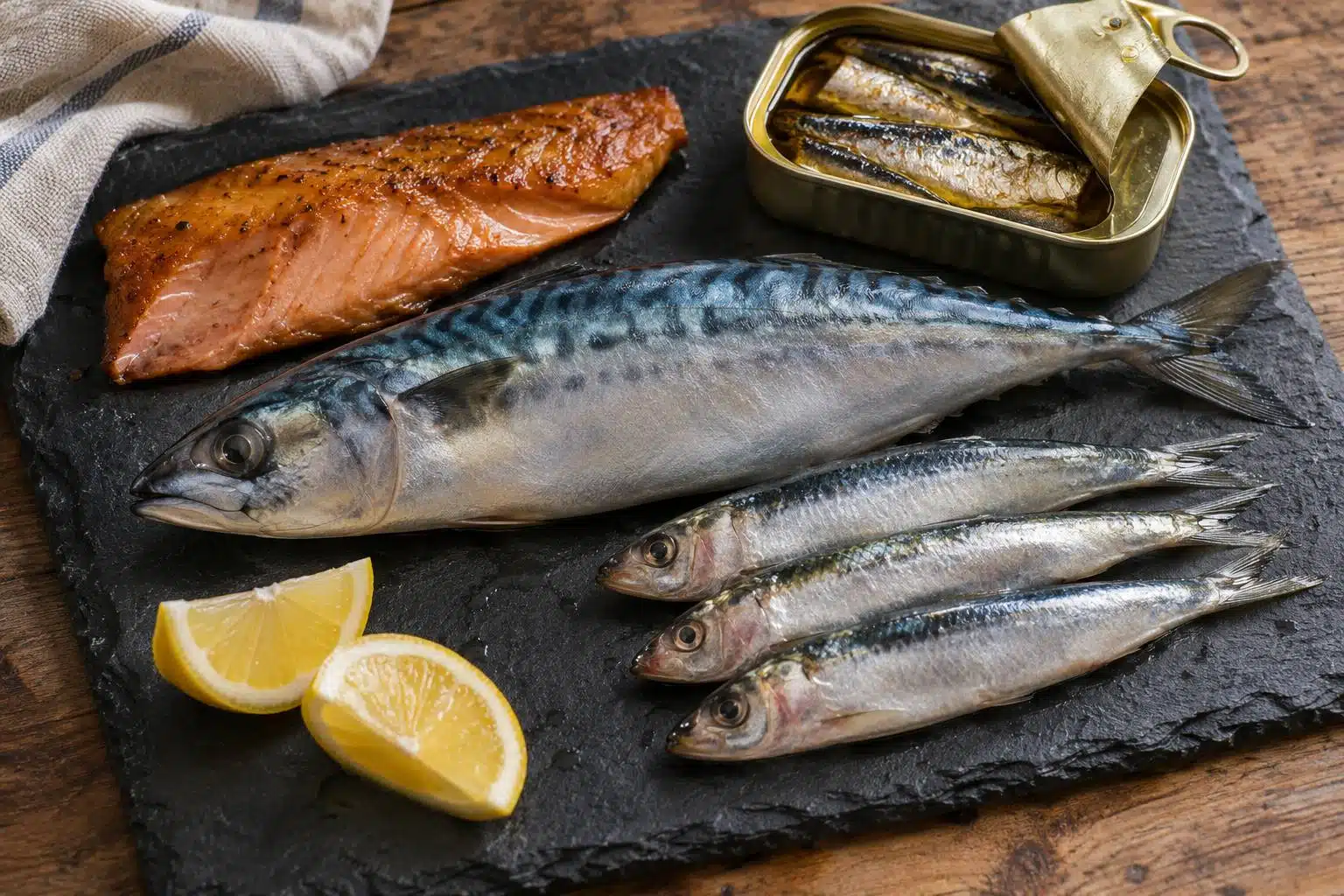
What Does Mackerel Do in a Recipe?
Mackerel gives a dish fat, a strong savory flavor and firm flesh that flakes in large pieces. Raw Atlantic mackerel has about 14 grams of fat per 100 grams, while raw Atlantic herring has about 9 grams, according to USDA data.
Remember it later
Planning to try this recipe soon? Save it for a quick find later!
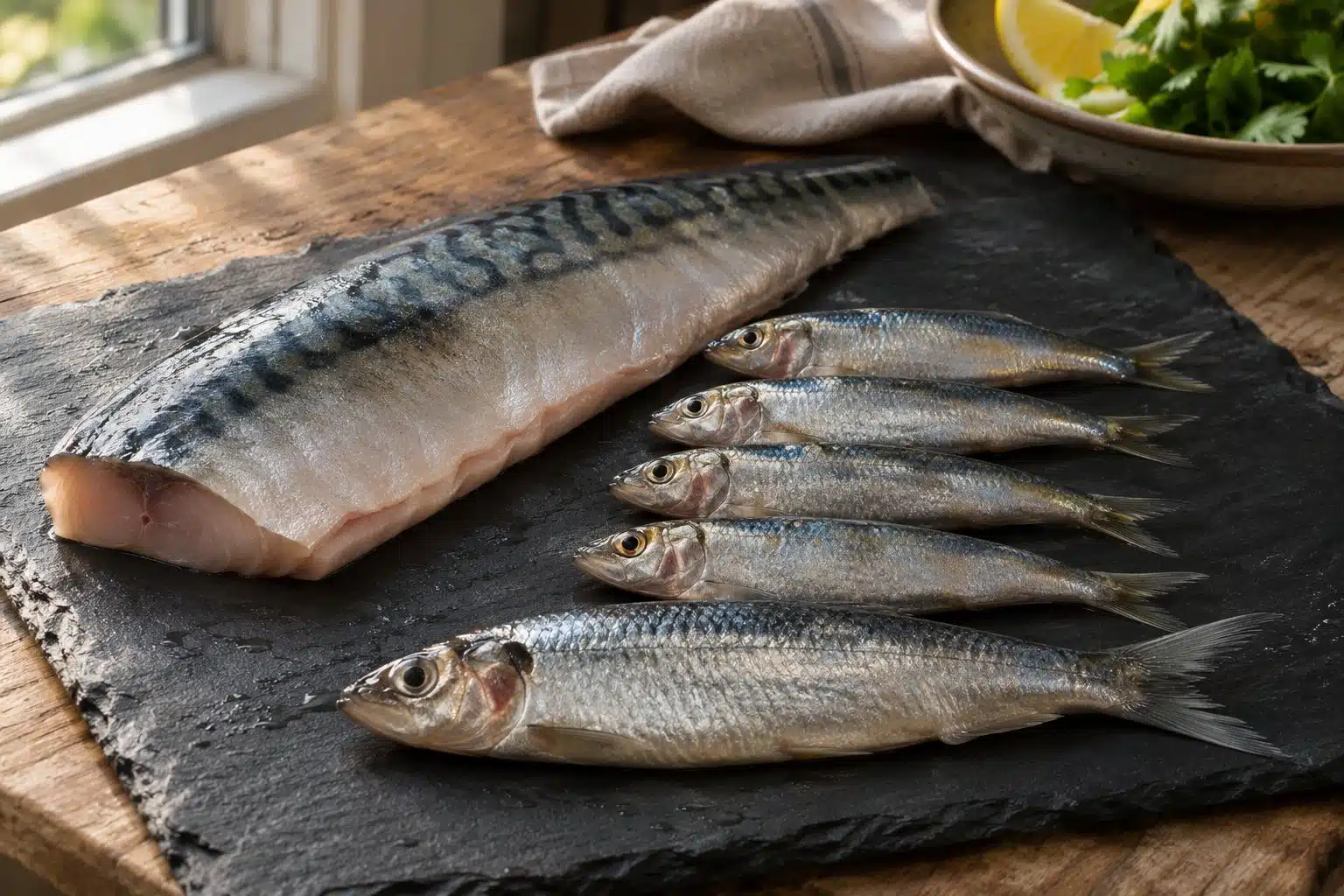
Fat and flavor travel together. NC Sea Grant notes that higher-fat fish have a more pronounced flavor and darker meat, so a leaner swap always tastes milder than mackerel in the same dish.
Your recipe leans on mackerel in up to four ways, and each one tells you what to protect when you swap:
- Fat: It keeps grilled fillets moist and gives pâtés and pasta sauces their body, so a leaner swap needs a brush of oil or a spoonful of cream cheese.
- Flavor: It is assertive enough to take lemon, mustard, horseradish and pickled onions without disappearing.
- Texture: Cooked or hot-smoked mackerel breaks into large moist flakes, which is what a salad or spread needs.
- Salt: Smoked and canned mackerel usually carry salt from curing, so taste a swap before you add more.
If you have never cooked it, our page on what mackerel tastes like covers the fresh, smoked, canned and cured forms.
The 7 Best Mackerel Substitutes, Ranked
These seven are ranked by how close they get to mackerel and how easy they are to find. Every ratio is 1:1 by weight, using drained weight for canned fish.
| # | Substitute | Best For | Ratio | Key Note |
|---|---|---|---|---|
| 1 | Sardines | ✨ Both | 1:1 | Close in fat when canned |
| 2 | Herring | 🍳 Cooking | 1:1 | Leaner, salty if jarred |
| 3 | Spanish Mackerel | 🍳 Cooking | 1:1 | Closest relative |
| 4 | Hot-Smoked Trout | 🥗 Raw | 1:1 | Milder smoked flake |
| 5 | Salmon | 🍳 Cooking | 1:1 | Farmed is richest |
| 6 | Bluefish | 🍳 Cooking | 1:1 | Lean, brush with oil |
| 7 | Canned Tuna in Oil | 🥗 Raw | 1:1 | Milder, finer flakes |
All seven swap at the same weight. What changes is fat, salt and flake size, so read the note under each one before you cook.
1 – Sardines, Fresh or Canned
Use sardines 1:1 by weight, whole and grilled or canned and flaked. Canned sardines packed in oil have about 11 grams of fat per 100 grams, close to fresh mackerel's 14, so they carry pasta, toast and spreads the same way.
Fresh sardines are small and bony, so buy them cleaned and expect finer flakes than mackerel gives. Our sardine and tomato salad sears fresh sardines and dresses them with lemon and olive oil, much as you would dress grilled mackerel.
To keep tins on the shelf for this swap, see our picks for the best canned fish.
2 – Herring
Use herring 1:1 by weight. Three details change how it cooks and tastes:
- Leaner fillets: Fresh herring has about 9 grams of fat per 100 grams, so brush it with oil before you grill or pan-fry it.
- Jarred herring is salty: Fresh herring is not saltier than mackerel, but the jarred kind is pickled or salted, so rinse it and taste before you add any salt or vinegar.
- Kippers are softer: They are cold-smoked herring, silkier than hot-smoked mackerel, so they suit a warm breakfast dish better than a flaked salad, and the package says how to heat them.
3 – Spanish Mackerel
If your fish counter carries it, use Spanish mackerel 1:1 by weight. It is a close relative of the fish you wanted, and NC Sea Grant lists it with the fish that have a light but pronounced flavor.
The FDA rates Spanish mackerel a Good Choice for mercury, one step below Atlantic mackerel's Best Choice, with mean levels of 0.182 ppm for South Atlantic fish and 0.454 ppm for Gulf of Mexico fish, against 0.05 ppm. Buy Spanish, not king mackerel, which has a far higher mercury level (see the warning below).
4 – Hot-Smoked Trout
For smoked mackerel, use hot-smoked trout 1:1 by weight. Hot smoking cooks the fish, so it flakes in firm pieces like smoked mackerel, but trout tastes milder.
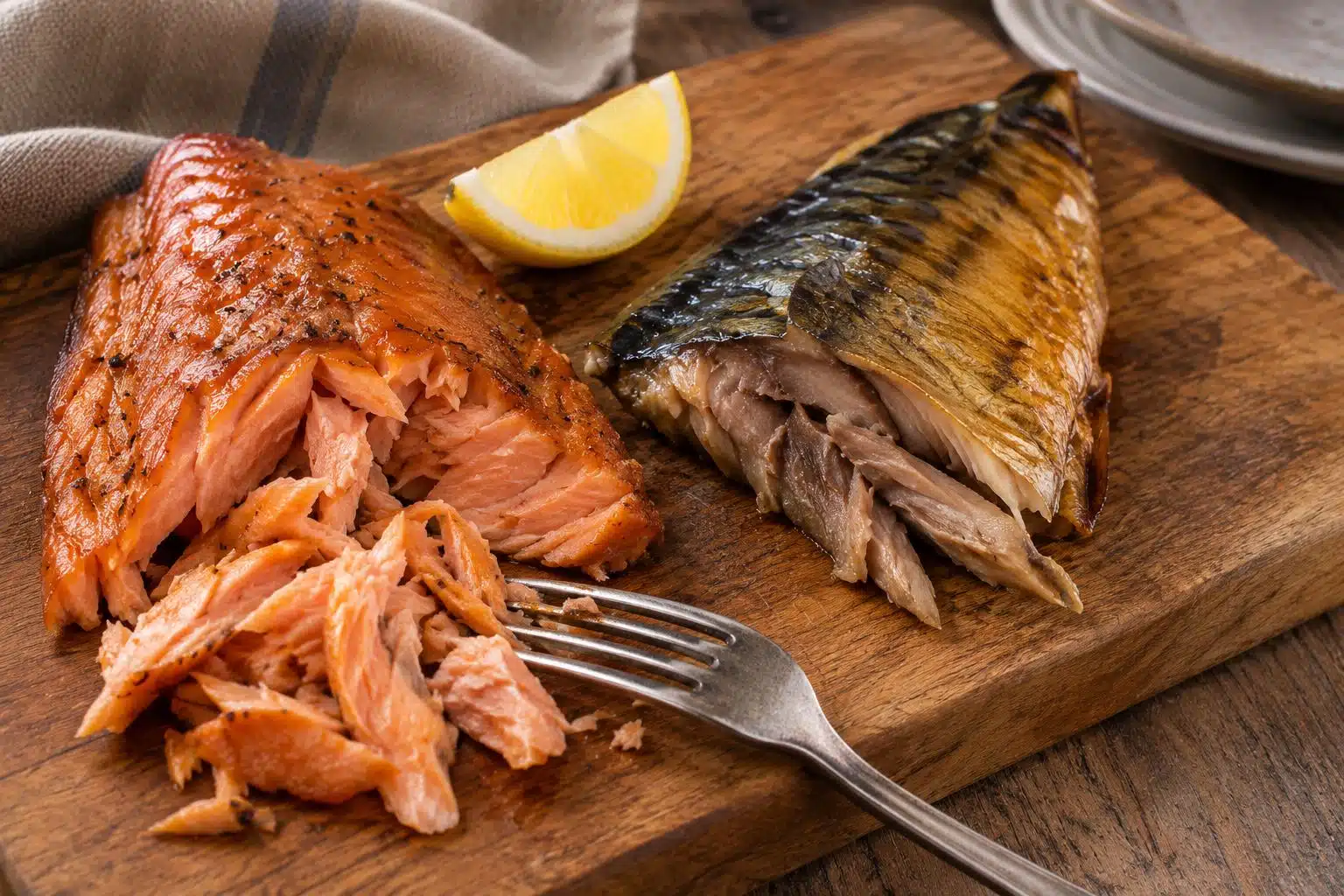
That milder taste means a trout spread needs a firmer hand with seasoning. Add extra lemon juice, black pepper or horseradish until it tastes as sharp as the mackerel version would.
Smoked trout flaked into cream cheese with lemon and dill, as in our smoked trout spread, stands in for a smoked mackerel pâté.
5 – Salmon
Use salmon 1:1 by weight when you want a milder fish with similar richness. Farmed Atlantic salmon has about 13 grams of fat per 100 grams, nearly the same as mackerel, while wild salmon has about 6 grams.
- Milder flavor: Salmon tastes sweeter and less fishy, so it takes mustard, dill and soy glazes without mackerel's sharp edge.
- Good with dill sauce: A creamy dill sauce suits it, as in our pan-seared salmon with dill sauce.
- Skip cold-smoked salmon: In flaked dishes, lox comes in silky slices instead of flakes, so choose hot-smoked salmon or flake fresh fillets you cooked yourself.
6 – Bluefish
Use bluefish 1:1 by weight. It has dark flesh like mackerel's but is much leaner, at about 4 grams of fat per 100 grams, so grill it over medium heat, brush it with oil and take it off once it flakes.
The FDA rates bluefish a Good Choice for mercury, with a mean level of 0.368 ppm. NC Sea Grant puts its flavor in the light-to-moderate range, so add lemon or mustard to the marinade to make up the gap.
7 – Canned Tuna in Oil
In cold dishes that call for canned mackerel, use canned tuna packed in oil, drained, 1:1 by weight. The oil adds back some richness, but tuna is milder and flakes finer.
Three details decide which tin to open:
- Mercury: The FDA lists canned light tuna as a Best Choice (0.126 ppm) and canned albacore as a Good Choice (0.350 ppm).
- Flake size: Tuna flakes too finely for a fish cake that needs large chunks, so reach for canned sardines there instead.
- Which tin: Our guide to the best canned tuna covers the tins worth buying.
Which Swap Fits Which Dish?
| If You're Making | Pick | Why |
|---|---|---|
| Grilling | Spanish mackerel, sardines | Oily enough to stay moist |
| Pan-Frying | Herring, salmon | Thin or rich, cooks fast |
| Smoked Spread | Hot-smoked trout | Flakes in firm pieces |
| Canned Pasta | Canned sardines | Close in fat content |
| Cold Salad | Tuna in oil | Mild, drained and flaked |
| Pickling | Herring | Takes salt and vinegar |
The table matches each dish to the fish that keeps its fat and texture. Cook fresh swaps until the thickest part reaches 145°F, the USDA safe minimum for fish, and check early on thin fillets such as sardines.
Serve a smoked-fish spread cold with toasted bread and something sharp, like the cornichons and mustard in our sides for pâté.
What Can You Use If You Don't Eat Fish?
No plant food has mackerel's fat, so a vegan swap only supplies flaky texture and a sea flavor. That is enough for sandwiches and salads, but not for a grilled fillet.
Shred drained young green jackfruit that was packed in water or brine, not syrup, and use it 1:1 by volume. Season it with crumbled nori, lemon juice and olive oil to add the sea flavor and some fat.
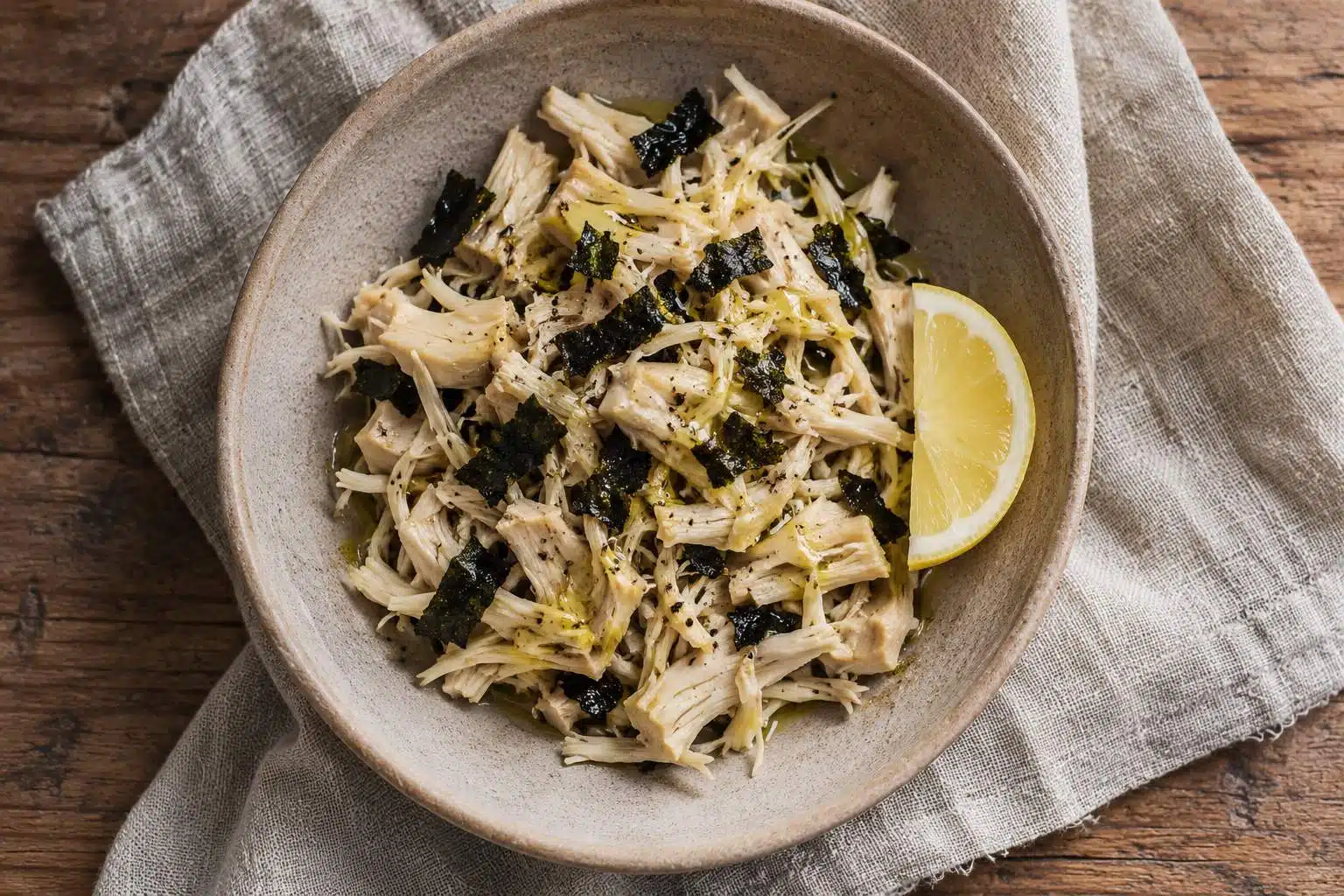
Firm tofu is the other option. Press it, crumble it and marinate 1 cup of tofu in about ¼ cup of seaweed broth for at least 2 hours, then add a spoonful of olive oil for the missing fat.
Which Fish Should You Not Swap In?
Lean white fish such as cod or tilapia are poor swaps too. They have little fat, so they dry out sooner and taste bland beside the mustard, lemon and pickles a mackerel recipe uses.
Is Herring Saltier than Mackerel?
Fresh herring is not. Jarred herring is saltier because it is pickled or salted, so rinse it, taste it, and hold back any added salt.
Can I Use Smoked Salmon in Place of Smoked Mackerel?
Hot-smoked salmon flakes like smoked mackerel and tastes milder. Cold-smoked salmon (lox) is silky and sliced, so it suits bagels and canapés but not flaked salads or pâtés.
Which Substitute Has the Least Mercury?
In FDA testing, sardines average 0.013 ppm, fresh salmon 0.022 ppm and Atlantic mackerel 0.05 ppm. Spanish mackerel (0.182 to 0.454), bluefish (0.368) and king mackerel (0.73) run higher.
Can I Use Fresh Fish Where a Recipe Calls for Canned Mackerel?
Yes. Cook it to 145°F, let it cool, flake it and season it generously, because canned fish arrives salted and packed in oil or brine.



