Thick, cool, and faintly golden on top - clotted cream announces itself before you even taste it. That dense, spoonable layer carries a warm milky scent with a whisper of caramelized butter, something between double cream and a soft, lightly browned dairy fat.
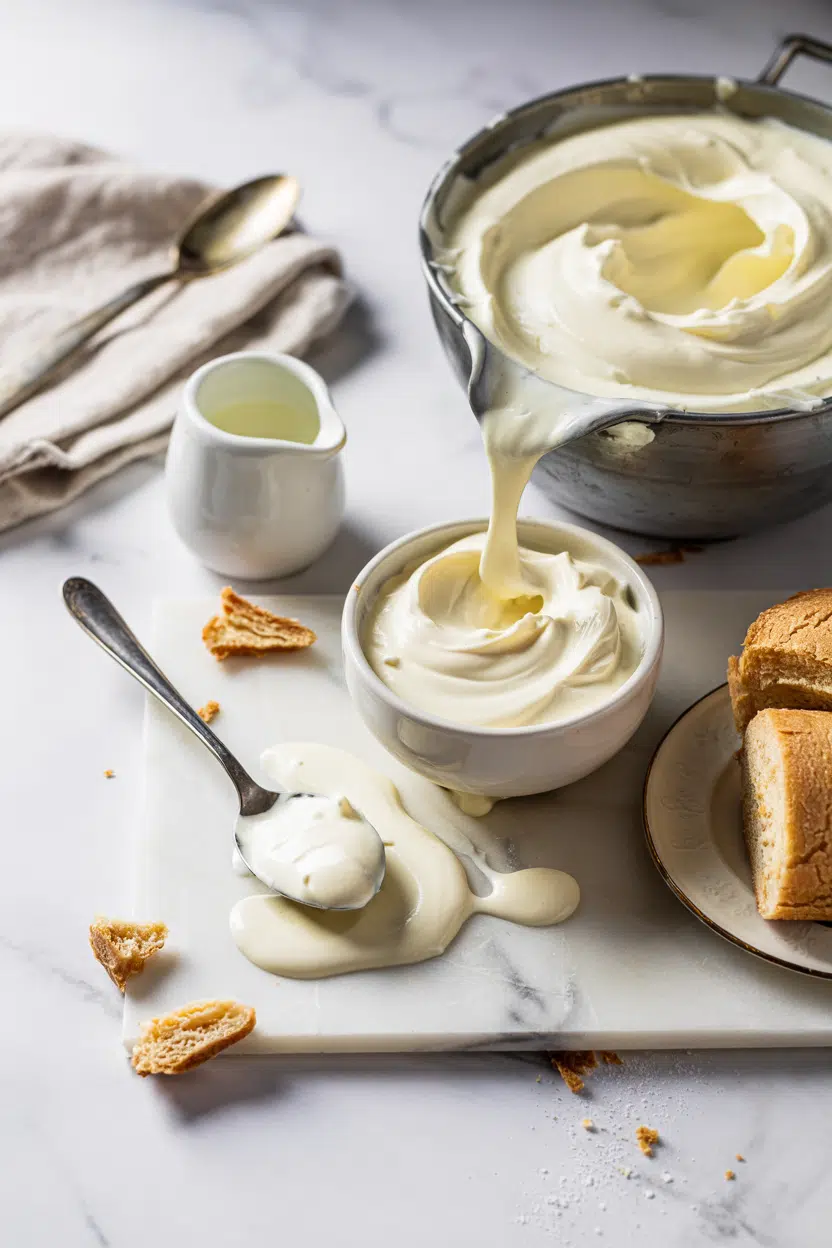
One small spoonful lands heavy on the tongue, richly sweet without being sugary, with a buttery finish that lingers. Nothing else quite replicates it - not whipped cream, not mascarpone swaps, not anything made in a blender.
Clotted cream is a heat-treated, high-fat dairy cream from southwest England, slow-baked until a dense golden layer forms on top. It tastes rich, buttery, and mildly sweet with a faint nutty note from the crust. Best served cold on scones or spooned over warm desserts.
What Is Clotted Cream?
Clotted cream is a heat-treated dairy product originating from Devon and Cornwall in southwest England, where it remains a protected regional specialty.
Remember it later
Planning to try this recipe soon? Save it for a quick find later!
Full-fat cow's milk is gently heated for many hours at a low temperature, then left to cool slowly so the cream rises and sets into a thick, clotted layer on the surface.
The result has a fat content of 55-65%, far higher than standard heavy cream (around 36%) or even double cream (48%). That fat concentration is what gives clotted cream its signature density - it doesn't pour, it's lifted with a spoon.
You may also see it labeled Devonshire cream or simply "clotted Cornish cream," depending on the region of origin. Both are authentic; the main regional debate concerns whether jam or cream goes first on a scone.
- Fat content - 55-65%, which is higher than any other common cream product
- Golden crust - forms during the slow heating process; it's the most flavored part of the tub
- No thickeners - the texture comes entirely from fat concentration and gentle heat, not additives
What Does Clotted Cream Taste Like?
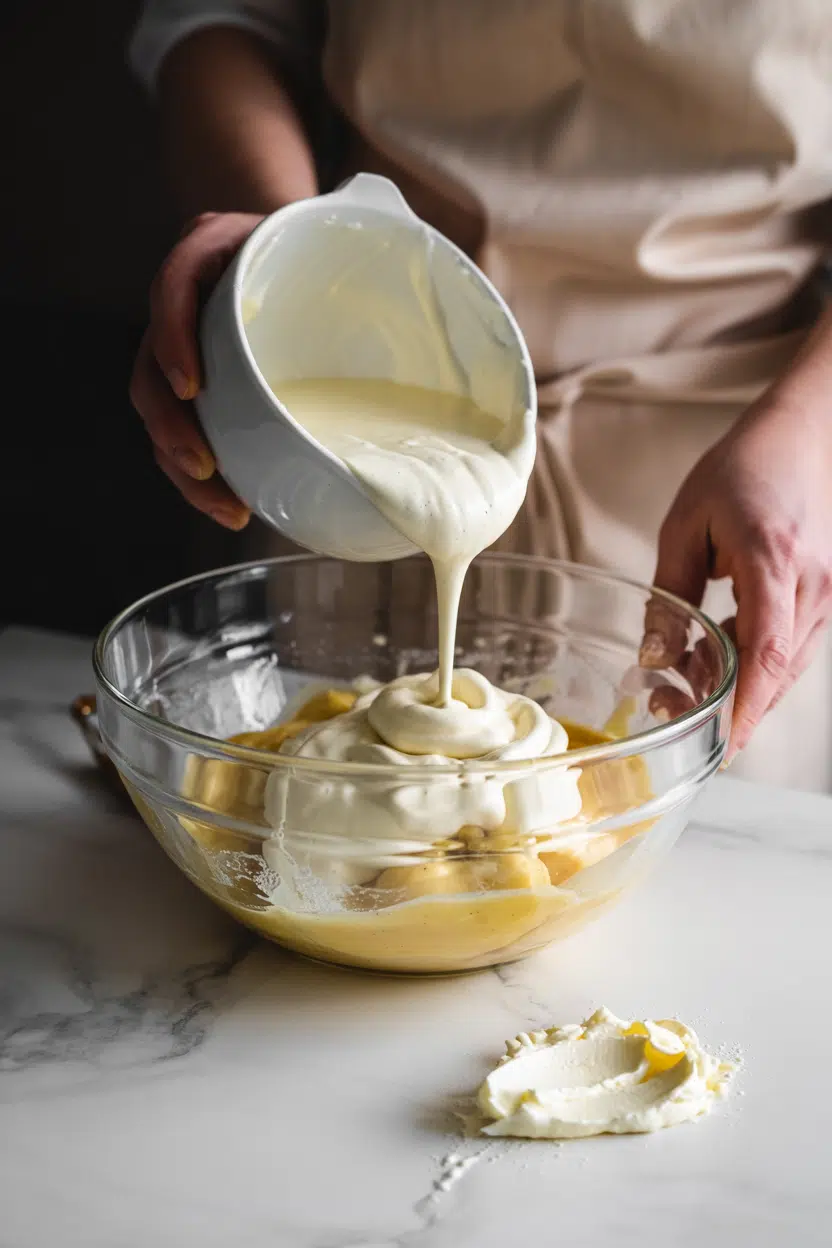
The closest comparison is a very thick, lightly caramelized heavy cream crossed with mascarpone - but clotted cream has more buttery weight and a faint nuttiness that mascarpone lacks entirely.
That nuttiness comes specifically from the golden crust, which carries the most concentrated flavor in the tub.
The sweetness is natural, not added. It reads as milky richness rather than sugar, with a barely-there lactic tang underneath.
Served cold, the flavor is composed and restrained. Spoon it onto something warm and the fat softens slightly, releasing more of that caramelized dairy note.
How to Use Clotted Cream
Clotted cream is a finishing product, not a cooking ingredient. Heat it aggressively and the fat separates into a greasy puddle.
The right move is to serve it cold, at room temperature, or spooned gently onto something already warm.
The classic application is the cream tea: a warm scone split open, spread with clotted cream and strawberry jam. The Devonshire method puts cream first, jam on top.
Cornwall reverses it. Both work; the argument is mostly about regional pride.
Beyond scones, clotted cream earns its place across a short but well-defined range of uses:
| Method | Best For | Tip |
|---|---|---|
| 🥗 Cold / Room Temp | Scones, shortbread, fresh berries, afternoon tea service | Pull from fridge 10 minutes before serving for better spreadability |
| 🍳 Spoon onto Warm | Sticky toffee pudding, poached rhubarb, warm pancakes or waffles | Add just before serving - residual heat softens it without breaking |
| ✨ Fold In (off-heat) | Porridge, warm fruit compote, finishing a sauce | Stir gently at the end; never bring clotted cream to a boil |
| 🍽️ Garnish | Fruit tarts, smoked salmon on rye (small amounts), honey and brittle plates | Use sparingly - its richness is a contrast element, not a base |
Clotted cream pairs cleanly with honey, nut brittle, lightly toasted bread, and fresh strawberries or raspberries. It anchors the afternoon tea spread as reliably as any other element on the table.
If you can't source it locally, a look at clotted cream swaps will help you find the closest workable alternative.
How to Buy and Store Clotted Cream
Look for the crust. A well-made tub of clotted cream should show a firm, pale gold layer across the top - that's your quality indicator. Check the fat content label (55-65% is standard) and avoid any tub with visible liquid pooling inside or a sour smell at opening.
Storage is straightforward: keep it refrigerated at 34-40°F (1-4°C) in its original sealed tub. Unopened, most tubs last 2-3 weeks.
After opening, cover tightly and use within 3-5 days. For a full breakdown, see our guide on clotted cream storage life.
Freezing is technically possible but degrades the texture - the dense, silky body turns grainy after thawing. Fresh is strongly preferred.
Start Simple, Then Expand
A warm scone and a jar of clotted cream is still the best entry point - and it shows you the full flavor range in a single bite. Once you're comfortable with its richness, start spooning it over sticky toffee pudding or folding it into porridge.
Keep portions small. At 55-65% fat, a little carries a lot.
Reach for it when you want genuine dairy richness that no whipped cream or soft cheese quite delivers the same way.
Frequently Asked Questions
Heavy cream contains around 36% fat and pours easily; clotted cream sits at 55-65% fat and holds its shape in a spoon. The slow-heating process also gives clotted cream a distinct buttery, slightly nutty flavor that heavy cream doesn't have.
No. Mascarpone is an Italian cream cheese made by acidifying cream, giving it a slightly tangy, soft-cheese quality. Clotted cream is heat-set, not acidified, and has a more distinctly buttery flavor with no cheese character.
No - and you shouldn't try. Its fat structure is already set by the heating process, so whipping breaks it into a greasy, separated mess rather than adding volume. Serve it as-is, straight from the tub.
Three to five days refrigerated is the standard window. Keep it tightly covered and stored at 34-40°F - any warmer and it deteriorates faster than the label suggests.
Technically yes, but the texture suffers - the dense, silky interior turns grainy once thawed. If you do freeze it, use it only in cooked applications afterward rather than serving it straight.