
Most people treat basil as an afterthought - something scattered on pizza or stirred into jarred sauce without much thought.

That's the wrong approach. Fresh basil behaves more like a finishing spice than a background herb: add it too early, and the heat strips out its aroma entirely.
Understanding how and when to use it is the difference between a dish that smells like a garden and one that just tastes vaguely green.
Basil is a tender aromatic herb with sweet, slightly peppery, and clove-like flavor notes. It's most effective added raw or off-heat, and anchors dishes like pesto, Caprese, and Thai curries. Fresh basil lasts 3-7 days; dried keeps for months.
What Is Basil?
Basil (Ocimum basilicum) is a leafy aromatic herb in the mint family, originally domesticated across tropical Asia and the Indian subcontinent.
Remember it later
Planning to try this recipe soon? Save it for a quick find later!
It arrived in the Mediterranean centuries ago and has since become one of the most widely cultivated cooking herbs in the world.
Sweet basil - the broad-leafed, bright green variety sold in most grocery stores - is what Italian and Mediterranean cooking is built around. However, "basil" covers a wide family of cultivars with genuinely different characters.
- 🌿 Sweet basil - mild, clove-forward, the standard for pesto and Caprese
- 🌿 Thai basil - smaller, sturdier leaves with a pronounced licorice-spice flavor; holds up to heat better than sweet basil
- 🌿 Holy basil (tulsi) - more peppery and clove-like, central to Indian cooking and distinctly different from sweet basil
- 🌿 Lemon basil - citrus-forward, used in Southeast Asian cuisines and lighter dressings
- 🌿 Purple basil - similar flavor to sweet basil with a slightly earthier edge and striking color
In Italian, basil is called basilico; in some older texts you'll see the Latin basilum. All varieties share that signature aromatic oil profile, though each tilts it in a different direction.
What Does Basil Taste Like?
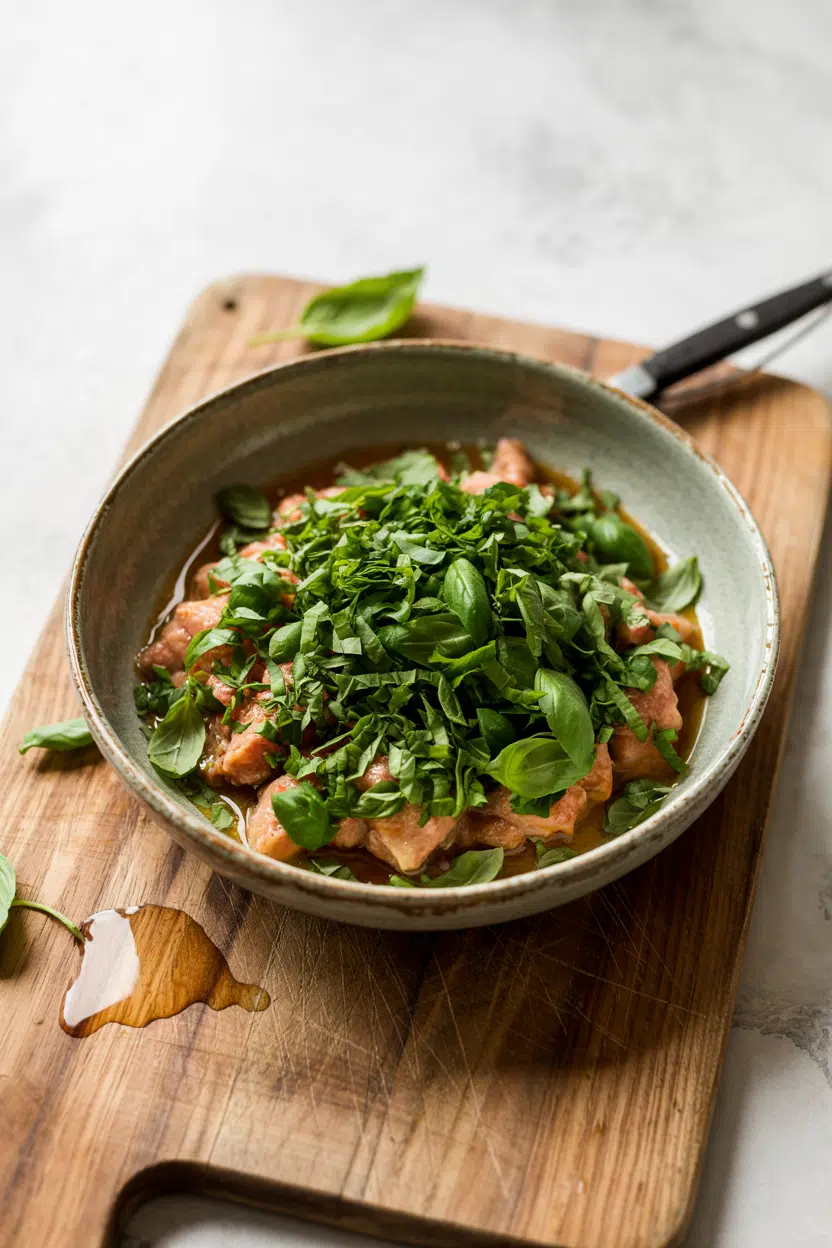
Sweet basil delivers a layered experience: the first note is fresh and green, then a warm clove-like sweetness settles in, followed by a faint peppery finish.
It's often compared to peppery parsley crossed with mild anise, though the anise character stays in the background rather than dominating.
Thai basil tips the balance toward licorice and spice - much closer to tarragon than to sweet basil, which is why recipes calling for one won't always work with the other.
Heat changes everything: cook sweet basil for more than a minute and those delicate top notes fade fast, leaving only a faint vegetal sweetness behind.
That's the core reason most Italian recipes add it raw at the end.
How to Use Basil
Sweet basil's home territory is Italian and Mediterranean cooking. Torn over sliced tomato and fresh mozzarella with good olive oil, it's the backbone of Caprese - and understanding olive oil swaps that work matters here, since the oil carries basil's aroma across the dish. Blended with pine nuts, Parmesan, garlic, and olive oil, it becomes pesto - one of the few preparations that actually concentrates basil's flavor rather than cooking it away.
For hot applications, stir sweet basil into tomato sauce in the final 60 seconds, or scatter torn leaves over pizza straight from the oven. It works equally well stirred into minestrone off-heat for a burst of freshness just before serving.
Thai basil behaves differently. Its sturdier leaves and higher heat tolerance make it the right choice for stir-fries - adding it alongside garlic and chili garlic sauce stand-ins when building a Thai-style sauce.
Vietnamese pho traditionally arrives with a side of fresh Thai basil to tear in tableside.
| Method | Best For | Tip |
|---|---|---|
| 🥗 Raw / Torn | Caprese, pizza garnish, pho, grain bowls | Tear rather than chop to avoid bruising and blackening |
| 🍳 Off-Heat | Tomato sauces, soups, minestrone | Stir in 30-60 seconds before serving; don't let it simmer |
| 🔥 Quick Sauté | Thai stir-fries, pad krapow | Use Thai basil - it holds aroma under brief high heat |
| 🫙 Blended | Pesto, herb oils, dressings, marinades | Add a squeeze of lemon to slow browning in blended preparations |
When no fresh basil is available, the role parsley plays in a dish often overlaps enough to partially fill the gap - though it lacks the clove and anise character basil brings.
A broader look at alternatives to basil covers what works variety by variety.
How to Buy and Store Basil
At the store, look for stems with glossy, unblemished leaves - deep green, firm, and fully upright. Yellowing at the edges, slimy patches, or a slightly fermented smell all signal the bunch is past its best.
Stems should snap cleanly, not bend limply.
For Thai basil, a loose wrap in a damp paper towel and a spot in the warmest part of the fridge works better than the counter method.
Dried basil keeps well in a sealed container away from light for several months, though its flavor profile shifts - the fresh green notes disappear, leaving mostly the clove and herbal base.
Knowing the basil spoilage signs to watch for helps you use the bunch before it turns, especially when you're working through a large stem.
If a recipe calls for fresh tomato alongside basil and you're considering pantry options, keep in mind that swapping out canned tomato can shift the overall brightness of the dish too.
Start Here for Basil
New to cooking with it? Tear a few leaves over sliced tomato, drizzle with olive oil, and add a pinch of salt. That single preparation exposes every quality basil has to offer - no cooking skill required.
Once you're comfortable with basil raw, move to pesto. From there, the off-heat tomato sauce technique follows naturally.
Thai basil is its own learning curve - treat it as a separate ingredient, not a swap for sweet basil.
Frequently Asked Questions
Sweet basil tastes herbal and faintly clove-like with a light peppery finish. The anise note is there but subtle - nothing like star anise. Thai basil shifts the balance toward licorice and spice.
No. Holy basil (tulsi) is a distinct variety with a more clove-forward, peppery flavor and a slightly medicinal edge. It's common in Indian cooking and is not a direct substitute for sweet basil in most Western recipes.
Sweet basil should almost always go in at the very end, off heat. Thai basil tolerates brief high heat in stir-fries. Extended cooking destroys the volatile oils that give basil its aroma.
Sweet basil - specifically large-leaf Genovese basil if you can find it. Its mild, clove-forward flavor blends cleanly with pine nuts and Parmesan without overpowering either. Thai or holy basil will produce a noticeably different, sharper result.
Keep sweet basil at room temperature in a jar of water - cold causes blackening fast. Avoid washing until just before use, and keep it away from direct sunlight on the counter.



