
You're halfway through the stew and the pantry shelf where canned tomatoes usually sit is empty. The recipe needs that thick, tangy base for a reason.
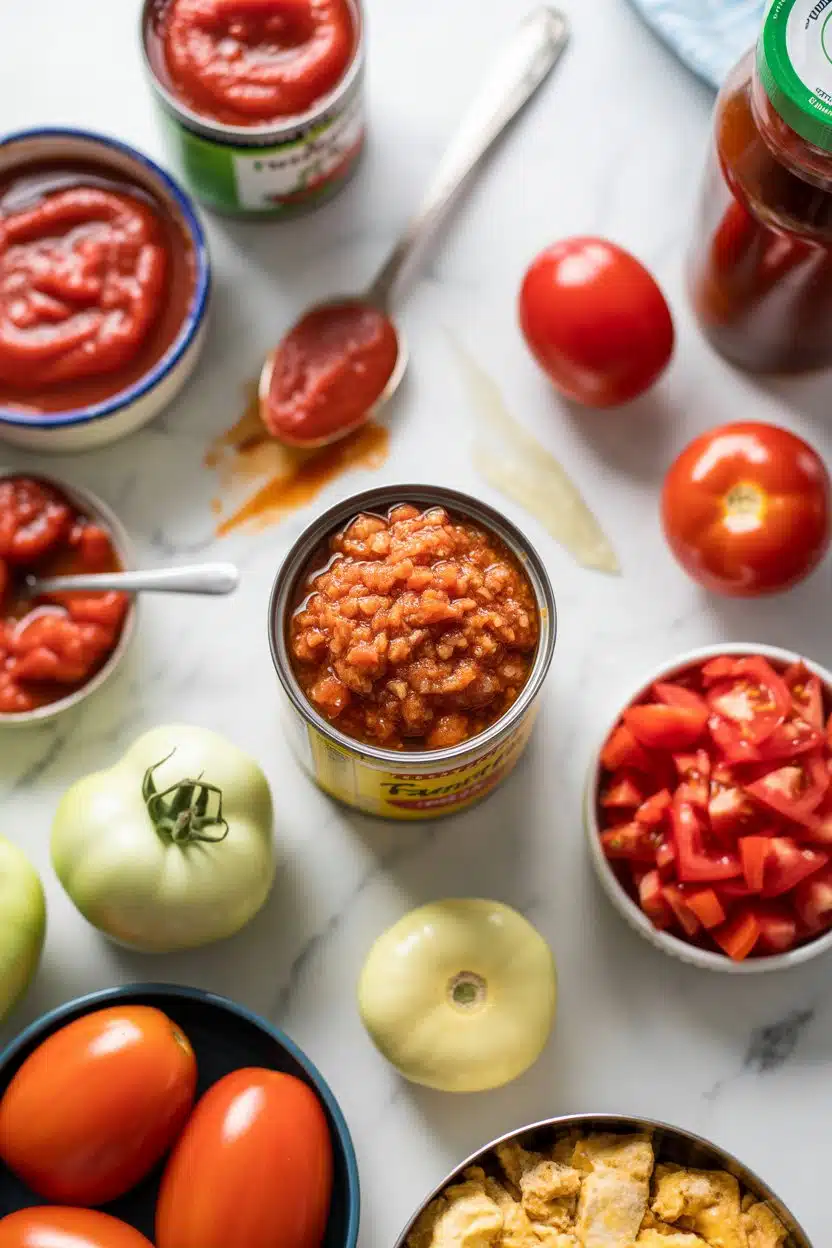
Canned tomatoes carry acidity, moisture, and body-they thicken while they flavor. Without them, the sauce can taste flat or watery.
A few swaps can fill that gap using what's already in your kitchen.
For cooked sauces and stews, we reach for tomato paste mixed with water or fresh tomatoes cooked down. Both rebuild the acidity and thickness canned tomatoes bring. Watch the consistency-paste needs dilution, and fresh tomatoes release more liquid than you expect. In pasta sauces, crushed tomatoes or prepared tomato sauce work with minimal tweaking.
| # | Substitute | Best For | Ratio | Key Note |
|---|---|---|---|---|
| 1 | Tomato Paste Mix | 🍳 Cooking | 1:2 water | Rich, concentrated flavor |
| 2 | Cooked Fresh Tomato | 🍳 Cooking | 1.5:1 | Brighter, fresher taste |
| 3 | Crushed Tomato | 🍳 Cooking | 1:1 | Coarser, rustic texture |
| 4 | Red Pepper Puree | 🍳 Cooking | 1:1 | Less acidic, sweeter |
| 5 | Tomato Sauce | 🍳 Cooking | 1:1 | Often pre-seasoned |
1. Tomato Paste Mix 🥫
Tomato paste diluted with water rebuilds canned tomato's consistency and tang at home. Mix 1 part paste with 2 parts water to match the thickness.
Remember it later
Planning to try this recipe soon? Save it for a quick find later!
The paste brings concentrated tomato flavor and deep color. Water thins it to the right consistency for simmering.
- ✅ Closest match for thick sauces and stews
- ✅ Long shelf life in the pantry
- ⚠️ Tastes richer and less fresh than canned whole tomatoes
You can adjust the ratio if you want a thicker base-use less water and let the sauce reduce. If you're out of paste entirely, Tomato Paste substitutes for cooking can step in.
2. Cooked Fresh Tomato 🍅
Fresh tomatoes cooked and pureed get you closest to homemade canned tomato flavor. Use 1.5 cups chopped fresh tomatoes per 1 cup canned.
Cooking breaks down the pulp and releases juice. The texture won't be as uniform as canned, but the taste is brighter.
Plan for longer simmering to thicken the sauce. Fresh tomatoes hold more water and need time to reduce.
- 🍳 In cooking: Simmer 10-15 minutes longer than with canned
- ⚠️ Skip if: You need a quick-cooking sauce ready in under 20 minutes
3. Crushed Tomato 🥘
Crushed tomatoes deliver similar acidity and moisture with a chunkier texture. Use them 1:1 in place of canned tomatoes.
The texture stays coarser and more rustic. Works well in braises, chili, and pasta sauces where smooth puree isn't the goal.
- ✅ Ready to use straight from the can
- ⚠️ Won't puree as smoothly for refined sauces
If you want a smoother result, hit it with an immersion blender for a few pulses. That'll break down the chunks without losing the body.
4. Red Pepper Puree 🌶️
Pureed roasted red peppers add color and thickness but skip tomato's tang. Use equal volume and add a splash of vinegar or lemon juice to balance the sweetness.
The flavor runs sweeter and more vegetal. It won't taste like tomato, but it fills the structural role in vegetable-heavy sauces.
- 🍳 In cooking: Roast the peppers first to deepen flavor
- ✅ Color match: Gives sauces the same red hue
- ⚠️ Add acid: Mix in 1 teaspoon vinegar per cup to mimic tartness
- 🌱 For variety: Works in non-Italian dishes where tomato flavor isn't required
If you're swapping peppers often, check out common Bell Pepper swaps ranked for more options.
5. Tomato Sauce 🍝
Prepared tomato sauce steps in when you need ready-to-use tomato flavor. Use it 1:1 in stews, braises, and pasta dishes.
The texture runs smoother and thinner than canned tomatoes. Most brands add seasoning-salt, garlic, herbs-so taste before adding more.
- ✅ No prep required
- ✅ Works in any cooked tomato-based dish
- ⚠️ Often pre-seasoned-adjust salt accordingly
If you're working with jarred sauce and want more control over flavor, common Tomato Sauce swaps ranked can help you tweak it.
Picking Your Canned Tomato Swap
- For thick stews and braises: Tomato paste mixed with water
- For fresh-tasting sauces: Cooked fresh tomatoes with extra simmer time
- For rustic dishes: Crushed tomatoes straight from the can
- For non-Italian sauces: Red pepper puree with added vinegar
Frequently Asked Questions
No. Ketchup is heavily sweetened and seasoned with vinegar and spices. It won't mimic the clean, slightly acidic flavor canned tomatoes bring to sauces and stews.
Not always. If you're blending or pureeing the sauce, the skins will break down. For a smoother texture, blanch the tomatoes in boiling water for 30 seconds and peel them before cooking.
Only if you want a very thick, concentrated base. Straight paste will over-intensify the tomato flavor and make the sauce too dense. Dilute it with water or broth to match canned tomato's consistency.
Crushed tomatoes are ground into a coarse puree. Diced tomatoes are cut into chunks and packed in juice. Crushed blends better into sauces, while diced keeps its shape in chili and soups.
Three to four days in an airtight container. Freeze it for up to three months if you won't use it within a week. Reheat gently on the stove to prevent scorching.
5 Best Substitutes for Canned Tomato
Ingredients
Method
- Select a substitute based on your dish's needs (thickness, acidity, texture).
- Prepare the substitute by diluting, cooking down, or seasoning as indicated.
- Apply the recommended ratio for substitution and mix into your recipe.
- Adjust seasoning and consistency by tasting and simmering if needed.
Notes
- Tomato paste mix is the closest match for thick sauces and stews.
- Fresh tomatoes require longer simmering to reduce excess liquid.
- Red pepper puree needs added acid to balance sweetness and mimic tomato tang.



