Tabbouleh is mostly parsley - not bulgur, not tomato - and that distinction matters once you actually taste a well-made version.

Parsley is one of the most recognizable herbs in Western cooking, yet it gets reduced to a garnish more often than it deserves.
It belongs in the same conversation as chervil's flavor and uses and other underused leafy herbs - and like keeping basil fresh, knowing how to handle parsley properly changes what you get out of it.
This profile covers what it tastes like, how to cook with it, and how to buy a bunch worth using.
Parsley is a mild leafy herb with fresh green, slightly bitter, and mildly peppery flavor. Used raw or added at the finish, it brightens soups, sauces, and grain dishes. Flat-leaf is sharper in flavor; curly is milder. Refrigerated bunches last 5-10 days with proper storage.
What Is Parsley?
Parsley (Petroselinum crispum) is a biennial herb native to the Mediterranean and Eurasian regions, grown widely across the globe and used in cooking for over two thousand years.
Remember it later
Planning to try this recipe soon? Save it for a quick find later!
It belongs to the Apiaceae family - the same group as celery, dill, and carrot - which explains its clean, slightly vegetal character.
Two varieties dominate in kitchens: flat-leaf parsley (Italian parsley) and curly parsley. Flat-leaf has broader, darker leaves and a more pronounced aroma; curly has tightly ruffled leaves and a milder, slightly watered-down flavor.
A third type worth knowing is Hamburg parsley (parsley root), grown for its edible root rather than its leaves. It's common in Eastern European cooking but rarely found in standard Western supermarkets.
- 🌱 Flat-leaf (Italian) parsley - sharper flavor, preferred for cooking and sauces
- 🌀 Curly parsley - milder, mostly used as a plate garnish
- 🫚 Hamburg parsley - grown for the root; tastes like parsley-meets-parsnip
The stems are edible and hold concentrated flavor - many cooks chop them into stocks and soffritto rather than discarding them.
What Does Parsley Taste Like?
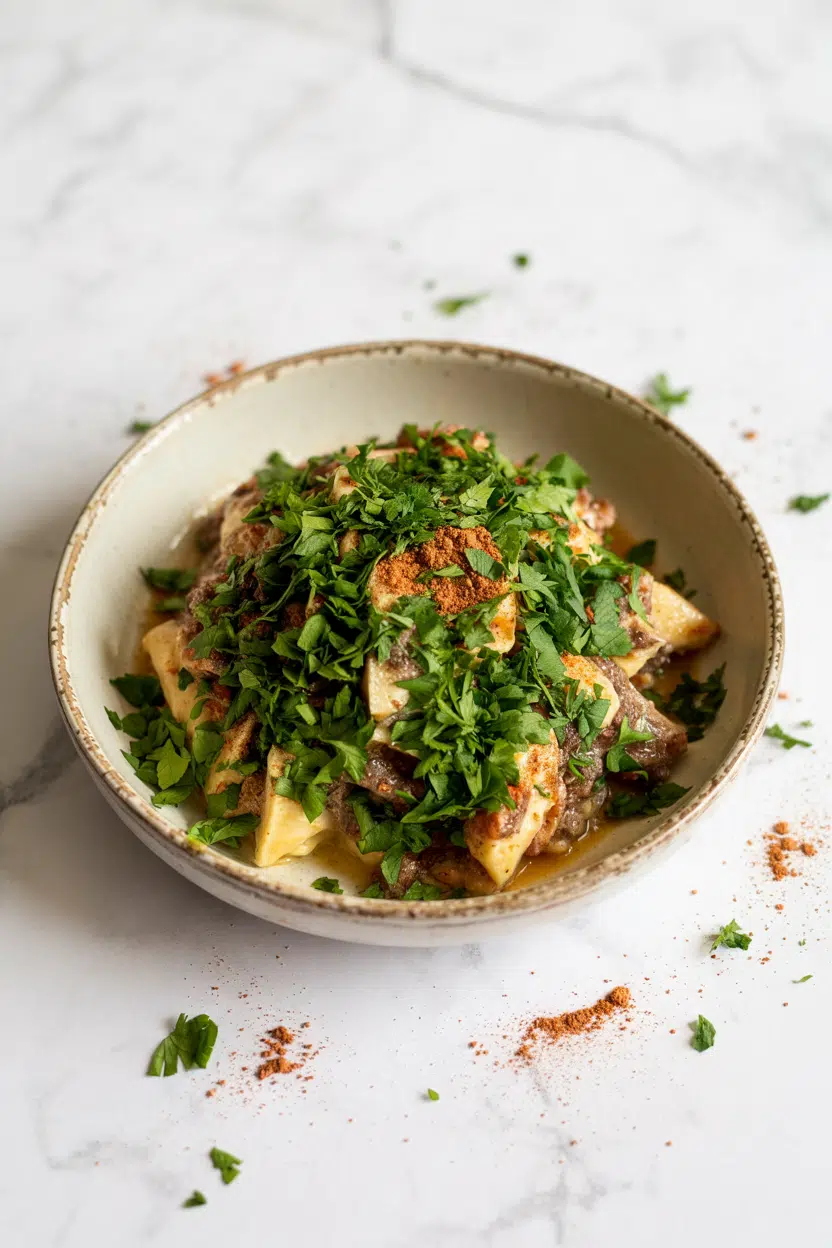
Raw parsley tastes fresh and green, with a mild bitterness that reads as clean rather than sharp.
There's a faint peppery edge underneath and a very soft anise note - nothing like tarragon or fennel, just a whisper of sweetness at the finish.
Compared to cilantro, parsley is quieter. It lacks the citrus-soapy top notes that make cilantro polarizing, sitting closer to celery leaves in its grassy, slightly bitter register.
Basil is sweeter and more floral; parsley is drier and more neutral.
Heat flattens parsley fast. Added mid-cook, it loses its brightness and turns slightly bitter; added at the end, it keeps that clean, grassy lift that makes finishing herbs worth using.
If you need something with a similar role but different flavor, a guide to alternatives to parsley covers the closest swaps for each context.
How to Use Parsley
Parsley works hardest when added late or raw. Its brightness is volatile - the compounds responsible for that grassy freshness dissipate quickly under heat, so the most effective uses keep it out of prolonged cooking.
In Middle Eastern cooking, flat-leaf parsley is the structural backbone of tabbouleh, chopped fine and combined with bulgur, tomato, lemon, and olive oil.
The herb isn't a garnish there - it's the majority of the dish, and what pairs well alongside it matters as much as the parsley itself (what pairs with tabbouleh gives a solid starting point).
In French cooking, it anchors persillade - a raw blend of parsley and garlic used to finish roasted meats - and gremolata, where lemon zest joins the mix specifically for osso buco.
South American chimichurri relies on parsley's neutral green base to carry heat and acidity without competing with the vinegar and chili.
Compound butters, herb sauces, and green blends all lean on the same quality: parsley doesn't dominate.
Similar logic applies when comparing it to cilantro - a creamy cilantro lime dressing recipe shows how much bolder cilantro behaves in a dressing context.
| Method | Best For | Tip |
|---|---|---|
| 🥗 Raw, chopped | Tabbouleh, salads, garnish | Use flat-leaf for flavor; curly for visual garnish |
| 🫙 Blended | Chimichurri, gremolata, persillade | Add a splash of cold water to keep the color green |
| 🧈 Compound butter | Grilled steak, roasted fish, corn | Fold in at room temp; chilled butter loses aroma |
| 🍲 Finish on hot dishes | Soups, stews, roasted veg | Add off heat - 30 seconds of residual steam is enough |
| 🫕 Lightly wilted | Pan sauces, sautéed greens | 30 seconds max; longer and the bright note goes flat |
Parsley pairs cleanly with lemon, garlic, olive oil, butter, lamb, fish, and tomato. It bridges fat-heavy dishes by cutting richness without adding competing flavor.
Avoid pairing it with strong anise herbs like tarragon in delicate preparations - the faint anise note in parsley collides.
How to Buy and Store Parsley
At the market, look for bright, uniformly green leaves with no yellowing or translucent patches. Stems should snap crisply, not bend.
Flat-leaf bunches tend to have more fragrance at point of purchase - give them a quick press and smell before buying if you can.
For full detail on timelines and signs of spoilage, parsley's shelf life breaks it down by storage method. The same logic applies to other leafy herbs - keeping dill fresh follows nearly identical rules.
- Refrigerator (water jar method) - 7-10 days; change the water every 2-3 days
- Refrigerator (damp paper towel) - 5-7 days; works when jar space is limited
- Frozen (chopped) - up to 6 months; freeze in a thin layer on a tray, then bag it
- Cut-and-washed containers - 3-5 days; convenient but loses flavor faster
Start with Flat-Leaf
Flat-leaf parsley is the right starting point for anyone cooking with parsley seriously for the first time. Its sharper aroma and cleaner flavor make a bigger difference in finished dishes than curly, which is best reserved for visual garnish work.
Try it first in gremolata - just parsley, lemon zest, and garlic stirred together and scattered over braised meat or fish right before serving. Three ingredients, no cooking required, and the result is noticeably brighter than the dish without it.
From there, chimichurri and persillade follow the same logic.
Frequently Asked Questions
Flat-leaf is better for cooking. It has a stronger, more defined flavor and holds up slightly better when blended or chopped into sauces. Curly parsley's tightly ruffled structure traps water and delivers less aroma per gram.
No. They look similar but taste very different. Parsley is mild, grassy, and faintly bitter; coriander (cilantro) has strong citrus and soapy notes that make it polarizing. They're not interchangeable in most dishes.
You can cook it briefly, but prolonged heat kills its flavor. Parsley stems work well in stocks and braises; the leaves are best added at the very end of cooking or raw as a finish.
Yes. The stems are edible and more intensely flavored than the leaves. Most cooks chop tender stems into dishes directly and save thicker stems for stocks, where they release flavor slowly over long cooking.
No - dried parsley loses most of its bright, grassy character during dehydration and tastes noticeably flat by comparison. It works in slow-cooked dishes where the fresh note would cook off anyway, but never as a finishing herb.