• Skip to primary navigation
  • Skip to main content
  • Skip to primary sidebar
  • Recipe Index
    • Air Fryer
  • Side Dishes
  • Substitutes
  • About
  • Contact
  • Subscribe

ForkLiftKitchen

menu icon
go to homepage
  • Recipe Index
    • Air Fryer
  • Side Dishes
  • Substitutes
  • About
  • Contact
  • Subscribe
subscribe
search icon
Homepage link
  • Recipe Index
    • Air Fryer
  • Side Dishes
  • Substitutes
  • About
  • Contact
  • Subscribe
×

Blog

What Is Cognac? [Taste, Uses & More]

March 8, 2026

Most people treat cognac as a sipping spirit and nothing more, missing half of what it can do.

What Is Cognac

That misread costs real flavor in the kitchen - where its oak-aged depth, dried fruit character, and warming finish outperform generic brandy in sauces, flambés, and marinades by a significant margin.

QUICK SUMMARY

Cognac is a double-distilled grape brandy from southwest France, aged in oak and graded by age (VS, VSOP, XO). It tastes of dried stone fruit, vanilla, and warm spice with a silky finish - useful in cocktails, pan sauces, flambés, and chocolate desserts.

🍇Origin: Cognac AOC, Charente and Charente-Maritime, southwest France
🔥Flavor: Dried apricot, vanilla, caramel, cinnamon, and citrus peel
🍳Best Uses: Pan sauces, flambé desserts, cocktails, chocolate ganache
🥃Age Grades: VS for cooking and cocktails; VSOP or XO for sipping
📅Shelf Life: Indefinite unopened; 1-3 years once opened with slow flavor loss

What Is Cognac?

Cognac is a regulated brandy produced exclusively within the Cognac AOC in France's Charente and Charente-Maritime departments.

Under French law, it must be made from specific grape varieties - primarily Ugni blanc (also called Trebbiano) - double-distilled in copper pot stills and aged in Limousin or Tronçais oak barrels.

The spirit is classified by age. VS (Very Special) means the youngest eau-de-vie in the blend is at least two years old. VSOP extends that minimum to four years, and XO to ten years.

Each step up brings greater oak integration and complexity.

The region itself is divided into crus, the most prestigious being Grande Champagne and Petite Champagne, where chalky soils produce the most aromatic base wines. Borderies, by contrast, yields rounder, nuttier spirits from a smaller growing zone.

  • VS - youngest; straightforward fruit, ideal for mixing
  • VSOP - balanced oak and fruit; works for cooking and light sipping
  • XO - deeply aged; reserved for finishing sauces or drinking neat
  • Single cru expressions - labeled by growing zone, often from specialty houses

What Does Cognac Taste Like?

cognac - What Is Cognac

Cognac leads with dried stone fruit - apricot and raisin are dominant - followed quickly by oak-driven vanilla and caramel. Warm baking spice (cinnamon, clove, nutmeg) comes through in the mid-palate, with citrus peel and faint floral notes on the back end.

Sensory SnapshotStrong Intensity
👅 Flavor
dried apricotvanillacaramelwarm spicecitrus peel
✋ Texture
silkyviscouswarming finish
👃 Aroma
raisinorange peeltoasted oakbaking spice

Compared to armagnac, cognac is typically cleaner and more polished - armagnac tends toward earthier, more rustic character. Against bourbon, cognac is notably less sweet and far more floral, with no corn-grain backbone.

Heat changes the profile. In a hot pan, alcohol volatilizes quickly, leaving behind the fruit and spice notes without the raw burn.

That makes it particularly effective in cream-based sauces, where those residual flavors round out the fat without dominating it.

Golden Rule
Never add cognac directly over a live flame - pull the pan off heat first, then add, then return to ignite for a controlled flambé.

How to Use Cognac

Deglazing and sauce work is where cognac earns its place most reliably in the kitchen. Add a splash to a hot pan after searing steak or duck, scrape up the fond, then reduce before adding cream or stock. The result is a peppercorn or mustard sauce with depth that a plain stock reduction won't match.

For desserts, cognac is the standard flambé spirit in crêpes Suzette and cherries jubilee. It also works as a finishing spoonful stirred into warm chocolate ganache or caramel just before setting, contributing oak and fruit without sweetness.

Macerating dried fruit is slower but effective. Soak raisins, figs, or apricots in cognac at room temperature for 24-48 hours before folding into holiday cakes or compotes. The fruit absorbs the spirit's spice character evenly.

How Cognac Is Used
MethodBest ForTip
🥩 DeglazeSteak, duck, roasted poultry pan saucesReduce by half before adding cream or stock
🔥 FlambéCrêpes Suzette, cherries jubileeRemove pan from heat before adding; tilt to ignite
🍫 FinishChocolate ganache, caramel sauceStir in off heat - 1 teaspoon per cup of sauce
🍇 MacerateHoliday cakes, compotes, dried fruit fillings24-48 hours at room temperature, sealed jar
🥃 CocktailsSazerac, Sidecar, brandy milk punchUse VS grade; save VSOP/XO for the glass

Cognac pairs cleanly with dark chocolate, butter, cream, aged cheeses like Comté, black pepper, and orange zest. Avoid it in light, acidic raw preparations - the spirit overwhelms delicate green salads and fresh herb dressings.

If you need a substitute, cognac alternatives worth considering include armagnac, Calvados, or a quality aged brandy depending on the dish.

Try It In
🍋Sidecar French Cognac CocktailThe classic ratio of cognac, orange liqueur, and lemon juice→

How to Buy and Store Cognac

Match the age grade to the job. VS bottles (the most affordable) are the right choice for cocktails and cooking - there's no benefit to burning off XO in a sauce.

VSOP works well across both cooking and casual sipping. XO is a sipping spirit first.

Best Pick
For an all-purpose cooking and cocktail bottle, a VSOP from a recognized house (Rémy Martin, Hennessy, Courvoisier, Martell) gives consistent quality without overspending.

When buying, check that the label states Cognac AOC - this guarantees double distillation and oak aging. Clear amber color and an intact natural cork are both good signs.

Avoid any bottle with cloudiness or a cracked, dried-out cork.

Store bottles upright, not on their side like wine. Cognac's high alcohol content degrades natural cork if it stays in constant contact.

Keep the bottle in a cool, dark place - a cabinet away from the stove works well. Once opened, cognac's shelf life runs 1-3 years before noticeable flavor loss, depending on how much air is left in the bottle.

Start Here

If you've only used cognac for sipping, start with a pan sauce. Sear a chicken thigh or steak, deglaze with two tablespoons of VS cognac, and reduce with cream.

That one step demonstrates the spirit's function more clearly than any tasting note.

From there, a Sidecar cocktail shows its citrus and spice balance in a stripped-down context. Those two applications cover most of what this spirit does in the kitchen and at the bar.

Shortcut
One mid-range VS bottle handles both cooking and cocktails. You don't need separate bottles until you're sipping regularly.

Frequently Asked Questions

Is cognac the same as brandy?

All cognac is brandy, however not all brandy is cognac. Cognac must come from the Cognac AOC, use specific grapes, and undergo double pot distillation and oak aging - rules that generic [brandy](https://forkliftkitchen.com/brandy/) doesn't require.

What does cognac taste like compared to bourbon?

Cognac is more floral and fruit-forward, with no grain sweetness. Bourbon carries corn-driven caramel and a heavier body; cognac is silkier and more aromatic with citrus and dried fruit at the fore.

What are VS, VSOP, and XO?

They're minimum age grades for the youngest eau-de-vie in the blend. VS is at least 2 years, VSOP at least 4, and XO at least 10. Older blends carry more oak integration and generally command higher prices.

Can you cook with cognac?

Yes - it's one of the more useful spirits in a French kitchen. VS grade works for deglazing, flambéing, and macerating; the alcohol burns or evaporates, leaving oak, fruit, and spice behind in the dish.

How long does an opened bottle of cognac last?

Typically 1-3 years before the flavor noticeably softens. Transfer to a smaller bottle if less than a third remains - reducing headspace slows oxidation considerably and extends the useful life.
5 Best Tamari Substitutes for Authentic Asian Cooking

March 8, 2026

You're marinating chicken for dinner and reach for the tamari. The bottle tips-empty. Tamari brings gluten-free umami and a smoother saltiness than standard soy sauce, and the recipe depends on that depth.

5 Best Tamari Substitutes for Authentic Asian Cooking

Without it, dishes can taste flat or one-dimensional. The right swap restores that savory backbone without changing the whole flavor profile.

A few pantry staples can cover the gap.

QUICK SUMMARY

We reach for regular soy sauce or liquid aminos first when tamari runs out. For stir-fries and marinades, both deliver similar umami without much adjustment-watch the salt level since some brands run heavier. In gluten-free dishes, coconut aminos works but tastes sweeter and milder.

🏆Closest match: Soy sauce at 1:1, add earlier if gluten isn't a concern
⚖️Ratio tweak: Most swaps work 1:1 but adjust salt to taste
🌱Gluten-free pick: Coconut aminos or liquid aminos avoid wheat entirely
Quick Substitute Reference
#SubstituteBest ForRatioKey Note
1 Soy Sauce 🍳 Cooking 1:1 Contains gluten, saltier
2 Coconut Aminos 🌱 Gluten-Free 1:1 Sweeter, less salty
3 Liquid Aminos 🥗 Raw 1:1 Lighter fermented flavor
4 Miso Solution 🍳 Soups 1 tablespoon miso + 1 tablespoon water Richer, thicker texture
5 Soy-Free Mix 🥗 Finishing 1 tablespoon vinegar + 1 tablespoon molasses + 2 tablespoon water Tangy, less umami

1. Regular Soy Sauce 🥢

Regular soy sauce steps in when you need that salty, umami punch and gluten isn't a concern. It's slightly saltier and less smooth than tamari, but the core flavor is nearly identical.

Use 1 tablespoon soy sauce per 1 tablespoon tamari. Add it at the same point in the recipe.

  • ✅ Nearly identical umami depth
  • ⚠️ Contains wheat-not gluten-free

Most recipes won't notice the swap. If you're cooking for someone with celiac disease, this one's off the table-but for everyone else, it's the fastest fix. If soy sauce itself runs short, we've covered Soy Sauce substitutes for cooking in detail.

Best Pick
For non-gluten-free dishes, regular soy sauce is the swap we use most.

2. Coconut Aminos 🥥

Coconut aminos delivers gluten-free, soy-free umami with a noticeably sweeter and milder profile. It won't match tamari's depth, but it works when dietary restrictions matter more than exact flavor.

Use 1 tablespoon coconut aminos per 1 tablespoon tamari. You may need to add a pinch of salt to balance the sweetness.

The lighter saltiness means stir-fries and marinades can taste less savory without adjustment. In dressings and dipping sauces, the sweetness shows up more clearly.

Add it early in cooking so the flavors meld. For raw dishes, taste as you go-you might need less than you expect. If you're curious about other ways to use it, check out Coconut Aminos alternatives to try for more context.

3. Liquid Aminos 💧

Liquid aminos (like Bragg's) brings soy-based umami without fermentation's deeper notes. The flavor runs lighter and less complex than tamari, but it's gluten-free and works in most recipes.

Use 1 tablespoon liquid aminos per 1 tablespoon tamari. It's a direct swap.

  • 🥗 In raw dishes: Shines in dressings and cold sauces
  • 🍳 In cooking: Works but lacks the richness of fermented sauces
  • ⚠️ Color: Won't darken dishes as much as tamari

The amino acid profile differs slightly, so the savory punch isn't quite as strong. For high-heat stir-fries, you might notice the lighter flavor. If you need more ideas around this swap, we've ranked common Liquid Aminos swaps ranked by use case.

4. Miso + Water 🍲

Miso paste thinned with water rebuilds tamari's umami with a thicker, fermented richness. It's not liquid like tamari, but it delivers deep savory flavor when you mix it smooth.

Use 1 tablespoon miso paste + 1 tablespoon water per 1 tablespoon tamari. Whisk it until smooth before adding.

  • ✅ Deep fermented umami
  • ✅ Works in soups and stews
  • ⚠️ Thicker texture won't dissolve as cleanly

The paste adds body, so it won't work in clear broths or light dressings where you need transparency. In marinades and braised dishes, it's solid. White miso tastes milder and sweeter; red or brown miso runs saltier and more intense. For other ways to swap miso, we've tested easy Miso Paste swaps that work across recipes.

5. Soy-Free Mix (Vinegar + Molasses) 🧪

Homemade soy-free substitute combines vinegar's tang with molasses's sweetness to mimic tamari's balance. It's not as savory, but it works when you're avoiding soy entirely.

Use 1 tablespoon vinegar + 1 tablespoon molasses + 2 tablespoons water per 1 tablespoon tamari. Mix before adding.

  • ✅ Soy-free and gluten-free
  • ✅ Works in finishing sauces and salads
  • ⚠️ Less umami-tastes more acidic and sweet
  • ⚠️ Won't hold up in long-cooked dishes

The umami depth isn't there, so this works best as a last resort or in dishes where other ingredients carry the savory load. Apple cider vinegar or rice vinegar both work. If you need more traditional soy-based options, we've covered tested Soy Sauce replacements that include both gluten-free and standard picks.

Match Your Pantry to Tamari

Got regular soy sauce? Use it 1:1 unless gluten matters-it's the closest match.

Need gluten-free? Coconut aminos or liquid aminos both work, but coconut runs sweeter.

Avoiding soy entirely? The vinegar-molasses mix or miso solution cover the gap with less umami.

Frequently Asked Questions

Can I use soy sauce instead of tamari in every recipe?

Yes, as long as gluten isn't a concern. Soy sauce is slightly saltier and less smooth, but it works 1:1 in stir-fries, marinades, and dressings. If you're cooking for someone with celiac disease, skip it and use coconut aminos or liquid aminos instead.

What's the difference between tamari and soy sauce?

Tamari is traditionally gluten-free and made with little to no wheat, while soy sauce includes wheat in the fermentation. Tamari tastes smoother and less sharp. Both deliver salty umami, but tamari's flavor is more mellow.

Does coconut aminos taste like tamari?

No, it's sweeter and milder with less umami punch. Coconut aminos works as a gluten-free and soy-free swap, but you'll need to adjust for the lighter saltiness. Add a pinch of salt or use slightly more to match tamari's depth.

Can I make tamari at home?

Not easily-real tamari requires fermentation over months with specific bacteria and mold cultures. The homemade soy-free mix of vinegar, molasses, and water mimics the salty-sweet balance but won't replicate the fermented umami. For true tamari flavor, store-bought is the only practical option.

Is liquid aminos the same as tamari?

No, but they're close. Liquid aminos is made from soy protein and is gluten-free like tamari, but it lacks the fermentation depth. It tastes lighter and less complex. Use it 1:1 in most recipes, but expect a milder flavor in dishes where tamari's richness stands out.

5 Best Tamari Substitutes for Authentic Asian Cooking

5 Best Substitutes for Tamari

No ratings yet
Tamari offers a gluten-free umami flavor with a smooth saltiness that many recipes rely on. These five pantry staples provide excellent alternatives, balancing saltiness and savoriness without drastically changing your dish.
Print Recipe Pin Recipe
Prep Time 12 minutes mins
Cook Time 8 minutes mins
Total Time 20 minutes mins
Servings: 4 servings
Course: Kitchen Tips, Substitutes
Cuisine: Various
Ingredients Method Notes

Ingredients
  

  • 1 cup Soy Sauce Use 1:1 ratio with tamari; contains gluten and is saltier
  • 1 cup Coconut Aminos Use 1:1 ratio with tamari; sweeter and less salty, add salt if needed
  • 1 cup Liquid Aminos Use 1:1 ratio with tamari; lighter fermented flavor, gluten-free
  • Miso Solution Mix 1 tablespoon miso paste with 1 tablespoon water per 1 tablespoon tamari; thicker texture
  • Soy-Free Mix Combine 1 tablespoon vinegar + 1 tablespoon molasses + 2 tablespoon water per 1 tbsp

Method
 

  1. Choose the substitute based on your dietary needs and recipe type.
  2. Prepare the substitute: blend miso paste with water or mix vinegar, molasses, and water as needed.
  3. Use substitutes at a 1:1 ratio to tamari, adjusting salt or sweetness to taste.
  4. Add substitutes early in cooking to blend flavors or adjust seasoning during raw applications.
  5. Check final taste and consistency before serving to ensure the flavor balance matches your preference.

Notes

  • Regular soy sauce is the closest match but contains gluten.
  • Coconut aminos and liquid aminos provide gluten-free options with differing flavor profiles.
  • Miso solution and soy-free mix work best in specific dishes like soups or finishing sauces and require mixing before use.

Tried this recipe?

Let us know how it was!

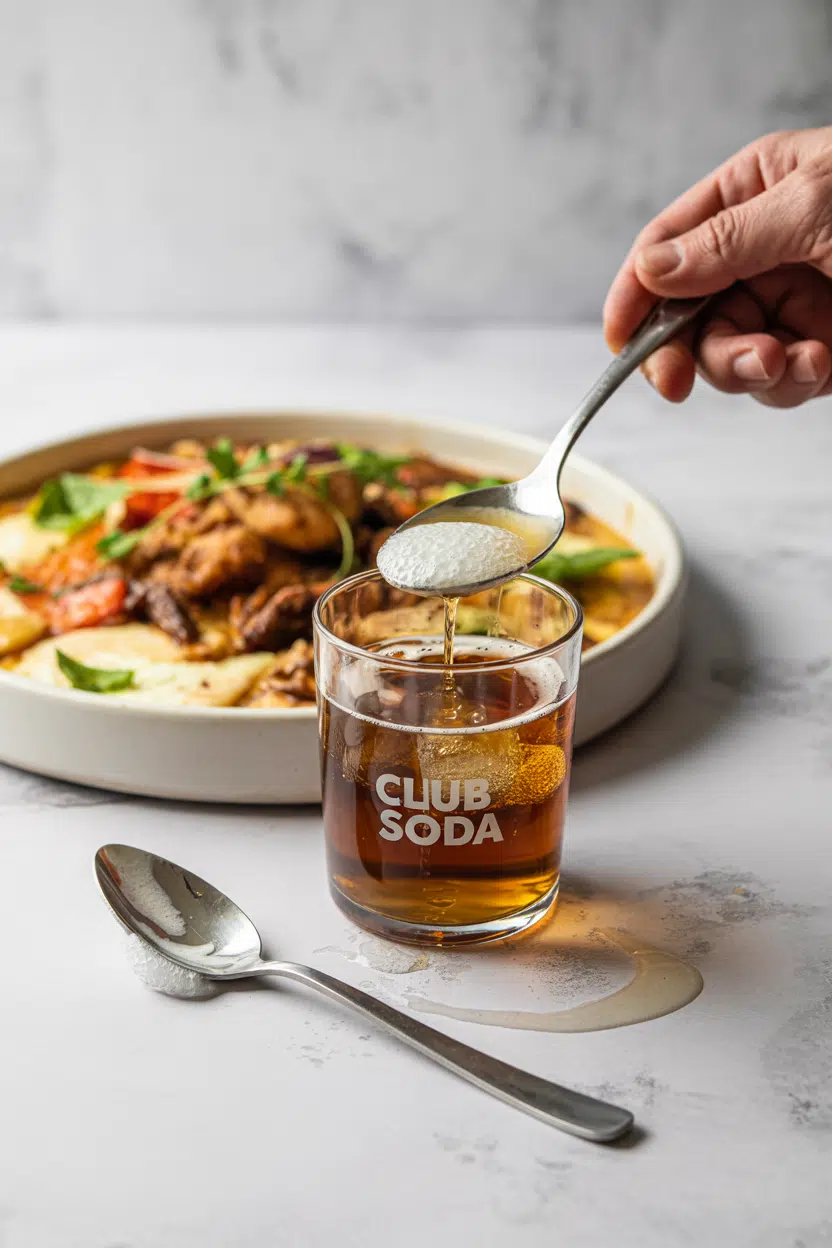
What Is Club Soda? Taste, What It Tastes Like & Uses

March 8, 2026

Most people grab club soda without thinking twice, treating it as neutral filler behind whatever spirit or syrup takes center stage. That's the wrong read.

What Is Club Soda

The added minerals - sodium bicarbonate, potassium sulfate, trace salts - give it a faint alkaline edge that plain seltzer lacks, and that distinction matters in everything from a whiskey highball vs cocktail to a tempura batter. Understanding what club soda actually is changes how you use it.

QUICK SUMMARY

Club soda is carbonated water with added minerals - sodium bicarbonate, potassium sulfate, or sodium chloride - giving it a mild saline-alkaline bite that plain seltzer lacks. It's calorie-free, sugar-free, and works as a cocktail mixer, batter lightener, and finishing splash.

💧Category: Carbonated mineralized water, not plain seltzer
👅Flavor: Mildly saline, faint alkaline tang, clean finish
🍹Best Uses: Highball mixer, tempura batter, spritz mocktails
📅Shelf Life: Unopened: months; opened: best within 1-3 days
⚠️Watch: Sodium content varies by brand - check labels on low-sodium diets

What Is Club Soda?

Club soda is water that has been carbonated with CO₂ and then infused with added minerals - typically sodium bicarbonate, potassium sulfate, or sodium chloride. That mineral addition is what separates it from plain seltzer, which is just CO₂-charged water with nothing else added.

It originated in North American commercial beverage production and became a bar staple under names like soda water and club-water. You'll sometimes see it mislabeled as "sparkling water," though true sparkling water carries natural carbonation from a source, not an industrial process.

Several subtypes exist depending on brand formulation:

  • Standard club soda - sodium bicarbonate dominant, mild alkaline note, widely available in cans and glass bottles
  • High-mineral variants - extra potassium sulfate, slightly fuller mineral character, popular in European bistro service
  • Low-sodium formulations - reduced bicarbonate for shoppers monitoring sodium intake without giving up carbonation

The carbonation level tends to be vigorous compared to many mineral waters, with persistent small bubbles rather than the large, fast-dissipating bubbles you get from cheap sparkling water.

What Does Club Soda Taste Like?

club soda - What Is Club Soda

Club soda tastes cleaner and more neutral than tonic water vs ginger ale - no sweetness, no quinine bitterness. What you notice instead is a faint baking-soda tang on the back of the palate, followed by a light mineral bite that fades quickly.

Sensory SnapshotMild Intensity
👅 Flavor
mildly salinealkaline tangclean mineral
✋ Texture
vigorous effervescencepersistent bubbles
👃 Aroma
neutralfaint mineral

That alkaline edge isn't sharp - most people wouldn't identify it blind without comparison. It becomes more noticeable when you sip club soda alone rather than mixed, or when you've had plain seltzer right before it.

Once opened, the flavor doesn't change dramatically, however the carbonation drops fast. Flat club soda still carries the mineral salts, so it retains a slightly rounded mouthfeel even after the fizz is gone - a texture plain flat water doesn't replicate.

Golden Rule
Always taste your club soda before mixing. A brand with heavy sodium bicarbonate can push a delicate cocktail alkaline and mute citrus notes.

How to Use Club Soda

Club soda earns its place in three distinct roles: beverage mixer, batter lightener, and finishing agent. Each depends on the carbonation staying active, so timing matters across all three.

How Club Soda Is Used
MethodBest ForTip
🥗 Cold MixHighball cocktails, spritz mocktails, diluted syrupsAdd last, stir once gently to preserve bubbles
🍳 BatterTempura, pancakes, beer-batter alternativesFold in just before frying - bubbles collapse within minutes
✨ Finishing SplashCooked shellfish (shrimp, oysters), chilled fruit compotesA small pour brightens without adding sweetness
🍧 Cold StirFizzy granitas, fruit salads with sparkleAdd immediately before serving - it loses fizz fast when stirred

In cocktail work, club soda pairs cleanly with vodka, gin, and whiskey because it adds lift without sweetness. It also works well with citrus (lemon, lime) and fresh herbs like mint or basil in spritz-style mocktails.

For batter, the alkaline CO₂ bubbles create pockets that expand during frying, producing lighter, crispier coatings. Japanese tempura practice leans on this - some cooks chill their club soda further to slow bubble loss before folding it in.

Shortcut
No club soda? Check our guide to club soda replacements for quick swaps that preserve carbonation in batters and cocktails.

One area to avoid: delicate emulsions that need oil-water bonding. The carbonation disrupts that structure and will break your foam or sauce.

Try It In
🍞Irish Soda Bread TraditionalSodium bicarbonate as leavening — the same alkaline chemistry at work→

How to Buy and Store Club Soda

Buy club soda in clear glass bottles or sturdy cans labeled explicitly as "club soda" or "soda water," and flip to the ingredient list to confirm added minerals are present.

Avoid dented cans or bottles with visible bulging - both signal compromised carbonation before you even open them.

Watch Out
Sodium content varies widely across brands. Some formulations add enough bicarbonate to matter on a low-sodium diet - always check the nutrition panel.

Storage is straightforward:

  • Unopened bottles/cans - store in a cool, dark pantry or refrigerator; carbonation stays stable until the best-by date
  • Opened bottles - reseal tightly and refrigerate upright; the club soda freshness guide drops sharply once open, with peak fizz lasting only 1-3 days
  • Cans - use in one sitting; partial cans can't be resealed effectively and go flat within hours

Skip plastic bottles if you're storing long-term. Glass and aluminum retain carbonation better than PET plastic.

Where to Start With Club Soda

If you've only used club soda as a generic mixer, start with a side-by-side taste test against plain seltzer. The difference is subtle but real, and recognizing it helps you choose the right one for each job.

From there, try it in a batter before you try it in a cocktail. The effect in frying is immediate and obvious - you'll see the difference in crispness before you've had a chance to second-guess anything.

Club soda also compares differently to beer than most people expect when used as a batter liquid - worth knowing if you're substituting in a beer-batter recipe.

Frequently Asked Questions

Is club soda the same as seltzer?

No. Both are carbonated water, however seltzer has no added minerals. Club soda contains sodium bicarbonate, potassium sulfate, or sodium chloride, which gives it a faint alkaline-saline note that seltzer lacks.

Does club soda have calories?

No calories, no sugar. The only nutritional variable is sodium, which ranges from negligible to moderate depending on how much bicarbonate the brand adds.

Can club soda be used instead of tonic water?

In cocktails, it works as a low-calorie swap but removes all sweetness and quinine bitterness. A gin and tonic made with club soda tastes noticeably drier and less complex.

Why does club soda taste salty?

The added minerals - primarily sodium bicarbonate or sodium chloride - produce a mild saline note. Some brands use more than others, so saltiness varies by formulation.

How long does an opened bottle of club soda last?

Peak carbonation holds for 1-3 days when resealed and refrigerated upright. After that it's safe to drink but noticeably flatter - fine for cooking, less ideal for mixing drinks.

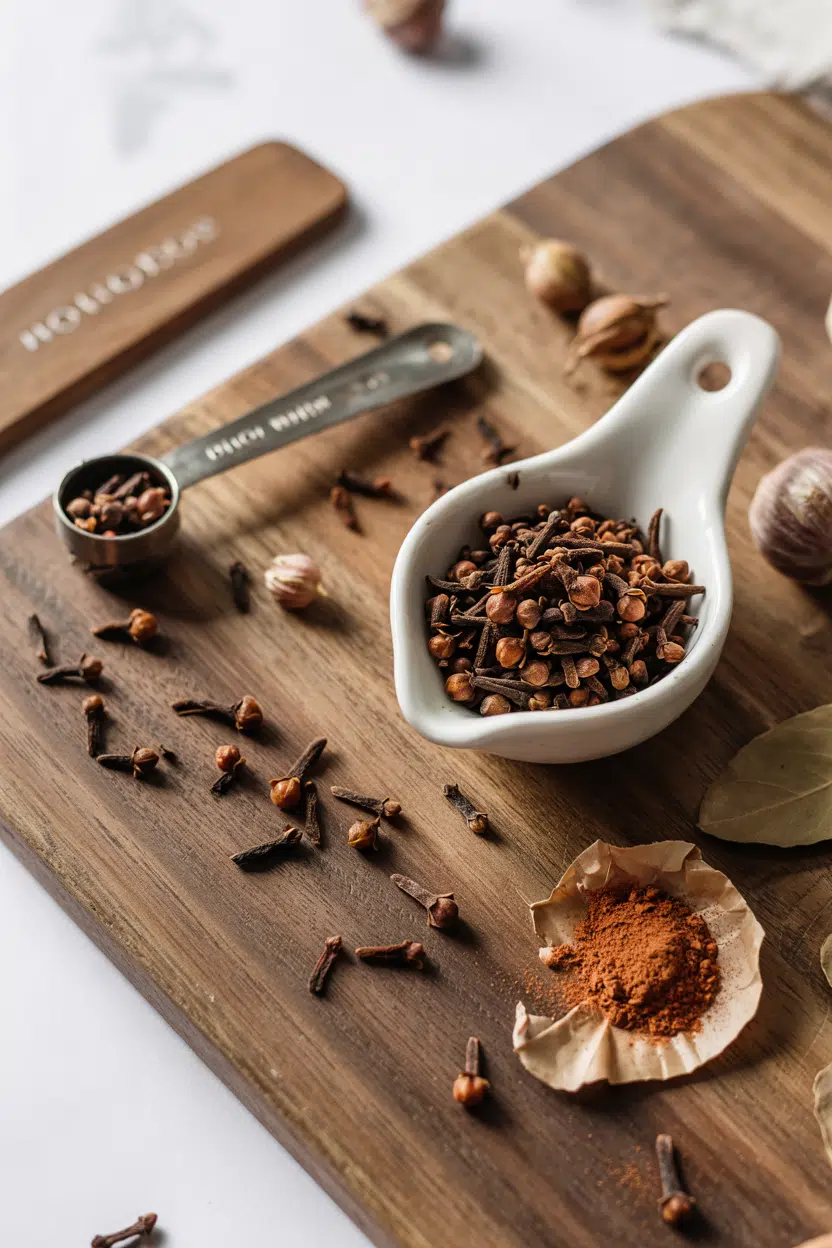
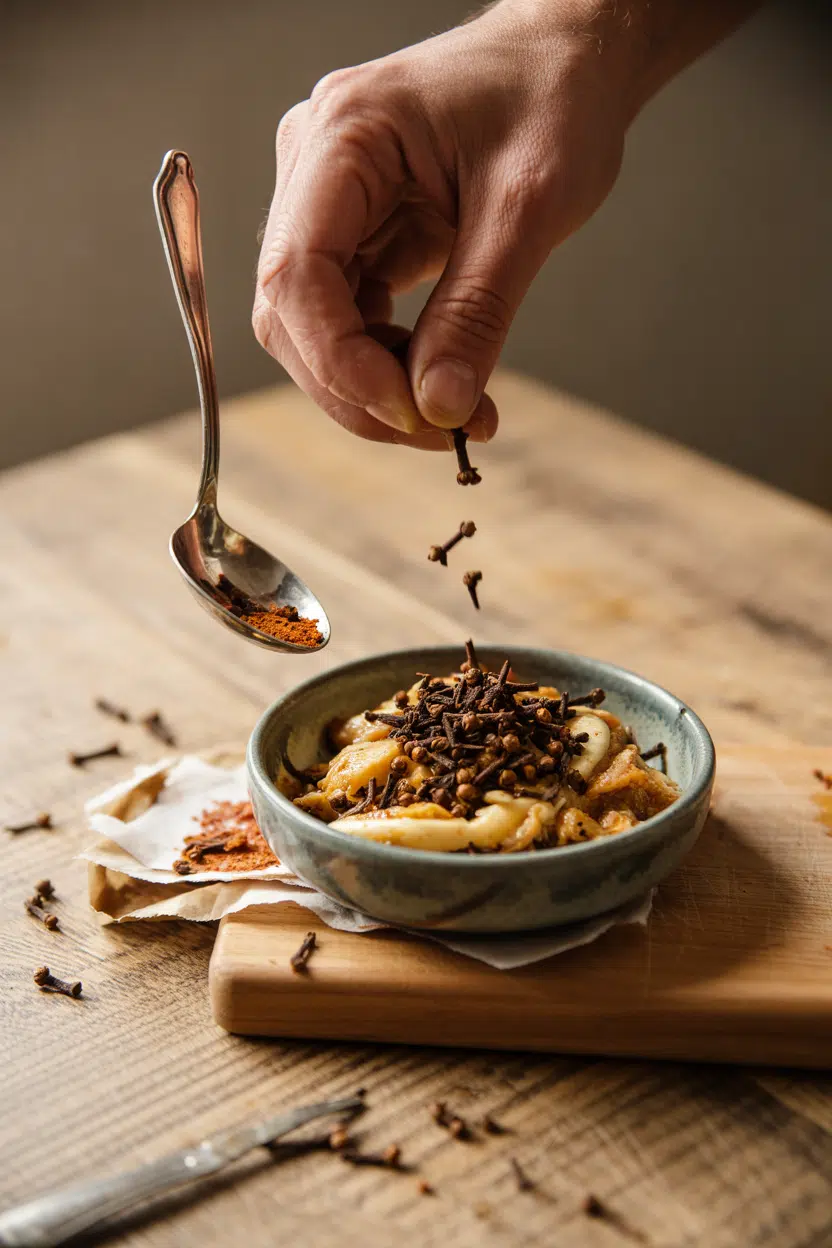
What Is Clove? Taste, Uses & More for Cooking

March 8, 2026

Clove does something no other dried spice does quite as sharply: it shows up in a recipe in a quantity that seems almost trivial - two buds, maybe three - and still shapes the entire dish. That single whole clove dropped into a braise or simmered into a syrup carries enough eugenol oil to shift the flavor profile of everything around it.

What Is Clove

Understanding what clove actually is, how it tastes, and how much to use is the difference between a dish with depth and one that tastes like cough drops. Spice blends like allspice replacements often lean on clove for exactly that reason.

QUICK SUMMARY

Clove is a dried flower bud with pungent, warm-spicy flavor driven by eugenol oil. Use it sparingly - whole in braises and biryanis, ground in spice blends and baked goods. Whole cloves keep 2-4 years; ground clove fades within 6-12 months.

🌿Type: Dried flower bud spice from the Syzygium aromaticum tree
👅Flavor: Warm, sweet-bitter, slightly camphor-like with peppery heat
🍳Best Uses: Slow braises, chai blends, gingerbread, mulled wine, studded ham
🛒Buying Tip: Choose plump, glossy dark-brown whole buds; avoid pale or dusty bags
📅Shelf Life: Whole: 2-4 years; ground: use within 6-12 months for full potency

What Is Clove?

Clove is the dried, unopened flower bud of Syzygium aromaticum, a tropical evergreen tree native to the Maluku Islands (the Moluccas) of eastern Indonesia.

Harvested before the bud opens, each clove dries into a small, hard, nail-shaped form - which is why some older European texts call it a "clove nail." The word clove itself derives from the Latin clavus, meaning nail.

The spice belongs to the Myrtaceae family and is categorized as a dried flower bud, not a seed or bark like some of its common spice companions. Whole cloves are dark brown, glossy, and roughly 1-2 cm long.

Unlike cinnamon or cardamom, clove has only one commercially significant variety rather than distinct cultivars, though origin matters - Indonesian, Zanzibar, and Sri Lankan sources can differ slightly in eugenol concentration.

Historically, the anise vs star anise trade routes ran parallel to the clove spice trade across Southeast Asia and the Arab world.

Ground clove is simply whole buds milled fine, though it loses potency much faster once processed.

What Does Clove Taste Like?

clove - What Is Clove

Clove tastes like a concentrated mix of nutmeg and black pepper, lifted by a sharp, camphor-like coolness that no other common spice replicates. The flavor is warm and sweet up front, then turns slightly bitter and astringent on the finish.

That coolness comes directly from eugenol, the dominant phenolic compound in clove oil. It's the same compound used in dental applications - which explains why clove sometimes reads as faintly medicinal in large quantities.

Sensory SnapshotPungent Intensity
👅 Flavor
warm-spicysweet-bittercamphorastringent
✋ Texture
hard wholepowdery groundoily when crushed
👃 Aroma
intensely warmslightly medicinaleugenol-forward

Heat affects clove's character noticeably. Bloomed briefly in hot fat, it mellows and turns rounder.

Left raw in a salad or cold preparation, that medicinal edge sharpens into something harsh and unpleasant - which is why clove almost always enters recipes via heat.

How to Use Clove

Clove appears in South Asian, Southeast Asian, Middle Eastern, and Northern European cooking - and the form you use matters as much as the quantity.

Whole cloves suit long, slow applications where time softens their edge. Ground clove integrates quickly into dry blends and batters but overpowers fast if you misjudge the amount. A reliable rule: use ground clove at roughly one-quarter the volume you'd use whole buds in an equivalent dish.

How Clove Is Used
MethodBest ForTip
🍖 StuddingGlazed ham, onions for stockPush bud into fat or scored surface so it anchors during roasting
🫕 Whole in liquidBiryanis, curries, braised meats, mulled wineAdd at the start; remove before serving - biting into one is unpleasant
🧈 Bloomed in fatCurry bases, dal, spiced rice30 seconds max in hot oil; pulls eugenol into the fat and mellows raw sharpness
🎂 Ground in blendsGaram masala, chai spice, gingerbread, pumpkin pieMeasure carefully - a pinch too much dominates the whole blend
🍵 Steeped then strainedSyrups, poaching liquids, infused milk3-4 whole cloves per cup of liquid is usually enough

Clove pairs tightly with cinnamon, star anise, nutmeg, cardamom, and ginger - essentially the warm-spice family. Citrus, especially orange peel, brightens clove's heaviness and is standard in mulled wine and pickling brines.

Red meat and pork carry its intensity well; delicate fish does not.

In swedish cardamom buns and Northern European baking, clove often plays a supporting role behind cardamom without dominating.

Golden Rule
Clove is a background spice. If you can identify it as the primary flavor in a finished dish, you've used too much.
Try It In
🍗Slow Cooker Roast ChickenAdd 2 whole cloves early for warm background depth→🥩Slow Cooker Beef Stew with VegetablesWhole cloves handle long braise times without turning harsh→🌶️Spicy Beef StewClove's warmth reinforces chili heat without competing→

How to Buy and Store Clove

At the store, choose whole buds that are uniformly dark brown, plump, and glossy with a clear nail shape intact. Shriveled, pale, or dusty buds have lost significant oil content and won't deliver the flavor you're paying for.

Watch Out
Ground clove sold in large jars is almost always stale by the time you reach the bottom. Buy small quantities and replace within 6 months.
  • Whole cloves - Store in an airtight, opaque container away from heat and light; potent for 2-4 years.
  • Ground clove - Keep in a small sealed jar; flavor degrades quickly, so use within 6-12 months.
  • Freshness test - Crush one bud between your fingers; strong, immediate aroma means good oil content. No aroma means no flavor.

For a full breakdown of how long cloves actually last under different conditions, see our clove storage guide guide.

Where to Start With Clove

New to clove? Start with two whole buds in a slow-cooked braise or stew.

That application is forgiving - long cooking rounds off the sharpness, and you can remove the buds before serving.

Once you're comfortable with whole cloves, move to ground clove in a spice blend like garam masala or a chai mix, where it works alongside cinnamon and cardamom. If you need a stand-in for a recipe, the clove alternatives guide covers your closest options and ratios.

The ground cloves vs whole cloves breakdown is worth reading before you swap one form for the other.

Frequently Asked Questions

Are cloves the same as allspice?

No - they're different spices. Allspice is a dried berry that naturally tastes like a blend of clove, cinnamon, and nutmeg combined. Clove is a flower bud with a sharper, more pungent profile and higher eugenol concentration than allspice.

How do you use whole cloves vs ground cloves?

Whole cloves suit long-simmered dishes where they're removed before serving - braises, stocks, mulled wine. Ground clove integrates directly into batters, dry rubs, and spice blends but at roughly one-quarter the volume of whole buds.

Why do recipes call for studding ham with cloves?

The fat in a glazed ham carries eugenol oil deep into the meat as it roasts, delivering warm aroma throughout the cut. The buds also visually mark scored diamond patterns - a classic presentation technique with a functional origin.

Can I substitute ground clove for whole cloves?

Yes, with adjustment. Use ¼ teaspoon ground clove for every 3-4 whole cloves a recipe calls for. Ground clove disperses instantly, so it works better in batters and blends than in dishes where you'd normally remove the whole bud.

Is clove oil safe to eat?

Normal cooking amounts are safe for everyone. Concentrated clove oil (eugenol extract) is a different product - ingesting undiluted clove oil can irritate mucous membranes and, in large medicinal doses, may affect blood clotting. Stick to culinary use.

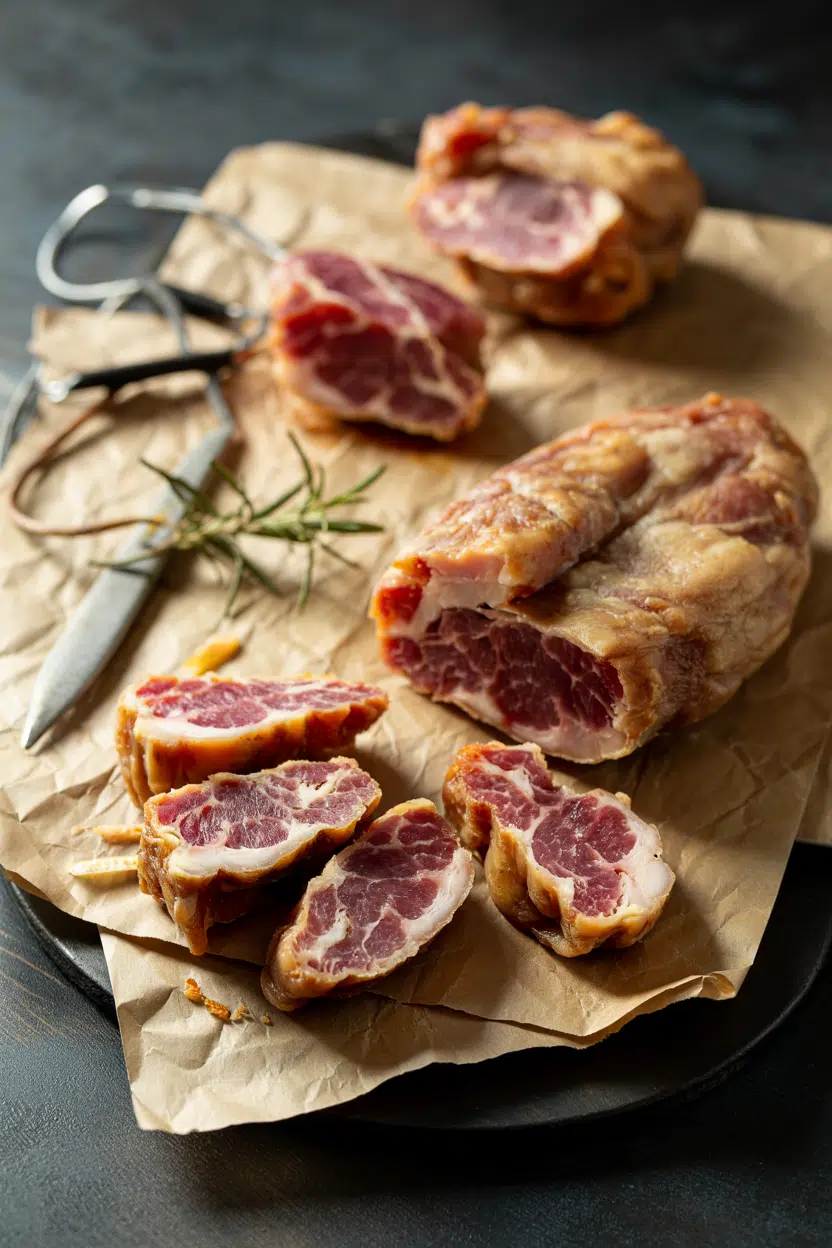
What Is Chicharron? [Taste, Uses & More]

March 7, 2026

Tuck a handful of chicharrón into a warm tortilla with salsa verde and raw onion, and you've got one of the most straightforward tacos imaginable - two ingredients doing serious work. That combination shows up in taquerias across Mexico City, street stalls in Oaxaca, and home kitchens throughout Latin America.

What Is Chicharron

Chicharrón occupies a different category from something like pancetta - it's not a cured product, but a fried one, built on rendered fat and intense heat. Few snack ingredients carry this much depth of flavor and regional identity.

QUICK SUMMARY

Chicharrón is fried pork skin - sometimes with fat or meat attached - that crisps into light puffs or dense slabs depending on style. It's salty, savory, and umami-rich, with a toasted pork fat aroma. Used across Mexican, Cuban, and Filipino cooking, it ranges from a roadside snack to a taco filling.

🐷Category: Fried pork rind and snack meat
💥Flavor: Salty, savory, umami-rich, porky, sometimes smoky
🌍Origin: Iberian Peninsula, widely adopted across Latin America
🔥Best Use: Tacos, tostadas, refried beans, pozole, low-carb breading
📦Shelf Life: Weeks to months sealed; refrigerate opened or home-fried pieces

What Is Chicharron?

Chicharrón (plural: chicharrones) is fried pork skin, rendered in fat until it blisters and crisps. The name comes from Spanish and traces back to the Iberian Peninsula, carried into Latin America through Spanish colonization.

Regional style determines what you actually get. In Mexico and much of Latin America, the most common form is the puffed rind - light, airy, and brittle, made by deep-frying dried pork skin until it balloons.

A second major type is chicharrón prensado, a pressed slab of pork skin with attached fat and sometimes meat, cooked down and compressed before frying.

  • Puffed rind (chicharrón de cuero) - Light and brittle with a hollow crunch; fat has been rendered out fully.
  • Chicharrón prensado - Dense, chewy, and fatty; sold in blocks and sliced or chopped to order.
  • Chicharrón con carne - Pork skin with meat still attached, chewier and meatier in bite.
  • Chicharrón molido - Ground pork rind used as breading or mixed into fillings.

Outside Latin America, equivalent products go by different names - pork crackling in the UK, pork rinds in the United States. Filipino cooking has its own version called chicharon, often served with a vinegar dipping sauce.

What Does Chicharron Taste Like?

chicharron - What Is Chicharron

Chicharrón tastes like deeply salted, toasted pork fat - somewhere between bacon drippings and a meaty chip. The savory punch is immediate and strong, backed by a lingering umami quality from the rendered skin and fat.

Sensory SnapshotStrong Intensity
👅 Flavor
saltysavoryumamiporky
✋ Texture
brittle crunchchewy (prensado)
👃 Aroma
toasted pork fatlightly smoky

The two main styles taste noticeably different. Puffed rind is lighter, with a clean salt-and-fat hit that fades quickly.

Prensado carries more lingering pork flavor because of the attached meat and fat layers - chewier, richer, and slightly greasier on the palate.

Acid cuts the fat cleanly. That's why lime and pickled onions work so well alongside it - they reset the palate between bites.

Golden Rule
Acid is chicharrón's best companion. A squeeze of lime or a spoonful of salsa verde doesn't just complement the fat - it structurally balances the whole bite.

How to Use Chicharron

Chicharrón shows up across multiple cuisines and in more forms than its snack-food reputation suggests. In Mexican cooking alone, it covers street food, home staples, and regional specialties.

As a taco filling, chopped prensado goes into a warm tortilla with salsa verde or a red guajillo sauce - this is one of the most common lunch tacos sold at fondas and markets. As a topping, broken puffed rind adds crunch to sopes, tlacoyos, and tostadas without overwhelming other flavors. Stirred into refried beans, small pieces of chicharrón melt slightly into the fat, adding texture and depth.

How Chicharron Is Used
MethodBest ForTip
🥗 Broken RawToppings on soups, tostadas, sopesAdd just before serving to keep crunch
🍳 Pan-FriedReheating prensado, crisping taco fillingMedium heat only - high heat scorches fast
🔥 Deep-FriedMaking from scratch, final crispeningOil must be hot enough to puff rind in seconds
🫙 Oven-FinishedReducing excess oil, reviving stale rinds5-8 minutes at 350°F restores snap
🫓 Ground (Molido)Low-carb breading, mixed into gorditasPulse in a food processor - don't over-grind

Cuban cooking uses chicharrón as a side alongside rice and black beans, often with hot sauce on the table. Filipino chicharon typically pairs with vinegar and calamansi rather than chiles.

Across all these cuisines, the fat content means chicharrón stands up to bold, acidic condiments that would flatten a leaner ingredient.

Ground chicharrón molido has found a second life as a zero-carb breading for chicken or fish - a use that requires nothing more than a food processor and a hot pan.

Try It In
🐷Chicharrones Fried Pork RindsMake puffed rinds from scratch at home→

How to Buy and Store Chicharron

Puffed rind should look uniformly golden to light brown - avoid bags with heavy black scorch marks or pieces that feel damp or soft. A dry, crisp surface means the moisture was fully driven out during frying. For prensado, look for firm slabs with visible skin layers and no sour or off odor; the fat should be pale and clean, not grey.

Watch Out
Oil pooling inside a sealed bag is a red flag. It means the rind wasn't dried enough before frying and will likely taste stale or rancid before the printed date.

Commercial packaged chicharrón keeps for weeks to months when sealed, thanks to low moisture content. Once opened, seal it tightly and use within a few days for best texture.

Home-fried pieces and prensado should go into a sealed container in the refrigerator - learn more about chicharrón shelf life if you're making a large batch.

Pure pork rind chicharrón is naturally gluten-free, however, flavored commercial versions sometimes include coatings or additives - always check the label.

Where to Start With Chicharron

New to it? Start with packaged puffed rind, a squeeze of lime, and a good hot sauce.

That combination takes thirty seconds and gives you the clearest read on the flavor.

From there, try tacos de chicharrón prensado - chopped pressed rind in a corn tortilla with salsa verde. If you want chicharrón substitutes for a recipe that calls for crunch without the fat, fried shallots or toasted breadcrumbs get close in texture but not in flavor.

Nothing else replicates the rendered pork fat depth, so treat this as its own ingredient, not a stand-in for something else.

Frequently Asked Questions

Is chicharrón the same as pork rinds?

Largely yes, but not exactly. Both are fried pork skin, however, chicharrón often includes attached fat or meat, while American-style pork rinds are typically pure skin with fat fully rendered out. Regional preparation also differs significantly.

How is chicharrón made?

Pork skin is cleaned, dried, and slow-rendered to remove moisture and fat, then deep-fried at high heat until it puffs and crisps. Prensado-style involves pressing the cooked skin into blocks before a final fry.

Can chicharrón be part of a keto diet?

Yes. Pure pork rind chicharrón contains zero carbohydrates and is high in fat and protein, fitting standard keto macros. Check flavored varieties - some include sugar or starch-based seasonings.

What is chicharrón prensado?

It's a pressed block of cooked pork skin, fat, and sometimes meat, sold by the slab and typically sliced to order. The texture is dense and chewy rather than airy, and the flavor is richer and meatier than puffed rind.

How long does chicharrón last?

Sealed commercial puffed rind keeps for weeks to months at room temperature. Once opened, use within 2-3 days for best texture. Refrigerated home-fried or prensado pieces stay good for up to two weeks.

What Is Cheese Curds? Taste, Uses & Flavor Guide

March 7, 2026

Cheese curds do something no other fresh dairy product quite manages: they hold their shape under heat long enough to create pockets of melted richness, yet eaten cold and raw, they push back with a springy resistance that's immediately satisfying.

What Is Cheese Curds

That combination - structural integrity and meltability in one ingredient - is why poutine wouldn't exist and why Midwestern snack bars still deep-fry them by the basket.

QUICK SUMMARY

Cheese curds are fresh, unaged dairy solids separated from whey during early cheese-making. Mild, milky, and faintly tangy, they squeak when bitten and melt into gooey pockets when heated. Best within a few days of production, they shine in poutine, fried appetizers, and mac and cheese.

🧀Flavor: Mild milky, buttery undertone, clean lactic tang
✋Texture: Springy and squeaky raw, gooey and creamy when heated
🍟Best Uses: Poutine, pan-fried snacks, mac and cheese, deep-fried fritters
📅Shelf Life: Best within 1-3 days; usable up to 7 days refrigerated
🛒Buy When: Shiny, moist, and squeaky - avoid any yellowing or slimy surface

What Are Cheese Curds?

Cheese curds are the solid pieces that form when milk is curdled during the early stage of cheese production. Rennet or an acid causes milk proteins to coagulate; the resulting solids are cut, drained of whey, and sold fresh before aging begins.

They originate from dairy farming regions of Quebec and Ontario, where the fresh-curd tradition became deeply embedded in local food culture. In the U.S., Wisconsin and Minnesota cheesemakers adopted the format, turning it into a Midwestern staple.

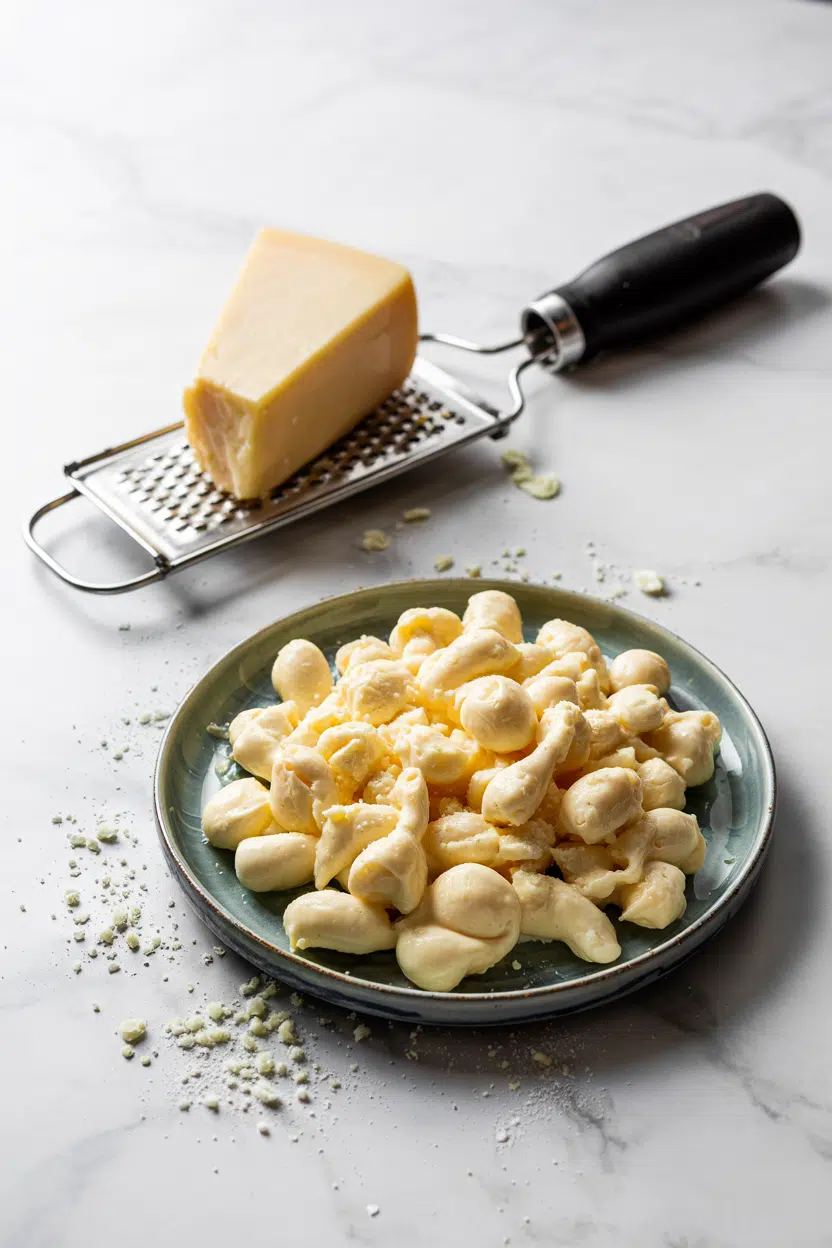
Fresh curds are uneven, irregular lumps - not formed wheels or blocks. They go by several names:

  • 🧀 Squeaky curds - named for the sound and feel against teeth
  • Fresh curds - emphasizing the unaged, day-of-production character
  • Curds and whey - older colloquial usage, referencing the production byproducts

Compared to aged varieties, curds share DNA with young cheddar - most commercial batches start from the same base milk - however the absence of aging keeps flavor clean and mild rather than sharp.

What Does Cheese Curd Taste Like?

Mild and milky is the baseline - closer to young farmer's cheese than anything sharp or funky. A bright lactic tang follows, noticeably cleaner than mozzarella's more neutral profile.

The buttery undertone is subtle but present, especially in high-fat batches made from whole milk. That richness doesn't linger; the finish is short and clean.

Sensory SnapshotMild Intensity
👅 Flavor
milkylactic tangbuttery
✋ Texture
springysqueakycreamy when heated
👃 Aroma
fresh dairylight lactic

Heat changes everything. A briefly pan-fried curd develops a golden crust while the interior goes creamy, softening that tangy edge into something richer and rounder.

The squeak disappears entirely above about 90°F - which is also why curds left at room temperature for a few hours lose their signature resistance before any visible change occurs.

Watch Out
Curds lose their squeak quickly at room temperature. If the goal is that springy bite, keep them refrigerated right up until serving.

How to Use Cheese Curds

cheese curds - What Is Cheese Curds

Poutine is the most famous application - fresh curds placed over hot fries so that brown gravy partially melts them without dissolving them entirely. The goal is semi-melted pockets rather than a smooth sauce, which is why curd size and freshness both matter here.

Beyond poutine, curds earn their place across several cooking methods.

How Cheese Curds Are Used
MethodBest ForTip
🥗 RawSnacking, salad contrast, cheese boardsServe cold for maximum squeak
🍳 Pan-FriedGolden-crusted snack or appetizerMedium-high heat, no oil needed if non-stick
🫕 Baked/BroiledMac and cheese, gratins, topped dishesAdd near the end - they melt fast
🍟 Deep-FriedBreaded curd fritters, bar snacksBatter thick enough to seal before curd melts

Pairings follow the same logic as the cooking methods - fat against fat, acid against richness. Brown gravy and crispy fries are the canonical match.

Caramelized onions bring sweetness that balances the lactic tang well. Tart fruit - apple slices, a sharp cranberry relish - cuts through the butterfat cleanly.

Curds work in Quebecois and Midwestern U.S. cooking as a primary ingredient rather than a garnish. In casual dairy-focused menus, they appear alongside sharp cheddar in layered dishes where contrast between aged and fresh matters.

Shortcut
Stir cold curds into mac and cheese off the heat at the very end. They partially melt into gooey pockets without fully dissolving into the sauce.
Try It In
🫕Mexican Chongos Zamoranos CurdsA sweet, simmered curd dish that shows how far fresh dairy solids can travel from their savory roots→

How to Buy and Store Cheese Curds

Buy the freshest batch available - ideally same-day from a local dairy or cheesemaker. At the supermarket, check the pack date and prioritize anything produced within the last two days.

Visual cues matter more than labeling here:

  • ✅ Shiny, moist surface - indicates proper whey retention and freshness
  • ✅ Audible squeak - bite one before buying if possible; no squeak means the proteins have already relaxed
  • ❌ Yellowing or dry edges - sign of dehydration and age
  • ❌ Sour smell beyond light lactic tang - indicates spoilage, not just aging

Store curds in an airtight container, ideally in their original whey or a lightly salted brine. Refrigerate immediately.

For a full breakdown of how long they keep, see our guide to cheese curds freshness guide.

Golden Rule
The squeak is a freshness clock. Once it's gone, the curds are still usable for cooking - but the raw-snacking experience is over.

If fresh mozzarella follows the same short window you're used to, curds are even more time-sensitive. They don't benefit from the slight buffer that mozzarella gets from its brine bath.

Where to Start With Cheese Curds

Start raw. Buy a fresh bag, bite one cold, and let the squeak orient you to what you're working with.

From there, the path splits clearly:

  • For poutine - use curds straight from refrigeration; heat from the gravy does the melting work
  • For frying - try a simple pan-fry first before committing to a full breaded batch
  • For cooking applications - curds past their squeak-prime are still solid for mac and cheese or gratins

If you can't find fresh curds locally, cheese curds alternatives like young mozzarella or fresh paneer can fill some roles - however neither replicates the squeak. That part is irreplaceable.

Frequently Asked Questions

Why do cheese curds squeak?

The squeak comes from long, elastic protein strands - specifically casein - rubbing against tooth enamel. Fresh curds retain this protein structure; as curds age, proteins break down and the squeak fades. It's a reliable freshness indicator, not a processing quirk.

Are cheese curds the same as cottage cheese?

No. Both are fresh dairy products, however cottage cheese is wet, soft, and mixed with cream dressing after draining. Cheese curds are firm, dry-ish solids sold without added cream - closer to a block cheese at its earliest stage.

How long do cheese curds last in the fridge?

Up to 7 days, however quality drops noticeably after day 3. Squeak is typically gone by day 2-3 at room temperature or after repeated handling. For cooking, day 4-7 curds still melt and brown well.

Can you freeze cheese curds?

Yes, but freezing permanently destroys the squeak and changes texture slightly. Frozen-then-thawed curds work fine for poutine, frying, or melting - just don't expect raw snacking quality after the freeze.

How do you revive stale cheese curds?

Microwave them for 5-10 seconds. The brief heat reactivates the protein structure temporarily, restoring some squeak for a short window. It won't match truly fresh curds, however it works in a pinch before serving.

What Is Challah Bread? [Taste, Uses & More]

March 7, 2026

Challah turns up at the breakfast table as French toast more often than at a Shabbat dinner, which says everything about how far this bread has traveled from its origins - knowing how long french toast keeps after you make it matters precisely because challah soaks custard so well it produces something closer to a pudding than a toast.

What Is Challah Bread

That absorbency is the whole story: an egg-enriched dough braided into a loaf that holds its shape while remaining pillowy inside, finished with a glossy egg wash that signals quality before you've even cut a slice.

Understanding bread spoilage signs keeps the loaf useful longer - challah is best in its first two days, but knowing what to watch for changes how you shop for it.

QUICK SUMMARY

Challah is a mildly sweet, egg-enriched braided bread from Ashkenazi Jewish tradition. Its open, pillowy crumb and golden crust suit everything from a Shabbat table to French toast to bread pudding. Fresh at room temperature for 2-3 days; freezes well for up to 3 months.

🍞Category: Enriched braided egg bread, Ashkenazi Jewish origin
👅Flavor: Mildly sweet, buttery-eggy richness, subtly yeasty
✋Texture: Pillowy, open crumb with a slightly chewy braid crust
🍳Best Uses: French toast, bread pudding, sandwiches, Shabbat table
🛒Buy It: Look for deep golden gloss and a springy, airy crumb
📅Shelf Life: 2-3 days room temp; up to 3 months frozen

What Is Challah Bread?

Challah is a braided egg bread rooted in Ashkenazi Jewish communities across Eastern Europe, traditionally served on Shabbat and major holidays like Rosh Hashanah.

The word itself is Hebrew, referring to the portion of dough separated as an offering - the bread carries that ritual significance into every modern loaf.

It's also spelled hallah or challa, though challah is the most widely used form in English.

The defining structure is the braid, typically three to six strands of dough twisted together before baking.

That braid isn't decorative for its own sake - the tension it creates gives the crust a slightly chewier pull than a standard sandwich loaf.

Inside, the crumb is open and airy, built from a dough enriched with eggs, oil (sometimes butter), and a small measure of sugar or honey.

Two common variations appear at the holiday table. The standard loaf is an elongated braid, while round challah - coiled into a spiral - is served at Rosh Hashanah to symbolize the cycle of the year.

Raisin challah, sweetened further with honey and studded with dried fruit, sits closer to a dessert-style bread and is common at sweet holiday meals.

What Does Challah Bread Taste Like?

challah bread - What Is Challah Bread

Challah reads as mildly sweet with a clean egg richness - not sugary, but with enough sweetness that it reads as a distinct background note against the yeasty dough.

The eggs contribute a buttery depth without the bread actually needing much butter in the dough itself. That subtle layering is what makes it interesting.

Sensory SnapshotModerate Intensity
👅 Flavor
mildly sweeteggy richnesssubtly yeasty
✋ Texture
pillowy crumbslightly chewy crust
👃 Aroma
warm breadyeggy-buttery

The closest comparison is brioche, however challah is less buttery and slightly less sweet - where brioche leans into fat, challah holds back just enough to stay versatile.

Toasting a slice deepens the egg notes and adds a faint caramel edge at the crust where the egg wash has crisped.

Day-old challah loses some of its springiness but gains in density, which is exactly why it absorbs custard so efficiently for French toast or pudding.

How to Use Challah Bread

Fresh challah needs little beyond the table.

At a Shabbat or holiday meal, it's sliced and served with honey or good olive oil for dipping, often as part of a larger spread alongside smoked fish, soft cheeses like ricotta or cream cheese, and cured meats.

If you're extending the spread further, exploring challah bread in grain dishes opens up a wider menu around it.

The bread's custard-soaking ability is where it earns most of its weekday work.

French toast made with challah is thicker and richer than versions made with sandwich bread - the open crumb pulls the egg-and-milk mixture deep into the slice. Bread pudding is another natural fit; torn challah pieces soak in a sweetened custard before baking into something dense and custardy, and there are solid ideas for dishes alongside bread pudding if you're building a full brunch spread.

Even a belgian yeast waffles recipe shares that same yeast-risen richness that makes challah so at home on the breakfast table.

Golden Rule
Use day-old challah for French toast and bread pudding. Fresh slices are too soft to hold their structure once soaked in custard.

Beyond sweet applications, challah holds up well as a sandwich base - its mild sweetness works with egg salad, smoked salmon, or deli-style fillings without competing. Cubed and toasted, it becomes rich croutons or absorbent stuffing for savory bakes.

Strongly acidic sauces or very spicy fillings tend to overwhelm its subtle profile, so keep pairings on the gentler side.

How Challah Bread Is Used
MethodBest ForTip
🍽️ Fresh-slicedShabbat table, dipping in honey or oilServe within 24 hours for peak crust gloss
🍳 Soaked & bakedFrench toast, bread puddingUse day-old loaf for better custard absorption
🥪 Sliced for sandwichesEgg salad, smoked fish, deli fillingsToast lightly to firm up the crumb
🧊 Cubed & toastedCroutons, stuffing for savory bakesDry cubes in a low oven before using
Try It In
🍮Warm Bread Pudding with Vanilla SauceTorn challah soaks up custard better than any other bread here→🍌Moist Banana BreadAnother egg-enriched bake that shares challah's pillowy crumb logic→🧄Garlic Herb Pull Apart BreadSee how a braided structure translates into shareable savory bakes→

How to Buy and Store Challah Bread

A well-made loaf has a deep golden, glossy braid - that shine comes from egg wash applied before baking, and it's a reliable indicator of technique.

Squeeze the loaf gently at the bakery; the crumb should spring back firmly without feeling gummy or dense.

Skip anything with a dry, cracked crust or a faint sour smell.

When a substitute is needed, swapping out challah bread for brioche or milk bread works in most applications.

Watch Out
Don't refrigerate a whole, uncut challah - the cold environment accelerates staling and dulls the crust. Keep it at room temperature instead.

Store challah loosely wrapped in a paper bag or linen bread bag at room temperature for up to three days.

Pre-sliced portions can go in the fridge for up to a week, though the crumb will firm.

Freeze whole or sliced in a zip-seal bag for up to three months - slice before freezing for easier portioning.

Watch for challah bread spoilage signs like mold at the braid seams or a stale, off smell before using older loaves.

The egg wash gloss fades after day two, which is a useful visual cue that freshness is slipping.

For loaves made with butter rather than oil, also check whether the comparing milk wash vs egg wash options matters for the recipe you're baking - it affects final gloss and crust color.

Start With the Loaf, Then Decide

If you've never baked with challah, buy a fresh loaf and slice it plain first - the egg richness and mild sweetness tell you exactly what every recipe using it is working with.

Day-old loaves point you directly toward French toast or bread pudding.

  • 🛒 Buying fresh - look for a glossy braid, springy crumb, and no sour smell
  • 🍳 For French toast or pudding - use a day-old loaf and let it absorb fully before cooking
  • 🥪 For sandwiches - toast lightly to stabilize the crumb under wet fillings
  • ❄️ For longer storage - slice and freeze immediately rather than refrigerating the whole loaf

Frequently Asked Questions

Is challah the same as brioche?

No. Both are enriched breads, however brioche relies heavily on butter for richness while challah uses oil and eggs. Challah is less fatty, slightly less sweet, and traditionally dairy-free in kosher kitchens where meat is also served.

Can you freeze challah?

Yes - challah freezes well for up to three months. Slice it before freezing so you can thaw individual pieces without defrosting the whole loaf.

Why is challah braided?

The braid carries symbolic meaning in Jewish tradition, representing intertwined themes like love and unity on Shabbat. It also creates extra surface area for the egg wash, producing a more pronounced golden crust than a plain loaf would.

What to make with stale challah?

Stale challah is ideal for bread pudding, French toast, and stuffing because its firmer crumb absorbs custard or broth without falling apart. It also cubes well for croutons - dry the pieces in a low oven for 15 minutes first.

Is challah dairy-free?

Often, yes. Traditional challah uses oil rather than butter, making it pareve under kosher dietary law and suitable for meals that include meat. Check the label on store-bought loaves, since some bakeries add butter for richness.

What Is Catfish? [Taste, Uses & More]

March 7, 2026

You spot it at the fish counter between the tilapia and the trout - a row of pale, pearly fillets with no scales, no skin, just clean white flesh. Catfish doesn't announce itself the way salmon does.

What Is Catfish

It sits quietly, and that's exactly why it gets overlooked.

Most people who avoid it do so based on reputation rather than experience. Wild-caught catfish from murky river water earned that muddy stigma fair and square, however farmed varieties are a different fish entirely - mild, buttery, and closer to cod than anything swampy.

QUICK SUMMARY

Catfish is a mild, firm-fleshed freshwater fish with a slightly sweet flavor and meaty texture. Farmed varieties are cleaner and more neutral; wild fish can carry an earthy note. Best for frying, blackening, or stewing - a staple of Southern U.S. and Southeast Asian cooking.

🐟Category: Freshwater fish, scaleless, sold as fillets or whole
👅Flavor: Mildly sweet, slightly earthy; farmed is buttery and neutral
🍳Best Uses: Southern fried, blackened Cajun, stewed with okra and tomatoes
🛒Buy It: Look for pearly white fillets; no ammonia smell, no gray tint
❄️Storage: Fridge 1-2 days; frozen up to 6 months vacuum-sealed
🌍Cuisines: Deep South, Cajun/Creole, Vietnamese, West African riverine

What Is Catfish?

Catfish are scaleless freshwater fish identified by the whisker-like barbels around their mouths - sensory organs that help them navigate murky water.

They're not a single species but a broad family, and the ones you'll find at most American fish counters are channel catfish, blue catfish, or flathead catfish, often labeled simply as "catfish" with no further distinction.

The U.S. catfish industry is dominated by farm-raised fish from ponds in Mississippi, Alabama, and Arkansas. Wild fish are still caught from major river systems, though they're less consistent in flavor.

Internationally, related species appear across Southeast Asia and West Africa, where they're staples in riverine cooking traditions.

In markets, catfish goes by a few aliases:

  • Mudcat - an informal name for wild-caught channel catfish, common in the rural South
  • Channel cat - the most commercially farmed variety in the U.S.
  • Flathead catfish - a larger, wilder species with stronger flavor, rarely farmed
  • Blue catfish - prized for its mild, clean flavor; found in larger river systems

What Does Catfish Taste Like?

catfish - What Is Catfish

Farmed catfish tastes mild and slightly sweet, with a buttery quality that makes it easy to season in almost any direction. Think of it as sitting between tilapia and mild cod - firmer than tilapia, less flaky than cod, with a meatier bite. If you've tried tilapia replacements or sea bass alternatives, catfish often comes up as a practical match.

Wild catfish is a different proposition. Fish pulled from rivers or natural ponds can carry a pronounced earthy or muddy note - geosmin, a compound absorbed from algae and sediment in the water.

It's not spoilage; it's simply the environment the fish lived in.

Sensory SnapshotModerate Intensity
👅 Flavor
mildly sweetearthy (wild)buttery (farmed)slightly fishy
✋ Texture
firmmeatyflaky when cooked
👃 Aroma
mild freshwaterearthy (wild)clean (farmed)

Heat tightens the flesh and pushes the earthy notes forward, which is one reason bold coatings and spice work so well with this fish.

How to Use Catfish

Catfish holds up to aggressive heat and heavy seasoning in ways that more delicate white fish can't. Its firm texture won't fall apart in a hot skillet or a deep fryer, and its mild base flavor absorbs marinades and spice rubs without being overwhelmed.

How Catfish Is Used
MethodBest ForTip
🍳 Deep-FrySouthern-style fillets with crisp cornmeal crustDredge in seasoned cornmeal, not flour alone, for proper crust
🔥 BlackenCajun-spiced fillets with smoky charUse a cast-iron pan at near-smoking heat; butter baste at the end
🍲 Stew/BraiseTomato or okra-based broths, West African fish stewsAdd fish last - it only needs 8-10 minutes to cook through
🔥 GrillWhole fish or thick fillets with smoky charOil the grates well; catfish skin tears easily if it sticks
🫙 BakeLemon-herb fillets, foil-wrapped for moisture375°F for 15-18 minutes; don't overbake or it dries quickly

Cornmeal breading is the classic pairing in the American South - coarser than flour, it fries up crunchier and holds the crust better. If you're experimenting with texture, cornmeal replacements like fine polenta or panko work as alternatives. Acidity is key with this fish: lemon juice, vinegar-dressed coleslaw, or pickles cut through the richness and brighten the plate.

For cuisines, catfish appears in Vietnamese canh chua (a tamarind-sour soup), Nigerian pepper stew, and Cajun étouffée-style preparations, as well as in straightforward Deep South fish fries.

It pairs well with okra, tomatoes, butter, garlic, and cayenne - practically everything that defines Southern and Creole cooking.

Golden Rule
Don't use catfish in raw preparations. Freshwater fish carry a higher parasite risk than marine species - always cook it fully to an internal temperature of 145°F.
Try It In
🔥Cajun Blackened CatfishShows how bold spice and high heat suit catfish's firm flesh→🍳Southern Fried Catfish FilletsClassic cornmeal crust — the definitive way to cook this fish→

How to Buy and Store Catfish

At the counter, look for fillets that are pearly white to off-white - any gray tint is a warning sign. There should be no ammonia smell; a faint freshwater or neutral scent is fine.

Avoid anything slimy or with ragged edges from mishandling. For whole fish, check that the eyes are bright and clear, the flesh springs back under light pressure, and the barbels are intact.

Watch Out
A strong ammonia smell from catfish fillets means they're past their prime. Mild earthiness is normal in wild fish - sharp chemical odor is not.

Farmed catfish will almost always look cleaner and smell more neutral than wild. Once home, refrigerate fillets on a tray covered with plastic wrap and use within 1-2 days. For longer storage, freeze raw fillets in a single layer first, then vacuum-seal or wrap tightly. Properly frozen catfish holds quality for 4-6 months. A simple baked lemon-herb preparation works well for fillets you're cooking the day you buy them.

Start Here With Catfish

If you've never cooked catfish before, buy farmed. It's consistent, mild, and forgiving - you won't hit the muddy note that puts people off wild fish.

Dredge it in seasoned cornmeal and pan-fry it first. That single method will show you exactly what this fish does well.

From there, blackening is the natural next step. Once you're comfortable with the flavor, try a stew.

If you'd rather swap in something similar while you decide, catfish alternatives include mild options that cook the same way.

Frequently Asked Questions

Does catfish taste fishy?

Farmed catfish has very little "fishy" smell or flavor - it's mild, slightly sweet, and closer to tilapia than anything strongly marine. Wild catfish can taste earthier, but that comes from geosmin absorbed from sediment, not from the fish itself being strong or oily.

Is catfish safe to eat?

Yes, when fully cooked. U.S. farm-raised catfish is regulated and considered safe for regular consumption. Like all freshwater fish, it should never be eaten raw - cook to an internal temperature of 145°F to eliminate parasite risk.

How can you tell if a catfish fillet is fresh?

Fresh fillets are pearly white to off-white with no gray areas and no ammonia smell. The flesh should look moist but not wet or slimy, with clean-cut edges rather than torn or ragged ones.

Is catfish farmed or wild?

Most catfish sold in U.S. supermarkets is farm-raised, primarily from pond operations in Mississippi and Alabama. Wild catfish is available from river fisheries but is less common in retail and tends to have stronger, earthier flavor.

How long does catfish last in the freezer?

Up to 4-6 months at best quality when vacuum-sealed or tightly wrapped. Beyond that it's safe to eat but the texture degrades - freeze as quickly as possible after purchase for the best results.

5 Best Substitutes for Marjoram in Mediterranean Dishes

March 7, 2026

You're scaling up a tomato sauce for guests when you realize you only have half the marjoram the recipe needs. The jar's nearly empty.

5 Best Substitutes for Marjoram in Mediterranean Dishes

Marjoram adds a gentle herbal sweetness that brightens savory dishes without overwhelming them. Most swaps lean stronger or more peppery, so you'll need to adjust amounts to keep the balance right.

QUICK SUMMARY

Oregano and thyme work best for cooked dishes, though both taste stronger. Use less at first-marjoram's sweetness is hard to replicate. The main risk is overpowering delicate recipes with too much pungency.

🌿Closest match: Oregano at ⅔ the amount gives similar warmth
⚖️Core ratio: Start with half the called-for marjoram, then taste
⚠️Common mistake: Using full amounts of stronger herbs ruins the dish's balance

5 Marjoram Substitutes Without Big Changes

Each substitute brings different intensity and character. Pick based on whether your dish cooks long or finishes fresh.

Quick Substitute Reference
#SubstituteBest ForRatioKey Note
1 Oregano 🍳 Cooking ⅔ teaspoon per 1 tsp stronger, more bitter
2 Thyme 🍳 Cooking 1:1 earthy, less sweet
3 Savory 🍳 Cooking 1:1 peppery warmth
4 Basil 🍳 Cooking 1:1 fresh sweet, raw dishes only
5 Herbes de Provence 🍳 Cooking 1:1 complex blend with lavender

1 - Oregano

Oregano shares marjoram's herbal warmth but hits harder. It works well in Mediterranean sauces and roasted vegetables where the extra punch won't throw things off.

Use ⅔ teaspoon oregano for every 1 teaspoon marjoram called for. Start conservative-you can always add more after tasting.

Fresh Oregano

Works for: bright, leafy dishes that cook quickly

Skip if: you need subtle background flavor

Dried Oregano

Works for: long-simmered sauces and braises

Skip if: finishing a delicate fish or salad

Here's what to know:

  • Oregano tastes more pungent and slightly bitter than marjoram
  • It stands up to tomato-based dishes better than marjoram does
  • The flavor mellows with heat, so add early in cooking

Skip if: your recipe highlights marjoram's floral sweetness as a finishing note.

2 - Thyme

Thyme brings earthy, minty notes without marjoram's sweetness. It blends into soups and stews where herbs support rather than lead.

Use equal amounts-1 teaspoon thyme for 1 teaspoon marjoram. The flavor profile shifts slightly earthier, but most dishes absorb the change well.

Shortcut
Strip fresh thyme leaves by running your fingers down the stem backward-saves time over picking individual leaves.

Quick specs:

  • Works best in dishes that cook at least 20 minutes
  • Fresh thyme tastes brighter; dried concentrates the earthiness

Skip if: the recipe depends on marjoram's gentle sweetness to balance acidity.

3 - Savory

Savory mimics marjoram's warmth but leans peppery instead of sweet. It shines in bean dishes and vegetable stews where a little bite helps.

Use the same amount-1 teaspoon savory for 1 teaspoon marjoram. The peppery edge adds character without dominating the dish.

The essentials:

  • Summer savory tastes lighter and works for fresh applications
  • Winter savory runs stronger and suits long-cooked dishes
  • Both varieties hold up to heat better than marjoram
  • Savory pairs especially well with legumes and root vegetables

Missing savory too? Savory swaps for beans covers milder herb options.

Skip if: you're finishing a cream sauce or delicate seafood dish.

4 - Basil

Basil works when you're using marjoram raw or adding it at the very end. The sweet, peppery notes complement salads and fresh tomato dishes where marjoram would normally brighten things up.

Watch Out
Basil turns black and bitter when cooked too long-add it in the last minute or use it raw.

Use equal parts fresh basil for marjoram in uncooked applications. Tear the leaves instead of chopping to prevent bruising and bitterness.

Key details:

  • Basil's clove undertones replace some of marjoram's floral character
  • Thai basil adds a slight anise note that can work in Mediterranean dishes
  • Fresh basil wilts fast, so add it right before serving

Out of basil as well? Replacements for basil has fresh herb picks that stay bright.

Skip if: your recipe involves simmering or roasting-basil's flavor breaks down with heat.

5 - Herbes de Provence

This blend already contains marjoram along with thyme, rosemary, and lavender. It brings complexity but works when you want layered herbal flavor instead of a single note.

Use the same amount-1 teaspoon herbes de Provence for 1 teaspoon marjoram. The blend adds more dimension than marjoram alone.

UseRatioNotes
Roasted vegetables1:1Lavender adds floral warmth
Grilled chicken1:1Complex blend builds depth
Herb crusts1:1Multiple herbs create texture

What to expect:

  • The lavender note can feel prominent if you're not used to it
  • Works best in French and Mediterranean preparations

Skip if: you need a clean, single-herb flavor or your dish already has multiple seasonings.

Making Marjoram Substitutes Work

The best swap depends on how you're using marjoram and how much its sweetness matters. Oregano works for most cooked dishes, while basil handles fresh applications.

Test your substitute in a small portion first if the recipe centers on marjoram's flavor. Most swaps need less than the original amount to avoid overpowering the dish.

  • Closest match - Oregano at ⅔ amount for herbal warmth
  • Easiest grab - Thyme at equal parts for everyday cooking
  • Fresh option - Basil at equal parts for raw applications

Frequently Asked Questions

Can I use dried marjoram instead of fresh?

Yes-use 1 teaspoon dried marjoram for every 3 teaspoon fresh. Dried herbs concentrate in flavor, so you need less. Add dried marjoram early in cooking to let it bloom.

Does marjoram taste like oregano?

They're related but marjoram tastes sweeter and more delicate. Oregano brings stronger, more pungent flavor with a slight bitterness that marjoram lacks.

Can I substitute marjoram in baking?

Rarely-marjoram works better in savory applications. If a sweet bread recipe calls for it, try thyme or a tiny pinch of lavender instead. The floral notes translate better than oregano's pungency.

How much marjoram equals a bay leaf?

Use 1 teaspoon dried marjoram for every bay leaf in soups or stews. Bay leaf adds subtle background flavor while marjoram brings more forward herbal notes, so the swap changes the dish's character slightly.

What if my substitute tastes too strong?

Cut the amount in half and add a pinch of sugar to mimic marjoram's sweetness. Dilute with a splash of broth or water if the flavor's already in the dish. Next time, start with less.

5 Best Substitutes for Marjoram in Mediterranean Dishes

5 Best Substitutes for Marjoram

No ratings yet
Marjoram adds gentle herbal sweetness to dishes, but when unavailable, oregano and thyme are reliable cooked dish substitutes that require cautious amount adjustments to avoid overpowering flavors. Basil suits fresh uses best.
Print Recipe Pin Recipe
Prep Time 6 minutes mins
Cook Time 8 minutes mins
Total Time 14 minutes mins
Servings: 4 servings
Course: Substitution Guide
Cuisine: French, Mediterranean
Ingredients Method Notes

Ingredients
  

  • 0.67 teaspoon Oregano Use ⅔ teaspoon oregano per 1 teaspoon marjoram. Stronger and more bitter, best for cooking.
  • 1 teaspoon Thyme Use equal amounts of thyme for marjoram. Earthy and less sweet, good for cooked dishes.
  • 1 teaspoon Savory Use equal amounts savory for marjoram. Peppery warmth suitable for beans and vegetable stews.
  • 1 teaspoon Fresh Basil Use equal parts fresh basil for marjoram only in raw applications or fresh dishes.
  • 1 teaspoon Herbes de Provence Use equal amounts herbes de Provence for marjoram. Complex blend with lavender, adds depth.

Method
 

  1. Choose your substitute based on whether the dish cooks long or is fresh-finished.
  2. For cooked dishes, prefer oregano or thyme but start with less than marjoram amount to avoid overpowering.
  3. For fresh or raw applications, use fresh basil in equal amounts to marjoram.
  4. Apply the recommended ratios: ⅔ teaspoon oregano per teaspoon marjoram, or 1:1 for thyme, savory, basil, and herbes de Provence.
  5. Add oregano early in cooking to mellow pungency; add basil at the end or raw to prevent bitterness.
  6. Taste and adjust the substitute quantities gradually to maintain balanced flavor.

Notes

Add oregano slowly and taste-test to prevent overpowering the dish's delicate balance.

Tried this recipe?

Let us know how it was!

What Is Caper? [Taste, Uses & More]

March 7, 2026

You spot a small jar of capers tucked between the olives and cornichons at the grocery store, and you're not quite sure what to do with it. These tiny pickled buds punch well above their size - a few scattered into a dish deliver more briny, tangy impact than almost anything else in the pantry.

What Is Caper

If you've been reaching for preserved lemon to add that sharp, salty brightness to a recipe, capers are worth knowing just as well.

QUICK SUMMARY

Capers are pickled flower buds from the caper bush, sold in brine or salt. They taste briny, tangy, and faintly floral - closer to a concentrated green olive than anything else. Use them sparingly in pasta, sauces, salads, and fish dishes.

🌿What It Is: Pickled bud of Capparis spinosa, a Mediterranean shrub
👅Flavor: Briny, salty, tangy with a floral, slightly lemony edge
🍝Best Uses: Pasta puttanesca, piccata, smoked salmon, tapenade, dressings
🧂Buy: Nonpareil (small) for most recipes; look for clear brine and plump buds
🧊Store: Pantry unopened; refrigerate in brine after opening
⏱️Shelf Life: Up to a year unopened; several months refrigerated once opened

What Is a Caper?

Capers are the unopened flower buds of Capparis spinosa, a sprawling shrub native to the Mediterranean basin.

Harvesters pick the buds by hand before they bloom, then cure them in brine or pack them in coarse salt - the pickling process is what gives capers their signature sharp flavor.

You'll find them sold in jars or tins under a few regional names: kapari in Greek cooking, or simply "pickled capers" on most labels.

The caper berry is a different product - it's the larger, olive-sized fruit that forms after the flower opens, with a milder, less concentrated flavor and small edible seeds inside.

Size grading matters here:

  • Nonpareil - the smallest grade (under 7mm), most prized for their delicate texture and intense flavor
  • Surfines / fines - slightly larger, still good for most recipes
  • Caperberries - the full fruit, eaten whole as a garnish or antipasto item, not a direct swap for buds

Southern Italian and Greek kitchens use capers most heavily, though North African cuisine also folds them into cooked sauces and relishes.

What Does a Caper Taste Like?

caper - What Is Caper

Briny and salty hits first - that's the brine talking. Right behind it comes a bright tanginess, almost acidic, with a faint floral sharpness that separates capers from plain salt or anchovies.

The closest comparison is a concentrated green olive - same briny salinity, but capers carry a lighter, more lemony top note. Bite through one and you get a firm outer skin giving way to a slightly soft, poppy center.

Sensory SnapshotStrong Intensity
👅 Flavor
brinytangysaltyfloral
✋ Texture
firm skinyielding center
👃 Aroma
brinylightly floral

Heat mellows the sharpest edges. A brief sauté in butter or olive oil softens the bite and pulls out a rounder, more savory quality - which is why piccata sauce tastes less aggressive than eating a caper straight from the jar.

How to Use Capers

Capers work as a seasoning, not a centerpiece. A small amount reshapes a whole dish; too many and everything tastes like brine.

Raw and unrinsed is the strongest approach - drop them directly into cold pasta salads, potato salads, or vinaigrettes for maximum salty-acid punch. Rinsing first (a quick cold-water rinse and pat dry) dials back the sodium and lets the floral note come through more cleanly. Either approach is valid depending on the dish.

Golden Rule
Add capers at the end of cooking when you want their texture intact. Add them early only when you're building a sauce and want their flavor to dissolve in.

In cooked applications, brief heat is enough. Pasta puttanesca stirs them in during the last few minutes with olives and tomato. Chicken or fish piccata builds a whole pan sauce around them - capers, lemon juice, and butter form the backbone.

Tapenade blitzes them with olives, olive oil, and anchovies into a spreadable paste.

How Capers Are Used
MethodBest ForTip
🥗 RawSalads, dressings, bagels with smoked salmonRinse if sodium-sensitive; leave unrinsed for max punch
🍳 SautéedPiccata, pasta sauces, roasted vegetable dishesAdd in last 2-3 minutes to preserve shape and flavor
✨ GarnishGrilled fish, eggs, smoked salmon plattersLeave whole; scattered at the end adds visual and flavor contrast
🧄 BlendedTapenade, salsa verde, compound buttersChop or process with anchovies, herbs, and oil for spreads

Capers pair strongest with lemon, butter, parsley, dill, anchovies, tuna, and cream cheese. Avoid pairing them with anything sweet - the brine clashes with dessert flavors or sweet glazes.

Try It In
🧈Anchovy Caper ButterCapers and anchovies melt into butter for an instant finishing sauce→🫒Italian Olive and Capers Salsa VerdeSee how capers sharpen a herb sauce alongside olives→🐟Fish Piccata with Lemon Caper SauceThe classic caper application — briny, buttery, bright→

How to Buy and Store Capers

Look for nonpareil-grade capers - labeled as such on the jar - for the best texture and flavor intensity in most recipes. The brine should be reasonably clear, not murky, and the buds should look plump and intact rather than mushy.

Watch Out
Always use a clean, dry utensil to remove capers from the jar. Introducing water or food particles shortens their fridge life significantly.

Store unopened jars in a cool, dry pantry - they keep well for up to a year. Once open, submerge the remaining capers in their brine, seal the jar, and refrigerate.

For a full breakdown of how long they last under different conditions, see our guide to caper freshness guide. If you run out mid-recipe, caper swaps cover the closest alternatives.

Where to Start With Capers

Capers reward cooks who use them with intention. Start with a piccata or smoked salmon application - both are low-effort and show exactly what capers contribute without overwhelming the dish.

  • Already a caper user? Try folding them into a salsa verde or compound butter to see how they behave when blended rather than whole.
  • New to the flavor? Rinse before using. The sodium is high and the unrinsed brine can dominate your first attempt.

One jar goes a long way. Used well, it's one of the most efficient flavor-builders in a pantry.

Frequently Asked Questions

Are capers the same as caperberries?

No. Capers are the small, pickled flower buds; caperberries are the larger fruit that forms after the flower opens. Caperberries have a milder, less concentrated flavor and are typically eaten whole as a garnish or antipasto rather than used as a recipe seasoning.

Do you rinse capers before using?

It depends on the recipe. Rinsing removes excess brine and reduces sodium, letting the floral flavor come through more cleanly. Skip the rinse when you want full-strength briny punch in a sauce or dressing.

What size caper should I buy for recipes?

Nonpareil (under 7mm) is the standard recommendation - smaller buds have more concentrated flavor and a more delicate texture. Larger grades work fine in blended applications like tapenade where size doesn't matter.

Can you freeze capers?

Technically yes, but it's rarely worth doing. Freezing softens the texture considerably, and an opened jar kept submerged in brine in the fridge already lasts several months. Freeze only as a last resort.

Are capers high in sodium?

Yes - sodium is high due to the pickling brine. A single tablespoon can contain 200-300mg. Rinsing reduces this noticeably, and since capers are used in small quantities, the impact on most diets is limited.

What Is Canola Oil? [Taste, Uses & More]

March 7, 2026

Crack open a bottle of canola oil and the first thing you notice is almost nothing - a pale yellow color, a barely-there scent, and a texture so light it coats the measuring cup and slides clean. That near-invisible presence is exactly the point.

What Is Canola Oil
QUICK SUMMARY

Canola oil is a neutral, pale-yellow vegetable oil pressed from low-erucic rapeseed varieties. Refined versions handle high heat well. Cold-pressed types carry a faint nuttiness suited to dressings. Both forms work across a wide range of everyday cooking without adding competing flavor.

👅Flavor: Very mild, barely perceptible - faint nuttiness in cold-pressed types
🌡️Smoke Point: Refined canola reaches around 400°F - suitable for deep-frying
🍳Best Uses: Frying, baking, emulsifying dressings and mayonnaise
📦Shelf Life: Refined: 12 months unopened; cold-pressed: about 6 months unopened
🛒Buy It: Choose refined for high heat, cold-pressed for dressings; opaque bottles preferred

What Is Canola Oil?

Canola oil is a vegetable oil pressed from the seeds of specially bred rapeseed plants (Brassica napus) developed in Canada during the 1970s.

The breeding goal was to reduce erucic acid - a fatty acid found at high levels in older rapeseed - to safe, commercially accepted levels, producing what we now call canola (a contraction of "Canadian oil, low acid").

You'll sometimes see it labeled rapeseed oil, particularly in Europe, though that term historically referred to the unreduced, higher-erucic varieties. Modern bottles sold as canola and as "low-erucic rapeseed oil" are effectively the same product.

Two main forms exist on shelves:

  • Refined canola oil - the standard grocery-store bottle, processed to remove color, odor, and most flavor compounds, resulting in a high smoke point near 400°F
  • Cold-pressed canola oil - minimally processed, retains more of the seed's natural character, with a slightly warmer color and faint nuttiness; lower smoke point, better for dressings

Nutritionally, canola oil is high in monounsaturated oleic acid and contains omega-3 alpha-linolenic acid (ALA), making it one of the lower saturated-fat options among common cooking oils. It contains no cholesterol - it's a plant-derived fat.

What Does Canola Oil Taste Like?

canola oil - What Is Canola Oil

Refined canola oil is as close to flavorless as a cooking fat gets. A drop on the tongue registers thin, clean, and faintly oily - no bitterness, no fruitiness, no heat at the back of the throat.

Sensory SnapshotMild Intensity
👅 Flavor
neutralfaintly nuttyvery mild grassy
✋ Texture
thinsilky
👃 Aroma
neutrallightly vegetal

Compared to olive oil replacements or sunflower oil alternatives, canola sits at the quieter end of the flavor spectrum - lighter than extra-virgin olive oil's peppery finish, less distinct than sunflower's mild sweetness.

Cold-pressed canola introduces a subtle nuttiness and a faint green note, but nothing that competes with other ingredients in a dish.

Heat changes very little about the flavor at moderate temperatures. Push past the smoke point and any oil turns acrid - canola included.

Watch Out
Old or improperly stored canola oil develops a noticeable rancid or fishy odor from oxidation of its ALA content. If the oil smells off before heating, discard it - cooking won't fix oxidized oil.

How to Use Canola Oil

Refined canola oil handles most kitchen tasks without complaint. Its smoke point near 400°F makes it a reliable choice for deep-frying french fries and battered fish, pan-frying chicken cutlets at medium-high heat, and stir-frying at home without worrying about the oil breaking down mid-cook.

How Canola Oil Is Used
MethodBest ForTip
🍟 Deep-FryingFrench fries, battered fish, donutsRefined only; monitor oil temp to avoid smoking
🍳 Pan-Frying / SautéChicken, tofu, vegetablesWorks at medium-high without competing flavors
🧁 BakingCakes, muffins, quick breadsReplaces butter for a tender crumb with no added taste
🥗 Dressings / EmulsionsVinaigrettes, mayonnaiseCold-pressed type adds faint nuttiness; refined stays invisible
🔥 Grilling MarinadesOil carrier for herbs and acidsNeutral base lets lemon, garlic, or mustard dominate

In baking, canola oil is a straightforward swap for other neutral fats. If you're experimenting with vegetable oil substitutes for brownies, canola is usually the closest match in both texture and neutral flavor.

Pairings lean into the oil's neutrality. Lemon and vinegar build bright vinaigrettes; garlic and onion start virtually every sauté base.

Mustard emulsifies well with canola in mayonnaise, and spices like paprika and cayenne bloom cleanly in hot canola fat without any background flavor muddying the result.

Golden Rule
Reserve cold-pressed canola for no-heat or low-heat applications - dressings, dips, drizzles. High heat destroys its delicate flavor compounds and wastes the premium.

Skip canola when a recipe specifically calls for toasted sesame oil or a nut oil - those oils exist to provide aroma, and a neutral substitute misses the point entirely.

Try It In
🎂Olive Oil CakeCanola works as a neutral swap where olive oil flavor isn't essential→🍋Ricotta with Lemon and Olive OilCold-pressed canola can sub in for a subtler, less grassy finish→

How to Buy and Store Canola Oil

At the store, the first decision is refined vs. cold-pressed. Refined is the right call for frying, sautéing, and most baking.

Cold-pressed suits dressings and finishing applications where a faint natural character is welcome.

Best Pick
Choose bottles made from dark-tinted or opaque plastic. Light accelerates oxidation in canola oil faster than in most other common cooking oils because of its ALA content.

Check the label for a clear production date or best-by date, and pass on any bottle that looks cloudy or shows sediment in refined oil - both signal age or contamination. Once open, store away from the stove and direct light, sealed tightly.

Shelf life is straightforward: refined canola oil lasts about 12 months unopened and 6-9 months after opening. Cold-pressed cuts that roughly in half.

For a fuller breakdown, the canola oil freshness guide guide covers signs of rancidity and storage in detail. The same oxidation rules apply to other high-PUFA oils - the avocado oil freshness guide guide is a useful comparison if you rotate between both.

Where Canola Oil Fits in Your Kitchen

Start with a bottle of refined canola oil if you cook at high heat regularly or bake often. It handles the jobs that canola oil replacements struggle to replicate without flavor trade-offs.

Add cold-pressed canola if you want a subtle, neutral finishing oil for dressings without reaching for olive oil every time. Most home kitchens only need one bottle - make it refined.

Frequently Asked Questions

Is canola oil healthy?

Yes, by standard dietary measures. It's high in monounsaturated fat and low in saturated fat, with a useful amount of omega-3 ALA. Most major nutrition bodies consider it a heart-health-friendly cooking oil.

What is the smoke point of canola oil?

Refined canola oil has a smoke point around 400°F (204°C), making it suitable for deep-frying and high-heat sautéing. Cold-pressed canola smokes at lower temperatures and should not be used for high-heat cooking.

Can you use canola oil for deep frying?

Refined canola oil works well for deep frying. Its high smoke point and neutral flavor won't interfere with the food being cooked. Use a thermometer to keep oil between 325-375°F for best results.

Does canola oil have cholesterol?

No. Cholesterol is only found in animal-derived fats. Canola oil is a plant-based fat and contains zero dietary cholesterol.

How long does canola oil last after opening?

Refined canola oil lasts 6-9 months after opening when stored in a cool, dark spot. Cold-pressed canola degrades faster - use it within 3-6 months of opening for best quality.

5 Best Substitutes for Italian Dressing in Salad Dressings

March 7, 2026

You shake the bottle. Empty. The recipe won't wait, and Italian dressing pulls double duty-coating salads, tenderizing marinades, keeping greens crisp and tangy.

5 Best Substitutes for Italian Dressing in Salad Dressings

Swaps vary by what you need most: brightness, herb punch, or oil-and-vinegar balance. Pick the substitute that matches your dish's texture and flavor goals.

QUICK SUMMARY

Mix **homemade vinaigrette** or grab **Greek dressing** for the closest match. Both deliver acidity and herbs with minimal fuss. Most swaps work 1:1, but watch for sweetness shifts in French dressing and separation in lemon-oil blends.

🥗Closest match: Homemade vinaigrette recreates the core with fresh herbs
📊Ratio: Most swaps use 1:1 replacement straight from the bottle
⚠️Common mistake: French dressing adds tomato sweetness-taste before using

5 Easy Italian Dressing Swaps for Cooking

Substitutes below range from pantry staples to quick mixes. Each one shifts flavor or texture slightly, so match the swap to your dish type.

Quick Substitute Reference
#SubstituteBest ForRatioKey Note
1 Homemade Italian Vinaigrette ✨ Both 1:1 Fresh herbs brighten flavor
2 Balsamic Vinaigrette 🍳 Cooking 1 tablespoon : 1 tbsp Darker, sweeter profile
3 Greek Dressing ✨ Both 1:1 Lemon replaces vinegar tang
4 French Dressing 🍳 Cooking 1:1 Tomato adds unexpected sweetness
5 Lemon-Oil Mix 🍳 Cooking 1 tablespoon : 1 tbsp No emulsification, separates quickly

1 - Homemade Italian Vinaigrette

Olive oil, vinegar, and dried Italian herbs recreate the foundation of bottled dressing. The flavor stays bright and herbaceous, closer to the original than any store-bought swap.

You lose the smooth emulsion-homemade versions separate faster. Shake or whisk before each use to recombine oil and vinegar layers.

Homemade Vinaigrette

Works for: fresh herb flavor, cost savings, pantry simplicity

Skip if: you need shelf-stable smoothness or zero prep time

Bottled Italian Dressing

Works for: stable emulsion, consistent sweetness, grab-and-go

Skip if: you want fresher herb notes without preservatives

Here's what to know:

  • Equal parts oil and vinegar, seasoned to taste
  • Add oregano, basil, garlic powder for classic herbs
  • Separates in the fridge-stir before pouring

If you're short on olive oil too, neutral oil swaps covers lighter alternatives.

2 - Balsamic Vinaigrette

Balsamic vinegar brings a darker, sweeter tang than white or red wine vinegar in Italian dressing. It works best in cold salads where the robust flavor complements roasted vegetables or sturdy greens.

The sweetness overpowers delicate lettuce or recipes that need bright acidity. Use it when richness won't clash with other ingredients.

Skip if: you need classic Italian herb brightness or a lighter vinegar profile.

3 - Greek Dressing

Greek dressing swaps lemon juice for vinegar, keeping the oil-and-herb structure intact. The oregano punch stays strong, and the citrus brightness feels lighter than vinegar's sharpness.

It lacks the mild sweetness of Italian dressing and leans heavier on lemon. Adjust the ratio if your dish calls for sweeter notes or a more neutral acid.

Best Pick
Greek dressing works for Mediterranean-style salads and grilled vegetables where lemon complements the dish.

Quick specs:

  • Oregano dominates the herb profile
  • Citrus tang replaces vinegar sharpness

Missing citrus as well? Lemon juice swaps has options that preserve brightness.

4 - French Dressing

French dressing shares the vinaigrette base but adds ketchup for tomato sweetness and paprika for warmth. It works in bold-flavored salads or as a dipping sauce where sweetness won't clash.

The tomato flavor shifts the profile completely-this isn't a neutral swap. Taste before using in recipes that rely on Italian herb notes.

The essentials:

  • Ketchup adds unexpected sweetness
  • Paprika brings mild heat
  • Oil and vinegar still emulsify
  • Works best in hearty, bold dishes

No ketchup either? Tomato-based swaps offers tangy replacements.

Watch Out
French dressing's sweetness overpowers delicate greens-stick to robust salads or dipping sauces.

Skip if: you need light herbaceous flavor or a dressing that won't mask other ingredients.

5 - Lemon-Oil Mix

Lemon juice and olive oil with Italian seasoning deliver brightness and herbs without emulsification. The flavors stay clean and sharp, ideal for quick drizzles over salads or roasted vegetables.

It separates immediately after mixing-no creamy texture, just layered oil and acid. Whisk constantly or pour with motion to blend each bite.

UseRatioNotes
Light salads1 tablespoon eachBright finish, no creaminess
Marinades1 tablespoon each + herbsAcid penetrates quickly
Roasted veggies1 tablespoon eachDrizzle right before serving

Key details:

  • No emulsion means oil floats on top
  • Lemon sharpness exceeds vinegar tang
  • Italian seasoning mimics dried herbs

If you're out of lemon juice as well, citrus replacements for brighter swaps.

Skip if: you need a smooth, creamy dressing that stays blended.

Before You Swap Italian Dressing

Start with homemade vinaigrette or Greek dressing for the closest match. Adjust seasoning after tasting-some swaps lean sweeter or sharper than the original.

  • Closest match - Homemade vinaigrette with fresh herbs
  • Easiest grab - Greek dressing from the fridge
  • Dietary option - Lemon-oil mix for vegan simplicity

Frequently Asked Questions

Can I use balsamic vinegar instead of Italian dressing?

Yes, balsamic vinaigrette works in cold salads and vegetable dressings. It brings sweeter, darker flavor than classic Italian dressing, so taste before using in delicate recipes.

What's the ratio for homemade Italian vinaigrette?

Use equal parts olive oil and vinegar, then add Italian herbs to taste. Mix and shake before each use since it separates in the fridge.

Does Greek dressing taste like Italian dressing?

Greek dressing shares the oil-and-herb base but swaps lemon juice for vinegar. It's brighter and less sweet, with stronger oregano notes.

Can I use French dressing in a salad that calls for Italian dressing?

Yes, but French dressing adds tomato sweetness and paprika warmth. It works best in hearty salads where bold flavor won't clash with other ingredients.

Why does lemon-oil mix separate so quickly?

Lemon juice and olive oil don't emulsify without an agent like mustard or egg yolk. Whisk constantly or shake before each pour to blend the layers.

5 Best Substitutes for Italian Dressing in Salad Dressings

5 Best Substitutes for Italian Dressing

No ratings yet
These five substitutes vary in flavor and texture, suitable for salads or cooking. Pick homemade vinaigrette or Greek dressing for a close match; use French or lemon-oil blends cautiously based on sweetness and emulsification.
Print Recipe Pin Recipe
Prep Time 10 minutes mins
Cook Time 6 minutes mins
Total Time 16 minutes mins
Servings: 4 servings
Course: Condiments, Sauces
Cuisine: Italian-Inspired
Ingredients Method Notes

Ingredients
  

  • Homemade Italian Vinaigrette Use equal parts oil and vinegar seasoned with oregano, basil, and garlic powder; shake or whisk before use as it separates faster than bottled dressings.
  • 1 tablespoon Balsamic Vinaigrette Use in cold salads or vegetable dishes where a darker, sweeter flavor is desired; watch sweetness level as it can overpower delicate greens.
  • Greek Dressing Replace vinegar with lemon juice to add citrus brightness and oregano punch; adjust ratio if a sweeter or more neutral acid is needed.
  • French Dressing Use cautiously due to tomato sweetness and paprika warmth; taste before use and avoid on delicate herb-forward dishes.
  • 1 tablespoon Lemon-Oil Mix Mix lemon juice and olive oil with Italian seasoning; whisk constantly or shake before pouring to prevent separation and maintain flavor balance.

Method
 

  1. Choose a substitute based on your dish's flavor and texture needs: homemade vinaigrette or Greek dressing for freshness; French or lemon-oil blends for cooking with caution.
  2. Prepare homemade vinaigrette by mixing equal parts olive oil and vinegar with Italian herbs; shake or whisk before use to recombine.
  3. For balsamic vinaigrette or lemon-oil mix, use one tablespoon of each component, adjusting for dish type.
  4. Apply a 1:1 ratio replacement with bottled dressings; taste and adjust seasoning especially for French dressing due to its tomato sweetness.
  5. When using lemon-oil mix, whisk constantly or pour with motion to blend flavors and prevent separation before serving.

Notes

Taste-test French dressing slowly to avoid overpowering delicate dishes with its sweetness.

Tried this recipe?

Let us know how it was!

What Is Cajun Seasoning? [Taste, Uses & More]

March 7, 2026

That first hit of cajun seasoning is unmistakable - toasty paprika, sharp garlic, and a slow-building cayenne heat that lands well after the first bite. It's a dry spice blend built for Southern Louisiana cooking, where bold flavor is the baseline, not the exception.

What Is Cajun Seasoning

Dishes like shrimp jambalaya and blackened fish exist because of this blend, and once you understand how it works, it earns a permanent spot in your pantry.

QUICK SUMMARY

A Louisiana dry spice blend built on paprika, cayenne, garlic, and onion. It delivers smoky, savory, and spicy flavor - strong enough to anchor a dish on its own. Best used as a rub, skillet seasoning, or stir-in for soups and sauces. Stays potent for 6-12 months.

🌶️Flavor: Smoky, savory, and hot with cayenne heat and paprika warmth
🍳Best Use: Dry rub for blackening fish, chicken, shrimp, or potatoes
🧂Category: Dry spice blend from Louisiana, USA
⏳Shelf Life: Optimal 6-12 months; usable up to 24 months
🛒Buy It: Look for bright red-orange color and paprika listed near the front of the ingredients

What Is Cajun Seasoning?

Cajun seasoning is a dry spice blend rooted in Louisiana cooking, built around a core of paprika, cayenne pepper, garlic powder, and onion powder. Most versions also include black pepper, white pepper, dried oregano, and thyme - though no two blends are identical, which is part of what makes regional and homemade versions interesting.

It goes by several names: Cajun spice, Cajun rub, or simply Cajun spices. The blend is closely related to Creole seasoning, but Cajun versions typically lean spicier and earthier, while Creole blends tend to include more herbs and sometimes a touch more complexity.

Both traditions come from Louisiana, where Cajun cooking developed in rural Acadian communities and Creole cooking emerged in New Orleans' urban kitchens. The spice blend reflects that heritage - direct, peppery, and built for high-heat cooking methods like blackening.

You'll find it sold as a pre-mixed commercial blend or as a homemade mix. When substituting one spice blend for another, smoked paprika plays a key role in replicating the smoky backbone.

What Does Cajun Seasoning Taste Like?

cajun seasoning - What Is Cajun Seasoning

Cajun seasoning hits hard and in layers. Paprika leads with toasty, slightly sweet warmth, then garlic and onion powder deliver a savory punch that feels almost roasted. Cayenne comes in last - a clean, direct heat that lingers.

Sensory SnapshotStrong Intensity
👅 Flavor
smokysavoryhotearthy
✋ Texture
dry and granularfine to slightly coarse
👃 Aroma
toasty paprikaroasted garlicwarm pepper

Compared to a barbecue rub, cajun seasoning is less sweet and more peppery. It sits closer to a pepper-forward Creole blend than to anything mild.

Heat from high-heat cooking like blackening intensifies the cayenne and deepens the paprika into something almost charred - which is exactly the point.

A squeeze of lemon or a splash of vinegar cuts through the heat effectively. Without that acid contrast, the blend can taste one-dimensional on lighter proteins.

How to Use Cajun Seasoning

Blackening is the technique most associated with this spice blend. Press it firmly onto fish fillets or chicken thighs, then cook them in a screaming-hot cast-iron skillet with butter. The crust that forms is what makes blackened redfish, catfish, and salmon so distinct.

Cajun seasoning also builds depth in long-cooked dishes. Stir it into crockpot gumbo early in cooking for a smoky base, or add it near the end of a jambalaya for brighter spice.

How Cajun Seasoning Is Used
MethodBest ForTip
🧂 Dry RubFish, chicken, shrimp, pork before high-heat cookingPress firmly into the surface; don't just dust it
🍳 BlackeningCast-iron skillet fish or chickenUse butter, not oil - it caramelizes the spices faster
🍲 Stir-InGumbo, jambalaya, soups, and stewsAdd early for background depth, late for sharp spice
🥣 Sauce BlendMayo, sour cream, or butter-based dipping saucesStart with ½ teaspoon per ½ cup - it amplifies in fat
🍟 Finishing SprinkleRoasted potatoes, popcorn, roasted nuts, wingsAdd after cooking so the cayenne doesn't burn

For dipping sauces, one teaspoon per half cup of mayo or sour cream is a reliable starting point. Cajun spice amplifies in fat, so less goes further than you'd expect.

Tossed with popcorn, it makes a savory snack worth keeping in rotation. For a comparison of other seasoning options in that context, see our guide to popcorn seasoning blends.

Try It In
🍿Popcorn Seasoning BlendsCajun spice is one of the boldest popcorn seasonings — here's how it compares→

How to Buy and Store Cajun Seasoning

Fresh cajun seasoning has a bright red-orange color from active paprika. Avoid jars with dark brown tones or visible clumping - both signal age or moisture exposure.

Check ingredient order: paprika and cayenne should appear near the front.

Watch Out
Many commercial blends list salt as the first ingredient. If you're controlling sodium or building your own heat level, choose a salt-free blend or make your own.

Store in an airtight, opaque container in a cool, dark pantry - not on a shelf above the stove, where heat and steam degrade the paprika fastest. Commercial blends stored properly last up to 24 months, but flavor starts dropping off after 12.

For a full breakdown of how long it stays usable, see the guide to cajun seasoning storage guide.

If the blend smells flat or the color has gone dull, it's time to replace it.

Start Here

Start with blackened chicken or shrimp if this is your first time cooking with cajun seasoning. Both proteins handle the spice well, cook fast, and give you a clear read on heat level before you commit to a larger batch.

Golden Rule
Taste your blend before you cook with it. Saltiness varies widely between brands, and adjusting early is easier than correcting at the table.

If the commercial blend you bought is too mild or too salty, there are reliable cajun seasoning alternatives that let you rebuild the flavor profile from scratch.

Frequently Asked Questions

Is cajun seasoning the same as Creole seasoning?

No. Both are Louisiana blends, but Cajun seasoning is spicier and more pepper-forward. Creole seasoning typically includes more dried herbs like thyme and basil, and has a slightly more complex, less fiery profile.

How spicy is cajun seasoning?

Medium-hot for most commercial blends. Cayenne is the main heat source, and spice level varies by brand. Homemade versions let you dial cayenne up or down to your tolerance.

Can you use cajun seasoning on fish?

Yes - it's one of the best applications. Catfish, redfish, and salmon hold up to the heat and spice. Use it sparingly on very delicate white fish, where heavy cayenne can overwhelm the flesh.

Does cajun seasoning contain salt?

Many commercial blends do - sometimes as the first ingredient. Pure spice blends and most homemade versions don't. Always check the label if you're managing sodium intake.

How do you make cajun seasoning at home?

Combine paprika, garlic powder, onion powder, cayenne, black pepper, dried oregano, and thyme. A common ratio is 2 parts paprika to 1 part each of the remaining spices. Adjust cayenne to control heat.

5 Best Substitutes for Pumpkin in Fall Baking

March 7, 2026

You pull the can of pumpkin from the pantry and realize it's empty. The recipe's half-prepped, and you need that dense, smooth texture to hold everything together.

5 Best Substitutes for Pumpkin in Fall Baking

Pumpkin brings moisture, body, and binding power to baked goods and soups. The best swap matches what pumpkin does in your specific recipe, not just its color or mild sweetness.

QUICK SUMMARY

**Butternut squash** and **sweet potato** puree work best for most recipes. Both match pumpkin's moisture and thickness, though they bring sweeter, stronger flavors. Choose based on whether you're baking (where sweetness helps) or cooking savory dishes (where mild matters).

🎯Closest match: Butternut squash mimics texture perfectly in pies
⚖️Core ratio: **Use 1:1 for any puree swap**, reduce liquid slightly
⚠️Common mistake: Skipping the drain step with zucchini ruins texture

5 Easy Pumpkin Swaps for Cooking

Pumpkin substitutes vary in density, sweetness, and binding strength. Pick based on whether you need thick body for pies, moisture for cakes, or mild flavor for soups.

Quick Substitute Reference
#SubstituteBest ForRatioKey Note
1 Butternut Squash 🥧 Baking 1:1 Sweeter, nuttier
2 Sweet Potato ✨ Both 1:1 Denser, richer
3 Carrot 🥧 Baking 1:1 Bright color, less creamy
4 Zucchini 🥧 Baking 1:1 Drain excess water first
5 Applesauce 🥧 Baking 1:1 Fruitier, thinner

1 - Butternut Squash

Butternut squash puree delivers the same creamy texture and moisture as pumpkin. It holds up in pies, muffins, and breads without collapsing or turning watery.

The flavor leans sweeter and nuttier than pumpkin. That works beautifully in spiced baked goods but can overpower milder recipes.

Butternut Squash

Works for: Pies, muffins, quick breads where sweet depth helps

Skip if: You need neutral flavor for savory soups

Pumpkin

Works for: Any recipe needing mild, creamy body

Skip if: You're out and need a swap fast

Use equal parts butternut squash for pumpkin. If it looks wetter than expected, reduce other liquids by 1-2 tbsp.

Missing butternut squash too? Squash replacements by texture ranks firmer picks.

Skip if: the recipe highlights pumpkin's subtle earthiness.

2 - Sweet Potato

Sweet potato puree matches pumpkin's moisture and thickening power. It works in both sweet and savory recipes, though it brings more sweetness and density than pumpkin.

The texture stays smooth but feels heavier. That richness suits hearty soups and dense cakes.

Here's what to know:

  • Use 1:1 for pumpkin in any recipe
  • Cut back other sweeteners by 1-2 tablespoon if it tastes too sugary

Out of sweet potato as well? Sweet potato swaps for baking covers lighter options.

Skip if: you need a neutral base for delicate spice blends.

3 - Carrot

Carrot puree adds moisture and bright color to cakes and breads. It's less creamy and binding than pumpkin, so it works best when the recipe doesn't rely on thick body.

The flavor is sweeter and earthier. That suits spiced baked goods but can taste off in mild or savory dishes.

Best Pick
Use in carrot cake variations or quick breads where the orange hue helps

Swap 1:1 for pumpkin. If the batter looks thin, add 1-2 tablespoon flour to firm it up.

No carrots either? Carrot swaps for moisture has dense alternatives.

Skip if: you're making custard pies or smooth soups.

4 - Zucchini

Canned pureed zucchini brings moisture and light binding to muffins and breads. It's neutral in flavor but much wetter and less dense than pumpkin.

The trade-off is texture. Zucchini won't thicken batters the way pumpkin does.

Quick specs:

  • Drain zucchini puree in a fine-mesh strainer for 10 minutes before using
  • Use 1:1 for pumpkin, then add 2-3 tablespoon flour to offset the extra water
UseRatioNotes
Muffins1:1Drain first, add flour
Quick breads1:1Reduce liquid by 2 tbsp
SoupsSkipToo watery for body

Missing zucchini too? Zucchini swaps for baking lists firmer picks.

Skip if: the recipe needs thick, creamy texture or distinct pumpkin flavor.

5 - Applesauce

Applesauce contributes moisture and binding in sweet baked goods. It's thinner and fruitier than pumpkin, so it changes both texture and flavor.

The sweetness works in spiced cakes and muffins. In soups or pies, it tastes out of place.

Watch Out
Applesauce makes batters runnier - add 3-4 tablespoon flour to thicken

The essentials:

  • Use 1:1 for pumpkin
  • Cut sugar by 2-3 tablespoon to balance the extra sweetness
  • Works best in recipes with strong spices like cinnamon or ginger

Skip if: you're making pumpkin pie, savory soups, or anything needing thick body.

How to Choose a Pumpkin Substitute

No single swap replicates pumpkin in every recipe. Match the substitute to what pumpkin does in your dish - moisture, thickness, or mild flavor - then adjust ratios as needed.

  • Closest match - Butternut squash for creamy texture in pies
  • Easiest grab - Sweet potato for dense moisture in baking
  • Dietary option - Applesauce for egg-free sweetness in muffins

Frequently Asked Questions

Can I use fresh pumpkin instead of canned puree?

Yes, but roast and puree it first, then drain excess water. Fresh pumpkin is wetter than canned, so reduce other liquids by 2-3 tbsp.

Does butternut squash taste like pumpkin in pies?

It's sweeter and nuttier but close enough that most people won't notice in spiced pies. The texture matches perfectly.

Can I mix substitutes to get closer to pumpkin?

Yes. Combine half butternut squash and half sweet potato for balanced sweetness and texture.

Why does my zucchini swap make the batter too wet?

Zucchini holds more water than pumpkin. Drain it first and add extra flour to thicken.

Can I use these swaps in pumpkin soup?

Butternut squash and sweet potato work best for soup. Skip zucchini and applesauce - they're too watery or fruity for savory dishes.

5 Best Substitutes for Pumpkin in Fall Baking

5 Best Substitutes for Pumpkin

No ratings yet
Pumpkin substitutes add moisture, body, and binding power depending on your recipe. Choose butternut squash or sweet potato for most uses, adjusting liquids and flour as needed for texture and flavor.
Print Recipe Pin Recipe
Prep Time 10 minutes mins
Cook Time 8 minutes mins
Total Time 18 minutes mins
Servings: 6 servings
Course: Guide, Substitution
Ingredients Method Notes

Ingredients
  

  • 1 cup Butternut Squash Puree Use 1:1 ratio for pumpkin; sweeter, nuttier flavor
  • 1 cup Sweet Potato Puree Use 1:1 ratio for pumpkin; denser, richer flavor; cut sweeteners 1-2 tablespoon if needed
  • 1 cup Carrot Puree Use 1:1 ratio for pumpkin; less creamy binding;
  • 1 cup Zucchini Puree Drain excess water first; use 1:1 ratio; add 2-3 tablespoon flour to thicken;
  • 1 cup Applesauce Use 1:1 ratio; thinner and fruitier; reduce sugar 2-3 tbsp;

Method
 

  1. Identify your recipe's need for moisture, binding, or mild flavor to choose the appropriate pumpkin substitute.
  2. For zucchini puree, drain excess water in a fine-mesh strainer for 10 minutes before use to avoid watery texture.
  3. Use any substitute puree in a 1:1 ratio to replace pumpkin puree.
  4. Adjust liquids by reducing 1-2 tablespoons if the substitute looks wetter than expected.
  5. Add extra flour as needed: 1-2 tablespoons for carrot or 2-4 tablespoons for zucchini and applesauce to maintain proper batter consistency.
  6. Cut back on sweeteners by 1-3 tablespoons when using sweeter substitutes like sweet potato or applesauce to balance flavor.
  7. Taste and check batter consistency before baking or cooking, making further adjustments to liquid or flour if necessary.

Notes

  • Drain zucchini puree well before use to prevent watery batter and maintain proper texture.

Tried this recipe?

Let us know how it was!

What Is Bourbon? [Taste, Uses & More]

March 6, 2026

Bourbon hits warm and sweet before anything else - a rush of vanilla and caramel that settles into toasted oak, then a slow, spicy finish that lingers longer than most whiskey does.

What Is Bourbon

That sensory sequence is exactly what makes it useful across so many kitchens, from a deglazing pan over a hot stove to a rocks glass at the end of service.

QUICK SUMMARY

Bourbon is an American whiskey made from at least 51% corn, aged in new charred oak barrels. It tastes sweet, oaky, and spicy - warm enough to anchor cocktails, bold enough to survive heat in sauces and glazes.

🌽What It Is: Corn-forward American whiskey, aged in charred oak
🍬Flavor: Vanilla, caramel, toasted oak, and baking spice
🥃Best Uses: Pan sauces, glazes, marinades, cocktails
📦Storage: Upright, cool, and dark; opened bottles best within 1-3 years
⏳Shelf Life: Indefinite unopened; peak flavor fades gradually once opened

What Is Bourbon?

Bourbon is a straight American whiskey distilled from a grain mash containing at least 51% corn, with the remainder typically split between rye, wheat, and malted barley.

Federal law mandates that it must be aged in new charred oak barrels - a requirement that gives it the signature vanilla and caramel profile no other whiskey category shares by rule.

Most bourbon is made in Kentucky, though the law doesn't restrict production to that state. Common subtypes include straight bourbon (aged at least two years with no added coloring or flavoring), bottled-in-bond (a stricter designation requiring four years of aging at 100 proof), and high-rye expressions that emphasize spice over sweetness.

Age statements on the label indicate the youngest whiskey in the bottle.

  • Straight bourbon - aged minimum two years, nothing added post-distillation
  • Bottled-in-bond - four years aged, 100 proof, single distillery season
  • High-rye bourbon - more rye in the mash bill, spicier and drier on the finish
  • Wheated bourbon - wheat replaces rye, producing a softer, rounder profile

What Does Bourbon Taste Like?

bourbon - What Is Bourbon

Vanilla and caramel arrive first - that sweetness comes directly from the charred oak reacting with the corn-heavy mash during aging. Oak tannins follow, adding structure and a dry, slightly bitter edge that keeps the sweetness from feeling flat.

Rye content in the mash bill tilts the flavor toward baking spice: think cinnamon, clove, and a mild peppery bite. Older expressions tend to pick up butterscotch and smoke as more time in barrel concentrates the char notes.

Compared to Irish whiskey or Scotch, bourbon is noticeably fuller-bodied and sweeter, with less of the grassy or peaty character those styles carry.

Sensory SnapshotStrong Intensity
👅 Flavor
vanilla-carameltoasted oakbaking spicecorn sweetness
✋ Texture
warm and oilyfull-bodiedlingering finish
👃 Aroma
sweet vanillacharred oaktoasted spice

How to Use Bourbon

Bourbon survives heat better than most spirits because its bold oak and caramel notes don't disappear into the background the way a lighter spirit would.

That makes it well-suited for pan deglazing - after searing a pork chop or steak, a splash of bourbon lifts the fond and anchors a quick pan sauce with depth that wine alone won't match.

Watch Out
Never add bourbon directly from the bottle over an open flame. Pour into a measuring cup first, then add to the pan away from the burner - or tilt the pan briefly to flambé intentionally.

Reduction is where bourbon's sweetness becomes a structural ingredient. Cooked down with brown sugar and a touch of apple cider vinegar, it becomes a barbecue glaze sticky enough to coat ribs or grilled peach halves without sliding off.

Stir it into compound butter with pecans and maple for a finishing touch on grilled corn or sweet potatoes.

In Southern-style cooking, bourbon appears in marinades for brisket and pork shoulder, where the alcohol helps carry spice into the meat while the sugars aid browning.

It also works as a finishing splash in hot chocolate or espresso - enough to add warmth and vanilla without dominating the drink.

How Bourbon Is Used in Cooking
MethodBest ForTip
🍳 DeglazingSteak and pork pan saucesAdd off the direct flame; reduce by half before adding stock
🔥 ReductionGlazes for ribs, grilled fruit, roasted vegetablesWatch the sugar - it scorches fast at high heat
🥩 MarinadeBrisket, pork shoulder, poultry brineCombine with brown sugar and mustard for bark development
🍮 FinishHot chocolate, espresso, compound buttersAdd after heat is off to preserve volatile aromatics
🍹 Cocktail baseOld Fashioned, Manhattan, bourbon sourMatch proof to the drink - higher proof holds up to sweet syrups

Bourbon pairs cleanly with dark chocolate, smoked pork, aged sharp cheddar, toasted pecans, and anything with maple or brown sugar. Avoid it with delicate raw seafood or herb-forward salads - the oak and caramel will drown subtle, clean flavors.

Try It In
☕Peach Cold Brew CoffeeA natural base for a splash of bourbon alongside peach sweetness→☕Passion Fruit Cold Brew CoffeeBright acidity that contrasts bourbon's oaky sweetness→🍫Passion Fruit Hot ChocolateStir in a measure of bourbon for a warming adult variation→

How to Buy and Store Bourbon

Look for bottles labeled "straight bourbon" - that designation guarantees at least two years of barrel aging and no additives. An age statement is a reliable quality signal; no statement doesn't mean young, however it removes transparency.

For cooking, 80-90 proof works fine. For flambé or high-heat work, reach for something closer to 100 proof.

Best Pick
For both cooking and sipping, a mid-range straight bourbon in the 90-100 proof range gives you enough character to survive heat while remaining balanced enough to drink neat.

Store bottles upright in a cool, dark spot - heat and UV light accelerate oxidation and dull the aromatics. Once opened, the flavor stays near peak for roughly one to three years, though a bottle that's less than a quarter full will fade faster due to the increased oxygen-to-liquid ratio.

For more detail on how long an open bottle holds up, see our guide on bourbon storage life.

Starting Points for Bourbon

If you've never cooked with bourbon, deglaze a pan first. It's the lowest-commitment move - a few tablespoons into a hot skillet after cooking pork, then reduce for two minutes.

You'll immediately understand what the oak and vanilla do to a savory sauce.

From there, try a simple bourbon glaze on grilled peaches: reduce with brown sugar and a pinch of salt until syrupy. If you want to explore the spirit side, an Old Fashioned - bourbon, sugar, and angostura bitters - is the clearest showcase of what a well-chosen bottle actually tastes like.

Need a stand-in for a recipe? Our roundup of bourbon swaps covers the closest options.

Frequently Asked Questions

Is bourbon the same as whiskey?

All bourbon is whiskey, however not all whiskey is bourbon. Bourbon is a specific American whiskey that must meet federal requirements: at least 51% corn mash and aging in new charred oak barrels.

What does bourbon taste like compared to Scotch?

Bourbon is sweeter and fuller-bodied, with dominant vanilla and caramel from new oak. Scotch is typically drier, grassier, and - in peated expressions - smoky in a way bourbon rarely is.

How long does an open bottle of bourbon last?

Peak aroma and flavor hold for roughly one to three years once opened. A bottle less than a quarter full degrades faster - the large air gap accelerates oxidation.

Is bourbon gluten-free?

Distillation removes gluten proteins, so bourbon is generally considered safe for most people with gluten sensitivity. Those with celiac disease should consult a physician, as trace contamination risks vary by facility.

Can you substitute rye whiskey for bourbon in a recipe?

Yes, with a flavor trade-off. Rye is spicier and drier, so it works well in savory sauces but produces less caramel sweetness in glazes and desserts. Our guide to [rye whiskey under $50](https://forkliftkitchen.com/best-rye-whiskey-under-50/) lists approachable bottles to try.

What Is Bok Choy? Taste, Texture, Uses & More

March 6, 2026

Bok choy turns up in a bowl of wonton soup, fanned around a steaming bed of noodles, and you barely notice it until it's gone - then the dish feels incomplete. Its mild, clean flavor does quiet work, keeping richer sauces and bolder proteins grounded without competing with them.

What Is Bok Choy

If you've leaned on spinach alternatives or softer greens to fill that role, bok choy does it with more structure. This profile covers what it tastes like, how to cook it, and how to pick the best heads at the market.

QUICK SUMMARY

Bok choy is a mild, crisp leafy green from the Brassica family. Its white stalks stay crunchy under heat while the leaves turn silky fast. Used across Chinese and pan-Asian cooking, it's a reliable green for stir-fries, soups, and braises that need texture without bitterness.

👅Flavor: Mildly sweet and vegetal with a faint peppery edge
🥢Best Uses: Stir-fries, soups, braises, steamed side dishes
🕐Shelf Life: 5-7 days whole; baby bok choy lasts 3-5 days
🛒Buy It: Look for firm white stalks and glossy dark green leaves
🌿Diet Notes: Naturally gluten-free, vegan-friendly, and low in calories

What Is bok choy?

Bok choy - also sold as pak choi or bok choi - is a leafy vegetable in the Brassica rapa species, originating from China and used across East and Southeast Asian cooking for centuries.

Unlike heading cabbages, it grows in an open rosette with distinct white or pale-green stalks and broad dark green leaves.

Two main forms appear in most markets.

Standard bok choy produces larger heads with thicker, bright white stalks. Baby bok choy - a smaller, more compact variety - is harvested earlier and has a slightly sweeter, more tender result; Shanghai bok choy sits between the two, with pale green rather than white stalks.

  • Standard bok choy - larger heads; stalks are wide, white, and juicy; best halved for stir-frying or braising
  • Baby bok choy - compact, 3-4 inches tall; can be cooked whole; favored for presentation and even cooking
  • Shanghai bok choy - pale green throughout; slightly more tender than standard; common in Chinese restaurant kitchens

All three behave similarly in cooking, though baby bok choy needs less time over heat.

What Does bok choy Taste Like?

bok choy - What Is Bok Choy

Bok choy has a mild, clean flavor - somewhere between a tender cabbage and Swiss chard stems, without the mineral bitterness you get from kale or mature mustard greens. The stalks taste faintly sweet and watery; the leaves are slightly greener and more vegetal.

Heat shifts the flavor noticeably. Raw, the stalks have a light peppery edge and smell faintly of fresh cabbage.

Cooked quickly in a hot wok, that pepperiness mellows and the natural sweetness comes forward. Slow-braised stalks become genuinely sweet and almost buttery in texture.

Sensory SnapshotMild Intensity
👅 Flavor
mildly sweetvegetallightly pepperysubtle mustardy
✋ Texture
crisp watery stalkssilky leaves
👃 Aroma
mild greenfaint cabbage

Older, larger specimens can develop a subtle mustardy bite near the stalk base - not unpleasant, but worth knowing if you're serving it raw.

How to Use bok choy

Bok choy fits into high-heat and low-heat cooking equally well, though the two produce very different results. The stalks and leaves also cook at different speeds, so technique matters here.

How Bok Choy Is Used
MethodBest ForTip
🔥 Stir-frySide dishes, noodle bowls, quick weeknight cookingAdd stalks 1-2 minutes before leaves; high heat only
🍲 BraiseCantonese-style dishes with oyster sauceLow heat, longer time; stalks turn sweet and tender
♨️ BlanchSalads, cold sesame noodle sides, garnishShock in ice water immediately to stop cooking
🫧 SteamClean preparations with light saucesHalve heads for even steam penetration
🥗 RawSlaws, chopped salads, dumpling fillingsSlice stalks thin; salt and drain to reduce moisture

Garlic, ginger, and soy sauce form the most common flavor base for bok choy across Chinese preparations. Sesame oil and toasted sesame seeds finish dishes well. Oyster sauce is the classic braising liquid in Cantonese cooking - it coats the stalks without masking their flavor.

Bok choy also works as a filling component. Chopped and salted, it adds moisture and texture to dumpling and wonton wrappers without making the filling watery.

For soups and ramen, add it in the final two minutes so the stalks stay crisp.

Pairing-wise, it holds up alongside pork, chicken, and shellfish. Tofu and shiitake mushrooms make it a complete vegetarian plate.

Chili oil adds contrast without overwhelming the mild base flavor. For ideas on what to build around it, what to serve with stir-fry covers the full picture.

Golden Rule
Never cook the stalks and leaves together from the start. Add leaves in the last 60-90 seconds - they need far less heat than the stalks.
Try It In
🥟Pork Wonton Soup with Bok ChoyBok choy added at the end keeps its crunch in hot broth→

How to Buy and Store bok choy

Good bok choy is firm everywhere. Stalks should be white-to-pale-green with no sliminess at the base; leaves should be dark, glossy, and intact - not yellowed or wilted at the edges. For baby bok choy, choose compact bulbs with tightly clustered leaves and no brown spots.

Quick Tip
Keep bok choy away from apples, pears, and bananas in the fridge - the ethylene gas speeds up yellowing significantly.

Store it unwashed in a perforated plastic bag or wrapped loosely in a damp paper towel, then place it in the crisper drawer. Keep the stalk bases intact until you're ready to cook.

  • Whole heads - last 5-7 days in the refrigerator under proper conditions
  • Baby bok choy - typically 3-5 days; it wilts faster once detached from its compact base
  • Pre-cut bok choy - use within 1-2 days; cut surfaces oxidize and lose texture quickly

For a more detailed breakdown of timing and signs of spoilage, see our guide to bok choy freshness guide.

Start with the stalk

If you're new to bok choy, stir-fry it first. Halve a few baby bok choy heads, cook them cut-side down in a hot pan with garlic and a splash of soy sauce, and you'll have its core character in under five minutes.

From there, braising and soups follow naturally. If you can't find it, bok choy swaps and napa cabbage alternatives cover the closest options by use case.

Frequently Asked Questions

Is bok choy a type of cabbage?

It's in the same species as turnips and napa cabbage - Brassica rapa - but it doesn't form a head like standard cabbage. The open rosette growth and distinct white stalks set it apart structurally and in flavor.

Can you eat bok choy raw?

Yes. The stalks are crisp and mild enough for slaws and chopped salads. Slice them thin and salt briefly to draw out excess moisture before combining with dressings.

How do you cook baby bok choy without it getting soggy?

High heat and short time. Cook over a very hot pan for 2-3 minutes total, and don't crowd the pan - excess moisture steams rather than sears the cut surface, which leads to softness.

Is bok choy good for you?

It's low in calories and provides vitamin A, vitamin C, and calcium. It also contains vitamin K, which is worth noting if you take blood-thinning medications that require consistent vitamin K intake.

Do you cook the leaves and stalks of bok choy the same way?

No - they cook at very different rates. Stalks need 2-4 minutes depending on method; leaves wilt in under 90 seconds. Add them separately to avoid one being overcooked while the other finishes.

What Is Blue Cheese? [Taste, Uses & More]

March 6, 2026

A wedge salad without blue cheese is just a bowl of iceberg - it's the crumbled mold-ripened cheese that turns something ordinary into something worth ordering. Blue cheese carries a sharp, salty, funky punch that very few other ingredients can replicate, and understanding what drives that flavor helps you use it with confidence.

What Is Blue Cheese

It's not just one cheese, either - Roquefort, Gorgonzola, and Stilton each bring a slightly different character to the table. This guide covers what blue cheese tastes like, how to cook with it, and what to look for at the counter.

QUICK SUMMARY

Blue cheese is a mold-ripened dairy cheese inoculated with Penicillium cultures that create blue-green veins and a sharp, tangy, umami-rich flavor. Texture ranges from crumbly to creamy. Use it on salads, in pan sauces, or on a cheese board with pears and honey.

👅Flavor: Tangy, salty, sharp, umami-rich with a fermented bite
✋Texture: Crumbly paste, creamier near the blue-green veins
🧀Best Uses: Salad dressings, steak sauces, cheese boards, crostini
❄️Shelf Life: 3-4 weeks unopened; 1-2 weeks once opened
🛒Buy It: Look for clear blue-green veining and no ammonia smell at the counter

What Is Blue Cheese?

Blue cheese is a category of mold-ripened cheese made from cow, sheep, or goat milk and inoculated with Penicillium roqueforti - the culture responsible for those signature blue-green veins running through the paste.

The cheese ages in humid, temperature-controlled caves or cellars where the mold develops distinct veining, aroma, and texture over weeks or months.

Three varieties define the category for most cooks. Roquefort comes from southern France and is made exclusively from sheep milk, giving it a rich, tangy depth. Gorgonzola is an Italian cow-milk version that splits into two styles: Dolce, which is younger and creamier, and Piccante, which is firmer and more assertive. Stilton, the British standard, is also cow-milk and tends toward a drier, more crumbly texture with a slightly milder bite than Roquefort.

The milk source used in production has a direct impact on flavor intensity.

If you find most blue cheeses overpowering, a young Gorgonzola Dolce is often a reasonable starting point - and if you need a milder swap entirely, goat cheese replacements can work in some applications.

What Does Blue Cheese Taste Like?

blue cheese - What Is Blue Cheese

Blue cheese tastes closest to a strong aged goat cheese, but with a salty, fermented edge that goat cheese never fully reaches.

The sharpness comes from the mold breaking down fats and proteins during aging - a process called lipolysis - which generates free fatty acids responsible for the funky, almost metallic bite.

Sensory SnapshotPungent Intensity
👅 Flavor
tangysaltysharpumami-rich
✋ Texture
crumblycreamy near veins
👃 Aroma
pungentearthymusty

Heat softens the edge without erasing it. Melted into a pan sauce, blue cheese becomes richer and less aggressively salty, which makes it more approachable for people who find it overwhelming straight from the block.

Left cold and crumbled on a salad, you get the full sharpness with every bite.

Golden Rule
Balance blue cheese with something sweet (honey, pear) or fatty (cream, butter) - its salt and tang need contrast, not competition.

How to Use Blue Cheese

Blue cheese earns its place in cold applications just as readily as hot ones. Crumbled raw over a wedge salad or stirred cold into a dressing, it contributes distinct minerality and salt.

Knowing side dishes for blue cheese helps you plan pairings that work - walnuts, pears, honey, and caramelized onions all cut the intensity without burying it.

How Blue Cheese Is Used
MethodBest ForTip
🥗 Raw / CrumbledWedge salads, cheese boards, crostini with honeyAdd after plating - heat dulls its sharpness
🍳 Melted into sauceSteak pan sauces, compound butters, mashed potatoesAdd off heat or at low temp; high heat can make it grainy
🥣 Cold in dressingBlue cheese dressing, dips, ranch-style spreadsLeave some chunks intact for texture contrast
🍕 Baked brieflyFlatbreads and pizza - added post-bake or in final 2 minutesDon't overbake; it tightens and loses its creamy edge

For pairings, bold flavors hold up best. Cabernet Sauvignon and hoppy IPAs both have enough structure to stand beside Stilton or Roquefort without being overwhelmed.

On the food side, rye bread, sourdough, and caramelized onions are all strong matches. Avoid pairing blue cheese with overly sweet glazes or delicate green teas - both lose the battle immediately.

Try It In
🥗Blue Cheese Dressing (Homemade)Classic creamy dressing with big, chunky crumbles throughout→🥩Grilled Steak and Blue Cheese SaladThe cheese melts slightly over warm steak — balanced by greens→🍶Blue Cheese Dressing with ButtermilkTangier and thinner — works well as a dip or light drizzle→

How to Buy and Store Blue Cheese

At the counter, look for distinct blue-green veining that runs through the interior paste, not just surface discoloration. A creamy-to-crumbly texture without large dry cracks is a good sign.

Reject any wedge with a strong ammonia smell or pink and orange surface patches - those signal spoilage, not aging.

Watch Out
A faint ammonia smell can develop near the rind but should not dominate the whole wedge. If the entire piece smells sharply of ammonia, don't buy it.

At home, wrap blue cheese in wax paper or dedicated cheese paper, then place it inside a loose plastic bag or loosely sealed container. This allows limited air exchange without drying the paste out.

Avoid wrapping it tightly in cling film - that traps moisture and accelerates unwanted bacterial growth.

Unopened refrigerated wedges hold for 3-4 weeks. Once you cut into one, target 1-2 weeks.

For a full breakdown of how storage conditions affect longevity, see our blue cheese storage guide guide.

Where to Start With Blue Cheese

New to blue cheese? Start with Gorgonzola Dolce - its younger age and cow-milk base keep the intensity moderate.

From there, move to Stilton for a firmer, drier experience before trying Roquefort's full sheep-milk punch.

Already a convert? Use it where heat can soften the edge: folded into mashed potatoes, stirred into a steak pan sauce, or spread on crostini with a drizzle of honey.

If a recipe calls for blue cheese but you're cooking for mixed crowds, check blue cheese alternatives for milder swaps that still bring tang.

Frequently Asked Questions

Is blue cheese safe to eat?

Yes. The Penicillium roqueforti mold used in production is non-toxic and specifically cultivated for cheesemaking. It's a different species entirely from molds that cause food spoilage. Discard it only if you see pink or orange discoloration, or if the whole wedge smells strongly of ammonia.

Why does blue cheese taste so strong?

The mold breaks down fats during aging through lipolysis, generating free fatty acids that produce the sharp, funky flavor. Longer aging and denser veining both increase intensity. Sheep-milk varieties like Roquefort tend to run sharper than cow-milk options.

What is the difference between Roquefort and Gorgonzola?

Roquefort is French, made from sheep milk, and has a sharper, saltier profile. Gorgonzola is Italian, made from cow milk, and is generally milder - especially in its younger Dolce form. Both use Penicillium cultures but age differently and carry distinct protected origin status.

Can lactose-intolerant people eat blue cheese?

Often, yes. Aged blue cheeses are very low in lactose because the aging process breaks most of it down. Individual tolerance still varies, so start with a small amount. This does not apply to people with a true dairy protein allergy.

How long does blue cheese last after opening?

Wrapped properly in cheese paper and refrigerated, an opened wedge keeps for 1-2 weeks. Tightly sealed in cling film it deteriorates faster - trapped moisture encourages unwanted bacterial growth rather than slowing it.

What Is Beef Tallow? [Taste, Uses & More]

March 6, 2026

Beef tallow does something no plant-based oil can replicate: it coats a hot pan with a beefy, savory base that becomes part of the crust on whatever you're cooking. Rendered from the fat surrounding beef kidneys or from trimmings, this solid cooking fat was the default frying medium across kitchens in Europe and North America for centuries before vegetable shortening displaced it.

What Is Beef Tallow

It's back in serious kitchens now - not as a trend, but because its high smoke point and flavor profile genuinely outperform neutral oils in specific applications.

QUICK SUMMARY

Beef tallow is a rendered animal fat made from beef suet or trimmings. It's firm at room temperature, melts silky and smooth, and adds a rich, savory depth to frying, roasting, and pastry. Best for high-heat cooking where flavor and stability both matter.

🥩Flavor: Rich, beefy umami with mild savory and buttery notes
🌡️Smoke Point: High - well-suited for deep-frying and hard searing
🍟Best Uses: Frying, roasting root vegetables, savory pie crusts, searing
🧊Texture: Firm and crumbly when cold, silky when melted
📦Shelf Life: Months at room temp unopened; refrigerate after opening
🚫Avoid In: Sweet desserts or neutral-flavored dishes where beef aroma clashes

What Is Beef Tallow?

Beef tallow is rendered beef fat - specifically, the fat tissue around the kidneys (called suet when raw and unrendered) or fat trimmings processed by low, slow heat until the pure fat separates from connective tissue and impurities. The result is a clean, shelf-stable block or jar of fat that stays solid at room temperature.

It falls in the same category as lard swaps and duck fat alternatives - rendered animal fats prized for their cooking performance.

You'll see it labeled as rendered beef fat, beef drippings, or suet (though technically suet refers to the raw, unprocessed fat).

Quality varies by source - grass-fed cattle yield tallow with a slightly different fatty acid profile, with traces of CLA and small amounts of fat-soluble vitamins A and K2.

Tallow contains predominantly saturated fats (palmitic, stearic) and monounsaturated oleic acid, the same fatty acid found in olive oil. It has no carbohydrates or protein, making it compatible with keto and lactose-free diets.

  • 🐄 Also called - rendered beef fat, beef drippings, or suet (raw form)
  • 🌍 Historic range - staple across British, American, and rustic European kitchens
  • 🧪 Fat composition - palmitic, stearic, and oleic acids dominate the profile
  • 🌿 Grass-fed difference - higher CLA content and trace fat-soluble vitamins

What Does Beef Tallow Taste Like?

beef tallow - What Is Beef Tallow

Raw tallow has almost no flavor. Rendered properly, it develops a mild, meaty warmth - savory in the way a good beef stock is savory, but quieter and less intense.

Think of it as somewhere between clarified butter (ghee) and beef drippings: it carries a beefy-forward note without the dairy sweetness of ghee.

Sensory SnapshotModerate Intensity
👅 Flavor
beefy umamisavoryfaintly butterymild mineral
✋ Texture
firm when coldsilky when melted
👃 Aroma
meatyroastedfaintly nutty

Heat intensifies the aroma noticeably. At high temperatures, tallow smells roasted and warm - closer to a seared steak than raw fat.

That mineral back-note comes from trace beef marrow compounds and disappears entirely in pastry applications where the fat is blended cold into flour.

Golden Rule
If your tallow smells rancid or strongly sour at room temperature, discard it. Fresh tallow has a neutral-to-mild meaty smell - never sharp or acrid.

How to Use Beef Tallow

Tallow's high smoke point makes it the right fat when you need intense, sustained heat. A cast-iron pan with a spoonful of melted tallow produces a crust on a steak or burger that a low-smoke-point oil simply can't achieve without burning.

It was also the original fat for deep-frying french fries at fast food scale - the flavor those fries had before chains switched to vegetable oil is exactly what home cooks are chasing when they fry in tallow today.

Beyond frying, cold tallow acts as a shortening. Worked into flour for savory pie crusts or suet pastry, it creates a tender, flaky crumb with a mild beefy undertone. British suet pastry for steak and kidney pie relies on this exactly.

Tallow also shows up in pemmican - the shelf-stable preserved meat made from dried beef, fat, and sometimes berries - where it functions as both binder and preservative.

How Beef Tallow Is Used
MethodBest ForTip
🍟 Deep-FryingFries, doughnuts, fried chickenMaintain 325-375°F for the crispest exterior with least fat absorption
🥩 Pan-SearingSteaks, burgers, bone-in cutsAdd tallow to a cold pan and heat together to reduce smoke overshoot
🥕 RoastingRoot vegetables, potatoes, parsnipsToss vegetables in melted tallow before roasting - coat every surface
🥧 Pastry/ShorteningSavory pie crusts, suet pastryKeep tallow cold and grated or cubed - work it in quickly like butter
🍲 Stock SearingBones before stock-makingBrown bones in tallow first for a deeper, richer mouthfeel in the final stock

Rosemary, thyme, garlic, and onions are the natural partners here - they reinforce tallow's savory register rather than fighting it. Avoid using tallow where a neutral oil is critical, like in delicate vinaigrettes or sweet baked goods where the beef aroma reads as off.

Try It In
🥔Air Fryer Garlic Parmesan Potato WedgesSwap in melted tallow for a savory, beefy crust on every wedge→🍯Air Fryer Honey Garlic Potato WedgesTallow adds depth that balances the sweet honey-garlic glaze→🥒Air Fryer Garlic Parmesan Zucchini FriesTallow's high smoke point keeps the coating crisp without burning→

How to Buy and Store Beef Tallow

Look for clean, white to pale-yellow blocks or jars labeled "beef tallow" or "rendered beef fat." Grayish tallow or anything with a sharp, sour smell at room temperature is already compromised. Vacuum-sealed packaging is a good sign - it limits oxidation before you open it.

Grass-fed sourcing matters for nutrition but not significantly for cooking performance.

Shortcut
You can render tallow yourself from beef suet purchased at a butcher - low heat in an oven at 250°F for 3-4 hours produces clean, mild fat that keeps for months.

Once opened, transfer tallow to a sealed glass jar and refrigerate it. Unopened shelf-stable tallow keeps for several months in a cool, dark cupboard. Refrigerated after opening, it lasts several months more.

For longer storage, the beef tallow storage life extends to a year or more in the freezer with no quality loss. If you're weighing options, suet swaps cover what to use when tallow isn't available.

Where to Start With Beef Tallow

Start with potatoes. Toss cubed potatoes in a tablespoon of melted tallow and roast at high heat - it's the lowest-risk way to see what this fat actually does. From there, use it to sear a steak or burger in a cast-iron pan. Reserve it for pastry only once you're comfortable with the flavor profile, since the beefy aroma is most forward in baked applications.

Watch Out
Don't substitute tallow in recipes that call for a neutral oil without tasting first - the beefy aroma is subtle in frying but noticeably forward in raw doughs and uncooked pastry.

Frequently Asked Questions

Does beef tallow taste like beef?

Mildly, yes. Properly rendered tallow has a quiet, beefy savory note - not as strong as eating the meat itself. The flavor intensifies with heat and is most noticeable in shallow frying or pastry applications.

Can I fry with beef tallow?

Yes - it's one of tallow's strongest applications. Its high smoke point handles deep-frying temperatures without breaking down. Fries cooked in tallow develop a crispier exterior and a distinctly savory aroma.

How do you render beef tallow?

Cut raw suet into small pieces and melt it slowly in an oven at 250°F for three to four hours. Strain through cheesecloth, discard solids, and store the clean fat in a sealed jar.

Is beef tallow healthy?

It's calorie-dense and high in saturated fat, so it doesn't suit low-fat diets. Grass-fed tallow contains small amounts of CLA and fat-soluble vitamins. Used in moderation, it's no more problematic than butter.

How long does beef tallow last?

Unopened shelf-stable tallow keeps for several months at room temperature. Once opened, refrigerate it in a sealed container for up to several more months. Frozen tallow stays good for a year or more.

5 Best Substitutes for Sour Mix for Home Bartenders

March 6, 2026

You reach for the sour mix and the bottle's empty-or worse, expired and dusty from last summer's margarita phase. Cocktails and mocktails depend on that sweet-tart balance to work.

5 Best Substitutes for Sour Mix for Home Bartenders

Sour mix brings citrus bite and sugar in one pour. Without it, drinks taste flat or overly boozy.

A few simple combos get you back on track.

QUICK SUMMARY

For cocktails, we mix fresh lime juice with simple syrup or swap in lemon juice plus agave nectar for a softer citrus profile. The main risk is losing the shelf-stable convenience-fresh citrus mixes don't last. Use equal parts acid and sweetener to rebuild sour mix's balance, and adjust salt or sugar to taste in mixed drinks.

🍹Closest match: Fresh lime juice + simple syrup gives brightest flavor in margaritas
⚖️Ratio rule: Mix 1 part acid to 1 part sweetener per 2 parts sour mix
⚠️Watch out: Fresh blends spoil fast-make small batches and refrigerate within 3 days
Quick Substitute Reference
#SubstituteBest ForRatioKey Note
1 Lime & Syrup ✨ Both 1:1:2 Brightest fresh citrus flavor
2 Lemon & Agave ✨ Both 1:1:2 Softer, mellower citrus tang
3 Lemon-Lime Soda 🥗 Raw 1:1 Quick fix with bubbles
4 Vinegar & Syrup 🍳 Cooking 1:2:2 Sharp tang, no citrus aroma
5 Orange Mix ✨ Both varies Sweeter, experimental citrus twist

1. Lime Juice + Simple Syrup 🍹

Fresh lime juice mixed with simple syrup rebuilds sour mix from scratch. Use equal parts of each to match two parts of sour mix-so 1 tablespoon lime plus 1 tablespoon syrup replaces 2 tablespoons sour mix.

The flavor runs brighter and cleaner than bottled sour mix. You get real citrus aroma and sharper acidity.

Mix only what you need for the day or two ahead. Fresh lime juice oxidizes fast and loses punch after 48 hours in the fridge.

If you run low on fresh limes, easy Lime Juice swaps that work can fill in temporarily.

  • ✅ Closest match to bartender-quality sour mix
  • ✅ Adjustable sweetness-add more syrup if you want mellower drinks
  • ⚠️ No preservatives-spoils within 2-3 days refrigerated
  • ⚠️ Requires squeezing fresh citrus or buying juice

2. Lemon Juice + Agave Nectar 🍋

Lemon juice swapped with agave nectar softens the citrus edge. The combo tastes less sharp than lime-based versions and brings a hint of floral sweetness.

Use equal parts lemon and agave to replace two parts sour mix. Agave dissolves easier than granulated sugar, so it blends fast in cold drinks.

The flavor leans mellow and works well in whiskey sours or mocktails where you don't want aggressive tartness. For more flexibility with the acid component, check Lemon Juice substitutes for cooking.

  • 🍹 In cocktails: Softer profile suits bourbon and rum drinks
  • 🥤 In mocktails: Agave's mild sweetness balances soda water nicely
  • ⚠️ Flavor shift: Lemon tastes different than lime-skip if recipe demands lime specifically
Best Pick
For whiskey sours and drinks with darker spirits, lemon + agave often tastes smoother than lime + simple syrup.

3. Lemon-Lime Soda 🥤

Lemon-lime soda works when speed matters more than craft cocktail precision. Pour it 1:1 in place of sour mix-no squeezing or mixing required.

The carbonation changes the drink's texture. Bubbles lighten heavy cocktails but fade fast once stirred.

Flavor runs sweeter and less natural than fresh citrus blends. The citrus notes come from flavoring, not real juice.

Skip this in drinks where sour mix plays a lead role-margaritas and daiquiris need genuine citrus brightness. Use it for casual mixed drinks or punch bowls where subtle differences won't show.

  • ✅ Fastest swap-no prep needed
  • ⚠️ Carbonation alters mouthfeel and dilutes faster than flat mixes

4. White Vinegar + Sugar Syrup 🧪

White vinegar blended with sugar syrup mimics sour mix's sweet-tart balance without citrus. Use 1 part vinegar to 2 parts simple syrup per 2 parts sour mix.

The acidity hits harder and sharper than lime or lemon. Vinegar lacks fruit aroma, so drinks taste clean but less aromatic.

This swap works best in cooking applications or drinks where other strong flavors dominate-think spicy margaritas or savory cocktails. If you need the vinegar itself for something else, try what to use for White Vinegar in a pinch.

Start with less vinegar than the ratio suggests and taste as you go. Too much and the drink smells pickled.

  • ✅ Long shelf life-vinegar and syrup both keep weeks
  • ⚠️ No citrus aroma-drinks lack fruity brightness

5. Orange Juice + Cream of Tartar + Sugar 🍊

Orange juice mixed with cream of tartar and sugar creates an experimental sour mix. Use 1 part orange juice, ⅛ teaspoon cream of tartar, and sugar to taste per 2 parts sour mix.

Cream of tartar adds tartaric acid to boost sourness that orange juice alone can't deliver. The result tastes fruitier and sweeter than lime-based versions.

The flavor profile shifts away from traditional sour mix. Works in tropical drinks or experimental cocktails where orange complements the base spirit.

Skip this in classic margaritas or whiskey sours-orange's sweetness throws off the balance. If orange juice itself runs low, Orange Juice replacements that work can help.

  • ✅ Adds fruity complexity some drinks benefit from
  • ⚠️ Sweeter and less sharp than lime or lemon versions
  • ⚠️ Cream of tartar isn't a pantry staple for most home bars

Match Your Sour Mix Swap to the Drink

  • For classic cocktails: Fresh lime juice + simple syrup delivers the cleanest, brightest flavor
  • For whiskey-based drinks: Lemon juice + agave nectar softens the edges without losing balance
  • For quick casual mixes: Lemon-lime soda works when convenience beats precision
  • For cooking or savory drinks: White vinegar + sugar syrup skips citrus but keeps sweet-tart balance

Frequently Asked Questions

Can I use bottled lime juice instead of fresh?

Yes, but expect a flatter flavor. Bottled lime juice lacks the bright aroma and complex acidity of fresh-squeezed citrus. It works in a pinch for casual drinks where other strong flavors dominate.

How long does homemade lime and syrup sour mix last?

About 2-3 days refrigerated. Fresh citrus oxidizes quickly and loses flavor. Make small batches and store them in airtight containers to slow breakdown.

Can I skip the sweetener and just use citrus juice?

Not if you want balanced drinks. Sour mix provides both acid and sugar-citrus alone makes cocktails too tart and unbalanced. You'll need to add simple syrup, agave, or another sweetener separately.

Does lemon-lime soda work in frozen margaritas?

It works but loses carbonation in the blender. The result tastes sweeter and less bright than fresh citrus versions. Use it for casual batches where speed matters more than craft cocktail quality.

Can I mix different citrus juices together?

Yes. Blending lime and lemon creates a balanced citrus profile that mimics commercial sour mix closely. Use equal parts of each citrus with simple syrup for flexibility across different cocktails.

5 Best Substitutes for Sour Mix for Home Bartenders

5 Best Substitutes for Sour Mix

No ratings yet
Sour mix is essential for achieving a balanced sweet and tart flavor in cocktails and mocktails. When unavailable, fresh citrus combined with sweeteners can replicate the bright and refreshing qualities of classic sour mix. These five substitutes offer options for various flavor profiles and uses, from bright lime juice blends to experimental orange twists.
Print Recipe Pin Recipe
Prep Time 10 minutes mins
Cook Time 5 minutes mins
Total Time 15 minutes mins
Servings: 4 servings
Course: Kitchen Tips, Substitutes
Cuisine: Various
Ingredients Method Notes

Ingredients
  

  • Lime juice + Simple syrup Mix equal parts lime juice and simple syrup to replace 2 parts sour mix (1:1
  • Lemon juice + Agave nectar Mix equal parts lemon juice and agave nectar to replace 2 parts sour mix (1:1
  • 1 part Lemon-Lime Soda Use 1:1 ratio as direct substitute for sour mix
  • White vinegar + Simple syrup Mix 1 part white vinegar with 2 parts simple syrup to replace 2 parts sour
  • Orange juice + Cream of tartar + Sugar Use 1 part orange juice plus ⅛ teaspoon cream of tartar and sugar to taste

Method
 

  1. Choose the substitute based on your drink's flavor profile and use case.
  2. Prepare the substitute by mixing fresh juices with sweeteners or using soda directly as indicated.
  3. Use the recommended ratios to replace sour mix, typically 1:1 acid to sweetener for 2 parts sour mix.
  4. Adjust sweetness or tartness to taste, and consider refrigeration if using fresh ingredients.
  5. Serve in your cocktail or mocktail and check for desired balance and flavor.

Notes

  • Fresh citrus substitutes spoil quickly; make small batches and refrigerate.
  • Adjust sweetness to suit your taste preferences and drink type.
  • Carbonated substitutes alter texture and dilute faster than fresh blends.

Tried this recipe?

Let us know how it was!

5 Best Substitutes for Maraschino Cherry in Cocktails

March 6, 2026

You reach for the jar and it's empty. That maraschino cherry was supposed to sit on top of a sundae or float in a cocktail, and now you're stuck mid-recipe without it.

5 Best Substitutes for Maraschino Cherry in Cocktails

Maraschino cherries add a pop of color and a sweet, slightly fruity note to drinks and desserts. Swaps work best when they match both the visual appeal and the sweetness, but not every option gives you that bright red hue or chewy bite.

QUICK SUMMARY

Luxardo cherries and glacé cherries are your best bets for garnishing and desserts. Most swaps trade the artificial brightness for more natural cherry flavor. The key risk is losing that signature red color or introducing unwanted tartness.

🍒Closest match: Luxardo cherries for cocktails and toppings
📏Core ratio: 1:1 cherry swap, adjust syrup for liquid swaps
⚠️Common mistake: Using tart cherries without sweetening-add simple syrup first

5 Maraschino Cherry Substitutes Without Big Changes

These options range from specialty-store finds to pantry staples. Pick based on what you're making-garnish swaps need color, baked goods need sweetness.

Quick Substitute Reference
#SubstituteBest ForRatioKey Note
1 Luxardo Cherries ✨ Both 1:1 Contains alcohol, richer flavor
2 Glacé Cherries 🥧 Baking 1:1 Softer texture, milder taste
3 Fresh Cherries + Syrup 🍳 Cooking 1 cherry + 1 teaspoon syrup Color fades quickly
4 Rehydrated Dried Cherries 🥧 Baking 1 cherry + 1 teaspoon juice Chewier, less vibrant
5 Cherry Syrup 🍳 Cooking 1 teaspoon per cherry No texture or garnish appeal

1 - Luxardo Cherries

Luxardo cherries bring authentic cherry flavor with a hint of alcohol warmth. They're darker and less neon-red than maraschinos, but the sweetness and chewy bite match closely.

Use one Luxardo cherry per maraschino cherry. The syrup they come in works well for sweetening drinks or drizzling over ice cream.

Luxardo Cherries

Works for: Cocktails, sundaes, and upscale desserts where deeper flavor beats bright color

Skip if: You need alcohol-free or the dish is for kids

Standard Maraschino

Works for: Budget-friendly garnishes with maximum visual pop

Skip if: You want natural ingredients or richer cherry taste

Quick specs:

  • Color is deeper burgundy, not candy-red
  • Contains about 18% alcohol by volume
  • Syrup is thicker and less artificially sweet

If you're out of Luxardo cherries too, Luxardo substitutes for cocktails covers similar flavor options.

Skip if: Serving to children or making alcohol-free drinks.

2 - Glacé Cherries

Glacé cherries are candied and soft, making them ideal for baking into cakes or pressing into cookie dough. They're milder than maraschinos and don't hold up as well on top of drinks.

Swap one glacé cherry for one maraschino cherry in baked goods. Chop them if the recipe calls for it-they slice cleanly without bleeding color.

Here's what to know:

  • They soften further when baked
  • Less intense sweetness than maraschinos

Skip if: You need cherries that stay chewy or firm after baking.

3 - Fresh Cherries + Syrup

Fresh red cherries soaked in simple syrup give you natural cherry flavor without artificial dyes. They work best as a topping for fresh desserts or drinks you'll serve right away.

Best Pick
Use Bing or other sweet red cherries-skip sour varieties unless you double the syrup.

Soak one pitted fresh cherry in 1 teaspoon simple syrup for 10 minutes per maraschino cherry. Pat dry before using as a garnish to avoid excess drip.

Key details:

  • Color dulls within an hour
  • Texture is firmer and less bouncy
  • Syrup level adjusts sweetness

Skip if: The dish sits longer than an hour or needs that sticky-sweet coating.

4 - Rehydrated Dried Cherries

Dried tart cherries plumped in juice give you concentrated cherry flavor with a chewier bite. They're darker and less glossy, but they bake into muffins and cakes without losing shape.

Soak one dried cherry in 1 teaspoon cherry or apple juice for 15 minutes per maraschino cherry. Drain before adding to batter or dough.

The essentials:

  • Texture stays chewier even after soaking
  • Color is dull red or brown
  • Tartness cuts through sweet batters
  • Longer soak time softens them more

Skip if: You're making a dish where bright color matters or the cherries are visible on top.

5 - Cherry Syrup

UseRatioNotes
Cocktails1 teaspoon per cherryAdds flavor without garnish
Frosting1–2 teaspoon per batchTints pink, boosts sweetness
Sauces1 tablespoon per cupThins out, add cornstarch if needed

Cherry syrup captures the maraschino cherry sweetness and flavor without any texture. It's best for drinks, frostings, or sauces where you don't need a whole cherry on display.

Use 1 teaspoon syrup per maraschino cherry for flavor matching. Stir into liquids or fold into whipped cream for a sweet cherry note.

What to expect:

  • No visual appeal as a garnish
  • Syrup spreads sweetness evenly

Skip if: The recipe needs a cherry you can see or bite into.

How to Choose a Maraschino Cherry Substitute

The best swap depends on what the cherry does in your dish. Match sweetness for desserts, color for garnishes, and texture for baked goods.

  • Closest match - Luxardo cherries for deeper flavor
  • Easiest grab - Glacé cherries for baking
  • Dietary option - Fresh cherries with syrup for natural ingredients

Frequently Asked Questions

Can I use regular cherries instead of maraschino cherries?

Yes, but soak them in simple syrup first to add sweetness. Fresh cherries are less sweet and firmer, so they work best for short-hold garnishes rather than baked goods.

What's the difference between Luxardo and maraschino cherries?

Luxardo cherries are preserved in a Marasca cherry syrup with alcohol, giving them a richer, deeper flavor. Maraschino cherries are typically soaked in sugar syrup with almond extract and food coloring, making them brighter red and sweeter with a more artificial taste.

Can I use cherry syrup in place of whole maraschino cherries?

Yes, for flavoring drinks or frostings. Use 1 teaspoon syrup per cherry to match sweetness, but skip this swap if the recipe needs the visual or textural element of a whole cherry.

Do glacé cherries taste like maraschino cherries?

They're milder and less intensely sweet. Glacé cherries work well in baking where the cherry flavor blends with other ingredients, but they lack the punchy sweetness and almond note of maraschino cherries.

Can I rehydrate dried cherries for a maraschino cherry substitute?

Yes, soak them in juice for 15 minutes to soften. They'll stay chewier and darker than maraschino cherries, so they're best for baked goods where color and exact texture matter less.

5 Best Substitutes for Maraschino Cherry in Cocktails

5 Best Substitutes for Maraschino Cherry

No ratings yet
This guide covers five effective substitutes for maraschino cherries, matching the original's sweetness and appearance for garnishes, cooked dishes, and baked goods. Choose based on your dish's needs.
Print Recipe Pin Recipe
Prep Time 10 minutes mins
Cook Time 6 minutes mins
Total Time 16 minutes mins
Servings: 4 servings
Course: Substitution Guide
Cuisine: Universal
Ingredients Method Notes

Ingredients
  

  • 1 Luxardo Cherries Use one Luxardo cherry per maraschino cherry; contains alcohol with richer flavor
  • 1 Glacé Cherries Use one glacé cherry per maraschino cherry in baked goods; softer texture and milder taste
  • Fresh Cherries + Syrup Soak one pitted fresh cherry in 1 teaspoon simple syrup for 10 minutes per maraschino cherry
  • Rehydrated Dried Cherries Soak one dried cherry in 1 teaspoon cherry or apple juice for 15 minutes per maraschino cherry
  • 1 teaspoon Cherry Syrup Use 1 teaspoon syrup per maraschino cherry for flavoring drinks or frostings without texture

Method
 

  1. Choose your substitute based on the dish: Luxardo for cocktails and desserts, glacé for baking, fresh cherries with syrup for quick garnishes, dried cherries for baking, and syrup for flavor only.
  2. For fresh or dried cherries, soak in simple syrup or juice as specified, then pat dry or drain before use to reduce excess moisture or drip.
  3. Apply substitutes at a 1:1 ratio for cherries or as specified for syrups; adjust syrup for sweetness and liquid balance as needed.
  4. For baked goods, chop glacé cherries if called for; for drinks or toppings, ensure syrup from Luxardo cherries is used to enhance sweetness and flavor.
  5. Check the final dish for color, texture, and sweetness balance; adjust syrup or substitute quantity slightly if needed to match desired effect.

Notes

Drain Luxardo cherries before use to prevent syrup from making your dish too watery.

Tried this recipe?

Let us know how it was!
« Previous Page
Next Page »

Primary Sidebar

ForkliftKitchen recipe developer

Welcome!

Recipe Developer · 12+ Yr Kitchen Veteran

I'm the recipe developer behind this site, focused on practical, well-tested dishes and smart ingredient swaps. Every recipe is written to be clear, reliable, and easy to make at home.

650+ Recipes
12+ Yrs Exp.
3x Tested
Our Story →

As Featured In

Allrecipes

TASTE OF HOME

Food52

HUFFPOST

Yahoo! Life

Our Editorial Standards

  • ✓ Every recipe tested at least 3 times before publishing
  • ✓ Substitutes verified by real kitchen trials, not guesswork
  • ✓ Reviewed for accuracy by our editorial team
  • ✓ Updated regularly with seasonal info and reader feedback

Most Popular

  • Creamy Lemon Shrimp Linguine
    Creamy Lemon Shrimp Linguine
  • Creamy Garlic Mushroom Chicken
    Creamy Garlic Mushroom Chicken
  • Sesame Ginger Chicken Noodle Bowls
    Sesame Ginger Chicken Noodle Bowls
  • Baked Lemon Herb Fish Fillets
    Baked Lemon Herb Fish Fillets
  • Veggie Loaded Fried Rice
    Veggie Loaded Fried Rice
  • Spicy Garlic Shrimp Stir Fry
    Spicy Garlic Shrimp Stir Fry

Join 8,000+ Home Cooks

Weekly Kitchen Tips

Easy recipes, smart substitutes, and real cooking shortcuts — every Thursday.

Subscribe Free →


Side Dishes

  • What to Serve With Asian Salmon? 15 Best Side Dishes
    What to Serve With Asian Salmon? 15 Best Side Dishes
  • Side Dishes for Strawberry Spinach Salad
    15 Best Side Dishes for Strawberry Spinach Salad
  • Sides for Grilled Cauliflower Steaks to Complete the Meal
    15 Sides for Grilled Cauliflower Steaks to Complete the Meal
  • 15 Sides To Serve With Calabacitas
    15 Best Sides for Calabacitas – Mexican-Inspired Favorites


Substitutes

  • 7 Best Substitutes for Hot Sauce in Marinades & Stir-Fries
    7 Best Substitutes for Hot Sauce in Marinades & Stir-Fries
  • 9 Best Substitutes for Butter in Baking and Cooking
  • 7 Best Substitutes for Tagliatelle for Italian Pasta Dishes
    7 Best Substitutes for Tagliatelle for Italian Pasta Dishes
  • 7 Best Substitutes for Udon Noodles in Asian Stir-Fries
    7 Best Substitutes for Udon Noodles in Asian Stir-Fries


Browse by Topic

  • Side Dishes320
  • Substitutes785
  • Dinner163
  • Air Fryer77
  • Taste Profiles484
  • Food Storage123


Reader Reviews

★★★★★

"Finally a food blog that tells you exactly why a substitute works instead of just listing options."

— Sarah M., via email

★★★★★

"The side dish recommendations are so specific — saved my dinner party twice this month."

— James R., Pinterest comment

★★★★★

"I trust this site more than most because they actually test everything. You can tell."

— Priya K., blog comment

Footer

↑ Back to Top

Forklift Kitchen

We do the heavy lifting so you can enjoy the cooking. Tested recipes, smart substitutes, and perfect pairings—built for real home cooks.

Content

  • Recipes
  • Substitutes
  • What to Serve With
  • Blog

Company

  • About Us
  • Contact
  • Subscribe

Legal

  • Privacy Policy
  • Terms of Service

As an Amazon Associate I earn from qualifying purchases.

© 2026 Forklift Kitchen.

Rate This Recipe

Your vote:


A rating is required
A name is required
An email is required