Bok choy turns up in a bowl of wonton soup, fanned around a steaming bed of noodles, and you barely notice it until it's gone - then the dish feels incomplete. Its mild, clean flavor does quiet work, keeping richer sauces and bolder proteins grounded without competing with them.

If you've leaned on spinach alternatives or softer greens to fill that role, bok choy does it with more structure. This profile covers what it tastes like, how to cook it, and how to pick the best heads at the market.
Bok choy is a mild, crisp leafy green from the Brassica family. Its white stalks stay crunchy under heat while the leaves turn silky fast. Used across Chinese and pan-Asian cooking, it's a reliable green for stir-fries, soups, and braises that need texture without bitterness.
What Is bok choy?
Bok choy - also sold as pak choi or bok choi - is a leafy vegetable in the Brassica rapa species, originating from China and used across East and Southeast Asian cooking for centuries.
Remember it later
Planning to try this recipe soon? Save it for a quick find later!
Unlike heading cabbages, it grows in an open rosette with distinct white or pale-green stalks and broad dark green leaves.
Two main forms appear in most markets.
Standard bok choy produces larger heads with thicker, bright white stalks. Baby bok choy - a smaller, more compact variety - is harvested earlier and has a slightly sweeter, more tender result; Shanghai bok choy sits between the two, with pale green rather than white stalks.
- Standard bok choy - larger heads; stalks are wide, white, and juicy; best halved for stir-frying or braising
- Baby bok choy - compact, 3-4 inches tall; can be cooked whole; favored for presentation and even cooking
- Shanghai bok choy - pale green throughout; slightly more tender than standard; common in Chinese restaurant kitchens
All three behave similarly in cooking, though baby bok choy needs less time over heat.
What Does bok choy Taste Like?
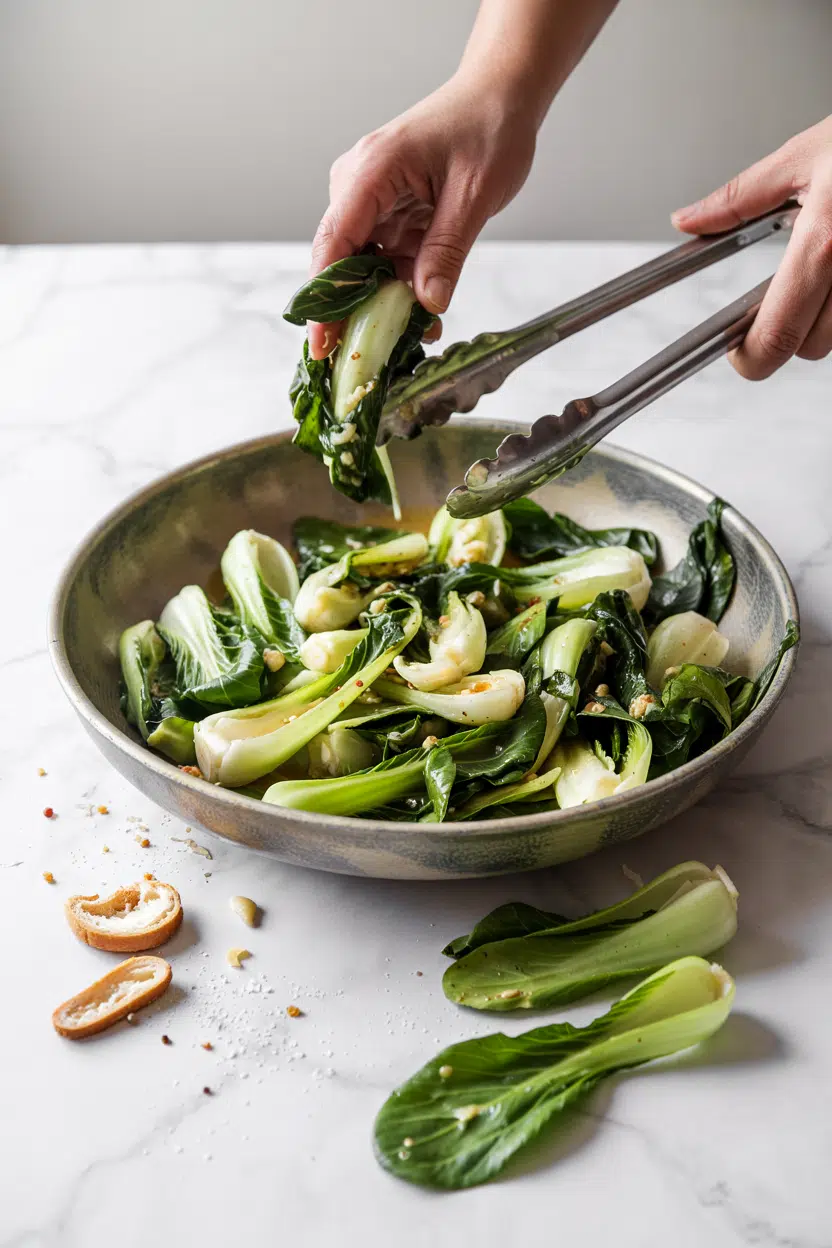
Bok choy has a mild, clean flavor - somewhere between a tender cabbage and Swiss chard stems, without the mineral bitterness you get from kale or mature mustard greens. The stalks taste faintly sweet and watery; the leaves are slightly greener and more vegetal.
Heat shifts the flavor noticeably. Raw, the stalks have a light peppery edge and smell faintly of fresh cabbage.
Cooked quickly in a hot wok, that pepperiness mellows and the natural sweetness comes forward. Slow-braised stalks become genuinely sweet and almost buttery in texture.
Older, larger specimens can develop a subtle mustardy bite near the stalk base - not unpleasant, but worth knowing if you're serving it raw.
How to Use bok choy
Bok choy fits into high-heat and low-heat cooking equally well, though the two produce very different results. The stalks and leaves also cook at different speeds, so technique matters here.
| Method | Best For | Tip |
|---|---|---|
| 🔥 Stir-fry | Side dishes, noodle bowls, quick weeknight cooking | Add stalks 1-2 minutes before leaves; high heat only |
| 🍲 Braise | Cantonese-style dishes with oyster sauce | Low heat, longer time; stalks turn sweet and tender |
| ♨️ Blanch | Salads, cold sesame noodle sides, garnish | Shock in ice water immediately to stop cooking |
| 🫧 Steam | Clean preparations with light sauces | Halve heads for even steam penetration |
| 🥗 Raw | Slaws, chopped salads, dumpling fillings | Slice stalks thin; salt and drain to reduce moisture |
Garlic, ginger, and soy sauce form the most common flavor base for bok choy across Chinese preparations. Sesame oil and toasted sesame seeds finish dishes well. Oyster sauce is the classic braising liquid in Cantonese cooking - it coats the stalks without masking their flavor.
Bok choy also works as a filling component. Chopped and salted, it adds moisture and texture to dumpling and wonton wrappers without making the filling watery.
For soups and ramen, add it in the final two minutes so the stalks stay crisp.
Pairing-wise, it holds up alongside pork, chicken, and shellfish. Tofu and shiitake mushrooms make it a complete vegetarian plate.
Chili oil adds contrast without overwhelming the mild base flavor. For ideas on what to build around it, what to serve with stir-fry covers the full picture.
How to Buy and Store bok choy
Good bok choy is firm everywhere. Stalks should be white-to-pale-green with no sliminess at the base; leaves should be dark, glossy, and intact - not yellowed or wilted at the edges. For baby bok choy, choose compact bulbs with tightly clustered leaves and no brown spots.
Store it unwashed in a perforated plastic bag or wrapped loosely in a damp paper towel, then place it in the crisper drawer. Keep the stalk bases intact until you're ready to cook.
- Whole heads - last 5-7 days in the refrigerator under proper conditions
- Baby bok choy - typically 3-5 days; it wilts faster once detached from its compact base
- Pre-cut bok choy - use within 1-2 days; cut surfaces oxidize and lose texture quickly
For a more detailed breakdown of timing and signs of spoilage, see our guide to bok choy freshness guide.
Start with the stalk
If you're new to bok choy, stir-fry it first. Halve a few baby bok choy heads, cook them cut-side down in a hot pan with garlic and a splash of soy sauce, and you'll have its core character in under five minutes.
From there, braising and soups follow naturally. If you can't find it, bok choy swaps and napa cabbage alternatives cover the closest options by use case.
Frequently Asked Questions
It's in the same species as turnips and napa cabbage - Brassica rapa - but it doesn't form a head like standard cabbage. The open rosette growth and distinct white stalks set it apart structurally and in flavor.
Yes. The stalks are crisp and mild enough for slaws and chopped salads. Slice them thin and salt briefly to draw out excess moisture before combining with dressings.
High heat and short time. Cook over a very hot pan for 2-3 minutes total, and don't crowd the pan - excess moisture steams rather than sears the cut surface, which leads to softness.
It's low in calories and provides vitamin A, vitamin C, and calcium. It also contains vitamin K, which is worth noting if you take blood-thinning medications that require consistent vitamin K intake.
No - they cook at very different rates. Stalks need 2-4 minutes depending on method; leaves wilt in under 90 seconds. Add them separately to avoid one being overcooked while the other finishes.