
We're doubling the batch and there's not enough sunflower oil to cover it. The fridge holds half a bottle, and the rest of the recipe depends on oil that spreads heat evenly and stays neutral.
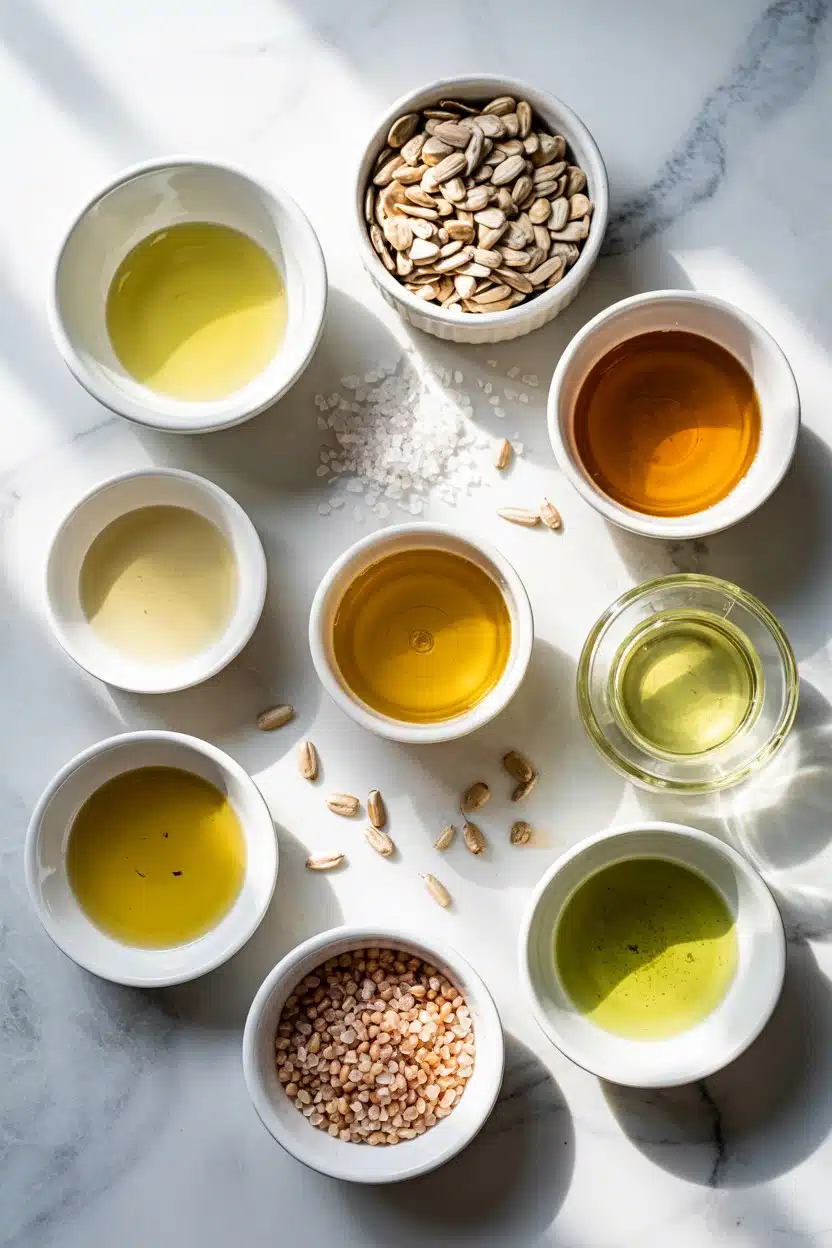
The right substitute depends on smoke point and flavor, not just whether it pours. Oils differ in how they handle heat, whether they turn a sauté bitter, and if they leave an aftertaste in vinaigrettes.
| # | Substitute | Best For | Ratio | Key Note |
|---|---|---|---|---|
| 1 | Canola Oil | ✨ Both | 1:1 | Slightly nutty, very neutral |
| 2 | Olive Oil | 🍳 Cooking | 1:1 | Fruity and peppery |
| 3 | Avocado Oil | 🍳 Cooking | 1:1 | Buttery, high smoke point |
| 4 | Vegetable Oil | ✨ Both | 1:1 | Neutral, similar texture |
| 5 | Grapeseed Oil | ✨ Both | 1:1 | Light, slightly nutty |
| 6 | Light Coconut Oil | ✨ Both | 1:1 | Mild coconut aroma |
| 7 | Safflower Oil | ✨ Both | 1:1 | Mild, very close match |
Canola oil and vegetable oil are top substitutes, chosen for their neutral flavor and heat tolerance. Prioritize smoke point and flavor to suit your dish. For baking, a mild oil keeps flavors balanced; for frying, pick oils with higher smoke points.
7 Sunflower Oil Substitutes Without Big Changes
Each substitute below fills the role of sunflower oil in a slightly different way. Match the swap to what you're making-frying needs high smoke points, baking tolerates more flavor, and dressings reward clean taste.
Remember it later
Planning to try this recipe soon? Save it for a quick find later!
1 - Canola Oil
Canola oil runs more neutral than sunflower, with a faint nuttiness that disappears under heat. The flavor holds back enough to work in cakes, cookies, and quick breads without competing with vanilla or cocoa.
Use it straight across at 1 tablespoon per 1 tablespoon. It heats to 400°F, making it reliable for roasting vegetables or shallow frying chicken cutlets.
If you're out of canola too, Canola Oil alternatives to try covers swaps that hit the same neutral range.
Canola Oil
Works for: Frying, baking, and sautéing without added flavor
Skip if: You want zero nutty undertones in dressings
Sunflower Oil
Works for: High-heat cooking and mild-tasting baked goods
Skip if: You need a richer mouthfeel in sauces
2 - Olive Oil
Olive oil brings fruity and peppery notes that stand out in sautés and roasted dishes. The flavor runs bolder than sunflower, so it reshapes mild recipes like muffins or plain white cakes.
Swap 1 tablespoon for 1 tablespoon in savory contexts-garlic shrimp, sheet-pan vegetables, or pan-fried fish fillets. Extra virgin works best as a finishing drizzle; light or refined olive oil tolerates medium heat without turning bitter.
If olive oil isn't available either, Olive Oil replacements that work narrows it to milder cooking oils.
Here's what to know:
- Use light or refined olive oil for baking to minimize grassy notes.
- Extra virgin shines in vinaigrettes and cold sauces where fruitiness adds depth.
Skip if: You're baking angel food cake or another delicate dessert that can't handle peppery undertones.
3 - Avocado Oil
Avocado oil heats to 520°F, making it the strongest choice for wok stir-fries, deep-frying, or high-temperature roasting. The buttery, slightly grassy taste stays mild enough to avoid clashing with spices or seasonings.
Use the same measure-1 tablespoon per 1 tablespoon. It costs more per ounce, so save it for recipes where heat matters most: searing steaks, crisping tofu, or frying hash browns.
The mild flavor also blends into smoothies or no-bake energy bars without adding oiliness.
Skip if: You're baking brownies or cakes where the buttery note reads too rich.
4 - Vegetable Oil
Vegetable oil mimics sunflower oil's neutral profile and light texture almost exactly. It fries chicken without leaving a heavy coating, and it keeps cakes moist without adding flavor that competes with chocolate or lemon zest.
Swap 1 tablespoon for 1 tablespoon in any recipe. It works in dressings, marinades, and cookie dough with no adjustments.
When you need a second backup, replacements similar to Vegetable Oil lists oils that share the same clean taste.
- Smoke point hovers around 400°F, making it suitable for most stovetop cooking.
- Blends well with vinegar and mustard in vinaigrettes without separating.
- Costs less per ounce than specialty oils, so it stretches when you're scaling up.
- Store in a cool, dark spot to prevent rancidity from light exposure.
Skip if: You want to avoid blended oils or prefer single-source options.
5 - Grapeseed Oil
Grapeseed oil tastes lighter and slightly nuttier than sunflower, with a delicate profile that disappears into dressings and baked goods. It emulsifies cleanly in vinaigrettes, keeping Caesar or balsamic dressings smooth without an oily slick.
Use 1 tablespoon per 1 tablespoon. The smoke point sits around 420°F, so it handles medium-high heat for sautéing or roasting but turns bitter if pushed past that.
Missing grapeseed too? Grapeseed Oil alternatives to try covers neutral oils with similar emulsifying strength.
- Works best in cold applications like mayonnaise or aioli where the nutty hint adds depth.
- Heats to 420°F, making it reliable for quick pan-frying or medium roasting.
| Use | Ratio | Notes |
|---|---|---|
| Dressings | 1:1 | Emulsifies cleanly, mild nutty hint |
| Baking | 1:1 | Keeps cakes moist, doesn't overpower vanilla |
| Sautéing | 1:1 | Good for medium heat, turns bitter above 420°F |
Skip if: You're deep-frying at temperatures above 420°F.
6 - Light Coconut Oil
Light or refined coconut oil carries a subtle coconut aroma that blends into baked goods without turning them tropical. It melts at 76°F, so it solidifies in cool kitchens but liquefies quickly under gentle heat.
Swap 1 tablespoon for 1 tablespoon in cookies, muffins, or quick breads. The mild sweetness pairs well with chocolate, cinnamon, or citrus zest.
For sautéing, it heats to 350°F-enough for scrambled eggs or seared tofu but not high enough for wok cooking. If you don't have coconut oil either, common Coconut Oil swaps ranked lists plant-based fats that melt at similar temperatures.
- Solidifies below 76°F, so warm it gently before measuring for dressings or smoothies.
- Adds a faint sweetness that complements baked goods with brown sugar or maple syrup.
- Smoke point hits 350°F, making it suitable for low to medium stovetop heat only.
Skip if: You're frying at high heat or want zero coconut presence.
7 - Safflower Oil
Safflower oil runs nearly identical to sunflower oil in taste, texture, and smoke point. The hint of nuttiness stays so faint that most cooks can't distinguish it in finished dishes.
Use 1 tablespoon per 1 tablespoon in any recipe that calls for sunflower oil. It fries, bakes, and emulsifies without altering flavor or texture.
The smoke point reaches 450°F, making it reliable for high-heat roasting or shallow frying. When safflower isn't on hand either, Safflower Oil swaps by recipe type covers oils that match its neutral profile.
Skip if: You want a richer, more pronounced flavor in your cooking.
Making Sunflower Oil Substitutes Work
Most of these swaps work without changing the recipe. For frying or high-heat roasting, avocado or safflower oil handles the heat without smoking.
For baking, canola, vegetable, or light coconut oil keeps cakes moist and neutral.
- Closest match - Safflower oil, nearly identical in taste and smoke point
- Easiest grab - Vegetable oil, works everywhere sunflower does
- High-heat option - Avocado oil, handles wok temps without breaking down
Frequently Asked Questions
Use light or refined olive oil in baking to avoid peppery notes. Extra virgin olive oil works in savory breads or rustic cakes, but it overpowers delicate desserts like vanilla sponge or angel food cake.
Avocado oil handles the highest heat at 520°F, making it ideal for deep frying or wok cooking. Safflower and vegetable oil also work well, with smoke points around 450°F and 400°F respectively.
Canola, vegetable, and safflower oil maintain the same moisture and crumb structure as sunflower oil. Coconut oil solidifies at cooler temperatures, so it can create a slightly denser texture in some cakes.
Mixing neutral oils like canola and vegetable works fine. Avoid blending strong-flavored oils like extra virgin olive oil with mild ones unless you want that flavor in the finished dish.
All seven substitutes listed are nut-free. Canola, vegetable, safflower, avocado, olive, grapeseed, and light coconut oil contain no tree nuts or peanuts, making them safe for nut allergies.
7 Best Substitutes for Sunflower Oil
Ingredients
Method
- Choose your substitute based on cooking method: avocado or safflower oil for high heat, canola, vegetable, or light coconut oil for baking, others for dressings or medium heat.
- Warm or gently heat solid oils like light coconut oil before use to liquefy them if needed.
- Use each substitute in a 1:1 ratio to replace sunflower oil without changing measurement.
- Adjust based on flavor preferences, especially with olive oil, which has a stronger taste.
- After preparation, check taste and consistency, making minor adjustments as needed for desired results.



