
Clove does something no other dried spice does quite as sharply: it shows up in a recipe in a quantity that seems almost trivial - two buds, maybe three - and still shapes the entire dish. That single whole clove dropped into a braise or simmered into a syrup carries enough eugenol oil to shift the flavor profile of everything around it.
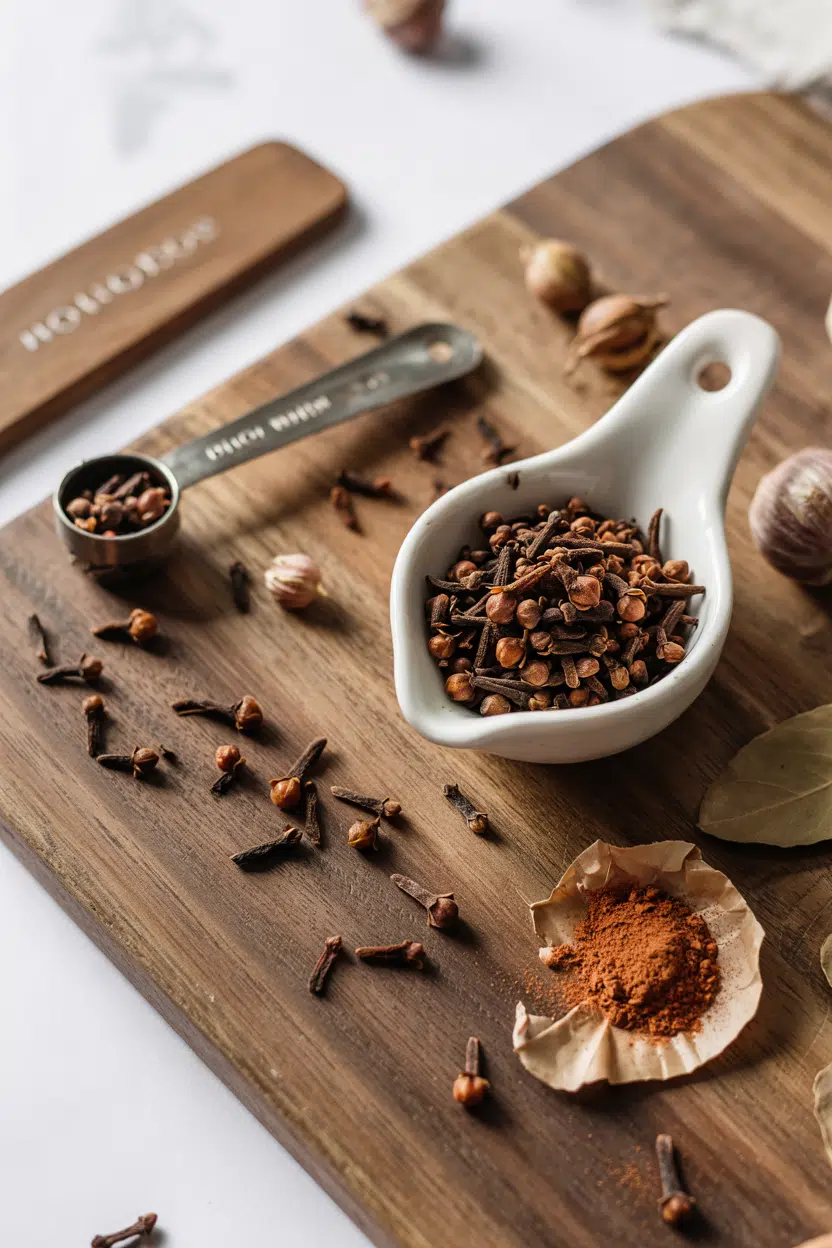
Understanding what clove actually is, how it tastes, and how much to use is the difference between a dish with depth and one that tastes like cough drops. Spice blends like allspice replacements often lean on clove for exactly that reason.
Clove is a dried flower bud with pungent, warm-spicy flavor driven by eugenol oil. Use it sparingly - whole in braises and biryanis, ground in spice blends and baked goods. Whole cloves keep 2-4 years; ground clove fades within 6-12 months.
What Is Clove?
Clove is the dried, unopened flower bud of Syzygium aromaticum, a tropical evergreen tree native to the Maluku Islands (the Moluccas) of eastern Indonesia.
Remember it later
Planning to try this recipe soon? Save it for a quick find later!
Harvested before the bud opens, each clove dries into a small, hard, nail-shaped form - which is why some older European texts call it a "clove nail." The word clove itself derives from the Latin clavus, meaning nail.
The spice belongs to the Myrtaceae family and is categorized as a dried flower bud, not a seed or bark like some of its common spice companions. Whole cloves are dark brown, glossy, and roughly 1-2 cm long.
Unlike cinnamon or cardamom, clove has only one commercially significant variety rather than distinct cultivars, though origin matters - Indonesian, Zanzibar, and Sri Lankan sources can differ slightly in eugenol concentration.
Historically, the anise vs star anise trade routes ran parallel to the clove spice trade across Southeast Asia and the Arab world.
Ground clove is simply whole buds milled fine, though it loses potency much faster once processed.
What Does Clove Taste Like?
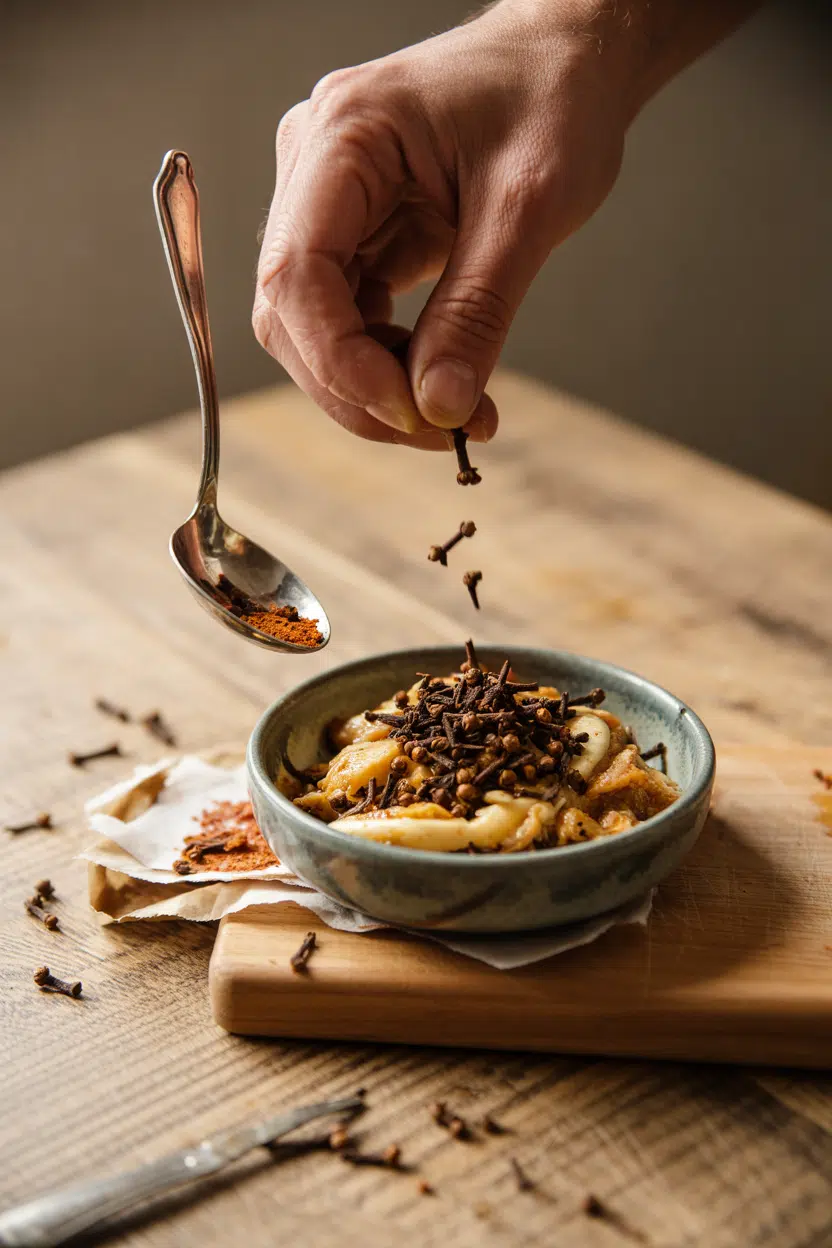
Clove tastes like a concentrated mix of nutmeg and black pepper, lifted by a sharp, camphor-like coolness that no other common spice replicates. The flavor is warm and sweet up front, then turns slightly bitter and astringent on the finish.
That coolness comes directly from eugenol, the dominant phenolic compound in clove oil. It's the same compound used in dental applications - which explains why clove sometimes reads as faintly medicinal in large quantities.
Heat affects clove's character noticeably. Bloomed briefly in hot fat, it mellows and turns rounder.
Left raw in a salad or cold preparation, that medicinal edge sharpens into something harsh and unpleasant - which is why clove almost always enters recipes via heat.
How to Use Clove
Clove appears in South Asian, Southeast Asian, Middle Eastern, and Northern European cooking - and the form you use matters as much as the quantity.
Whole cloves suit long, slow applications where time softens their edge. Ground clove integrates quickly into dry blends and batters but overpowers fast if you misjudge the amount. A reliable rule: use ground clove at roughly one-quarter the volume you'd use whole buds in an equivalent dish.
| Method | Best For | Tip |
|---|---|---|
| 🍖 Studding | Glazed ham, onions for stock | Push bud into fat or scored surface so it anchors during roasting |
| 🫕 Whole in liquid | Biryanis, curries, braised meats, mulled wine | Add at the start; remove before serving - biting into one is unpleasant |
| 🧈 Bloomed in fat | Curry bases, dal, spiced rice | 30 seconds max in hot oil; pulls eugenol into the fat and mellows raw sharpness |
| 🎂 Ground in blends | Garam masala, chai spice, gingerbread, pumpkin pie | Measure carefully - a pinch too much dominates the whole blend |
| 🍵 Steeped then strained | Syrups, poaching liquids, infused milk | 3-4 whole cloves per cup of liquid is usually enough |
Clove pairs tightly with cinnamon, star anise, nutmeg, cardamom, and ginger - essentially the warm-spice family. Citrus, especially orange peel, brightens clove's heaviness and is standard in mulled wine and pickling brines.
Red meat and pork carry its intensity well; delicate fish does not.
In swedish cardamom buns and Northern European baking, clove often plays a supporting role behind cardamom without dominating.
How to Buy and Store Clove
At the store, choose whole buds that are uniformly dark brown, plump, and glossy with a clear nail shape intact. Shriveled, pale, or dusty buds have lost significant oil content and won't deliver the flavor you're paying for.
- Whole cloves - Store in an airtight, opaque container away from heat and light; potent for 2-4 years.
- Ground clove - Keep in a small sealed jar; flavor degrades quickly, so use within 6-12 months.
- Freshness test - Crush one bud between your fingers; strong, immediate aroma means good oil content. No aroma means no flavor.
For a full breakdown of how long cloves actually last under different conditions, see our clove storage guide guide.
Where to Start With Clove
New to clove? Start with two whole buds in a slow-cooked braise or stew.
That application is forgiving - long cooking rounds off the sharpness, and you can remove the buds before serving.
Once you're comfortable with whole cloves, move to ground clove in a spice blend like garam masala or a chai mix, where it works alongside cinnamon and cardamom. If you need a stand-in for a recipe, the clove alternatives guide covers your closest options and ratios.
The ground cloves vs whole cloves breakdown is worth reading before you swap one form for the other.
Frequently Asked Questions
No - they're different spices. Allspice is a dried berry that naturally tastes like a blend of clove, cinnamon, and nutmeg combined. Clove is a flower bud with a sharper, more pungent profile and higher eugenol concentration than allspice.
Whole cloves suit long-simmered dishes where they're removed before serving - braises, stocks, mulled wine. Ground clove integrates directly into batters, dry rubs, and spice blends but at roughly one-quarter the volume of whole buds.
The fat in a glazed ham carries eugenol oil deep into the meat as it roasts, delivering warm aroma throughout the cut. The buds also visually mark scored diamond patterns - a classic presentation technique with a functional origin.
Yes, with adjustment. Use ¼ teaspoon ground clove for every 3-4 whole cloves a recipe calls for. Ground clove disperses instantly, so it works better in batters and blends than in dishes where you'd normally remove the whole bud.
Normal cooking amounts are safe for everyone. Concentrated clove oil (eugenol extract) is a different product - ingesting undiluted clove oil can irritate mucous membranes and, in large medicinal doses, may affect blood clotting. Stick to culinary use.



