
A wedge salad without blue cheese is just a bowl of iceberg - it's the crumbled mold-ripened cheese that turns something ordinary into something worth ordering. Blue cheese carries a sharp, salty, funky punch that very few other ingredients can replicate, and understanding what drives that flavor helps you use it with confidence.
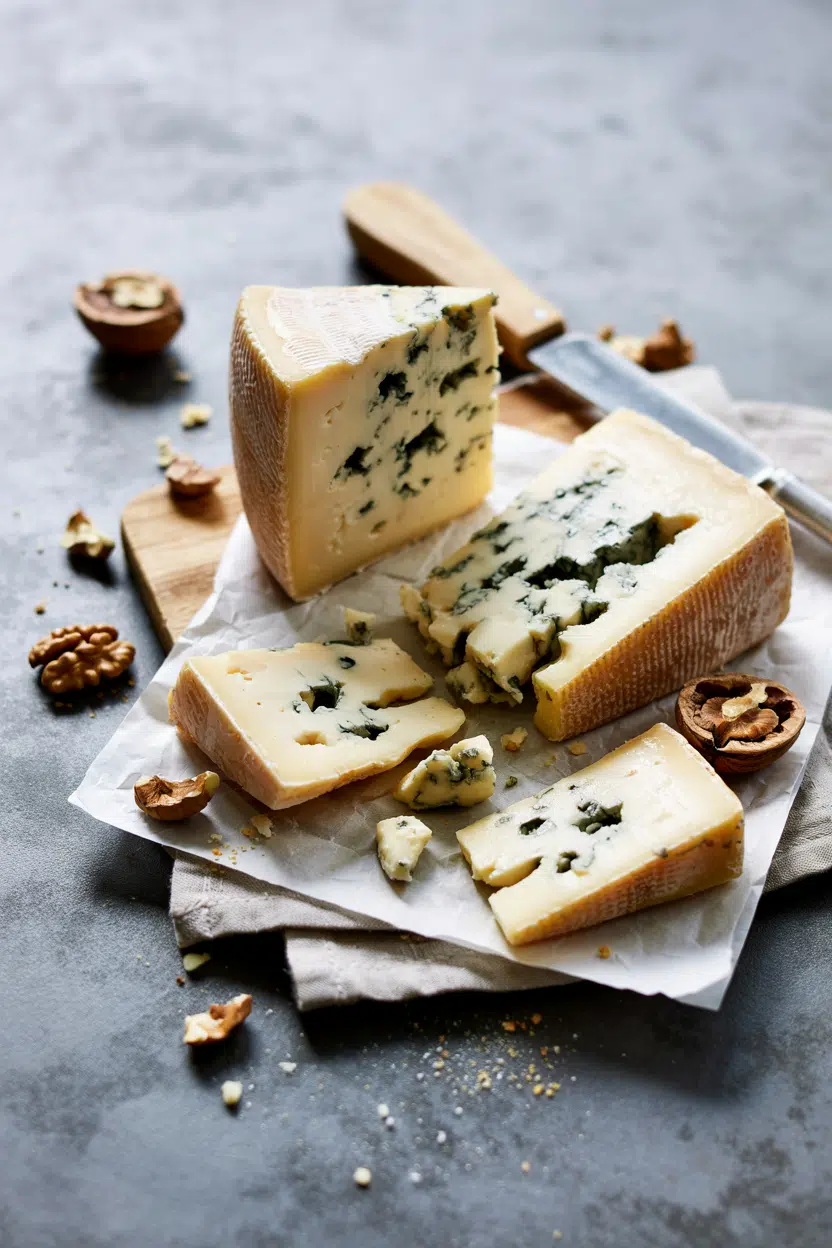
It's not just one cheese, either - Roquefort, Gorgonzola, and Stilton each bring a slightly different character to the table. This guide covers what blue cheese tastes like, how to cook with it, and what to look for at the counter.
Blue cheese is a mold-ripened dairy cheese inoculated with Penicillium cultures that create blue-green veins and a sharp, tangy, umami-rich flavor. Texture ranges from crumbly to creamy. Use it on salads, in pan sauces, or on a cheese board with pears and honey.
What Is Blue Cheese?
Blue cheese is a category of mold-ripened cheese made from cow, sheep, or goat milk and inoculated with Penicillium roqueforti - the culture responsible for those signature blue-green veins running through the paste.
Remember it later
Planning to try this recipe soon? Save it for a quick find later!
The cheese ages in humid, temperature-controlled caves or cellars where the mold develops distinct veining, aroma, and texture over weeks or months.
Three varieties define the category for most cooks. Roquefort comes from southern France and is made exclusively from sheep milk, giving it a rich, tangy depth. Gorgonzola is an Italian cow-milk version that splits into two styles: Dolce, which is younger and creamier, and Piccante, which is firmer and more assertive. Stilton, the British standard, is also cow-milk and tends toward a drier, more crumbly texture with a slightly milder bite than Roquefort.
The milk source used in production has a direct impact on flavor intensity.
If you find most blue cheeses overpowering, a young Gorgonzola Dolce is often a reasonable starting point - and if you need a milder swap entirely, goat cheese replacements can work in some applications.
What Does Blue Cheese Taste Like?
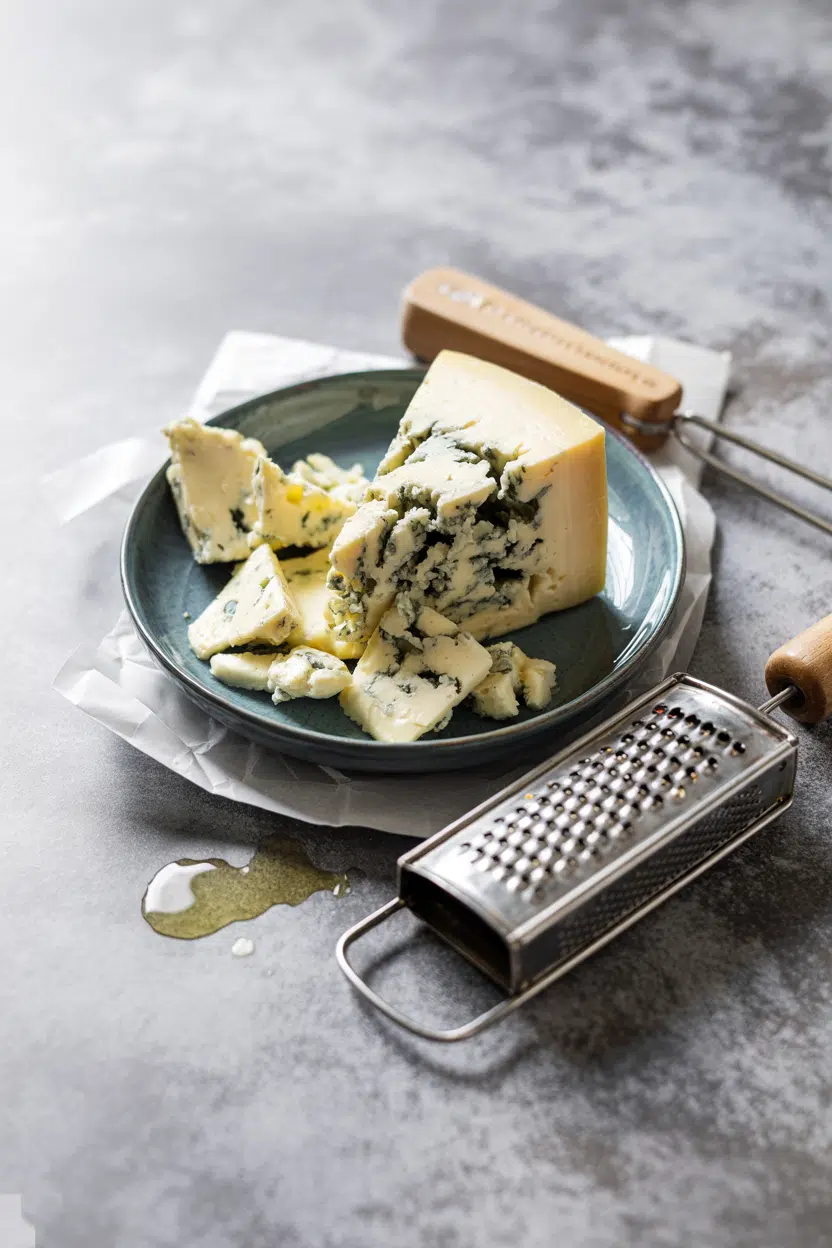
Blue cheese tastes closest to a strong aged goat cheese, but with a salty, fermented edge that goat cheese never fully reaches.
The sharpness comes from the mold breaking down fats and proteins during aging - a process called lipolysis - which generates free fatty acids responsible for the funky, almost metallic bite.
Heat softens the edge without erasing it. Melted into a pan sauce, blue cheese becomes richer and less aggressively salty, which makes it more approachable for people who find it overwhelming straight from the block.
Left cold and crumbled on a salad, you get the full sharpness with every bite.
How to Use Blue Cheese
Blue cheese earns its place in cold applications just as readily as hot ones. Crumbled raw over a wedge salad or stirred cold into a dressing, it contributes distinct minerality and salt.
Knowing side dishes for blue cheese helps you plan pairings that work - walnuts, pears, honey, and caramelized onions all cut the intensity without burying it.
| Method | Best For | Tip |
|---|---|---|
| 🥗 Raw / Crumbled | Wedge salads, cheese boards, crostini with honey | Add after plating - heat dulls its sharpness |
| 🍳 Melted into sauce | Steak pan sauces, compound butters, mashed potatoes | Add off heat or at low temp; high heat can make it grainy |
| 🥣 Cold in dressing | Blue cheese dressing, dips, ranch-style spreads | Leave some chunks intact for texture contrast |
| 🍕 Baked briefly | Flatbreads and pizza - added post-bake or in final 2 minutes | Don't overbake; it tightens and loses its creamy edge |
For pairings, bold flavors hold up best. Cabernet Sauvignon and hoppy IPAs both have enough structure to stand beside Stilton or Roquefort without being overwhelmed.
On the food side, rye bread, sourdough, and caramelized onions are all strong matches. Avoid pairing blue cheese with overly sweet glazes or delicate green teas - both lose the battle immediately.
How to Buy and Store Blue Cheese
At the counter, look for distinct blue-green veining that runs through the interior paste, not just surface discoloration. A creamy-to-crumbly texture without large dry cracks is a good sign.
Reject any wedge with a strong ammonia smell or pink and orange surface patches - those signal spoilage, not aging.
At home, wrap blue cheese in wax paper or dedicated cheese paper, then place it inside a loose plastic bag or loosely sealed container. This allows limited air exchange without drying the paste out.
Avoid wrapping it tightly in cling film - that traps moisture and accelerates unwanted bacterial growth.
Unopened refrigerated wedges hold for 3-4 weeks. Once you cut into one, target 1-2 weeks.
For a full breakdown of how storage conditions affect longevity, see our blue cheese storage guide guide.
Where to Start With Blue Cheese
New to blue cheese? Start with Gorgonzola Dolce - its younger age and cow-milk base keep the intensity moderate.
From there, move to Stilton for a firmer, drier experience before trying Roquefort's full sheep-milk punch.
Already a convert? Use it where heat can soften the edge: folded into mashed potatoes, stirred into a steak pan sauce, or spread on crostini with a drizzle of honey.
If a recipe calls for blue cheese but you're cooking for mixed crowds, check blue cheese alternatives for milder swaps that still bring tang.
Frequently Asked Questions
Yes. The Penicillium roqueforti mold used in production is non-toxic and specifically cultivated for cheesemaking. It's a different species entirely from molds that cause food spoilage. Discard it only if you see pink or orange discoloration, or if the whole wedge smells strongly of ammonia.
The mold breaks down fats during aging through lipolysis, generating free fatty acids that produce the sharp, funky flavor. Longer aging and denser veining both increase intensity. Sheep-milk varieties like Roquefort tend to run sharper than cow-milk options.
Roquefort is French, made from sheep milk, and has a sharper, saltier profile. Gorgonzola is Italian, made from cow milk, and is generally milder - especially in its younger Dolce form. Both use Penicillium cultures but age differently and carry distinct protected origin status.
Often, yes. Aged blue cheeses are very low in lactose because the aging process breaks most of it down. Individual tolerance still varies, so start with a small amount. This does not apply to people with a true dairy protein allergy.
Wrapped properly in cheese paper and refrigerated, an opened wedge keeps for 1-2 weeks. Tightly sealed in cling film it deteriorates faster - trapped moisture encourages unwanted bacterial growth rather than slowing it.



