
Tuck a handful of chicharrón into a warm tortilla with salsa verde and raw onion, and you've got one of the most straightforward tacos imaginable - two ingredients doing serious work. That combination shows up in taquerias across Mexico City, street stalls in Oaxaca, and home kitchens throughout Latin America.
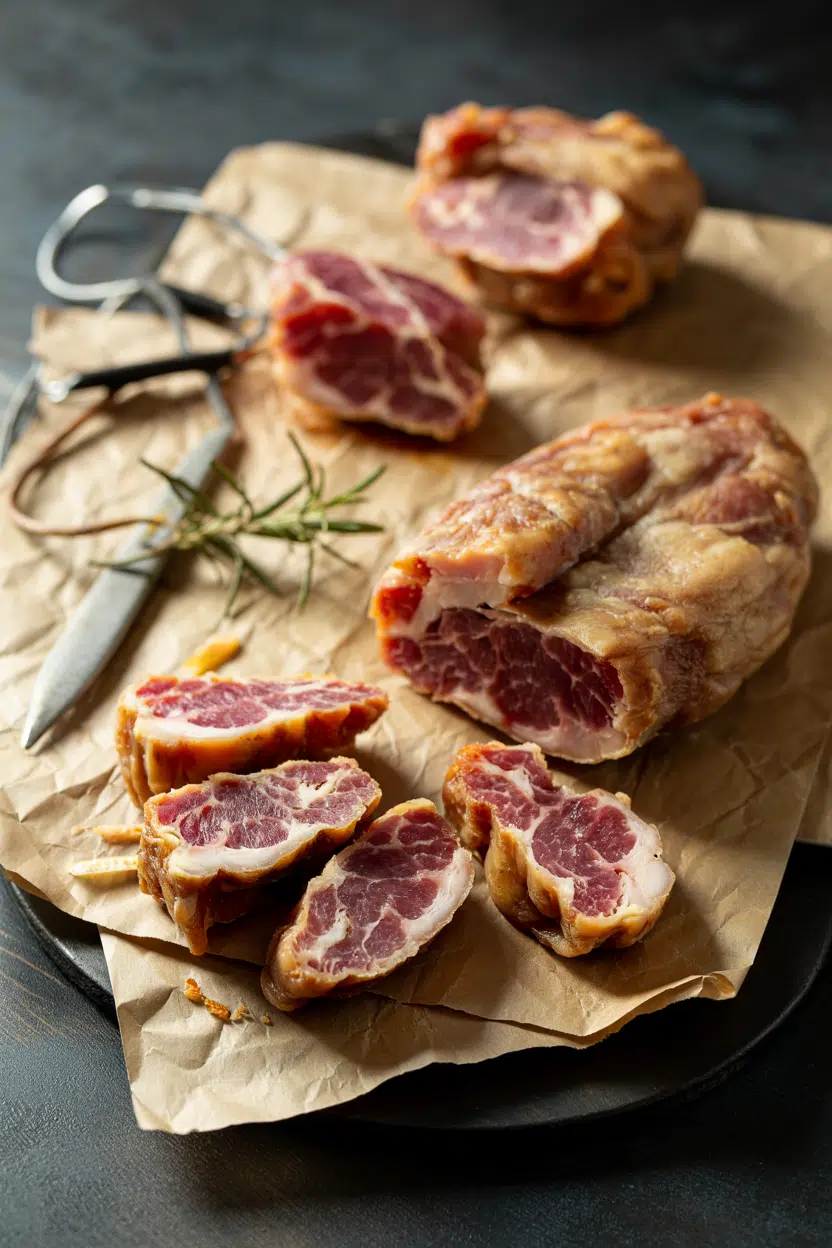
Chicharrón occupies a different category from something like pancetta - it's not a cured product, but a fried one, built on rendered fat and intense heat. Few snack ingredients carry this much depth of flavor and regional identity.
Chicharrón is fried pork skin - sometimes with fat or meat attached - that crisps into light puffs or dense slabs depending on style. It's salty, savory, and umami-rich, with a toasted pork fat aroma. Used across Mexican, Cuban, and Filipino cooking, it ranges from a roadside snack to a taco filling.
What Is Chicharron?
Chicharrón (plural: chicharrones) is fried pork skin, rendered in fat until it blisters and crisps. The name comes from Spanish and traces back to the Iberian Peninsula, carried into Latin America through Spanish colonization.
Remember it later
Planning to try this recipe soon? Save it for a quick find later!
Regional style determines what you actually get. In Mexico and much of Latin America, the most common form is the puffed rind - light, airy, and brittle, made by deep-frying dried pork skin until it balloons.
A second major type is chicharrón prensado, a pressed slab of pork skin with attached fat and sometimes meat, cooked down and compressed before frying.
- Puffed rind (chicharrón de cuero) - Light and brittle with a hollow crunch; fat has been rendered out fully.
- Chicharrón prensado - Dense, chewy, and fatty; sold in blocks and sliced or chopped to order.
- Chicharrón con carne - Pork skin with meat still attached, chewier and meatier in bite.
- Chicharrón molido - Ground pork rind used as breading or mixed into fillings.
Outside Latin America, equivalent products go by different names - pork crackling in the UK, pork rinds in the United States. Filipino cooking has its own version called chicharon, often served with a vinegar dipping sauce.
What Does Chicharron Taste Like?
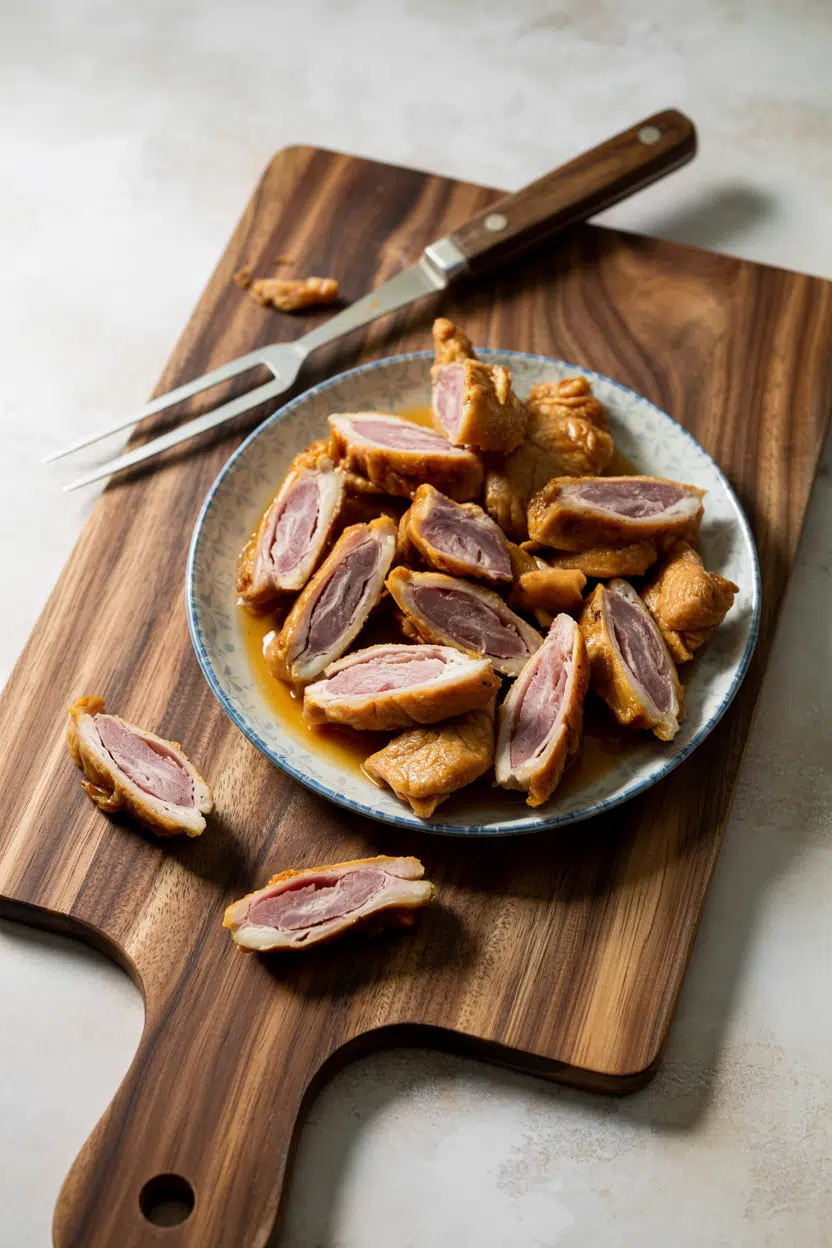
Chicharrón tastes like deeply salted, toasted pork fat - somewhere between bacon drippings and a meaty chip. The savory punch is immediate and strong, backed by a lingering umami quality from the rendered skin and fat.
The two main styles taste noticeably different. Puffed rind is lighter, with a clean salt-and-fat hit that fades quickly.
Prensado carries more lingering pork flavor because of the attached meat and fat layers - chewier, richer, and slightly greasier on the palate.
Acid cuts the fat cleanly. That's why lime and pickled onions work so well alongside it - they reset the palate between bites.
How to Use Chicharron
Chicharrón shows up across multiple cuisines and in more forms than its snack-food reputation suggests. In Mexican cooking alone, it covers street food, home staples, and regional specialties.
As a taco filling, chopped prensado goes into a warm tortilla with salsa verde or a red guajillo sauce - this is one of the most common lunch tacos sold at fondas and markets. As a topping, broken puffed rind adds crunch to sopes, tlacoyos, and tostadas without overwhelming other flavors. Stirred into refried beans, small pieces of chicharrón melt slightly into the fat, adding texture and depth.
| Method | Best For | Tip |
|---|---|---|
| 🥗 Broken Raw | Toppings on soups, tostadas, sopes | Add just before serving to keep crunch |
| 🍳 Pan-Fried | Reheating prensado, crisping taco filling | Medium heat only - high heat scorches fast |
| 🔥 Deep-Fried | Making from scratch, final crispening | Oil must be hot enough to puff rind in seconds |
| 🫙 Oven-Finished | Reducing excess oil, reviving stale rinds | 5-8 minutes at 350°F restores snap |
| 🫓 Ground (Molido) | Low-carb breading, mixed into gorditas | Pulse in a food processor - don't over-grind |
Cuban cooking uses chicharrón as a side alongside rice and black beans, often with hot sauce on the table. Filipino chicharon typically pairs with vinegar and calamansi rather than chiles.
Across all these cuisines, the fat content means chicharrón stands up to bold, acidic condiments that would flatten a leaner ingredient.
Ground chicharrón molido has found a second life as a zero-carb breading for chicken or fish - a use that requires nothing more than a food processor and a hot pan.
How to Buy and Store Chicharron
Puffed rind should look uniformly golden to light brown - avoid bags with heavy black scorch marks or pieces that feel damp or soft. A dry, crisp surface means the moisture was fully driven out during frying. For prensado, look for firm slabs with visible skin layers and no sour or off odor; the fat should be pale and clean, not grey.
Commercial packaged chicharrón keeps for weeks to months when sealed, thanks to low moisture content. Once opened, seal it tightly and use within a few days for best texture.
Home-fried pieces and prensado should go into a sealed container in the refrigerator - learn more about chicharrón shelf life if you're making a large batch.
Pure pork rind chicharrón is naturally gluten-free, however, flavored commercial versions sometimes include coatings or additives - always check the label.
Where to Start With Chicharron
New to it? Start with packaged puffed rind, a squeeze of lime, and a good hot sauce.
That combination takes thirty seconds and gives you the clearest read on the flavor.
From there, try tacos de chicharrón prensado - chopped pressed rind in a corn tortilla with salsa verde. If you want chicharrón substitutes for a recipe that calls for crunch without the fat, fried shallots or toasted breadcrumbs get close in texture but not in flavor.
Nothing else replicates the rendered pork fat depth, so treat this as its own ingredient, not a stand-in for something else.
Frequently Asked Questions
Largely yes, but not exactly. Both are fried pork skin, however, chicharrón often includes attached fat or meat, while American-style pork rinds are typically pure skin with fat fully rendered out. Regional preparation also differs significantly.
Pork skin is cleaned, dried, and slow-rendered to remove moisture and fat, then deep-fried at high heat until it puffs and crisps. Prensado-style involves pressing the cooked skin into blocks before a final fry.
Yes. Pure pork rind chicharrón contains zero carbohydrates and is high in fat and protein, fitting standard keto macros. Check flavored varieties - some include sugar or starch-based seasonings.
It's a pressed block of cooked pork skin, fat, and sometimes meat, sold by the slab and typically sliced to order. The texture is dense and chewy rather than airy, and the flavor is richer and meatier than puffed rind.
Sealed commercial puffed rind keeps for weeks to months at room temperature. Once opened, use within 2-3 days for best texture. Refrigerated home-fried or prensado pieces stay good for up to two weeks.



